by Rain Trueax
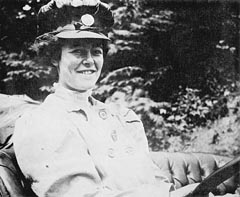
Historic photos from Ancestry.com
When
we do research on an historic figure, we get the bare facts (which
don't always agree). Rarely do we get the emotional stories behind those
facts. I live on land that has one of those amazing stories that could
fit into a romance-- or not. I know the bare facts, but what lies behind
them? That is where imagination takes over.
This story
begins with two brothers, John and Sebastian Ritner, born in 1804 and
1815 in Helvetia Confederacy, Switzerland. I've been curious as to why
and what year they immigrated from there to the United States. Did Europe have a reason a younger and older brother would leave? How
about their parents or other siblings? None of that shows up in records.
Records from way back are not always tidy.
Whatever the
case, it must have been in Pennsylvania where they met Sarah Jane
Woodling, born in 1817, the daughter of Peter Woodling and Mary
Houghner. When she was sixteen and he was twenty-nine, John and Sarah
married in Easton, Pennsylvania. There is no information on when John
and Sarah moved to Missouri, but they had four daughters there:
Missouri Ann born 1840; Mary Elizabeth born 1841; Julia Ann born 1848; and Flora born 1850.
Facts
don't tell stories. Sarah and John were married 7 years before their
first daughter was born. Were there miscarriages? Was it a marriage in
name only for a while? What caused them to leave Pennsylvania for
Missouri. Maybe Sarah had to nurse ailing parents, and it delayed
things. With old historic records, they often have dates different or
names spelled other ways.
After researching several
sites (in the years before the Internet) I found some dates for
Sebastian that make for more curiosity. One site said that he came to
Oregon with cattle in 1845. Except, how does that fit with the claim he
went to California in 1847 for gold (which he reportedly found)? Did he go off and leave the cattle or sell them out there-- if he even brought them? Then, there is how
does it fit with his time in the military, which is among the facts. He
was baptized in 1848 while serving with Company C, Fourth Regiment,
Oregon volunteers in the Cayuse Indian War. Or how about that he was
confirmed in 1845 as Private Sebastian Ritner? The second one fits
better with his first communion being May 5, 1845 while serving in
Captain Solomon Tetherow's company as a private.

He
also is said to be the third foreigner naturalized in Polk County where
he presumably took those cattle. In 1850 (some records claim 1848), he
took up a Donation Land Claim in a valley and hills that he said
reminded him of his homeland, presumably meaning Switzerland, which meant he didn't leave Europe as a baby. He liked this valley, it was claimed, as it was far from people and good for raising cattle.
Sebastian
certainly fits the romance hero, having left his family to become an
adventurer, Indian fighter, and miner before settling on his valley to
build a cabin with what he'd made in the goldfields. When he wrote his
brother to tell him what a wonderful land he had found, he would have
been thirty-five and no sign of a woman in his life. When John wrote
back that they would come, Sebastian headed back to the goldfields for more
money. He left a pair of his pants on the floor of the cabin with a $50
gold piece in the pocket knowing only a woman would pick them up to wash
them and find it (story told to me by one of the locals).
In
response to Sebastian's letter, John left the farm he had built up in
Missouri, with his wife and four daughters, the oldest being twelve, and
headed out on the Oregon Trail. The story of what happened next varies
depending on the source. It is agreed that their oxen were spooked by
something. One source said Indians had been trying to steal stock.
Whether it was that or an over rambunctious Fourth of July celebration, John stepped onto the wagon tongue to try and settle them.
He lost his balance and fell beneath the wagon that ran over him. He
died
July 05, 1852 in On Horse Creek,
east of Laramie where he was buried in an unmarked grave.
I
don't know if Sarah was able to get word to Sebastian of the tragedy;
or if she just had to go on with no idea he'd not even be at the
homestead. Might she have gone back to Missouri? No idea, but she did go
on, did find the money, and then Sebastian returned. As a widow, she was entitled to and filed for her own Donation Land Claim September 15, 1853, land adjoining Sebastian's.
History
only records facts, oftentimes families don't remember details. It is
romantic to think how a lonely man and woman might have realized they
were in love. Is it possible that Sebastian had always loved his
brother's wife since he was only two years older than her? John, as a
mature man, would
have
had the money and ability to provide for a life that an 18 year old
would not have. Whatever the reason for the second marriage, October 20,
1854, Sarah married Sebastian and with the ensuing years bore him four
children, John, Lewis, Sophronia and Frank. They built a cabin that
straddled both land claims, built barns, cleared more of the land,
raised horses, hay, and lived out their days. For a time, their home
became the community church. Traveling ministers came through the
valleys, preaching to those who would come. The Ritners helped build the
first schools and churches, making what had been a wilderness into a
community.

On
a hill high above the creek, they and many of their descendants, their
names engraved on granite tombstones, are buried in a small, well-kept,
family cemetery. For over a hundred years, the land of Ritner Creek
Ranch remained in the hands of Sebastian and Sarah's descendants.
Of
the physical things they built here, only the harness shed remains
today. The stories though, the ford on the creek, the logging chains
across it, they were there when we arrived-- the ones from outside the
family who bought it from the widow of a descendant of Missouri. Our buying it is a
story all on its own for how that came to be-- pure serendipity. There
were and still are two wagon wheels from the wagon that probably brought
Sarah to Oregon. Physical things though never remain forever. The
stories can if someone saves them. I wanted to save this one, as since
1977, I have lived on the land they settled where they created a life for
themselves. I hope my family can hold onto it as long as theirs did. Only time will tell on that, but our son wants to hold onto it as a start.

There
are ironies in this, as when I was a girl, I wrote a story about the
Oregon Trail, which finally came out when I became an indie writer. In
my story, there was an accident with a run away team of mules and the
hero was badly injured. In romances, heroes don't get killed. Real life
isn't always so kind, but then is the real romance a man who always
loved a woman he couldn't have? I wrote one of those
too-- based in a different part of Oregon.
As you can see from the research, romances can't always get all the details. That's where writers take over and merge what they
know with what they
surmise :)
My story of the Oregon Trail:
Round the Bend at Amazon
It is also wide at Barnes and Noble, Kobo, etc.


 I’m just getting started on my next Proxy Brides book
(releasing at the end of March). A recent trip to hike in Death Valley has
given me so many ideas!! Have you ever heard of the California 49ers? Yes, they
are a sports team, but it also refers to the peak year of influx of people moving
to California searching for gold (1849). One group who were looking for a
shortcut to the gold fields got a wee bit lost and ended up wandering around
the desert for a couple months. Finally they burned their wagons and ate their
oxen and walked out on foot. Death Valley National Park has several monuments
to their adventures and losses. I can’t even begin to imagine how terrifying
that must’ve been! At least that story has a happy ending (except for the
oxen).
 I think the groom in my next book will have made his wealth through
some of these exploits. It’s quite fascinating to read about the massive shift
in fortunes during the 40s and 50s. We’re so used to stores, and roads, and
hotels today. People must have been truly intrepid back then! I can’t wait to
explore some of these themes in my next manuscript J