Tuesday, March 12, 2019

The Kannally Ranch

by Rain Trueax

Fire and water from the well
Simple gifts but freely given
In the house where good men dwell
 words etched  in wood in the Kannally home

Because of the popularity of historical romances and westerns, we have an idea of what Old West ranching was like. The reality was often quite different. An example is Arizona's Kannally Ranch.

Like other westward seekers, in 1902, 23-year old Neil Kannally (probably a nickname as there is a Cornelius M. Kannally listed in the cemetery with the rest of his family) left his home in Illinois, with the hope that sunshine and a drier climate would heal his damaged lungs. Because of a lack of definitive records, it's difficult to know for sure (a reason for that will be revealed later), but his father might've been Michael Kannally, who since 1857, had built up a prosperous grocery business in Sterling.  

If so, it could explain how Neil could afford to go west and stay at a health resort in Oracle, 38 miles north of Tucson, at about 4000 feet in elevation, which specialized in healing those with tuberculosis. The sunshine, higher elevation, and treatment helped, and a year later he urged his brother Lee to join him.
 
In 1903, the two purchased the 1880s McCarius homestead of 160 acres, good land for cattle with room to expand. 

Here's where the romance comes in, right? I mean two bachelors-- they'd have to be handsome and strong if they hoped to operate a ranch. Wouldn't they want wives? It is possible that Lee was on the young side for that as records put his date of birth as 1888, which would've made him 15. Not that unusual for youths to head west-- hardly an age for marriage-- at least of men.

Whatever the case, the brothers set out to work their land. They slept in a small adobe cottage that had come with the property. From a second-generation, Irish Catholic family, the young men eventually asked more siblings to join them. Vincent (possibly 28), 30-year old Mary (sometimes called Molly in articles), and 7-year old Lucille came to the Kannally ranch. Is it possible the parents had died for a child to come that far with her siblings? To accommodate the growing family, the brothers added onto the original adobe and then built cottages for their sisters. They all filed for homesteads and expanded the ranch land.

Surely now there'd be a romance-- well, if there ever was one for any of the five, it never came to fruition. None of the Arizona Kannallys married or had children. The thing is the information on them is sparse and sometimes mixed up for names or dates. This was done deliberately at Lucille's request after her death in 1976. As the sole surviving sibling, she requested all family historical records be destroyed. What mysteries might they have revealed-- we'll never know nor will we know her motivations. Imagination has to do the work now for what the dynamics were for these family members.

When WWI came along, articles said that Lee went to war. I checked service records on Ancestry and there were quite a few Kannallys that served-- including a Captain Vincent Kannally. Was this the Vincent who had come west with his sisters? Was it one of the things family members did; and of course, Neil could not go given his lung damage. In the war, Lee suffered nerve gas damage that afflicted him the rest of his life. He took up painting as a way to find peace. 

The beautiful home on the property was built between 1929-1933 of adobe, designed by a Kentucky architect, H. Newkirk. It was neither planned nor paid for by the ones living on the ranch, but by two other brothers, who had followed different paths. 

Although William and Michael visited the ranch, they never lived there. The home was the dream of William, who was in the lumber business, and partially financed by Michael, a Chicago lawyer. The four-level Mediterranean home with its Moorish influences was Italianate in its inspiration. [Photos of the Historic Kannally Ranch Home]

Here comes another of the mysteries that the family's story is full of, possibly due to Lucille's decision. Some articles claim Lee was a self-taught painter and never thought highly of his work. Others say he studied in Paris with the impressionists... Whatever the case, Lucille valued his impressionistic paintings (with a feel of DeGrazia another Arizona artist). Today, they are hung throughout the home. 

Living on the ranch, the brothers and sisters were not recluses. They held formal dinner parties, entertained the bishop of Tucson, and Magma Copper executives. Lucy also threw lavish luncheons for her lady friends. It is certainly a home well set up to entertain.

Interestingly though, the home had no bedrooms. At night the family went, even when icy, down the path to the original homes where they slept.

There may be mysteries in their relationships or else why destroy the papers, but it appears they won't be revealed now. I read that there was a history put together by locals in 1986 but that the facts didn't agree. 

The one certain fact is they grew that ranch into a major cattle operation, with nearly 50,000 acres, which included what would one day be the mining town of San Manuel. They sold the bulk of the land in the 1950s when possibly ranching became more than the brothers could handle with health and aging issues. 


One might imagine that Lucille was a great outdoors woman, since in her will, she left the remaining property to Defenders of Wildlife. It is said that wasn't the case. The home was her domicile. She and her sister liked to
wear beautiful dresses. Their brother Michael had paid for them to travel to Europe, and it's said they wished to have been fashion designers.

As an interesting tidbit, with no certain place for where to put it, Lucille traveled to Machu Picchu in 1976, became ill, returned home, and died a month later. What led her, a woman who loved being in her home, to want to travel to that distant but fascinating place? It's not the usual thing for someone 78 years old (especially back then) due to high elevation and difficulty of getting there.

For the ranch's final destination, in attempting to find the right use, the Defenders of Wildlife donated the home and land to the Arizona State Parks Board. Today, it is Oracle State Park, a 4,000-acre wildlife refuge, picnic area, historic home for tours, and environmental learning center.

Stories like those of the Kannallys are of great interest to writers-- followed by great frustration, as finding motivation is a writer's stock in trade. Curiosity goes right along with it. Sometimes, with all of that, there is no real way to find the story-- at least historically speaking

Sunday, March 10, 2019

I'M WRITING WESTERNS by E. Ayers


I have Loving Anabelle in edits as I speak.  I wrote it for Debra Holland's Montana Sky Publishing. It will release this summer.  I haven't had a historical western release in quite a long while. And there's another planned for this fall. So there's two coming this year plus a contemporary western.

I have a love/hate relationship with historical westerns when it comes to writing them. As you know I'm very picky about accuracy. And that sends me researching the strangest of things. That also means I fall down rabbit holes and get completely side-tracked gathering info that I will never use. But then again strange tidbits surface in the oddest of places.

Probably everyone knows about the jackrabbits that live in the west. They make our little eastern bunnies look like Toy Poodles next to Rottweilers. But did you know they are endangered? They are. As a child, I remember seeing them in my uncle's backyard in California. The jackrabbits made their homes amongst the orange groves that surrounded his house.

Maybe it's the jackalopes that have fascinated me since those early days of spotting the jackrabbits. We don't see them very often in the east, but taxidermy jackalopes do exist. Now try to explain to a six-year-old that the taxidermy jackalope isn't real. Of course not, just like that deer head is not alive.  At six, I didn't get it. So when a local restaurant that claims western fame for their beef recently added a jackalope to their wall, I had to grab a picture.

Yes, I did it. I couldn't help myself. I wanted a picture. As I went to take the picture with
my cell phone, the hostess seated a family at the table under the jackalope.  I turned to the family and asked if I could, if they didn't mind, but I really wanted to grab a photo of this fantastic creature. The family looked at me as though I was one with antlers.

The child asked, "What is it?"

"Oh, it's a jackalope. They are very rare. Some believe they might be extinct."

"Really?" The mother looked at this strange head that would watch them eat.

I nodded. "Yes, I write historical westerns and preserving our American heritage is important to me."

The wife said, "It looks like a rabbit with horns."

I snapped a few pictures. "Yes. A jackrabbit deer mix."

"Oh. Interesting." The husband was now studying the creature. "And this is a jackalope?"

"Yes. It was probably fairly young. It's rather small and its rack doesn't have many points." I smiled brightly. "Thank you and enjoy your dinner."

I thought my friend was going to die trying to hold his laughter. (I promise, I was merely preserving the folklore of our American West.) My friend and I immediately left the restaurant and had a good laugh.

But my odd bits of trivia come out in the strangest of places in my stories. One of my manuscripts in edits is a modern sort of east meets west romance. And what did I do? I wrote about a jackalope. (Reporters are allowed to have a little fun, too.)

STILL UNTITLED WEDDING VOW SERIES
Part of the 
Montgomery Family Saga


Marty Robinson looked at [Traci] and scowled. That watchdog environmental group constantly tried to make waves over the strangest of things. Of course, it didn't help when a fellow reporter for DSS with a little support from [Traci], convinced Marty that the jackrabbit hole wasn't a jackrabbit hole, but a jackalope burrow. And the fact that the jackalope were thought to be extinct... Therefore, it was a much more important hole than an endangered jackrabbit's. Marty walked into an environmental meeting ready to convince a state agency of the importance of preserving the land and not permitting any further development of that area. Traci and her cohort didn't stick around to watch what would happen.
****
Now back to the old west... 

 Loving Arabelle is a mail order bride story with an unusual twist. (Since when do I do anything normally?) He's a Quaker and she's been raised in a Catholic convent. They have a lot to learn about each other. Especially since she drags trouble to Morgan's Crossing.

Please join me with several fellow authors, including Debra Holland, for this fun, prize-filled party on Facebook.  I'll be there with my other Montana Sky books that are being reissued this spring Loving Matilda and Loving Ellen.  There's lot's more info about Loving Arabelle and all sorts of fun facts about the first two stories.


If you happen to also like contemporary romances. I have new novel, Silent Journey, that is available on Kindle and at all major booksellers in paperback. Click Kindle to read a sample of this book. Or click the book cover.
Kindle
Hope to see you all at the Montana Sky Publishing Facebook party!

Friday, March 8, 2019

Historical Items as Inspiration

Lately I’ve been thinking about how I write.  Not style, word choice, or my writing schedule, but the actual “how” of sitting down and writing a novel.
I have an active imagination for storylines, but need inspiration to get the thoughts flowing. Here’s how I do that…
For starters, I listen to music.
Right now, my personal favorites are the soundtrack to the movie All the Pretty Horses, and a cassette tape (I know, I have to drag out a tape player every time I want that one playing) filled with songs about The Oregon Trail from National Geographic.
I also surround myself with various props.
I write historicals so when I need inspiration for what my characters look like I go to an antique store and browse through the collections of photos of people. I have about seven such photos right now for my WIP (work in progress) in a pile right next to my desk.
Also, a silver jewel case is very significant to the storyline of my WIP. I found one I liked, complete with red velvet interior, and bought it. It resides right next to my desk. And, you can see it in the opening shots of my book trailer.
I often dress in “period pieces”.
Dressing in clothes/styles from the past allows me to get into the heads of my characters and gives me a sense of what it must have been like for the character to wear such clothes. This includes bonnets, floor-length skirts, frilly things, various styles of cowboy hats, cowboy boots, and a leather holster complete with the fake gun. (I included several of these in my book trailer)
And finally, this is what I tell myself when I think my writing is really, really bad, or really, really good.

What in particular inspires you while you’re completing a task?

Wednesday, March 6, 2019

WHO WAS THAT WOMAN? by Arletta Dawdy


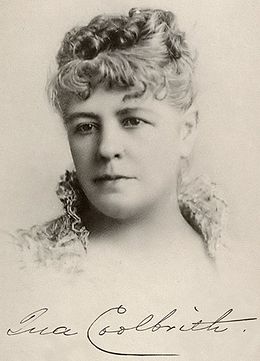
She was born in Nauvoo, Illinois, the niece and , later, step-daughter of Joseph Smith, founder of the Church of Latter Day Saints. Upon the death of her second husband, her mother left the church,  the mother resumed the use of her maiden name in her efforts to dissociate from the church and relatives, and  married a printer/lawyer. The family traveled to Southern California by wagon train. The ten year old girl sat on horseback with Jim Beckwourth, famed African-American scout as they neared Los Angeles. She had spent the travels reading the works of Lord Byron and Shakespeare!

Image result for ina  coolbrith images

         In her teen years , she maintained what became  lifelong correspondence with her cousin, Joseph F. Smith, professing their love for one another. She was writing poetry regularly, was known as a beauty to the point of opening a ball with the last Mexican governor of California,  Pio Pico.  A disastrous marriage at seventeen to a union iron worker/part-time actor resulted in abuse, the loss of her infant son, the beating of her husband by her step-father that resulted in the vile man losing a hand. The couple’s divorce finalized three yeas later after a sensational trial.


Related image


         In 1862, the family moved to San Francisco and the woman shed her married name, took her mother’s maiden name again and taught  English. She also made new literary friends that included such notables as Bret Harte, Mark Twain and Adha Menken. The woman continued to write and her poetry caught the attention of John Greenleaf Whittier, Alfred Lord Tennyson, John Muir and Charles Warren Stoddard. With Harte and Stoddard, they edited the Overland Monthly and became known as “The Golden Gate Trinity.” Her poetry attracted attention in many corners of the state and country.

HAVE YOU GUESSED WHO SHE WAS?

         Her work and beauty continued to bring accolades to her doorstep. Tennyson described her as “divinely tall, and most divinely fair.” The New York Times reviewed her poem about her lost child. “The Mother’s Grief,” positively. Ambrose Bierce praised much of her work in the 1870’s only to turn against her in later years, destroying their personal relationship.

         That woman took under her wing the unusual poet Cincinnatus Hiner Miller, convincing him to take the pen name of Joaquin Miller,  adopt a new look by ridding himself of his Mountain Man appearance and sent him off to Europe for a tour. They both admired Lord Byron and Miller was to lay a laurel wreath at his tomb. Her poem “With a Leaf of Laurel” commemorates their time together on the project. There are inferences that she and Miller were a couple and also that she may have bedded other of her admirers, like Harte and Stoddard    
Related image
THE TRANSFORMATION


Related image


She had hoped to go with Miller but had taken over responsibility for her sick sister, her niece and nephew and her mother. In 874, she took a job as Oakland’s librarian and moved the family across the Bay. Her sister died in 1874 and her mother two years later. Meanwhile, Joaquin Miller left an Indian girl in her charge, a child who may have been his. He took off again for Brazil and Europe.

              The library job was intense with ten-hour work days, six days a week. Her poetry and other writings suffered for some nineteen years. In the course of her time with the library she befriended and guided the readings and education of Jack London and Isadora Duncan, She is reputed to have been the love of Isadora's father's life, which led to the parents' divorce. 

             Literary friends, including novelist Gertrude Atherton, Harte, Miller, Stoddard and many others honored and assisted her over the years of her long life. The sudden loss of her job was a shock, perhaps more so as she was replaced by her nephew whom she had trained, provided for and no doubt cared for. He went on to make significant changes to better the program while she was left to find her way once again in the face of upset and loss.

SO, WHO WAS SHE?


Related image

         I will share much more about INA COOLBRITH next time!
March 10, 1841- February 29, 1928
      
References:
1.Wikipedia for an extensive biography and bibliography
       2. PoemHunter.com for same bio, abbreviated, and poetry
       3. Photos: Google Images        


Monday, March 4, 2019

SHAMROCK VS CLOVER By Cheri Kay Clifton


 With St. Patrick’s Day just around the corner, the image that comes to my mind beside a leprechaun and Ireland’s patron saint, St. Patrick, is the green shamrock. 


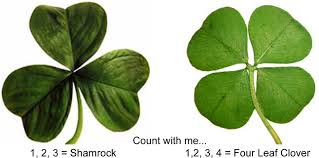
How many of you know the difference between a shamrock species of clover and the four-leaf kind? “Clover” is a generic term that refers to trefoils, or any of the 300 species that belong to the Trifolium family. These plants have leaves that are separated into three leaflets, but you may find four-leaf, five-leaf or even six-leaf clovers as a genetic abnormality.

 “Shamrock,” on the other hand, comes from the Irish word, “seamrog,” and means “little plant.” It refers to the white clover species or the suckling clover species. Although a real shamrock only has three leaves, that doesn’t mean it’s not lucky. In Irish folklore, the number three is considered very lucky. 


Saint Patrick is said to have used the shamrock as a metaphor for the Christian Holy Trinity. It has been used as a symbol of Ireland since the 18th century and is registered as a trademark by the Government of Ireland.

So, remember, shamrocks are clovers, but not all clovers are shamrocks.


Around our house in North Carolina grew large patches of clover and I loved to search for ones with four-leaves. Over time I had collected a few and still have a couple pressed between plastic. Did they bring me luck? Who knows, but like finding pretty sea shells on our Florida beaches, I enjoyed the challenge of the hunt!

Scientific studies have said that the odds of finding a single four-leaf clover is about one in 10,000.  However, when further analyzed, about a 5-foot square patch of clover could contain 10,000 sprigs and thus, one would have a chance of finding a four-leaf one.  


I’ll conclude this bit of clover trivia with the popular decades old song I would sing while searching for those illusive four-leaf clovers.


I hope you'll visit my website and check out my Wheels of Destiny series,  click here.


Saturday, March 2, 2019

An Act of Desperation

By Paisley Kirkpatrick
I'm sharing a couple of my photos and stories of the life in Placerville, California during the gold rush era that began around 1849 and, in some circumstances, is still alive now. These two buildings have quite an interesting history as one gave immediate gratification in the form of a drink, and the second in the form of lust fulfilled. The Soda Works building was constructed in 1852, and is one of the oldest buildings in Placerville.
Soda water was bottled using a carbonation machine, which is still on display, and sold to miners because it has seen many different types of businesses inside its doors. I had the opportunity to enter the tunnel that still remains open at the back of the building. It is narrow and has cold rock along the edges. I had to stoop over to keep from banging my head. There is a cool draft as you proceed deeper into the dark. I can imagine it might have been an unnerving experience for the men who headed to the other end to find the Chinese bordello. Up until a couple of years ago, when there was a rock slide at the bordello end of the tunnel, it was still fully functional. The tunnel started at one end of town and went nearly the entire length of Placerville's Main Street, inside a mountain of rock. If you didn't know about it, you would never suspect it was there.
I stepped inside the bordello several years ago to have a video copied. That was the current business that was operating in the building. The owner showed me their historical holes in the wall. I wish I had taken photos, but at the time didn’t think to do so. Along a hallway there are niches cut into a rock wall that were about five-foot long and maybe 2 ½ to 3 feet deep. Apparently, when the men finished with their drinks, they would walk the length of the tunnel from the Soda Works to visit the bordello. I am not sure how long that walk was, but I'd guess at least a quarter mile. When the gentleman reached the end of his walk, he was expected to shower before spending time with the girl in that small cubbyhole cut int the wall. What can I say except that they had to be tough, and they had to be a bit desperate. The saving grace of visiting the girls in that manner is that nobody knew they were there, if that was something they wanted to keep to themselves.

Thursday, February 28, 2019

THE DEVIL'S IN THE DETAILS--MAIN CHARACTERS by CHERYL PIERSON


Are you the kind of reader who likes to have a detailed description of the hero or heroine in romance books? What about other secondary characters? And do you feel the same way about characters in books of genres other than western historical romance, or romance in general?

To me, there is a big difference in how much character description is needed in romance novels versus other genres, and here’s why.

When we read romance, we put ourselves in the story, empathizing with both the heroine and the hero. Of course, we need enough description to let us be familiar with them both, but this might be a case of “less” being “more.”

In our personal lives, we have preferences in how our romantic “leading men” look, speak, behave, and so on. If our preferences are toward the tall, dark, and handsome hero, it will be hard for us to be vested in a story with a hero who’s short, fair, and ugly. Or one who has habits we personally don’t find attractive.

I knew a woman who didn’t like blond heroes. If he had blond hair on the cover, she’d color it brown or black with a marker. In the book, if “blond” was mentioned, she’d mark through it and write whatever color of hair she’d decided he needed. I asked her about the heroines. “They’re all me,” she answered. “I don’t pay attention to their descriptions.”

It made me wonder how many others felt this way.

Stephen King had mentioned at one time in his book ON WRITING that “description begins in the writer’s imagination, but should finish in the reader’s.”
https://amzn.to/2EdXjVy

And in genres other than romance, character description is different and maybe more important, because the reader doesn’t have any preconceived expectations of the story, such as romance readers do.

When I taught creative writing classes, this description was one I used to illustrate how so much could be packed in to a short amount of words without being an info dump.

https://amzn.to/2T4bXZU
This is the beginning of St. Agnes’ Stand, by Thomas Eidson, who also wrote The Missing. Take a look:

He was hurt and riding cautiously. Thoughts not quite grasped made him uneasy, and he listened for an errant sound in the hot wind. His eyes were narrowed—searching for a broken leaf, a freshly turned rock, anything from which he could make some sense of his vague uneasiness. Nothing. The desert seemed right, but wasn’t somehow. He turned in the saddle and looked behind him. A tumbleweed was bouncing in front of the wild assaults from the wind. But the trail was empty. He turned back and sat, listening.

Over six feet and carrying two hundred pounds, Nat Swanson didn’t disturb easy, but this morning he was edgy. His hat brim was pulled low, casting his face in shadow. The intense heat and the wind were playing with the air, making it warp and shimmer over the land. He forced himself to peer through it, knowing he wouldn’t get a second chance if he missed a sheen off sweating skin or the straight line of a gun barrel among branches.


And then this, a couple of paragraphs down:

He had been running for a week, and he was light on sleep and heavy on dust and too ready for trouble. He’d killed a man in a West Texas town he’d forgotten the name of—over a woman whose name he’d never known. He hadn’t wanted the woman or the killing. Nor had he wanted the hole in his thigh. What he did want was to get to California, and that’s where he was headed. Buttoned in his shirt pocket was a deed for a Santa Barbara ranch. Perhaps a younger man would have run longer and harder before turning to fight and maybe die; but Nat Swanson was thirty-five years that summer, old for the trail, and he had run as far as he was going to run.

I absolutely love this. Can you feel that you’re right there with Nat Swanson as he’s riding? There are no wasted words, and this is just such an eloquent, masterful description of not only Nat, but the situation and the physical place he’s in as well as the dilemma he’s faced with.

Another excellent way of describing a character and setting the scene at the same time is from another character’s POV. This passage is from Jack Schaefer’s iconic classic, Shane—from the eyes of Bobby Starrett—when Shane first rides into his life.

https://amzn.to/2BWlIin

This is just the very beginning of the book—there is more physical description of Shane a few paragraphs later, but I chose this passage because it lets us know what’s going on in a few short sentences—and that is real talent.

He rode into our valley in the summer of ’89. I was a kid then, barely topping the backboard of father’s old chuck-wagon. I was on the upper rail of our small corral, soaking in the late afternoon sun, when I saw him far down the road where it swung into the valley from the open plain beyond.

In that clear Wyoming air I could see him plainly, though he was still several miles away. There seemed nothing remarkable about him, just another stray horseman riding up the road toward the cluster of frame buildings that was our town. Then I saw a pair of cowhands, loping past him, stop and stare after him with a curious intentness.

He came steadily on, straight through the town without slackening pace, until he reached the fork a half-mile below our place. One branch turned left across the river ford and on to Luke Fletcher’s big spread. The other bore ahead along the right bank where we homesteaders had pegged our claims in a row up the valley. He hesitated briefly, studying the choice, and moved again steadily on our side.

This is tough, because we’re seeing it through two “lenses”—Bobby is nine years old, and this is what he sees, but it’s filtered by the adult Bobby who’s now telling the story of what happened all those years ago.

In writing the story this way, the reader gets the full impact of experiencing the fears, the situation brings, the joy of having Shane there, and the anguish of his leaving all through the eyes of a nine-year-old boy, with the adult overview that lets us know that Shane was not a hero—but he was to Bobby and those small time settlers who needed one so desperately. Yet, leaving was the only thing he could have done and kept Bobby’s view of him untarnished and intact.

Because we don’t know how the story will end, and we don’t know what to expect, we are learning about Shane’s character right along with Bobby so we are actively looking for details and descriptors the author might give us along the way—it will affect our opinion of Shane and let us know if Bobby is a reliable narrator, and it affects the outcome of the story.

I bring this up because in romance, seldom does the description have such a direct effect on the story itself, unless our main characters have scars, afflictions, or disabilities that might have some direct bearing on the story and its outcome.
So what do you think? Do you like a lot of description and detail about the WHR heroes you read about, or would you rather “fill in the blanks” for yourself?

As far as heroines go, most people I’ve talked to are not as concerned wither physical description (maybe because each person sees herself in the heroine?) but are more concerned with her personality traits—is she likable? Is she determined?

If she is not a fierce match for the hero, the story line is doomed.

And what about our hero? Though he can get away with more “questionable” traits, he has to be endowed with almost superhuman strength to overcome everything that’s thrown his way, and that is description that must be thoroughly detailed—not left to the reader’s interpretation.
(I apologize for the Amazon links being all over the place--I could not get them to "stick" under the book covers.)