Showing posts with label WWI. Show all posts

Tuesday, March 12, 2019

The Kannally Ranch

by Rain Trueax

Fire and water from the well
Simple gifts but freely given
In the house where good men dwell
 words etched  in wood in the Kannally home

Because of the popularity of historical romances and westerns, we have an idea of what Old West ranching was like. The reality was often quite different. An example is Arizona's Kannally Ranch.

Like other westward seekers, in 1902, 23-year old Neil Kannally (probably a nickname as there is a Cornelius M. Kannally listed in the cemetery with the rest of his family) left his home in Illinois, with the hope that sunshine and a drier climate would heal his damaged lungs. Because of a lack of definitive records, it's difficult to know for sure (a reason for that will be revealed later), but his father might've been Michael Kannally, who since 1857, had built up a prosperous grocery business in Sterling.  

If so, it could explain how Neil could afford to go west and stay at a health resort in Oracle, 38 miles north of Tucson, at about 4000 feet in elevation, which specialized in healing those with tuberculosis. The sunshine, higher elevation, and treatment helped, and a year later he urged his brother Lee to join him.
 
In 1903, the two purchased the 1880s McCarius homestead of 160 acres, good land for cattle with room to expand. 

Here's where the romance comes in, right? I mean two bachelors-- they'd have to be handsome and strong if they hoped to operate a ranch. Wouldn't they want wives? It is possible that Lee was on the young side for that as records put his date of birth as 1888, which would've made him 15. Not that unusual for youths to head west-- hardly an age for marriage-- at least of men.

Whatever the case, the brothers set out to work their land. They slept in a small adobe cottage that had come with the property. From a second-generation, Irish Catholic family, the young men eventually asked more siblings to join them. Vincent (possibly 28), 30-year old Mary (sometimes called Molly in articles), and 7-year old Lucille came to the Kannally ranch. Is it possible the parents had died for a child to come that far with her siblings? To accommodate the growing family, the brothers added onto the original adobe and then built cottages for their sisters. They all filed for homesteads and expanded the ranch land.

Surely now there'd be a romance-- well, if there ever was one for any of the five, it never came to fruition. None of the Arizona Kannallys married or had children. The thing is the information on them is sparse and sometimes mixed up for names or dates. This was done deliberately at Lucille's request after her death in 1976. As the sole surviving sibling, she requested all family historical records be destroyed. What mysteries might they have revealed-- we'll never know nor will we know her motivations. Imagination has to do the work now for what the dynamics were for these family members.

When WWI came along, articles said that Lee went to war. I checked service records on Ancestry and there were quite a few Kannallys that served-- including a Captain Vincent Kannally. Was this the Vincent who had come west with his sisters? Was it one of the things family members did; and of course, Neil could not go given his lung damage. In the war, Lee suffered nerve gas damage that afflicted him the rest of his life. He took up painting as a way to find peace. 

The beautiful home on the property was built between 1929-1933 of adobe, designed by a Kentucky architect, H. Newkirk. It was neither planned nor paid for by the ones living on the ranch, but by two other brothers, who had followed different paths. 

Although William and Michael visited the ranch, they never lived there. The home was the dream of William, who was in the lumber business, and partially financed by Michael, a Chicago lawyer. The four-level Mediterranean home with its Moorish influences was Italianate in its inspiration. [Photos of the Historic Kannally Ranch Home]

Here comes another of the mysteries that the family's story is full of, possibly due to Lucille's decision. Some articles claim Lee was a self-taught painter and never thought highly of his work. Others say he studied in Paris with the impressionists... Whatever the case, Lucille valued his impressionistic paintings (with a feel of DeGrazia another Arizona artist). Today, they are hung throughout the home. 

Living on the ranch, the brothers and sisters were not recluses. They held formal dinner parties, entertained the bishop of Tucson, and Magma Copper executives. Lucy also threw lavish luncheons for her lady friends. It is certainly a home well set up to entertain.

Interestingly though, the home had no bedrooms. At night the family went, even when icy, down the path to the original homes where they slept.

There may be mysteries in their relationships or else why destroy the papers, but it appears they won't be revealed now. I read that there was a history put together by locals in 1986 but that the facts didn't agree. 

The one certain fact is they grew that ranch into a major cattle operation, with nearly 50,000 acres, which included what would one day be the mining town of San Manuel. They sold the bulk of the land in the 1950s when possibly ranching became more than the brothers could handle with health and aging issues. 


One might imagine that Lucille was a great outdoors woman, since in her will, she left the remaining property to Defenders of Wildlife. It is said that wasn't the case. The home was her domicile. She and her sister liked to
wear beautiful dresses. Their brother Michael had paid for them to travel to Europe, and it's said they wished to have been fashion designers.

As an interesting tidbit, with no certain place for where to put it, Lucille traveled to Machu Picchu in 1976, became ill, returned home, and died a month later. What led her, a woman who loved being in her home, to want to travel to that distant but fascinating place? It's not the usual thing for someone 78 years old (especially back then) due to high elevation and difficulty of getting there.

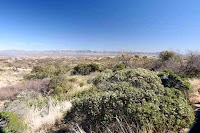
For the ranch's final destination, in attempting to find the right use, the Defenders of Wildlife donated the home and land to the Arizona State Parks Board. Today, it is Oracle State Park, a 4,000-acre wildlife refuge, picnic area, historic home for tours, and environmental learning center.

Stories like those of the Kannallys are of great interest to writers-- followed by great frustration, as finding motivation is a writer's stock in trade. Curiosity goes right along with it. Sometimes, with all of that, there is no real way to find the story-- at least historically speaking

Wednesday, January 10, 2018

In what years…? By E. AYERS


The hardest thing for me to keep track of is exact dates. It least I can remember July 4, 1776, beyond that I'd better have a list someplace. So I thought I'd share one of my lists with all of you. Besides if I'm not writing, I'm probably reading. And I'll be honest; I can get so confused so quickly if I can't remember certain dates. I was one of those kids who couldn't remember most of this stuff anyway. Give me something about the way they lived and I could snap that into my brain's storage files faster than Jack Sprat could jump that candle stick. Give me a date and I couldn't remember it long enough to write it down! I haven't improved one iota over the years. In fact, I've managed to get the birth dates of the grandchildren mixed up. (Oh was I in trouble when I did that!)
Keeping lists is important to me otherwise I can screw up even a poem that is supposed to help us remember. In 1642 Columbus sailed the ocean blue. That's totally wrong. I have to look it up each time! It's 1492. I remembered the one, four, and two! Do I get credit for anything? (And why are we celebrating Columbus? Never mind, that's a whole different time in history and a whole different story.) So I keep timelines on my computer and Wikipedia has a very comprehensive one. I figured I'd share with you the one that I use frequently now that I'm writing about American history. The dates are when the states were admitted or ratified. That's why the gap between the signing of the Declaration of Independence and the formation of the first 13 states. I like this list because it tells which piece of land became which state.

State
Order
Date
From
 Delaware
1
December 7, 1787
Crown Colony of Delaware
 Pennsylvania
2
December 12, 1787
Crown Colony of Pennsylvania
 New Jersey
3
December 18, 1787
Crown Colony of New Jersey
 Georgia
4
January 2, 1788
Crown Colony of Georgia
 Connecticut
5
January 9, 1788
Crown Colony of Connecticut
 Massachusetts
6
February 6, 1788
Crown Colony of Massachusetts Bay
 Maryland
7
April 28, 1788
Crown Colony of Maryland
 South Carolina
8
May 23, 1788
Crown Colony of South Carolina
 New Hampshire
9
June 21, 1788
Crown Colony of New Hampshire
 Virginia
10
June 25, 1788
Crown Colony of Virginia
 New York
11
July 26, 1788
Crown Colony of New York
 North Carolina
12
November 21, 1789
Crown Colony of North Carolina
 Rhode Island
13
May 29, 1790
Crown Colony of Rhode Island and Providence Plantations
 Vermont
14
March 4, 1791
Vermont Republic (AKA New Hampshire Grants)
 Kentucky
15
June 1, 1792
Virginia (District of Kentucky: Fayette, Jefferson, and Lincoln counties)
 Tennessee
16
June 1, 1796
Southwest Territory
 Ohio
17
March 1, 1803
Northwest Territory
 Louisiana
18
April 30, 1812
Territory of Orleans
 Indiana
19
December 11, 1816
Indiana Territory
 Mississippi
20
December 10, 1817
Mississippi Territory
 Illinois
21
December 3, 1818
Illinois Territory
 Alabama
22
December 14, 1819
Alabama Territory
 Maine
23
March 15, 1820
Massachusetts (District of Maine)
 Missouri
24
August 10, 1821
Missouri Territory
 Arkansas
25
June 15, 1836
Arkansas Territory
 Michigan
26
January 26, 1837
Michigan Territory
 Florida
27
March 3, 1845
Florida Territory
 Texas
28
December 29, 1845
Republic of Texas
 Iowa
29
December 28, 1846
Iowa Territory (part)
 Wisconsin
30
May 29, 1848
Wisconsin Territory (part)
 California
31
September 9, 1850
unorganized territory (part)
 Minnesota
32
May 11, 1858
Minnesota Territory (part)
 Oregon
33
February 14, 1859
Oregon Territory (part)
 Kansas
34
January 29, 1861
Kansas Territory (part)
 West Virginia
35
June 20, 1863
Virginia (Trans-Allegheny region counties
 Nevada
36
October 31, 1864
Nevada Territory
 Nebraska
37
March 1, 1867
Nebraska Territory
 Colorado
38
August 1, 1876
Colorado Territory
 North Dakota
39
November 2, 1889
Dakota Territory
 South Dakota
40
November 2, 1889
Dakota Territory
 Montana
41
November 8, 1889
Montana Territory
 Washington
42
November 11, 1889
Washington Territory
 Idaho
43
July 3, 1890
Idaho Territory
 Wyoming
44
July 10, 1890
Wyoming Territory
 Utah
45
January 4, 1896
Utah Territory
 Oklahoma
46
November 16, 1907
Oklahoma Territory and Indian Territory
 New Mexico
47
January 6, 1912
New Mexico Territory
 Arizona
48
February 14, 1912
Arizona Territory
 Alaska
49
January 3, 1959
Territory of Alaska
 Hawaii
50
August 21, 1959
Territory of Hawaii

Here are a few other important dates:

Civil War
1861-1865
Begins at Fort Sumter, the seaport of Charleston, SC, Ap 12, 1861
Ends when Lee surrenders to Grant at Appomattox Court House, VA. May 13, 1865

Transcontinental RR
1863-1869
Started in 1863 and completed May 10 1869

WWI
1914-1918
July 28,1914 - Nov 11, 1918

Great Depression
1929-1939
Stock Market crash
Oct 29,1929

Dust Bowl
1930 -1936

WWII
Sept 1, 1939-Sept 2,1945
Pearl Harbor
Dec 7,1941

Vietnam War
Nov1, 1955 - Ap 30, 1975

Hope these lists help you as you read and write about American history. They are far from complete because so many important things have happened. There no dates for the Wright brother's first flight or the first automobiles. I could have written fifty pages worth of important and interesting dates such as the death of Wild Bill Hickok, Lincoln's assassination, our presidents, the first telephones, or a gazillion other things. Instead I tried to just give a few of the bigger things along the way. 

Saturday, November 5, 2016

FLYING COWBOYS: EARLY SMOKEJUMPERS


This month I thought I’d veer off the trail of cowboys, sheepherders, and gunslinging desperados. I’ve decided to focus on a different hero of the West, the ones who fall from the sky and fight fires…the smokejumper.

In 1918, Henry S. Graves, the Chief Forester for the U.S. Forest Service, contacted the Chief of the Army Air Service (Army Air Corps), inquiring about the possibility of cooperating with the Forest Service to provide aerial fire detection over forests in the Western states.

The first aerial patrols were conducted on June 1, 1919 over the Angeles Forest in California. The Missoula Sentinel out of Missoula, Montana reported in May of 1919 “…This will be the beginning of experimental work in which the adaptability of aircraft to forest patrol work is to be tried out thoroughly. If the tests prove as successful as it is thought that they will be, it is expected that the airplane patrols will be extended before the end of the 1919 season and that airplanes will become a permanent feature of the forest service forces." 

These first trials proved successful and in 1925, aerial flight patrols started in Region 1 (Montana, Idaho, and eastern Washington at the time).  The Spokane Chronicle, June 25th, 1925, said: "Lieutenant Nick B. Mamer of Spokane today received appointment as forest fire patrol pilot for eastern Washington, northern Idaho and western Montana. He will leave Spokane tomorrow night for Rockwell Field, San Diego, to get his Liberty-motored deHaviland Airplane which will be used on the patrol..." Nick Mamer was already a legendary pilot coming out of WWI.  He later established the Mamer Flying Service and Mamer Air Transport firms in Spokane.

From 1925-1935, Forest Inspector Howard R. Flint and Nick Mamer were instrumental in the pioneering of aerial activities in the Northern Rocky Mountain Region until Mamer’s untimely death in a plane crash. 

During the early years of aerial reconnaissance in the Forest Service, many began examining the possibility of dropping firefighters in by parachute.  A formal proposal was made in 1934, but Forest Service officials were not impressed. In 1935, the Aerial Fire Control Experimental Project in California experimented with dropping water and chemicals on wildland fires.  While these initial drops proved unsuccessful, they made delivery of cargo by parachute possible and helped set the stage for experiments in parachute jumping.
 
By 1939, the Aerial Fire Control Experimental Project was moved to Winthrop, Washington, where the balance of funds shifted to carrying out parachute jumping experiments. The Forest Service prepared a contract providing for parachutes, protective clothing, and the services of professional riggers and parachutists.

Montana Smokejumper descends into fire

After a series of experimental jumps, in the summer of 1940 the U.S. Forest Service Smokejumper Project became fully operational. Six smokejumpers were based at Winthrop, and seven at Moose Creek Ranger Station in Idaho. Two of the smokejumpers from Moose Creek made the first operational jump on the Nez Perce National Forest in Idaho. Eight more jumps were made during the 1940 fire season.

When U.S. Army Major William Lee (the father of airborne troops) witnessed smokejumper training in Montana, he incorporated many smokejumper techniques into the Army Airborne doctrine.
The entire project, consisting of 26 jumpers, was relocated to Missoula, Montana in 1941. This was an economical decision, basing all smokejumpers in one location made more sense than maintaining multiple and widely scattered facilities. Missoula was chosen because it was home to the Johnson’s Flying Service, who supplied smokejumpers with aircraft and pilots.


Early smokejumpers with equipment

As it did with so many things, World War II, interrupted and changed the smokejumper service.  With the United States entry into the war, by the summer of 1942 the number of qualified smokejumpers had been greatly depleted. By 1943, only five jumpers were available.  This problem was solved when the smokejumper program turned to the Civilian Public Service, an organization made up of conscientious objectors. Seventy members of the CPS were trained as smokejumpers and the use of CPS personnel continued through 1944.

A threat to the Western forests by Japanese fire balloons rose in 1945. Members of the U.S. Army’s All-Black 555th Parachute Infantry Battalion were trained in timber jumping and firefighting to combat this threat. The threat did not materialize, but the members of the battalion were used as suppression crews on the large fires of that season.

Member of 555th Parachute Infantry Battalion preparing to jump into fire


On August 4, 1949, a 5,000 acre forest fire near Helena, Montana changed the way the Forest Service would fight fires, and leave the smokejumpers scarred.

The Mann Gulch fire was started by lightning during a particularly dry season. A fire thought to be only a few acres, blew up to 3,000 acres in ten minutes. Sixteen smokejumpers had jumped into the location only to be hunted by a fire with flames estimated at fifty feet high and moving fifty yards every ten seconds. Added to this was the terrible loss of their communication equipment during the cargo drop, leaving the jumpers without a way to contact the outside world. They attempted to make it to a ridgetop, but the fire caught up to them.


Members of NFS carry out victims of Mann Gulch fire


Thirteen brave men were lost, the largest single loss of life due to fire the Forest Service experienced until the loss of nineteen in a fire in Arizona in 2013.

The smokejumper program continued to grow through the 1950s, and new bases were established at Grangeville, Idaho; West Yellowstone, Montana; Silver City, New Mexico; and Redding, California.  In 1959, the BLM established a base in Fairbanks, Alaska, the first base not under the Forest Service management.

 This is just a small glimpse of the proud history of these elite firefighters.  I have a new contemporary series releasing this month, 4 Marines For History, and one of the heroines is a smokejumper and the heroes are members of a hotshot crew. While conducting research, I had the opportunity to meet with a few smokejumpers who offered more information than I needed for this series. So, coming in 2017, I will be writing a spinoff series focusing on smokejumpers and hotshots. I’m also planning a historical series featuring those first brave men who decided to fight fire by attacking it from the sky. 

Thanks so much for stopping by!  


Kirsten Lynn is a Western and Military Historian. She worked six years with a Navy non-profit and continues to contract with the Marine Corps History Division for certain projects. Making her home where her roots were sewn in Wyoming, Kirsten also works as a local historian. She loves to use the history she has learned and add it to a great love story. She writes stories about men of uncommon valor…women with undaunted courage…love of unwavering devotion …and romance with unending sizzle. When she’s not writing, she finds inspiration in day trips through the Bighorn Mountains, binge reading and watching sappy old movies, or sappy new movies.