Showing posts with label relationships. Show all posts

Tuesday, March 12, 2019

The Kannally Ranch

by Rain Trueax

Fire and water from the well
Simple gifts but freely given
In the house where good men dwell
 words etched  in wood in the Kannally home

Because of the popularity of historical romances and westerns, we have an idea of what Old West ranching was like. The reality was often quite different. An example is Arizona's Kannally Ranch.

Like other westward seekers, in 1902, 23-year old Neil Kannally (probably a nickname as there is a Cornelius M. Kannally listed in the cemetery with the rest of his family) left his home in Illinois, with the hope that sunshine and a drier climate would heal his damaged lungs. Because of a lack of definitive records, it's difficult to know for sure (a reason for that will be revealed later), but his father might've been Michael Kannally, who since 1857, had built up a prosperous grocery business in Sterling.  

If so, it could explain how Neil could afford to go west and stay at a health resort in Oracle, 38 miles north of Tucson, at about 4000 feet in elevation, which specialized in healing those with tuberculosis. The sunshine, higher elevation, and treatment helped, and a year later he urged his brother Lee to join him.
 
In 1903, the two purchased the 1880s McCarius homestead of 160 acres, good land for cattle with room to expand. 

Here's where the romance comes in, right? I mean two bachelors-- they'd have to be handsome and strong if they hoped to operate a ranch. Wouldn't they want wives? It is possible that Lee was on the young side for that as records put his date of birth as 1888, which would've made him 15. Not that unusual for youths to head west-- hardly an age for marriage-- at least of men.

Whatever the case, the brothers set out to work their land. They slept in a small adobe cottage that had come with the property. From a second-generation, Irish Catholic family, the young men eventually asked more siblings to join them. Vincent (possibly 28), 30-year old Mary (sometimes called Molly in articles), and 7-year old Lucille came to the Kannally ranch. Is it possible the parents had died for a child to come that far with her siblings? To accommodate the growing family, the brothers added onto the original adobe and then built cottages for their sisters. They all filed for homesteads and expanded the ranch land.

Surely now there'd be a romance-- well, if there ever was one for any of the five, it never came to fruition. None of the Arizona Kannallys married or had children. The thing is the information on them is sparse and sometimes mixed up for names or dates. This was done deliberately at Lucille's request after her death in 1976. As the sole surviving sibling, she requested all family historical records be destroyed. What mysteries might they have revealed-- we'll never know nor will we know her motivations. Imagination has to do the work now for what the dynamics were for these family members.

When WWI came along, articles said that Lee went to war. I checked service records on Ancestry and there were quite a few Kannallys that served-- including a Captain Vincent Kannally. Was this the Vincent who had come west with his sisters? Was it one of the things family members did; and of course, Neil could not go given his lung damage. In the war, Lee suffered nerve gas damage that afflicted him the rest of his life. He took up painting as a way to find peace. 

The beautiful home on the property was built between 1929-1933 of adobe, designed by a Kentucky architect, H. Newkirk. It was neither planned nor paid for by the ones living on the ranch, but by two other brothers, who had followed different paths. 

Although William and Michael visited the ranch, they never lived there. The home was the dream of William, who was in the lumber business, and partially financed by Michael, a Chicago lawyer. The four-level Mediterranean home with its Moorish influences was Italianate in its inspiration. [Photos of the Historic Kannally Ranch Home]

Here comes another of the mysteries that the family's story is full of, possibly due to Lucille's decision. Some articles claim Lee was a self-taught painter and never thought highly of his work. Others say he studied in Paris with the impressionists... Whatever the case, Lucille valued his impressionistic paintings (with a feel of DeGrazia another Arizona artist). Today, they are hung throughout the home. 

Living on the ranch, the brothers and sisters were not recluses. They held formal dinner parties, entertained the bishop of Tucson, and Magma Copper executives. Lucy also threw lavish luncheons for her lady friends. It is certainly a home well set up to entertain.

Interestingly though, the home had no bedrooms. At night the family went, even when icy, down the path to the original homes where they slept.

There may be mysteries in their relationships or else why destroy the papers, but it appears they won't be revealed now. I read that there was a history put together by locals in 1986 but that the facts didn't agree. 

The one certain fact is they grew that ranch into a major cattle operation, with nearly 50,000 acres, which included what would one day be the mining town of San Manuel. They sold the bulk of the land in the 1950s when possibly ranching became more than the brothers could handle with health and aging issues. 


One might imagine that Lucille was a great outdoors woman, since in her will, she left the remaining property to Defenders of Wildlife. It is said that wasn't the case. The home was her domicile. She and her sister liked to
wear beautiful dresses. Their brother Michael had paid for them to travel to Europe, and it's said they wished to have been fashion designers.

As an interesting tidbit, with no certain place for where to put it, Lucille traveled to Machu Picchu in 1976, became ill, returned home, and died a month later. What led her, a woman who loved being in her home, to want to travel to that distant but fascinating place? It's not the usual thing for someone 78 years old (especially back then) due to high elevation and difficulty of getting there.

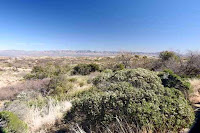
For the ranch's final destination, in attempting to find the right use, the Defenders of Wildlife donated the home and land to the Arizona State Parks Board. Today, it is Oracle State Park, a 4,000-acre wildlife refuge, picnic area, historic home for tours, and environmental learning center.

Stories like those of the Kannallys are of great interest to writers-- followed by great frustration, as finding motivation is a writer's stock in trade. Curiosity goes right along with it. Sometimes, with all of that, there is no real way to find the story-- at least historically speaking

Saturday, January 12, 2019

Oregon Trail Romance

by Rain Trueax


 map drawn by my daughter when she was at university
Having lived on what was an original homestead claim for 40 some years, the story of the trek west to Oregon has a very personal connection to my life. We have two of the wheels from the covered wagon that had traveled that trail. My interest in the journey though went back to my youth. The struggles these people went through, the very real dangers, were the very essence of adventure to my young mind.

You know, there are certain historic events that take on mythic qualities. In America, some of those have had lasting consequences, others not so much: Boston Tea Party; Revolutionary War; Lewis and Clark Expedition; Indian Battles; Pony Express; Building of the Railroads; Civil War; and on any list, the westward migration across the American continent.

When the United States government wanted to consolidate its power over this nation, the answer was to give away land. One such act was the Donation Land Claim Act of 1850:
"Arguably the most generous federal land sale to the public in American history, the law legitimized the 640-acre claims provided in 1843 under the Provisional Government, with the proviso that white male citizens were entitled to 320 acres and their wives were eligible for 320 acres. For citizens arriving after 1850, the acreage limitation was halved, so a married couple could receive a total of 320 acres. To gain legal title to property, claimants had to reside and make improvements on the land for four years."

"The Donation Land Law was significant in shaping the course of Oregon history. By the time the law expired in 1855, approximately 30,000 white immigrants had entered Oregon Territory, with some 7,000 individuals making claims to 2.5 million acres of land. The overwhelming majority of the claims were west of the Cascade Mountains. Oregon’s population increased from 11,873 in 1850 to some 60,000 by 1860." William G. Robbins in Oregon Encyclopedia
These giveaways attracted people from all walks of life. Mostly they were neither unusually rich nor poor. It cost around $1000 to acquire all needed to make the 2200 mile journey from Independence, Missouri to the Willamette Valley. For a family of four, that meant wagon, clothing, tent, bedding, livestock, 600 pounds of flour, 400 pounds of bacon (packed in barrels of bran), 100 pounds of sugar, 60 pounds of coffee and 200 pounds of lard. Add to that sacks of bean, rice, dried fruit, salt, vinegar and molasses. Eggs packed into cornmeal were then used to make bread.
 photo of pioneers at Oregon Trail Interpretive Center, Baker City, OR

If they brought a milk cow, butter was made by putting the morning's milk in buckets that churned it during the day’s travel (which illustrates how enjoyable riding in that wagon would be). They waited for the grass to green up in the spring and then hoped to beat the snows before they went over the last mountain ranges. If they brought something too heavy to make the whole journey, it would be left along the road. Worse, that road was littered with graves, which for the Oregon Trail wasn’t so much from Indian attacks as cholera and accidents.

Fortunately, for our understanding what they went through, some of the pioneers kept journals. We can read past the cold facts of the journey, to their own words, which tell of the sacrifices and difficulties they faced for the hope of a better life in Oregon.
“Then cholera took my oldest boy. His sister Isabel fell beneath the wagon And was crushed beneath the wheels.” from Overland 1852

 “The children and myself are shivering round and in the wagons, nothing for fires in these parts, and the weather is very disagreeable.” Amelia Stewart Knight, 1853

“This is the ninth case of death by violence on the route, three of whom were executed, the others were murdered. This route is the greatest one for wrangling, discord and abuse of any other place in the world, I am certain.”   Abigail Scott Duniway
It was into this saga, of hope and loss, sacrifice and danger, struggle and victory, that I set my first Oregon historical romance, Round the Bend. I first told the story of Matt and Amy verbally to my cousin during family gatherings. It was a simple story back then but it always held my interest.

When I decided to put it onto paper, I typed it out an old Royal. At the same time, I was doing a lot of research, back in the days where that meant a card catalog. Through the years, I'd improve on it; and when computers came along, I typed it into one. I continued to edit it as I'd come to see more depth in my characters and, of course, always research for enriching details-- trying to avoid using so many that they drowned my hero and heroine's story. 

This wasn't the first book I published from my backstories. I hesitated on it, not sure anyone would see what I did in this journey toward the Promised Land, and this young couple, who both had a lot to learn beyond the physical travails they were facing. 


At seventeen, Amelia Stevens, having grown up in a nurturing environment, is full of dreams and the many books she’s read. When her best friend, since childhood, Matthew Kane tells her he has other feelings for her, she pushes him away. He's ruining everything.

At almost twenty-one, Matt has already seen too much of the hard side of life. He holds few illusions about the trip or his own future. His family is as different from hers as darkness to light. Even if Amy changed her mind, it really couldn't work. She deserves someone more like the handsome wagon train scout, Adam Stone.

Round the Bend tells a story of the purest of love and the most driven of hate. It is the story of the westward march of pioneers. Most of all, it is the story of how a man’s highest ideals can change his life and that of others. Heat level (with 1 least and 5 most) is ♥♥♥♥. It, to my surprise, ended up being book one in a series of four about the settling of Oregon and one family.

Buy sites for eBook or paperback at:
Amazon

other sites at
  Romances with an Edge