Showing posts with label Thomas Eidson. Show all posts

Thursday, May 28, 2020

TELEPHONE RIVALS

By Julia Ridgmont


As one of the original Pinkerton Matchmaker authors, I vividly recall a conversation we had regarding telephones and how we laughingly lamented the fact that in our stories, they hadn’t been invented yet. How much more convenient it would have been for our characters to have access to one! But since these stories mostly were taking place in the 1871, and on into 1872, oh well. We—and our characters—would get by.

That conversation took place two years ago when this series was new and gaining popularity. Now, as it begins winding down, we’ve have many cases solved and many couples matched, all at the behest of head agent, Archibald Gordon and his assistant and now wife, Marianne. But the fun isn’t finished yet. There are still a few more Pinkerton Matchmaker stories scheduled to release this summer, and all of them are sure to be exciting—much like the way it was when all of these wonderful gadgets like the telephone were being invented. Imagine if you had lived during that time. Would you have felt the excitement, too, or do you think you might have been wondering if those newfangled things would actually work? For me, probably a little bit of both.

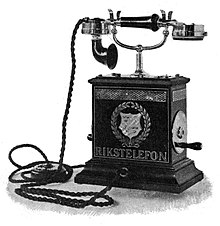
But like Laura Ingalls Wilder, who saw both the horse and buggy days as well as the advent of motor vehicles, I think I would have been awestruck by the ingenuity of the times. This is a facet of life that I enjoy incorporating into my stories, and my upcoming Pinkerton Matchmaker story, An Agent for Sarah, is no exception. This story takes place six years later than the original stories. In 1879, I discovered, Denver, Colorado received telephone lines for the first time. Two recent Harvard graduates, Frederick O. Vaille and Henry R. Walcott, partnered with saloonkeeper Sam Morgan and applied for a franchise of the American Bell Telephone Company (think Alexander Graham Bell) from Boston. They received it, and on February 24, 1879, the Denver Telephone Dispatch Company was born. These Bell-inspired telephones were all the rage, and it seemed that progress was being made to keep family and friends who were long distances apart in touch.

But then a second telephone company sprang up, this one called the Colorado Edison Telephone Company, inspired by—you guessed it—Thomas Edison. His improvements on the transmitters made it possible for the Western Union-owned company to install phones in surrounding areas. Vaille and Walcott didn’t like this, of course, so they sued for infringement on the patent and won. Soon the two companies merged and, over a series of turnovers and share sales, became the Mountain States Telephone and Telegraph Company. A few of the buildings that were used in the intermountain region still exist today and are on the national historic register.

Though not a huge part of the plot in An Agent for Sarah, this rivalry does play a significant role. My couple, Mark Wilson and Sarah Packard, are not your typical Pinkerton couple, either. For one, Sarah isn’t even a Pinkerton agent yet and doesn’t become one until the end of the story. Mark, her friend from childhood, is dismayed when she becomes engaged to another man. Since Mark and Sarah are both from Virginia (they were minor characters in An Agent for Jessica), I had to figure out a way to get them both to Denver. I accomplished this by making Sarah engaged to a man from Denver who had gone back East to buy horses from their renowned horse-breeding business. Mark, on the other hand, is so distraught over this development that at his mentor’s urging, who used to be a Pinkerton agent under Archie, Mark moves to Denver to seek employment there. Little does he know, nor is he prepared, when he and another agent are assigned to catch the person who’s trying to sabotage Sarah’s wedding.

How does the telephone rivalry play into this? Well, the groom’s father is a magnate, and he has his hand in a lot of pies. One of them is the newfangled telephone. When an unknown enemy starts using guerilla-style tactics to stop the wedding, he thinks it’s his rival. But that is only one of the strange things that is happening to his family. Will Mark and Sarah be able to uncover the real culprit in time?

An Agent for Sarah releases on June 5, 2020. It’s available as a preorder if you’d like to grab your copy now. That way it will download immediately on release day. Talk about modern conveniences! I hope you will enjoy Mark and Sarah’s story. They really have waited a long time to be together. When he rescued her in An Agent for Jessica, readers clamored for their love story. I’m happy that it’s finally here!


Thursday, February 28, 2019

THE DEVIL'S IN THE DETAILS--MAIN CHARACTERS by CHERYL PIERSON


Are you the kind of reader who likes to have a detailed description of the hero or heroine in romance books? What about other secondary characters? And do you feel the same way about characters in books of genres other than western historical romance, or romance in general?

To me, there is a big difference in how much character description is needed in romance novels versus other genres, and here’s why.

When we read romance, we put ourselves in the story, empathizing with both the heroine and the hero. Of course, we need enough description to let us be familiar with them both, but this might be a case of “less” being “more.”

In our personal lives, we have preferences in how our romantic “leading men” look, speak, behave, and so on. If our preferences are toward the tall, dark, and handsome hero, it will be hard for us to be vested in a story with a hero who’s short, fair, and ugly. Or one who has habits we personally don’t find attractive.

I knew a woman who didn’t like blond heroes. If he had blond hair on the cover, she’d color it brown or black with a marker. In the book, if “blond” was mentioned, she’d mark through it and write whatever color of hair she’d decided he needed. I asked her about the heroines. “They’re all me,” she answered. “I don’t pay attention to their descriptions.”

It made me wonder how many others felt this way.

Stephen King had mentioned at one time in his book ON WRITING that “description begins in the writer’s imagination, but should finish in the reader’s.”
https://amzn.to/2EdXjVy

And in genres other than romance, character description is different and maybe more important, because the reader doesn’t have any preconceived expectations of the story, such as romance readers do.

When I taught creative writing classes, this description was one I used to illustrate how so much could be packed in to a short amount of words without being an info dump.

https://amzn.to/2T4bXZU
This is the beginning of St. Agnes’ Stand, by Thomas Eidson, who also wrote The Missing. Take a look:

He was hurt and riding cautiously. Thoughts not quite grasped made him uneasy, and he listened for an errant sound in the hot wind. His eyes were narrowed—searching for a broken leaf, a freshly turned rock, anything from which he could make some sense of his vague uneasiness. Nothing. The desert seemed right, but wasn’t somehow. He turned in the saddle and looked behind him. A tumbleweed was bouncing in front of the wild assaults from the wind. But the trail was empty. He turned back and sat, listening.

Over six feet and carrying two hundred pounds, Nat Swanson didn’t disturb easy, but this morning he was edgy. His hat brim was pulled low, casting his face in shadow. The intense heat and the wind were playing with the air, making it warp and shimmer over the land. He forced himself to peer through it, knowing he wouldn’t get a second chance if he missed a sheen off sweating skin or the straight line of a gun barrel among branches.


And then this, a couple of paragraphs down:

He had been running for a week, and he was light on sleep and heavy on dust and too ready for trouble. He’d killed a man in a West Texas town he’d forgotten the name of—over a woman whose name he’d never known. He hadn’t wanted the woman or the killing. Nor had he wanted the hole in his thigh. What he did want was to get to California, and that’s where he was headed. Buttoned in his shirt pocket was a deed for a Santa Barbara ranch. Perhaps a younger man would have run longer and harder before turning to fight and maybe die; but Nat Swanson was thirty-five years that summer, old for the trail, and he had run as far as he was going to run.

I absolutely love this. Can you feel that you’re right there with Nat Swanson as he’s riding? There are no wasted words, and this is just such an eloquent, masterful description of not only Nat, but the situation and the physical place he’s in as well as the dilemma he’s faced with.

Another excellent way of describing a character and setting the scene at the same time is from another character’s POV. This passage is from Jack Schaefer’s iconic classic, Shane—from the eyes of Bobby Starrett—when Shane first rides into his life.

https://amzn.to/2BWlIin

This is just the very beginning of the book—there is more physical description of Shane a few paragraphs later, but I chose this passage because it lets us know what’s going on in a few short sentences—and that is real talent.

He rode into our valley in the summer of ’89. I was a kid then, barely topping the backboard of father’s old chuck-wagon. I was on the upper rail of our small corral, soaking in the late afternoon sun, when I saw him far down the road where it swung into the valley from the open plain beyond.

In that clear Wyoming air I could see him plainly, though he was still several miles away. There seemed nothing remarkable about him, just another stray horseman riding up the road toward the cluster of frame buildings that was our town. Then I saw a pair of cowhands, loping past him, stop and stare after him with a curious intentness.

He came steadily on, straight through the town without slackening pace, until he reached the fork a half-mile below our place. One branch turned left across the river ford and on to Luke Fletcher’s big spread. The other bore ahead along the right bank where we homesteaders had pegged our claims in a row up the valley. He hesitated briefly, studying the choice, and moved again steadily on our side.

This is tough, because we’re seeing it through two “lenses”—Bobby is nine years old, and this is what he sees, but it’s filtered by the adult Bobby who’s now telling the story of what happened all those years ago.

In writing the story this way, the reader gets the full impact of experiencing the fears, the situation brings, the joy of having Shane there, and the anguish of his leaving all through the eyes of a nine-year-old boy, with the adult overview that lets us know that Shane was not a hero—but he was to Bobby and those small time settlers who needed one so desperately. Yet, leaving was the only thing he could have done and kept Bobby’s view of him untarnished and intact.

Because we don’t know how the story will end, and we don’t know what to expect, we are learning about Shane’s character right along with Bobby so we are actively looking for details and descriptors the author might give us along the way—it will affect our opinion of Shane and let us know if Bobby is a reliable narrator, and it affects the outcome of the story.

I bring this up because in romance, seldom does the description have such a direct effect on the story itself, unless our main characters have scars, afflictions, or disabilities that might have some direct bearing on the story and its outcome.
So what do you think? Do you like a lot of description and detail about the WHR heroes you read about, or would you rather “fill in the blanks” for yourself?

As far as heroines go, most people I’ve talked to are not as concerned wither physical description (maybe because each person sees herself in the heroine?) but are more concerned with her personality traits—is she likable? Is she determined?

If she is not a fierce match for the hero, the story line is doomed.

And what about our hero? Though he can get away with more “questionable” traits, he has to be endowed with almost superhuman strength to overcome everything that’s thrown his way, and that is description that must be thoroughly detailed—not left to the reader’s interpretation.
(I apologize for the Amazon links being all over the place--I could not get them to "stick" under the book covers.)