Showing posts with label #Marisa Masterson. Show all posts

Monday, April 24, 2023

PREPARING FOR WILLA'S OVERLAND TRIP by Marisa Masterson


My heroine is making a journey across the country. Fine, but how to bring the reader into the setting so they feel like that trip is real?

Research, of course! That's me, always researching.

First, I decided to use oxen rather than horses or mules to pull her wagon. Why oxen? They did not require grain or oats like horses. The oxen (trained and castrated bulls) were willing to forage for grass. They also tolerated the long miles and hard work better.

Hard work? Definitely! The oxen typically started out from Missouri pulling 2500 pounds of supplies.


How many oxen? Two as I have read in other novels? No, usually, three sets of two pulled the wagon. 

How else could I add reality to my sweet romance? I added some of the early landmarks that overlanders would see. First, the crossing of the South Platte River. The travelers would then begin to climb the incredibly steep California Hill. 

Why go that route? After the climb, they would stop at Ash Hollow, where people would enjoy sweet, sweet water after weeks of drinking boiled river water.

Next, I included details about the significant rock formations. First, Courthouse Rock. But my travelers don't stop there. They push on to get to Chimney Rock. It's a significant spot. There, they know that one quarter of the journey is over. I'd celebrate if I was there like so many real travelers did who climbed that rock and chisled their names into it.

From Wagon Train Willa:

The company passed Courthouse Rock without much fanfare. To the travelers, it simply became one of the landmarks many knew of on the trail. Only a few days after that, they came to Chimney Rock. That was much more exciting.

The train stopped there, spending a free day at the spot. The people felt encouraged as they knew that now they had covered one quarter of the trail, over five hundred miles already walked. Most made this a celebration. The group even had a potluck dinner planned, and hunters went out to search for fresh game to add to it.

Like others in the company, Cade and Willa took the boys to the top of Chimney Rock. He carried the chisel. With a flourish, he carved their names and the date into the rock. Willy and Billy stood with their eyes wide as they watched small chips of rock fly.

“See, boys. In years to come, people will know that we made the trip across the country. A family who traveled together.” Cade grinned as he stretched a hand toward the carving.

What else happens to this family? I hope you are curious to find out. The novel is now on pre-order and will release soon from Amazon.




Friday, March 24, 2023

MISSING GOLD and a MIDNIGHT RAID by Marisa Masterson


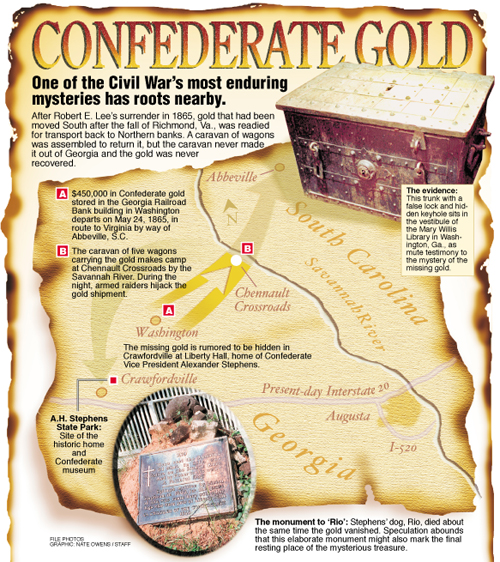
https://southernsentinel.wordpress.com/the-lost-confederate-treasure/


The war between the states had ended. The Confederacy was toppling. Jefferson Davis remained steadfast that the cause for states' rights was a just one. He prepared to head south, wanting to reach Texas. 

Davis's plans reached the ears of bankers in Richmond, Virginia. They emptied their bank vaults of gold, entrusting it to Davis and his enterage to keep safe for a later time. After all, Union troops were near Richmond, ready to take the capital of the Confederacy. Too, Confederate soldiers planned to burn the city so that nothing remained for Yankee invaders. The gold was best removed and safeguard somewhere else.

By the time that gold reached Georgia, the plan fell apart. Davis was captured, along with his family. The gold from the Richmond banks had moved further south, no longer traveling with him by that time. Even so, Union soldiers took control of it soon after.

End of story, right? Not so quick.

In the dead of night, a group of approximately twenty-five riders swept into the camp. They surprised sleeping soldiers and seized the gold. The raiders stuffed as much of it as they could carry into saddlebags and left as rapidly as they had arrived.


Union forces took after them. Much of the gold was recaptured immediately. Some was found in later years stuffed in the knotholes of trees. However, a small amount of the gold was never recovered.

Too me, that makes for a great mystery in a historical novel. In fact, I have based an entire series around the search for this missing gold. I call it The Confederate Gold Widows.

The first in the series is already available. Here's what one reviewer had to say about Mail Order Marietta:

This sweet novella kicks off the Confederate Gold Widows series. I love mail order bride stories, and this one is rather unique. The smoothly flowing, intriguing plot grabbed me from the beginning and held me to the “to be continued” ending. The characters are diverse and compelling. I loved Marietta and Riley individually and as a couple. Interesting history adds depth and interest to the story. A gentle faith element and sweet romance temper the villainous activities. I enjoyed this quick, satisfying read and look forward to the next book in the series. (Carolyn, Amazon Review)

Buy it at Amazon!


Marietta is panicked after her husband’s execution. Her best choice is to marry a stranger. 

Her future with her sheriff husband hints at love until a desperate man tracks her down, intent on forcing her to give up the stolen Confederate gold. One problem – she doesn’t have it! 

Will this treasure hunter ruin Marietta’s chance at a home and family?

Friday, February 24, 2023

SNAKE OIL--the False Promise of the West by Marisa Masterson


 Snake Oil--it's synonymous with being cheated. So, what’s the story behind the term “snake oil salesman”?

It started innocently. As Chinese workers flooded into the United States in the nineteenth century, they brought snake oil with them. It was a cure made from the Chinese water snake. People rubbed it on their joints to reduce swelling, something that seemed to work.


Americans wondered how they could make their own snake oil. Enter Clark Stanley, the Rattlesnake King. The former cowboy traveled around the country, setting up his medicine show in towns.

Think about these western small towns. There was little entertainment. Watching Stanley chop up a rattlesnake and then add it to liquid drew crowds.

Sadly, it was all for show. The actual medicine he sold was mostly mineral water. It did help some, probably because it contained capsaicin from the pepper extract he added. That gave the tingling effect so customers felt the snake oil working.

We know now that capsaicin actually does reduce inflammation. Too, we know that chopped rattlesnake doesn’t. (LOL) Stanley knew that too, but he made a fortune out of his product.


After the government passed the Pure Food and Drug Act of 1906, Stanley’s snake oil was tested. Newspapers blasted the news that there was no snake in it. From that, snake oil became a term associated with false promises.


 Here's something that's not full of snake oil. My new release has been tickling the funny bone of readers. 

It's jammed with romance and adventure with a heroine who is NOT impressed with her groom at first sight. What will it take to change her mind?


Take a look today on Amazon! 

https://www.amazon.com/dp/B0BLW7851H


Tuesday, January 24, 2023

WHO CARES ABOUT WOMEN VOTING: Colorado in 1893 by Marisa Masterson

 Women in Wyoming already had the vote. The ladies in Colorado wanted their state to be the next to gain that right. 


They'd tried in 1890 and been disappointed. Men voted not to allow women that right. After all, it was a short step from granting them the right to vote and the ladies using it to outlaw alcohol. Many men saw women's suffrage and the Temperance Movement as hand in hand.


The defeat in 1890 was such a disappointment that many of the national suffrage organizations didn't come to Colorado in 1893 to help rally people to the cause. Truly, this was a grassroots effort with local chapters champaigning hard for the female vote.

In fact this is where my hero and heroine first meet, at a local suffrage rally in Sylvia's Secret.

Scooting to the middle of the row, Sylvia worked to slow her ragged breathing. As she lifted the netting, nervous fingers made sure her glasses were still in place. Not that she needed them. No, they were only a part of her disguise, as was the tight bun that pulled at the skin of her face to give her a pinched look.

Women on each side of her flashed welcoming smiles before returning their attention to the speaker. Needing to blend in, Sylvia did the same. She expected to hear about foreign missions. That was a common topic for ladies’ meetings.

The speaker’s voice rose as she raised one fist. “Tyranny does not belong in our democracy. Women are as much a part of ‘We the People’ as are men. Those first words that begin the Constitution guarantee that we are members of this democracy.”

Sylvia nearly gasped. She raised a hand to her lips and coughed to cover it. Oh, she’d done it now. She was surrounded by suffragettes! If her father had discovered her secret in China Alley, she’d planned to argue that at least she hadn’t joined the suffragist movement. He hated that more than he despised the Chinese.

At that moment, the speaker spoke that very word. Chinese. “So, we fight not simply for the right to make our own future, but also for the Chinese women’s rights.”

That was a new thought for Sylvia. Her father and aunt both ranted about the unnatural suffragettes. “The Good Book’s already told us where woman belongs. In the home, that’s where,” her aunt had growled out more than once.

Try as she might, Sylvia couldn’t remember a bible verse that said this. Each time Aunt Clarice made the statement, Sylvia’s father only nodded and growled out, “Want the man to raise the children, they do, so they can run the government.”

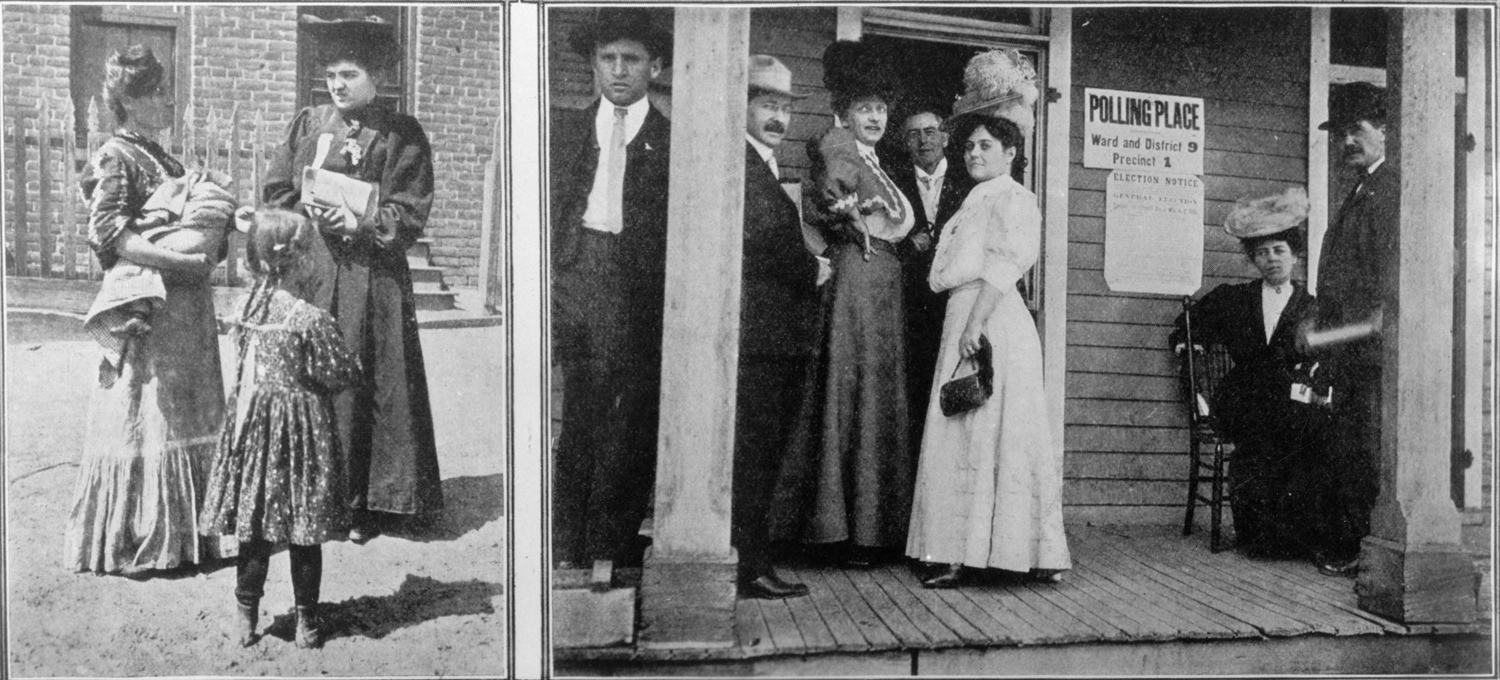
In the end, it was almost a non-issue, sadly. The vote turn out was low. This meant that there was an edge for those who truly cared and wanted to see their wives, mothers, and daughters gain their democatic right to vote. Because of the low turn out at the polls, Colorado became the second state to give women the vote.

Men and women outside a polling station in Colorado, 1893.

Here's how I celebrate that historical win in my novel:

“It passed! The referendum is law!”

Lydia Frasier waved a telegram in one hand and a newspaper in the other. She ran to the head table where her son sat with his wife. If it had been anyone else yelling like that, shocked murmurs might have started. This was Lydia, and the guests at her son’s wedding reception understood.

“Fifty-five percent, Ernie! Take a look!” She handed him the telegram.

He scanned the small paper with a growing grin. Raising his head, Ernest held up a hand. “May I have your attention. Sylvia and I thank you for coming out to celebrate with us. Seems we have more to be thankful for today. Women now have the right to, and I quote, ‘vote in the same manner in all respects as male persons are.’”

Lydia shouted, “It’s official.”

But why such a low turn out? If men really felt strongly about stopping women's suffrage, wouldn't they have come out to the polls? The answer is yes, they would have. By this point, people were apathetic toward the issue. They wouldn't vote for or against. Many seemed to no longer care. 


Colorado Governor Granting Women's Suffrage, 1893.

For further reading, I encourage you to go to https://www.historycolorado.org/story/womens-history/2019/11/07/road-vote. This Colorado source is excellent for retelling the history of suffrage in that state.


Sylvia makes up her mind to no longer be the "good daughter". Not when Chinese children couldn’t attend school. Besides, she's nearly thirty-years-old, already a spinster! She was old enough to make decisions.

Her secret teaching leads her into danger. That danger sends her running for safety. Dodging into a hall to escape her pursuer, she finds that safety at a suffragette meeting.

What an odd place to fall instantly in love! Who would expect to meet a handsome man in a women’s rally?

A quick marriage and threats to her new husband’s life make Sylvia realize that some secrets have to come out into the open.

If you enjoy sweet romance with a historical flavor, then sink into a chair and start reading Sylvia's Secret.

https://www.amazon.com/dp/B0B6D4PQMF

Saturday, December 24, 2022

EASTERN CHRISTMAS TRADITIONS HEAD WEST by Marisa Masterson

 Christmas, no big deal? Amazingly, that was the case in the Old West. The nostalgic traditions many people love observing each year were unheard of amongst settlers until Eastern traditions headed west. 

Once upon a time, Christmas was seen as an adult holiday. It was a time for drinking alcohol and eating rich meals. For those in the West, Bible reading and a large meal would be the extent of the celebration. 

Immigrants and the Civil War changed that.

German immigrants in the West brought many traditions with them. One, the Christmas tree and candles on it, arrived with them. In fact, until after the 1920s, Germany remained the source of most Christmas tree ornaments sold in the United States. 

Santa Image Created by Thomas Nast
How does the Civil War connect with Christmas? That really involves Santa Claus. Clement Moore's A Visit from St. Nicholas was already a popular poem, even in the United States. Thomas Nast adapted that to create an American St. Nicholas. He drew cartoons for newspapers during the war that showed Santa promoting the Union cause. Santa and Christmas became patriotic after that.


Santa visiting Civil War camp, by Thomas Nast.

Merry Christmas and blessings for 2023!
Marisa Masterson


She craves to be needed. He just wants a mother for his children. Can love grow out of this marriage of convenience?
Winnie's life is all about helping others, but she longs for a family of her own. When her sister brings a matchmaker to her door, Winnie grabs hold of a future, one that includes a husband and children.


Shrug Brandt is stubborn, but his children desperately need a mother. To get them one, he'll accept a wife—a wife that his heart refuses to love and then lose. He’ll give the spinster bride his name, but he won't share his heart with her.


​​​​​​​Will this holiday surprise heal this family's grief and give Winnie her Christmas wish?
Don’t miss out on this warm holiday romance! Buy Today.


Thursday, November 24, 2022

IMMIGRANTS AND THE CHANGING MEANING OF THANKSGIVING by Marisa Masterson


Thanksgiving. Food. Shopping. Family. A precursor to Christmas. Perhaps one of these fits your holiday this year. Really, if one thinks about it, the holiday has had several purposes over the decades and centuries here in the United States.  

When Lincoln officially made Thanksgiving a national holiday in 1863, he did so during a terrible time. After two years of bloody fighting, the American Civil War still raged. He wanted to set aside a day for Americans to pray. It was a remembrance day rather than a true feast.


Later, as immigrants flooded the country during the later half of the 1800s, the holiday became a way to welcome newcomers. Symbolism allowed the immigrants to practice American traditions. The turkey, the pie, the celebration of a harvest in their new country. Thanksgiving changed from a time of remembrance to more of the celebration and feast we know it as today.


A poem by Douglas Malloch captured the idea of the glory of a good harvest at Thanksgiving time:


To explain the shopping emphasis surrounding Thanksgiving, we have to look later to the 1920s. During that decade, the annual parades started. We can thank Gimbel and Macy for that. For my part, I prefer to associate this day with the warm joy of a thankful heart and a full plate.


Specially priced at $.99 for you this Christmas! Pre-order today!


Monday, October 24, 2022

NEW WORLD BREAD by Marisa Masterson


As German immigrants traveled west, they took their native rye seeds with them. They combined these with the items they found locally, foodstuff that they traded with native peoples. Oh, and they added that one item that was widely used by pioneers--molasses.


The result was a bread for the new life they found themselves living as settlers in the West. This dense, brown bread was also known by another name, one that is too derogatory to native people for me to include here. 

But, I wanted to introduce to you another aspect of pioneer life we rarely read about in novels. White flour was expensive. This bread allowed them to use a rougher, locally ground flour from the rye they'd grown. Also, it included the cornmeal that was a staple of the American diet at the time.

[This] is a healthy bread made with rye flour, molasses, honey, butter, cocoa powder, and cornmeal. It is a delicious and sweet bread. You can also add raisins and nuts to it.

IngredientsQuantity
Rye Flour2 ½ cups
All-Purpose Flour1 cup
Granulated Sugar3 teaspoons
Dry Yeast1 packet
Warm Water1 ½ cup
Molasses4 teaspoons
Honey2 teaspoons
Butter2 teaspoons
Cocoa Powder2 teaspoons
Salt1 teaspoon
Cornmeal2 teaspoons 

  1. Take a bowl and mix yeast, water, and sugar in it. Leave it for about 5 minutes until the yeast in the mixture starts reacting.
  2. Mix flour, molasses, honey, butter, cocoa powder, salt, and cornmeal along with the yeast mixture in a mixer until the dough is soft and lacks moisture.
  3. Put the dough ball into a lightly greased container. Cover the dough with a cotton cloth. Let the dough rest for about 1 hour.
  4. Preheat the oven to 455°C.
  5. Line a baking sheet with parchment paper. Sprinkle the parchment paper with cornmeal.
  6. Place the baking tray in the oven. Bake it until golden for about 30-35 minutes.
  7. After that, take it out from the oven and let it cool for some time.

So, you are done baking the [word removed] bread and it is ready to eat. Enjoy this recipe with your friends and family on a lazy Sunday or whenever you want.

You can find this recipe at https://thefoodxp.com/squaw-bread-recipe/.


Gossip forces them into a marriage. After all, Minnie's been trusted to raise her precious baby sister. She and her husband are determined to make the best of this hurried marriage, but strange things keep happening. Then, Granny is kidnapped...


Will getting the old woman back take the life of the man she's only now coming to love?

Sunday, September 25, 2022

THE TRAVELS OF A RECIPE by Marisa Masterson


Once there was a lutheran pastor's wife who brought the recipe with her. She moved to the small community in Michigan and brought her fantastic cookies to her congregation. 

Later, a young wife received that recipe. She began to make the cookies and give them away. In fact, people started to believe it had always been her recipe.

When the wife was old and had become a grandmother, a young woman and her family moved into the community. The old woman took them under her wing. She shared more than the cookies and the recipe. The young family became like her own relatives. 

Who knows where the recipe started from? Who invented it? That's not the important part. 

What matters is the love each woman showed as she made the cookies and passed on the recipe to others. It's the love that I pushed to share in my next book. 

The recipe I'm referring to is for molasses cookies, and that's how it made its way to me. The recipe means so much to me that I wrote a book about it.

Curious about the recipe. It's included in my book!


Wednesday, August 24, 2022

A TALE OF DANIEL BOONE by Marisa Masterson

 I came across a true story recently that intrigued me. A tale from early in the settlement of the United States by whites.


It comes from the time when settlers poured into what is now Tenessee and Kentucky. A period when the unknown West truly made up the majority of the United States, and it was illegal for those same whites to be in that area.

England's law forbidding settlement in what was Cherokee and Shawnee territory didn't stop Daniel Boone. Along with others, he led his family into Kentucky and set up a small fort named Boonesborough. Only, the native people didn't take kindly to having their treaty with England broken.


Painting by C. Wimar
The story goes that fourteen-year-old Jemima Boone and two friends left the fort one day. They took the group's only canoe and floated down the river. One account says that they wanted to pick grapes.

Regardless of their reasons, a raiding party watched from the trees on the opposite side of the river. The men jumped into the river while the girls paddled frantically. It was useless. The natives snatched the three screaming girls.


Remember, this was Daniel Boone's girl. She knew her father would come after her. He would follow her trail, so she determined to leave him a trail to follow.

She and the other two bent branches, broke twigs, and dropped both berries and leaves when their captors led them through the forest. The long dresses worn by the girls slowed the raiding party's escape. One of the men cut off the garments at the knee. I wonder if that left the girls feeling vulnerable or hopeful, perhaps thinking they could run better and possibly get away from this band of Cherokee-Shawnee.

The trail marked by the girls disappeared once the natives took them into a stand of river cane. But Daniel Boone took a chance on a buffalo trail he knew in that area. Following it, he found the camp and attacked. 

In the end, two natives were killed and the girls were rescued. Interestingly, those three girls' future husbands all took part in their rescue that day.


The story was so popular on the frontier that James Fennimore Cooper included it in his book The Last of the Mohicans. 

To read more, check out two of my sources for this frontier tale--

https://www.timesnews.net/living/features/what-happened-when-jemima-boone-wandered-away-from-the-fort/article_f9b2073f-acab-5b6d-b5af-7b5d09837daa.html

https://www.history.com/news/women-american-frontier


On sale now for only 99¢!


Sunday, July 24, 2022

DROOPING STOCKINGS by Marisa Masterson

In the nineteenth century, how did a woman do to keep her socks from falling?

Many of the common class wore home-
knitted stockings. Two things were used to keep those socks from falling.


Garters would be tied to stockings that came above the knee. Lacy garters could be made at home by crocheting or tatting lace. A ribbon would be woven through the garter. A woman would tie that to keep the stocking from slipping.


Another way to keep a sock up was ribbing. The rib stick was used to keep the sock tight around the leg, especially for a working man's socks.


Not all socks were homemade. From the late sixteenth century onward, knitting machines were used to make socks. These too would have had the ribbing stitch included.


All of this changed in the 1930s. Nylon was invented, allowing for the creation of elastic. Garters went out of fashion after that, for the most part. Wool as one the main sources used to make socks also went out of fashion after this. 


ON SALE TODAY, jULY 24, 2022.


Friday, June 24, 2022

A DREAM COME TRUE (for some) by Marisa Masterson


The 1889 Oklahoma Land Run--the first land run!

Drought and financial depression made claiming land a dream come true in the inviting Oklahoma Territory. Women were allowed to claim land as long as they were single or widowed, and at least twenty-one-years of age. African Americans also saw this land run as an opportunity and rushed into the area. Native peoples, however, were legally forbidden from staking claims.

Woman staking claim in 1889 Oklahoma.


When the first Oklahoma Land Run was announced in 1889, people had only ONE MONTH to prepare! Imagine learning of this and scrambling to take advantage of this. There was no guarantee that you'd get anything if you waited on the border on April 22. At noon the gun, boomed and you would have ridden out amidst thousands of others who probably wanted the same land that you do...

Waiting for the 1889 land run to start.


My latest book is a part of a series that focuses on the white settlement of Oklahoma--specifically the land runs. Interesting history! Now, add in romance and mail-order brides. A winner!!


4/8/5 Stars on Amazon (after 44 ratings!)

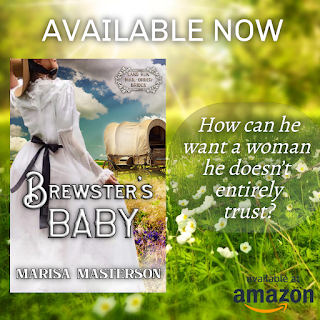
He wants her, needs her. But, will he ever find a way to express his emotions to her?

Michael Brewster needs a wife as he sets up a new business. That’s all! No complications or tender feelings will soften his hard heart or get in the way of his plans to build an empire.

Hetty Fields arrives by train on the very day of the first Oklahoma Land Run. She’s a day late, upsetting her groom's perfect schedule. Add to that, she does something to him that threatens to awaken his sleeping emotions. And then he sees the baby…

Why didn’t she warn him about the baby? How can he want a woman he doesn’t entirely trust?

If you enjoy sweet romance set against historical events with light suspense, this book is one for you to read!