Dr. Susan Laflesche
Tonight, while I waited to check into a motel outside of
Lincoln, the man waiting in front of me was listening to a beautiful Native
American ceremony on his radio. Suddenly he ducked to the front of the motel, made
a phone call, then returned to the line.
He resumed his place (without asking). I said, “that was beautiful chanting. What was it?”
He said, “That’s what we call the half-breed song. Like you.”
I was so amused that I didn’t flinch.
He continued. “The
Omaha Nation’s dedicating a statue of my great-grandmother, Susan Laflesch,
tomorrow morning at the capitol rotunda.
She was a half-breed like you.”
Did you ever feel that a person was egging you on?
But I was terribly interested in what would come next. Also, I was glad that Dr. Laflesch was being
honored at the Nebraska State Capitol and I’d gladly overlook her great-
grandson’s peculiar outlook.
The term ‘half-breed’ originated among American Indians when
land was being divided by the federal government for various tribal uses. Tribes in one region demanded a reservation
set apart for the ‘half-breeds’ but the reservations themselves were to be open
only to ‘pure-bloods’ or ‘bloods.’
I got checked in and went to my room, leaving the famous Dr.
Susan Laflesch’s great- grandson making preparations in his. Through the open door, I noticed a woman
dividing up food as I walked by.
I started thinking catty thoughts, wondering if he
considered all Native American women like the braves of old supposedly did: women
were property, fit for skinning hides and gathering berries, but nothing much
beyond that. The braves of old, though, supplied
the tribe, including single females, with fresh meat.
The warriors also protected the women of their band. All women would be safe from raids and
attacks, when women could be stolen and enslaved. (Stealing and enslaving, then selling, women
from other tribes was common, especially among the Plains Indians. European American -- non-tribal American -- slave
dealers held auctions at local and larger markets, selling captive women as
slaves.
Among the tribes, women were ranked, like every other
member, with the young married women ranking ‘most,’ and the older, widowed or
unwed women ranking ‘least.’ The women whom they’d captured, even those
taken as captive wives, had no rank. I admitted to myself that the warriors of
old might have felt insulted when any woman spoke to them as their equal.
Of course, the entire American Indian social structure was
disrupted, first by the reservation system, then the attempts at ‘allotment’ (written
into law by the Dawes Act). Small
parcels of land were given to individual Indians for their personal use only.
Farming was encouraged, though tribal land was not uniformly
suitable for growing crops and tools, like plows, and seed, were hard to come
by, even by homesteaders and other settlers.
For example, the ancient inhabitants of the great southwestern deserts,
like the Pueblo and Hopi Indians, lived where farming was impossible for
anyone.
In other regions, Indians were able to grow potatoes with
success. (Potatoes were considered by
settlers and Indians alike as filled with nutrients, and were valued for
keeping away scurvy.) Other individual
Indians worked hard and had good luck against the clouds of insects, the droughts,
and the harsh weather that sent many homesteaders away.
Some Indians were discouraged by life on reservations, then economically
stopped by the decision that individuals must be farmers. They’d grown up to expect nothing different
from generations of their kinsmen. From
boyhood they’d learned skills for hunting large mammals like buffalo, which was
– when you consider it – dangerous and life-threatening. They learned how to ride their ponies and
swing in front of charging buffaloes, or movements for confusing large animals
while filling them with arrows or spears while riding.
As children, they’d learned how to make bows, string them from
the same materials as their ancestors, to carve arrows from rocks; certain
types of arrows would kill small game; they made others suitable for hunting
buffalo or other large game.
The young warriors used certain wood for making the bows,
and they learned to substitute other wood when their choice became too scarce. (I do not offer these facts as excuses, but
as tidbits of Western history. I am unfit to judge anyone.)
The Dawes Act sought to enhance the federal government’s new
project. Allotments of small tracts of
land to individual Indians were to replace the reservations, which they’d given
to tribes. This was to reduce/remove tribal life and to create individual
farmers. It was written up as a
charitable, humanitarian effort. Hundreds
of hard-working organizations endorsed this effort to help the native
population.
The land that wasn’t used as allotments to Indians was sold
to people settling the land; the federal government received the profits. The effort toward creating individual
allotments of land for Indians was discarded as a failure in the 20th
century.
Then I remembered how truly great Dr. Susan Laflesch
was. As I’ve mentioned before in Sweethearts of the West, Susan Laflesch
was the first Native American medical doctor.
She went to the University of Pennsylvania medical college during the
post-civil war era.
Doctors in America could – and did -- practice openly with
no medical training. Doctors abounded,
opening clinics with no medical training whatsoever and no licensing. The
University of Pennsylvania had one of the few accredited medical colleges.
Dr. Laflesch worked not only as a licensed medical doctor
for the Omaha tribe. She worked
constantly for simple people. For
example, normal Indians who needed complicated paperwork filled out and sent
through the government maze. Like others
in her family, she felt that she should take advantage of her many blessings –
like being educated -- for helping others. Her medical practice consisted of
high payment to no payment.
*
It’s three o’clock in the morning. I’m glad that my
experience this evening led to my sharing these ideas with you. I’ll snap some photos of Dr. Laflesch’s
statue and post them next month. She was
a strong-willed, admirable and very pretty woman.
I suspect that she’d been called a half-breed, too. Only twice in my life have I been called a
‘half-breed.’ The first time, I was
teaching at a university in Thailand.
One of the Thai teachers said innocently, ‘Oh! You must be a half-breed!” I don’t remember what I said, but certainly
nothing to hurt her. She spoke very little English, and I was sure she hadn’t
meant this as a slur.
My encounter this evening?
The Oto tribe has never been one of the flashier, publicized tribes. The
Oto is much smaller than the Omaha tribe, and has been since diseases and
famines swept across the nation. The Otoes resisted attempts to unite with
other tribes, but finally joined with the Missouria. It had also been a larger, more powerful
tribe, but numbers had simply decreased over the years.
My grandmother married an Irish merchant
in Oklahoma. Her son, my father, was a
handsome wild Oto. Like the strong hero
in my last book – Thunder Hawk in Rescuing
the Indian’s Bride -- it’s difficult to imagine a person ever calling him
anything insulting.
American Indian women, though, were slandered to their faces
by being sneered at as ‘squaws.’ Like
most racist slurs, the word stood for many other things. Why should I feel slandered at being called
‘half-breed’ when I share the title with the great Dr. Susan Laflesch!
 First women Native American medial college graduates
I hope you’ve forgiven me for my very late Sweethearts of the West blog post. I’d counted on internet in airports to send you
my latest article; but as I learned, since the pandemic, airports simply don’t
have that service. I spent hours waiting in airports, but without internet (or food
or water).
I’m finally in my new apartment, but there's no phone or internet, so sending you this from
the city library! I enjoyed looking at Dr. LaFlesch Picotte's statue. It's very popular, with many people stopping and looking carefully. Gardeners have planted sturdy Plains flowers and greenery as part of the arrangement.
Here's an article you might enjoy: https://en.wikipedia.org/wiki/Susan_La_Flesche_Picotte
I’ll be on time in the future! Thank you again for your loyalty to me and to
our great blog, Sweethearts of the West.

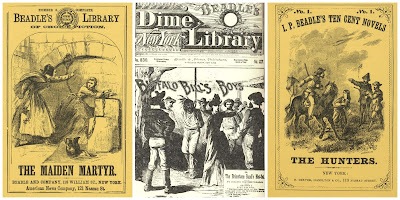


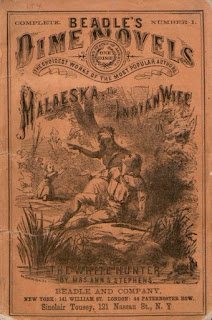
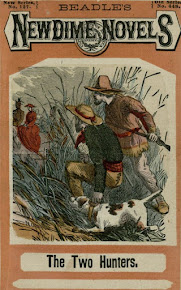 First issued by the New York printing firm of Irwin and Erasmus Beadle and Robert Adams, the dime novels were an immediate success. Between 1860 and 1865 alone, Beadle and Adams published more than five million dime novels. During this time, the Civil War made soldiers a prime audience for the publishers who produced books that catered to the men needing a light diversion during the boredom that often came with camp life.