Showing posts with label Mended Hearts series. Show all posts

Thursday, June 16, 2022

The Man Who Inspired Father's Day - by Jo-Ann Roberts


“I remember everything about him. He was both father and mother to me and my brothers and sisters.”

                                                                                                       Sonora Smart Dodd

Like Memorial Day, Labor Day, Veterans’ Day, and Mother’s Day, Father’s Day evolved from a concerted effort by a loved one to honor a group or individual for their selfless, and often times, unrecognized contribution to family and country.

Such is the case of Sonora Smart Dodd.


When Sonora was 16, her mother Ellen died, leaving William Jackson Smart as a single father to Sonora and her five younger brothers.

Sonora’s mother Ellen, herself a widow, had three children from a previous marriage. In addition, William had been married and widowed before he met Sonora’s mother. William had five children with his first wife who were already grown when he became a widower for the second time.

An unlikely inspiration for the Father’s Day movement, William Jackson Smart was born in Arkansas in 1842. Records there show that he enlisted as a Union soldier in 1862. That in itself is odd because Arkansas was a Confederate state.

However, records show that he fought for both sides in the war.

Driving a supply wagon for Confederate troops, William was captured in a decisive victory in Arkansas at the battle of Pea Ridge. Rather than languish in a Union prison, he opted to join the northern cause. As a result, Sonora was eligible to claim membership as a member of both the United Daughters of the Confederacy and the Daughters of Union Veterans.

William and his second wife Ellen were living on a “coal ranch” in Jenny Lind, Arkansas when Sonora was born in 1882. Instead of mining for coal, William and the family “farmed” it, collecting chunks of coal from the surface and carting it to town for sale. In 1887,  they sold the farm for $5000—a hefty sum at the time—and the family move to Spokane, Washington. 

Fun fact…the farm in Arkansas would turn out to be one of the most productive coal fields in the entire nation!

In 1898, William became a widower for the second time. In Sonora’s memories of this sad, difficult time, she recalls her father as a “great home person”, a man who exemplified fatherly love and protection.

It was this selfless devotion that prompted Sonora to action while attending one of the first official Mother’s Day services at her church in 1909.

If mothers deserved a day in honor of their loving service, why not fathers?

In 1910, Sonora brought a petition before the Spokane Ministerial Alliance to recognize the courage and devotion of all fathers on William’s birthday, June 5. Though the local clergy like the idea of a day devoted to fathers, they couldn’t pull something together in so short a time span. Instead, they settled on June 19th, the third Sunday in June.

On that first Father’s Day in 1910, churches sermons across Spokane were dedicated to fathers, red and white roses were handed out in honor of fathers both living and dead, and the governor and mayor issued proclamations...and Sonora found her calling.

With the support of her congressman, she began to lobby for the creation of a national holiday, determined to give fathers like hers the recognition they deserved.

But it wasn’t until 1972 that President Nixon finally signed a Congressional resolution declaring the third Sunday in June to be Father’s Day.

William Jackson Smart, no doubt, would have been proud of Sonora.


Happy Father's Day 

to all the special dads, step-dads, grandads, uncles, 

brothers, cousins, neighbors, teachers, and friends

who stepped up to show a child what it truly means to be a father.


Monday, May 16, 2022

Crimes of Fashion - The Civil War Hoop Skirt Smugglers


I admit it...I'm a history junkie! Particularly when it comes to the 19th century Victorian America, Civil War, and the Wild West. Honestly, if there was a time-machine that could transport passengers back to that time, I'd be the first in line. 

Having just finished my entry, Ainsley - Book 8 in the Love Train series, I turned to writing Wooing the Widow, Book Two in my Mended Hearts series. Based in Roswell, Georgia during the last year of the Civil War, it tells the ordeal of Sofie Bishop who innocently takes a job in a mill producing 'Roswell grey' fabric to be sewn into Confederate uniforms. 

The taking and destruction of the mill, looms, and fabric was not just a capture of infrastructure. Charging them with treason, the Union troops took about 400 mill workers, most of them women and children, to Marietta to be sent North on trains.  

They spent a week in holding in Marietta before being sent North, many to Indiana, Kentucky, and Illinois on trains.  They were then left to fend for themselves in Northern towns already overcrowded with refugees. Many would die from starvation or exposure until a mill opened in 1865 that provided employment. The ultimate fates of many of these women are unknown, but the majority who survived settled in the North.  There are only a few reports of any women and children returning to Roswell. 

While researching this Civil War "Trail of Tears", I came across an article about hoop skirt smugglers. Instantly, I knew I had to add a scene or two showing how some of the women might have used their skirts for a different purpose: smuggling to support the Cause. So...down the rabbit hole I went!

In a time when women had little political power, I discovered many of them eagerly joined in to not only support the troops in spirt, but took a more aggressive role in the war. From undercover spies to actual soldiers, many women considered themselves as equal participants.

Realizing their unique position as women, they used their hoop skirts for smuggling messages, weapons, and medical supplies. Despite what modern readers might view as bothersome, many women enjoyed wearing things like hoop skirts and corsets. Those who utilized them to smuggle goods reveled in the power it gave them to feel both feminine and fierce.

Belle Boyd - Siren of the Shenandoah


Boyd's espionage career began by chance. According to her highly fictionalized 1866 account, a band of Union army soldiers heard that she had Confederate flags in her room on July 4, 1861, and they came to investigate. They hung a Union flag outside her home. Then one of the men cursed at her mother, which enraged Boyd. She pulled out a pistol and shot the man, who died some hours later. A board of inquiry exonerated her of murder, but sentries were posted around the house and officers kept close track of her activities. 
In one account, Belle organized a smuggling operation composed of other southern belles to hide weapons in their hoop skirts. While Union troop were relaxing near their encampment in Harper's Ferry, she and her belles confiscated sabers, pistols,  muskets, and calvary equipment. She also smuggled precious quinine (best treatment for malaria) across the Potomac River to secessionist towns in Maryland.

In addition to her hoop skirts, Belle used her feminine wiles to seduce both Union and Confederate soldiers, easily extracting information from the unsuspecting men who were unaware of a woman's ability to perform as a spy. 

Elizabeth Van Lew

Upon the outbreak of the war, Van Lew began working on behalf of the Union with her mother, caring for wounded soldiers. When Libby Prison was opened in Richmond, Van Lew was allowed to bring food, clothing, writing paper, and other things to the Union soldiers imprisoned there.  Quickly, her efforts escalated to smuggling written messages in and out of the prison by pasting them in books, and on one occasion, she brought in coded messages in the bottom of her custard dish. Another time she brought along her knitting and intertwined messages in her stitches.

When her hostile neighbors began to attack her mental capacity because of her allegiance to the Union, she took to combing her hair crooked, wearing tattered dresses, walking the neighborhood looking generally disheveled. Given her wealth, this led to her neighbors to jump to the conclusion that she was indeed, disturbed, and hence, not a threat to the cause.


When Richmond fell to U.S. forces in April 1865, Van Lew was the first person to raise the Union flag in the city. On Grant's first visit to Richmond after the war, he had tea with Van Lew. Grant said of her, "You have sent me the most valuable information received from Richmond during the war. Elizabeth was eventually inducted into the Military Intelligence Hall of Fame.


Emma Kline - "Hostile in Spirit"

As the daughter of a Mississippi planter, and a sister to five brothers, Emma Kline became involved in the war effort with enthusiasm. On one occasion, she managed to conceal a roll of army cloth, several pairs of cavalry boots--tied to the rolled coils of her hoop skirt--along with a roll of crimson flannel, packages of gilt braid and sewing silk, cans of preserved meats, and a bag of coffee—quite a tally of contraband for a 20-year old woman.  

Eventually, the entire Kline family was exiled from the Vicksburg area by order of Major Eastman...

"I desire you to entrap and catch these outlaws, if you can. I am also well satisfied that the Kline family, and especially Miss Kline, are guilty of acting in bad faith toward our government and imparting information to the enemy. You will, therefore, take immediate steps to put the whole family across the Big Black, not to return to this side without written permission from the proper military authorities, under penalty of being dealt with as spies."

Emma Kline would be little remembered today if not for one photograph of her that was taken in 1864. It shows a defiant young lady standing between two guards from the 5th Iowa Infantry after her arrest for smuggling.

Elizabeth White, Annie Hempstone, Kate and Betsie Ball

Early on the morning of July 5, 1864, these Virginia-based Confederate sympathizers embarked on a daring mission to retrieve desperately needed boots and clothing for soldiers of the 35th Battalion who had family in Maryland. They crossed the Potomac River at Point of Rocks into Maryland. 

With boots and clothing tied to the frames of their hoop skirts, they discovered Union troops guarding the crossing. They retreated to Elizabeth's mother's home where they hid the clandestine goods.

The four women were arrested as spies and sent to the Old Capitol Prison in Washington, D.C.   Though Union officials knew the women were Confederate sympathizers, they could find no evidence to support a charge of spying. The women repeatedly stated that their trip to Montgomery County, Maryland was for pleasure alone, and Union officials released them three weeks later.

Somehow escaping detection, Elizabeth White and her comrades promptly returned to the house of White’s mother in Dickerson, Maryland and retrieved their concealed items. The return river crossing was precarious simply because of the weight of the items concealed in the folds of the women’s skirts but went off without a hitch.

These women had taken great risks to retrieve these supplies and had demonstrated their willingness to expose themselves to great danger to support their soldiers.

How to Catch a Lady Smuggler

The prevalence of female smugglers had become such a problem for the Union army that the following red flags became well-known to officers. 
        • A traveler walking oddly
        • Clothing that was quite tight
        • A woman who seems overly nervous
        • Clothing that appears too large for the wearer
So, this led me to wonder... How would a male officer  prove a female was smuggling contraband?

Enter the Inspectress.

Code of morality were such at the time that conducting searches would have been too uncomfortable for most officers to bear. It would also mean putting his own reputation at considerable risk.

One aspect of my research that I hadn't expected was that the boldness of one group of women created an entirely new career for another. Since women had never been employed at the prisons, they were now brought in to conduct such searches. When the war ended, and fashion trends evolved to slimmer skirts and fitted bodices of the early 1900s the opportunity for on-person smuggling diminished.

Wait...what about the bustles of the 1870s, 1880, and 1890s?  I guess I'll have to take another trip down the rabbit hole!


Saturday, April 16, 2022

Daughters of the Regiment - Vivandieres of the Civil War by Jo-Ann Roberts


Having just finished "Ainsley" my contribution to the Love Train series, I've turned my attention to Book Two in the Mended Heart series, "Winning the Widow's Heart".

In early July 1864, General Sherman ordered the arrest and deportation of the 400 women, children, and a few men from Roswell and Marietta, Georgia with treason for spinning yarn and weaving cloth for the Confederates. Then he shipped them north, from their homeland, through Tennessee and on to Louisville, Kentucky, ordering them to cross the Ohio River and support themselves in Indiana in whatever way they could.  

"Winning the Widow's Heart" follows the journey of Sofie Bishop of Roswell, Georgia from teacher to mill worker to alleged traitor and Union Captain Seth Ramsey, one of the officers charged with transporting the mill workers north.

While doing my research, I came across an article on vivandieres. Having never heard of these women who were part of a regiment, down the rabbit hole I went. Honestly, learning about these women was enlightening. I've never heard them mentioned in any history books, let alone a historical romance, either as the heroine or in a supporting role. There were the usual nurses, laundresses, cooks, and soiled doves who traveled with the armies. But vivandieres...no!

A vivandiere was a woman who filled several roles as needed: water bearer; a seller/distributor of food and creature comfort items like whiskey and tobacco; a nurse, a laundress, a mascot for shoring up morale; and many other incidental ones that came up as circumstances warranted. There were similar ladies called cantinieres, but at least early on there was a distinction between the two; vivandieres could accompany a unit onto the battlefield, while the cantinieres were to remain behind in camp. It has been noted that vivandieres did occasionally fight with their men.

Uniforms of vivandieres in the American Civil War varied from regiment to regiment. All had in common a knee-length skirt worn over full trousers, a tunic or jacket, and a hat. This style of costume was similar to bathing costumes depicted in fashion magazines of the period and was suitable for the outside exercise required of vivandieres who lived and marched with their regiments. There was a great deal of variation in trim and materials.
  
Mary Tepe

When the Civil War began, French-born Mary Tepe and her husband Bernard both joined the 27th Pennsylvania Volunteer Infantry Regiment, popularly known as Collis’ Zouaves. 
French Mary Tepe owed her nickname to her accent. In her role as a Zouave vivandiere, French Mary Tepe wore a blue jacket, red pants, and a blue skirt trimmed in red. She participated in the Battle of Fredericksburg (December 13, 1862), during which she received a bullet wound to one of her ankles. After a short hospitalization, Tepe rejoined her regiment. In July 1863, Mary and the 114th PA fought at the Battle of Gettysburg. When the battle was over, Mary volunteered her services as a nurse. A few weeks later, her nursing work at Gettysburg completed, she continued with her regiment and served throughout the remainder of the American Civil War.
Annie Etheridge
In April 1861, Annie Ethridge joined nineteen other women who enlisted as vivandieres with the Second Michigan Volunteer Regiment. Annie served throughout the rest of the war with the Third and Fifth Michigan Regiments. She became famous for her bravery under fire; after a battle, her skirt was always riddled with bullets. She carried pistols for her protection, saddlebags filled with medical supplies, and she frequently rode on horseback to the line of battle to aid wounded soldiers. She served at the First and Second Bull Run, Antietam, Gettysburg, and Fredericksburg. 
‘Gentle Annie,’ as she was called, worked for the Hospital Transport Service, which ferried wounded soldiers to military hospitals in the North aboard old paddle wheel boats that had been converted to be used for that purpose. Annie was used as a shield at one point -- some cowardly officer squeezed in behind Annie and her mare to shield himself from the fighting. Surprised, she turned to speak to him (and probably was going to tell him to get back into the fighting) when a stray minie ball struck him, killing him.


Kady Brownell 
 In the early 1860s, Kady McKenzie worked as a weaver in the mills of Providence, where she met and fell in love with Robert Brownell. With the outbreak of the Civil War in April 1861, Robert joined the 1st Rhode Island Infantry; Kady was determined to serve with him. 

 At the First Battle of Bull Run (July 1861), she held the regimental flag high as Confederate bullets were flying all around her. After enlisting in the 5th Rhode Island Infantry with her new husband, she served at the Battle of New Bern, North Carolina (1862). Brownell remained in New Bern after the battle, caring for her wounded husband. After his recovery he was deemed unfit for battle, and both were discharged.


                                                                                   Lavinia Williams of the 1st Louisiana Tigers


Calculating the exact number of women who served as vivandieres is nearly impossible. Neither North nor South recognized the service of vivandieres and they are rarely mentioned in official records. Their courage and brave deeds are recorded in personal accounts and post-war regimental histories. 

Armed with this fascinating information on those brave, intrepid women, a vivandiere or two will be featured in "Winning the Widow's Heart" coming late 2022/early 2023.


Pre-Order Available June 1st
Releases July 15th


Mended Hearts Series


Available on Kindle Unlimited and Amazon


Saturday, October 16, 2021

An Adventure for A Dime by Jo-Ann Roberts


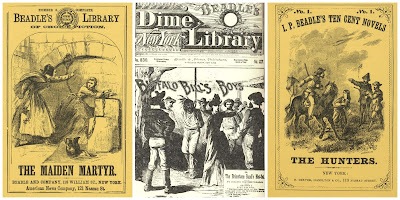
Initially published around the time of the Civil War, the first dime novels were immensely popular. These sensational stories were full of romance and adventure and became wildly popular in both the United States and in England, where they were dubbed "penny dreadfuls". 

Dime novels typically told the dramatic adventure stories of a single hero or heroine who often found himself or herself in the midst of a moral dilemma. They were ethically sound, endorsing good character, and strong moral values, with the hero/heroine choosing virtue over vice.

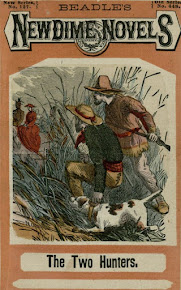
The storylines were simple and told in in language that brought to mind concrete pictures and people for the readers. The books were simple in appearance, bound in inexpensive paper with brightly illustrated covers, easy to carry, and easy to pass around. Though the subject matter of the novels included detectives, the military, chaste romance, and even early science fiction, it was the Western dime novel that dominated the market.

In the beginning, these stories were about the American Indians, but when the Indians were forced onto reservations, the public's fascination with them began to fade. Consequently, the novels focused on cowboys in the Wild West, outlaws and bandits, and train robbers. 

In Victorian England, "penny dreadfuls" were written in the macabre Gothic tradition to frighten and thrill readers.


Dime novel stories would often feature a recurring hero such as Buffalo Bill, Deadwood Dick, Buckskin Sam, or Roving Joe. The printing house could then establish a series and garner a following for these heroes. These heroes were, of course, packaged in a fast-paced adventure story often described as
"blood and thunder". 

First issued by the New York printing firm of Irwin and Erasmus Beadle and Robert Adams, the dime novels were an immediate success.  Between 1860 and 1865 alone, Beadle and Adams published more than five million dime novels. During this time, the Civil War made soldiers a prime audience for the publishers who produced books that catered to the men needing a light diversion during the boredom that often came with camp life.
Writing these stories was a lucrative business for many late 19th century authors. A well-established author could earn up to $1,000 per story; a lesser established author could expect close to $50 per story. One such author, Prentiss Ingraham achieved success and fame as an author of the "Buffalo Bill" series. By his own account he penned 600 novels by 1900.

Another major publishing house, Street and Smith, viewed fiction as a commodity, and editors had strict authority over the authors' works. Each author was allowed limited room for creativity and was required to follow a specific formula in the plot lines and writing style. No wonder authors like Horatio Alger, Upton Sinclair, and Jack London wrote for Street and Smith under pen names!


However, not all authors wrote under pen names to save their reputations. Many authors were writers who were often journalists, teachers, or clerks simply looking to make a bit more money to supplement their current occupations. With the invention of the typewriter, authors were able to churn out stories at an unbelievable rate. One author, Frederic Marmaduke Van Rensselaer Dey, the creator of street-savvy detective Nick Carter, was rumored to put out 25,000 words every week for almost twenty years!
 
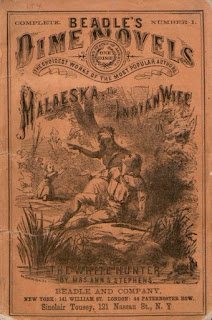
Although not as numerous as their male counterparts, female authors also found success in the dime novel market. The most notable among these was Ann S. Stephens. In 1860, she authored the very first Beadle's Dime Novel, "Malaeska: The Indian Wife of the White Hunter".


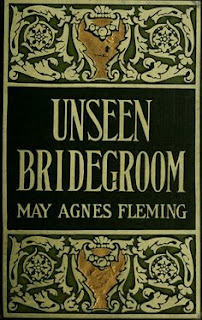
Bertha Clay, Geraldine Fleming, and Laura Libbey were among the most prominent female authors who penned stories about the pioneers, sensational murder mysteries, and society romances aimed at a young, working, middle-class audience. All for Love of a Fair Face, The Story of a Wedding Ring, A Charity Girl, The Unseen Bridegroom, and Only a Mechanic's Daughter were among the most popular romance novels enjoyed by girls and women, and surprisingly by many men.


The dime novel craze heavily influenced pulp fiction magazines introduced in the 1890s. Rising postal rates may have caused a decline in the publication of the dime novels, but the content material and sentiment behind the works continue to influence publications even today.