Showing posts with label Winning the Widow's Heart. Show all posts

Thursday, March 16, 2023

St. Patrick's Day in American History - by Jo-Ann Roberts


Every March 17th, the United States becomes emerald-green for a day. We wear green clothing, drink green beer and milkshakes, and eat green bagels and grits. Parades in big cities and small towns cheer on bagpipers, step dancers and marching bands. However, these traditions weren't imported from Ireland.

They were made in America.

In contrast, March 17th in Ireland had been more of a holy day than holiday. The Irish would attend church in the morning and attend modest feasts in the afternoon. There were no green-tinted foods, since blue, not green was the traditional color associated with Ireland's patron saint prior to the 1798 Irish Rebellion.

While many people believe Boston was the first to hold a St. Patrick's Day celebration in the American colonies, evidence has been unearthed that St. Augustine, Florida may have hosted America's first St. Patrick's Day celebration. Gunpowder expenditure logs indicate cannon blasts or gunfire was used to honor the saint in 1600, and that residents paraded through the town in honor of St. Patrick...perhaps at the urging of an Irish-Catholic priest living there.


Following the devastating failure of Ireland's potato crop in the mid 1840s, Irish Catholics flooded the United States. They clung to their Irish identities and took to the streets in St. Patrick's Day parades to protest the bigotry of the "Know-Nothings", a political party with strong anti-immigrants and anti-Catholics who believed these groups posed a threat to the economic and political security of native-born Protestant Americans.  

"Many who were forced to leave Ireland during the Great Hunger brought a lot of memories, but they didn't have their country, so it was a celebration of being Irish..."


Attitudes toward the Irish began to soften after tens of thousands of them served in the Civil War. They entered the war as second-class citizens but came back as heroes. Notable among them was the 69th Regiment from New York City or as Robert E, Lee called them, The Fighting 69th. As the Irish slowly assimilated into American culture, those without Celtic blood joined in St. Patrick's Day celebrations.


The meal most associated with St. Patrick's Day celebrations--corned beef and

cabbage--was also an American innovation. When ships came into South Street seaport, many women from the slums of lower Manhattan would run down to the docks hoping there was leftover salted beef they could get from the ship's cook for a penny a pound. They would boil the beef three times--the last time with cabbage--to remove some of the brine.

While St. Patrick's Day evolved in the 20th century into a party day for Americans of all ethnicities, the celebration in Ireland remained solemn. For decades, Irish laws prohibited pubs from opening on holy days such as March 17th. Until 1961, the only legal place to get a drink in the Irish capital on St. Patrick's Day was the Royal Dublin Dog Show.

The party atmosphere spread to Ireland after the arrival of television when the Irish could see all the fun Americans were having. Today, the St. Patrick's Day Festival, launched in Dublin in 1996, now attracts one million people each year.

Though the Irish have now St. Patrick's Day traditions, there is one tradition, however, that might not catch on in Ireland...green Guinness! As Mike McCormack, national historian for the Ancient Order of Hibernians says, "St. Patrick never drank green beer."


Happy St. Patrick's Day!

Coming April 26th!


In the summer of 1864 in Roswell, Georgia, widow Sofie Bishop struggles to manage the small family vineyard on her own. The War Between the States took her husband and her way of life. Now, with her home in ruins her only option was working at the Ivy Woolen Mill. Her woes go from bad to worse when the Yankees arrive on Roswell’s doorstep.


Courteous and kind, Captain Seth Ramsey is not what Sofie expects from a Union officer. However, charming he might be, she’s determined to keep her distance. Even when she finds herself branded as a traitor, arrested, and transported north to an uncertain destiny, she didn’t think she could lose much more to the Yankees.
But she was wrong.
Will his vow of love mend her wounded heart? Or would a marriage of convenience be the best she can offer?


Saturday, October 16, 2021

An Adventure for A Dime by Jo-Ann Roberts


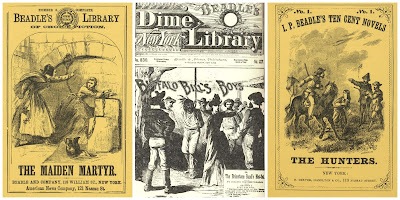
Initially published around the time of the Civil War, the first dime novels were immensely popular. These sensational stories were full of romance and adventure and became wildly popular in both the United States and in England, where they were dubbed "penny dreadfuls". 

Dime novels typically told the dramatic adventure stories of a single hero or heroine who often found himself or herself in the midst of a moral dilemma. They were ethically sound, endorsing good character, and strong moral values, with the hero/heroine choosing virtue over vice.

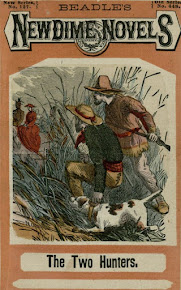
The storylines were simple and told in in language that brought to mind concrete pictures and people for the readers. The books were simple in appearance, bound in inexpensive paper with brightly illustrated covers, easy to carry, and easy to pass around. Though the subject matter of the novels included detectives, the military, chaste romance, and even early science fiction, it was the Western dime novel that dominated the market.

In the beginning, these stories were about the American Indians, but when the Indians were forced onto reservations, the public's fascination with them began to fade. Consequently, the novels focused on cowboys in the Wild West, outlaws and bandits, and train robbers. 

In Victorian England, "penny dreadfuls" were written in the macabre Gothic tradition to frighten and thrill readers.


Dime novel stories would often feature a recurring hero such as Buffalo Bill, Deadwood Dick, Buckskin Sam, or Roving Joe. The printing house could then establish a series and garner a following for these heroes. These heroes were, of course, packaged in a fast-paced adventure story often described as
"blood and thunder". 

First issued by the New York printing firm of Irwin and Erasmus Beadle and Robert Adams, the dime novels were an immediate success.  Between 1860 and 1865 alone, Beadle and Adams published more than five million dime novels. During this time, the Civil War made soldiers a prime audience for the publishers who produced books that catered to the men needing a light diversion during the boredom that often came with camp life.
Writing these stories was a lucrative business for many late 19th century authors. A well-established author could earn up to $1,000 per story; a lesser established author could expect close to $50 per story. One such author, Prentiss Ingraham achieved success and fame as an author of the "Buffalo Bill" series. By his own account he penned 600 novels by 1900.

Another major publishing house, Street and Smith, viewed fiction as a commodity, and editors had strict authority over the authors' works. Each author was allowed limited room for creativity and was required to follow a specific formula in the plot lines and writing style. No wonder authors like Horatio Alger, Upton Sinclair, and Jack London wrote for Street and Smith under pen names!


However, not all authors wrote under pen names to save their reputations. Many authors were writers who were often journalists, teachers, or clerks simply looking to make a bit more money to supplement their current occupations. With the invention of the typewriter, authors were able to churn out stories at an unbelievable rate. One author, Frederic Marmaduke Van Rensselaer Dey, the creator of street-savvy detective Nick Carter, was rumored to put out 25,000 words every week for almost twenty years!
 
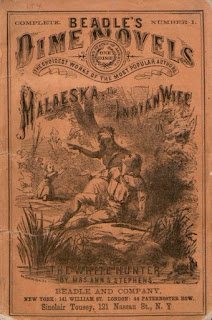
Although not as numerous as their male counterparts, female authors also found success in the dime novel market. The most notable among these was Ann S. Stephens. In 1860, she authored the very first Beadle's Dime Novel, "Malaeska: The Indian Wife of the White Hunter".


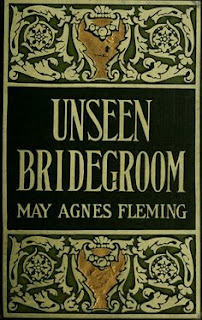
Bertha Clay, Geraldine Fleming, and Laura Libbey were among the most prominent female authors who penned stories about the pioneers, sensational murder mysteries, and society romances aimed at a young, working, middle-class audience. All for Love of a Fair Face, The Story of a Wedding Ring, A Charity Girl, The Unseen Bridegroom, and Only a Mechanic's Daughter were among the most popular romance novels enjoyed by girls and women, and surprisingly by many men.


The dime novel craze heavily influenced pulp fiction magazines introduced in the 1890s. Rising postal rates may have caused a decline in the publication of the dime novels, but the content material and sentiment behind the works continue to influence publications even today.