Showing posts with label railroads. Show all posts

Sunday, May 8, 2022

THE GREAT DAKOTA BOOMS

When my most recent heroine protests to the Dakota settler who wants to marry her,  "but will you respect me and my beliefs?" he protests that he will.  He explains the cruel experiences his family endured elsewhere finding work. (They arrived, like many others, starving and without experience, from Galway, Ireland.)  He, though, had persevered, proved up his land, and was now able offer her a good home. 


Jake, my hero, in need of a wife

The population of Dakota (from the official census in 1860) was 4,837, but immigrants going West sometimes came northward, swelling the population of Dakota to 11,776 in 1870.

If Jake's family had settled in Dakota, the boys would have found work as  miners, even as waves of immigrants poured into the Black Hills (1874).  Suddenly, Deadwood changed to a large, bustling city, one of the largest in the area.


The Black Hills


90% of immigrants to Dakota were English-speakers, though they'd had little work in Ireland, or even in England. Once relocated to Dakota, their experience grew and their skills were honored.  Cornish and Irish miners, especially, were sought after.

 Miners were often chosen for top-ranking jobs when they spoke English, being able to direct other workers underground.  The British had a different situation in Dakota, with sympathetic help coming from a wealthy independent family.  The concept was to help other British people become prosperous 'Gentlemen farmers', and the aid included Dakota farmers and hands-on experts working with newcomers.

But Scandinavian immigrants were the largest numbers to Dakota, often coming in groups.  The census of these early 'waves' of Northern European immigration began in 1890, with  Norwegians listed as bringing the most people:  19,275.  Germans and others from the areas near Germany brought a slightly fewer number of people, with 18,188.  During the Dakota Boom, one European family was so enchanted with Dakota that they relocated!


Medora, Marquise de Mora

The Dakota Booms lasted roughly from 1873 -- after the Panic of 1873  had abated -- to 1890, and the boom suddenly stopped, when a great drought hit the plains. 


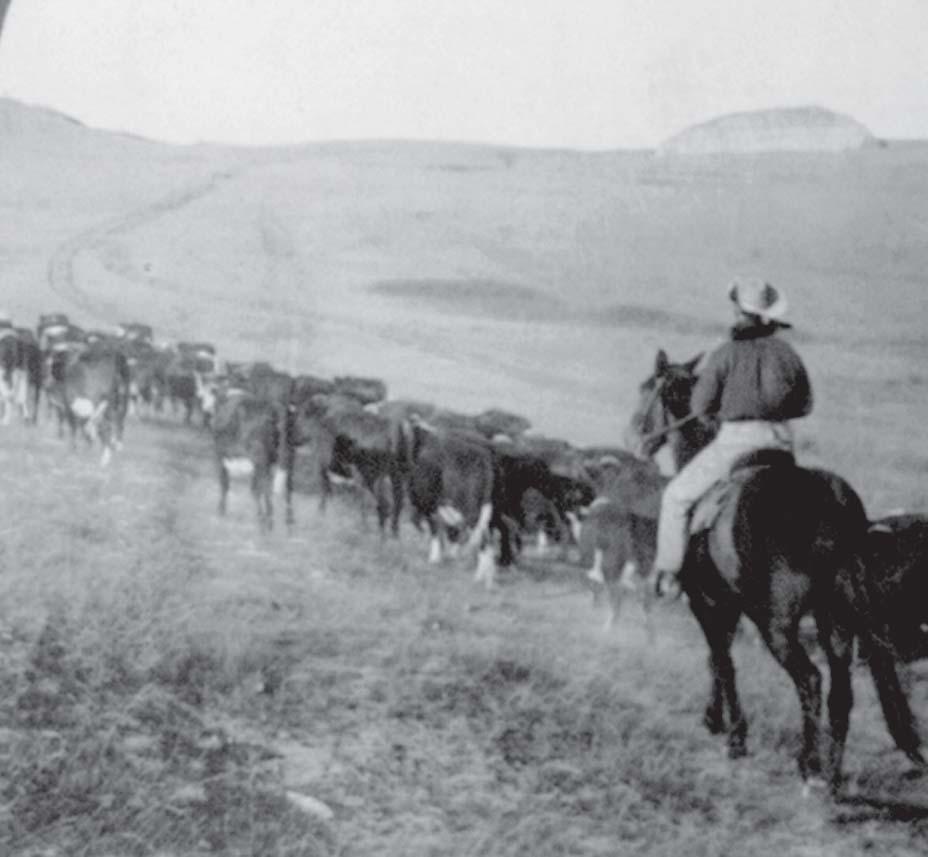
People with farming skills found work in the Dakotas as sheep herders and cowboys when Dakota was 'discovered' as cattle country.

The Homestead Act of 1862 had little influence.


Cowboys and hands camp in the Badlands

But the boom was cemented by the railroads.  First, the eastern areas were drenched with trains, then the smaller communities were reached.  Sources say that the railroad companies were tremendously rich, and had knowledge of where depots would be located.  Nonetheless, many people found jobs laying and maintaining those tracks.

Bismark rails across the Missouri

285 towns were platted during those years, and 135 had railroad a railroad terminus.


Prosperous Deadwood 1876


The Drought of 1890 that ended the Dakota Boom

One North Dakota college states that booms have continued since then, encouraging the population to swell (it's close to 700,000 now). 


Tuesday, April 26, 2022

HOW WINDMILLS CHANGED THE WEST

By Caroline Clemmons

I love both windmills and sunsets. Although they’re difficult to find now, I love the old wooden frame style best. I love the song the windmill sings during a breezy day or evening. With the windows open, the sound is a lullaby at bedtime. Don’t get me wrong, I love modern conveniences, but they’re a trade-off. We lose something with each part of our past that disappears.


Over 80,000 windmills are estimated to be working now in Texas, the state in which I live. You can’t drive on any road without seeing them in the distance. They are of particular service to ranchers in the arid regions. Land that once was almost useless to ranchers became valuable once windmills were erected. The windmill has come to be one of the symbols of ranching and cowboys. Once I started researching them, I was surprised the type I have come to love was not as old as I’d suspected.

Before the introduction of windmills to the West, inhabitable land was confined to areas where a constant water supply was available. There was no way for vast areas to be settled without a life-giving supply of water. The coming of the windmill made it possible to pump water from beneath the ground, and soon whole new areas were opened up to settlers. The first windmills were of the European style, built by Dutch and German immigrants for grinding meal and powering light industry. What settlers needed most, however, was a windmill that pumped water.

Because of its bulk and need for constant attention, the European windmill was impractical for this purpose. The solution to this problem came in 1854, when Daniel Halladay (Halady or Halliday) built the first American windmill in Ellington, Connecticut. He added to his mill a vane, or "tail," as it was called by cowhands, that functioned to direct the wheel into the wind. The wheel was a circle of wood slats radiating from a horizontal shaft and set at angles to the wind, designed so that centrifugal force would slow it in high winds; thus, the machine was self-regulating and operated unattended. Its simple direct-stroke energy converter consisted of only a shaft and a small fly wheel to which the sucker rod was pinned. This compact mechanism was mounted on a four-legged wooden tower that could be constructed over a well in one day.

Railroad companies immediately recognized windmills as an inexpensive means of providing water for steam engines and for attracting settlers to semi-arid regions through which they planned to lay track. By 1873 the windmill had become an important supplier of water for railways, small towns where there were no public water systems, and small farms. Are you old enough to remember that old television show, Petticoat Junction?


Many of the very early mills were crude, inefficient, homemade contraptions. One of the popular makeshift mills was a wagon wheel with slats nailed around it to catch the wind, mounted on half an axle. The axle was fastened securely to a post erected beside the well. A sucker rod was pinned to the edge of the hub. It was stationary and worked only when the wind blew in the right direction. The windmills used later on the big ranches were the more dependable factory-made windmills.

Windmills moved to ranches with the use of barbed wire in the late 1870s. At first the water holes, springs, creeks, and rivers were fenced, so that the back lands had no access to water. In the midst of the fence cutting and fighting, some ranchers began drilling wells and experimenting with windmills. Most of these experiments were unsuccessful, however, due to lack of knowledge concerning the proper size of the windmill in relation to the depth and diameter of the well. One of the earliest successful experiments was made eight miles north of Eldorado, in Schleicher County, Texas by Christopher C. Doty, a nomadic sheepman. Doty moved his flock into that area and found abundant water in shallow wells. By 1882, however, a drought had dried his wells; he ordered a drilling rig from Fort Scott, Arkansas, bored a fifty-two-foot well, and erected a Star windmill, which successfully supplied water for his 4,000 head of stock.


 Watering stock with windmills spread rapidly. Eastern land speculators began buying, fencing, and running stock on the land until it became ripe for colonization. The largest of the Eastern land speculators, the Capitol Syndicate, began using windmills on its XIT in 1887. One of their windmills was believed to be the world's tallest. It was made of wood and was a total height of 132 feet. A historical marker at Littlefield, Texas, marks the site of a replica. The original windmill blew over in 1926. By 1900 the XIT had 335 windmills in operation.

Not until the King Ranch began extensive use of the windmill in 1890 did that the practice begin to spread rapidly over that area. By 1900, windmills were a common sight in the West. Inhabitable land was no longer limited to regions with a natural water supply. The windmill made the most remote areas habitable.

The use of windmills brought about two of the most colorful characters of the West, the driller and the windmiller, and altered the lifestyle of another, the range rider. The driller was usually a loner and seldom seen by anyone except the range rider and windmiller. He followed the fence crews and guessed at where he might find water, then bored wells with his horse-powered drilling rig. When the driller was successful the windmiller followed and set up a mill. Owners of the larger ranches usually employed several windmillers to make continuous rounds, checking and repairing windmills. The windmillers lived in covered wagons and only saw headquarters once or twice a month. The early mills had to be greased twice a week, and this was the range rider's job. He kept a can (or beer bottle) containing grease tied to his saddle. When he rode up to a mill that was squeaking, he would climb it, hold the wheel with a pole until he could mount the platform, and then let the wheel turn while he poured grease over it.

The range rider was always in danger of attacks from swarms of wasps, which hung their clustered cells beneath the windmill's platform; there was the added danger of falling from the tower when such attacks occurred. The windmill industry's shift in 1888 to the back-geared, all-steel mill caused heated debates in livestock and farming circles. Most ranchers and farmers welcomed the new steel windmill because its galvanized wheel and tower held up better in harsh weather; also, its gear system was better able to take advantage of the wind, thus enabling the windmill to run more hours per day. The back-geared mill could also pump deeper and larger-diameter wells. Those who favored the old wood mill argued that the steel mill was more likely to break because of its high speed, that it was not as easily repaired as the wood mill, and that when parts had to be ordered the steel mill might be inoperative for days. Though sales of wood mills continued, they declined steadily, so that by 1912 few were being sold.


The last major development in the windmill came in 1915. A housing that needed to be filled with oil only once a year was built around the mill's gears. This relieved the range rider of his biweekly greasing chores and somewhat diminished the windmiller's job. Because of the dependability of this improved windmill, worries over water shortages were eased for the rancher, farmer, and rural dweller. This mill was the prime supplier of water in rural Texas until 1930, when electric and gasoline pumps began to be widely used.

The Aermotor Windmill Company, which commenced operations in Chicago in 1888, is the nation’s sole remaining full-time manufacturer of water-pumping machines. Windmills remain an important supplier of water for cattlemen. Texas’ King Ranch in the late 1960s kept 262 mills running continuously and 100 complete spares in stock. Stocking spare mills is a common practice among ranchers who depend on the windmill to supply water for cattle in remote pastures. One important ranch worker is the man who rides—or drives—from windmill to windmill lubricating the gears and making repairs.

Because the windmill has been confined for the most part to remote areas, it has become a symbol of a lonely and primitive life, fitting for the pioneers it first served and the cowboys about whom we love to read.


Wednesday, February 26, 2020

WYOMING MINERS VS. THE RAILROAD


Whatever your opinion of current unions, there was a time in our history that they formed the only protection workers had against corporate greed. Such was the case when the continental railway was in its infancy. Unfortunately, the disagreement didn’t end well.

Coal mines were established wherever coal was available. Locomotives required a great deal of coal to fuel the steam engines. I always think of West Virginia as the center for coal production, but there are coal mines across the United States (Including North Central Texas where I live). Not only did the coal fuel the steam engines, it was transported and sold to cities across the rail line for home and corporate use.  If you’ve been stuck at a rail crossing and watched a long freight train go by, no doubt you saw cars heaped with coal.


During the Industrial Revolution in the 18th and 19th centuries, coal became the dominant worldwide energy source. In Wyoming, as in other places with growing industry, coal was cheap and abundant. It was much easier to mine coal than to cut wood for fuel. Hotter coal fires brought major changes in the metal industries. Demand grew for the products of the new technologies fueled by coal. Converting coal into clean natural gas was also first considered at this time; cities such as Boston used large ovens to turn coal into gas that fueled streetlights and lamps in homes.
In the second half of the 19th century, more uses for coal were discovered. Civil War weapons factories converted to coal. By 1875, coke, a hotter fuel refined from coal, replaced charcoal as the primary fuel for iron blast furnaces used to make steel. Smith’s Fork in what is now Lincoln County, a long-time trading post for trappers and Indians, changed its name to Cokeville because of large deposits of coke-suitable coal nearby.

According to Chamois L. Anderson in an article for the Wyoming State Historical Society, commercial mining for coal in Wyoming began with the arrival of the Union Pacific Railroad in 1867. Coal was used to fuel steam engines to power locomotives. It was the primary source of fuel for trains until diesel engines replaced the locomotives in the mid-20th century. The U.P.’s route across what soon became Wyoming Territory depended on two main factors, topography and plentiful coal. The route connected the major mines of Carbon, Rock Springs, and Almy, Wyoming, near Evanston.

The first mines were owned by the Wyoming Coal and Mining Company, which leased the land from the railroad. The company mined the coal and sold it to the railroad for a profit. In 1874, the government terminated the agreement between the two companies. Consequently, the Union Pacific Coal Company was formed as the Union Pacific Coal Department by the Union Pacific Railroad, with the railroad effectively taking over the mines. U.P. Coal Company then had a monopoly on coal production in the territory and used the coal primarily for its railroad operations.

Coal mining at Rock Springs, 140 miles west of Carbon, also began in the late 1860s to supply coal to the U.P. During the next century, more than 100 million tons of coal came from Rock Springs mines.
But here’s where Union Pacific Coal became especially greedy. U.P. Coal Company officials held a tight rein on worker pay. In 1875, company executives cut the work rate paid to miners by one-fifth, but kept charging the same coal prices to its buyers. Imagine suddenly being told your income—which was barely a living wage in the first place—was reduced by twenty percent. Yikes! 
Coal mining is hard work with numerous dangers. Explosions in the mines are deadly. Working in the mine often causes black lung. One of my favorite authors, Louis L'Amour, once wrote he had black lung from the short time he worked in a coal mine as a boy. 
When the miners went on strike, company officials replaced them with Chinese laborers who worked for less. The Chinese were imported and merely wanted to earn a living. That they were working in places formerly manned by miners of European and British descent created hatred against the Chinese as well as against the railroad.  This led to a long series of strikes, and eventually to murder.
In 1885, the Rock Springs Massacre made national headlines. The miners’ resentment of the U.P. Coal Company and its pay cuts, combined with rumors that Colorado miners were to receive pay raises, resulted in a major uprising. Members of a union called the Knights of Labor burned the homes of 74 Chinese families, and 28 people were killed. The Chinese fled toward Green River and U.P. trainmen rescued them as they fled along the tracks. Federal troops were called in to restore order and eventually the Chinese returned to work. I didn’t learn what happened to the striking miners.

In my book, A BRIDE FOR LUKE, I deal with such resentment and a similar situation. Wyoming Sheriff Luke Sullivan is charged with avoiding an incident like this. I used a fictional railroad name and a fictional town. However, I believe I fairly represented the miners’ complaints in having my hero character diffuse the situation. I hope you’ll read this book and let me know whether or not you agree.


Blurb for A BRIDE FOR LUKE, Proxy Brides Series book 36

Each is struggling to build a better life . . .
Two strong-willed people are bound to clash . . .
Danger forces them to focus on what is at stake . . .

Maeve Kelly came to America for a better life but found only signs that said No Irish Need Apply. When the cousin with whom she is staying leaves Boston, Maeve is left desperate. Her job at the laundry doesn’t pay enough for her to survive alone. Her friend suggests a way out, Maeve resists but finally accepts. What else can she do?

Sheriff Luke Sullivan is proud of his accomplishments. Known for his strong principles, he is admired and well-respected in the community. When he learns his mother and aunt have schemed to get him a proxy bride he’s furious. If he’d wanted a wife he would have found one. He respects and loves his mother and finally agrees to the marriage. Before he and his bride can adjust to one another, Luke is caught in the middle of an explosive situation between striking miners and the railroad.

Threats against Luke by each side have him fearing for the safety of his wife, mother, and aunt. He must resolve the strike to protect his family and many others. Will he succeed in time to save lives?

Here’s an excerpt:
He pushed back from the table. “How can I keep you safe if you don’t follow orders? Do you understand?”
She put her hands on her hips. “Oh, so it’s orders you’re giving me, is it? Weel, Lucas Brady Sullivan, I take orders from no man. Do you understand?”
“Mae, you’re making something from nothing.” He tapped his chest. “I’m your husband. You promised to obey me when we wed.”
That brought her temper down a notch. She had promised and Father Patrick had lectured her on the husband being the head of the household. “Mayhap I did, but not high handed orders.”
“And what would you consider obeying? You want a written invitation to remain home? Shall I show you the other wanted poster and suggest you avoid that man? You’ve no idea what these other men look like so how would you know if they were walking down the street or shopping in the Mercantile? How can you know who’s an upstanding citizen and who’s a stranger in town? You were in front of the Mercantile when Higgins accosted you.”  
She turned toward the sink, hands on her face to hide her shame. “Aye, ‘tis sorry I am. The worry of what’s going to happen has me in bits. I can’t get out of my mind the fact someone may shoot at you from an ambush.”
He wrapped his arms around her. “Don’t fret, honey. I’m doing my best to keep this situation from becoming violent. I can’t focus on my job if I’m worried about where you are and what you’re doing and who’s around you.”
She leaned her head against his broad chest. His strong heartbeat reassured her. “I see the way I was wrong. ‘Twas my mistake and ‘tis sorry I am.”
She looked up at him. “But, for us to have a peaceful marriage you’d best consider making requests instead of giving orders.”

Here’s the Universal Amazon link: http://mybook.to/Maeve
It’s available in e-book and print and is free in KU.

Reviews have been excellent. I hope you’ll read and enjoy it. 

Saturday, February 10, 2018

TRAINS by E. Ayers


Say gauge when talking about trains and I immediately think about those cute trains that people set up at Christmas. As a child, I become enamored with those displays. I had an uncle that often started the beginning of October to set up the display so that it would be ready by Dec. He kept it up through Jan and it took another two months to pack away. I used to beg my parents to go see that aunt and uncle as often as possible over the holidays and they lived several hours away in another state. I was hooked on what was once considered a child's toy.
I knew that those toy trains came in "gauges" and that meant size, but I didn't know that gauge referred to the size of the tracks, I thought it was the size of the little trains.
In the 1800's trains underwent some major changes. It had nothing to do with the way they looked or their engines, although during that time we made major strides in producing faster and more efficient engines. I'm talking about how they got from here to there - their tracks!
One of the things that started the changes was the fact that we "imported" people who built trains in England. I'll skip the fact that the original tracks were wood, then wood topped with strips of metal, and go right to the forged metal tracks.
How big did the tracks need to be and who decided such things? The men who came here from England were familiar with the train cars that were used in the mines. Four foot, eight and a half inches seemed to be the standard gauge for the mines, and to keep things seamless, the tracks that were built to move mined minerals were kept the same width to move those cars full of coal, etc directly to the cities. That was easier than moving the minerals by hand to the next train that would cart them away from the mines. It was as labor and time saving back then as it would be today. So why would anyone change that? There seems to be some ideas that those measurements matched the width of two horses' behinds or the ruts made by the old Roman carts. Seems that is an erroneous belief, but I don't think it's been totally proven fact or fiction.
Today's Trains, CSX
In America, the concept was to use many British locomotives, except they soon discovered it was cheaper and more efficient for us to build our own. The other thing that was happening in America, was that many trains were built to connect bodies of water, usually canals, which had been the primary way to move supplies from place to place. It didn't matter if the train tracks, or what is known as gauge, matched or not. Lots of rail companies existed, each with their own gauge, each serving a small area of land. They built what was needed for their area and what they were transporting.
Train gauges varied because nothing was standard and because the gauges made a difference in a variety of things. Even to this day there are differences depending on the train and how it is used. High-speed trains don't need as much track width. That means less real estate. But those super wide tracks, about 8 feet are still used in some parts of the world today. They can hold heavy loads, they are very stable, and the trains are much slower.
But back in the North America, trains tracks varied from 3 feet to 6 feet. Whenever a train encountered another company's rails that were a different size, the loads had to be transferred by hand. And during the Civil War there were over 20 rail companies, each with their own gauge in the United States.
It was the Baltimore & Ohio and the Boston & Albany RRs that used the 4 feet, 8 1/2 inches. These large companies serviced much of the northeast. Surprisingly the Pennsylvania RR used a 4 feet, 9inch track that was compatible. (That thought still scares me a little bit because I would think the train wouldn't be as stable.)
The Erie and the Lackawanna railroads were very important and ran on a 6 foot, 0 inch gauge. The Canadian railroads ran on a 5 foot, 6 inch rails mostly for military transport.
But the South tended to use broad gauges, because they were moving heavy agricultural products and related items. That five-foot track extended between Norfolk and Richmond, and onto Memphis and New Orleans, except it wasn't a full network because it wasn't totally connected.
Along came the Civil War and the North decided that by destroying the supply lines through the South, they could quickly end the war. They were correct. It had devastating consequences through the South and actually affected the North because the North was also dependent on those agricultural products. In a strange and convoluted way, the North actually did the South a favor because it forced the rebuilding of the tracts.
But it was when the war ended and the east needed the grain out of the Midwest that the need for standardization of the rail system became imperative. It was recommended that the rails should be 5 foot because that's what California was, but at the last minute, the decision was made to stick with the gauge of the most important railroads in the east. The decision was made to keep the tracks to 4 feet, 8 1/2 inches.
I'm willing to bet that one of those companies was padding a few senators' pockets. But no matter why or what gauge they used, Congress did something right by standardizing the rails across the USA. Canada followed suit in 1872-1873. By the time the South managed to get their new railroads built to the new standard and the old rails converted, it took a major push that ended on Memorial Day weekend in 1886 with a very big celebration. This standardization also paved the way for our transcontinental railroad. It is the same gauge that we use today.
But wait, times change! Have you ever driven on a city road and discovered you are sharing the road with a train? It's a little unnerving, or at least it was for me. I saw the tracks and I'm thinking trolley tracks. No. It's a train! Lightweight trains for moving people in and out of congested city areas are often using electrified trains with narrow tracks. It's less real estate used and it works. Of course for someone like me who is used to small town traffic and avoids the "big" city as much as possible, discovering that a train is riding beside you or coming "towards" you is enough to make me a little white-knuckled and send my heart into a sprint. Smaller gauge tracks with lightweight trains for passengers seem to be the way of the future. But for now, we are still moving products, minerals, raw material, and most people on tracks with a gauge of four feet, eight and one half inches just as we've done almost from the beginning of trains in America, because it's fast, efficient, and very economical.


Saturday, June 10, 2017

Land! by E. Ayers


I've covered tiny things that affected everyday life. So this time I thought maybe I would write about something really BIG that also had a bearing on the lives of those who went west. It was the land itself. Who owned it, what was there, and how it could be settled.
           The land was totally wide-open, raw land, except the government owned the land. (Yes, you could argue that the Am. Indians owned the land, but they believed there was no ownership - it was there for them to use.) A large chunk of our western lands was obtained from France in the Louisiana
Purchase of 1803. Most of the land beyond that portion was owned by Spain. Eventually we owned what is now known as the contiguous United States. I'd say it was a slow process, but not really. A hundred nine years, after the Louisiana Purchase, to create the 48 States is relativity fast when you look at history. The land after being purchased was surveyed and marked in neat squares creating boroughs or counties. (Well, until the land wasn't as easily divided because of mountains, etc., and by then, the government was running out of money to have the land surveyed.)
Quite a bit changed in the course of those years, and we needed a faster way to travel to the west. The government decided that we needed to build railroads, they began to divide the land based on where they thought the railroads should go. Then that land was allocated and eventually "sold" to the railroads. (Only the surface land and not what was under it.) But to prevent congestion of settlers (don't laugh) along those railroad lines, the government granted the right for the railroads to own the land, but they only owned every other square of land. And the squares were laid like a checkerboard. So, in theory, the railroad owned a square on this side of the track and the government owned the other side of that track, only to switch every few miles.
People moving west, once this land was subdivided, were allowed to homestead on the government squares, but not on the railroad squares. Each checkerboard square was 10 square miles and a square was granted to the railroad for every mile of track they built. Sounds like they were given the squares after they built the tract. Well, maybe in some places, but for the most part it was already laid out and allocated before the railroad tracks were started.
The government made some decisions about where the tracks should go, which size rails to use (that determined the type of locomotive and cars on those tracks), what steel to use, how steep the grades should be, and the number of degrees a curve could have. In today's world, it sounds sensible, but back then it forced standardization because wheels and tracks were different, and provided some of the first safety features. Then railroads were "loaned" money to build the tracks. The more difficult it would be to lay the track through areas of land where there were mountains, rivers, or hills, the more money they were given. Speculation on railroads became a major investment opportunity because in theory the railroads could make huge profits. People made fortunes or lost them. But these tracks often weren't constructed as quickly as our government thought they would be. Many railroad companies went belly-up because the cost for them to lay the tracks far exceeded any estimates.
There are tons of early maps showing railroads cross-crossing the land. What they really show is what is supposed to be there. Since the railroad wanted to build an additional rail line through Wyoming, they were offered these lands in a series of checkerboard squares. Surprise! That railroad wasn't built until well into the 1900's because it wasn't worthwhile for the railroad to actually spend the money to build it. The rail line was started several times and abandoned several times. But the railroad had the land and they sold that land to raise the money to pay the government back for that amazing loan. (Are you confused yet?)
Honestly I was so confused that it took a historian from BNSF to straighten it out for me. But I was looking at a map with the railroad on it. And the Internet was populated with the old maps showing that railroad. How could it not be there? It was merely proposed, and the land granted to the railroad much like our right-of-way today. (That right-of-way might look like a road on the map, but it's not really anything and might have trees growing in the center of it.)
We made the whole situation worse when the Yankees decided to squelch the Rebel forces during the Civil War by destroying the railroad tracks in the South. Some of those tracks took forever to rebuild, while others were quickly replaced after the War. So in the late 1860's, it looked like the railroads existed on maps, but they didn't. Money was spent on the railroads that had been destroyed during the War, thus taking away money from company funds that had been allotted to build railroads out west.
It took a large number of laborers to build these lines. These guys worked horrible hours and under even worse conditions. Yes, the Chinese, working west to east, laid a great deal of the tracks, but so did plenty of other people. Why? Because many were new immigrants often chasing the American Dream and many laborers couldn’t find work where they had been living. It was honest work with what was considered good wages for those days. Okay, it was lousy pay for a dangerous job with long hours, and they were doing it in horrendous heat and freezing cold. But they did it. It was a job and they were happy to have it. They lived in moveable tent cities with only basic amenities. As companies folded, failed, or whatever, many of these workers stayed where they were and homesteaded, because they were in the middle of nowhere with no funds.
The Homestead Act of 1860 gave the homesteader 160 acres. That really wasn't enough for people to raise cattle, so they turned them loose on government property and allowed them to graze freely during the summer. If someone had enough money, they could purchase a "square" This was actually a much smaller square than those railroad checkerboard squares, those railroad squares are 10 miles squared, and a simple square within that larger square is 1 mile by 1 mile. A square mile is 640 acres. So the homesteader of 160 acres was only homesteading a fourth of that one-square mile.
Many homesteaders were wise to the system and homesteaded on government land with nearby prairie but also next to railroad land. They bought the railroad land for a cheap price, because the railroads were frequently broke and in need of cash flow. Someone with money could take the homestead acreage and purchase quite a few one-mile squares from the railroad giving them a very large chunk of land.
The real kicker here is there was quite a bit of corruption going on in the lawless West, and buying land from the railroads was actually safer than buying land from the government. Frequently, the government really didn't know what they owned. But the railroads tended to keep accurate records. They knew exactly what they owned and where! It took until almost 1910 for the government to begin to settle who owned what. Too many people who bought land from the government had their money stolen by corrupt government agents and the papers were never actually filed with the government. Or they were filed and lost, or a fire wiped out the records. It was a huge mess. And the landowners were forced to prove what they had paid, and what had been homesteaded, including the dates.
The next big question is how did they know how much land they were homesteading? There weren't too many surveyors out west and those that were worked for the railroads. Besides a surveyor would have been expensive and the average homesteader had very little money. They marked the land themselves. They used chains, ten feet long between the first and last link. They started at a spot that was identifiable, often a tree or a large rock but frequently they started at a surveyor's mark on the corner of one of those county squares. They would pound the first stake into the ground, hook the chain over it, and stretch it out. They put a stake where the chain ended. Without removing that second stake they would swing the chain and drop the next stake. They had to pound a fence post into the hole that was made with the stake. And so it went for the perimeter of their 160 acres. It was a long, hard job, and they had to keep the line straight. (That's geometry, and I'm not going to explain it. I also seriously doubt that many settlers went to that much trouble. They merely sighted the fence line.)
Homesteading was fraught with problems beyond trying to create a house out of nothing, having clean water, and growing crops where there were none. We are rather spoiled today. We call the realtor, say we like that piece of property, a few people wave magic wands, and several weeks later, we receive a copy of the deed. Someone else has already surveyed the land, guaranteed that the house is sound, and the property actually has a clean title. I'm so glad I don't have to go out there with a mallet, a chain, a few spikes, and a shovel.

Ebook on pre-order for 99c

A Rancher's Request

Zadie Larkford, recently graduated from an Eastern women’s college, lives a quiet life in her hometown of Franklin, Virginia. Content to spend her days painting by the river and watching her friends marry, she is shocked to learn that her father has promised her hand in marriage to a complete stranger. Ultimately unable to disobey, she leaves her childhood home to travel – unaccompanied – to Creed’s Crossing, Wyoming to meet her betrothed.
Raised in a seafaring community in North Carolina, Duncan Lorde made the decision to leave his father’s prosperous fishing venture to make a life for himself in the west. Determined to succeed in the treacherous and unpredictable pursuit of cattle ranching, he has land, a small cabin, and a herd. All he needs now is a wife–a good woman who will cook, clean, and provide him with strong sons to help on the ranch. When Zadie arrives in Creed’s Crossing, the young daughter of his father’s old friend is far more independent and strong-willed than he expected.
The young would-be couple has barely begun to forge a bond when the forces of man and nature collide, impeding Duncan and Zadie as they struggle to fulfill … A Rancher’s Request.