Showing posts with label "Marisa Masterson". Show all posts

Thursday, September 24, 2020

A RURAL BALLROOM by Marisa Masterson

 When I think of regency novels, a ballroom comes to mind. Wealthy women creating a rainbow as they twirl past on the parquet dance floor. Men in fine black coats and crisp white shirts. In the background an orchestra plays a waltz, perhaps by Strauss.


A beautiful scene. No wonder the poorer classes wanted to imitate the experience. Because of that, the tradition of barn dances was born in Scotland in the nineteenth century. With the high number of immigrants coming to the United States during the last half of that century, this imitation of the celebrations amongst the wealthy classes came along with Scottish newcomers.

For some today, mention of a barn dance brings to mind a hillbilly with a corn cob pipe blowing on a moonshine jug and an equally hick man playing a harmonica. I only have to watch something like Looney Tunes to see this.

https://www.youtube.com/watch?v=kP-FfzjeuVY&ab_channel=MarkBlair


Actually, that image is far from the truth. Since barn dances were meant to bring the ballroom to the rural setting as well as to be celebrations, rural folk would change into their best clothes. A caller would dominate the night to guide dancers through the steps of songs. The most talented musicians available played, filling the night with popular tunes as well as commonly recognized folk songs.


Growing up on a farm, I've wondered where the people actually found room in a barn to dance. Picture a typical barn or stable. Stalls dominate the space. Perhaps a hay mow could be used, but if the people held the dance in honor of the harvest, that would be filled. 

From what I can tell, any open space in a barn was used. So, as a farm girl, I image couples dancing down the aisle with the stalls on each side. I can see why they would take advantage of a brand new barn with it's empty space to have a dance. 

Many barn dances were done in sets of people. That makes sense if they are perhaps pushed to find space to dance in an empty stall.


Whether to celebrate a harvest, a holiday, a wedding, or a barn raising, the idea of a barn dance continues in our cultural memory. When I think of the pioneers and the westward expansion, I always imagine communities celebrating with this type of party. So, grab your partner, join my set, and dance in a square with me while I celebrate September and the beginning of harvest.


Want more barn dance? Here's one of my books with a key scene happening at a barn dance.


With a new name, Grace Winkelman fled west to teach in a small town. How could she anticipate her past following her that far?

Errol Marsden wandered for years, taking his cobbler's wagon from town to town fixing shoes. His heart broke with the sudden death of his young wife almost four years before. He's shocked to glimpse her on a street in Fort Bridger and follows her to Belle.

Will he get the answers he needs to understand why she faked her death? When the couple is drawn into the mystery surrounding the disappearance of Grace's aunt, will they work together or let old lies stand in their way?


This is a sweet, American western historical romance and mystery. 


Friday, July 24, 2020

A COWBOY CHRISTMAS--THE RODEO by Marisa Masterson


It's Christmas in July and the gate opens. Out comes a wildly bucking horse with the man determined to stay in the saddle. Six seconds, seven, eight! He stayed on the required eight seconds.


That's a common enough scene at a rodeo. Consider, though, how did we get our modern rodeo?

Small communities in Texas would come together to celebrate the Fourth of July. Bronc riding and showing off roping skills became a part of those celebrations. Cowboys from different ranches could compete to see who was the best.

In the last quarter of the nineteenth century, Wild west shows were very popular and featured some of what became a part of any rodeo. Cowboys signed on to show off their riding and roping skills. The public loved it.


The first rodeo recorded as awarding prizes was held in Pecos, Texas in 1883. The first one to charge admission is thought to be in Prescott, Arizona. Regardless of where these things happened, by the 1890, rodeos became annual events in many places.

With their popularity, a huge problem rose. Many of the large rodeos billed themselves as "World Championship Rodeo". Just imagine how many world champions there were in one year alone! This is one of the reasons that several rodeo committees formed the Rodeo Association of America in 1929. It was the start at trying to regulate the celebration and change the rodeo from a spectacle into the sport that it is today.

But why Christmas in July or Cowboy Christmas? I'm not sure. I do know that ten days in early July are packed with more rodeos than a person could hope to attend. It's definitely an exciting time. The contestants have the chance to win some serious money, though most spend more to be there than they win. Still, maybe the chance of winning the payout is why it's like Christmas to them.


Sadly, people couldn't head out to rodeos this year. Long standing traditions gave way to health and safety concerns, and the annual rodeo became one more victim in this terrible pandemic.

I hope that isn't a sign that Santa plans to stay home on December 24...

(I want to direct you to a fantastic article for more information on the background of rodeos--https://tshaonline.org/handbook/online/articles/llr01#.)


Here's my own spin on Christmas in July, available at a special pre-order price. Now, it's $.99, but the price goes up to $2.99 on July 31...


A hula dancer—seriously? And blonde to boot!

Why did someone send JT Kirkwood a hula dancer ornament? This was July, not even close to December and the season for a Christmas tree. The note promised that the dancer was real and waiting for him. No matter how ridiculous this seemed, JT looked at the ornament and felt compelled to find the woman mentioned in the note. Too bad his father’s accident prevents him from looking.

A luau—seriously? With their town of Oak Grove hit by layoffs, why did Bonnie Miller’s mother insist that they throw a city-wide party at the small strip mall that housed Bonnie’s restaurant. Still, her mother had fantastic insight into what the public wanted, so Bonnie went along with it. She even danced the hula for the crowd, and saw the man of her dreams watching.

Serenaded by Elvis, this couple easily falls in love. But is love at first sight enough to overcome the distance that separates the couple when JT has to return to his job in another town far from Oak Grove? He loves his home and job, but Bonnie is fiercely loyal to hers as well.

Mrs. Claus is discovering that not even the magic of a compelling ornament or the lyrical sounds of Elvis will be enough to bring about this couple’s happily ever. Which one will compromise? Will each say Aloha--meaning goodbye?

Wednesday, June 24, 2020

MAKING LEMONADE FROM LEMONS...OR HOW HANGER GOT A NEW LEG by Marisa Masterson


Growing up, my parents, my teachers, and even television shows taught me that the United States was built on a can-do attitude. People took a challenge or a problem and found a way to solve it. Like the old saw, they made lemonade from lemons.


An inspiring example of this can be seen in the story of James Hanger. Without the loss and challenges that came his way, countless persons wouldn't have benefitted. Read on, and I'll reveal how this American changed the world.

In 1861, Hanger had been training to be an engineer. The American Civil War changed his plans. The eighteen-year-old enlisted in a cavalry unit in Virginia. Only two days later, a cannonball hit him. A surgeon removed almost all of Hanger's leg, leaving only about seven inches below the hip socket.

This was, in fact, the first amputation of the Civil War. Sixty thousand more would follow, many being fingers or toes rather than the whole limb. Still, many men lost legs like Hanger did. Most of those men were young, with life mostly ahead of them. They would need something more than a peg to stump around on.


Sent home, Hanger retreated to his room. He asked his family to leave him alone. They assumed he'd sunk into a deep depression. But, James Hanger's mind was occupied with something other than grief.
He created a new above-the-knee prosthesis. One that used rubber bumpers and could bend better, more like a real joint.


Hanger created a new field of prosthesis. He dedicated his life to providing increasingly better devices to amputees. Later, he said how thankful he was for the loss of his limb. He came to understand that it provided an opportunity to help others and use the training and skill innate to him. This began the design for the modern artificial limb.


On a personal note, I've lived some of that same loss, but in a much smaller way. Almost nine years past, a neurological condition stripped me of my ability to walk normally, to hike, or ride my bike. I was no longer able to teach, retiring after only twenty-two years in the classroom.

The healing process has been long. At one point, I asked, "What can I still do?" After all, I felt sure the Lord wouldn't take my much-loved career and leave me with nothing. This is when the door opened for Christine Sterling Bortner to mentor me as a writer.

Days are rough, often. It's that can-do attitude I was taught as a child and a lot of blessings that keep me going.

Oh, and examples like James Hanger.

The heroine of Massachusetts Bride shows that same can-do attitude. She's left Ireland, needing desperately to send money back to her family in that country. Almost forced into a brothel when she arrives in Boston, Fiona reinvents herself as a maid with the help of a gracious lady. When that same lady asks her to marry a man sunk deep into grief and despair, how can Fiona say no?

The novel focuses on love in 1861. Though there is a war taking place, the everyday life they live on a farm outside Boston and their growing relationship (along with a mystery) is the book's plot. I invent you to check out Fiona's can-do attitude.


Massachusetts, 1861
All’s fair in love and war.


Hardly! Neither war nor love have been kind to Milo Roberts.
He survived a battle no one expected only to have his brother die next to him. Wounded, he lays in a cot and determines to leave war behind, no matter what his abolitionist father says.
Fiona immigrates to the United States after her cousin promises her a job. While aboard ship, she worries about the war ramping up in that country. Little does she know danger is much closer than the battlefields.


At the Boston docks, she escapes the trap set for her. When the woman who gave her safety asks Fiona to marry her son, the girl agrees. She longs to live on the farm that will be his when they marry.
If only the husband wasn’t so tempting.


The battle in this couple's farm house involves unfulfilled love and the tormenting nightmares. What can a man do when his beloved wife prefers the cow’s company? With unrest among the Irish and interference from Fiona’s cousin, will his Irish beauty ever love him?


Sunday, May 24, 2020

FASTEST GUN IN TEXAS by Marisa Masterson

Maybe you've tried channels like Sling or Philo? They offer seven days free just to surf their programing. That's what I was doing when I ran into the fastest shootist Texas ever experienced.

I'm a documentary junky. I love learning. Perhaps that's why I became a teacher. For whatever reason, I ran across this documentary on a man who sent shivers through Texans.

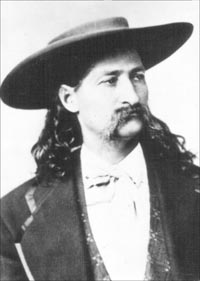
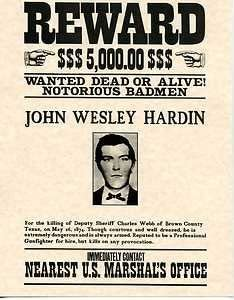
John Wesley Hardin. Mothers used his name as a threat to make their children behave "or Wes would get them." Even Bill Hickok found himself facing the business end of this man's guns. So, exactly who was he?

John Wesley Hardin
Named for the evangelist John Wesley, Hardin was the son of a preacher and grew up in Civil War era Texas. With his father's encouragement, he practiced with the gun until he was a marksman at the age of twelve.

One of the tricks this shootist did to prove himself was to hit playing cards at fifteen paces, never missing. By the end of childhood, the man was deadly and bore a nasty grudge against Yankees and any people of color be they Mexican or African-American.

Maybe that's why he killed his first man when he was only fifteen. The former slave had bested him in a wrestling match. When he encountered the man alone in the woods, he shot him and claimed the man attacked him with a stick. The victim lived long enough to declare that a lie. Hardin ran from his home, fearing arrest.

Cowboys in Kansas
From there, he leaves a trail of dead men. He easily hid amongst a group of cattle drovers taking a heard to Kansas. That's how he eventually met Wild Bill Hickok in Abilene, Kansas. Guns weren't allowed while walking the streets of that town. Typically defiant, Hardin kept his on.

"Wild" Bill Hickok
Hickok confronted the armed cowboy, being the marshal, and demanded he remove the guns, Hardin did so and handed them toward Hickok with the handles first. Before that man could grab them, the shootist flipped them so he held them cocked and pointed close to the famous marshal's face.

This wasn't the first man Hickok talked down to avoid violence. The two went into a saloon and shared a drink bought by the lawman. When they met again another year, Hickok didn't ask the shootist to remove his guns.

That was just the type of man Hardin seemed to be. Showy, cocky, and willing to kill. After he returned to Texas and killed a lawman, Texans had had enough.Many put pressure on the governor to send a new group called the Texas Rangers after the man. With a $5,000 bounty on his head, the governor was confident the man would be caught.

I would think so, considering the amount. It was one more thing Hardin boasted about to people--the size of his bounty! In 1875, that $5,000 was equivalent in purchasing power to about $116,540 in 2020.

Someone was willing to risk Hardin's guns to claim it, and the rangers caught the man in a railroad car. Not a very glamorous life!

Here's where it gets interesting for me. While Hardin sat in Hunstville Prison, he wrote his autobiography. This is why historians view him as a man with no conscience. He detailed murders, excused them, and vowed he felt no remorse. He was the faster gun and that was all that mattered.

After serving seventeen years, the murderer went free, a supposedly changed man. While in prison, he'd earned a law degree and tried to set up a law practice. Surprise, surprise, but people were too afraid of him to use his services.

He eventually ended up in El Paso where he was shot from behind and killed. It didn't matter how fast he was since he hadn't guarded his back.

One last note--the word shootist. I used that rather than gunslinger to be authentic. Amazingly, the word gunslinger was invented in the 1920's by author Zane Grey. Men in the old west never used it, calling men like Hardin shootists. Very accurate for Hardin, I think!


If you enjoy action, romance, and adventure, please take a look at Ruby's Risk. With our 380,000 pages read on Kindle Unlimited, readers are falling in love with this book.


A man might homestead, but it takes a woman to turn that place into a home! This matchmaker will settle the West one couple at a time.

Under suspicion after his wife’s murder, Elias Kline knows he has to leave Mills Bluff. Learning a lynch mob is planning to kill him, he slips away from town. Taking only his smithy tools and his young son, he chooses a new name—Ezra King. Heading west seems a fine way to start over, but he’ll need a wife to raise his son and cook his meals. One sent by an agency shouldn’t expect love, he decides.

A matchmaker convinces lonely Ruby Hastings to take a risk on Ezra King. After all, the man is helping fulfill the nation's destiny of settling the west. Reading the man’s letter, Ruby aches for the widower's little boy and seizes on this chance to be a mama to him. After all, with a brother on the run from the law and a newly married sister, her siblings no longer need Ruby and this motherless boy does.

It should be a convenient arrangement. What happens when the mail-order wife begins to push past the walls guarding Elias’ heart, challenging him spiritually and emotionally? When danger follows him from Mills Bluff, will Elias be able to keep his family together?

Friday, April 24, 2020

FROM FT. SUMTER TO SODDIES by Marisa Masterson

Sometimes I can't help but look back on terrible events in history and marvel at the events or advancement they trigger.

The Confederate attack on Fort Sumter was just such an event. Without it, would adventurous men have been able or willing to claim 160 acres just by living on it for five years? I'm really not sure.

To explain, I need to start by mentioning that the majority of the United States Army was stationed west of the Mississippi in 1861. Numerous forts existed to protect both settlers and mail delivery. When Fort Sumter is fired on, troops are moved back east. After all, 97% of the population still lived in the eastern part of the U. S. and needed to be kept safe.

So, with states leaving the Union, how to guarantee that Confederate states didn't grab for land in the West? A painting and The Homestead Act were the answers to that.

This act was aimed at freeing loyal citizens, and those seeking citizenship, from poverty. Also, officials hoped to relieve overcrowding in the cities. So many immigrants had arrived. Since many had backgrounds in farming, it made sense to imclude them in the offer.

At the same time as the Homestead Act, a German artist living in New York was hired by the government to romantize western expansion even as soldiers left homesteaders in the west unprotected. His name was Emmanuel Leutze, and he titled his mural Westward the Cournse of Empire Takes Its Way.


Free land for loyalty--what a bargain. Encouraged by Leutze's mural, families went west and settled land. They kept it protected for the Union. Volunteers would man forts in the west, especially those who were settling land because of this Homestead Act. These were volunteers toughened by hardships and interested in dominating or eliminating the native peoples in the western part of the United States. They truly acted out the title of Leutze's painting with empire forcing its will through these pioneer militia volunteers.

All because Fort Sumter was attacked...


“A great cast of characters, including the secondary characters and a fast-paced plot kept this story interesting to the end. This one is a must-read.”—Amazon Review


True love picked a terrible time to grab Ginger Snap’s heart. She saw the man she would love forever. He saw a scruffy boy.

From the moment her cruel stepfather cuts Ginger’s braid and forces her into boy’s clothes, she has lived a lie. That lie allows her to inherit a farm, giving her family a comfortable life.
Even so, she longs to escape and be herself again—especially after she meets him.

Theodore Edwards never expected to battle thieves or to be the one who has to stop a land grab that is cheating widows in southern Nebraska. He thought he’d pass a dull year working in a law office. After he caught sight of that lovely redhead skinny dipping, life has been a roller coaster. If only he could find her again instead of always running into her younger brother.

Is love worth dangers he faces to save her from the corrupt sheriff and the gold thieves who are trailing Ginger? 

Friday, January 24, 2020

SO YOU WANNA BE A MARSHAL by Marisa Masterson


The Old West was wild for about seventy years--a long time to go without justice or law enforcement. Good thing President George Washington signed the law in 1789 that allowed for the creation of the United States Marshal Service. Without the federal marshal, the Wild West might have been, well, wilder.

Originally, marshals were charged with executing warrants. From the earliest days, these marshals were allowed to recruit local deputies or even temporary marshals to help them. Morgan and Wyatt Earp as well as "Doc" Holliday were examples of men hired as special deputies. They were made temporary marshals to deal with the Clanton gang in a little shootout that took place at a spot called the O.K. Corral in Tombstone, Arizona.

Wyatt Earp, Bat Masterson, and the Dodge City Peace Commission, 1883
A marshal didn't have to be someone with legal training or a spotless background. Men such as Wyatt Earp could have criminal acts in their past and still serve as a marshal. They simply needed a strong commitment to enforce the law as well as to execute warrants given them by a judge.


Bass Reeves was a man like this. He couldn't read, but he is well-known in history as a sucessful marshal in the Indian Territory. Someone would read the warrant to him which he then memorized. Reeves fearlessness and ability to speak five Native American languages worked in his favor as a marshal.

For my upcoming novel, The Teacher's Star, I used the wording from Bass Reeves Oath of Office (right). A lawman in need of help convinces my heroine to become a temporary marshal--

Delia’s brows flew upward. “So, you knew where I was headed? That’s why you sat by me?”
He gave an abrupt nod and reached into his inside coat pocket. His right fist gripped something tightly as he withdrew it. A piece of paper appeared in his left hand from his outside pocket.
“Swear—”
“You want me to cuss?” Was the man delirious?
“Sign. Like swearing in…to office.” The man thrust the paper toward her as if reaching up to her while he dangled from a cliff.
He wanted her to sign it? Easy enough.
She dug briefly in her oversized reticule and came up with a short pencil. Taking the paper, she filled in her name and the affixed her quick signature in what looked to be the correct spot.
“Read—to me.” He gagged and gripped his belly, face now snowy white.
Sneaking her wire-framed spectacles out of her bag, she slid them quickly up her nose and began to read softly to the suffering man.
“I, Delia Perkins, do solemnly swear that I will faithfully execute all lawful precepts, directed to the Marshal of the United States for the territory of Wyoming, under the authority of the United States—”
Her voice trailed off, alarm keeping her from closing her mouth. “What are you doing here?”
Mr. Jessup ignored her question. Between pains, he groaned out, “Finish it.”
Adventure, obedience, pride. She didn’t know which of these drove her at that moment. Delia opened her mouth and wholeheartedly affirmed, “And in all things well and truly, and without malice or partiality, perform the duties of Deputy Marshal of the Wyoming Territory during my continuance in said office, and take only my lawful fees, so help me god.”
The raspy voice begged, “The pencil. Paper.”
She handed both to him. Jessup crawled his name. “Date.”

Retrieving the pencil and paper, she filled in September 21, 1871, showing it to him. He nodded and opened his right fist. A silver star landed in her lap, gleaming against the dark drown skirt of her traveling suit. A large envelope landed on top of it.


By 1893, the Wild West was declared officially tamed. U. S. marshals went on executing warrants as well as stepping in to suppress major labor strikes. In the 1920s, marshals helped to enforce prohibition. None of this sounds like the dangerous and exciting man who rides into town with a silver star on his vest, ready to single-handedly bring justice. Sigh!


Look for The Teacher's Star to be released March 3, 2020 as a part of The Belles of Wyoming.


 Inspired by Shakespeare's As You Like It --

Ginger Snap is trapped. She hates living a lie. Yet, her family will be homeless and hungry if she doesn't. Once she meets Theodore Edwards, she becomes desperate for a way to escape the web of deception tangled around her.
Theodore Edwards wants to help people. After all, that's why he's sure he has a calling to become a minister and not a lawyer. Now finished with the law degree his family insisted on, Theodore travels to Kearney, Nebraska. If he stays there six months, working for his father's cousin, the family will pay for his seminary training.
Simple enough he thought, but Theodore didn't count on a boarding house filled with crazy animals, train robbers, or a beautiful woman who seems to disappear when he goes looking for her.
Will he find the helpmate his grandfather predicts he'll meet? How can he keep her when she keeps running from him?

Tuesday, December 24, 2019

A KANSAS PRAIRIE CHRISTMAS by Marisa Masterson

A KANSAS PRAIRIE CHRISTMAS by Marisa Masterson


Imagine…You came along the Santa Fe trail to settle in this part of the Missouri territory. Few people have made their homes here, other than the Native Americans who were forced into the area from the Great Lakes region and the East. They live far from you, though, and aren’t a concern.


Image of Kansas in winter by Rob Wishusen


It’s the isolation worrying you this day, the 24th of December. There is no church service to attend, no close neighbors to gather with for a small Christmas Eve service. Looking around you, the two small faces gazing at you cause you to shake off your gloom. You will make Christmas Eve special with the things you have around you.


This was the case for pioneers who lived a rough, work-centered life to maintain their existence in places like the Kansa prairie of the Missouri Territory. Holidays like Christmas were treasured. They paused in their daily struggle and celebrated with whatever and whoever they had close at hand. It might seem like a humble celebration to us today, but Christmas was not forgotten or ignored by these families.


Typically, the homes were small—dugouts or soddies. Wood was scarce in some areas of Kansas so families there rarely had Christmas trees. Still, they decorated with what was at hand. Gingerbread men and cookie dough ornaments would be made, even if there was no tree. Brown paper that had wrapped purchases made during the year might be brought out so that a paper chain could be made. If any product with foil lining its inside had been purchased during the year, that shiny paper would have been removed and saved for Christmas. Everything was used. Even the wishbones from chickens could be dried and decorated. (I grew up with many of these decorations still being used at Christmas on our farm.)


The land around the homesteaders provided part of the decorations. Dried plants that seemed festive took the place of evergreens and pine cones. Imagine the dried grasses and prickly brown cones of thistles in mason jars or along a small mantle. Perhaps the mother dried flowers in her root cellar, hanging them upside down. Now, she brings them out to add some muted color to the holiday.
Even dried grasses began a part of the Christmas decorations.


Other dried items would also come out at this time of year. Dried apples would be used to make a pie, perhaps, or just to chew on as a special treat. Dried vegetables like green beans would be eaten as well. Green beans were strung during the summer and hung above the cookstove. As they dried, they absorbed the smoke from the stove to give them added flavor. Sometimes called leather britches, these were chewed during the winter, helping to avoid vitamin deficiencies.


Popcorn was another source of fun at Christmas. Using thread and a needle, it was carefully turned into a garland. Dried items like the rose hips gathered from wild roses could also be added to the garland for color. In America, the tradition of a popcorn garland actually dates back to Williamsburg, Virginia. According to author Phillip Snyder, the first Christmas tree in that city appeared in 1842. It was decorated with popcorn and colored paper. (from The Christmas Tree Book by that author) Pioneers would be very familiar with the practice adapted from traditions brought to the United States by German immigrants. These quickly became popular in the East.


In the days leading up to Christmas, one traditional item would be aging to gain flavor—the plum pudding. Mixed together and then placed in some type of linen, this was typically made two to three days before Christmas. It was steamed on Christmas day and served with a lemon sauce or a sweet milky sauce. My grandparents were still including it as a part of our Christmas celebration when I was a child and a teen. I remember well the spicy flavor of the very moist cake.


The homesteaders would gather on Christmas Eve as a family. Though the group might be small and the wind would howl outside as it whipped the snow, they would sing carols and read the Christmas story from the Gospel of Luke. Children would wake up to small homemade gifts left in stockings.


Yes, Christmas was treasured by these hardy homesteaders on the Kansas prairie.

(For further reading, I recommend https://www.legendsofamerica.com/we-christmas/.)

Christmas Pudding 

(My great-great-great grandmother brought this recipe with her to the United States when she immigrated from Northumbria, England. I believe the sorgum was a substitute for another ingredient since it was a common sweetener in Wisconsin.)

3 cups flour
1 tsp. soda
1 tsp. nutmeg
1 cup suet
1 cup soured milk
3 tsp. sorgum
1/2 cup sugar
Raisins

Steam 3 hours in cloth.


Thursday, October 24, 2019

NOT A WAGON TRAIN IN SIGHT! by Marisa Masterson

In my newest novel, the hero decides to follow the Oregon Trail in search of a newly created town, one he hoped would desperately need a blacksmith. To do this, he plans to join a wagon train for safety as he heads west.

Stop! Here's where I hit a wall. My book couldn't take place any earlier than 1871. A little research and, boom, my plan was totally blown. Any guess why? No more wagon trains.

That's right. The wagon trains were done. By 1869, the railroad was pushing westward.  It was faster and safer to settle the west by train. For as little as $65, a person could take a seven day train trip.
While emigrants like my hero, Elias Kline, continued to use the trail. They didn't go with wagon trains, though. Most went alone or with another family.

Realizing this, I rethought my plot. My characters would travel only a small part of the trail. But would they start from Independence?

Train station in St. Joseph, MO.


My heroine would arrive by train as a mail-order bride. I looked at maps from 1869 that showed the railroads. Because my heroine came from New England, St. Joseph, Missouri, was the best spot for her to meet up with her hunky German-American groom.


By 1871, St. Joseph was a key spot in our country, sort of a gateway for goods. Items needed in the west were first shipped to St. Joseph before being hauled to destinations further from "civilization". Even before the railroad, steamers came up the river and delivered goods to be hauled west. Pioneers came by steamboat also and used St. Joseph as a jumping off point for travel by wagon overland. This history made the town a good choice as the place where my couple would meet, marry, and start their journey.


I still want to write a wagon train romance. Ruby's Risk, my soon to be released novel, just didn't turn out to be that, exactly. Maybe some day soon a wagon train romance plot will tickle my mind. Fingers crossed!


https://www.amazon.com/Rubys-Westward-Hearts-Mail-Order-Brides-ebook/dp/B07YBK98P8


 A man might homestead, but it takes a woman to turn that place into a home! This matchmaker will settle the West one couple at a time.
Under suspicion after his wife’s murder, Elias Kline knows he has to leave Mills Bluff. Learning a lynch mob is planning to kill him, he slips away from town. Taking only his smithy tools and his young son, he chooses a new name—Ezra King. Heading west seems a fine way to start over, but he’ll need a wife to raise his son and cook his meals. One sent by an agency shouldn’t expect love, he decides.
A matchmaker convinces lonely Ruby Hastings to take a risk on Ezra King. After all, the man is helping fulfill the nation's destiny of settling the west. Reading the man’s letter, Ruby aches for the widower's little boy and seizes on this chance to be a mama to him. After all, with a brother on the run from the law and a newly married sister, her siblings no longer need Ruby and this motherless boy does.
It should be a convenient arrangement. What happens when the mail-order wife begins to push past the walls guarding Elias’ heart, challenging him spiritually and emotionally? When danger follows him from Mills Bluff, will Elias be able to keep his family together?


Monday, June 24, 2019

FLOODS! WRITING A NOVEL AROUND MY RESEARCH

by Marisa Masterson

Before there was a gold rush in California or free land for Civil War veterans, lumber made the fortunate of men from the east, especially from New York. It created a push westward. Wisconsin Rapids, the town I chose as the setting of my latest novel, is a town that exists because of this push.
Growing up in Wisconsin, I was convinced that farming drew whites to the state. When I began my research for A Shadowed Groom for Christmas, I was surprised by the important role lumber played in settling the state. Lumber barons like Jeremiah Witter made a fortunate from the white pine and established towns at the same time. In only eighteen years, the town of Grand Rapids—which later became Wisconsin Rapids after combining with the town of Centralia--already had a bank, courthouse, and a high school, among other businesses.

South Wood County Historical Museum--an early photo of a business on Second Street

After deciding that I wanted to set the novel in historic Wisconsin Rapids, I needed to find something significant that happened around the time period. Flooding solved that. There was a historic iron bridge in the town. According to a short history on the McMillan Library website, “Two years later the county built the first iron bridge, a very high and cheap structure, which, however, served until the flood of 1888, which tore off its western span.” Flooding seemed to be a repeated problem for this town. That made it perfect for me to develop conflicts for my novel that included the flooded Wisconsin River. In fact, here’s an excerpt from the novel so readers can see how I worked the idea into the book.

Without even bothering to shut the door behind her, the older woman pulled Kitty down the sidewalk to her buggy. She half-pushed, half-flung her into it and then shoved Kitty over before rocking the buggy by settling her own bulk into it. Snapping the reins, she hustled the horses toward Cranberry Street and the bridge they had to cross to get to Kit’s factory.
Soon after getting the horses started, the woman began to talk. Gone was the sweet little girl voice. A mature and much lower voice issued from her frowning mouth now. “I hear you were poking around the factory yesterday. You and that Phineas can’t be allowed to ruin things for my husband. When he told me about seeing you there, I knew what had to be done.”
They approached the bridge. Already on edge by the menace she heard in the woman’s voice as well as the implied threats, Kitty dreaded crossing the river that swirled and foamed after last night’s heavy rain. When they had made it about half-way across the bridge, Mrs. Forrest gasped. “Did you see that child in the water?”
Hurriedly setting the brake, the woman bolted from the buggy. Kitty raced after her and leaned over the bridge to look down into the dark water below. “I don’t see any…”
The hands at her back pushed hard. Then Kitty felt her legs being lifted before she hurtled through the air toward the raging torrent below.
Wisconsin Historical Society--view after flooding in 1880, Grand Rapids, WI
Wisconsin River at Wisconsin Rapids with the second iron bridge in the background
In addition to information about flooding, I also researched the lay out of the town. I wanted the street names--such as Eighth as well as the main street that paralleled the town--and the location of businesses in the town to be as accurate as possible. What really surprised me from my reading was that the town so quickly established schools and even a high school. As a retired teacher, I loved that 
http://www.swch-museum.com--A view of Second Street
fact.
http://www.swch-museum.com
To learn more about how quickly settlers grew a town as well as the early lumber industry, check out https://www.mcmillanlibrary.org/short.


https://www.amazon.com/dp/B07SNFSW38
About the Book-- 


Alone! Kitty Donaldson’s marred face keeps her isolated from others. When offered the opportunity to be a mail-order bride to a stranger who refuses to leave his home, Kitty gladly accepts. After all, she’s always lived without friend.

Kit Randolph has been hideously scarred in a mysterious fire. Did someone purposefully burn down his home? His cousin Phineas suspects someone near to Kit is a murderer. How can he prove it?
Married to a man in a mask, Kitty begins to wonder about her husband. Who or what lies under the hood he wears? Why is she constantly shadowed by a companion? Worse yet, why is she equally drawn to her scarred husband and his handsome cousin.
What will Kitty find when her husband’s mask is removed? With a murderer on the loose, will she live to see his face?

Available now as an ebook and on Kindle Unlimited.

To learn more about my books, please sign-up for my newsletter at https://mailchi.mp/543792bef24a/marisamasterson.


About Marisa Masterson

Marisa Masterson and her husband of thirty years reside in Saginaw, Michigan. They have two grown children, one son-in-law, a grandchild on the way, and one old and lazy dog.

She is a retired high school English teacher and oversaw a high school writing center in partnership with the local university. In addition, she is a National Writing Project fellow.

Focusing on her home state of Wisconsin, she writes sweet historical romance. Growing up, she loved hearing stories about her family pioneering in that state. Those stories, in part, are what inspired her to begin writing.