Thursday, May 28, 2020

TELEPHONE RIVALS

By Julia Ridgmont


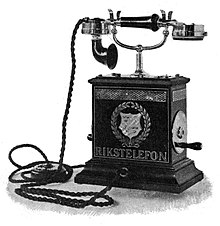
As one of the original Pinkerton Matchmaker authors, I vividly recall a conversation we had regarding telephones and how we laughingly lamented the fact that in our stories, they hadn’t been invented yet. How much more convenient it would have been for our characters to have access to one! But since these stories mostly were taking place in the 1871, and on into 1872, oh well. We—and our characters—would get by.

That conversation took place two years ago when this series was new and gaining popularity. Now, as it begins winding down, we’ve have many cases solved and many couples matched, all at the behest of head agent, Archibald Gordon and his assistant and now wife, Marianne. But the fun isn’t finished yet. There are still a few more Pinkerton Matchmaker stories scheduled to release this summer, and all of them are sure to be exciting—much like the way it was when all of these wonderful gadgets like the telephone were being invented. Imagine if you had lived during that time. Would you have felt the excitement, too, or do you think you might have been wondering if those newfangled things would actually work? For me, probably a little bit of both.

But like Laura Ingalls Wilder, who saw both the horse and buggy days as well as the advent of motor vehicles, I think I would have been awestruck by the ingenuity of the times. This is a facet of life that I enjoy incorporating into my stories, and my upcoming Pinkerton Matchmaker story, An Agent for Sarah, is no exception. This story takes place six years later than the original stories. In 1879, I discovered, Denver, Colorado received telephone lines for the first time. Two recent Harvard graduates, Frederick O. Vaille and Henry R. Walcott, partnered with saloonkeeper Sam Morgan and applied for a franchise of the American Bell Telephone Company (think Alexander Graham Bell) from Boston. They received it, and on February 24, 1879, the Denver Telephone Dispatch Company was born. These Bell-inspired telephones were all the rage, and it seemed that progress was being made to keep family and friends who were long distances apart in touch.

But then a second telephone company sprang up, this one called the Colorado Edison Telephone Company, inspired by—you guessed it—Thomas Edison. His improvements on the transmitters made it possible for the Western Union-owned company to install phones in surrounding areas. Vaille and Walcott didn’t like this, of course, so they sued for infringement on the patent and won. Soon the two companies merged and, over a series of turnovers and share sales, became the Mountain States Telephone and Telegraph Company. A few of the buildings that were used in the intermountain region still exist today and are on the national historic register.

Though not a huge part of the plot in An Agent for Sarah, this rivalry does play a significant role. My couple, Mark Wilson and Sarah Packard, are not your typical Pinkerton couple, either. For one, Sarah isn’t even a Pinkerton agent yet and doesn’t become one until the end of the story. Mark, her friend from childhood, is dismayed when she becomes engaged to another man. Since Mark and Sarah are both from Virginia (they were minor characters in An Agent for Jessica), I had to figure out a way to get them both to Denver. I accomplished this by making Sarah engaged to a man from Denver who had gone back East to buy horses from their renowned horse-breeding business. Mark, on the other hand, is so distraught over this development that at his mentor’s urging, who used to be a Pinkerton agent under Archie, Mark moves to Denver to seek employment there. Little does he know, nor is he prepared, when he and another agent are assigned to catch the person who’s trying to sabotage Sarah’s wedding.

How does the telephone rivalry play into this? Well, the groom’s father is a magnate, and he has his hand in a lot of pies. One of them is the newfangled telephone. When an unknown enemy starts using guerilla-style tactics to stop the wedding, he thinks it’s his rival. But that is only one of the strange things that is happening to his family. Will Mark and Sarah be able to uncover the real culprit in time?

An Agent for Sarah releases on June 5, 2020. It’s available as a preorder if you’d like to grab your copy now. That way it will download immediately on release day. Talk about modern conveniences! I hope you will enjoy Mark and Sarah’s story. They really have waited a long time to be together. When he rescued her in An Agent for Jessica, readers clamored for their love story. I’m happy that it’s finally here!


Tuesday, May 26, 2020

THE DOCTOR'S BAG


A book interesting to western readers and extremely helpful for any western historical writer is that of Dr. Keith Souter, an English physician who writes westerns as Clay Moore (in homage to Clayton Moore, who played the Lone Ranger). Keith’s book, THE DOCTOR’S BAG: MEDICINE AND SURGERY OF YESTERYEAR, is primarily aimed at writers and readers who are interested in the American Southwest.

Disclaimer: The book is not intended as a medical textbook for modern treatment of illness and injury. Instead, THE DOCTOR’S BAG explains past treatments for various common problems. As writers and readers of western historical novels, this is information we can find helpful. He covers everything from snakebite to hanging.

Who was the best doctor in the Old West? How did the doc remove an arrow? Could silk really stop a bullet? What was the “Germ theory”? The answers to all these questions and more can be found in THE DOCTOR’S BAG.

The book begins with a reminiscence of Gunsmoke. My family seldom missed seeing the show on television. However, I didn’t realize it had first been a radio show. Doc Adams is used as an example of the stereotypical Old West doctor. By the way, I didn’t realize Doc Adams had a dark past, but he had killed a man in a duel, fled west, and changed his name.

I admit I’ve used the book to research particular treatments rather than reading it cover to cover but it is interesting enough to sit down and read for pleasure. The table of contents clearly lists the ailments with possible treatments. This is helpful when a writer needs quick access to a remedy. We turn to Google, but the information there is not always trustworthy and often offers contradictory information. THE DOCTOR’S BAG is a factual reference, often with illustrations, with easy to understand explanations.


THE DOCTOR’S BAG is available for free in KU or in print from Amazon:

Dr. Keith Souter

Dr. Souter was born in St. Andrews, Scotland, and attended the University of Dundee. He lives in West Yorkshire in England with his wife Rachel within arrow-shot of the ruins of a medieval castle. He is a prolific author in four genres—westerns, crime, historical, and YA. He also pens a weekly health column. He writes crime as Keith Moray and non-fiction as himself.

Dr. Souter is a member of Western Fictioneers, an online group to which many western and western romance authors belong. We exchange information and generally chat about subjects of interest to those who write in these genres. This is an io group open to all writers willing to post only topics of interest to writers—no politics, etc. He is also a member of Western Writers of America, International Thriller Writers, Crime Writers Association, and the Medical Journalists Association. To learn more about him, check out his website at https://www.keithsouter.co.uk. His blog is at https://moreontherange.blogspot.co.uk   


My next release, now up for pre-order, is AN AGENT FOR JUDITH, Pinkerton Matchmaker’s Series, book #79. 

Judith McAdams vows to rescue her brother, even if she has to become a Pinkerton agent and enter a marriage of convenience with Peyton Knight. Their mission takes them to Northern New Mexico and pits them against a crooked lawman and a greedy rancher who doesn’t mind killing those who oppose him. 

Pre-order now for June 19 release at https://mybook.to/Judith     

Sunday, May 24, 2020

FASTEST GUN IN TEXAS by Marisa Masterson

Maybe you've tried channels like Sling or Philo? They offer seven days free just to surf their programing. That's what I was doing when I ran into the fastest shootist Texas ever experienced.

I'm a documentary junky. I love learning. Perhaps that's why I became a teacher. For whatever reason, I ran across this documentary on a man who sent shivers through Texans.

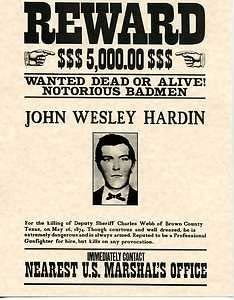
John Wesley Hardin. Mothers used his name as a threat to make their children behave "or Wes would get them." Even Bill Hickok found himself facing the business end of this man's guns. So, exactly who was he?

John Wesley Hardin
Named for the evangelist John Wesley, Hardin was the son of a preacher and grew up in Civil War era Texas. With his father's encouragement, he practiced with the gun until he was a marksman at the age of twelve.

One of the tricks this shootist did to prove himself was to hit playing cards at fifteen paces, never missing. By the end of childhood, the man was deadly and bore a nasty grudge against Yankees and any people of color be they Mexican or African-American.

Maybe that's why he killed his first man when he was only fifteen. The former slave had bested him in a wrestling match. When he encountered the man alone in the woods, he shot him and claimed the man attacked him with a stick. The victim lived long enough to declare that a lie. Hardin ran from his home, fearing arrest.

Cowboys in Kansas
From there, he leaves a trail of dead men. He easily hid amongst a group of cattle drovers taking a heard to Kansas. That's how he eventually met Wild Bill Hickok in Abilene, Kansas. Guns weren't allowed while walking the streets of that town. Typically defiant, Hardin kept his on.

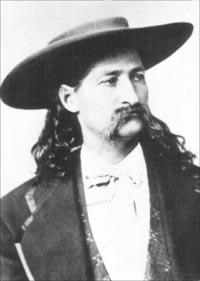
"Wild" Bill Hickok
Hickok confronted the armed cowboy, being the marshal, and demanded he remove the guns, Hardin did so and handed them toward Hickok with the handles first. Before that man could grab them, the shootist flipped them so he held them cocked and pointed close to the famous marshal's face.

This wasn't the first man Hickok talked down to avoid violence. The two went into a saloon and shared a drink bought by the lawman. When they met again another year, Hickok didn't ask the shootist to remove his guns.

That was just the type of man Hardin seemed to be. Showy, cocky, and willing to kill. After he returned to Texas and killed a lawman, Texans had had enough.Many put pressure on the governor to send a new group called the Texas Rangers after the man. With a $5,000 bounty on his head, the governor was confident the man would be caught.

I would think so, considering the amount. It was one more thing Hardin boasted about to people--the size of his bounty! In 1875, that $5,000 was equivalent in purchasing power to about $116,540 in 2020.

Someone was willing to risk Hardin's guns to claim it, and the rangers caught the man in a railroad car. Not a very glamorous life!

Here's where it gets interesting for me. While Hardin sat in Hunstville Prison, he wrote his autobiography. This is why historians view him as a man with no conscience. He detailed murders, excused them, and vowed he felt no remorse. He was the faster gun and that was all that mattered.

After serving seventeen years, the murderer went free, a supposedly changed man. While in prison, he'd earned a law degree and tried to set up a law practice. Surprise, surprise, but people were too afraid of him to use his services.

He eventually ended up in El Paso where he was shot from behind and killed. It didn't matter how fast he was since he hadn't guarded his back.

One last note--the word shootist. I used that rather than gunslinger to be authentic. Amazingly, the word gunslinger was invented in the 1920's by author Zane Grey. Men in the old west never used it, calling men like Hardin shootists. Very accurate for Hardin, I think!


If you enjoy action, romance, and adventure, please take a look at Ruby's Risk. With our 380,000 pages read on Kindle Unlimited, readers are falling in love with this book.


A man might homestead, but it takes a woman to turn that place into a home! This matchmaker will settle the West one couple at a time.

Under suspicion after his wife’s murder, Elias Kline knows he has to leave Mills Bluff. Learning a lynch mob is planning to kill him, he slips away from town. Taking only his smithy tools and his young son, he chooses a new name—Ezra King. Heading west seems a fine way to start over, but he’ll need a wife to raise his son and cook his meals. One sent by an agency shouldn’t expect love, he decides.

A matchmaker convinces lonely Ruby Hastings to take a risk on Ezra King. After all, the man is helping fulfill the nation's destiny of settling the west. Reading the man’s letter, Ruby aches for the widower's little boy and seizes on this chance to be a mama to him. After all, with a brother on the run from the law and a newly married sister, her siblings no longer need Ruby and this motherless boy does.

It should be a convenient arrangement. What happens when the mail-order wife begins to push past the walls guarding Elias’ heart, challenging him spiritually and emotionally? When danger follows him from Mills Bluff, will Elias be able to keep his family together?

Friday, May 22, 2020

THOSE OLD COWBOY HEROES

Post by Doris McCraw
writing as Angela Raines

Photo property of the Author
I imagine most of you are like me, you love the West, the stories, the history, the people, and the myths. One thing I've always enjoyed was the older 'B' Westerns from the 1930s-50s. The old serials, short films, and of course the hero Cowboys. These films go back to the old Johnny Mack Brown, Buck Jones, and Ken Maynard. I thought for fun, I'd spend some time talking about some of those famous heroes. Yes, Gary Cooper, Jahn Wayne, Joel McCrea, Randolph Scott, and James Stewart made films during this time, along with Gene Autry and Roy Rogers, but I'll be looking at the actors who were favorites back then, but not so well known now. As we head into a different Memorial Day Weekend, here's to the memories these stars have given moviegoers over the years.

In the 1930s Charles Starrett, Bob Steele, Robert Livingston, and William Boyd began making films.

Bob Steele (1907-1989) - Find A Grave Memorial

Bob Steele: 1907-1988  Bob Steel probably had one of the longest careers in the industry with 244 film credits. He began performing at age two with his father and starred on film age 14. I still remember him in the TV series F-Troop and the Clint Eastwood film "Hang Em High"

Charles Starrett - Wikipedia

Charles Starrett:  1903-1986 Charles Starrett is best known for his work as 'The Durango Kid" films. He began playing the character in 1945 and ended in 1952. At the time of his death he held the record for the longest-running lead in feature films. He began his career while at attending Dartmouth College where he was hired as an extra for the film "The Quarterback". He was on the college football team at the time. And I do enjoy the Durango Kid film when I can find it.

Robert Livingston (actor) - Wikipedia

Robert Livingston: 1904-1988. Robert Livingston also billed as Bob Livingston, was born in a town about thirty-five miles from my home town. He was one of the original Three Mesquiteers and also played The Lone Ranger and Zorro. He began as a newspaper reporter in for the LA Daily News, his father was an editor in Robert's home town and gradually moved into film.

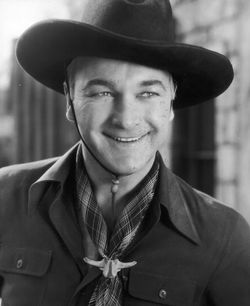
William Boyd (1895-1972) - Find A Grave Memorial

William Boyd: 1895-1972 Best known for his work as Hopalong 'Hoppy' Cassidy, Boyd was one of the early actors who bought the rights to his films and transferred to the new medium of television. He also marketed merchandise based on his character. According to his biography, his family moved to Oklahoma when he was seven and he lost both in his early teens. He dropped out of school to provide for himself. Now tell me, who doesn't love Hoppy?


In the 1940s  Buster Crabbe, George Montgomery, and Allan 'Rocky' Lane began their careers

Buster Crabbe - publicity.GIF

Buster Crabbe: 1908-1983 While Buster Crabbe is more well known for his roles as Tarzan and Flash Gordon, he made a number of westerns as the character Billy the Kid/Billy Carson with Al 'Fuzzy' St. John. He also won the Olympic Gold Medal in 1932 for the 400- meter freestyle swim event.

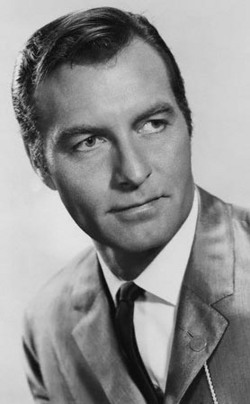
 George Montgomery

George Montgomery: 1916-2000  George Montgomery was a jack of many trades. His career began in the 1930s with a number of uncredited roles. He started to come into his own in the 1940s with roles in a number of Westerns. He moved into television, even had a television show 'Cimarron City', in the 1950s while still doing films.

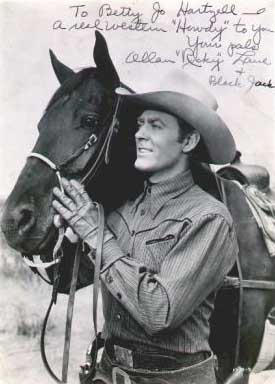
Allan “Rocky” Lane (1909-1973) - Find A Grave Memorial

Allan 'Rocky' Lane: 1909-1973 Allan Lane, other than the voice of the talking horse in the television series Mr. Ed, Lane is probably best known for his series of films in the late 1940s early 50s staring as the character Rocky Lane. I admit I've always loved his films.

By 1950 television was becoming more popular and these films began to wane. Still, some wonderful, fun films were made during this time. Sunset Carson, Lash LaRue, and Wild Bill Elliott were fun to watch.

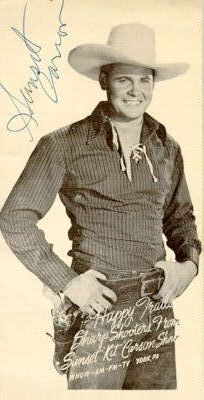
Sunset Carson (1920-1990) - Find A Grave Memorial

Sunset Carson: 1920-1990. At 6'6" Carson was one of the taller stars. He was briefly popular in the late 1940s and ending in 1950.

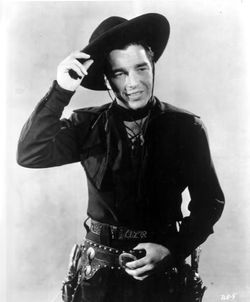
Lash LaRue (1917-1996) - Find A Grave Memorial

Lash LaRue: 1917-1996 Alfred 'Lash' LaRue was known not only for his use of the bullwhip and his likeness to Humphrey Bogart. His films had him starring as the character "The Cheyenne Kid/Cheyenne Davis".

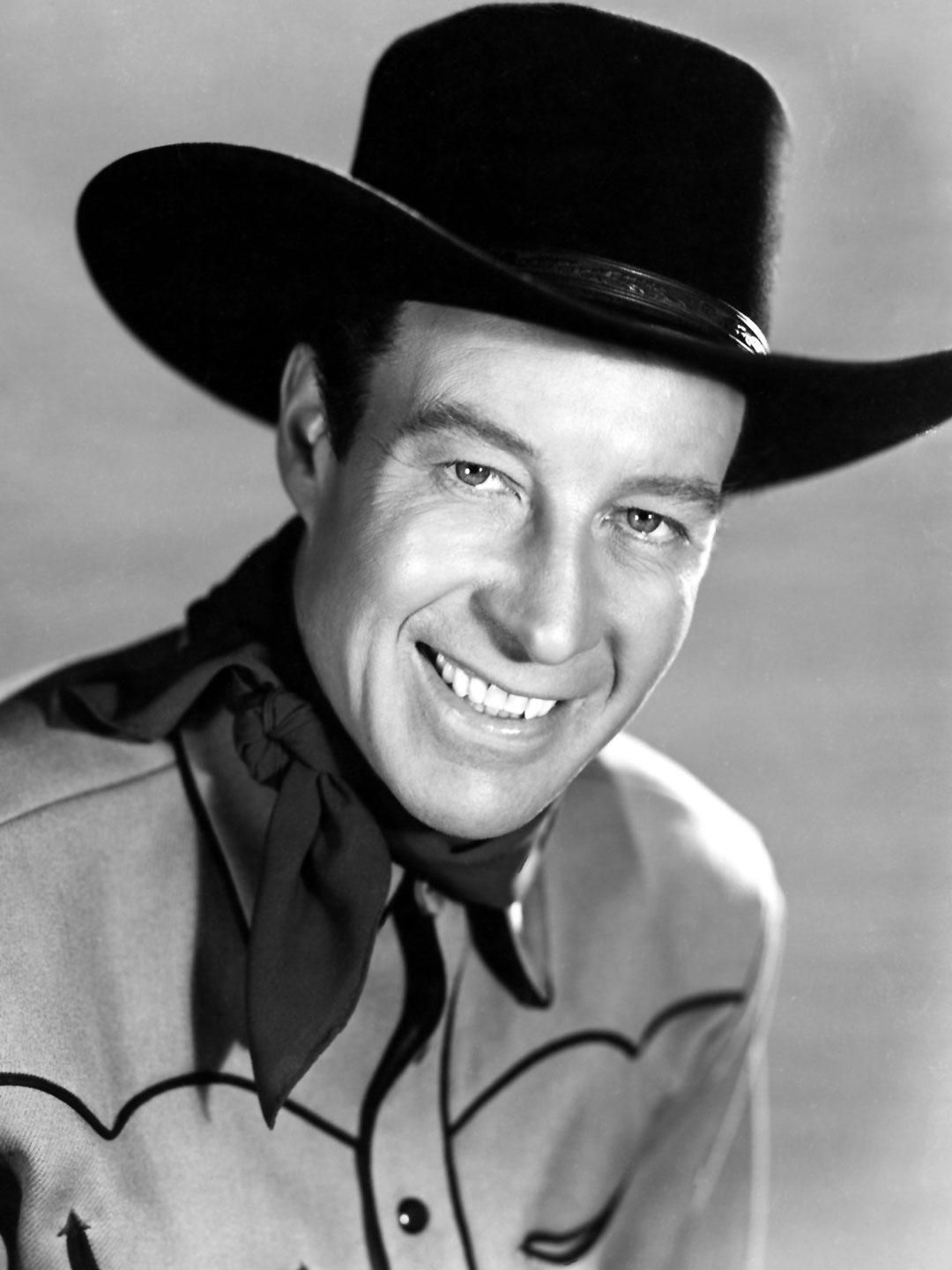
William “Wild Bill” Elliott (1904-1965) - Find A Grave Memorial

Wild Bill Elliott: 1904-1965 Elliott's Western career began with the fifteen chapter serial, "The Great Adventures of Wild Bill Hickock" in 1938. Although he'd been in other films, it was this series that built his career, which lasted through the early 1950s. A lot of films in Elliott's middle years were a step above the standard 'B' Westerns.

I can't end this post without talking about two actors who remain favorites. Walter Brennan and Audie Murphy.

Walter Brennan (1894-1974) - Find A Grave Memorial

Walter Brennan: 1894-1974  Brennan is the only actor so far to win three Academy Awards for Best-Supporting Actor. Brennan was comfortable on the large and small screen. I loved him in "Red River' with Wayne, and of course in TV in "The Real McCoys".

Audie Murphy - Wikipedia

Audie Murphy: 1925-1971 Perhaps best known for his Westerns, Murphy was also in the film version of "Red Badge of Courage" and "To Hell and Back" based on his biography and time in WWII. By the age of twenty-one, Murphy was the most decorated soldier of that war.

On this coming Memorial Day, please remember Murphy and all others who have given so much for family and country.

Below are links to Westerns by decades:

Western Films 1930s
Western Films 1940s
Western Films 1950-1954

For those who like the Western, check out this anthology.

The Untamed West by [L. J. Washburn, Jeffrey J. Mariotte, James Reasoner, Matthew P. Mayo, Tom  Rizzo, J.E.S.  Hays, Ben  Goheen, Dorothy A.  Bell, Angela  Raines, Dennis Doty]
Amazon ebook
And if you like Western TV shows:

52 Weeks - 52 TV Westerns by [Scott Harris, Paul Bishop, Rob Word]
Amazon ebook


Doris Gardner-McCraw -
Author, Speaker, Historian-specializing in
Colorado and Women's History
Angela Raines - author: Where Love & History Meet
Angela Raines FaceBook: Click Here

Wednesday, May 20, 2020

Houston and Galveston Snowed In


Yup, you read that right. On Valentines Day 1895, Houston, Galveston and much of the Gulf Coast were blanketed with heavy snow. Unusual to say the least.

So, how did this extraordinary event come to pass? To begin with, the winter of 1894-95 was dang cold. February of that year was the coldest February and the second coldest month ever recorded in Houston. And Galveston Island is not far (50 some miles) from the large metropolis.

Temperatures in February 1895 actually fluctuated drastically. Temps reached around 60° in Houston on February 6th, followed by a cold front on February 7th, when temperatures only rose into the low 20s. After a low of 10° on February 8th, temps warmed back up into the 40s through the 11th. Then another cold front swept down from the north on Tuesday the 12th and Wednesday the 13th. On Thursday morning the Houston Post reported:

"The unusual sight of falling snow was witnessed last night in this city. The wind was blowing steadily from the north and a cold, misty rain which began to fall between 7 and 8 o'clock, soon changed to sleet and then to snow. At midnight, the streets were covered with an exceedingly thin mantle of snow, but the indications were that the fall of snow would probably be changed to rain."
The newspaper's prediction proved wrong, as witnessed in this photo.
University of Houston Digital Archives/NWS Houston
Without getting too technical, what caused the snow was likely the cold front from up north colliding with precipitation from California that, according to weather maps, blew across the southwest and Texas. Also, it is thought that a storm on the Gulf swept the coast from Texas to Florida, adding more moisture and wind to the mix.

In Galveston, snow began to fall around 1 o'clock in the afternoon on the 14th, Valentines Day, and continued through the day. It totaled between 12 and 16 inches, bringing streetcars to a halt and causing many businesses to close. People waited in vain for trains that could not get through to them. At the station, Officer Perrett saved a half frozen dog he found in a snow drift, warming it by the waiting room stove. (There were three railroad bridges connecting Galveston to the mainland by this time. Two were destroyed by the terrible 1900 hurricane.) 

Famous Galveston Strand snow-covered; Rosenberg Library Archives

Carriage driving through snow; Rosenberg Library Archives

Shoe stores sold out of "gum boots" (rubber boots) and people, both young and old cavorted in the snow, holding snowball fights all over the city. Some clever citizen rigged runners to their carriages and used them as sleighs. Inevitably, others ended up falling on their backsides in the snow.

The Valentines Day snow storm figures prominently in my current work in progress. It's a time travel romance set in Galveston.

Lyn Horner is a multi-published, award-winning author of western historical romance and paranormal romantic suspense novels, all spiced with sensual romance. She is a former fashion illustrator and art instructor who resides in Fort Worth, Texas – “Where the West Begins” - with her husband and two very spoiled cats. As well as crafting passionate love stories, Lyn enjoys reading, gardening, genealogy, visiting with family and friends, and cuddling her furry, four-legged babies.

Amazon Author Page: viewAuthor.at/LynHornerAmazon (universal link)  
Website:  Lyn Horner’s Corner 

Saturday, May 16, 2020

The Orphan Train Movement


When my friends were going through the adoption process I found it fascinating and heartbreaking and ended up doing lots of research about it. Because I love history, I wanted to learn about the history of adoption. This led me to Mr. Charles Brace and the Orphan Trains. And inspiration for a series of books was born J

The Orphan Train Movement was a supervised welfare program that transported orphaned and homeless children from crowded Eastern cities of the United States to foster homes located largely in rural areas of the Midwest. The orphan trains operated between 1854 and 1929, relocating about 200,000 orphaned, abandoned, abused, or homeless children.

Three charitable institutions, Children's Village (founded 1851 by 24 philanthropists), the Children's Aid Society (established 1853 by Charles Loring Brace) and later, the New York Foundling Hospital, endeavored to help these children. The institutions were supported by wealthy donors and operated by professional staff. The three institutions developed a program that placed homeless, orphaned, and abandoned city children, who numbered an estimated 30,000 in New York City alone in the 1850s, in foster homes throughout the country. The children were transported to their new homes on trains that were labeled "orphan trains" or "baby trains". This relocation of children ended in the 1920s with the beginning of organized foster care in America.

Around 1830, the number of homeless children in large Eastern cities such as New York City exploded. In 1850, there were an estimated 10,000 to 30,000 homeless children in New York City. At the time, New York City's population was only 500,000. Some children were orphaned when their parents died in epidemics of typhoid, yellow fever or the flu. Others were abandoned due to poverty, illness or addiction. Many children sold matches, rags, or newspapers to survive. For protection against street violence, they banded together and formed gangs.

In 1853, a young minister named Charles Loring Brace became concerned with the plight of street children. He founded the Children's Aid Society. During its first year the Children's Aid Society
primarily offered boys religious guidance and vocational and academic instruction. Eventually, the society established the nation's first runaway shelter, the Newsboys' Lodging House, where vagrant boys received inexpensive room and board and basic education. Brace and his colleagues attempted to find jobs and homes for individual children, but they soon became overwhelmed by the numbers needing placement. Brace hit on the idea of sending groups of children to rural areas for adoption.
Brace believed that street children would have better lives if they left the poverty and debauchery of their lives in New York City and were instead raised by morally upright farm families. Recognizing the need for labor in the expanding farm country, Brace believed that farmers would welcome homeless children, take them into their homes and treat them as their own. His program would turn out to be a forerunner of modern foster care.

After a year of dispatching children individually to farms in nearby Connecticut, Pennsylvania and rural New York, the Children's Aid Society mounted its first large-scale expedition to the Midwest in September 1854. The scope of this movement was amazing! The Children's Aid Society's sent an average of 3,000 children via train each year from 1855 to 1875. Between 1854 and 1929, an estimated 200,000 American children traveled west by rail in search of new homes. Brace's notion that children are better cared for by families than in institutions is the most basic tenet of present-day foster care.

Of course, there were all sorts of tragedies involved in this. The need for it was tragic and sadly, there were many opportunities for less than reputable individuals to exploit these tragedies. But there were also many success stories.

I was inspired by this background to write my Orphan Trainseries which was just recently released in a boxed set.

She'd happily give him her heart … if only it wouldn’t cost her the only home she’s known

Sophie Brooks thought she had everything she could want in life. Friends, loved ones at the orphanage where she was raised, a job that gives her purpose, and a chance to help children every day … what more could she need? But a chance encounter with a handsome stranger has her wondering if a life—and love—outside the orphanage might be exactly what she never knew she needed.

Renton Robert Rexford III has never wanted for anything. Until he meets Sophie. The charming, intelligent beauty draws him like no other. But, thanks to a disapproving benefactor who threatens to pull the orphanage’s funding, his pursuit of her could cost Sophie everything she holds dear. She’s all he wants in the world, but how can he ask her to give up so much when all she’d get in return is his heart?

It’s not long before Sophie is forced to weigh her loyalty to the only home she’s ever known against the needs of her heart. Can love prevail—or is the cost simply too high?