Showing posts with label Colorado. Show all posts

Thursday, May 28, 2020

TELEPHONE RIVALS

By Julia Ridgmont


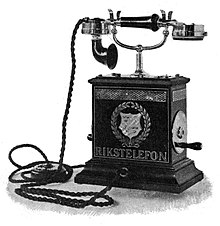
As one of the original Pinkerton Matchmaker authors, I vividly recall a conversation we had regarding telephones and how we laughingly lamented the fact that in our stories, they hadn’t been invented yet. How much more convenient it would have been for our characters to have access to one! But since these stories mostly were taking place in the 1871, and on into 1872, oh well. We—and our characters—would get by.

That conversation took place two years ago when this series was new and gaining popularity. Now, as it begins winding down, we’ve have many cases solved and many couples matched, all at the behest of head agent, Archibald Gordon and his assistant and now wife, Marianne. But the fun isn’t finished yet. There are still a few more Pinkerton Matchmaker stories scheduled to release this summer, and all of them are sure to be exciting—much like the way it was when all of these wonderful gadgets like the telephone were being invented. Imagine if you had lived during that time. Would you have felt the excitement, too, or do you think you might have been wondering if those newfangled things would actually work? For me, probably a little bit of both.

But like Laura Ingalls Wilder, who saw both the horse and buggy days as well as the advent of motor vehicles, I think I would have been awestruck by the ingenuity of the times. This is a facet of life that I enjoy incorporating into my stories, and my upcoming Pinkerton Matchmaker story, An Agent for Sarah, is no exception. This story takes place six years later than the original stories. In 1879, I discovered, Denver, Colorado received telephone lines for the first time. Two recent Harvard graduates, Frederick O. Vaille and Henry R. Walcott, partnered with saloonkeeper Sam Morgan and applied for a franchise of the American Bell Telephone Company (think Alexander Graham Bell) from Boston. They received it, and on February 24, 1879, the Denver Telephone Dispatch Company was born. These Bell-inspired telephones were all the rage, and it seemed that progress was being made to keep family and friends who were long distances apart in touch.

But then a second telephone company sprang up, this one called the Colorado Edison Telephone Company, inspired by—you guessed it—Thomas Edison. His improvements on the transmitters made it possible for the Western Union-owned company to install phones in surrounding areas. Vaille and Walcott didn’t like this, of course, so they sued for infringement on the patent and won. Soon the two companies merged and, over a series of turnovers and share sales, became the Mountain States Telephone and Telegraph Company. A few of the buildings that were used in the intermountain region still exist today and are on the national historic register.

Though not a huge part of the plot in An Agent for Sarah, this rivalry does play a significant role. My couple, Mark Wilson and Sarah Packard, are not your typical Pinkerton couple, either. For one, Sarah isn’t even a Pinkerton agent yet and doesn’t become one until the end of the story. Mark, her friend from childhood, is dismayed when she becomes engaged to another man. Since Mark and Sarah are both from Virginia (they were minor characters in An Agent for Jessica), I had to figure out a way to get them both to Denver. I accomplished this by making Sarah engaged to a man from Denver who had gone back East to buy horses from their renowned horse-breeding business. Mark, on the other hand, is so distraught over this development that at his mentor’s urging, who used to be a Pinkerton agent under Archie, Mark moves to Denver to seek employment there. Little does he know, nor is he prepared, when he and another agent are assigned to catch the person who’s trying to sabotage Sarah’s wedding.

How does the telephone rivalry play into this? Well, the groom’s father is a magnate, and he has his hand in a lot of pies. One of them is the newfangled telephone. When an unknown enemy starts using guerilla-style tactics to stop the wedding, he thinks it’s his rival. But that is only one of the strange things that is happening to his family. Will Mark and Sarah be able to uncover the real culprit in time?

An Agent for Sarah releases on June 5, 2020. It’s available as a preorder if you’d like to grab your copy now. That way it will download immediately on release day. Talk about modern conveniences! I hope you will enjoy Mark and Sarah’s story. They really have waited a long time to be together. When he rescued her in An Agent for Jessica, readers clamored for their love story. I’m happy that it’s finally here!


Tuesday, May 12, 2020

Strange Laws in Texas and Colorado by Bea Tifton

Whew! I got busy with some other projects and just let the due date for my blog this month just whiz right by me. It's a good thing forgetting a deadline isn't against the law, isn't it. Or is it?
Every state has its share of strange old laws. Those laws that were made when life was different or to address a specific person or event. Laws that, once passed, stay on the books until they're completely forgotten and overlooked.
I decided to choose two states, my native Texas, which is known for being, um, independent and colorful, and Colorado, a beautiful state to which I thought of relocating years ago.
So, here's a list of some of the stranger old laws.

Weird Texas Laws:
-You need to watch yourself in San Antonio. It's illegal to "flirt with the eyes or hands." (Boy, the revenue from ticketing people on the River Walk alone would keep the state afloat.)
-You may not shoot a buffalo from the second story of a hotel. (I cannot shoot anything from anywhere, but good to know.)
-You may not dust  any public building with a feather duster if you're ever in Clarendon. (Have you seen my house? Catching me with a feather duster is not going to be a problem. Ahem.)
-You may not own the complete set of The Encyclopedia Brittanica because one of the volumes contains a recipe for brewing beer at home. (Thank goodness for Google, right?)
-You may not milk someone else's cow. (Durn. I'll guess I'll have to make a store run.)
-You may not ride a horse or buggy through the town square in Temple. (You may ride your horse into a saloon, though, so that's all right.) 
-You  may not emit "obnoxious odors" while riding in an elevator in Port Arthur. (And I'm just going to leave that one well enough alone.
Weird Colorado Laws
-You can't kiss a sleeping woman in Logan County. (So if that's the way you or your partner wake each other up, you might want to make sure you take your alarm clock if you visit.)
-You may not own chickens in Louisville, but you may own up to three turkeys. (No fresh eggs for you but Thanksgiving's gonna be great.)
-You may not graze your llama on public land in Boulder. (Fine. I'll just leave my llama at home, then.)
-You may not roll a boulder on city property in Boulder. (Is this a thing? You get one or two smart alecks and they ruin it for everyone.)
-You may not use catapults, blowguns, or slingshots in Aspen. (What in the world was going on in Aspen?)
-You may not bring your horse or pack mule above the ground floor of any building in Cripple Creek. ( I wonder if that's why all the old saloons were on the first floor. Hmm.)

 With all the paperwork throughout the years, it's inevitable that some of the more obscure laws would be forgotten as they remain on the books. To us, they seem absurd, but at the time, the lawmakers presumably had a good reason for making them. Have you accidentally broken any of these? Leave a comment below.


Friday, May 8, 2020

How Settlers in the West Survived By Cora Leland

Pre-order link!
https://amzn.to/3beqmXB


How Settlers in the West Survived

By Cora Leland


“Nobody can fully understand how tough life was in the West, or the courage it took to settle a new land with all its challenges. Those who were equal to the task were heroes and heroines, and their lives are worth remembering.” – R.O. Lane


The story of Willa Cather’s family leaving Back Creek, Virginia for the wilds of Nebraska was echoed thousands of times until the frontier was finally stated as closed in 1893.

Over the years, most settlers developed surprising resiliency.  For example, young Mollie Dorsey and her family left an area similar to Ms. Cather’s to move to the Great Plains.  Although their mother worried a great deal about how her children had no school to attend, no church, no doctor, and snakes crawled throughout the forest where they lived,  the girls were thrilled to be through with the competitive life back East. Their one room cabin was all they ever wanted from life.

Like Mollie and her mother, settlers usually planted vegetable gardens, and in the wagons, they’d carried poultry to raise.  One unusual trait – by today’s standards – was for more established people to welcome new settlers into their homes, not for a meal or two, but to sleep on their cabin’s dirt floor for a week or longer, while the newcomers’ home was built. Families continued to help each other, building their barns, plowing and haying each other’s meadows and ‘proving up’ their homes.

Friends and relatives from home paid calls to these new areas. A visit or a call included at least one full meal and often stretched over a few days. Half a dozen people would visit a friend, unannounced, resting gossiping and talking, eating and usually leaving after spending the day.  If the weather turned bad, the hosts would instantly invite their visitors to spend the night.

One lucrative way for young men to earn money was to travel their part of the state on the harvest circuit, sometimes on foot, sometimes by ‘conveyance,’ working at farms doing whatever the season dictated, sleeping in the barns and eating with the families.  Work in more expensive Colorado was dependent on the weather, the terrain, or the nature of the city.  For example, Rolf Johnson walked from his family’s central Nebraska homestead to Colorado in June, 1879.

Farm work included training horses, breaking them of bad habits like running away with their riders or scraping them off.  Often the farms were owned by wealthy Denver men. No provision was made for their helpers’ broken bones or ruined clothes if the horses broke loose.

However, this kind of work seems to have been a masculine pursuit. Women and girls usually lived quietly with their parents. Those who didn’t become servants would leave their homes for a few months at a time – ‘a season’ – staying with affluent women as their seamstress.
   
Clothes for women and children were made by hand sewing, and skilled needlewomen were in demand. Sewing machines did exist, but not many families owned them. Men’s clothes were inexpensive and readymade, though some men continued to wear homemade clothes, sewn from home spun fabric.

Women could work in Colorado at sewing, cooking, and millinery and be well paid.  There a seamstress could set her own rates, or so say the journals and diaries.  The cost of living, though, was much higher in Colorado.  In remote mining towns, spools of thread were 10 cents or more; in Denver they were 25 cents each.  In Nebraska they were five cents.  A dozen eggs in Denver was $2. The currency rate in Denver was gold dust; women carried it in little bottles.

Women could earn and save money, though it took a great deal of hard work and attention to detail. The building boom in Colorado meant more workers needing cooked food.  Cooking, or ‘boarding’, usually required at least two women and one or two cleaning helpers if the job was to run more than a week. There was a kitchen to be established – though sometimes cooking had to be done outdoors over a fire bounded by rocks.
 
Then there were tables and benches to be built. Sometimes this could be arranged through bartering meals for labor; the cooks were expected to find the lumber and order it. As far as cleaning helpers and other jobs, the cooks sometimes hired locals at very low rates.
 
Cooks had the authority to say what they would cook and what would be impossible. In the Rockies, vegetables were often scarce, and sometimes cooks demanded that they’d be unable to cook more than meat dishes and dessert.  If they had to cook over open fires, the dishes they’d serve would be different: no cakes or pies.

Such hard work was a stepping stone for women who wanted to work for themselves.  Boarding brought in a good sum of money, and the next rung up the ladder was buying or renting a tailoring or millinery shop and hiring seamstresses to work there.  These clever women built clientele and launched their businesses, and they’d started with little more than a sewing kit and good needlework skills.  

During their first year of marriage, Mollie and By Sanford moved to Denver, crossing the plains by covered wagon.  He was a blacksmith, but had learned to be a jack of all trades. When they arrived in Denver, they moved at least a dozen times. By was finally able to build a one room house for them, but soon after it was completed, the town was flooded.

The waters swept homes, schools and livestock away, first at Cherry Creek itself. When the flood swept into Mollie’s street, some neighbor boys saw the flood waters rising and carried the young couple’s few precious possessions away in a wagon.  Unfortunately, Denver was a lawless kind of city, frightening Mollie with killings in saloons and dens of vice.  (In the wagons crossing the prairie, she cried when her husband swore at the teams.)

When Mollie Dorsey Sanford first came to Colorado she was a versatile young wife and in today’s jargon, she was an entrepreneur.  However, her funds were always very low. She and her husband, By, had sold most of their belongings so he could buy machinery for his gold mine.
This photo from 1864 Colorado is a gold prospector's gift to his parents.


She was wise, bartering dairy and eggs for as many things as she could.  (In those days, people kept cows and poultry in town.) The city of Boulder was made up of twelve log cabins; Mollie and By tried living up there, but she got sick, and By had to walk up the mountain to come home from his job as a day watchman each evening. Denver’s population was 5,000, including suburbs like Cherry Creek.

A Nebraskan about her age whom she did not know, Rolf Johnson, grew prosperous while he worked in Colorado, finding jobs as he could, in the mountains or in town, living in hotels in Denver, strapping on guns while he lived there. A young man’s life was very different, working, but also visiting theaters, the opera house, saloons and the red light district. Married or single, Mollie was dependent on her employers’ dispositions.

Rolf Johnson returned to Nebraska after a few months; Mollie and By Sanford lived permanently in Denver. Willa Cather graduated from The University of Nebraska in Lincoln, worked and lived in Nebraska, then in many areas, including Pennsylvania and New York.

Further Reading

Dee Brown.  The American West

Ruth B. Moynihan, Susan Armitage, Christiane Fisher Dichamp. So Much to Be Done

Tom Streissguth. Writer of the Plains. A Story about Willa Cather

Rolf Johnson, ed. Richard E. Jensen. Happy as a Big Sunflower. Adventures in the West, 1876-1880

Mollie. The Journal of Mollie Dorsey Sanford in Nebraska and Colorado Territories, 1857-1866


Thursday, March 26, 2020

CREEDE, A COLORADO SILVER BOOMTOWN

By Caroline Clemmons


The California Gold Rush that followed the 1848 discovery was credited as the largest and most important event in the opening of the western frontier. The California Gold Rush set the stage for many smaller rushes and booms throughout the west.

In addition to gold rushes, there were a series of silver rushes. Creede was the last silver boom town in Colorado in the 19th century. The town leapt from a population of 600 in 1889 to more than 10,000 in December 1891. The Creede mines operated continuously from 1890 until 1985. They were served by the Denver & Rio Grande Railroad. Traveling by highway today, Creede is about 265 miles southwest of Denver and about 260 miles north of Albuquerque. Creede is located in southwest Colorado just north of the Rio Grande River and east of the San Juan Mountains. 

Nicholas Creede
A miner named Nicholas Creede was prospecting in what became North Creede in 1890. 

Supposedly, when he hit a rich strike he said. “Holy Moses, I’ve struck it rich.”

That makes me laugh, but he was right. The Holy Moses Mine became one of the most profitable in the region.

The small boom of 1890 increased when Nicholas Creede sold the Holy Moses mine for $70,000 to three investors who were connected with the D&RG Railroad. Creede was to receive a stipend of $100 a month to continue prospecting plus one-third of all future finds. He then located the rich Amethyst vein which included several lucrative mines. His income was estimated at $1,000 per day in 1892.
News of the big sale brought more people to Creede. At the same time, the Sherman Silver Purchase Act was passed by Congress in 1890, almost doubling the price of silver. You can understand why this brought increased numbers of prospectors to the Rocky Mountains where there were known silver strikes. 

Creede, Colorado, 1892
As more people heard of the strike, a camp bloomed in lower East Willow Canyon. Shacks, cabins and businesses began to be built. Some of those who came were families with women and children as a part of camp life from its beginning. The camp was first called Willow Camp, but in the fall of 1890 the miners voted to change the name to Creede. The narrow canyon was soon overflowing, so building was extended downstream and into Willow Canyon. This canyon was slightly larger, so cabins, houses and businesses were built there, too. However, the tale is that town space was at such a premium that buildings were even constructed on stilts in the river.

The year of 1892 was the biggest boom time in Creede’s history. By late spring, the boom brought miners, businessmen and ordinary folks. But it also brought in scoundrels – con men, gamblers, ladies of the night, gunslingers and others who wanted to mine the miners rather than the hills.

Bob Ford
Bob Ford, infamous killer of Jesse James, found his way there and he soon became the “camp boss” of all the shady businesses in town. A month later, Jefferson Randolf (Soapy) Smith arrived with his soap game. Smith challenged Ford to be the “camp boss” and Soapy won out. In June of 1892, Bob Ford was shot to death in his tent saloon by Ed O’Kelley.
Because of Bob Ford, Soapy Smith and all the saloons, gambling halls, gunfights and undesirable people and incidents, Creede got the reputation as one of the wildest boom towns in Colorado. Reportedly, at  one time there were over forty saloons in Creede.
The 1892 Colorado Business Directory stated the population of Creede as around 6,000 and close to 10,000 in the mining district. The Creede Candle newspaper reported that mine production was outstanding in 1892. The Amethyst Mine was listed as the highest producer of ore and the second highest was the Last Chance Mine.

Amethyst Band 1895
In the first half of 1893, Creede was still booming. The boom and the excitement came to a sudden end in August of 1893 when the U.S. Congress repealed the Silver Purchase Act. When the government quit buying silver, the price of silver crashed and silver mining in all the American West was halted. The boom was over. All mines closed in Creede. Many miners left town, which caused many businesses to close and owners to leave town.
Creede was one of the few lucky silver mining towns that never became a ghost town. Hundreds of little mining towns were abandoned in Colorado during the Crash. Within a few months the larger mines in the Creede District reopened but with much smaller crews and much lower wages. The town did not die, but it certainly changed, and it has never come even close to the boom time population.
As a mining town, Creede continued to experience boom and bust times. During the boom times more people would live there, buildings would be built, schools, churches and other groups would thrive. During bust times, many would leave town, businesses would close and social groups would have fewer numbers. Of course, the price of silver was the determining factor.
Creede Mine 1895
At the turn of the twentieth century, Creede experienced an economic upturn. In 1905 the Humphreys Mill and the Amethyst Mill were built. In 1930 the Emperius Mining Company was founded by B.T. Poxson and Herman Emperius. By 1945 they controlled most of the mines and purchased a mill just south of town.
In the 1960s the Commodore Mine was still being worked by the Emperius Mining Company. Homestake Mining Company came to Creede in that same decade and they opened the Bulldog Mine, initiating what was to become the last silver boom in Creede. In the 1970s the population was growing so fast that mobile homes had to be brought in and almost every nook and cranny in town had a trailer in it. In the 1980s the Commodore Mine ceased operation and in 1985 Homestakes’s Bulldog Mine halted its mining, closed its doors and sold many of its buildings.
This hardy town lived through many disasters. In the 1918 flu epidemic, the only place to put the ill was on the pool tables in the bars. In 1972, the train ceased to come to Creede, usually the death knell to any community. One of the worst disasters in the history of the town happened on June 5, 1892.
Around 6 o’clock in the morning a fire started in a saloon located at the north end. In two and a half hours most of the wooden district had burned down. It devastated the town, but had little effect on the mining. Although many of the business people left town, many stayed and started rebuilding the next day. This time, most of the businesses were built with brick which was made locally. The main block of the Creede business district today is reported to look very much like the rebuilt district looked after the fire.
Creede after the devastating 1892 fire
In the 1920s when automobiles became more affordable and popular, more tourists came to Creede. Many area ranches offered beds and food and later became dude ranches with cabins available. In town, accomodations were built for the tourists. 

Creede in 2005

While we're talking about Creede (segue here) my March 28 release is set in Creede,
POLKA WITH PAULINE, The Matchmaker's Ball Series, book 8. It's on preorder now at the Universal Amazon url http://mybook.to/Pauline and will be available in e-book and print and free in KU.
Pauline Brubaker arrives in Creede, Colorado from Denver to help care for her aunt while the aunt’s broken leg heals. Her aunt and uncle are special favorites of Pauline’s. They’ve recently retired to Creede due to her uncle’s heart problems. Pauline’s hesitant to give in to her attraction to Creighton because she will only be in Creede the few weeks her aunt needs her help. Her parents and her life are in Denver.


Creighton Reed makes amazing pieces of furniture. They sell as fast as he can create them. Creighton meets Pauline when her aunt and the sponsor of the Matchmaker Balls conspire to have them attend a dance together. He is immediately attracted to Pauline but she gives mixed signals. Later a man who claims to be her fiancé warns Creighton away from her. Creighton tells the man he’ll believe Pauline’s engaged when she tells him.
Two fire bombs destroy Creighton’s workshop and his living quarters in the back, and he’s almost trapped inside. Fortunately, he has purchased a house in order to marry Pauline and had moved some of his things there before the fire. Who sent firebombs into his workshop?  The arsonist must be caught before Pauline, her aunt and uncle, and Creighton are safe.


Sources: 

Saturday, September 28, 2019

GUEST JACQUI NELSON SHARES ABOUT MERINO SHEEP!

By Jacqui Nelson


I’m excited to be here on Sweethearts of the West because I love reading and writing and learning about the Old West. In my Western historical romance Christmas book, ROBYN: A CHRISTMAS BRIDE (which released last December), my hero, Max, is a tenacious business man who built a thriving freight company in Denver. His most unusual talent however is one he gave up—only to discover again while pursuing the love of his life, Robyn Llewellyn. That talent is knitting.

During the plotting of my new book, A BRIDE FOR BRYNMOR (which released Sept 19), I decided Robyn’s brother, Brynmor, and the love of his life, Lark, would be transporting two lambs to the talented knitter, Max. So he can knit more winter clothing for his family. They love his creations, but…

I’m not a fan of wool clothing. Yes, it’s warm and that’s wonderful, but most wool makes me maddeningly itchy. How could I make my characters want something I did not want? What if the lambs in my story had very soft wool. Merino wool immediately sprang to mind. That sounded Spanish and it is.

Merino Sheep

So when did Merino sheep come to America? Hopefully before 1878 because that’s when A BRIDE FOR BRYNMOR is set. It was time to do some research—a task that I love doing.

·         The Merino sheep breed originated in 12th-century southwestern Spain.
·         Before the 18th century, the export of Merinos from Spain was a crime punishable by death.
·         In 1802, Colonel David Humphreys (U.S. Ambassador to Spain) introduced the breed in Vermont with the import of 90 Merinos from Portugal.
·         Before the War of 1812, the British embargo on wool exports to America led to a “Merino Craze.”
·         Between 1809 and 1811, William Jarvis (of the Diplomatic Corps) imported 3,500 Merinos through Portugal.

Hurrah! Merino sheep were in America before my story’s setting of 1878! But all of the above was happening east of the Mississippi and not in Colorado where my story is set. Luckily, I found the following on coloradopreservation.org  

·         In 1598, Don Juan de Onate trailed 2,900 Churros into the Purgatoire River region of southeastern Colorado. Churros are descended from the Spanish Churra that were first imported in the 16th century to feed Spanish armies and settlers.
·         Between that year and the dates below, Thomas Boggs, Alexander Hicklin, and Albert Boone Jones established sheep ranches that introduced Merinos into the Raton Basin in southern Colorado.
·         With the increase in sheep raising in the 1870s and early 1880s, it was reported that as many as 300,000 sheep were exported yearly from Colorado’s Raton Basin (to feed and clothe miners in the mountains and coal fields).

Double Hurrah! I’d reached A BRIDE FOR BRYNMOR’s story date and location of Colorado, 1878. And now after finishing the story, I can’t imagine it without Brynmor and Lark’s Merino lambs. Read on for an excerpt with those lambs. But first the book blurb…


A BRIDE FOR BRYNMOR (Songbird Junction, Book 1) ~ Book blurb

Can a sister who’s lived only for others find freedom with one man? Family has always come first—for both of them. He’s never forgiven himself for letting her go. She’s never forgiven herself for almost getting him killed.

When Lark and her songbird sisters are separated fleeing their cruel and controlling troupe manager, only Brynmor Llewellyn can help Lark save her sisters and escape to the far west. But Lark wants more. And so does Brynmor. When they’re stranded in a spot as difficult to guard as it is to leave—a rustic cabin at a train junction between Denver and the mountain town of Noelle, Colorado—they find themselves fighting not only for survival but for redemption, forgiveness, and a second chance for their love.

Will the frontier train stop of Songbird Junction be Lark and Brynmor’s salvation? Or their downfall when her manager, a con artist who calls himself her uncle but cherishes only his own fame and fortune—demands a debt no one can pay?


A BRIDE FOR BRYNMOR ~ An excerpt with lambs

Balancing a fidgety lamb in one arm, Brynmor opened the railcar’s door. Before he could take the other lamb from Lark, so she could more easily climb inside, she was aboard. As nimble as their foundlings’ wild cousins who ruled Colorado’s mountains.

The ebony waterfall cascading down the back of her red jacket mesmerized him. He hadn’t noticed until he met Lark that most women tied up their hair. Lark was completely different from anyone he’d ever met. She didn’t even braid her hair.

When she glanced over her shoulder, her dark eyes held a fathomless allure that rendered him speechless. “Have you changed your mind about traveling with me to Noelle?”

“No. Of course not.” Why would she think that? Because you’re staring at her like a besotted fool rather than getting on the train with her.

He tightened his grip on his cargo and followed her into the railcar. A lot less gracefully. The lamb squirmed at the worst moment. Rather than let the rascal hit the wall, he let his shoulder take the brunt. “Ouch. You little b—” He gritted his teeth and patted the little bounder’s head, trying to calm him.

“Are you all right?” Lark’s silky voice soothed his agitation.

He lifted the lamb higher. It nestled its head under his chin and finally relaxed as well.

“Haven’t felt this good in a long time.” The truth in his words did not surprise him. He was with Lark. And he wasn’t shirking his work so he didn’t have to feel guilty. At least not overly. He could’ve loaded the wool on the train, put the lambs in Lark’s excellent care, and trusted her and the conductor to handle the transport from there.

As was their routine, Robyn and Max would be waiting to unload their freight at the other end. He wasn’t needed for that. But he wanted to be there to help with that. He wanted to hug his sister and see Max’s reaction when he received his gift.

He wanted to see Lark’s as well. Every second she stayed with him was his gift.


Hope you enjoyed this look inside my new book and into my love for historical research—and now also my love for Merino sheep :)    

A BRIDE FOR BRYNMOR is available on Amazon Kindle for a limited-time, new release sale price of $0.99 or you can read it (and all of my stories) for free with your Kindle Unlimited subscription.

MY AUTHOR BIO


Fall in love with a new Old West...where adventurous women find steadfast men. You’ll find scouts, spies, cardsharps, trick-riding superstars, and more in my stories. My love for historical romance adventures with grit and passion came from watching Western movies while growing up on a cattle farm in northern Canada.


Join my newsletter and receive Rescuing Raven (Raven and Charlie’s story in Deadwood 1876) for free: www.JacquiNelson.com/download-my-free-read