Showing posts with label Westerns. Show all posts

Wednesday, June 22, 2022

Why Westerns?


Post by Doris McCraw aka Angela Raines


This post is about a question and book list of sorts. 

I have a good idea why I chose to write in the Western Genre, but often wonder why others decided to tell stories in this time frame. For me, it's the idea of wide-open spaces, being independent and responsible for one's self, and the possibilities that came from that westward movement. When you think about it most of the people who headed west were doing so because they were wanting something new, something different. Ultimately they were the risk-takers, for it takes courage or desperation to make that decision.


I do confess that watching Saturday morning television shows, Roy Rogers, Hopalong Cassidy, Sky King, the Cisco Kid, and of course Gene Autry probably had something to do with my love of the West. Additionally, an inherent love of history and the stories of the people who came before are also part of that inspiration.

To that end, some of the authors that inspired and continue to inspire me are:

Peter Dawson, L. P. Holmes, Gwen Bristow, Louis l'Amour, Andre Norton's Space Westerns, Lauran Paine just to name a few.

I would like to know whether you chose to write in the Western genre or it chose you? Who were the Western authors that inspired and perhaps still continue to inspire you? Most of the authors that I listed above not only tell character-driven stories but many times their secondary characters catch my fancy. I find myself wondering what happened to them. As a writer, I get to try to answer that question. Do you ever find yourself doing that?

Photo Property of the Author

Until next time happy reading and writing, and if you so choose feel free to contact me if you would like to have a discussion about some of the questions I've asked. I know I would enjoy that.

Doris McCraw


Monday, February 22, 2021

AH! THE OLD STORIES

Post by Doris McCraw writing as Angela Raines

Photo property of the author

Old stories. What is meant by that? We've all heard of Zane Grey, Bret Harte, even Ned Buntline. How about Andy Adams, Todhunter Ballard, B. M. Bower, or Owen Wister? We've heard of these writers, but how many have we read?

I love the old stories. The writing may be a bit old-fashioned, but the stories are quite nice to read. I remember reading Bret Harte's "The Luck of Roaring Camp" in school, along with Twain's "The Celebrated Jumping Frog".  

Here is a link to a Ned Buntline story about Buffalo Bill courtesy of Google Books. Buffalo Bill

Edward Zane Carroll Judson aka 
Ned Buntline - from Wikipedia

The Guttenburg Foundation has digitally preserved some of Andy Adams's work that can be found here: Andy Adams  I suppose I have an affinity for some of Adams's work since he is buried in my adopted hometown.

Now if you want to have some real fun, read William MacLeod Raine. He also lived for a time in my adopted state. For a list of his work you can check out Wikipedia: Raine

Believe it or not, Andre Norton, SWFA Grand Master, Science Fiction and Fantasy Hall of Fame, writer, also wrote a Western. (Actually many consider her "Beast Master" a Western, although it takes place on another planet)

Portrait of B. M. Bower, circa 1890
from Wikipedia

If anything, reading the stories written during and just after the settling of the west gives you a perspective on how things might have been or how the writers wished they could be. I've noticed that women were not the passive, stay-at-home save-me type women. In many of the early stories, the women were strong and capable. Of course, the men were strong and would save the day. 

If you get the chance, read some of the stories that were the beginnings of what we call 'Western Stories'. It is a wonderful and sometimes challenging exercise, but oh so fun.

There is also the book "Women Writers of the American West, 1833-1927" by Nina Baym, for anyone who would like to see what and how women told the stories of the life they were living. There is also the series "Covered Wagon Women" which is a compilation of diaries and writings of those early pioneers.

Whatever you choose, we have a lot to thank these early writers for. If it were not for them, who knows what we would be writing.


Doris Gardner-McCraw -
Author, Speaker, Historian-specializing in
Colorado and Women's History
Angela Raines - author: Telling Stories Where Love & History Meet


Monday, August 24, 2020

WYOMING'S LOVE OF LEARNING by Marisa Masterson


Last week, I started my newest novel--A Teacher for Christmas. Authors write about Christmas all year long. What seemed appropriate, though, was writing about school. August is the month when most children and teachers are thinking about the topic.

At the heart of this novel is a Wyoming town's desire to educate their children. In the past, I ran across research that indicated Wyoming, first the territory and then the state, placed a higher than normal emphasis on having a school in town so I began with that as my premise.

Here's the first few paragraphs from the story to show you what I mean:

Early November, 1889

Scrub Brush, Wyoming


“We need someone quickly!”

Voices rose, seconding that demand. Mayor Boswick Carter stood with his palms facing out, trying to calm the townspeople.

“Every last man here knows we don’t have money to go hirin’ a teacher. Not unless he’ll work for nickels and be willin’ to move from home to home each month.”

Then Boss—as he’d been nicknamed early on by his mother who hated the name her husband insisted on using--looked around the room. “That is, if y’all are willin’ to house him.”

Mutters and shrugs were his only response. From the back, a woman stood. A woman! Every one of those gentle critters knew to keep quiet in his meetings.

“Don’t have to be a him. Could be a woman teacher.”

The frustrated mayor sighed and returned to his seat. “Jack, control your woman.”

Jack Fuller rose to stand beside his wife, smoothing his sandy colored hair with a trembling hand. “Boss, this is my wife, not just some woman. And, she has a point.”

At his wife’s nudge, Jack added, “With the crops in, not too many months before the snow’ll keep us at home. We need a teacher to set the kids to lessons they can be doin’ all winter.”


Before Wyoming became a state, the legislature was forming an educational bill. Doctor Winthrop of Boston was hired to help the legislature plan out the educational bill. He was quoted as saying, "Wyoming can start at once an educational system that has taken Massachusetts and Wisconsin fifty years to formulate and perfect." (https://sites.rootsweb.com/~wytttp/history/bartlett/chapter27.htm)

To make that happen, Wyoming spent more money on each student than any other spot in the United States in 1870. Land was set aside for schools. A small part of the school's land grant was sold, providing the funding for the school startup. First agricultural leases and then oil leases also helped to pay for schools in the state. Wherever a stable population of settlers made a town, a school was quick to follow--even if this didn't always mean a school house. Most of us must remember Laura Ingles going to school in the church, I imagine.

Teachers attended a week of instruction at the Territorial Teachers Institute each year. This too shows the state's desire for good education. Instructors learned the latest methods there. By 1873, the state made sure to get some of the latest textbooks and readers to those teachers, also. That year, the legislature also made it a law that children ages 7-16 had to attend at least three months of school each year. They could be sure that many parents were teaching their children at home during the other months, I expect. With winters and the agricultural economy of Wyoming, that was the most they could demand the kids attend at that time.


 Wherever a stable population of settlers established a town, a school was quick to follow--even if this didn't always mean a school house at first. Most of us must remember Laura Ingles going to school in the church, I imagine.


Thursday, September 12, 2019

Inspiration coming from the land and an author

by Rain Trueax


Zane Grey with one of his guides-- painting inside the lodge at Kohl's Ranch
Most writers have authors who inspired them. For me, one of the earliest, was Zane Grey for his mix of action, romance, and nature. His books made me want to be in the places he described because I knew he'd written of what was real. I loved how he depicted the land having the power to change lives.


Alongside my desk is one of his books. It originally came out as To the Last Man, inspired by a real feud in the Tonto Basin-- [The Pleasant Valley War]. Years after the censored version, the book came out as he had originally intended-- Tonto Basin. Even back then but more so today, Zane Grey is criticized for not being politically correct. He had his prejudices and was a product of his time. He wrote his stories when the West wasn't that far removed from its wild and woolly days. Remember Arizona was denied statehood until 1912-- some say because the rest of the states thought it was still too violent. There was some conflict over it not wanting to be one state with New Mexico for possible racist reasons. Add to it that it seemed barren without water. Whatever the reasons, it was the last of the contiguous states to be admitted.


Much as I loved Grey's heroes and heroines, his descriptions of nature inspired me the most and probably contributed to my own love of it for my writing. He brought the land alive as a real character in his stories. As a hunter and fisherman, he walked the trails about which he wrote.

As an example of what I loved, the following is a snippet typed from the book. It was worth the work as I am still inspired to remember to bring to my books the nature that I always found in his.
 "Early in July the hot weather came. Down in the red ridges of the Tonto it was hot desert. The nights were cool, the early mornings were pleasant, but the day was something to endure. When the white cumulus clouds rolled up out of the southwest, growing larger and thicker and darker, here and there coalescing into a black thunderhead, Jean welcomed them. He liked to see the gray streamers of rain hanging down low from a canopy of black, and the roar of rain on the trees as it approached like a trampling army was always welcome. The grassy flats, the rocky slopes, the thickets of manzanita and scrub oak and cactus were dusty, glaring, throat-parching places under the hot summer sun."


As I typed the snippet, I was tempted to put in the commas that I am dinged for missing; but no, this is how it is in the book and how he wrote when you knew he'd experienced that kind of day.
We have been on the Rim many times but just one time through the valley where the feud happened. It is out of the way and required some gravel roads to leave it to the south.  It's a small place, very pretty with homes and business spread apart-- at least when we were there. Grey changed the names; but in an interview, he said there was still fear and anger from those he spoke to about that bloody time-- when it came down to the last man.


This photo above is not in Paradise Valley; but from 2011, near where Grey had a cabin under the Rim from where he hunted, fished, hiked, and wrote his Arizona books. 

My first time at his cabin came out of my desire to find his hunting and writing cabin. It was 1974. We had camped several miles below. It turned out the road to the cabin was closed due to storm damage. I had to see it, and we began walking. I think it was just over two miles.


Part way, some young rangers stopped and asked if we wanted a ride. We rode in the back of their pickup to the turnoff to the cabin. We were lucky that day that the caretakers were there. The cabin was one room with no bedrooms. Inside was a desk where he wrote. His guests and Grey slept in cabin tents. On that first visit, there were books for sale, and I bought three paperbacks even though I already owned them. 


In 1979, we had a second visit where the road to it was open. We parked in the parking area, but the caretaker was not there. We though could be on the porch and look in the windows.


My third time was 2011, after the monster Dude Fire had come though the rim country, and despite all efforts to save it, burned the cabin. A few mementos were saved. When we drove up anyway, the property was gated off by the association that apparently owned it.


Today there is a replica of Grey's cabin in Payson, a nearby town. I chose not to go into it as although it resembles the cabin, it's not the same for energy as when it was possible to see inside the walls that inspired a writer to create stories that still live on. 


When I wrote this, it reminded me of wanting to watch again the most recent movie (I read there were 112) based on one of Grey's books-- Riders of the Purple Sage. It's on Amazon, but I own it-- some movies I know I'll want to see again and again.  

Grey had a prejudice against Mormons and used some words that are not okay today, but this film avoids that and goes to the real problem with some groups using religion-- greed, search for power, and fundamentalism. Ed Harris and his wife, Amy Madigan, starred and kept it true to the energy of the book. It was filmed in gorgeous, red rock country, which is not on the Rim but to the north. Arizona is a state of diversity, which is why I've loved having a home there for over twenty years now and where I have placed so many of my books. 


Saturday, July 6, 2019

Howdy

Howdy Ya'll.
I wanted to take this time to introduce myself to you. I'm Patricia PacJac Carroll and happy to be here.

The PacJac are my initials and my husbands. When I went to publish my books, I found out there were other Patricia Carrolls out there, so, I added our initials.

To the left you'll see our horse, Big John Deere. My son got him when a friend said he had a horse that needed some grass, and we had grass needing a horse.
So we named him John Deere because
he came to mow.

I have always loved stories of the West and grew up watching westerns. AND I've always loved horses.


I write sweet clean historical romances set in the West. 
They all have a little fun, faith and always a Happily-ever-after. 

The older I get, the more I see how Life is hard. It has joys and triumphs but also trials and troubles. One thing I can do is to write stories that encourage, give hope, and entertain.

 I started watching the TV show Gunsmoke at night, and believe me, they are not sweet Hallmark movies. lol  Many of the stories are harsh, probably realistic to the hard life on the plains in the 1800s. But man, if you are not one of the stars,  you are likely to end up dead.  Of course that brings up the Cartwrights on Bonanza. You had better not fall in love with a Cartwright boy.

So I want you to know that my stories will have some trials but my characters will persevere. Romance will bloom on the prairie. And readers will have a good time and leave the pages of my stories happy. 

I look forward to finding interesting true stories of the West to share with you on this blog on the 6th of the month.

If you want to see my books and connect with me on social media here are the links:

Web site………... patriciapacjaccarroll.com
**Sign up My Newsletter and find out when my new books are releasing, discover good reads, and enjoy your weekends.

Have a blessed day 
Patricia PacJac Carroll

I do have a free book July 5-9, 2019  The Judge's Bride.  

Love Happens... Even when you have 10 kids.
Rachel held the letter in her hand as she watched the banker come up the lane. He was taking the farm. Wasn't it enough she'd been widowed 2 years ago. Worse, good meaning townspeople wanted her to disperse her ten children to families who needed them. She had to keep her family together. The letter from the judge in Montana. Her only hope of keeping her family together was to go west to Montana as a mail order bride.
Judge Solomon Taggart groaned at having to referee a dispute between the two feuding families. That even their children were at each other made him doubt the wisdom of sending that letter to the widow in Minnesota. She had children. She didn't say how many, and he hadn't asked. He grabbed his rifle and swung up in the saddle, praying there'd be no bloodshed. And then he prayed he'd been wise to send that letter.

Sunday, September 16, 2018

Have Gun-Will Travel by Kaye Spencer #classictelevision #Sweetheartsofthewest #westerns

During my growing-up years, I watched reruns or as-they-aired episodes of what are now classic television westerns: Bonanza, Gunsmoke, Lone Ranger, The Big Valley, High Chaparral, Rawhide, Laredo, The Virginian, Sugarfoot, Cheyenne, Maverick, Wagon Trail, Tales of Wells Fargo, Branded, Wyatt Earp, Johnny Yuma, Laramie, Broken Arrow, Guns of Will Sonnet, Zorro, Lancer, Cimarron Strip, Yancy Derringer... The list goes on and, no doubt, you each have your favorites.

It just so happens that one of my favorite classic western television shows is celebrates its premiere date this month.

 Have Gun-Will Travel
The adventures of a gentlemanly gunfighter for hire.
 IMDb website: http://www.imdb.com/title/tt0050025/
Sixty-one years ago (September 14, 1957), the television-watching population enjoyed the premiere of the thirty-minute, Saturday night western show, Have Gun - Will Travel, starring Richard Boone as the somewhat mysterious soldier of fortune, but always a gentleman, Paladin. The premise of the show was Paladin worked as a gunfighter-for-hire who traveled the west c. 1875 offering his special kind of problem-solving skills. He was a high-dollar gunman—$1000 per job wasn’t unusual—but he also provided his services for free to those with a worthy cause who couldn’t afford him otherwise. However, violence by gunplay wasn’t his only weapon. He was a pugilist and dueling champion of some renown in his former life.

General Trivia

  • The word ‘paladin’ derives from the knights in Charlemagne’s Court, who were champions of worthy causes.
  • Paladin was a Union cavalry officer and graduate of West Point.
  • His residence is the luxury Carlton Hotel in San Francisco.
  • When not riding about the countryside doing good deeds—dressed as the original “Man in Black”—he lives the life of a cultured businessman who wears custom-made suits, consumes fine wine, plays the piano, and attends the opera. He also has a weakness for women.
  • With just a sip, he can determine a particular bourbon’s distillery.
  • Paladin is an expert chess and poker player, an accomplished swordsman, and possesses skill in Chinese martial arts having studied under a Kung Fu master.
  • His level of education is such that he quotes classical literature, philosophy, case law, and he speaks several languages.
Richard Boone as Paladin
Link to source: HERE
  • Paladin’s weapons: 1) custom-made, single action .45 Colt (Army cavalry model) that he carries in a black leather holster adorned with a platinum chess knight symbol, 2) lever action Marlin rifle, and 3) concealed derringer.
  • He has a signature calling card/business card. In Paladin’s words:  “It's a chess piece, the most versatile on the board. It can move in eight different directions, over obstacles, and it's always unexpected.”
  
CBS Publicity image
Link to source HERE

The show’s four note opening motif was done purposely to create a musical memory akin to other popular television shows at the time: Highway Patrol, Dragnet, Twilight Zone, and Perry Mason.


The show closes with the song, “The Ballad of Paladin”, which was written by Johnny Western, Richard Boone, and Sam Rolfe. Johnny Western sings the ballad.


The show ran from September 14, 1957 to April 20, 1963 with 225 episodes.

From 1974 to 1991, a trademark lawsuit against the concept of the show moved in and out of court culminating with a substantial settlement. You can read the details here: HGWT Website

A radio version began on November 23, 1958 and ended November 22, 1960 with actor John Dehner portraying Paladin. John Dehner is one of those Hollywood character actors whose name rings a bell, but you can't put a face to the name until you see him.

John Dehner
image credit below**

Hollywood Trivia

Notable Episode Writers:
  • Gene Roddenberry (Star Trek)
  • Bruce Geller (Mission Impossible)
  • Harry Julian Fink (Dirty Harry)
  • Sam Peckinpah (directed a plethora of western movies)
  • Unusual for the era, many episodes were filmed outdoors and not on the Old West film lots – Bishop and Lone Pine, California – Paladin Estates between Bend and Sisters, Oregon – the Abbott Ranch near Prineville, Oregon
Notable Guest Stars:
  • Angie Dickinson
  • Ben Johnson
  • Buddy Ebsen
  • Charles Bronson
  • Dan Blocker
  • DeForest Kelley
  • Denver Pyle
  • Dyan Cannon
  • George Kennedy
  • Jack Elam
  • Jack Lord
  • James Coburn
  • Johnny Crawford 
  • June Lockhart (Lassie)
  • Ken Curtis 
  • Lee Van Cleef
  • Lon Chaney, Jr.
  • Pernell Roberts 
  • Robert Blake
  • Suzanne Pleshette
  • Vincent Price
  • Werner Klemperer
Who was Paladin?

Paladin was a West Point graduate, a Civil War cavalry officer, and his base of operations was the Hotel Carlton in San Francisco, California. While it's been too many years since I've watched these episodes, I've read that in the episode entitled "Fandango", Paladin encounters a sheriff who knew him from their Civil War days. The sheriff calls Paladin 'Bobby' and goes on to say, "It's been a long time since Bull Run." Maybe Paladin's real first name was Robert.

Generally, though, the consensus is his real name is never revealed. However, Paladin’s backstory is shown in flashback sequence in the first episode of the last (6th) season, “Genesis”, which aired September 15, 1962. This episode explains how Paladin came by his pseudonym and his subsequent mission to champion the causes of the less fortunate. It isn't his shining moment. Through his actions, another man dies, and Paladin takes on the dead man's identity and mission as a type of penitence to atone for his own actions.

Read the episode details at the HGWT Website.

Until next time,

Kaye Spencer

Writing through history one romance upon a time


Other Sources:
  • HWWT (Have Gun, Will Travel) website: http://www.hgwt.com/
  • Have Gun-Will Travel. Wikipedia, the free encyclopedia. Wikipedia.org.https://en.wikipedia.org/wiki/Have_Gun_–_Will_Travel. Creative Commons Share-Alike Attribution License.
  • Image: Paladin - By Source, Fair use, https://en.wikipedia.org/w/index.php?curid=33548427
  • Radio Show episodes: https://archive.org/details/HaveGunWillTravel_543
  • **Image: John Dehner - http://blogs.pjstar.com/mindingbiz/2013/12/23/before-he-was-mr-wilson-he-was-mr-radio-10-tv-stars-who-made-it-big-on-radio/

Saturday, December 30, 2017

END OF THE TRAIL (BUT NOT THE ADVENTURE)

By: Ashley Kath-Bilsky

As is the case with most things in life, there comes a time when we reach the end of the trail. When we realize the time has come to move on. When dreams, opportunity, or the promise of an exciting new adventure beckon us down a different path.

Although grateful for the road well traveled, like the pioneers and adventurers of yesteryear, we all want to explore new paths or see what lies beyond that distant mountain - real or imaginary. And so the time has come for me to saddle up and leave Sweethearts of the West. Today will be my final post on this site.

The first post I wrote for this blog was called Texas: A Whole Other Country back when the Sweethearts blog first began. Over the years I have shared my love of history, some personal history, and a great deal of historical research about the American West necessary for book projects. Through investigative research, writing, and period photography, I wanted to dig deep and not only address what life was like back then, but the people and events that shaped the West.

From Pinkerton Detectives, the Pony Express, Deadly Medicine in the American West, Duels and Gunfights (including the aftermath and legal consequences behind the famous Gunfight at the O.K. Corral) to Buffalo Hunters, the American Wild Horse, the History of the Texas Rangers, and The Comanche - Master Horsemen of the American West, I hoped to share with you my love for history, Country, and the West.

There have been biographical profiles about famous western film or television heroes such as John Wayne, Roy (King of the Cowboys) Rogers, and the legendary Will Rogers, as well as artists such as Frederic Remington.

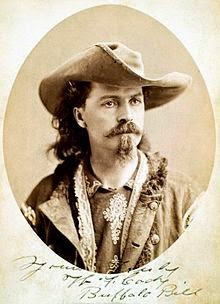
Some of my favorite profiles were about historical figures such as Davy Crockett, Buffalo Bill Cody [Pictured in 1875], Chief Sitting Bull, Chief Quanah Parker, Clara Barton, Luke (King of the Gamblers) Short, US Marshal Bat Masterson and western authors Bret Harte and Laura Ingalls Wilder.

Events from history included The Louisiana Purchase, the Alamo, the Battle at Wounded Knee, and the Battle of the Rosebud .

Inventions that helped shape our Nation were also addressed, from The Concord Coach (the first stagecoach that traveled across the western frontier), to one man's pioneering mail delivery service during the Gold Rush, and the arrival of train travel and the innovative Pullman Rail Cars.

Among my all-time favorite historical research projects were about the two guns that won the West: the Winchester Lever-Action Repeating Rifle [posted April 2011] and the Single-Action Army Revolvers (SAA) of Samuel Colt [posted March 2011], which included the famous Colt .45 Peacemaker [pictured left]. I have been so honored by the continued popularity of both these two posts, the latter of which had a whopping 148,835 individual page views.)

All in all, it has been a privilege to join the talented authors here at Sweethearts of the West, and to share my interest in history of the American West and my extensive research on subjects for their authentic inclusion in my books.

Because these posts involved hours of individual, in-depth historical research for inclusion in my book(s), they will no longer be available on this site. I will, however, be publishing them as a complimentary companion piece for readers of my western books, as well as make them available as a collective of my western historical research for history buffs or western writers.

In closing, it has been an honor to be a Charter member of this blog, and I wish to thank all the ladies (past and present) of Sweethearts of the West for their friendship, support, and encouragement.

Most of all, I want to thank ALL the many people (truly throughout the world) who have faithfully followed my posts each month over the years, many of whom take the time to contact me and even ask for research help. I hope you will continue to do so on my personal blog at www.ashleykathbilsky.com.

Again, thank you and I hope the New Year will bring health, happiness, prosperity, and wonderful adventures for all of you.

Happy Trails and God Bless. ~ AKB

Wednesday, September 18, 2013

How Yellowstone National Park Came To Be


 By Sarah J. McNeal author of the Wildings of Wyoming series including HARMONICA JOE'S RELUCTANT BRIDE, FOR LOVE OF BANJO and upcoming short story, A HUSBAND FOR CHRISTMAS to be released in the first anthology of Prairie Rose Publications.


I’ve only visited Wyoming once, but it only took that once to impress me for a lifetime. The beauty of its rolling hills and the majesty of the Teton Mountains still live in vivid color in my memory. Even though I live in North Carolina, I write westerns all of which are located in the fictional town of Hazard in the genuine state of Wyoming. Not only do I love the wild beauty of Wyoming, but I also admire its diverse and fiercely independent people. And a big plus, Wyoming is home of the first national park, Yellowstone.


After reports from homesteaders and trappers traveling through Wyoming came to the attention of the public with their descriptions of boiling mud, fountains of water shooting toward the heavens and diverse populations of wildlife, explorers began to come to the state to see what the fuss was all about. Keep in mind that the popular trend for any new lands was viewed by Americans as something for profit or exploitation.

After his first exploration of Yellowstone attempt failed, Ferdinand V. Hayden put together a second expedition to the Yellowstone region he named The Hayden Geological Survey of 1871 backed by the federal government. His report included numerous photographs by William Henry Jackson and paintings by Thomas Morgan along with comprehensive documentation in the hope of convincing the United States Congress to withdraw this portion of Wyoming from public auction and protect it. On March 1, 1872, President Ulysses S. Grant signed the Act of Dedication law that made Yellowstone the first national park. He did not want to see the same thing happen to Yellowstone that happened to Niagara Falls where commercial exploitation ruined the natural beauty of the park. He knew Yellowstone was a national treasure and its value would only increase with time.


                                                                THE ACT OF DEDICATION

AN ACT to set apart a certain tract of land lying near the headwaters of the Yellowstone River as a public park. Be it enacted by the Senate and House of Representatives of the United States of America in Congress assembled, That the tract of land in the Territories of Montana and Wyoming ... is hereby reserved and withdrawn from settlement, occupancy, or sale under the laws of the United States, and dedicated and set apart as a public park or pleasuring ground for the benefit and enjoyment of the people; and all persons who shall locate, or settle upon, or occupy the same or any part thereof, except as hereinafter provided, shall be considered trespassers and removed there from ...
Approved March 1, 1872.

Signed by

James G. Blaine, Speaker of the House

Schuyler Colfax, Vice President of the United States and President of the Senate

Ulysses S. Grant, President of the United States

(Quoted from Wikipedia)


Nathaniel Langford was appointed as superintendant over Yellowstone National Park, but received no salary, staff or funding to enforce the law. Of course, there was an outcry from developers to make the park smaller and allow development of property and attempts were made by entrepreneurs to build establishments to make money off the public, and animal populations of buffalo, mule deer and elk dropped from inappropriate and illegal hunting. After Langford was forced to step down, Philetus Norris volunteered for the position.  Finally, Congress saw the need for the superintendent to receive a salary and appropriated a small amount of funding for the park. Norris used the money to expand access to the park with crude roads and facilities.

In 1880, Harry Yount, who had once taken part in Hayden’s exploration of the park, became gamekeeper to prevent poaching and vandalism. He is thought of today as the first national park ranger. The headwater of the Yellowstone River was named Yount’s Peak in his honor.

Even after three superintendents had taken over the park, it was still difficult to maintain its pristine wilderness. Visitors to the park had only rudimentary roads and facilities which required the use of horses to traverse. Then, in 1908, the park got the attention of the Union Pacific Railroad.  Visitation increased dramatically with the railroad, but after World War II its popularity dropped off and finally ceased in the 1960s. The railroad ties were used to make trails, one of which was named the Yellowstone Branch Line Trail.

Sadly, Native American tribes were excluded from the park. Norris, a hero in other ways, disappointed me when I learned he had built a fort in Yellowstone to prevent the Native Americans from entering.

The park remained in peril from poachers until the United States Army arrived at Mammoth Hot Springs in 1886 and built Camp Sheridan, later renamed Fort Yellowstone. Under the Lacy Act, the army was effectively able to build permanent structures and protect the park. The National Park Service was created in 1916 and, by 1918, there was no further need for the army’s presence in the park.


I cannot close this blog without mentioning a personal hero of mine, John Muir, a naturalist and conservationist who is greatly responsible for the recognition of Yellowstone’s unique and diverse natural wonders. He was an unusual man who loved God’s creation. He explored the vast wilderness of Yellowstone without any special equipment except his own enthusiasm and ingenuity. Without proper climbing shoes, he created his own by hammering nails through the soles to create traction for mountain climbing. I intend to write more about him later.

For many who may never travel to Wyoming and see its wonders, it is still satisfying to know that it exists, that wild creatures run free there and a natural silence falls over the landscape uninterrupted by the building of houses, skyscrapers or roads. It is a place we can keep in our dreams and hold in our hearts.


 Where you can find me:
My Amazon Author’s Page: https://www.amazon.com/author/sarahmcneal