Showing posts with label American West. Show all posts

Tuesday, February 12, 2019

The RV Life in the West

by Rain Trueax

All of my books are set in the American West. It's where I live and love and where I know. They have varied from historic to contemporary along with some paranormals (which are hard to put in a box as they are kind of contemporaries with some fantasy). One of the contemporaries is about the RV lifestyle.

Saturday, December 30, 2017

END OF THE TRAIL (BUT NOT THE ADVENTURE)

By: Ashley Kath-Bilsky

As is the case with most things in life, there comes a time when we reach the end of the trail. When we realize the time has come to move on. When dreams, opportunity, or the promise of an exciting new adventure beckon us down a different path.

Although grateful for the road well traveled, like the pioneers and adventurers of yesteryear, we all want to explore new paths or see what lies beyond that distant mountain - real or imaginary. And so the time has come for me to saddle up and leave Sweethearts of the West. Today will be my final post on this site.

The first post I wrote for this blog was called Texas: A Whole Other Country back when the Sweethearts blog first began. Over the years I have shared my love of history, some personal history, and a great deal of historical research about the American West necessary for book projects. Through investigative research, writing, and period photography, I wanted to dig deep and not only address what life was like back then, but the people and events that shaped the West.

From Pinkerton Detectives, the Pony Express, Deadly Medicine in the American West, Duels and Gunfights (including the aftermath and legal consequences behind the famous Gunfight at the O.K. Corral) to Buffalo Hunters, the American Wild Horse, the History of the Texas Rangers, and The Comanche - Master Horsemen of the American West, I hoped to share with you my love for history, Country, and the West.

There have been biographical profiles about famous western film or television heroes such as John Wayne, Roy (King of the Cowboys) Rogers, and the legendary Will Rogers, as well as artists such as Frederic Remington.

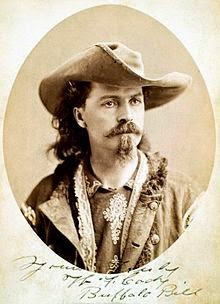
Some of my favorite profiles were about historical figures such as Davy Crockett, Buffalo Bill Cody [Pictured in 1875], Chief Sitting Bull, Chief Quanah Parker, Clara Barton, Luke (King of the Gamblers) Short, US Marshal Bat Masterson and western authors Bret Harte and Laura Ingalls Wilder.

Events from history included The Louisiana Purchase, the Alamo, the Battle at Wounded Knee, and the Battle of the Rosebud .

Inventions that helped shape our Nation were also addressed, from The Concord Coach (the first stagecoach that traveled across the western frontier), to one man's pioneering mail delivery service during the Gold Rush, and the arrival of train travel and the innovative Pullman Rail Cars.

Among my all-time favorite historical research projects were about the two guns that won the West: the Winchester Lever-Action Repeating Rifle [posted April 2011] and the Single-Action Army Revolvers (SAA) of Samuel Colt [posted March 2011], which included the famous Colt .45 Peacemaker [pictured left]. I have been so honored by the continued popularity of both these two posts, the latter of which had a whopping 148,835 individual page views.)

All in all, it has been a privilege to join the talented authors here at Sweethearts of the West, and to share my interest in history of the American West and my extensive research on subjects for their authentic inclusion in my books.

Because these posts involved hours of individual, in-depth historical research for inclusion in my book(s), they will no longer be available on this site. I will, however, be publishing them as a complimentary companion piece for readers of my western books, as well as make them available as a collective of my western historical research for history buffs or western writers.

In closing, it has been an honor to be a Charter member of this blog, and I wish to thank all the ladies (past and present) of Sweethearts of the West for their friendship, support, and encouragement.

Most of all, I want to thank ALL the many people (truly throughout the world) who have faithfully followed my posts each month over the years, many of whom take the time to contact me and even ask for research help. I hope you will continue to do so on my personal blog at www.ashleykathbilsky.com.

Again, thank you and I hope the New Year will bring health, happiness, prosperity, and wonderful adventures for all of you.

Happy Trails and God Bless. ~ AKB

Thursday, July 20, 2017

Lucius Beebe & The American West


Before introducing the topic of my post, I'm excited to tell you my new book, BEGUILING DELILAH, is now available on Amazon. At last! 
US Amazon     UK Amazon    CA: Amazon    AU: Amazon
FREE on Kindle Unlimited

Now, about Lucius Morris Beebe: (December 9, 1902 – February 4, 1966) Beebe was an American author, gourmet, photographer, railroad historian, journalist, and syndicated columnist.

Lucius Beebe (R) and partner Charles Clegg; back jacket photo - Steamcars To The Comstock

Born in Wakefield, Massachusetts to a prominent Boston family, Beebe attended both Harvard and Yale, where he contributed to the humorous magazine The Yale Record. He was known for pulling pranks, including an attempt to decorate J. P. Morgan’s yacht with toilet paper dropped from a chartered airplane. Consequently, he proudly had the sole distinction of being expelled from both Harvard and Yale. Eventually, he did earn his undergraduate degree from Harvard in 1926, only to be expelled during graduate school.
As a young man, Beebe published several books of poetry, but soon turned to journalism. He worked as a journalist for well-known newspapers in New York, Boston and San Francisco, and was a contributing writer to many magazines.
Beebe wrote a syndicated column for the New York Herald Tribune from the 1930s through 1944 called This New York. The column chronicled the doings of fashionable society, of which he was a notable part, at famous restaurants and nightclubs. He came up with the term “café society” to describe the people in his column.
Beebe in the West
In 1950, Beebe and his long-time life partner, photographer Charles Clegg, moved to Virginia City, Nevada, somewhat of a mecca at that time for writers. Beebe and Clegg purchased and restored the Piper family home.
Piper-Beebe House; Creative Commons; Attribution-Share Alike 3.0 Unported
Later, the pair purchased the dormant Territorial Enterprise newspaper, relaunching it in 1952. By 1954 the paper had the highest circulation in the West for a weekly newspaper. Beebe and Clegg co-wrote the "That Was the West" series of historical essays for the newspaper.
In 1960, Beebe began writing a syndicated column titled This Wild West for the San Francisco Chronicle. In addition to being a journalist, Beebe wrote over 35 books. His books dealt primarily with railroading and café society. Charles Clegg helped write many of his railroad books.

The pair also authored The American West: The Pictorial Epic of a Continent, first published in 1955 by Dutton Publishing. I own a 1989 hardcover edition published by Bonanza Books. I love it mainly for the plethora of wonderful illustrations. I wish I could share a few of them with you but don’t want to infringe on copyrights. The book is available used on Amazon. I highly recommend it.


Amazon description:
This truly magnificent book recreates with a wealth of rare pictures and vivid authoritative text the tremendous epic of the American West. As sweeping, spirited and many-sided as its subject, the book portrays the Old West in all its variety, from the days of the first pioneers to the final passing of the frontier. Includes more than 1000 illustrations.”

Reviews: There are only 2, but one is by our own Caroline Clemmons. Both give 5 stars.

By Bob G. on January 27, 2011

“. . .This is an absolute essential piece for your bookshelf if you are an aficionado of US History, particularly the classic era of the Western Frontier. What's most notable about this large volume, with over 500 pages, is the numerous illustrations (over 1000!) that will guarantee hours of your enjoyment. . .

“Worth the visual enjoyment alone, The American West: The Pictorial Epic of a Continent is written in an engaging style of colorful narration not seen in today's academic tomes. Much like the newspapers of the day, the authors Beebe & Clegg make fine use of the English language and deliver humor and excitement in their accounts.

“From the mountain men to the closing of the frontier, the whole story is presented as an illustrated summary that is always fun to pick up and refer to over and over again. A definite keeper!”

By Caroline Clemmons on November 11, 2014

“I bought this book after a friend mentioned it. It's a large book filled with illustrations and old photos to illustrate the text. Very useful for research.”


 Lyn Horner is a multi-published, award-winning author of western historical romance and romantic suspense novels, all spiced with paranormal elements. She is a former fashion illustrator and art instructor who resides in Fort Worth, Texas – “Where the West Begins” - with her husband and a gaggle of very spoiled cats. As well as crafting passionate love stories, Lyn enjoys reading, gardening, visiting with family and friends, and cuddling her furry, four-legged children.

Find Lyn’s books on her Amazon Author Page: http://amzn.to/Y3aotC

Sign up for Lyn’s Romance Gazette: http://eepurl.com/bMYkeX

Follow Lyn on these sites:  Lyn Horner’s Corner   Facebook   Twitter   Goodreads   

Wednesday, March 2, 2016

Adventures at the Empire Mine

By Paisley Kirkpatrick
The Empire Mine, located in Grass Valley, California, is one of the oldest, largest, deepest, longest, and richest gold mines in California. Between 1850 and its closure in 1956, the Empire Mine produced 5.8 million ounces of gold, extracted from 367 miles (591 km) of underground passages.
My grandparents lived in Nevada City, another town situated in the Mother Lode. Exploring gold mines became a summer ritual once I hit my teens. We'd find remnants lying on the ground in old garbage dumps and along the property not far from their house. Grandma and I found checks dated in 1901 from a gold mining company, crucibles (a ceramic container in which gold was melted at very high temperatures), and several other gold containers.
I remember the first time I visited the Empire Mine. We were able to step four feet into the mine to the place where the miners loaded and unloaded into the cart that carried them deep inside the mine.
We learned they kept canaries in cages. If one died, they knew methane gas (a colorless, odorless flammable gas that is the most common dangerous gas found in underground gold mines) was in the section they worked. The miners new they needed to vacate that area of the mine. They'd take mules down into the mines to carry what the miners dug out of the walls. They'd enter the mine before sunrise and come out after sunset.
The mules never saw daylight.
In Oct. 1850, George McKnight discovered gold in a quartz outcrop (ledge) called the Ophir Vein. It was bought and purchased several times until the Empire Mining Co. was incorporated in 1854. Miners from the tin and copper mines of Cornwall, England, arrived to share their experience and expertise in hard rock mining. Particularly important was the Cornish contribution of the Cornish engine, operated on steam, which emptied the depths of the mine of its constant water seepage at a rate of 18,000 gallons per day. This increased the productivity and expansion underground. Starting in 1895, Lester Allan Pelton's water wheel provided electric power for the mine and stamp mill. The Cornish provided the bulk of the labor force from the late 1870s until the mine’s closure eighty years later.
William Bowers Bourn acquired control of the company in 1869. Bourn died in 1874, and his estate ran the mine, abandoning the Ophir vein for the Rich Hill in 1878. Bourn's son, William Bowers Bourn II, formed the Original Empire Co. in 1878, took over the assets of the Empire Mining Co., and continued work on the Ophir vein after it was bottomed out at 1200 feet and allowed to fill with water. With his financial backing, and after 1887, the mining knowledge and management of his younger cousin George W. Starr, the Empire Mine became famous for its mining technology. Bourn purchased the North Star Mine in 1884, turning it into a major producer, and then sold it to James D. Hague in 1887, along with controlling interest in the Empire a year later.
Bourn reacquired control of the Empire Mine in 1896, forming the Empire Mines and Investment Co. In 1897, he commissioned Willis Polk to build the Cottage on land near the mine, using waste rock from the mine. The Cottage included a greenhouse, gardens, fountains and a reflecting pool.
PHOTOS:
Paisley Kirkpatrick
JERRYE AND ROY KLOTZ MD - Own work, CC BY-SA 3.0, c
Clark, W.B. - Gold Districts of California, Bulletin 193, California Division of Mines and Geology
Johnston, W.D. - The Gold Quartz Veins of Grass Valley, California, Professional Paper 194, USGS
Broken Promise is set in the California 1849 Gold Rush. The heroine inherits a gold mine and must discover its location to save her inheritance.
http://amzn.com/1612527485

Monday, October 20, 2014

Famous Western Dudes

by Lyn Horner

Among the many books about the Old West in my personal library, I have a big, heavy tome titled The American West, The Pictorial Epic of a Continent. Written by Lucius Beebe and Charles Clegg and originally published in 1955, this book is a treasury of facts and legends of the American West. It includes over 1,000 black and white illustrations.

While paging through the giant compendium, I came across a section on “Dudes.” According to the authors, softies from the eastern half of the continent and Englishmen with foreign accents and tall hats swarmed into the West from the earliest days of westward exploration. So many English dudes settled in Colorado Springs that it became known as “Little Lunnon” (London.)
 

One Boston dude who ventured west was Francis Parkman,”who doubted he would survive it and barely did.” The son of a clergyman, young Francis developed a love of wild areas, forests in particular, while living with his grandfather in an unsettled part of Massachusetts. After graduating from Harvard University and law school, Parkman traveled west for the first time, spending several weeks living with the Sioux Indians. This experience evidently left him with an unfavorable view of Native Americans, which colors much of his historical writings.

 
An English dude of the early frontier was Sir William Drummond Stewart. Between 1834 and 1843, Stewart made six overland trips from New Orleans to the annual fur traders rendezvous in the Green River area of Wyoming. His extensive entourage included artist Alfred Jacob Miller, who he retained to paint pictures of the American West to be hung in Stewart’s Murthley Castle in Scotland.


Another adventurer was Irish sportsman Sir St. George Gore. Dubbed “The Noblest Roamer of Them All’’ by one author, Gore once made an offer to the United States to hire a private army to exterminate the Indians. (Not so noble in my opinion!) He also mounted the greatest 19th century safari into the West. His heavily armed party left St. Louis in 1854, employing twenty-one two-horse red cherettes, a personal carriage and a number of express wagons, oxcarts and freighting wagons. Each night, his brass bed and iron washstand were set up in a large green and white striped tent.

Gore’s hunting expedition cost more than $500,000 and lasted three years. He traversed 6,000 miles of the mostly unexplored west, bagging 2,500 buffalo, 1,600 elk and 125 bears. When he had finally done enough killing, Gore offered to sell all of his equipment to the American Fur Company at Fort Union. However, the company’s factor tried to cheat him on the price. As a result, Gore built a huge bonfire, burning his wagons and boats in full sight of the fort. Today, Colorado’s Gore Mountains, Gore Pass and Gore Canyon memorialize the big-spending eighth baronet of Manor Gore.


Less well remembered is the debonair Frenchman, Marquis de Morès, who came to Little Missouri, Dakota Territory in 1883. De Morès founded a neighboring town, Medora, named for his wife, purchased 44,500 acres of land and began ranching. He also opened a stagecoach business. He named his house the "Chateau de Morès"; it is preserved in Medora as a historic site.

The Marquis and his wife set up housekeeping with a French chef, butler and housemaids. Four years later, their homestead was wiped out by the terrible blizzard of 1887, and the De Morès went home to France. A bronze statue of the Marquis in full cowboy regalia stands on the main street of Medora.

Now, from Dashing Irish, here's a peak at my version of a dude.


Bosque County, Texas; July 1874

“Consarned critter! Why’d you have to go and get stuck in there?” Lil Crawford muttered. She tugged harder on her rope in an effort to pull the bawling calf from the mud wallow it had wandered into. No luck. The animal was mired nearly up to his shoulders in thick clay gumbo. No matter how hard she pulled, she wasn’t going to get him out.

Nearby, standing beside the creek that had carved out the treacherous wallow along the bank, the calf’s mamma lowed plaintively as if blaming Lil for her baby’s predicament. Sending her a baleful glare, Lil said, “It’s not my fault. You should’ve dropped him in the spring like you’re supposed to ’stead of in the middle of summer. Then maybe he’d be big enough to climb out of this dang mud.”

Arms crossed, she studied the situation. She considered letting Major, her buckskin gelding, drag the calf out but feared injuring the little mite, possibly even breaking his neck. She sighed in disgust. There was no help for it; she’d have to get down in the mud and wrestle the calf out. It was either that or leave him there to die a slow, miserable death.

Dropping to the ground, she tugged off her boots and socks. She set them near the edge of the wallow, then rose, unbuckled her gun belt and laid it atop her footgear, where she could reach her six-shooter if need be. Her hat joined the pile for good measure.

Lil took a deep breath, set her teeth and stepped into the wallow, cringing as she sank up to her knees in the gooey muck. It squished between her toes and clung to her legs, plastering her britches to her skin. It also stank of rotting grass and other things she’d as soon not name.

Crooning softly to the frightened calf, she wrapped her arms around his middle, coating her hands, arms and shirt with mud in the process. She braced herself, preparing to wrestle the animal free.

A man’s deep-throated laugh caught her off guard. Jolted by the sound, she cried out in surprise and struggled to turn around, fighting the mud that imprisoned her legs. Once she succeeded, she stared, slack-jawed, at the stranger grinning at her from atop the most broken down nag she’d ever laid eyes on. The dude himself was a sight to behold. Togged out in a funny checked suit, with a derby hat atop jet-black hair, he made her lips twitch. However, her humor fled when she met his eyes. Brilliant blue, they shot sparks of light, brighter than the toothy grin splitting his handsome face.

“Sure’n I must be dreaming,” he said in a lilting Irish brogue. “Or are ye truly a lovely faery maid sent to enchant me?”

His foolish question broke Lil’s frozen stare and roused her anger. She knew she was far from lovely, and right now she was covered with nasty muck besides. “Mister, I’m no fairy and I don’t take kindly to strangers who ride up on me with no warning. So you can just turn that bag of bones around and git. Right now!”

“Ah, colleen, will ye not grant this poor beggar a few moments of your company? ’Twould be my pleasure to help ye with the wee animal if ye like.”

She snorted at his offer. “No thanks. I can get him out by myself. ’Sides, you wouldn’t want to muddy up your fancy suit, would you?” she drawled with a smirk.

 He looked down at himself and grimaced. “I take it ye don’t care for my fine attire.” Fine came out sounding like foin. “Well, you’re not the first. A layer of mud might not be such a bad thing, eh? With that in mind, will ye not reconsider and allow me to lend ye a hand?” He gave another roguish grin and splayed a hand over his heart. “In truth, your beauty so captivates me that I fear I cannot turn away.”

Lil bristled at his absurd comment. Certain he was making fun of her now, for her beauty would never captivate any man, she narrowed her eyes. She’d teach him, by criminy!

Without a word, she plowed through the mud over to where her belongings lay piled. She hastily wiped the worst of the mud from her hands onto the grassy embankment, then reached under her hat and drew her Colt. Coldly calm now, she turned to face the impudent stranger. It pleased her to see how fast he sobered with a gun aimed between his eyes.

“This is Double C land, mister. You’re trespassing. I could shoot you dead and nobody’d blame me. So unless you want a hole in your head bigger than your mouth, you’d best get moving.”

Sighing, he crooked his lips. “As ye wish.” He tipped his hat to her, clumsily reined his horse around and started to leave, but then he pulled up and glanced at her over his shoulder. He held up his hands when she cocked her gun. “I’m going, colleen, never fear. But first, could ye be directing me to the Taylor place, by any chance?”

Lil stared at him for a moment while questions raced through her head. Normally, she didn’t poke her nose into other folks’ business, but in this case . . . . “What do you want at the River T?” she demanded.

He frowned testily. “I mean no harm, if that’s what you’re thinking. I’m merely trying to find my sister. She’s wed to David Taylor. D’ye know him?”

Lil drew a sharp breath. “You’re Jessie’s brother?”

“Aye, that I am. So ye do know them.”

“I know them all right,” she gritted. She should’ve guessed who he was from his damned Irish accent and those blue eyes that were so much like his sister’s. The two looked a lot alike in other ways, too, except Jessie’s hair was dark red instead of black. And he was handsome, not beautiful.

Fiddlesticks! She didn’t care what he looked like. And she didn’t cotton to the way he was staring at her now, as if he was trying to see inside her head. It gave her an uneasy feeling. She wanted him gone. If giving him directions would get rid of him, so much the better.

“Follow the creek. It’ll take you to their place,” she snapped, jerking her head in the downstream direction. “Now leave before my trigger finger slips. On purpose.”

He blinked and seemed to come back to himself. “I thank ye for your kind assistance, milady,” he said mockingly. Facing forward, he kicked his sorry mount into a stiff-legged trot and headed down the creek, bouncing in his saddle.

Watching him, Lil snickered. He was a greenhorn if there ever was one, and he was going to be mighty sore tonight. She waited until he was well out of sight before laying her gun aside and returning her attention to the mired calf.


To find out what happens to the dude and the feisty Texas cowgirl, you can purchase Dashing Irish on these sites:


Find Lyn here:

Thursday, February 2, 2012

Eilley Orrum - The Lady of the Mansion

By Paisley Kirkpatrick


As a young girl, Allison "Eilley" Orrum realized she was destined for a life of success and riches. She knew it as she ran over the grassy moors and climbed the craggy ridges of her homeland in the Highlands of Scotland. Eilley had a rare gift: with the help of a glass sphere she called a peep-stone, she could see the future. Eilley, however, saw only a part of the things to come. Her famous crystal ball showed a vast fortune and a mansion. It did not reveal the personal grief she would encounter.

Born in Scotland in 1826, Eilley was a high-spirited young woman who was filled with ambition and a burning desire to achieve fame and fortune. Unfortunately, Scotland, in the 1800s had little to offer, so in order to escape, Eilley converted to Mormonism. She gave up her traditional Presbyterian faith and, with several hundred converts, sailed for America. The large group settled in the Mormon colony at Nauvoo, Illinois in 1843.

She married an elder of the church for the prestige, but bore him no children. They settled in Salt Lake City, where her marriage ended when her husband wanted to practice polygamy. Eilley secured a divorce and found employment at a trading store. While working there, a customer offered to sell a sphere of glass the size of a duck egg that he said was a crystal ball. Eilley immediately recognized the sphere as a peep-stone, similar to the one she had used in Scotland.

Peering into the mystical stone, she saw a vision of a green valley with a blue lake surrounded by large mountains. She knew this was the special place where her fame and fortune would be found. She married a farmer and they moved to a new colony of Mormons in the Carson Valley, Nevada. Instead of a sparkling lake, they found a sluggish creek and barren mountainous land. Disappointed, Eilley urged her easy-going husband to move on. Several days later they found her valley, which was exactly as she'd seen in her peep-stone with a beautiful lake and landscape. She envisioned a mansion with many rooms, gardens and flowing fountains. She also saw happy children. They marked off half the section of land and together built a cabin. The only thing missing was money and her husband's ambition to earn it.

Before winter set in, they left their homestead and moved to Gold Hill, a new town in Nevada that had just started to grow. She saw pieces of gold, miners, and wagons in her peep-stone. Eilley felt there was money to be made in Gold Hill, which at the time was a community of tents and saloons. They built a cabin and she started taking in boarders. The venture turned into a success until her husband was called back to Salt Lake City. He left immediately with their wagons and livestock. She stayed alone in a lawless town with only her peep-stone and herself to depend on. She was 32 years old...and childless.

She took in laundry as well as boarders. Her rule was that she would cook, wash, and care for the miners, but her bed was hers alone. She divorced her husband and the boarding house flourished, but she was not getting rich. One of the miners offered her his claim for an unpaid bill and Eilley accepted. The claim beside it belonged to Lemuel Sanford ”Sandy” Bowers, a young teamster who had recently arrived in Gold Hill. He asked her to share her life with him as well as her claim. He was 26, eight years younger than Eilley.

When they returned from their honeymoon, they were wealthy. The black streaks of sand Eilley had seen in her peep-stone were silver and together their claims made them two of the richest millionaires in Gold Hill. The couple, one illiterate and the other with illusions of grandeur, went on a European shopping trip to fill the mansion Eilley had built on the site of her old homestead in the Washoe Valley. On their way home the mother of a new infant died. They adopted the little girl and named her Margaret Persia.


After they returned home, Eilley stayed at the mansion and raised Margaret while Sandy returned to the mines. It was the happiest time of Eilley's life. She had everything she'd seen in the peep-stone. Unfortunately, her happiness didn't last. Her husband died of Silicosis, also called miner's disease. The Silver of the Comstock died out in 1867, and the business deals in which Sandy had been involved had been poorly handled. She tried to turn the mansion into a hotel. While she was expanding the mansion, she sent her daughter to Reno to live with friends. Margaret became ill and died. In 1875 Eilley lost the mansion by default and all the belongings were auctioned off.


Eilley was penniless. She started telling fortunes with the aid of her crystal ball and became known as the ”Washoe Seeress." Eventually the visions in her peep-stone vanished, and in 1903, at the age of 77, she died and was buried next to her husband and child overlooking her mansion.

Written by Anne Seagraves in the Women of the Sierra.

Saturday, September 3, 2011

The "Message Board" of the American West


The high desert of western New Mexico isn't the kind of place you would expect to come across an oasis...or what is known today as "sky island"...or, for that matter, a veritable message board for the American West. Yet if you happen to be traveling there and come across the El Morro National Monument, you would find all of the above.
Soft, flat El Morro Mesa has been a landmark for centuries. Thousands of years before people began carving their names in El Morro Mesa, Paleo and Archaic hunters gathered there, probably because even then it was a desert oasis. The ruins of a 13th century pueblo can still be found on top of the mesa and are known as the village of Atsinna. The people who lived there built the pueblos on top of the hard-to-reach mesa as a defensible position during a period of drought and famine.

The runoff from the mesa feeds the spring and gives it constant, reliable flow. It was a camping ground for Anasazi/Zuni traders, Spanish Conquistadors, the U.S. Army, and American pioneers. In fact, all of the above have carved their names into Inscription Rock at El Morro Mesa. The first translatable and dated message dates back to the 17th century when Adelantado Don Juan de Onate carved the following...


"Passed by here, the Adelantado Don Juan de Onate, from the discovery of the Sea of the South, the 16th day of April, 1605."

In the inscriptions of El Morro Mesa, history is written in many ways. For example, though they eventually lost control of New Mexico to the Mexicans (who in turn lost the colony to the United States), the Spanish ruled there for two centuries before the Pueblo Rebellion of 1680. They then reigned again for twelve years, after a victory against the Pueblo during which another a Spanish general carved the following....

"Here was the General Don Diego de Vargas, who conquered for our Holy Faith and for the Royal Crown all of New Mexico at his own expense, year of 1692."

The first American inscription at El Morro Mesa appeared in 1849 and was made by "Lt. Simpson" of the U.S. Army. In 1906, the state of New Mexico decided to recognize El Morro Mesa and Inscription Rock's historical value by incorporating both into El Morro National Monument. For the same reason, carvings are no longer permitted at Inscription Rock, but it remains a favorite camping spot for many modern explorers of the American West who don't mind going a bit off the beaten track to see a bit of history carved into desert stone.


Amber Leigh Williams
"Williams has brought the romantic back to romance!" ~ LASR

Tuesday, May 10, 2011

NATIVE AMERICAN RESEARCH BY RUTH ZAVITSANOS

Guest author Ruth Zavitsanos shares some of her research on Native Americans for her latest release, FLIGHT OF LITTLE DOVE.
"  
Available now from WhiskeyCreek Press
When the concept of my historical romance, FLIGHT OF LITTLE DOVE, came to mind I knew I wanted the story’s setting to be America’s frontier just a few years after the Civil War. I also knew I needed to have some Indian upheaval to make the opening paragraphs work.

A run for the prey. A hunt for the kill.
This was no game of tag. Deer Shadow’s coal black eyes were filled with hunger.

Little Dove drew a deep shuddering breath. She turned to run again. Deer Shadow’s swift muscular legs would easily catch her shorter ones. She mustered up her courage to stop in her tracks just as he was about to tackle her.

A few pages later, Little Dove escapes the night before her tribal ceremony to marry Deer Shadow, the chief’s son, she considers a brother. It was important for Deer Shadow to be from a friendly tribe. However, later Little Dove comes across a stagecoach being attacked by a tribe on the warpath.
Cheyenne family
near tipi

After research, I found the Cheyenne to be the friendlier tribe and the Comanches were the more volatile group of Native Americans living on America’s frontier.


THE WAY IT WAS IN THE USA: THE WEST, By Clarence P. Hornung, became a major book of reference for this story. The book is easy to follow with some terrific sketches from the time periods the author details.

Cheyenne Mother
with baby
A chapter later, when the handsome trail guide comes across the aftermath of the stagecoach attack, he immediately notes the arrows and shape of the footprints.

In comparing the Cheyenne with the Comanche I found several vast differences, including their physical stature (The Comanches were three to four inches shorter than the Cheyenne) "judging from his tall muscular build, Seb figured he was probably Cheyenne.
 
Quanah Parker,
Kwahadi Comanche
There are other details about these two Native American tribes I sprinkle throughout the story, adding a true sense of the people who did not need to claim the frontier but rather belonged to it.

FLIGHT OF LITTLE DOVE is a MUST READ on the Night Owl Review earning 5 stars. It continues to receive a variety of highly favorable reviews and is a June book club selection at a local book shop (outside of Philadelphia) awarded BEST OF THE MAIN LINE.
 
Currently, Ruth is working on the follow-up to FLIGHT. The story takes place outside of Denver at the SISTERS INN (Tentative book title). She is a member of PennWriters, Valley Forge Romance Writers of America, Society of Children’s Writer and Illustrators and has two children’s chapter books published, THE VILLA DOG and THE OLD FORTRESS DOG. For more information, visit her website at
www.ruthzonline.com