Showing posts with label Darlin' Irish. Show all posts

Monday, August 20, 2018

Showdown at Fort Sanders


Fort Sanders was a wooden U.S. Army fort constructed in 1866 on the Laramie Plains in southern Wyoming. First named Fort John Buford, it was renamed Fort Sanders after General William P . Sanders who died at the Siege of Knoxville, Tennessee, during the American Civil War. This was the second fort named after Sanders, the first being in Knoxville.
Fort Sanders officers quarters; http://wyomingsteakhouse.com
Originally intended to protect travelers on the nearby Overland Trail from Indian attacks, the  troops later protected Union Pacific crews along the rail line from the Laramie Range to across the plains. The railroad arrived near the fort in the spring of 1868.
In 1869 the town of Laramie (originally called Laramie City) was created about 3 miles north of the fort. After the construction of Fort D. A. Russell in Cheyenne in 1868, Fort Sanders became less important, but the War Department maintained it until 1882 when the buildings were sold. Today, the only building still partially standing on the grounds of the fort is the stone guardhouse, built in 1869.
Remains of 1869 stone guardhouse; photo by Jeffrey Beall ; Creative Commons 3.0 

Although Fort Sanders is less famous than some other frontier forts, it served as the backdrop for an important meeting that settled a dispute over the route of the Union Pacific Railroad across Wyoming. The disagreement was between Thomas C. Durant, vice president and general manager of the railroad, and General Grenville Dodge, the UP’s chief engineer. (Details below)
Thomas C. Durant


If you watched the TV series Hell on Wheels, you know Thomas Durant was depicted as a crafty, self-serving character. Although fictionalized, this portrayal contained grains of truth.
Trained as a medical doctor, Durant gave up medicine to become a financier and railroad promoter. He worked for the Chicago and Rock Island Railroad, becoming acquainted with the company's president, Henry Farnam. The two men formed a new company and contracted to manage construction of the Mississippi and Missouri RR across Iowa, acquiring large land grants in the process. The project entailed building a wooden railroad bridge, the first bridge across the Mississippi River. The bridge connected the M&M with the Chicago and Rock Island RR.
Durant actually built the line less than halfway across Iowa, but he and his cohorts became rich through stock manipulation. The Rock Island eventually took over and completed the route to Council Bluffs, Iowa, on the Missouri River.  
In 1862 President Abraham Lincoln chose Durant’s new company, the Union Pacific, to build the eastern half of the first Transcontinental Railroad. The starting point was at Council Bluffs.
Durant had a ruthless reputation, known for “squeezing friend and foe for personal gain.” Since the government paid for each mile of track laid, he overrode his engineers, ordering track to be laid in large, unnecessary oxbows. And he was in no hurry. Over the first two-and-a-half years, the UP only completed 40 miles of track and some 10 miles more of roadbed. Peter A. Dey, the chief engineer, quit due to a routing dispute with Durant.
Meanwhile, during the Civil War, Durant made a fortune smuggling contraband cotton from the Confederate States with the help of Gen. Grenville M. Dodge, who served as General Ulysses S. Grant’s intelligence chief. Dodge held a degree in civil engineering and also oversaw the rapid repair and rebuilding of railroads, bridges, and telegraph lines destroyed by the Confederates. After the war, Durant employed Dodge as the UP’s chief engineer and the pace of construction picked up.
However, Durant sometimes interfered with Dodge’s choice of route, allowing his consulting engineer, Silas Seymour, to change it – not to the advantage of the railroad. He tried this again when the line reached Rock Creek west of Laramie, Wyoming. Durant’s change added twenty miles to the route, costing the company more.
Meeting at Fort Sanders; General Grant with hands on fence; also present are Gen. Sheridan and Gen. Sherman
Matters came to a head at Fort Sanders in July 1868. General Grant came west along with others as part of his presidential campaign. While at the fort, they they reviewed the dispute between Durant and Dodge. Grant declared Dodge was to make all route decisions, with no further interference from Durant.

Now I must confess I have a soft spot in my heart for fort Sanders. You see, it's where Captain David Taylor, the hero of Darlin' Irish, my very first novel, is stationed. He's on his way back to the fort after a trip east when he meets Jessie Devlin, the feisty heroine, at the Union Pacific depot in Omaha. 
getBook.at/Darlin-Irish (universal Amazon link)
Book excerpt: 

A woman’s shriek rent the air, interrupting his ruminations and jerking him to attention. The sound had come from inside the depot.

“What the devil?” he muttered. Cutting a path between startled travelers, he shoved open the door and stepped into the building. The stuffy interior reeked of tobacco and sweaty bodies. Finding a gap in the crowd, David caught sight of a red-faced young corporal. The trooper bobbed and weaved, arms raised to fend off blows being rained upon him by a woman in a brown poke bonnet. Her weapon was a heavy looking black reticule.


“Scoundrel! I’ll teach ye some manners, I will!” she vowed in a furious Irish brogue. Swinging wildly, she sent the corporal’s blue cap flying.

“Take it easy, lady!” he cried. “I didn’t mean no harm.”

Wondering what offense the man had committed, David shouldered his way through the crowd until he stood directly behind the woman. Slim and a head shorter than himself, she wore a calico gown, the same drab color as her bonnet. Some settler’s wife, he assumed. But where was her husband?

“No harm, indeed! Stand still, ye heathen, and take what’s comin’ to ye,” she ranted. As she spoke, the yellow-haired corporal spotted David’s uniform and threw him a desperate look.

Feeling duty-bound to step in, David cleared his throat loudly and said, “Excuse me, ma’am, but perhaps that’s enough. The corporal might be needed in one piece when he gets back to his post.” His remark drew laughter from several bystanders.

The woman snorted angrily. “Indeed? Well, I don’t give a fig whether the lout is in one piece or twenty!” So saying, she landed a solid whack on the corporal’s noggin that made him yelp.

“Get ’im, darlin’!” a man in the crowd shouted, egging her on.

Afraid the young soldier might retaliate, David reached out to grasp the woman’s arms, stopping her in mid-swing. “Ma’am, if you’ll just settle down . . . .”

“Let me go!” she shrilled, attempting to wrench free.

He should have complied with her demand, but some primitive instinct made him slip an arm around her and haul her back against him. A sweet scent of lilacs and woman washed over him, and he instantly grew aware of her feminine curves.

She gasped indignantly. “How dare ye? Bithiúnach! Muclach! Take your filthy hands off me.”

Glad he didn’t understand Irish, David cursed under his breath when she rammed her heel into his shin. It didn’t hurt much thanks to his leather boots; nor did the small fists pounding on his arms. But her frantic twisting sent the wrong signal to his male parts.

“Calm down, you little wildcat!” he growled. Releasing her, he stepped back before he humiliated himself.

Whirling around, the woman drew back her arm as if to slap him, only to freeze when their eyes met. A choked sound escaped her lips and the angry color drained from her cheeks. Seeing her sway, David grasped her shoulders to steady her. Her hands clutched his forearms as he returned her wide-eyed stare.

Her eyes were sapphire blue, so dazzling that he had trouble breaking their hold upon him. When he did, he noticed how young she looked – eighteen or twenty, he guessed – and what a beauty she was.
His gaze wandered over her smooth, creamy cheeks and dainty nose then lingered on her pink parted lips. Forcing himself to look elsewhere, he noted the dark auburn curls framing her brow. Her ugly bonnet hid the rest of her hair, but he bet it would look like silk when she let it down.

Then he noticed how rapidly her breasts rose and fell, and desire surged through him, swift and strong. He felt a loco urge to pull her into his arms and kiss her. Reluctantly dragging his gaze back to her sapphire eyes, he wondered what had come over her. A moment ago, she’d been mad as a hornet. Now she stared at him as if she were seeing a ghost.

Dazed by the sight of him, Jessie wondered vaguely if she was having one of her visions. Her gaze kept returning to his gray-green eyes. Crowned by dark brows with an eerily familiar slant, they matched those she’d so often seen in her dreams. Could this tall, uniformed stranger be the man she had left home to find? She hadn’t expected her quest to bear fruit so soon. And the longer she studied his sun-bronzed, square-jawed face, arrow-straight nose and unyielding mouth, the more she doubted he was the one.

Those rakish features were hard, not gentle, and his hauntingly familiar eyes did not caress her like the ones in her dreams. Instead, they devoured her, making her stomach flutter and her heart race. When he boldly stared at her breasts, they tingled as if he were actually touching them. Stunned by her reaction, she inhaled sharply, catching the scent of shaving soap and virile male. She wondered if he would kiss her.

Sweet heaven! What was she thinking? She didn’t want him to kiss her. This fierce looking stranger could not be the man she was seeking. Surely his eye color and slanted brows were merely a coincidence.

Lyn Horner is a multi-published, award-winning author of western historical romance and romantic suspense novels, all spiced with paranormal elements. She is a former fashion illustrator and art instructor who resides in Fort Worth, Texas – “Where the West Begins” - with her husband and a pair of very spoiled cats. As well as crafting passionate love stories, Lyn enjoys reading, gardening, genealogy, visiting with family and friends, and cuddling her furry, four-legged children.

Amazon Author Page: viewAuthor.at/LynHornerAmazon (universal link)
Newsletter:  Lyn’s Romance Gazette http://eepurl.com/bMYkeX
Website:  Lyn Horner’s Corner 

Friday, April 20, 2018

Grand Island, Nebraska


When plotting my first book, Darlin' Irish, I planned for my characters to meet at the Union Pacific Railroad Station in Omaha, Nebraska, and travel west on the U.P. I wanted them to stop somewhere along the route and spend several days there, giving romance a chance to bloom. Having the hero get wounded protecting the heroine provided a reason for their stopover, but where to stage the incident?

After hunting up a train schedule from the period, 1872, I chose Grand Island, Nebraska, as the setting. The town was a dinner stop, allowing passengers about 30 minutes to purchase and wolf down a rushed meal in the nearby eating house. It was also located far enough along the route to make it dark out when my characters arrived, uh-hum, after a conveniently staged delay back in Omaha.

While preparing to write the section about Jessie and David's stay in Grand Island, I researched the town's history. My favorite source was and is a book titled The Town Builders by Robert N. Manley. I ordered it from the Sturh Museum of the Prairie Pioneer, located in Grand Island.

In 1857, 35 German settlers traveled into central Nebraska from Iowa. They settled on an island called La Grande Isle, meaning large or great island - likely named by French traders. It lay between the Platte River and a narrow channel that branched off the main river. They arrived there on July 4 and by September had built log houses out native ash, elm and cottonwood timber. Over the next nine years, the settlers faced hardships including blizzards, conflicts with Native Americans, and among the Germans themselves, some of whom scattered, staking squatters' claims in the Platte River valley .

During this period, advocates for a transcontinental railroad agreed that the most practical route should follow that same valley, the path so many covered wagons had rolled along. There would also need to be feeder lines connecting major cities to the main trunk line, and it was thought a good place for these lines to meet the U.P. would be in central Nebraska, where Grand Island lay.
Grand Island, 1867; wikipedia public domain

Eventually, Union Pacific surveyors laid out a town called Grand Island Station slightly inland from the island. Many settlers on Grand Island moved to the new town site. In 1868 the railroad arrived, bringing more business and settlers. By 1870, 1,057 people lived in the "new" town and in 1872 Grand Island was incorporated.

Grand Island never became quite the railroad hub envisioned by some or the nation's capital as other starry-eyed dreamers predicted. However, it did serve as an important stopping point for weary, hungry U.P. passengers, a fact I took advantage of in Darlin' Irish.


Excerpt:

A sickle moon hung low in the blue-purple sky over Grand Island, Nebraska, as Jessie ambled along the tracks. This was their first meal stop, and they were late due to the delay back in Omaha. Soon it would be pitch dark. And thank goodness for that! With the onset of evening, the heat had finally begun to let up.
The aroma of fried meat carried on the ever-present wind, coming from the nearby eating house, which was crammed to overflowing with ravenous passengers. They only had thirty minutes to wolf down their supper. It must be a regular bedlam in there.
She and Tye had already eaten from their store of food, as had others with little funds to spare. Her brother now stood near their coach, deep in conversation with the two would-be miners she had overheard earlier. Tired of listening to talk of silver mining, Jessie had slipped away, needing a few minutes alone, especially after enduring David Taylor’s company.
Aye, and after he’d finally returned to his coach, she’d had to put up with Tye’s maddening prattle. He had teased her, accusing her of being “taken with” the insolent captain and laughing at her adamant denial. Worse still, he’d asked if David Taylor might be the man she searched for, the man in her fateful vision. Naturally she had scoffed at the idea.
“Impossible!” she muttered, swatting a windblown curl out of her eye as her thoughts circled around the captain. She kept seeing that look of pity he’d given her. It still raised her hackles, but it also made her wonder. Might that spark of humanity mean he hid a softer heart beneath his steely exterior? She had told herself over and over again that he couldn’t be the gentle hero from her dreams. Was she wrong? . . 

Caught up in her thoughts, Jessie was nearing the caboose when she suddenly became aware of footsteps behind her. Turning, she saw a large male form approaching her. “Tye, is that you?” she called, unable to make out more than the man’s silhouette in the deepening gloom.
When he gave no answer, her skin prickled with fear and her heart began to race. She spun around and attempted to flee, but she’d taken barely two steps when a rough hand clamped over her mouth, smothering her terrified cry. She was hauled against a foul-smelling, buckskin-clad body.
            “Surprise, sweetheart,” her captor rasped. “You lookin’ to meet that uppity bluecoat back here? Seems like he ain’t comin’. But Wolf’s here, and we’re gonna have us some fun, girlie.”
            Oh God! Not Gerard! Flooded with fear, Jessie kicked and twisted and attempted to bite his filthy hand, but he merely laughed as he dragged her around the caboose. Her puny strength was no match for him. She couldn’t even reach up to claw his face with his arm fastened around her like a vice, pinning her own arms to her sides.
Help me, someone! she screamed silently.
*  * *
            As he left the eating house David heard Tye Devlin shout his sister’s name. Jessie did not reply. Standing by the train, the Irishman peered back and forth in the growing darkness.
            “What’s wrong?” David asked, striding up to him.
            Devlin pivoted, his face grim. “I can’t find Jessie. She was here a few minutes ago. Then she was gone. I was talking to two other gents and I didn’t see her leave.”
            David clasped his shoulder. “Take it easy. Did you check your coach?”
            “Aye, but she’s not there. And I’ve a terrible feeling she’s in trouble. I know she is!” Devlin glanced wildly toward the tender, where coal was still being loaded. “I was about to look up front. Will ye check the back end?”
            “Be glad to.”
            With a quick nod, Devlin trotted off toward the engine, while David headed in the opposite direction, hoping the Irishman’s bad feeling was wrong.
“Miss Devlin,” he called, but got no response. Didn’t the little greenhorn even have sense enough not to wander off by herself in the dark? And she thought she could take care of herself. “Fool girl!”
Damn, what if Gerard and his pals had gotten hold of her? At the thought, he broke into a run.
            “Jessie!” he shouted. Still no reply.
Then a woman screamed. The sound was cut off, but it clearly came from the other side of the train. Cursing, he drew his gun and vaulted over the coupling between the last two cars.
            “Bitch! Quit your bitin’!” a familiar ugly voice snarled, followed by the crack of a slap and a pained cry.
            “Gerard, you bastard! Leave her alone!” Seeing the struggling figures in the deep shadows by the caboose, David charged forward.
            The buffalo skinner roared a curse and shoved Jessie aside. She cried out as Gerard rushed at David. Recalling the man’s knife, David raised his gun but hesitated to fire, fearing he might hit the girl in the dark. His hesitation cost him. Spotting the glint of moonlight on metal, he started to twist aside, but Gerard’s blade caught him in the chest and slashed upward across his right shoulder.
The impact sent his gun flying, and he cried out as pain lanced through him. Instinctively, he knocked Gerard off balance and spun away. Sucking air between his teeth, he clutched his shoulder, feeling blood ooze between his fingers. Gerard regained his footing, growled, and rushed at him again. David dodged aside, forcing himself to ignore the pain.
“Want the next one in your belly, blue-leg?” the buffalo skinner taunted, circling him. “Or should I mark up your pretty-boy mug first? Think that little Mick would take to yuh with a few scars?”
“You won’t get away with this,” David ground out.
“Hell, I’ll be long gone on this here train before they find yuh. Or the girl.” Gerard gave a guttural laugh. “I watched yuh jawin’ with her and that buck she’s with. When I seen her sneak off from him, I hoped you’d come after her so’s I could even the score. Only I figured on havin’ a might more time with her first.”
David wanted to throttle him. “You need muzzling, cabrón, and that’s what I aim to do.”
            “Why, you meddlin’ yahoo! Think you’re gonna wup me, do yuh?” Gerard lunged, knife slashing wildly.
Evading him, David grabbed the man’s knife arm and tried to wrench the blade from his grasp. He failed but hung on tight.
“You’re a dead man,” the buffalo skinner growled, hammering at him with his other fist.
David attempted to block the blows, but the pain was almost more than he could stand, and he was losing blood. He could smell it mingled with Gerard’s rank odor, and he was beginning to feel cold, not a good sign.
            Stumbling, the buffalo skinner fell, and David went down with him. He gasped in agony when they hit the ground but maintained his death grip on the other man’s knife arm. They rolled in the dust, ending up with Gerard on top, straddling him.
            “I’m gonna gut you like a downed buffalo, bluebelly,” he threatened, attempting to drive his blade into David’s throat. “Then I’ll have me some fun with your little friend.”
“Like hell!” David snarled. With a cry of pure rage, he heaved the heavier man upward enough so that he could jam his knee into the bastard’s groin.
Gerard shrieked and slumped forward. Gagging, he attempted to clutch himself. Still, he hung onto the knife, forcing it lower with his weight. Staving off pain and weakness, David tightened his grip on Gerard’s forearm and grabbed his wrist. He gave a swift, sharp twist and heard bones snap.
The buffalo skinner let out a bloodcurdling howl and dropped the knife. David shoved him away. Landing on his backside, Gerard cradled his broken arm and rocked back and forth, keening shrilly.
            Slowly, David levered onto his knees. His breath came in labored gulps, and he swayed precariously. Marshalling the last of his strength, he delivered a roundhouse left to Gerard’s jaw that silenced him abruptly. He toppled backward onto the hard earth and lay there like a felled log.
            David slumped over. Gotta tie the bastard up, he told himself, but he was used up. Dizzy and hurting all over, he collapsed near his unconscious enemy.
            Huddled against the caboose, Jessie could barely make out the two men lying still and silent on the ground. Quaking from head to foot, she gathered her courage and forced herself to move. She had to find out if David was alive.
            Dreading the worst as she approached him, she dropped to her knees and hesitantly reached out to touch him. When she felt his chest move under her hand, she released a cry of gladness. His face was a pale blur, but she thought she saw his eyes open.
            “Thank heaven!” she said in a reedy voice. “I feared ye were . . . .” She broke off, unable to say the word.
“Not yet,” he muttered weakly. “He knifed me. Have to stop . . . the bleeding.” He fumbled with a button on his coat.
“Let me,” Jessie said, finding his hand and gently pushing it aside. Her own hands trembled as she worked open his heavy jacket. She longed to weep, but that would do him no good.
“Help!” she cried as loud as she could, praying someone would hear. Why hadn’t she run for help before, instead of cowering like a terrified rabbit while David fought to protect her? And why had she stupidly put herself in danger in the first place? This was all her fault!
            “You shouldn’t have . . . left your brother,” David mumbled, echoing her guilty thoughts.
            She choked down a sob. “I know. I’m so sorry.”
            He grunted and lay silent while she unbuttoned his blood-soaked shirt. When she probed gingerly beneath it, he jerked and inhaled sharply. Jessie bit her lip, hating to cause him more pain, but she could barely see him in the dark, and she had to know the position of his wound.
“Oh God,” she whispered, finding a long, gaping furrow that ran from near his breastbone, diagonally across his right shoulder. With such a wound, how had he managed to best Gerard?
Hastily, she tore a strip of cloth from her petticoat, folded it into a pad, and pressed it over his wound. She tried to be gentle, but still he groaned. Touching his cheek, she found it cold and clammy, and she couldn’t contain a whimper of fear for him.
“Help! Please!” she cried again, still getting no response. What should she do? She had to keep pressure on the gaping wound, but she couldn’t just sit here while he slipped away.
Dear God, don’t let him die, she prayed.

Lyn Horner is a multi-published, award-winning author of western historical romance and romantic suspense novels, all spiced with paranormal elements. She is a former fashion illustrator and art instructor who resides in Fort Worth, Texas – “Where the West Begins” - with her husband and a pair of very spoiled cats. As well as crafting passionate love stories, Lyn enjoys reading, gardening, genealogy, visiting with family and friends, and cuddling her furry, four-legged children.

Amazon Author Page: viewAuthor.at/LynHornerAmazon (universal link)
Newsletter:  Lyn’s Romance Gazette http://eepurl.com/bMYkeX
Website:  Lyn Horner’s Corner 

Saturday, February 20, 2016

The Peshtigo Fire: You never heard of it?

By Lyn Horner


While living near Chicago years ago I became fascinated by the history of the Great Fire of 1871, which leveled most of the city. Prior to the fire, Chicago’s buildings, even the fine hotels and mercantile district, were built out of wood. That summer was hot and deadly dry. The city’s fire crews had their hands full fighting one fire after another, even managing to tame a vicious blaze the day before Mrs. O’Leary’s cow kicked over her lantern (so the legend goes.) But there was no stopping the wind-driven monster that sent Chicagoans running for their lives on the night of Sunday, October 8, 1871.
Chicago in Flames -- The Rush for Lives Over Randolph Street Bridge
Originally from Harper's Weekly, 1871 – in the Public Domain

What most people probably don’t know is that a forest fire driven by the same brutal winds that destroyed Chicago occurred on the very same night some 250 miles north in Peshtigo, Wisconsin. In those days small fires were often set to clear forest land for farming and railroad construction. On that day in 1871, a cold front swept in from the west, bringing strong winds that fanned the fires out of control, creating a massive firestorm. Flames of at least 2,000 degrees Fahrenheit swept on winds of 110 miles per hour or stronger obliterated Peshtigo and burned across 1,875 square miles (4,860 km² or 1.2 million acres) of forest – an area about twice the size of Rhode Island.
Extent of the Peshtigo Fire
GNU Free Documentation License, Version 1.2
 
The Peshtigo Fire is the deadliest in American history. An accurate death toll could not be determined because local records were destroyed in the fire. Between 1,200 and 2,500 people are believed to have died. A later report to the Wisconsin Legislature listed 1,182 deceased or missing residents. More than 350 unidentified bodies were buried in a mass grave, in what is now the Peshtigo Fire Cemetery.
Peshtigo Fire Cemetery -- Mass Grave
Creative Commons Attribution-Share Alike 2.5 Generic
 

Survivors reported that the firestorm produced a fire whirl (like a tornado) that tossed rail cars and houses into the air. Some survived by immersing themselves in the Peshtigo River, wells, or other nearby bodies of water. Some drowned while others died of hypothermia in the frigid waters.

At the same time, another fire burned parts of the Door Peninsula, leading to the incorrect assumption that the fire had jumped across the waters of Green Bay. In Robinsonville (now Champion) on the Peninsula, Sister Adele Brise and other nuns and residents fled to a local chapel. There they prayed to the Virgin Mary. Although surrounded by flames, the chapel did not burn. Those gathered inside called their survival a miracle.

On the same day as the Peshtigo and Chicago fires, other towns across Lake Michigan also burned, as did Port Huron at the southern end of Lake Huron.

The Peshtigo Fire Museum houses several items that survived the fire.
Charred wood from Peshtigo Fire
Creative Commons Attribution-Share Alike 2.5 Generic
 
If you would like to read a FREE fictional account of the Chicago Fire, based firmly on history, I invite you to try my novella, White Witch (Texas Devlins, Book One.) An introduction to the Texas Devlins series, it spotlights the heroine's ability to look into the future and sets up her adventures in search of the man of her dreams. For that story you'll need to read Darlin' Irish (Texas Devlins, Book Two.)

Amazon                                       Amazon


Find all of my books on my Amazon Author Page:
http://amzn.to/Y3aotC


Wednesday, May 20, 2015

Fictional Characters & Historical figures

by Lyn Horner

Recently, Charlene Raddon of Cover-OPs http://cover-ops.blogspot.com/ designed new covers for my Texas Devlins series. She and I both spent many hours searching for models to portray my characters, not an easy task in some cases. I think we succeeded fairly well, but this got me thinking about how I come to "see" the people in my stories. Do they pop into my mind full blown like Athena from the head of Zeus? No! They are never that obliging.

Usually, my imaginary friends (they do become my friends) take shape gradually. They begin as shadowy figures with one or two distinctive characteristics, like Jessie Devlin's red hair and fiery temper. Yes, she's Irish and I gave her those stereotypical traits with backstory to explain them. Other facets of her appearance and personality are a compilation of real people, either ones I've met or seen on TV and movies -- or historical figures. This is true with all of my characters.

For instance, Captain David Taylor, Jessie's dream hero in Darlin' Irish, is based partly on Mac Traven, Tom Selleck's character in The Shadow Riders, one of my favorite Louis L'Amour novels and TV westerns. Mac is a Texan who fought for the North in the Civil War, the same as David Taylor. However, David is edgier than Mac and unlike the Traven family, David's father considers him a traitor. This is what happened to many southern-born soldiers who sided with the Union.


6 Generals Who Fought Against their Home State in the Civil War: A native of Southampton County, Virginia, George Thomas was a career soldier who had served with distinction in the Mexican-American War and later taught at West Point. But despite his strong southern roots—he’d grown up on a plantation and even owned slaves—Thomas refused to break his oath to the U.S. Army and remained loyal to the Union during the Civil War. The decision sent shock waves through the South. J.E.B. Stuart, a former pupil of Thomas’ at West Point, said he deserved to be hanged as a traitor. Even his own sister disowned him, writing that he had been, “false to his state, his family, and to his friends.”

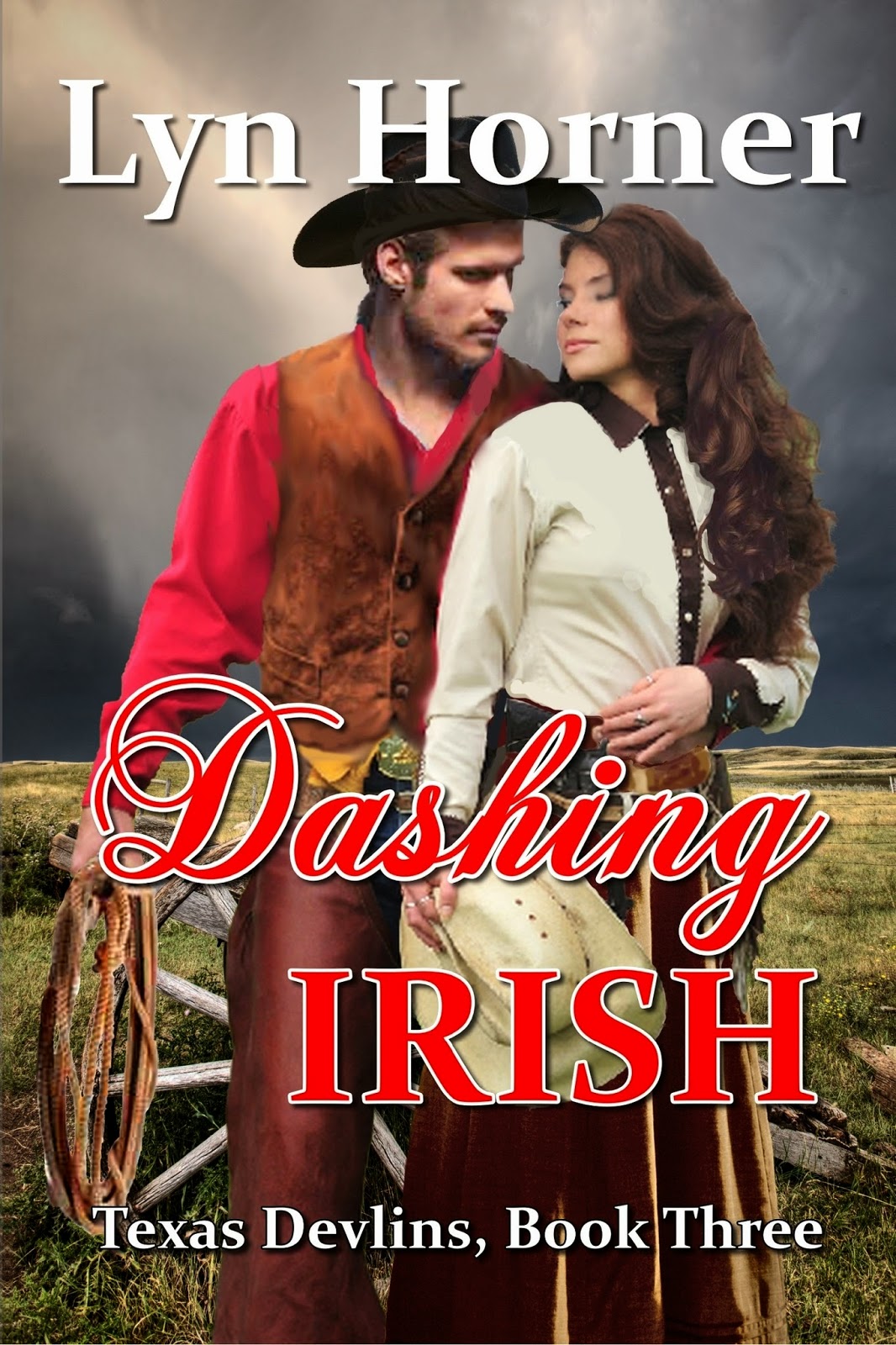
Lil Crawford, the heroine of Dashing Irish, Is based on real cowgirls who worked as hard as any man on ranches and trail drives. Some wore riding skirts, others wore britches. Virtually all were well versed in riding, roping, branding and handling a gun. They were not your average pioneer woman in calico and poke bonnet, but neither were they all that rare. The same goes for Lil's mixed blood lineage. She's one quarter Cherokee because her mother was the offspring of a French fur trapper and an Indian woman. Many a white man on the western frontier took an Indian wife, including some of my ancestors.


One of my favorite characters in Choctaw Jack from Dearest Irish. Jack is a half breed (actually three quarters) who works as a cowboy part of the year and a blacksmith the rest of the time for the Army at Fort Sill in the Indian Territory (Oklahoma.) He's also a Confederate veteran who fought with one of the Indian brigades in the Civil War. Think I made that up? Nope. In his very cool little book CIVIL WAR in the Indian Territory, Steve Cottrell says, "...Choctaws and Chickasaws, whose lands bordered Texas, readily sided with the South..." Other tribes fought for the North.


Authors gain inspiration from many sources and I'm no different in that. The next time you fall in love with a fictional character, think about what might have gone into creating him or her. Just for the fun of it, you could even look for stories on the internet about real people who bear a similarity to that character. You might learn some surprising historical facts.
 
 
Meanwhile, let me know what you think of my new book covers. Do the people depicted on them catch your eye? Do they tempt you to get acquainted with them in the pages of the book? I would love to know.
 
Oh, in case you're wondering, there is a Texas Devlins, Book One. Titled White Witch, it's a novella introducing the Devlins before they head west to Texas.
 
You can find all of my books on Amazon: http://www.amazon.com/Lyn-Horner/e/B004CY506Y


Wednesday, March 19, 2014

A Woman for President -- in 1872?

Victoria Woodhull

Have you heard of Victoria Woodhull? I had only a vague recollection of her being an early suffragette before coming across an article tucked inside a book purchased from a used bookstore. Who placed it there I have no idea, but this Parade Magazine article, printed in March 1998, astounded me.

Victoria Woodhull was far ahead of her time. The first woman owner of a Wall Street investment firm and founder of her own newspaper, she was an adviser to Cornelius Vanderbilt and spoke before Congress demanding women be given the vote. Most astonishing, she ran for President in 1872 against incumbent Ulysses S. Grant and newspaper mogul Horace Greely. Just think, that was 142 years ago – and we still haven’t had a woman president.

On top of all that, Victoria was a psychic, or claimed to be. Being a firm believer in such God-given gifts, when I read that about her, I had to find out more. From young childhood, she was exploited by her father in his carnival show as a clairvoyant and fortune-teller. She was able to recall past events and predict future ones, could find missing objects and people, and supposedly cured afflicted individuals. She was also said to communicate messages from the dead.

Raised in squalor, beaten and starved by her father, with little or no education, Victoria always claimed to be guided by spirits, one of whom told her she would “rise from poverty one day to become ruler of the nation.” Perhaps that’s why she ran for President. Obviously she didn’t win, but she did “set America on its ear” proclaims the 1998 article.

In her book Other Powers – The Age of Suffrage, Spiritualism and the Scandalous Victoria Woodhull, author Barbara Goldsmith says of Woodhull’s time, “If a married woman worked, her wages were given directly to her husband. She could not dispose of her property upon her death. If she divorced, she automatically forfeited custody of her children. Women could not enter universities, law schools or medical schools. They could not serve on juries, and they could not vote.

“Most significantly, women had no control over their own bodies: There were no laws to protect them from physical abuse at the hands of their husbands or fathers, although some states stipulated the size of the objects that might be used to inflict discipline. They had no right to deny their husbands sexual access.”

Good grief! No wonder Victoria Woodhull preached for the “. . . emancipation of woman and her coming into control of her own body . . . the end of pecuniary dependence upon man . . . the abrogation of forced pregnancy . . . “ and more.

For those of us who read and write romances set in the Old West, it behooves us to keep in mind the great difference between women’s circumstances then and now. We like our heroines to be capable of standing up for themselves, but the harsh reality is that they often had little or no say in what their husbands, fathers or other men decreed. Which is not to say there weren’t women who defied convention and men who respected their opinions, even loved them for their independent ways. My kind of heroes!

Horshoe, cactus, stetson & horse divider

Speaking of heroes, let me introduce three guys who learn their women are strong enough to walk beside them, not two paces behind.New cover 2013 redo

From Darlin’ Irish:

Captain David Taylor is an obstinate Texan who’s determined not to get involved with a hot-tempered colleen. She might make his blood run hot but he’s certain she doesn’t have the stuff to make a good frontier wife. It takes almost losing her to make him admit he’s wrong.

New Cover redo 2013


From Dashing Irish:

Tye Devlin feels an instant attraction to a gun-toting Texas cowgirl and she to him, but he’d rather walk away than allow her to stand with him against his enemies. However, the lady has a mind of her own. If she has to hogtie him, she’ll teach him two heads, two hearts and two guns are stronger than one.


From Dearest Irish:WordPress Cover 2

Half-breed cowboy Choctaw Jack may need help from a timid white girl with a healing touch, but he has no intention of letting her into his heart, for he treads a dangerous line between the white and red worlds. She can’t walk it with him. Or can she?


Find these Texas Devlins books plus the prequel novella, White Witch, on these sites:

                               Amazon              Barnes and Noble

Also available as a boxed set: Texas Devlins 4 Book Bundle

Http://lynhorner.com

Thursday, February 20, 2014

The Roots of Western Romance

New CK header

Today’s post is a revamped version of an article published on Cowboy Kisses in April 2012, and originally on Lyn Horner’s Corner in 2011.

Sweethearts of the West is dedicated to western romance readers and authors. As such, I thought it might be fun to pass on a little history of the genre, and how I came to love it.

The Flame and the Flower

Historical Romance as we know it was born in 1972 with the publication of The Flame and the Flower by Kathleen E. Woodiwiss. After her death in 2007, Ms. Woodiwiss’s editor, Carrie Feron, called her “the founding mother of the historical romance genre.” She wrote epic adventures with strong plots and character development, and she dared to include sizzling love scenes that went far beyond a kiss and a hug. However, she was not the first to write western romances.

Sweet savage Love

Rosemary Rogers claimed that honor with Sweet Savage Love, published in 1974. Whereas Woodiwiss often chose settings in far off lands and time periods, Rogers set SSL and following books in the Old West. Her plots were highly dramatic, her characters’ actions sometimes hard to be believe, but that didn’t matter to her fans. And yes, I’m one of them. Maybe she was queen of the bodice rippers back then, but oh my, her heroes were men with a capital “M.”

Sweet Savage Love set the stage for authors such as LaVyrle Spenser, Kat Martin, Linda Howard, and many more. But where did modern western romance spring from? What sets it apart from earlier literary genres?

Pride and Prejudice

Early illustration from Pride And Prejudice by Jane Austin

The taproot of all modern romances, westerns included, traces back to nineteenth century authors of romantic fiction such as Jane Austin and the Brontë sisters. Their books are notable for commentary about life in their time period. Some of the stories do not end happily, as most modern romances do, but they contain strong romantic themes.

 cowboy gear divider

The other main root of western romance leads back to classic shoot-em-up westerns, but the two genres differ greatly. Westerns are action driven and often focus on male characters; women are sometimes little more than props. Western romances, on the other hand, frequently tell the story from both the woman’s and the man’s point of view. The plots may be action-packed but they are largely character driven.

Quoting Constance Martin from a 1999 piece she wrote for Romantic Times, “Heroes in these novels seek adventure and are forced to conquer the unknown. They are often loners, slightly uncivilized, and ‘earthy.’ Their heroines are often forced to travel to the frontier by events outside their control. These women must learn to survive in a man’s world, and, by the end of the novel, have conquered their fears with love. In many cases the couple must face a level of personal danger, and, upon surmounting their troubles, are able to forge a strong relationship for the future.” Riders of the Purple Sage

My love of western romance evolved in the same way from classic westerns. I’ve always loved tales of the Old West thanks to my dad. He was a Texan born only a few decades after the great cowboy era, and I believe he always wished he’d lived in those days. With him, I watched every western he could find on TV. Later, he started me reading western novels, mainly those of Zane Gray. I remember writing book reports on westerns when I was in junior high. The usual girly books bored me to tears.

Then, as a young married, I discovered the Romance Revolution – so named by Bertrice Small in a newsletter article she wrote in 2007 for Long Island Romance Writers. She was, of course, talking about the beginning of modern romance, in which she played a part. With this revolution came the birth of western romance, and once I discovered this sub-genre, I was hooked.

CreateSpace cover 2013

Some years later, I began writing my own stories, publishing my first book, Darlin’ Irish,  in 2010. A prequel novella and two more novels in the Texas Devlins series followed. In the tradition of western romance, they combine fast-paced action with passionate love stories. h, and a glimmer of psychic magic and Irish charm just for fun.


shamrocks for home page


Book two, Dashing Irish (Texas Devlins, Tye’s Story) features a cattle drive – a nod to my favorite John Wayne classic, Red River.

In this scene feisty cowgirl Lil Crawford is driving off a troublesome band of wild mustangs, with help from a certain pesky Irishman.New cover for Createspace

She glanced over her shoulder, already knowing it was Tye. He waved and grinned, blue eyes twinkling in the sunlight, much like the bluebonnets spread among the prairie grass and other wild flowers along the trail.

Suddenly lighthearted, Lil smiled and waved back. “We’d better drive them off a ways, or they’re liable to turn and come back,” she shouted above the thunder of hooves.

“Whatever ye say, milady,” he called. Flashing her another impudent grin, he took position on the other side of the horse herd.

They pounded onward for a couple of miles. By then, Lil felt reasonably sure the mustangs wouldn’t return to harass the cattle. Spying a buffalo wallow partly filled with rain water, she waved her arm, catching Tye’s attention and signing for him to pull up.

“Let’s water our horses,” she called, pointing to the wallow.

“Grand idea. I could use a drink myself.” He wiped a dusty shirtsleeve across his forehead. “And a bath wouldn’t hurt.”

Lil glanced at him sharply as they approached the pond. Was he serious? If so, he could forget it. She wasn’t about to strip down in front of him. That would be asking for trouble, maybe more than she could handle.

“That can wait,” she declared. “We’ve got to get back to the herd.”

He looked at her and sighed. “Aye, I know. But a man can wish, no?” His warm gaze said he wished for more than a bath, causing Lil to hastily avert her eyes.

Dismounting, they led their horses to the wallow. While the animals drank their fill, she and Tye knelt nearby to drink. Though tepid and a little murky, the water tasted a lot better than trail dust. Once she’d quenched her thirst, Lil splashed water on her face, washing away some of the grit. She, too, longed for a bath. If her father located a creek where they could bed down tonight, maybe she’d find a hidden spot and clean up proper. For now, she pulled off her grimy bandanna, rinsed it out and swabbed her throat and neck.

Beside her, Tye plunged his head into the water, swished it back and forth vigorously and threw more water over his neck. He came up dripping, shirt half-soaked. Swiping water from his face, he took a breath and slicked back his hair. The wet tendrils immediately sprang back into unruly waves, making Lil long to run her fingers through the glistening black strands.

Tye turned his head and caught her staring. Stunned by the instant leap of desire in his eyes, she gazed into their beckoning depths. Her mouth went dry and her heart pounded wildly.

She still held the wet bandanna pressed to her throat. Shifting to face her, Tye took the wadded up material from her and tossed it aside. She was mesmerized by his caressing gaze, but when he leaned close, panic set in. He mustn’t kiss her again. That would be playing with fire.

“No!” she cried, pushing him away. She jumped up, but before she’d taken two steps, he was on his feet, catching her arms.

“Lily!” he murmured, soft tone imploring her not to run.

This time she couldn’t force herself to stop him as he bent toward her.

cowboy gear divider

All Texas Devlins books are available in ebook & paperback: http://www.amazon.com/lyn.horner.award-winning.books

http://www.barnesandnoble.com/s/Lyn-Horner?keyword=Lyn+Horner&store=catalog

Visit Lyn on these sites:
http://lynhorner.com                                https://twitter.com/LynHornerauthor     https://www.facebook.com/lyn.horner.1