Showing posts with label Charlene Raddon. Show all posts

Saturday, December 8, 2018

DIPSOMANIA IN AMERICA


Believe it or not, the Puritans believed in drinking. In fact, they brought more beer with them than water. Early Americans took a healthful dram for breakfast, whiskey for a lunchtime tipple, ale with supper and ended the day with a nightcap. Continuous imbibing clearly built up a tolerance. By 1830, consumption had peaked at 7 gallons per year per person.

By the late 19th Century, dipsomania, or alcoholism, was being treated as a disease. The first arrest for driving under the influence of alcohol was in 1897.

Physicians began to consider alcoholism a disease, but they had no real cure. There were facilities for the treatment of dipsomania, and if that failed, there were always insane asylums where people with disabilities of all sorts were put to get them out of the way.

In my new novel being released December 15, titled Thalia, The Widows of Wildcat Ridge Book 7, my heroine, Thalia, goes to the town doctor for advice in trying to cure the man she loves of drinking.


He tells her, "Alcohol consumption eats at your innards over a long period of time and brings about a long slow death. It grinds away a man's liver and other organs. Those who recover from it are often plagued with liver and heart problems the rest of their lives." He tells her of asylums back east where they treat dipsomania, but he doesn't recommend them. "Horrible places they are," he says.


But alcohol wasn't the only addiction rampant in the nineteenth century. During this time, much of the food consumed by working-class families was adulterated by foreign substances, contaminated by chemicals, or befouled by animal and human excrement. By the 1840s home-baked bread had died out among the rural poor; in the small tenements of the urban masses, unequipped as these were with ovens, it never existed. 


The list of poisonous additives reads like the stock list of some mad and malevolent chemist: strychnine, cocculus inculus (both hallucinogens) and copperas in rum and beer; sulphate of copper in pickles, bottled fruit, wine, and preserves; lead chromate in mustard and snuff; sulphate of iron in tea and beer; ferric ferrocynanide, lime sulphate, and turmeric in chinese tea; copper carbonate, lead sulphate, bisulphate of mercury, and Venetian lead in sugar confectionery and chocolate; lead in wine and cider; all were extensively used and accumulative in effect, resulting, over a long period, in chronic gastritis, and often fatal food poisoning.


And adults weren't the only ones imbibing these poisons. Most medicines, even for children, contained alcohol or opiates or both. Laudanum is a tincture of opium containing approximately 10% powdered opium by weight (the equivalent of 1% morphine). Medical officers were convinced that one of the major causes of infant mortality was the widespread practice of giving children narcotics, primarily opium, to quiet them. Laudanum was cheap enough, about the price of a pint of beer. Opium killed far more infants through starvation than overdose. Dr. Greenhow, investigating for the English Privy Council, noted how children 'kept in a state of continued narcotism will be thereby disinclined for food, and be but imperfectly nourished.'

At mid-century at least ten proprietary brands of medicines containing opiates existed, with Godfrey's Cordial, Steedman's Powder, and the grandly named Atkinson's Royal Infants Preservative among the most popular. Opium in pills and penny sticks was widely sold and opium-taking was described a way of life in places.


Morphine was treated like a new-fangled wonder drug. Injected with a hypodermic syringe, the medication relieved pain, asthma, headaches, alcoholics’ delirium tremens, gastrointestinal diseases and menstrual cramps. By the late 1800s, women made up more than 60 percent of opium addicts.

By 1895, morphine and opium powders, like OxyContin and other prescription opioids today, had led to an addiction epidemic that affected roughly 1 in 200 Americans. The Civil War helped. The Union Army alone issued nearly 10 million opium pills to its soldiers, plus 2.8 million ounces of opium powders and tinctures. An unknown number of soldiers returned home addicted, or with war wounds that opium relieved. Opiates made up 15 percent of all prescriptions dispensed in Boston in 1888, according to a survey of the city’s drug stores.


Only around 1895, at the peak of the epidemic, did doctors begin to slow and reverse the overuse of opiates. Advances in medicine and public health played a role: acceptance of the germ theory of disease, vaccines, x-rays, and the debut of new pain relievers, such as aspirin in 1899. Better sanitation meant fewer patients contracting dysentery or other gastrointestinal diseases, then turning to opiates for their constipating and pain-relieving effects.

Charlene Raddon is an Amazon best selling and award winning author of western historical romance and designs book covers at Silver Sage Book Covers. 
You can preorder THALIA on Amazon at http://a.co/d/46m706S

Sunday, August 26, 2018

FATHER OF MODERN FIREARMS, JOHN MOSES BROWNING


John Moses Browning, sometimes referred to as the “father of modern firearms,” was born January 23, 1855 in Ogden, Utah to Jonathan and Elizabeth Child Browning. Elizabeth was one of Jonathan's three wives and John Moses one of his father's nineteen children. Many of the guns manufactured by companies whose names evoke the history of the American West-Winchester, Colt, Remington, and Savage-were actually based on John Moses Browning’s designs.

As a western historical author, I've learned a lot from researching John Browning. I thought he would be a good Western-style inventor to use for this blog. I found he was incredibly versatile and responsible for dozens of firearms concepts, many of which are still used today. 

In addition, my current work in progress is BLESSING, a romance set in Utah. Coincidentally, that's where John Moses Browning was reared. BLESSING is book two in the exciting new series, Widows of Wildcat Ridge, and is now up for pre-order. BLESSING will be released on October 1st. The link is http://Getbook.at/blessingWOWR. The first book, PRISCILLA, by Charlene Raddon, will be released September 15, after which new books will be released every two weeks through spring. Series coordinator Charlene has designed all the covers for the series.


John Browning worked in his father's Ogden shop from the age of seven, where he was taught basic engineering and manufacturing principles, and encouraged to experiment with new concepts. He is said to have created his first gun in his father’s shop when he was–depending on the whose report is referenced—ten or thirteen or fourteen. Allegedly, this gun was made for his brother Matthew.

John Moses Browning

The year 1879 was eventful for the Browing family. Jonathan Browning died on June 21 and, soon thereafter, John Moses and his brothers started their own shop. They first used steam powered tools, tools that were originally foot-powered but were converted by John Moses to get power from a steam engine.

In that year, John Moses Browning married Rachel Teresa Child. Eventually, they had three sons: Val, John, and Louie.

The year 1879 was also the receipt of his first gun patent for the Breech-Loading Single Shot Rifle. He was twenty-four at the time and this was the first of his 128 patents during his lifetime.

John and his brothers began producing this rifle in their Ogden shop but customer demand soon exceeded their shop's production capacity. They were unable to expand their Browning Gun Factory because they lacked the capital required. Although John Moses Browning was very satisfied with the sales of his guns he was also very unhappy that the production chores and the daily work prohibited him from working on his new ideas. 

(This reminded me of us authors who just want to write but have to engage in social media, ads, formatting, choosing covers, editors, housework, errands, etc. I just want to write!)

A salesman for the Winchester Repeating Arms Company named Andrew McAusland happened to see one of John's Single Shot rifles in 1883. McAusland immediately bought one and sent it to Winchester's headquarters. The gun drew Winchester's interest and T. G. Bennet, Winchester's vice president and general manager, went to Ogden to buy the rights to Browning's gun. When Bennet arrived in Ogden, it didn't take long for the men to agree on the sale and Winchester paid John Moses $8,000 for the rights to produce the gun.

The agreement was beneficial to both parties. Winchester was happy because they turned competitor into a benefactor, plus they added an excellent rifle to their product line. John  was equally happy because the money from the sale and the ensuing relationship with Winchester allowed him to concentrate on inventing things instead of manufacturing them.

John Browning

John Browning was usually working on more than one project at one time. He started working on automatic pistols before 1900. He was the first to invent the slide which encloses the barrel and the firing mechanism of a pistol. Pistols of his invention were produced by both FN and Colt and they range from baby .25 caliber pistols to the .45 Government Model. The first automatic pistol designed by Browning was produced by FN as FN's .32 caliber Model 1900. The most famous pistols of John's design, however, were Colt's .45 ACP M1911 Government Model and FN's Browning High-Power Model P-35 in 9mm Parabellum.
Winchester manufactured several popular small arms designed by John Moses Browning. For decades in the late 19th Century-early 20th Century, Browning designs and Winchester firearms were synonymous and the collaboration was highly successful. This came to an end when Browning proposed a new long recoil operated semi-automatic shotgun design, a prototype finished in 1898, to Winchester management, which ultimately became the Browning Auto-5 shotgun.
John designed the lever action Winchester Model 1887 and the Model 1887 pump shotgun, the falling-block single-shot Model 1885, and the lever-action Model 1886, Model 1892, Model 1886, Model 1892, Model 1894, Model 1895 rifles as well as the long recoil operated semi-automatic Remington Model 8 rifle, many of which are still in production today in some form; over six million Model 1894s had been produced as of 1983, more than any other sporting rifle in history.
He is regarded as one of the most successful firearms designers of the 19th and 20th centuries, and pioneered the development of modern automatic and semi-automatic firearms. Impressed by the young man’s inventiveness, Winchester asked Browning if he could design a lever-action-repeating shotgun. Browning could and did, but his efforts convinced him that a pump-action mechanism would work better, and he patented his first pump model shotgun in 1888.
Browning’s manually-operated repeating rifle and shotgun designs were aimed at improving  the speed and reliability with which gun users could fire multiple rounds-whether shooting at game birds or other people. Lever and pump actions allowed the operator to fire a round, operate the lever or pump to quickly eject the spent shell, insert a new cartridge, and then fire again in seconds.
As was the custom of the time, Browning's earlier designs had been licensed exclusively to Winchester (and other manufacturers) for a single fee payment. With this new product, Browning introduced in his negotiations a continuous royalty fee based upon unit sales, rather than a single front-end fee payment. If the new repeating shotgun became highly successful, Browning stood to make substantially more fee income over the prior license fee arrangements. Winchester management was displeased with the bold change in their relationship, and rejected Browning's offer.
 Remington Arms was also approached, however the president of Remington died of a heart attack as John waited for his answer. Remington would later produce a copy of the Auto-5 as the Model 11 which was used by the US Military and was also sold to the civilian market.
John packed a sample of his shotgun into his luggage, crossed the Atlantic, and negotiated an agreement for Fabrique National de Belgique (FN) to produce his gun. He couldn't do that today, of course, but FN was then a young company in dire need of products to produce. Browning's automatic shotgun revolutionized the hunting market.This same shotgun was later produced in U.S.A. by Remington, as their Model 11. Still later, variants of this shotgun were produced by almost all of the large shotgun manufacturers, including Savage, Franchi, and Breda.
Having recently successfully negotiated firearm licenses with Fabrique Nationale de Herstal of Belgium (FN), Browning took the new shotgun design to FN; the offer was accepted and FN manufactured the new shotgun, honoring its inventor, as the Browning Auto-5. The Browning Auto-5 was continuously manufactured as a highly popular shotgun throughout the 20th century.
Browning influenced nearly all categories of firearms design. He invented, or made significant improvements to, single-shot, lever-action, and pump-action rifles and shotguns. His most significant contributions were in the area of autoloading firearms. He developed the first reliable and compact autoloading pistols by inventing the telescoping bolt, then integrating the bolt and barrel shroud into what is known as the pistol slide. Browning's telescoping bolt design is now found on nearly every modern semi-automatic pistol, as well as several modern fully automatic weapons.
He also developed the first gas-operated firearm, the Colt-Browning Model 1895 machine gun — a system that surpassed mechanical recoil operation to become the standard for most high-power self-loading firearm designs worldwide. He also made significant contributions to automatic cannon development.
By the late 1880s, Browning had perfected the manual repeating weapon. He wanted to make guns that fired faster, but that would require eliminating the need for slow human beings to actually work the mechanisms. Browning discovered the answer during a local shooting competition when he noticed that reeds between a man firing and his target were violently blown aside by gases escaping from the gun muzzle. He decided to use the force of that escaping gas to automatically work the repeating mechanism.

Browning began experimenting with his idea in 1889. Three years later, he received a patent for the first crude fully automatic weapon that captured the gases at the muzzle and used them to power a mechanism that automatically reloaded the next bullet. In subsequent years, Browning refined his automatic weapon design. When U.S. soldiers went to Europe during WWI, many of them carried Browning Automatic Rifles, as well as Browning’s deadly machine guns.
Among Browning’s most-famous designs were the Winchester Model 1886 lever-action rifle, the Remington Model 1905 semiautomatic shotgun, and the Colt Model 1911 semiautomatic pistol.

The Browning automatic rifle was adopted by the U.S. Army in 1918 and used until the late 1950s. From about 1920 until the 1980s the U.S. armed forces used Browning-designed automatic and semiautomatic weapons almost exclusively, including the .45-calibre Model 1911 auto-loading pistol; the Model 1918 .30 calibre Browning automatic rifle (BAR); crew-served .30- and .50-calibre machine guns, in several variations and modifications for air, naval, and land use; the .45-calibre auto-loading pistol; and the 37-mm automatic aircraft cannon.

The first two arms saw regular U.S. issue over 40 and 75 years, respectively. In the 21st century, improved variants of those military weapons remained in use around the world.
The premium priced Browning Superposed shotgun, an over-under shotgun design, was his last completed firearm design and possibly his most elegant. It was marketed originally with twin triggers; a single trigger modification was later completed by his son, Val Browning. Commercially introduced in 1931 by FN, Browning Superposed shotguns, and their more affordable cousins, the Browning Citori made in Asia, continue to be manufactured into the 21st century, and come with varying grades of fine hand engraving and premium quality wood.
John Browning was known as a dedicated and tireless innovator and experimenter who sought breakthrough consumer-oriented features and performance and reliability improvements in small arms designs. He did not retire from his career in his later years, but dedicated his entire adult life—literally to his last day—to these pursuits. On November 26, 1926, while working at the bench on a self-loading pistol design for Fabrique Nationale de Herstal (FN) in Liege, Belgium, he died of heart failure in the design shop of his son Val. Even the 9 mm semi-automatic pistol he was working on when he died had great design merit and was eventually completed in 1935, by Belgian designer Dieudonne Saive. 


During a career spanning more than five decades, Browning’s guns went from being the classic weapons of the American West to deadly tools of world war carnage. Amazingly, since Browning’s death, there have been no further fundamental changes in the modern firearm industry.
Sources:


Priscilla: The Widows of Wildcat Ridge Series Book 1 


Wednesday, May 20, 2015

Fictional Characters & Historical figures

by Lyn Horner

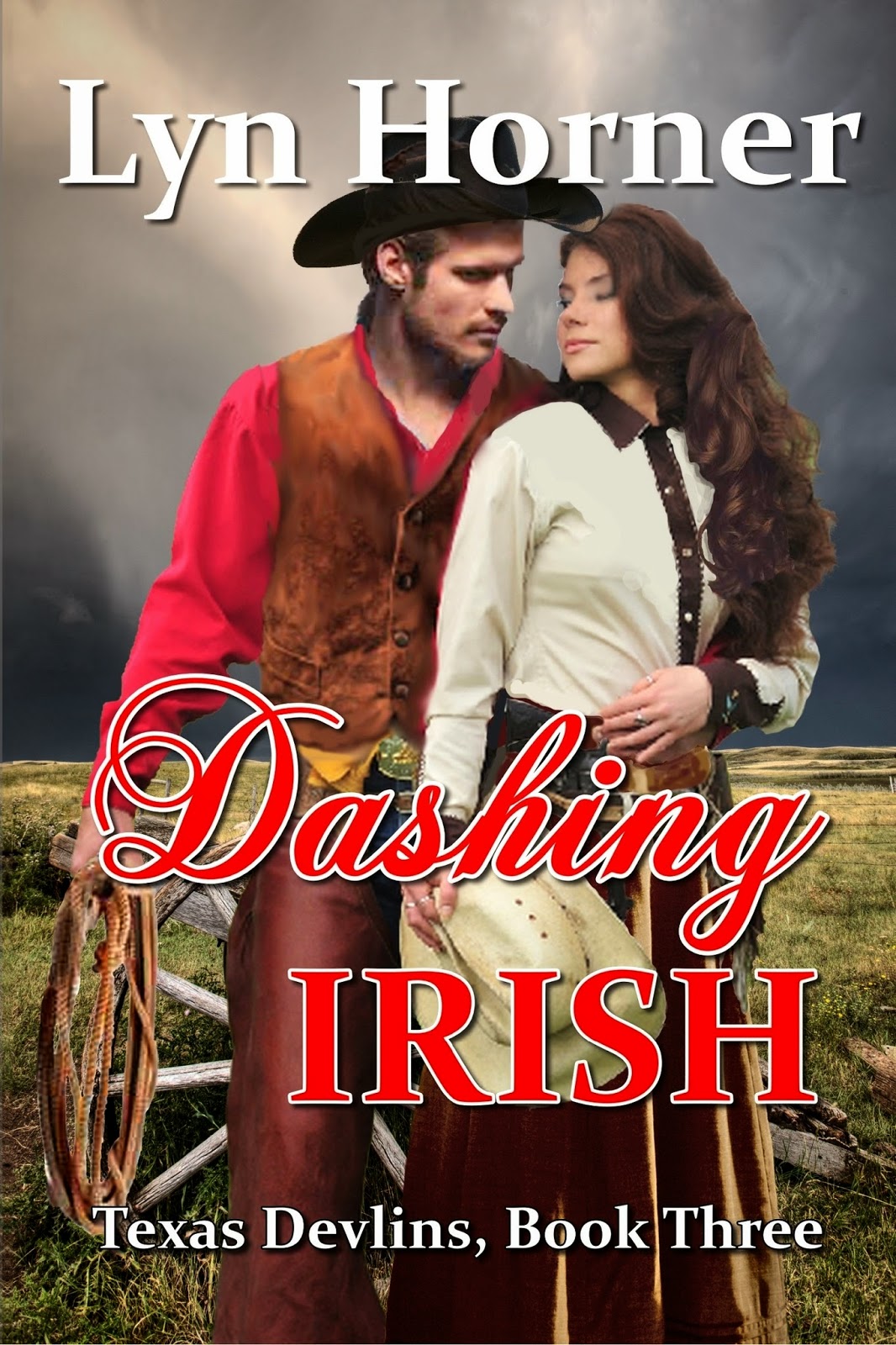
Recently, Charlene Raddon of Cover-OPs http://cover-ops.blogspot.com/ designed new covers for my Texas Devlins series. She and I both spent many hours searching for models to portray my characters, not an easy task in some cases. I think we succeeded fairly well, but this got me thinking about how I come to "see" the people in my stories. Do they pop into my mind full blown like Athena from the head of Zeus? No! They are never that obliging.

Usually, my imaginary friends (they do become my friends) take shape gradually. They begin as shadowy figures with one or two distinctive characteristics, like Jessie Devlin's red hair and fiery temper. Yes, she's Irish and I gave her those stereotypical traits with backstory to explain them. Other facets of her appearance and personality are a compilation of real people, either ones I've met or seen on TV and movies -- or historical figures. This is true with all of my characters.

For instance, Captain David Taylor, Jessie's dream hero in Darlin' Irish, is based partly on Mac Traven, Tom Selleck's character in The Shadow Riders, one of my favorite Louis L'Amour novels and TV westerns. Mac is a Texan who fought for the North in the Civil War, the same as David Taylor. However, David is edgier than Mac and unlike the Traven family, David's father considers him a traitor. This is what happened to many southern-born soldiers who sided with the Union.


6 Generals Who Fought Against their Home State in the Civil War: A native of Southampton County, Virginia, George Thomas was a career soldier who had served with distinction in the Mexican-American War and later taught at West Point. But despite his strong southern roots—he’d grown up on a plantation and even owned slaves—Thomas refused to break his oath to the U.S. Army and remained loyal to the Union during the Civil War. The decision sent shock waves through the South. J.E.B. Stuart, a former pupil of Thomas’ at West Point, said he deserved to be hanged as a traitor. Even his own sister disowned him, writing that he had been, “false to his state, his family, and to his friends.”

Lil Crawford, the heroine of Dashing Irish, Is based on real cowgirls who worked as hard as any man on ranches and trail drives. Some wore riding skirts, others wore britches. Virtually all were well versed in riding, roping, branding and handling a gun. They were not your average pioneer woman in calico and poke bonnet, but neither were they all that rare. The same goes for Lil's mixed blood lineage. She's one quarter Cherokee because her mother was the offspring of a French fur trapper and an Indian woman. Many a white man on the western frontier took an Indian wife, including some of my ancestors.


One of my favorite characters in Choctaw Jack from Dearest Irish. Jack is a half breed (actually three quarters) who works as a cowboy part of the year and a blacksmith the rest of the time for the Army at Fort Sill in the Indian Territory (Oklahoma.) He's also a Confederate veteran who fought with one of the Indian brigades in the Civil War. Think I made that up? Nope. In his very cool little book CIVIL WAR in the Indian Territory, Steve Cottrell says, "...Choctaws and Chickasaws, whose lands bordered Texas, readily sided with the South..." Other tribes fought for the North.


Authors gain inspiration from many sources and I'm no different in that. The next time you fall in love with a fictional character, think about what might have gone into creating him or her. Just for the fun of it, you could even look for stories on the internet about real people who bear a similarity to that character. You might learn some surprising historical facts.
 
 
Meanwhile, let me know what you think of my new book covers. Do the people depicted on them catch your eye? Do they tempt you to get acquainted with them in the pages of the book? I would love to know.
 
Oh, in case you're wondering, there is a Texas Devlins, Book One. Titled White Witch, it's a novella introducing the Devlins before they head west to Texas.
 
You can find all of my books on Amazon: http://www.amazon.com/Lyn-Horner/e/B004CY506Y


Monday, April 20, 2015

National Cowgirl Museum and Hall of Fame

by Lyn Horner

The book covers for my Texas Devlins series are in the process of being redone by my friend and fellow author Charlene Raddon, who also designs covers. You can sample her work here:       http://cover-ops.blogspot.com

Currently, Charlene is working on the cover for Dashing Irish, Tye Devlin’s story. Tye’s love interest is Lil Crawford, a Texas cowgirl with a bruised heart and a chip on her shoulder. Since her older brother died in the Civil War, Lil has more or less taken his place, working on her father’s ranch alongside the male ranch hands. She wears pants and a six shooter, and goes along on a cattle drive to Kansas.

The other day, Charlene suggested putting a skirt on Lil instead of pants for a more appealing cover, to which I agreed. After all, Lil does wear a dress occasionally. Thinking about her gave me the idea for today’s post. I first posted about real life cowgirls in July 2014. http://sweetheartsofthewest.blogspot.com/2014/07/women-who-dared-to-be-free.html

This time my topic is the National Cowgirl Museum and Hall of Fame and one of its honorees. Founded in 1975 in the basement of the Deaf Smith County Library in Hereford, Texas, the museum was moved to Fort Worth in 1994. It settled into its 33,000 square-foot permanent quarters in the city’s Cultural District in June 2002.

  National Cowgirl Museum and Hall of Fame
Wikipedia Creative Commons Attribution-Share Alike 3.0

The museum’s Executive Director is Pat Riley. Appointed in 1996 following the move from Hereford, Riley led the planning, design, fundraising and opening of the new museum in 2002. Riley has built upon the work started by founding director Margaret Formby, and has established the Museum on a national level.

“Cowgirls are ordinary women who have done extraordinary things.” ~Pat Riley, Executive Director, National Cowgirl Museum and Hall of Fame
 Poster of Cowgirl Museum Mural
Poster of Mural above Museum entrance, available in Museum Shop
  
Prairie Princess statue Nat. Cowgirl Museun 
“High Desert Princess” statue outside National Cowgirl Museum; Wikipedia Creative Commons Attribution-Share Alike 3.0

Dedicated to honoring courageous women of the American West, the Museum is an educational resource with exhibits, a research library and a rare photo collection. Each year, Honorees are added to its Hall of Fame. The museum also sponsors special events such as the Cowgirl Spring Roundup and Cowpoke Camp. Find an event calendar on their website: http://www.cowgirl.net/

There are over 200 honorees in the Cowgirl Hall of Fame. They include pioneers, artists, businesswomen, educators, ranchers and rodeo cowgirls. A few famous ones are Georgia O'Keeffe, Sacagawea, Annie Oakley, Dale Evans, Enid Justin, Temple Grandin and Sandra Day O’Connor. Another is Joyce Gibson Roach, author, educator, rancher and 5th generation Texan, who I quoted in my previous cowgirl post.

I recently purchased two books by Ms. Roach. One is titled Horned Toad Canyon, a children’s book about these unusual creatures that inhabit the arid, wide-open southwestern prairie. Also called horned frogs, they are the mascot for Texas Christian University, my daughter’s alma mater. How could I resist this charming little book?

The other book I purchased is The Cowgirls.
 The Cowgirls by Joyce Gibson Roach
Here’s part of the publisher’s description:

“The cowboy may be our most authentic folk hero, but the cowgirl is right on his heels. This Spur Award winning book fills a void in the history of the cowgirl.

While Susan B. Anthony and her hoop-skirted friends were declaring that females too were created equal, Sally Skull was already riding and roping and marking cattle with her Circle S brand on the frontier of Texas.

In Colorado, Cassie Redwine rounded up her cowboys and ambushed a group of desperadoes; Ann Bassett, also of Colorado, backed down a group of men who tried to force her off the open range.

In Montana, Susan Haughian took on the United States government in a dispute over some grazing rights, and the government got the short end of the stick.

Susan McSween carried on an armed dispute between ranchers in New Mexico and the U.S. Army, and other interested citizens.

In the years of the War Between the States, women were called upon to do many things that would have been unheard of in peacetime. When the people moved west after the war, women were obliged to keep doing these things if the family was to survive. Still other groups of women—second generation cattle-country women—did men’s jobs because they were good at it. Some participated in Wild West shows and made reputations for themselves in rodeo as trick and bronc riders.”


Bonnie McCaroll being thrown, Pendleton Rodeo 

"One of the most famous rodeo snapshots ever taken is of Bonnie McCarroll  being thrown from a horse named Silver at the Pendleton Round-Up in 1915"    Nat. Cowgirl Museum and Hall of Fame public domain photo by Walter S. Bowman
 cowboy gear divider
Since we all love romance here on Sweethearts, I’ll close with a romantic quote from Henrietta King, wife of Richard King. For 40 years after her husband’s death, Henrietta was sole owner of the King Ranch, largest ranch in North America.

"I doubt if it falls to the lot of any a bride to have so happy a honeymoon. On horseback, we roamed the broad prairies. When I grew tired, my husband would spread a Mexican blanket for me, and then I would take my siesta under the shade of the mesquite tree.”


Find all of my books here: http://www.amazon.com/Lyn-Horner/e/B004CY506Y

Tuesday, January 22, 2013

LIFE IN A DUGOUT


By Charlene Raddon

Author Charlene Raddon

Unbelievable as it might seem, some pioneer settlers liked living in dugouts. Letters and diaries of pioneers recorded that these dwellings were surprisingly comfortable; cool in summer, snug and easily heated in winter. Thick walls and sod roofs supplied good insulation at a time when few people knew the value of insulated homes, and wooden houses lacked in this feature.

Most dugouts consisted of a single room (average 12’ x 12’) dug into the lee side of a low hill. Walls were created by cutting and stacking sod blocks to a height of seven or eight feet. Some dugouts had windows, usually store-bought and hauled from the nearest town. For a roof, cottonwood poles were placed side by side and spread with a thick layer of coarse prairie grass for insulation and to cut down on the dirt that sifted through. Over the grass a double layer of sod building blocks was carefully fitted. The first good rain prompted the sod to grow, and a tall growth of waving prairie grass soon covered the roof, almost concealing it.

Rough wooden planks were laid to provide flooring, if the family could afford to buy them. Otherwise, the floor was dirt sprinkled with water daily and swept with crude grass brooms until the surface was as hard and smooth as finished concrete.

Elaborate Dugout


Walls were lined with newspapers pasted or pinned up with small, sharpened sticks to keep the, dirt from brushing off. Some more ambitious families located outcroppings of limestone rock which was burned and mixed with screened sand to provide a plaster coating for the walls—a vast improvement over untreated walls that could not keep out all the dirt, or insects.

Unfortunately, the pioneer dugout couldn't stand up to the demands of prosperity. The fertile prairie sod—turned over in the fall and broken down to mellow richness by winter snows, freezing and thawing—produced bumper crops of corn and small grains. Once a pioneer family had money in the bank, construction of a clap board house became the major goal. Grandma couldn't wait to get her family out of "that hole in the ground" and into a “more suitable” uninsulated clapboard structure: A house that was stifling hot in the summer and poorly heated in the winter by buffalo chips in the kitchen range or costly store bought coal that had to be hauled from town, carefully hoarded and sparingly doled out.

Log and wood supplemented dugout


Money provided the means to build wooden houses, but it was the desire to improve the family’s status and supposed living conditions that was the driving force that ultimately destroyed the dugout. Most lasted little more than a decade, but a few pictures still exist, and memories and journals provide records of the dugout's comforts and advantages.  Of course the disadvantages were also recorded.

It might be pointed out that dugouts were the first homes of many homesteaders well into the twentieth century. My paternal grandparents moved from Kansas to the Oklahoma panhandle in 1916 and lived in a dugout until a house could be built. I’m not sure when my mother’s folks did the same thing, but it would have been a bit later. Mother was the eldest of twelve children. Her father was a great farm worker and was in much demand by other farmers. Unfortunately, Grandfather didn’t want to work for other people; he wanted to farm his own land. But without someone to tell him what to do and when, he couldn’t quite seem to succeed at farming. Poor living conditions and sparse food was the result, so the family frequently lived with other family members or inhabited abandoned homes. Many of these homes were dugouts.

Cellar-type dugout 
Mother told me numerous tales of life in such dwellings and didn’t seem nearly as enamored of them as some pioneers. I used a few of these in my book To Have And To Hold, which will be released in e-book format on January 24th. One has to do with 7” long centipedes that managed to find their way down onto the newspaper Grandmother tacked onto the ceiling to keep out some of the dirt. The sound of their feet scratching on the paper drove Grandfather crazy. Mother’s complaint, besides the dirt, was snakes. She hated it when her mother asked her to fetch wood from the wood box because too often a resident rattler would be hiding inside. Of course, snakes liked nice warm beds too, and the pallets laid on the floor where the children slept were very convenient. Frankly, I’m glad it was my mother and not me who had these experiences.

Have any of you heard any similar stories from your grandparents or great-grandparents?

Be sure to leave a comment, and include your contact information, for a chance to win a $5 Amazon gift card and a free copy of To Have And To Hold.


Charlene first serious writing attempt came in 1980 when she awoke one morning from an unusually vivid and compelling dream. Deciding that dream needed to be made into a book, she dug out an old portable typewriter and went to work. That book never sold, but her second one, Tender Touch, became a Golden Heart finalist and earned her an agent. Soon after, she signed a three book contract with Kensington Books. Five of Charlene's western historical romances were published between 1994 and 1999: Taming Jenna, Tender Touch (1994 Golden Heart Finalist under the title Brianna), Forever Mine (1996 Romantic Times Magazine Reviewer's Choice Award Nominee and Affaire de Coeur Reader/Writer Poll finalist), To Have and To Hold (Affaire de Coeur Reader/Writer Poll finalist); and writing as Rachel Summers, The Scent of Roses. Forever Mine and Tender Touch are available as e-books and after January 24, To Have and To Hold will be as well. When not writing, Charlene loves to travel, crochet, needlepoint, research genealogy, scrapbook, and dye Ukrainian eggs.
Find Charlene at: