Sunday, April 30, 2023

Devil's Gate and Emigrant Trails by Zina Abbott


Devil's Gate, or Devils Gate, is a natural rock formation. It is a gorge on the Sweetwater River located five miles (8 km) southwest of Independence Rock. Devil's Gate is a prime example of what is called an antecedent drainage stream. The Sweetwater River cuts a narrow 100-meter deep slot through a granite ridge. If the same river had flowed less than a kilometer to the south, it could have bypassed the ridge completely. The gorge was cut because the landscape was originally buried by valley fill sediments. As the river eroded downward through those sediments, once it hit granite, it kept on cutting. The cleft is about 370 feet deep and 1,500 feet long. It is about thirty feet wide at the base, but 300 feet wide at the top.

Devil's gate by Wm. H. Jackson, 1870

Goldfish 49'er, J.G. Bruff, wrote:
"...some of the boys clambered up the rock on the north side of the Gate...where they fired pistols and threw down rocks, pleased with the reverberation, which was great. I made a careful sketch of this remarkable gorge."


According to American Indian legend, they believed a powerful evil spirit in the form of a tremendous beast with enormous tusks ravaged the Sweetwater Valley, preventing the Indians from hunting and camping. A holy man told the tribes that the Great Spirit wanted them to destroy the beast. The Indians launched an attack from the mountain passes and ravines, shooting countless arrows into the evil monster. Enraged, the beast with a mighty upward thrust of its tusks, ripped a gap in the mountain and disappeared, never to be seen again.
Robert L. Munkees, “Independence Rock and Devil’s Gate” in Annals of Wyoming, April 1968.


There are some creatures living around Devil’s Gate that might not be monsters, but they also are not something most people wish to cross their paths. Rattlesnakes. The rock formation of which Devil’s Gate is part is known as the Granite Hills. On an 1872 map, the mountains immediately north of them were identified at Rattlesnake Mountains.

My husband and I made a visit to some of the landmarks along the emigrant trail. Stopping near Devil’s Gate, a docent advised us we could walk to the river where we could have a better view of the water going through the gorge. He also warned us there are a lot of rattlesnakes there.

This author took a pass on hiking closer to Devil’s Gate.


Both Devil’s Gate and Independence Rock were landmarks on the three major emigrant trails: Oregon, California, and Mormon. The above drawing by William Henry Jackson, circa 1870, shows circled wagon trains at Independence Rock, with Devil's Gate in the distance.

Emigrant Charles E. Boyle wrote in 1849:

“Although the cleft was too narrow for wagons to pass through alongside the river, emigrants frequently stopped to hike around these rocks and carve their names. Often they noticed bighorn sheep climbing the hills. The chasm is one of the wonders of the world,… The water rushes roaring and raving into the gorge, and the noise it makes as it comes in contact with the huge fragments of rock lying in its course is almost deafening.”

Map by Ezra Meeker, 1907

As mountain men and adventurers began traveling west through the territory of the Louisiana Purchase, which became United States territory in 1803, they soon discovered Devil’s Gate. It became one of the landmarks which bordered what became a popular trail. The trail allowed wagons and livestock to cross the Continental Divide through South Pass, a reasonably smooth, gentle sloping pass over otherwise steep and rugged territory.

Fr. Pierre-Jean DeSmet, S.J.,  said in 1841:
"...Travelers have named this spot the Devil's Entrance (Devil's Gate). In my opinion they should have rather called it Heaven's Avenue."

Devil's Gate was a marker along the trail that many pioneers hoped would lead to a heaven on earth. However, there is far more to Devil’s Gate’s history than being a landmark. Next month, I will share about a trading post built near Devil’s Gate.


Pearl
was my first book published in the Prairie Roses Collection (2022). Many of the same characters are in both Pearl and Clara. It also included the part of the story where the wagon train traveled passed Devil’s Gate as the wagons crossed the Sweetwater River nine times before reaching South Pass. The book is available as an ebook and in paperback, and also at no additional cost with a Kindle Unlimited subscription. To find the book description for Pearl and the purchase options, please CLICK HERE


Clara
picks up Clara’s romance after the wagon train has already traveled the trail through the Sweetwater River valley. The book is currently available for purchase as an ebook or at no additional cost with a Kindle Unlimited subscription. To find the book description and purchase options, please CLICK HERE


Sources:

https://plantsandrocks.blogspot.com/2014/08/sweetwater-river-at-devils-gate.html

https://www.hmdb.org/m.asp?m=95488

https://en.wikipedia.org/wiki/Devil%27s_Gate_(Wyoming)

Wednesday, April 26, 2023

The Texas Prison Rodeo by Bea Tifton


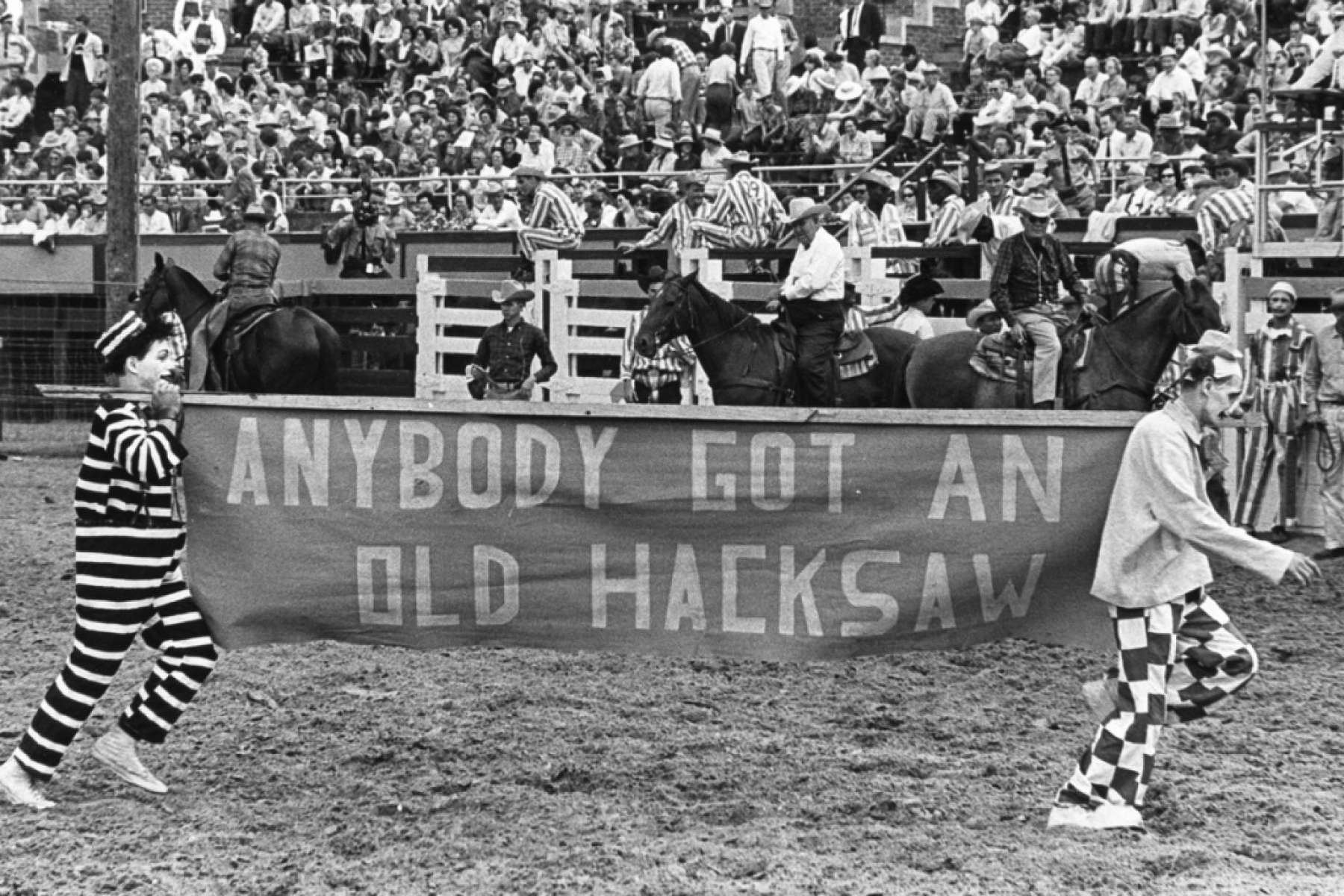
The Texas Prison Rodeo in Huntsville, Texas, was the first of its kind in the United States, operating from 1931 to 1986.  In 1931, the general manager for the Texas prison in Huntsville, Marshal Lee Simmons, instituted the Texas Prison Rodeo.  The rodeos were held on Sunday afternoons in October with the blessings of local clergy members.

Livestock was provided by the prison farms, and Simmons trucked in spectators and inmates on “rolling jails” from the prison farms and the prison itself, called “The Walls” by many. The rodeo took place on the prisoners’ baseball field. 

The wooden stadium only seated a few hundred, so organizers had to turn away fans.  In 1938 the arena seating was doubled and in 1950 a red brick arena with a 20,000 seating capacity was built for one million dollars.


Dubbed “The Wildest Show Behind Bars” and “The Wildest Show on Earth,” the rodeo proceeds were used to provide funds for an education and recreation fund that purchased such things as textbooks and Christmas turkeys.


Participants wore black and white striped uniforms sewn by women at the Goring unit. Men and women could participate in the rodeo.  Men competed in calf roping, bronc riding, bull riding, bareback basketball, and wild cow milking.  In “Hard Money,” inmates wearing red shirts competed against each other to be the first to snatch a tobacco sack full of cash from between the horns of a bull. Women participated in calf roping, barrel riding, and greased pig sacking.


Prisoners were paid for performing.  They earned two dollars in 1938 and ten dollars in 1986, but the main draw was the satisfaction and recognition for winning. O’Neal Browning began participating in rodeos when he was sixteen. His father, who wanted Browning to help him on the farm, beat the boy regularly even though he was bringing money home from rodeo winnings. While still in his teens in a drunken rage, Browning killed his father with an ax and was sentenced to life in prison. For 30 years he participated and became a celebrity as he was the top winner in seven rodeos.


Inmate rodeo clowns distracted the bulls and entertained the spectators. During halftime shows prison gospel choirs, string bands, and the “Goree Girls” featuring the former stripper Candy Barr entertained the crowd. In the 1950s, celebrities began performing, including Johnny Cash, Dolly Parton, Loretta Lynn, and Willie Nelson.


The rodeo involved inmates throughout the prison systems and local businesses such as restaurants and stores benefitted from the resulting tourism. In 1975, astronauts and cosmonauts from the Apollo-Soyez space mission attended the rodeo. In 1980, the film “Urban Cowboy” filmed several scenes from the arena and included the prison rodeo in the film’s plot.

Only two inmates ever escaped. One year a pair of convicts slipped under the bleachers and put on clothes left by an outside accomplice. As they were heading toward the exit, a security guard actually threw them out of the rodeo because he thought they were sneaking in.


Several factors contributed to the rodeo’s demise.  The energy crisis and inflation in the 1970s and 1980s, along with poor advertising and bad weather dramatically reduced the crowds. As Huntsville and the surrounding area became increasingly less rural, fewer inmates had the necessary skills to participate safely.  Changing views emerged concerning the treatment of incarcerated people.  Federal funding increased to the state prison system and eliminated the pressure for the state prison system to earn its own finances.  The rodeo was still quite popular in 1986 when engineers condemned the stadium as unsafe. Efforts to revive the rodeo in the 1990s proved unsuccessful. In 2012 the rodeo grounds were demolished.


Monday, April 24, 2023

PREPARING FOR WILLA'S OVERLAND TRIP by Marisa Masterson


My heroine is making a journey across the country. Fine, but how to bring the reader into the setting so they feel like that trip is real?

Research, of course! That's me, always researching.

First, I decided to use oxen rather than horses or mules to pull her wagon. Why oxen? They did not require grain or oats like horses. The oxen (trained and castrated bulls) were willing to forage for grass. They also tolerated the long miles and hard work better.

Hard work? Definitely! The oxen typically started out from Missouri pulling 2500 pounds of supplies.


How many oxen? Two as I have read in other novels? No, usually, three sets of two pulled the wagon. 

How else could I add reality to my sweet romance? I added some of the early landmarks that overlanders would see. First, the crossing of the South Platte River. The travelers would then begin to climb the incredibly steep California Hill. 

Why go that route? After the climb, they would stop at Ash Hollow, where people would enjoy sweet, sweet water after weeks of drinking boiled river water.

Next, I included details about the significant rock formations. First, Courthouse Rock. But my travelers don't stop there. They push on to get to Chimney Rock. It's a significant spot. There, they know that one quarter of the journey is over. I'd celebrate if I was there like so many real travelers did who climbed that rock and chisled their names into it.

From Wagon Train Willa:

The company passed Courthouse Rock without much fanfare. To the travelers, it simply became one of the landmarks many knew of on the trail. Only a few days after that, they came to Chimney Rock. That was much more exciting.

The train stopped there, spending a free day at the spot. The people felt encouraged as they knew that now they had covered one quarter of the trail, over five hundred miles already walked. Most made this a celebration. The group even had a potluck dinner planned, and hunters went out to search for fresh game to add to it.

Like others in the company, Cade and Willa took the boys to the top of Chimney Rock. He carried the chisel. With a flourish, he carved their names and the date into the rock. Willy and Billy stood with their eyes wide as they watched small chips of rock fly.

“See, boys. In years to come, people will know that we made the trip across the country. A family who traveled together.” Cade grinned as he stretched a hand toward the carving.

What else happens to this family? I hope you are curious to find out. The novel is now on pre-order and will release soon from Amazon.


Saturday, April 22, 2023

Rosita - LIttle Rose - Colorado

Post by Doris McCraw aka Angela Raines

driving toward the Wet Mountain Valley
Photo (c) Doris McCraw

Rosita, which means Little Rose in Spanish, was a silver mining town in Custer County Colorado in the Wet Mountain Valley area. It was a favorite of the writer Helen Hunt Jackson and the setting for her children's story "Nelly's Silver Mine".

It is also the setting for my fictional story tentatively named "Pauline".

The town itself was founded in 1872 and quickly grew with tents and log cabins. Shortly after there were now stores and of course carpenters and a hotel a saloon and by 1874 it had around 1000 residents and approximately 400 buildings. It also for a brief period of time was the county seat of Custer County. 

Image of Rosita, CO around 1888

Unfortunately for the town, the silver mines which were the reason for its being had short-lived silver veins. In the early 1880s, the towns of Silver Cliff and Querida grew as Rosita lost in population. In 1886 the town of Silver Cliff became the new county seat of Custer County after about a four-year fight. (On a side note, the town of Silver Cliff had its own drama when they expected the Denver and Rio Grande railroad to put a spur through but instead the depot was built in the town of Westcliff on land owned by Dr. Bell a friend of Gen. Palmer the owner of the Denver and Rio Grand.)

Briefly, in 1875 there was what they called the Pocahontas Mining War. It seems two men came into town promising to establish a bank but instead claimed ownership of the Pocahontas mine at the behest of the two men a Major George W Graham came to town to secure the mine. He arrived vowing revenge on certain townspeople. This major Graham was an escapee from the Colorado Territorial Prison. According to a story from Wikipedia, a mob of townsmen went to the mine where Graham then begged them to let him go. They told him to run. As he did so the mob shot him in the back. That same day according to the Corners inquest they stated Graham had taken 36 shots to his body. The body was taken in a wagon and buried outside of town. No one was ever charged with his murder.

Rosita Cemetery from Find A Grave

Today Rosita is now a ghost town although there are probably around a hundred residents and it has seasonal residents also. The Sangre de Cristos and the Wet Mountain Valley are still some of the most beautiful places in Colorado. Its name lived up to the beauty of its locations but the people in the town back then, that's another story.

Until Next Time: Stay safe, Stay happy, and Stay healthy.

Doris


Sunday, April 16, 2023

Larders, Butteries, Root Cellars - A Pantry by Any Other Name by Jo-Ann Roberts


With so many food storage options at our fingertips in today's world, I wondered how people in the 19th and well into the 20th century kept food cool and from spoiling.

Because a root cellar plays an important role in my upcoming release, Winning the Widow's Heart, I did some research and discovered that pantries are universal whether they are called a butler's pantry, a keeping room, a larder, or a dairy.

The word "pantry" comes from the Old French word "paneterie" meaning from "pain", the French word for bread. In medieval times food and supplies were stored in specific rooms. Meats were stored in a larder, alcohol stored in the buttery, and bread was stored in the pantry.

Before 1850, settlers in early American homes, where space was tight and possessions few, stored dry goods and spices in a cabinet or trunk. However, small rooms adjacent to the kitchen hearth began to appear in colonial houses for all manner of food storage. Early pantries--especially in the self-sufficient farmhouse--were unheated and primitive, with simple wood shelving on which to store barrels of dry goods and other bulk staples, as well as cooking utensils. Dark, cool, and dry, the pantry necessarily had a door or cloth covering over the entry to keep out dirt.

Milk room or dairies, many spring-fed, were often adjacent to farmhouse kitchens. Well-insulated dugouts (a walk-in, cave-like structure built into a hill) also ensured safe storage for perishables or preserves.

By the end of the Civil War and the 1920s, pantries were commonplace in homes of all styles, often with a servant's room above or adjacent to the kitchen.

Types of Pantries


Butler's Pantry
   A Victorian invention, it is a separate space adjacent to the dining room where food could be prepped and readily served, and where dishes often were washed in a "soft", copper-lined sink. It generally included storage space for tableware, serving pieces, and the family "plate" or silverware, which was the butler's responsibility.

Buttery (or butt'ry)   An old-fashioned word for the pantry or larder found in old farmhouses. This doesn't refer to butter but come from an English term for secondary pantry storage where more extensive provisions were stored in large barrels called "butts".


Keeping Pantry   An old English and New England term for a family sitting room immediately adjacent to the kitchen.


Larder   A small, cold room for storage of perishable food and prepared foods in the hottest weather.

It had slate or marble shelves two or three inches thick. Originally, it was where raw meat was larded--covered in fat--to be preserved. A dry larder was where bread, pastry, milk, butter, or cooked meats were stored.

Milk Room   Also called the dairy, this was a cool work room, often with running water from a spring, within the farmhouse and adjacent to the kitchen where butter


was churned, and pans of milk were stored.

Hoosier Cabinets   Made by the Hoosier Manufacturing Company in Indiana,  
this cabinet was created to be an all-in-one pantry and kitchen for the new


American home. These cabinets stood about six feet high, four feet wide and about two feet deep--making it a perfect size for small kitchens. It had built in storage bins and containers for everyday items like flour, sugar, coffee, tea and household spices.


Summer Kitchen
   

Located in the ell or wing of old farmhouses or, in hot climates, in a separate structure, it's a room apart where food was prepared in summertime. It was cooler and better ventilated than the main kitchen, and its usage kept cooking heat away from living quarters.

Even today, regardless of your kitchen size, you most likely have a pantry. It might be as small as a shelf in a cupboard or as large as a walk-in closet. Or if you're like me, you can remember your parents having a pantry just off the kitchen. 

We have one now which we call the "Mary Poppins" closet. When we moved into the house, anything we didn't have a place for went in the closet until we were further along in our unpacking. So now, when my husband can't find something, I tell him to look in the "Mary Poppins closet". 

P.S. Only those who know the story of Mary Poppins and her carpetbag will understand!!!

April 26th Release!


Saturday, April 8, 2023

Bear's Paw Mountain by Cora Leland

 I wanted to be sure that the mountain I was writing about would be as precarious as I needed: a teen-aged woman was riding alone in the mountains, like she did almost every day.  Her family was packing their prairie schooner for a trip to Nebraska to take a family friend to a specialist. The poor fellow drifted in and out of reality.

My beautiful young lady, though, was caught in a land slide!  But how could I show that the mountain was that vulnerable? If it were shale, I decided that it would be. (I'd hopped around like a mountain goat over shale, so I knew perfectly well, first hand, that it could create havoc.) 

My book-mountain was on a large spread (in Montana), so even a small injury to my teen-aged heroine could be fatal...


Daisy riding her pony at Bear's Paw Mountain

It took a few hours to verify that such shale existed in Montana, but it was most prevalent in north central Montana. 


The Missouri River has also been of great interest to me during the last half of this series (Lakota Rescue).   

I feel that this painting (done in 1845) by George Caleb Bingham establishes the importance of fur trappers and traders. The Metropolitan Museum of Art discusses this art work at length in those terms, telling us to look at the people in the boat, who they are and where they came from.  I did, and they were right! (The man paddling the boat they assumed to be a French fur trapper, also by the rare animal perched comfortably on the boat.  They assumed the young man was the trader's son.)  I also felt that I wanted to bring this feeling of cheerfulness and peace to my heroine after her accident.

Fur Trappers Descending the Missouri


Another important biographical painting done by this American portraitist from Missouri was about an election.  (Bingham said he'd travel the country painting 'normal' scenes.) In this painting of a small-town election in Missouri, the article's author told us to look at the people who were happy about the election:  "White males, every single one.  The 'few' women were perched in a balcony and the one Black person was pushing a cart (of 'brew')."  Bingham was a senator, an abolitionist & tea-totaller!


I'm very sorry that Sweethearts of the West blog won't be part of our lives past the end of this month!  I remember getting an invitation from Caroline Clemmons to write for the blog, years ago, how happy and honored I was.  I still have many ideas that I never got to write in Sweethearts of the West, and I remember the blog posts that helped my first and only bout with writer's block (what can I possibly say on this blog?).

Good luck to everyone in the future and I'm sure that our paths will cross again.  Cora Leland Author


 Bk 8 Lakota Rescue, Iron Elk: Rescuing Eliza

Thursday, March 30, 2023

Trabing Brothers Mercantile Empire by Zina Abbott


Among the most successful and prosperous freighters and merchants that supplied early Wyoming Territory were the Trabing Brothers.

Born in Allendorf, Hesse-Cassel, Germany, along with their blacksmith father, they arrived in America in August 1853. Augustus J. "Gus" was eleven years of age and Charles was eight. They settled near Washington D.C. where the boys worked from that early age with their father in a wagon factory. They both learned the smithing trade.

In June 1863, August went to Washington D. C. and enlisted with the U.S, Army’s Quartermaster Department. He served on guard duty at the Civil War forts around Washington D. C. and as a blacksmith until 1865.


On Aug. 28, 1865, both brothers departed for the West, working for the Army as blacksmiths and wagon repairers. Under Captain Gillis, they traveled with a quartermaster’s train of 258 six-mule-team government wagons headed to Fort McPherson near present-day North Platte, Nebraska. This expedition, led by Col. Brown of the 12th Missouri, was to drive the Sioux and Cheyenne from the valley of the Republican River. During this time the Trabing brothers also acquired retail experience, ordering and dispensing at the sutler store. The campaigns lasted about five months.

After Army service, they ranched near the fort and started a trading post in North Platte, Nebraska. During a Sioux uprising, the store was burned down. Although warriors ransacked and burned the store and ranch, according to August’s Indian depredation claim filed decades later with the federal government, the brothers rebuilt. On April 21, 1868 they were burned out a second time and some of their men were killed, including a cousin who worked for them. They suffered heavy losses in horses and cattle.


Selling everything that was left, the brothers and Ulrike, August’s first wife, bought some condemned government horses and wagons and moved west to Laramie, Wyoming Territory, arriving on June 18, 1868, five weeks after the arrival of the transcontinental railroad. They soon met J. C. Walters and the three went into business. They began bidding for and getting freight contracts from Col. Benton of the Union Pacific Railroad to supply cordwood and ties for the UP at Cooper Lake Station west of Laramie and at Medicine Bow Station.

By 1869 the brothers had several stores and contracts for supplying the railroad with wood. Starting in July, they advertised for twenty-five or more teams and established a freighting business between Rock Creek, Medicine Bow, and the Powder River country.

On July 28 and 29, 1869, Ulrika and August Trabing bought vacant property and buildings on First Street in Laramie from W. B. Bent, land agent for the Union Pacific Railroad. The purchase included The National Theater which stood on parts of two lots. This one-story wooden structure was located in the three-hundred block, across from the Union Pacific freight depot and about two blocks south of the passenger station. August was a singer and may have performed with some of the groups from time to time. The retail and wholesale store was located at the corner of Garfield and South Second Street. They ventured opening a saloon and theater for traveling vaudeville troupes coming in on the railroad. Eventually, the complex grew to include three buildings: the warehouse, the store, and the stables.

The theater, refurbished and painted blue, became known as “The Old Blue Front—” a place that would figure in their story for the next thirty-seven years. Ulrika would try running the business while August was filling the tie and wood contract at Cooper Lake but she wasn’t successful.

Near this time, coal was discovered at Carbon, Wyoming Territory, west of Medicine Bow. The railroad no longer needed cordwood. That meant the Trabings had to find other work. They decided to expand their Medicine Bow way station. They built a more substantial store and started a freighting business from there as well.


On Dec. 6, 1869, the Trabings leased their “Blue Front” building to their employee, George Weiske. In March 1870 their building would be sub-leased to Albany County as a temporary courthouse, since one had not yet been built. The Blue Front building served as the courtroom for the first jury in the world impaneling both men and women.

In late December 1869, the Trabings left Laramie on the railroad for Medicine Bow, which was sixty miles to the northwest. They brought $35 worth of groceries—two wagons full—which they bought from Edward Ivinson. This began their mercantile and freighting career. At that time, Medicine Bow had a freight depot. Large quantities of military supplies were shipped in by train. From there, they were freighted north to Fort Fetterman on the North Platte near present Douglas, Wyo., and later, to other forts farther north. Troops were also stationed at Medicine Bow along with tie cutters and UP employees.

The road to Fort Fetterman ran 83.5 miles through the Laramie Mountains and was often closed by snow and flooding creeks in winter and spring. There were four hazardous river crossings. Floods often washed out bridges, making travel unpredictable.

In 1874, weather and flooded crossings delayed freighting until July. That month, one newspaper noted the government had begun the season’s freighting to Fort Fetterman from Medicine Bow, and guessed that “Trabings are doing more business and making more money than any other house in the territory.”

By this time, the Trabing businesses were growing steadily. They were freighting to Fort Fetterman using their own teams and men, operating a growing grocery store at Medicine Bow and remodeling part of their Laramie warehouse. Local newspapers published their store advertisements frequently. A March 26, 1875, Laramie newspaper describes their Medicine Bow operation “.. as one of the largest store-rooms with warehouses, corrals, stables, blacksmith-shop and emigrant houses attached to be found in Wyoming Territory. Sales last year exceeded $50,000.” That would be more than $1.1 million in today’s dollars.

The Trabing Brothers continued expanding, buying a ranch 17 miles north of Medicine Bow on Shirley Rim. This cattle operation became the TB Ranch.

At Medicine Bow and Cooper Lake Station, they opened small stores, supplying whatever their freighters and tie cutters needed. Outlaws robbed them at Cooper Lake Station in 1869, and were soon captured and jailed by Albany County Sheriff, Nathan K. Boswell.

Starting in 1876, General Crook’s military campaigns to push the Sioux and Cheyenne tribes onto reservations and open their land to settlers began a series of intense series battles with the tribes, later called the Great Sioux War. The conflicts created more business for the Trabings and their freighters. They supplied the military forts and soldiers with tons of food, hay, cordwood, rifles and ammunition. Around that time, Trabing freighters were also hauling supplies to mining camps and settlers near Medicine Bow.

Charles maintained the store in Medicine Bow. At the time, the location was a strategic place for moving large quantities of merchandise from the rail head over the hill to Fort Laramie, and to the southwest to “Medicine Bow Crossings near Fort Halleck. They also transported goods north to Fort Fetterman. It is possible this is the store, run by Charles, that, at the end of May 1877, thieves broke into the store and robbed them of $2,000 to $3,000 worth of goods. Some reports say it was also burned. ground.

I wrote a post of the Bloomer women on another blog, which you may read HERE

The daughter, Mary Jane Bloomer Stimpson, and her husband, William Stimpson, bought out the old Overland Trail Stage Station at “The Crossings” on the Medicine Bow River. After her husband’s death in 1876, the Trabing Brothers, who already owned a store in Rock Creek, a Union Pacific Railroad town to the south, bought the store from the widow.

In 1877, the Trabing brothers expanded their Laramie store on First Street.  It was front-page Boomerang news when, in 1883, they built a brand-new building on Second Street.  Both brothers had homes befitting prosperous entrepreneurs.


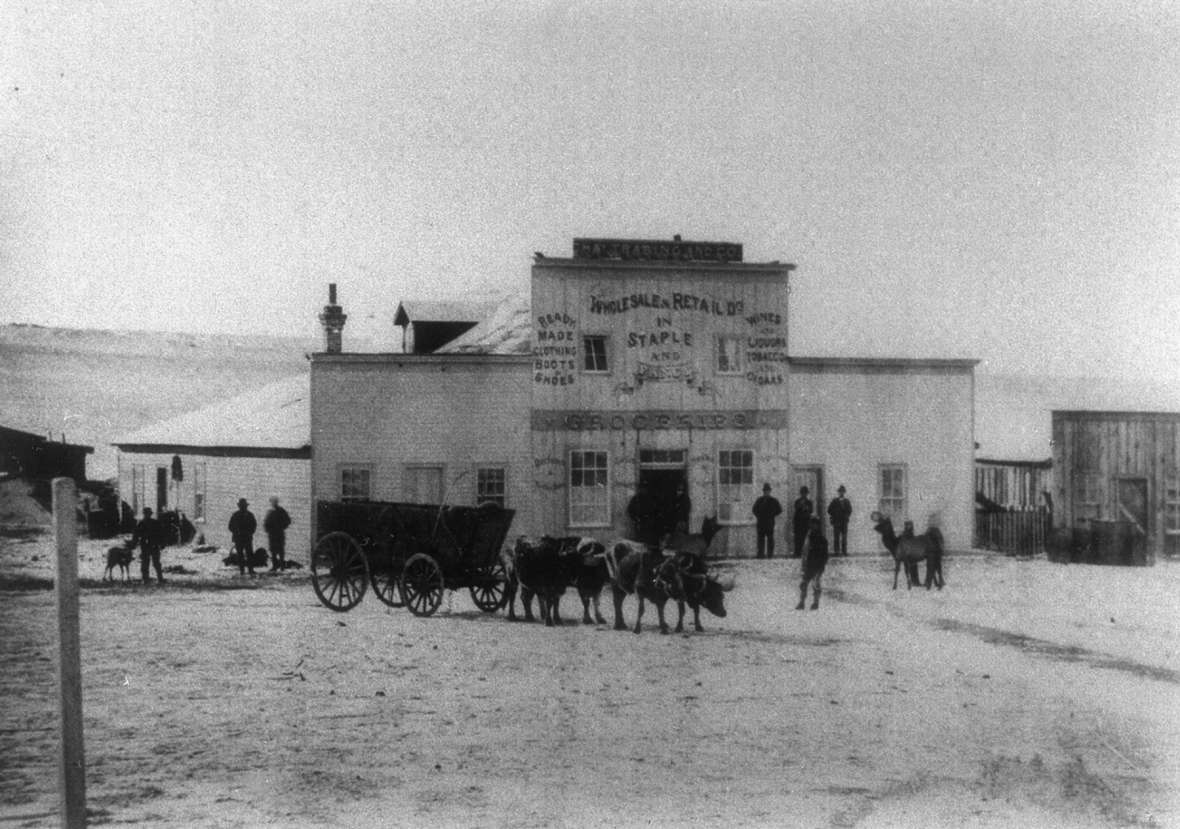
Charles built another store in what is now Johnson County at the Crazy Woman Crossing of the Bozeman Trail. The store was optimistically called "Trabing City." They chose this location for water, a change of horses, and a source of supplies halfway between Fort Reno to the south and the site of the former Fort Phil Kearny to the north.  It was a day’s ride from each.


August Trabing hired the young widow, Mary Jane Stimpson, to manage this new store. She, along with her five-year-old daughter, arrived with two wagons of goods while it was still being built. She operated the store from early 1878 until late 1879. According to Frank Grouard, the robbers were the Big Nose George gang. They might have committed the crime as he fled to Montana after the failed train derailment and murders of Deputy Sheriff Robert Widdowfield and UPRR Special Detective “Tip” Vincents in August, 1878.

Due to its remote location, that store was robbed multiple times by outlaw gangs. After Fort McKinney moved to its second location, on Clear Creek near the future site of Buffalo, Trabings decided to build a store closer to the protection of that fort. Then, at the urging of Chares Buell, who started building the first Occidental Hotel in 1880, August moved the Trabing store to his new location where Clear Creek crosses the Bozeman Trail, which was not far from Fort McKinney.

They leased their Crazy Woman location to two families, Deacon and Walker, who later purchased that store. Because the boundary of the original military reservation around the fort allowed civilian establishments no closer than six miles, the place was called Six Mile ranch.

When the size of the reservation was reduced to where civilians could settle just two miles from the fort, the Trabings freighted their buildings piece by piece into what would become town of Buffalo, on Clear Creek, and built the first store in that location. A bill of lading from that time shows the three Trabing stores operating during that time, Laramie, Medicine Bow and "on Clear Creek near Ft. McKinney." They sold their Buffalo store in 1882.

They opened a business in Rawlins, where they had leased the old courthouse as a warehouse. They obtained large freight contracts north to Fort Washakie and south to White River in Colorado. During 1880 one such contract was sublet to J. W. Hugus and Company of Rawlins, which failed to fulfill its contract due to weather. In November 1883, the U.S. government sued August and Charles Trabing for $76,000 for the failure. The jury ruled in favor of the Trabing Brothers. Headlines read, "Uncle Sam Beaten." Other contracts during this period included hauling mining supplies to North Park, Colo., Cummins City (later Jelm), W.T., Douglas Creek in southern Carbon County and other locations.

The ranch August and Charles Trabing developed, and the string of stores in Buffalo, Rawlins, Medicine Bow, Crazy Woman, and Laramie led to a successful freighting operation to supply the large Trabing Brothers stores.  At one time they had as many as one hundred freighters in their employ. Trabing Brothers and the Trabing Commercial Company became a prominent business in Laramie, Wyoming Territory.


Besides freighting and the mercantile business, the brothers engaged in growing livestock on their ranch.  

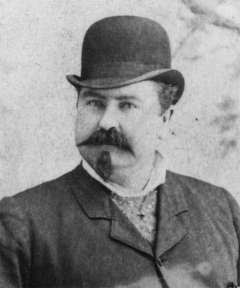
Charles Trabing

In 1885, Charles was shipping cattle on the Union Pacific to Omaha. At Sherman Hill, he injured his finger in attempting to move one of the steers wedged in a car. By the time he arrived in Omaha, the finger was swollen and painful. A physician cleaned and dressed the injury. The infection grew worse, and on a public street he dropped dead from apoplexy brought about by blood poisoning.

The size of the Laramie store was doubled in 1891 when a second building to the north was added.  Those two buildings covered four lots at the NW corner of Second and Garfield.  The basement had a boiler, storerooms, and a reservoir for the gas. Since the Trabing store was the only building with gas lights in Laramie, it had to store the fuel for the lights. Most of the new addition remained empty for a year.

Augustus Trabing

August Trabing moved to a penthouse atop the store in 1884. He was Laramie’s mayor for two terms: 1886-1887 and 1889-90. He was elected to the Territorial Legislature in 1888. After Wyoming became a state, he became a Wyoming Senator in 1895. 

In 1892, August Trabing cut a connection in the firewall between his two buildings so the retail operation now covered both. Wares included grain, wagons, housewares, furniture, hardware, and groceries.

A recession in 1893 forced Trabing to go to an all cash basis, closing out all credit accounts. The north building was rented to William Myers Dry Goods. The Odd Fellows Hall rented the space above, while Trabing’s store continued in the remaining building at 320 S. Second. 

In the evening of March 13, 1895, a fire started in the basement of the Trabing store.  It consumed both buildings, also their stable and warehouse behind on the alley, resulting in losses of $50,000.  One volunteer who tried to help put the fire out, UW student, George Cordiner, then seventeen, died in the blaze when a wall collapsed. The Trabings' two dogs died and their personal possessions were lost. August Trablin was required to make an assignment for the benefit of creditors. The business, however, recovered.

August and his second wife, Hannah Trabing, stayed in Laramie and continued to invest on a smaller scale in freighting, retail stores, and land development including the Pioneer Canal.

In 1891, Congress passed the Indian Depredations Act, which provided for recompense for losses sustained from Indian Depredations. As authorized by the Act, Trabing applied for compensation for his losses in Nebraska in 1868. At first, the Government did not oppose his claim. After its approval by the Court of Claims, the Attorney General, in a motion for rehearing, claimed that the court had no jurisdiction to grant the claim. Claims were only available to citizens of the United States. It was claimed by the Attorney General that Trabing's father had not become a citizen of the United States prior to Trabing turning 18. Therefore, the government argued that Trabing was not a citizen of the United States and was ineligible for compensation.

Rather than following the "liberal rule" applied by the Supreme Court, the Court of Claims rejected Trabing's claim, ruling that Trabing's averment that his father had voted for President Lincoln should be rejected as "hearsay;" that Trabing's service in Nebraska was before it became a state and thus he did not become a citizen until after the Indian depredation. The court additionally suggested that Trabing's service as mayor and as a legislator was "wrongful." The Court seemingly ignored that he had multiple time taken an oath of allegiance to the United States and instead held that Trabing "apparently chose to remain a subject of a foreign power." See Trabing v. The United States, 32 Ct. Cl. 440 (1897). The wheels of righting an injustice grind slowly. On January 26, 1907, Congress with the support of Senator Warren and Representative Mondell finally corrected the injustice and directed that allowed Trabing to prosecute his claim.

Unfortunately, the ruling came too late. In 1906, Trabing was residing on his ranch, "Wayside," about twenty miles north of Laramie near the headwaters of the Upper Chug. The ranch today is remembered in the name of Wayside Ranch Road. On the evening of October 26 while crossing the Laramie Mountains, his team became stuck in a snowdrift. Unable to free the wagon, he cut the horses loose and spent the night bedding in the snow beneath the wagon. The next morning, he trudged a mile and a half to the F. S. King's ranch. Several weeks later, he took his wife to Wisconsin for the winter. Upon his return later in the month, he spent several days in his room in Laramie before returning to Wayside.

On November 28, 1906, August Trabing became quite ill. His son-in-law, William Bridger, rode about 4 1/2 miles to the King Ranch, which had the closest telephone. He called Dr. Stevens and his brother-in-law, George Trabing. Dr. Stevens and George started right away to August Trabing’s ranch. When they arrived at 2:00 a.m., the second of the Trabing brothers had died.


At the time of his death, August Trabing owned the Trabing Commercial Company and Wayside, the Laramie-Walden, Laramie-Centennial, and Laramie-Sibylee stage lines.

I have two books set in the region of Rock Creek and Medicine Bow. take place.


Lauren
, Book 2 in the Rescue Me (Mail-order Brides) series is largely set in Rock Creek, Wyoming Territory. There are two mercantiles listed among Rock Creek’s 1878 businesses, one of them would have been a Trabing Brothers store. Also, the scenes involving Big Nose George and his gang attempting to derail the train just outside of Medicine Bow and the ambush of Deputy Sheriff Robert Widdowfield and UPRR Special Agent Tip Vincents are featured in chapters in this book. To read the book description and find the purchase options, please CLICK HERE.


My Runaway Brides of the West series book, Ellie, the scene in a Medicine Bow mercantile where Ellie meets Rand for the first time in person was probably the Trabing Brothers store. To read the book description and find the purchase options, please CLICK HERE.


Sources:

http://www.wyomingtalesandtrails.com/laramietrab.html

http://wyomingsteakhouse.com/the-trabing-fire/

https://www.wyoachs.com/people/2018/3/17/pioneer-trabing-brothers-build-a-wyoming-empire

https://sites.rootsweb.com/~wylaratp/html/_ox_cart_trip.html

https://www.wyohistory.org/encyclopedia/territorial-empire-trabings-and-their-freight