Showing posts with label Colorado History. Show all posts

Saturday, June 22, 2024

His Magnificient Distraction

Post by Doris McCraw

aka Angela Raines


"His Magnificent Distraction " - A First Lady of the Pikes Peak Region


You may wonder about the title of this post. As you will soon learn, this lady had reason to be so adored.

Cara Georgina Whitmore Scovell Bell was born in March of 1853 in Dublin, Ireland to Whitman and Caroline Mary F. Scovell. She married Dr. William Abraham Bell on May 8, 1872, at Saint James, Westminster, London, England.

So who was Dr. William A. Bell? William was born in April 1841 in Ireland to an English physician also named William Bell. He studied medicine at Cambridge University and practiced at St. George's Hospital after receiving his degree. He came to the US in 1867 where he met General Wm. Jackson Palmer. The two became fast friends. Between them, they had a hand in creating the Denver & Rio Grande Railway (and its various iterations). Started Colorado Fuel and Iron. Invested in real estate and helped make the towns of Colorado Springs and Manitou Springs, Colorado.

After establishing his various businesses, and medicine was not high on his list, Bell returned to England to marry Cara. Upon her arrival in  Manitou Springs, Bell set about showing what he had accomplished, and to have her meet his friend Palmer. Traveling by wagon, they visited Palmer's home in Glen Eyrie, the Garden of the Gods, the mineral springs, and Bell's sheep farm in Monument some twenty miles away. According to sources Cara seemed to thrive on these 'arduous' jaunts. Her only insistence was that her chef, Antonio Manasterlotti, accompany them. (Much to his discomfort according to history)

Image result for historic images of Dr. William A Bell manitou springs
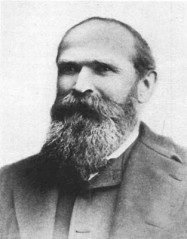
Dr. William A. Bell and Cara Bell
from Pinterest - date unknown
Bell also set up a dairy farm and cheese factory in the Wet Mountain Valley, some seventy-five miles away. Other than some complaints from her chef, she appeared to love the trip to the area. It's fun to read her writing where she calls her husband, Willie, and talks about her journeys. It seemed whatever or wherever 'Willie' wanted to go, Cara was up for the trip.

Cara was also a devout Episcopalian and set about searching for donors to build a church in Manitou Springs. The plans she had drawn up of an English church actually became the Manitou Railway station.

One of the promises Cara had William make was that their children would be born in England. Of course, this meant some arduous travel in the 1870s-80s, but William was good to his word.  Their first child, Rowena was born January 26, 1874. Rowena at the age of three months was left with a wet nurse at Eastbourne, William's parent's home and the two returned to America.

Image result for historic images of Dr. William A Bell manitou springs
The Briarhurst Manor today- a fine dining restaurant
photo from Wikipedia
At twenty-one, Cara set up housekeeping and was thrilled when her daughter Rowena could join them. When the temporary church was built, Cara would conduct the choir rehearsals and play the organ. It was said she pumped the organ with such vigor her feathered hat would fly off.

Although five children were born to the couple, only four made it to adulthood. The Bells, Cara, William, and the children traveled constantly. When home, the doors were open to guests from all over the world. Cara would tell visitors "The roof is your introduction", and despite her absent-mindedness, everyone loved William's vivacious wife.

I will end with the story of the Thomas Moran painting, 'Mount of the Holy Cross' that Cara convinced the painter to sell to them when they visited the gallery while on a trip to England. When they returned, the painting was mounted in the library. It was viewed and admired by the many guests who visited The Briarhurst Manor, as their home was named, including President Grant and his wife. When William was away in 1886, a fire broke out. Cara, upon smelling smoke, got the children from the house, then stayed and with the help of a servant, cut the painting from its frame and escaped the house. The house was destroyed, but the Bells built a new brick home that remains standing today. As for the original painting, it now resides in the Autry Museum of the Old West. View the Painting Here

There is more to Cara's story, but time and space limit the telling. The Bells returned to England around 1900 to retire. William passed away on June 6, 1921, at the age of eighty-one. Cara followed in December of 1937 at the age of eighty-four. She was living in Chelsea, London, England at the time.

Cara was a helpmate, adventurer, mother, hostess, and one of the 'First Ladies' of Manitou Springs. She was William's "Magnificent Distraction".

Until Next Time: Stay safe, Stay happy, and Stay healthy. 

Doris



Monday, May 22, 2023

Ever Heard of Wray, Colorado?

 Post by Doris McCraw

aka Angela Raines

Image of Pawnee National Grasslands
from Wikipedia 

A few years ago Colorado, in an effort to showcase the diverse aspects of my adopted state, divided the area into unique groupings. Over the next few posts, I will be focusing on what is called the "Pioneering Plains". This region is made up of those towns that many miss in their history of Colorado. 

The Plains also play a big part in some of my novels. It is an area of rich history from the early settlers, railroads, and ranching. 

As I journey through the histories and people who traversed and or stayed, I hope you enjoy the trip with me. 

Some of the towns I will be 'visiting' are: Brush, Limon, Fort Morgan, Burlington,

Julesburg, Ovid, Paoli, Wray, Stratton, Kit Carson, and Yuma.

Colorado: Prior to statehood
Image from Wikipedia

The Visitor Guide for the region describes the area as follows:

The Colorado Plains, spanning the eastern region of the state, are characterized by a sweeping landscape of prairies, grasslands, and gentle hills. Nestled between the Rocky Mountains to the west and the Great Plains to the east, this diverse terrain boasts an area of charming towns, and historical sites, offering visitors a glimpse into the rich heritage and natural beauty that define the Colorado Plains.

So sit back, grab a drink, and starting next month we are going to take a trip into history. Buckle up.

Until Next Time: Stay safe, Stay happy, and Stay healthy.

Doris


Saturday, April 22, 2023

Rosita - LIttle Rose - Colorado

Post by Doris McCraw aka Angela Raines

driving toward the Wet Mountain Valley
Photo (c) Doris McCraw

Rosita, which means Little Rose in Spanish, was a silver mining town in Custer County Colorado in the Wet Mountain Valley area. It was a favorite of the writer Helen Hunt Jackson and the setting for her children's story "Nelly's Silver Mine".

It is also the setting for my fictional story tentatively named "Pauline".

The town itself was founded in 1872 and quickly grew with tents and log cabins. Shortly after there were now stores and of course carpenters and a hotel a saloon and by 1874 it had around 1000 residents and approximately 400 buildings. It also for a brief period of time was the county seat of Custer County. 

Image of Rosita, CO around 1888

Unfortunately for the town, the silver mines which were the reason for its being had short-lived silver veins. In the early 1880s, the towns of Silver Cliff and Querida grew as Rosita lost in population. In 1886 the town of Silver Cliff became the new county seat of Custer County after about a four-year fight. (On a side note, the town of Silver Cliff had its own drama when they expected the Denver and Rio Grande railroad to put a spur through but instead the depot was built in the town of Westcliff on land owned by Dr. Bell a friend of Gen. Palmer the owner of the Denver and Rio Grand.)

Briefly, in 1875 there was what they called the Pocahontas Mining War. It seems two men came into town promising to establish a bank but instead claimed ownership of the Pocahontas mine at the behest of the two men a Major George W Graham came to town to secure the mine. He arrived vowing revenge on certain townspeople. This major Graham was an escapee from the Colorado Territorial Prison. According to a story from Wikipedia, a mob of townsmen went to the mine where Graham then begged them to let him go. They told him to run. As he did so the mob shot him in the back. That same day according to the Corners inquest they stated Graham had taken 36 shots to his body. The body was taken in a wagon and buried outside of town. No one was ever charged with his murder.

Rosita Cemetery from Find A Grave

Today Rosita is now a ghost town although there are probably around a hundred residents and it has seasonal residents also. The Sangre de Cristos and the Wet Mountain Valley are still some of the most beautiful places in Colorado. Its name lived up to the beauty of its locations but the people in the town back then, that's another story.

Until Next Time: Stay safe, Stay happy, and Stay healthy.

Doris


Wednesday, March 22, 2023

Alma, Such a Pretty Name for a Colorado Town

 Post by Doris McCraw aka Angela Raines

Mt. Bross, 14,178 feet
Located need Alma, CO. image from Wikipedia

Yes, Alma is a pretty name but for a town? I have driven through this small town located on Highway 9, just prior to Hoosier Pass, between Fairplay and Breckenridge Colorado. At an elevation of 10,361 feet, it makes it one of the higher towns in Colorado. To give you a perspective, Leadville is 12.5 miles from Alma as the crow flies. But since this is the mountains the driving distance is 55 miles. Leadville is 10,152' and is surrounded by Mt. Elbert, at 14,433 feet, and Mt. Massive 14,421 feet. This makes Alma, whose post office is located at the highest elevation of any in the country, the highest incorporated municipality. The fact that Alma is considered a town and not a city allows Leadville to be the highest incorporated city in the United States.

The story is that the town was named Alma for the wife of a merchant there but as with all of these old mining towns another story states that the town was named for the daughter of one of the early residents.

Alma, in the 1870s
from Wikipedia

The area around Alma, with its 17,452 mining sites, grew in population from its founding in 1872 and had its official post office established on March 7, 1873, the same year the town was incorporated. During its heyday, it was said there were around 10,000 inhabitants. Now, as of the 2000 census, there are just under 200 people.

Alma was considered the supply and service center for the mines in the area, being located at the juncture of buckskin Creek and the South Platte River. According to the South Park Heritage website, there were several early newspapers, three churches, Methodist, Catholic, and Presbyterian along with seven stagecoaches that operated from Alma to Leadville prior to Leadville's luck in having the railroads arrived in that town. Two years later Alma got its own railroad the Denver South Park and Pacific Railroad.

A 1907 fire destroyed a number of businesses in the town but the residents rebuilt, and what is interesting is in the 1930s during the great depression Alma became a backup for many people out of work. It seems there was still gold in those hills and these people came to find it.

Today those who drive Highway 9, one of the most picturesque easy mountain drives, will look at the few buildings left in this small town and not realize the rich history that is no longer visible. But, with a bit of imagination, you can see the bustling mines, minors, smelters, and businessmen as they went about the business of living their lives in that lost time.

And in case anyone actually reads this post and/or comments

Until Next Time: Stay safe, Stay happy, and Stay healthy.

Doris


Wednesday, February 22, 2023

Let's Talk About Bonanza - Colorado That Is


Post by Doris McCraw aka Angela Raines

Photo property of the author

Bonanza. The name brings up dreams of gold, and silver, of hitting the big time. That is what happened in the Colorado town of Bonanza. This is just south of Tin Cup, and west of Canon City, where portions of my novel "The Outlaw's Letter" takes place.

The town site sits over 9,400' in the mountains about forty miles southwest of Salida, Colorado. The story is that a man named Tom Cooke from Salida was in the mountains looking for wild horses when he came across a vein of silver. The town grew quickly to over 1,000 residents after its founding in 1880.

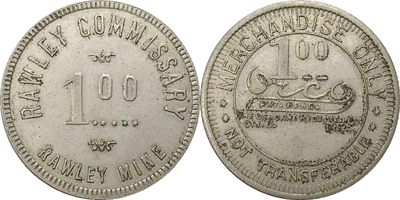
Token coin with the value of $1.00, issued by the Rawley Mine Commissary in Bonanza
from Wikipedia

The Daily Enterprise, a Bonanza town newspaper ran from  May 2, 1882, to July 13, 1882, for a total of 38 issues.  What is fascinating is in the inaugural issue they carried a story about women's garters. Below is the full article: 


Jeweled Garters.

New Yorik Sun. The fashion of wearing jeweled garters has spread so rapidly that jewelers ell keep them in stock. They are very expensive. A member of a conspicuous firm explains: “The rage is nonetheless strong and it promises to spread indefinitely as the trend is as unlimited as the purse. All the prominent society women and many who are not in society wear them. You see, women constitutionally delight in pretty things and their adornment is of more interest and enjoyment to them than anything else. If you will come downstairs I’ll show you the stock:.” 

There was a show-case full of them, each pair mounted in a velvet box. The pattern was the same in all as far as the band was concerned. The band was a full inch wide, made of fine elastic and covered with beautiful woven silk of every conceivable shade, pale blues and warm reds predominating. They are designed to match the tint of the dress worn with them. 'ln one case two heart-shaped clasps, of colored gold, inlaid with crossbars of " turquoises and pears, joined the ends of a scarlet band with little tie frills of silk along the edges. The price was $l9O. A pair with two oval clasps of hammered gold, perhaps an inch in length, could be bought for $43, while the cheapest pair with plain gold clasps, was $46

“It's a curious fact,” said the jeweler, “that the cheap ones won’t sell. When a customer wants an elegant garter he, I mean she, Is willing to pay for it.”

 A pair that cost $225 had two shields with three large pearls in each and little diamonds at the edge. Another pair was expensive though its delicate lace, which was arranged in a fuffy bow-knot, with two little gold disks clasped in the center.

At another establishment, the jeweler said: “The majority of them are made to order. Your visit is opportune, as 1 have just finished the most expensive pair that, ever left my factory. The price is $1,200.” In this, the lace and pearl-colored silk band was joined by an elaborate clasp. On one side was the lady's monogram in pearls; on the other the coat-of-arms, with frosted storks’ heads, a crest of delicately carved gold, and a motto set in chip diamonds. It was a present from a mother to her daughter, who is to be married soon.

“Has the demand for such garters increased?” 

“It is a hundred percent, greater than last year, and grows constantly.”

In the final issue was found this article: 


I hope you found these tidbits interesting. Until next time:

Stay safe, stay happy, and stay healthy.

Doris


Sunday, January 22, 2023

A Look at Two Early Colorado Towns

 Post by Doris McCraw aka Angela Raines

Photo property of the author

This post is a look at a couple of towns in Colorado that I'm fascinated with. As you can imagine, they have a history that drew me to them. 

In the case of Rico, Colorado, it was the town where Joe and Harriett Ward's daughter ran away to, lived, and died there. While the Ward story I've told in other posts and in a symposium paper, I didn't talk about their daughter. The accepted story is that she couldn't take the lifestyle her parents were living so ran away and then committed suicide. I feel there is more to this story, and hope to pursue a closer version of what really happened. 

Rico town hall - from Wikipedia

Rico was a mountain town a mining town located in the San Juan mountain range about 27 miles from Telluride, Colorado, and 30 miles from Durango, Colorado. Below are a couple of articles from the newspaper that was published in the early days of the town. I find it fascinating what they were interested in.


Rico Sun News


Rico Record Oct 18, 1883


Spar City is another town that has a boom/bust story and has lived on as a private reserve. It came into being during the heyday of silver mining but folded after silver was demonetized in 1893. It was located close to the town of Creede, Colorado. Around 1905 a group from Kansas bought the town and all that was in it as a place of their own to come to. 

Below is a short piece from their short-lived newspaper. Electricity was a source of interest back then.


Spar City Spark March 20, 1893

Until next time when I take a look at more of the Colorado towns, stay safe, stay happy, and stay creative.

Doris


Monday, August 22, 2022

A Couple Who Left Their Mark

 Post by Doris McCraw aka Angela Raines

Photo property of the Author

In the early days of Colorado Springs William S. and Helen (Hunt) Jackson were quite the couple. William, as the majority owner of the El Paso County Bank, treasurer of the Denver & Rio Grande Railroad, and later the receiver of the same company when it went into bankruptcy, was a major influence on the financial health and confidence in Colorado Springs. Helen (Hunt) was already an established author when she arrived in Colorado Springs. Her writings about the area were responsible for the view many Easterners and those from Europe had of the region.

How did these two come to achieve this status? Perhaps it will help to have a bit of background on the two individually.

William Sharpless Jackson

Born in Pennsylvania to Caleb S Jackson and Mary Ann Gause Jackson. His parents were involved in the Underground Railway, their home being a stop on that historical line, in Kennett Square, Chester County, Pennsylvania. His parents were also Quakers, the faith that William Jackson Palmer, one of the founders of Colorado Springs, also belonged to.

Helen was born Helen Marie Fiske on October 18, 1830, in Amherst Massachusetts. Her father Nathan Fiske was a teacher at Amherst College. Her mother Deborah Waterman Venal Fiske, taught Helen and her younger sister Anne at home whenever possible. There were two other children born to the Fiskes. Both were boys and died in infancy. Both of Helen's parents wrote. Her father wrote adult books and her mother wrote children's stories.

Helen came to Colorado in 1873 at the request of her doctor. She had been having fevers and sore throats. It was thought that the climate in Colorado would help Helen heal. She first arrived in Denver but did not like the town. It was suggested that she try Colorado Springs which was a few miles south of Denver.

Her doctor had said she needed to come to a warm, dry climate. When she arrived in Colorado Springs in the late fall it was snowing, overcast, and cold. She had thought that it might be best to go back to the east coast. To her Colorado Springs was raw, new, and not very welcoming. Helen felt the mountains were foreboding and the plains flat and ugly.

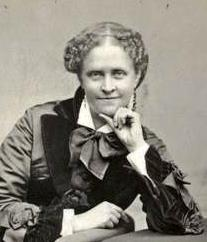
Helen H Jackson
from Wikipedia

Helen agreed to give Colorado one month. During that time, the sun came out again and Helen had a chance to see so many wonderful things. She soon fell in love with the area and over time traveled over a lot of Colorado. She wrote about what she saw and many of her essays were published in magazines back East. These essays described Colorado so well that people wanted to see what she wrote about.

While in Colorado Springs Helen met many people and one was William Sharpless Jackson. He worked for the Denver and Rio Grande Railroad and also was involved in banking. The two spent time traveling around the area and both loved the mountains and outdoors.

In October of 1875, Helen and William were married. This was Williams's first marriage and Helen's second. Helen was eight years older, but that did not seem to make any difference to William, or as Helen called him Will.

Williams's work kept him traveling a great deal; sometimes Helen would accompany him and sometimes she would stay in the home he had bought for them or travel on her own.

To Helen, Cheyenne mountain was the most beautiful mountain in the world. She and Will had spent much time around the mountain. Their favorite spot to 'camp' was an area in South Cheyenne canyon where it overlooked the city and the stream that flowed through the canyon.

Helen continued to write and travel. Sometimes she traveled without William and sometimes with him. Still, she kept writing her stories, essays, and poems. She would also return to the east coast where her sister Ann and family lived.

Up until Helen's death in 1885, this couple followed their own rules, and in the process did much that benefitted many. They both left a lasting legacy.


Doris McCraw

Saturday, May 22, 2021

AND UP THE MOUNTAIN WE GO - Pikes Peak Cog Railway

Post by Doris McCraw

writing as Angela Raines

With Colorado Springs celebrating its sesquicentennial this year, I will periodically be posting about the city and region. Earlier I posted about the Trolley Museum: Found Here. What makes this post so much fun for me is the resource I found for the article and the fact that the Cog Railway is opening up again after almost four years.

An early photo of the cog railway
from en.wilipedia.org

The Railway closed in October of 2017 for maintenance. The closure was longer than anyone expected. The re-opening coincides closely with the opening of a new Summit House at the top of the mountain. To me, there is nothing like riding up the side of the mountain to be greeted by views that take your breath away. 

But what about the beginnings. This article found in the "Cow-Boy Round-Up" was quite interesting. I'm sure they had high hopes for the publication, but I've only found one issue. As for the railway system, it didn't begin its climb up to the summit of the mountain until June 30, 1891.

Below is a short piece the publication included in that issue:

The Cow-Boy Round-Up is issued not only for the interest of the cowboy club but in the interest of the great and growing city of Denver, Colorado. The reader will find much interesting information regarding this wonderful city in this issue.

I'm not sure where this photo came from
but I had to share

And the following is the one on the railway.

To the top of Pike's Peak.

Colorado is bound to be the Mecca of tourists in the United States. A few days ago, a most important transaction took place, which will advertise Colorado all over the world. The transaction was nothing more or less than the taking up of the remaining stock in the Pike's Peak railroad company, a corporation that can now boast of a half million of capital, placed principally with Chicago capitalist. Within a few weeks, this corporation will commence breaking ground for one of the most novel railways in the United States — a cog-wheel road from Manitou to the top of Pike's Peak. The road will be 9 miles long, and will run straight up the face of the mountain. The trip to the top will be made in an hour and a half, thus enabling tourists to ascend to the top of the Peak and return between meals. At present, the traveled road is twenty-four miles long, and an entire day is generally taken for the trip. It will take the entire summer to build the road, but when completed, it will be solid, substantial, and safe. (Denver Journal of Commerce.) 

The Cow-Boy Round-Up, Volume 1, Number 1, March 4, 1889


The author's photo from one of the cog trips

I hope you enjoyed my trip back and how things may have changed, but still stay the same. Until next time.
 For more information on the process

Cog Railway History

Doris Gardner-McCraw -
Author, Speaker, Historian-specializing in
Colorado and Women's History
Author of the 'Agate Gulch' series of novellas and the 'Kiowa Wells' series of novels
Angela Raines - author: Telling Stories Where Love & History Meet
Angela Raines FaceBook: Click Here

(c) 2021 Doris McCraw All Rights Reserved.