Showing posts with label Texas history. Show all posts

Wednesday, April 26, 2023

The Texas Prison Rodeo by Bea Tifton


The Texas Prison Rodeo in Huntsville, Texas, was the first of its kind in the United States, operating from 1931 to 1986.  In 1931, the general manager for the Texas prison in Huntsville, Marshal Lee Simmons, instituted the Texas Prison Rodeo.  The rodeos were held on Sunday afternoons in October with the blessings of local clergy members.

Livestock was provided by the prison farms, and Simmons trucked in spectators and inmates on “rolling jails” from the prison farms and the prison itself, called “The Walls” by many. The rodeo took place on the prisoners’ baseball field. 

The wooden stadium only seated a few hundred, so organizers had to turn away fans.  In 1938 the arena seating was doubled and in 1950 a red brick arena with a 20,000 seating capacity was built for one million dollars.


Dubbed “The Wildest Show Behind Bars” and “The Wildest Show on Earth,” the rodeo proceeds were used to provide funds for an education and recreation fund that purchased such things as textbooks and Christmas turkeys.


Participants wore black and white striped uniforms sewn by women at the Goring unit. Men and women could participate in the rodeo.  Men competed in calf roping, bronc riding, bull riding, bareback basketball, and wild cow milking.  In “Hard Money,” inmates wearing red shirts competed against each other to be the first to snatch a tobacco sack full of cash from between the horns of a bull. Women participated in calf roping, barrel riding, and greased pig sacking.


Prisoners were paid for performing.  They earned two dollars in 1938 and ten dollars in 1986, but the main draw was the satisfaction and recognition for winning. O’Neal Browning began participating in rodeos when he was sixteen. His father, who wanted Browning to help him on the farm, beat the boy regularly even though he was bringing money home from rodeo winnings. While still in his teens in a drunken rage, Browning killed his father with an ax and was sentenced to life in prison. For 30 years he participated and became a celebrity as he was the top winner in seven rodeos.


Inmate rodeo clowns distracted the bulls and entertained the spectators. During halftime shows prison gospel choirs, string bands, and the “Goree Girls” featuring the former stripper Candy Barr entertained the crowd. In the 1950s, celebrities began performing, including Johnny Cash, Dolly Parton, Loretta Lynn, and Willie Nelson.
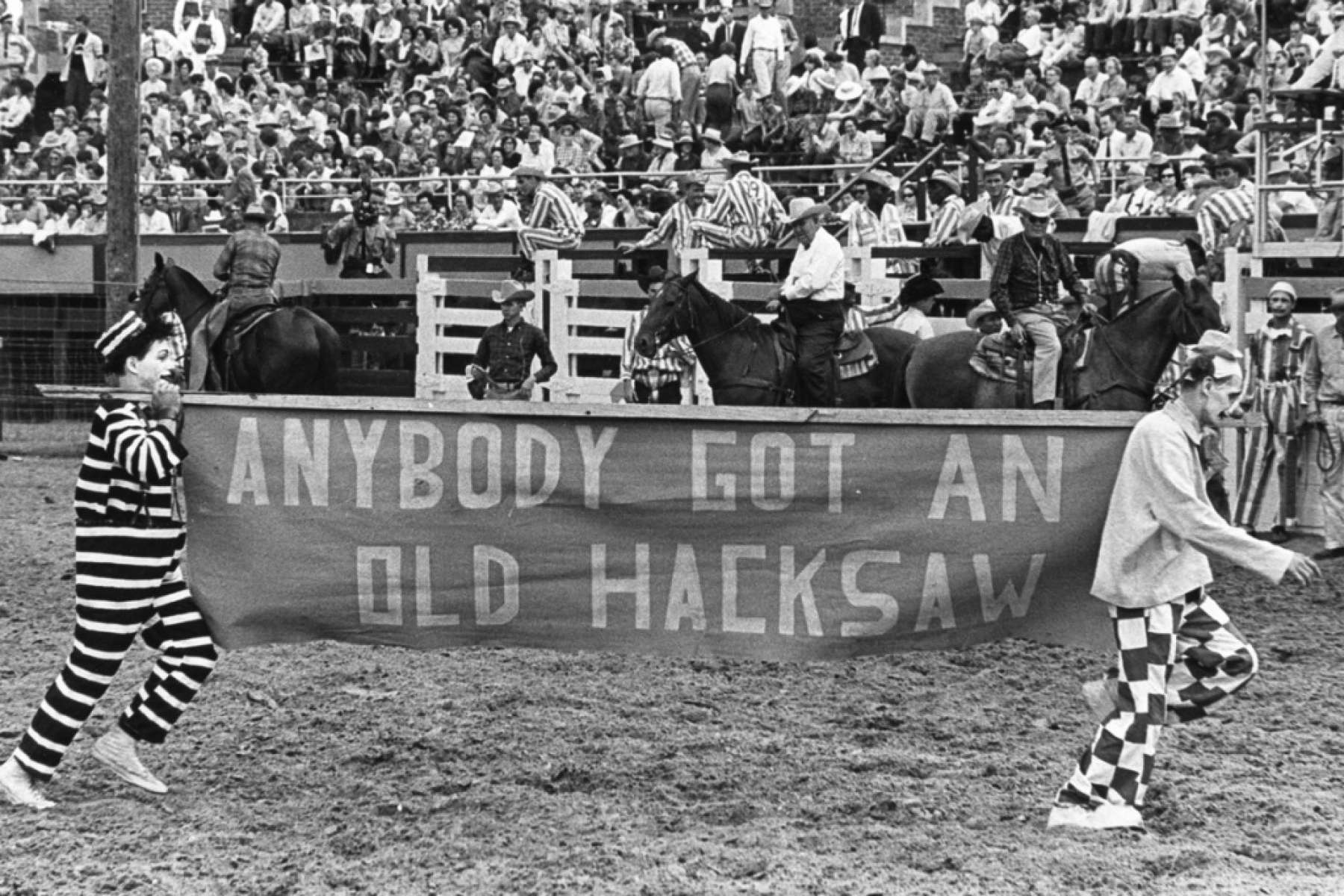


The rodeo involved inmates throughout the prison systems and local businesses such as restaurants and stores benefitted from the resulting tourism. In 1975, astronauts and cosmonauts from the Apollo-Soyez space mission attended the rodeo. In 1980, the film “Urban Cowboy” filmed several scenes from the arena and included the prison rodeo in the film’s plot.

Only two inmates ever escaped. One year a pair of convicts slipped under the bleachers and put on clothes left by an outside accomplice. As they were heading toward the exit, a security guard actually threw them out of the rodeo because he thought they were sneaking in.


Several factors contributed to the rodeo’s demise.  The energy crisis and inflation in the 1970s and 1980s, along with poor advertising and bad weather dramatically reduced the crowds. As Huntsville and the surrounding area became increasingly less rural, fewer inmates had the necessary skills to participate safely.  Changing views emerged concerning the treatment of incarcerated people.  Federal funding increased to the state prison system and eliminated the pressure for the state prison system to earn its own finances.  The rodeo was still quite popular in 1986 when engineers condemned the stadium as unsafe. Efforts to revive the rodeo in the 1990s proved unsuccessful. In 2012 the rodeo grounds were demolished.


Wednesday, April 13, 2022

The Texas Prison Rodeo by Bea Tifton

The Texas Prison Rodeo in Huntsville, Texas, was the first of its kind in the United States, operating from 1931 to 1986.  In 1931, the general manager for the Texas prison in Huntsville, Marshal Lee Simmons, instituted the Texas Prison Rodeo.  The rodeos were held on Sunday afternoons in October with the blessings of local clergy members.

Livestock was provided by the prison farms, and Simmons trucked in spectators and inmates on “rolling jails” from the prison farms and the prison itself, called “The Walls” by many. The rodeo took place on the prisoners’ baseball field. 

The wooden stadium only seated a few hundred, so organizers had to turn away fans.  In 1938 the arena seating was doubled and in 1950 a red brick arena with a 20,000 seating capacity was built for one million dollars.


Dubbed “The Wildest Show Behind Bars” and “The Wildest Show on Earth,” the rodeo proceeds were used to provide funds for an education and recreation fund that purchased such things as textbooks and Christmas turkeys.


Participants wore black and white striped uniforms sewn by women at the Goring unit. Men and women could participate in the rodeo.  Men competed in calf roping, bronc riding, bull riding, bareback basketball, and wild cow milking.  In “Hard Money,” inmates wearing red shirts competed against each other to be the first to snatch a tobacco sack full of cash from between the horns of a bull. Women participated in calf roping, barrel riding, and greased pig sacking.


Prisoners were paid for performing.  They earned two dollars in 1938 and ten dollars in 1986, but the main draw was the satisfaction and recognition for winning. O’Neal Browning began participating in rodeos when he was sixteen. His father, who wanted Browning to help him on the farm, beat the boy regularly even though he was bringing money home from rodeo winnings. While still in his teens in a drunken rage, Browning killed his father with an ax and was sentenced to life in prison. For 30 years he participated and became a celebrity as he was the top winner in seven rodeos.


Inmate rodeo clowns distracted the bulls and entertained the spectators. During halftime shows prison gospel choirs, string bands, and the “Goree Girls” featuring the former stripper Candy Barr entertained the crowd. In the 1950s, celebrities began performing, including Johnny Cash, Dolly Parton, Loretta Lynn, and Willie Nelson.


The rodeo involved inmates throughout the prison systems and local businesses such as restaurants and stores benefitted from the resulting tourism. In 1975, astronauts and cosmonauts from the Apollo-Soyez space mission attended the rodeo. In 1980, the film “Urban Cowboy” filmed several scenes from the arena and included the prison rodeo in the film’s plot.

Only two inmates ever escaped. One year a pair of convicts slipped under the bleachers and put on clothes left by an outside accomplice. As they were heading toward the exit, a security guard actually threw them out of the rodeo because he thought they were sneaking in.


Several factors contributed to the rodeo’s demise.  The energy crisis and inflation in the 1970s and 1980s, along with poor advertising and bad weather dramatically reduced the crowds. As Huntsville and the surrounding area became increasingly less rural, fewer inmates had the necessary skills to participate safely.  Changing views emerged concerning the treatment of incarcerated people.  Federal funding increased to the state prison system and eliminated the pressure for the state prison system to earn its own finances.  The rodeo was still quite popular in 1986 when engineers condemned the stadium as unsafe. Efforts to revive the rodeo in the 1990s proved unsuccessful. In 2012 the rodeo grounds were demolished.


Saturday, March 12, 2022

Ma Ferguson: The First Female Governor of Texas by Bea Tifton

Miriam Amanda "Ma" Ferguson was the first woman governor of Texas.  She was born in Bell County in Texas June 13, 1875. She attended Salado College and the Baylor Female College at a time when few colleges in the South would allow women to be students.  Miriam married James Ferguson in 1899 on New Year's Eve.   James Ferguson was a lawyer and a banker in Belton, Texas. The devoted couple had two daughters. 

Miriam's husband served as governor of Texas  from 1915 to 1917.  He was investigated and impeached during his second term for misappropriation of funds and embezzlement and prohibited from holding any state office in Texas.  

In 1924, Miriam ran for governor as a puppet candidate for her husband, whom she openly said she would consult for advice. At campaign rallies, Miriam would make an introductory speech and her husband would then take the platform to speak. One of the campaign slogans was "Me for Ma, and I Ain't Got a Durned Thing Against Pa." Another popular slogan was "Getting Two Governors for the Price of One." She won the election and became the first female governor of Texas and the second female governor in the United States, along with  Wyoming's Nellie Ross.


Ma was defeated by Dan Moody, the man who had investigated her husband while Pa was in office, in the 1926 gubernatorial election.  Ma ran and won a second term in 1932.  The Texas Rangers had endorsed Ma's opponent in the 1932 election. Soon after she was elected Ma discharged all Texas Rangers, making Texas a safe hideout for Depression era gangsters such as Bonnie and Clyde and Pretty Boy Floyd.  New Texas Rangers were quickly appointed , but they were unqualified and ineffective toward stopping the rising crime rate. 

Ma's platform was opposing the Ku Klux Klan and Prohibition.  Her slogan during the 1924 Democratic Primary against Klan- backed Felix Robertson was, "Make a Choice: The Bonnet or the Hood." After she was elected, Ma passed the "Anti Mask" law, aimed directly at the Klan. She pardoned almost 4,000 people during her combined terms, many of whom were people who broke prohibition laws. Rumors abounded that the pardons were the result of payments made to Pa Ferguson. Investigations were made as the rumors persisted, but no one was ever able to prove the allegations.  As a result, voters passed an amendment in 1936 that pardons would be made not by the governor, but by the Texas Board of Pardons and Paroles. 


Ma ran for governor again in 1940 but was defeated. She retired from politics. Pa died as the result of a stroke in 1944. Ma died from congestive heart failure in 1961 at age 86. She is buried the Texas State Cemetery in Austin. 


Ma is credited with the unfortunate quote that "English was good enough for Jesus Christ and it's good enough for the children of Texas." Historians agree that the quote is apocryphal and that Ma did not say it. Despite the shadows of suspected corruption during her terms, Ma Ferguson paved the way for future women in politics and made a positive contribution to Texas. 


Saturday, February 12, 2022

Madame Candelaria by Bea Tifton


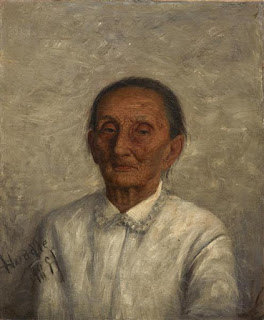
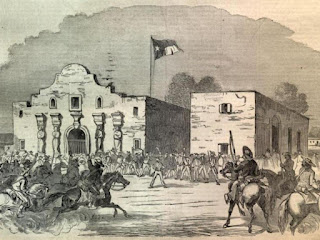
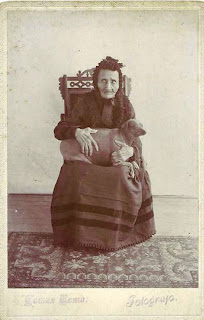
Madam Candelaria was born in 1785 as Andrea Castanon Villanueva. She died in 1899 at the age of 113 and claimed to be a survivor of the Battle of the Alamo in 1836. 

Madam Candelaria was born in either Laredo, Texas or Presidio del Rio Grande. She moved to San Antonio at the age of 25 and married her second husband, Candelario Villanueva. She had four children and raised 22 orphans. Madam Candelaria was known for her philanthropy and her nursing skills. She claimed that she nursed Jim Bowie during the Battle of the Alamo. Until the day she died, she would relate the story of the Alamo with tears running down her cheeks. 


Because there isn't well documented evidence either way, it is impossible to prove Madame Candelaria's story, but in 1891 the Texas legislature awarded her a pension of $12 a month for being a survivor of the Alamo and for her help in nursing smallpox victims in San Antonio. 

She is buried in the San Fernando Cemetery. 

Madame Candelaria lived to see Texas become its own republic, then a state in the United States of America, then a member of the Confederacy after seceding, then a state once again. She saw so many innovations and inventions change people's lives dramatically.


A Few Inventions Made During Madame Candelaria's Lifetime:

1793      Cotton Gin

1801      Suspension Bridge

1834      Refrigerator

1833      Sewing Machine

1836      Morse Code

1839      Train Sleeper Car

1842      Ether Based Anesthesia

1843      Rotary Printing Press

1846      Printing Telegraph

1850      Dishwasher

1857      Mass Produced Rolled Toilet Paper

1859      Electric Stove

1860      Vacuum Cleaner

1867      Motorcycle

1877      Phonograph

1885      Electric Mixer

1886      Automobile

1890      Incandescent Lamp


Sunday, September 12, 2021

Thurber, Texas by Bea Tifton


When many people hear about a town that went from boom town to ghost town, they might think about a gold rush as the cause, but Thurber, Texas, died another way. 

The entire town was owned by the Texas and Pacific Coal Company in the 1800s. At its high point, the mine at  Thurber produced 3,ooo tons of coal daily. Thurber was a corporate town, from its stores, saloons, school, and houses to its churches. The inhabitants included people from Italy, Poland, Ireland, and even Russia. Although the immigrants tended to cluster by country as far as neighborhoods, the various cultures lived together harmoniously. Thurber was one of the first Texas cities to be completely electrified. Each home had natural gas and running water. At its most populated, Thurber had about 10,000 inhabitants. 


In 1897, the company added a brick factory. Thurber  bricks were used to pave Congress Avenue in the state capitol of Austin, the Galveston Seawall Project, and the streets of the Fort Worth Stockyards. 


In 1913, the company manager at Thurber, William Knox Gordon, discovered oil in nearby

Ranger. As railroads began running on oil instead of coal, the coal mines and the brick kilns

were closed. The company became the Texas Pacific Coal and Oil Company and moved its

headquarters to Fort Worth. By the late 1930s, Thurber was a ghost town. The company

sold the buildings and people hauled them off to other towns. 


Today, the site has the Gordon Center, which includes a museum and a gift shop, and the

Smokestack Restaurant. The museum has interesting and informative exhibits. Thurber is a

fascinating place to visit. As visitors gaze out over the empty land, they can marvel that Thurber was once an innovative and thriving community.


Wednesday, May 12, 2021

Rainmaking in Texas by Bea Tifton

Rainmakers traveled the West in the 1800s. Many of these traveling showman set themselves up in sheds and sent mysterious gases up into the air, charging exorbitant fees. Others used the concussive theory of sending explosives into the sky to shake up the clouds. Most read meteorological signs in the atmosphere to work on days when rain was likely to occur. Many of these men believed they could actually produce rain, but most were merely opportunists selling rain instead of snake oil. In the late 1800s, the United States government decided to take a chance and funded rainmaking experiments in Texas.

A former Civil War general named Edward Powers wrote a book called War and the Weather in 1871 in which he recorded his observation that it rained following major battles.  He postulated that the loud noise level of the battle caused the clouds to release the rain they held. A senator from Illinois, Charles B. Farwell, read Power’s book years later and asked the Senate for money to make it rain.  Congress gave $7,000. 

The head of the rainmaking team was Robert Dyrenforth, a patent lawyer living in Washington, D.C. He had several clients who came to him with rainmaking patents and had become fascinated with the concept. Members of the team included George E. Curtis, a meteorologist.


The first experiment occurred at a ranch near Midland in 1891. Several hours after the team set off the explosives, a small amount of rain fell and the experiment was pronounced a success. On  August 21, the team set off the next batch of dynamite. When a slight mist occurred hours later, Dyrenforth once again claimed success.The last round of dynamite was fired for hours on August 25. Dyrenforth reported a thunderstorm occurred house later, but witnesses said it was merely a light sprinkle.

The conclusions among a skeptical scientific community, including George Curtis, were that there was no credible conclusion that the concussion method worked. Many people continued to believe it did, including Robert Dyrenforth.

The city of El Paso, Texas asked Dyrenforth to come and try to make it rain. Hours after the team sent explosives into the air, rain fell on the other side of town, for which the team took full credit. The team also conducted experiments in Corpus Christi and San Antonio. In San Diego, Texas, the team conducted an experiment partially funded by Henrietta King of the King’s Ranch. Hours after the experiment, rain fell.

As the scientific community continued to ridicule the rainmakers, the government eventually disbanded their rain making team. Dyrenforth returned to Washington, D. C. and was an object of ridicule for years to come. He died in 1910.


Further Reading:

https://truewestmagazine.com/article/bombs-over-texas/

https://www.kshs.org/kansapedia/rainmaking/12179

https://www.politico.com/magazine/story/2015/04/congress-scheme-to-shoot-rain-from-the-skies-1891-117361

https://www.smithsonianmag.com/history/when-us-government-tried-make-rain-exploding-dynamite-sky-180970193/