Showing posts with label Sundance Kid. Show all posts

Sunday, April 5, 2015

FACT AND FICTION ON A COLLISION COURSE FOR A FUN STORY AND GIVEAWAY!! by Kirsten Lynn

Sometimes a story is born from an actual event in history. This is the case with my newest release THE WIDOW'S LAWMAN.  Butch Cassidy, Harry Longabaugh (The Sundance Kid) and the rest of their Wild Bunch are popular subjects of study near where I live, mainly because the Hole-in-the-Wall is right down the road.

From researching the Wild Bunch and the Wilcox train robbery, a stubborn widow and an outlaw failing to reform were born. Along with these two wild and wonderful characters, Butch, Sundance, Etta and the boys came to life and joined forces to wreak havoc on the Wyoming countryside.

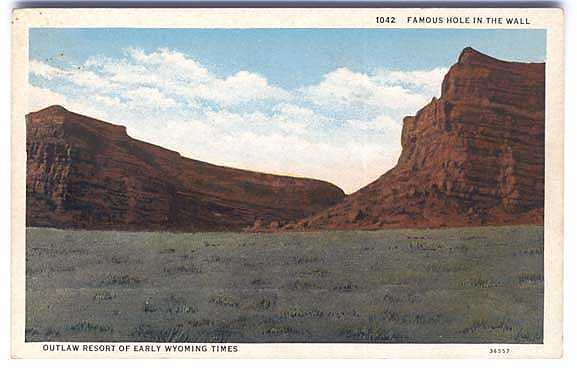
First let me give you a little peek at the Hole-in-the-Wall.


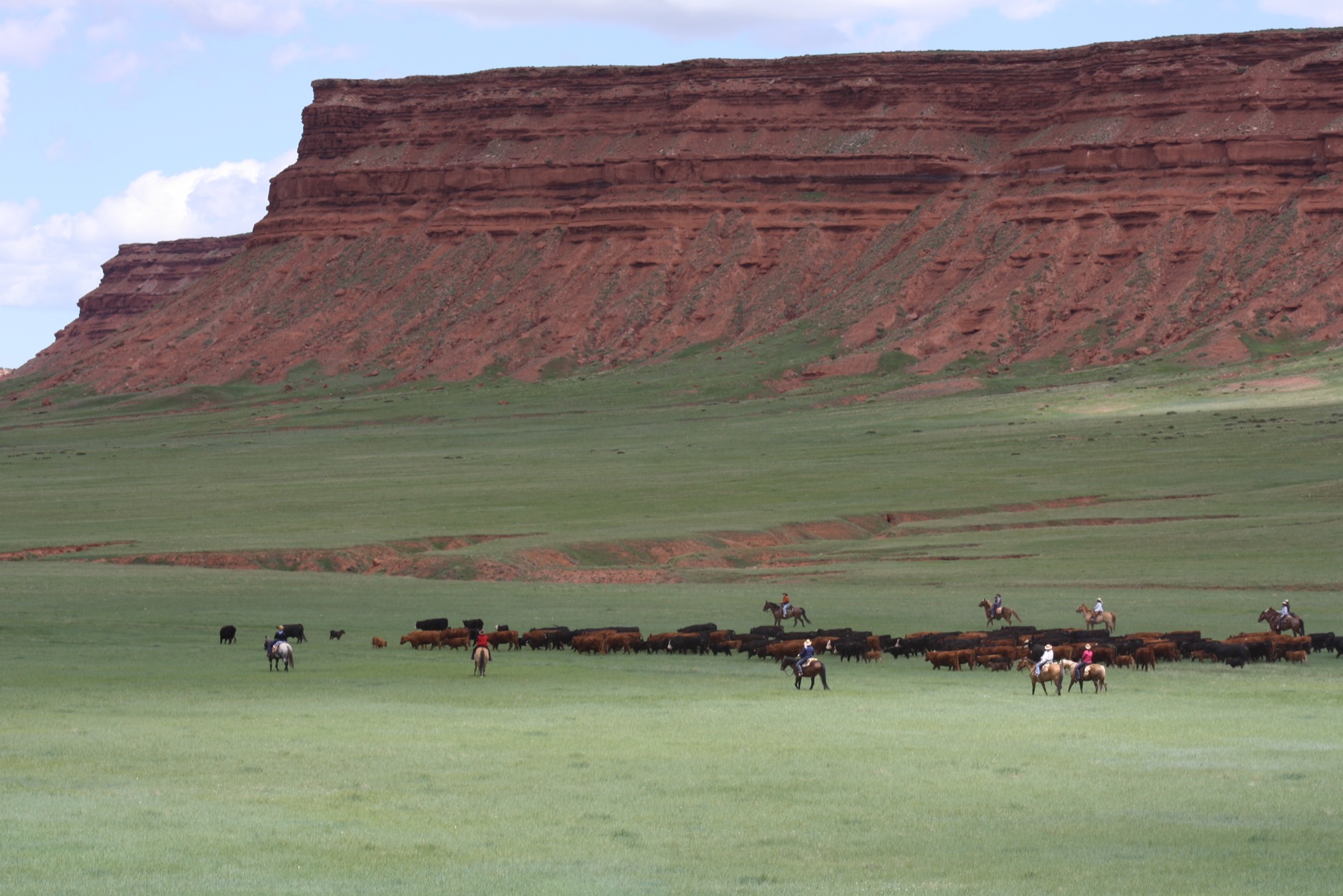
In Southwest Johnson County, Wyoming lying between the Red Wall and Big Horn Mountains is the most famous hideout on the Outlaw Trail, the Hole-in-the-Wall. Between roughly the 1860s and 1910, 30 to 40 outlaws stayed in the secluded spot including Jesse James and Butch Cassidy’s Wild Bunch.                                                                               

The area was (and still is) isolated taking about a day’s journey by horseback from any semblance of civilization. It is a steep climb to the top of the Wall, but overlooking the country below it is no wonder this location was chosen. With sweeping 360 views the pass was well situated to spot approaching lawmen and the narrowness of the approach made it easy to defend. The grassy plateau at the top and creek bed of the canyon below made it a good spot to graze all the rustled cattle.


In this area in the 1880s and 1890s, rustlers grazed stolen cattle and provided refuge to outlaws. Inhabitants of the six cabins that stood in the valley were known as the Hole-in-the-Wall Gang. Members of the gang included Bob Smith, Al Smith, Bob Taylor, George Currie, Tom O’Day, and the Roberts Brothers. Later Robert Leroy Parker (Butch Cassidy), Harry Longabaugh (the Sundance Kid), and Harvey Alexander Logan (Kid Curry).


A trestle across the Union Pacific near Wilcox, Wyoming at 1:00 a.m., June 2, 1899, forces the Overland Flyer to halt. Men wearing masks made from white napkins, possible stolen from the Harvey House Restaurant, boarded the train. One of the men after unsuccessfully forcing the engineer to pull the train forward, clubbed the engineer with a gun butt and pulled the train forward himself. The trestle was dynamited to prevent the second section of train from catching up. The train was pulled forward two miles and stopped.
There the express car was surrounded, and the attendant, E.C. Woodcock, was ordered to open the door. He refused. The car was blown up. Woodcock suffered a concussion from the blast and couldn't remember the combination to the safe. The gang blew up the safe. Initial reports stated the Wild Bunch made off with $30,000, some of the bank notes being scorched by the explosion or stained with raspberries also in the car. Later the superintendent of the Union Pacific, confirmed the gang made off with over $50,000 in stolen items, bank notes and even gold. 
then Union Pacific Superintendent W.L. Park wrote that the railroad had actually lost more than $50,000, some of it in gold. The outlaws escaped in a northerly direction, toward the Hole-in-the-Wall, a well-known outlaw enclave in the middle of Wyoming. - See more at: http://www.historynet.com/the-wilcox-train-robbery.htm#sthash.RHe0zya9.dpuf

Even though the men were masked immediate suspicion fell on the Wild Bunch.  Other newspapers identified the culprits as the Roberts brothers and reported the robbers to be George Currie and the Roberts brothers. It is now believed the name “Roberts” was used by Sundance and Harvey Logan. Authorities believed some of the robbers were headed for the Hole-in-the-Wall. Posses gave chase. Near Teapot Creek some of culprits were cornered by a posse led by Converse County Sheriff Joe Hazen. In the ensuing fire fight, Sheriff Hazen was killed and the train robbers made their escape by swimming across the river.

The members of the Wild Bunch involved included: "Flatnose" George Curry, Harvey Logan "Kid Curry," Lonnie Logan,  Harry Longabaugh "Sundance Kid," Ben Kilpatrick "The Tall Texan,"  and Will Carver.  Butch was thought to have been the mastermind behind the robbery, but did not participate in the actual robbery. In 1896, Butch was pardoned by Governor William A. Richards from the Laramie Penitentiary. The condition of this pardon was Butch promised to never again participate in any crimes within Wyoming's borders.

The Wilcox train robbery became one of the most famous train robberies in the West. A year later the Wild Bunch held up a second train near Tipton, Wyoming. While these robberies were successful, they also signaled the end of the Wild Bunch. Butch, Sundance and Etta made their way to South America. Other members were eventually tracked down and killed or imprisoned.

In one of those history makes a great a story, poor Agent Woodcock was the agent aboard the train during the Tipton train robbery. 

The Flyer also carried horses...And that's where Jake and Ellie enter the picture.


GIVEAWAY: Today I'm giving away TWO e-book copies of THE WIDOW'S LAWMAN, so you can have a chance to join the fun. Please leave a comment and your contact information for a chance to win.

Join Jake, Ellie, Butch, Sundance and the Wild Bunch on the track to true love...and a lot of shenanigans along the way.

Outlaw Jake Avery is handed an ultimatum--hang for his crimes, or become the new Sheriff of Sheridan, Wyoming. When he chooses the life of a lawman, he doesn’t expect a local widow woman to tangle with his emotions.

Ellie Reed needs Sheridan’s new sheriff to help her rob a train, and recover her late husband’s treasured property. She doesn’t expect the outlaw-turned-sheriff to steal her heart, as well.

As the train barrels through Wyoming, Jake and Ellie plan a robbery to avenge the past. But can they heist a future together?


 AMAZON BUY LINK

BARNES & NOBLE BUY LINK


 Kirsten Lynn writes stories based on the people and history of the West, more specifically those who live and love in Wyoming and Montana. Using her MA in Naval History, Kirsten, weaves her love of the West and the military together in many of her stories, merging these two halves of her heart. When she's not roping, riding and rabble-rousing with the cowboys and cowgirls who reside in her endless imagination, Kirsten works as a professional historian.
 
FACEBOOK    WEBSITE   TWITTER   NEWSLETTER

Monday, February 10, 2014

HOLE IN THE WALL GANG BY KIRSTEN LYNNE

By Special Guest Kirsten Arnold

Thank you to the amazing authors at Sweethearts of the West for inviting me back!

Last year my faithful camp cook, aka Cookie, and I introduced you to an obscure outlaw who ended up as footwear. Today we’d like to take you in the opposite direction to one of the most famous outlaw hideouts and introduce y’all around to a few of the more colorful part-time residents of Wyoming.

Oh, Cookie just brought up a good point. Y’all better leave your valuables on your wagons…we’re just sayin’ can’t be too careful at the Hole-in-the-Wall!


In Southwest Johnson County, Wyoming lying between the Red Wall and Big Horn Mountains is the most famous hideout on the Outlaw Trail, the Hole-in-the-Wall. Between roughly the 1860s and 1910, 30 to 40 outlaws stayed in the secluded spot including Jesse James and Butch Cassidy’s Wild Bunch.


The area was (and still is) isolated taking about a day’s journey by horseback from any semblance of civilization. It is a steep climb to the top of the Wall, but overlooking the country below it is no wonder this location was chosen. With sweeping 360 views the pass was well situated to spot approaching lawmen and the narrowness of the approach made it easy to defend. The grassy plateau at the top and creek bed of the canyon below made it a good spot to graze all the rustled cattle.

In this area in the 1880s and 1890s, rustlers grazed stolen cattle and provided refuge to outlaws. Inhabitants of the six cabins that stood in the valley were known as the Hole-in-the-Wall Gang. Members of the gang included Bob Smith, Al Smith, Bob Taylor, George Currie, Tom O’Day, and the Roberts Brothers. Later Robert Leroy Parker (Butch Cassidy), Harry Longbaugh (the Sundance Kid), and Harvey Alexander Logan (Kid Curry).


So let me introduce y’all to our hosts. Robert Leroy Parker, born in 1866, was the son of devout Mormons. He was led into a life a crime by Mike Cassidy and adopted the name George Cassidy, some believe as a way of not bringing shame on his family. In 1885, Mike Cassidy disappeared after killing a Wyoming rancher. Parker took a job with Charlie Crouse. Crouse operated a ranch in Brown’s Hole and a butcher shop in Rock Springs, Wyoming. It was alleged Crouse sold meat from cattle he rustled. It was while employed by Crouse, Parker adopted the name Butch.

By 1886, Parker was living near Meeteetse, Wyoming under his real name. It is believed he participated in the robbery of the San Miquel Valley Bank in Telluride in June of 1889. The Telluride robbery saw the introduction of a new tactic used by members of the Wild Bunch. Along the escape route, the robbers stationed fresh horses. The pursuing posse would have to continue the chase on tired horses, therefore the robbers could elude capture.

Butch Cassidy's prison photo

During this time, Parker continued to engage in rustling in Wyoming. He was arrested for horse stealing near Meeteetse and sentenced in 1894 to the State Penitentiary (in Laramie). He was released early in 1896 and returned to a life of crime using a series of hideouts including Robbers’ Roost in southern Utah, Brown’s Hole in northwest Colorado, and of course the Hole-in-the-Wall.

Harry Longabough, aka Sundance Kid


Our second host is Harry Longabough. Born in Pennsylvania in 1867, he moved to Colorado with his family. By age twenty, Longabough was working as a cowboy for the N Bar N owned by the Neidringhaus Brothers in Culbertson, Montana. In 1887, out of work and drifting he stole a horse, gun and saddle from Western Ranches, Ltd, owner of the Three V’s near Sundance, Wyoming. He was arrested and pleaded guilty, and was sentenced to 18 months in the Sundance jail. He was pardoned by Governor Thomas Moonlight. Longabough drifted to Bell Fourche, South Dakota, and there as a result of his bravado about the time spent in the Sundance jail he earned the appellation of Sundance or Sundance Kid.

Sundance moved north and worked for a period of time at the Bar U in Alberta and for a short period of time in the saloon business at Grand Central Hotel in Calgary. He then returned to Montana and the N Bar N at its Rock Creek unit.


In 1892, Sundance was implicated with Tom McCarty (an acquaintance from Colorado), Matt Warner, and Butch Cassidy, in the robbery of the Great Northern westbound #23 near Malta, Montana. By 1896, Sundance was reported to be in the Baggs and Dixon, Wyoming area.

George Currie aka Kid Curry


On June 28, 1897, Sundance along with George Currie (Kid Curry), Walt Punteney and Tom O’Day participated in the robbery of the Butte County Bank in Belle Fourche, South Dakota.  The bank was a huge target. After the railroad arrived, the town became prosperous as being a loading point for cattle and later sheep. The bank was so prosperous it was acquired in 1903 by Clay, Robinson, and Co., the largest commission agents in the country. John Clay managed the Three Vs, the ranch Sundance had stolen a horse and saddle beginning his criminal career.

The robbery and subsequent pursuit by the law was a comedy of errors with one man, O’Day, being found in a privy behind on of the numerous saloons after O’Day’s horse decided to leave town without him. It took until September for Sheriff John Dunn, Carbon County, Montana, and a small posse to catch up to the other three near Musselshell River. In the ensuing shootout, Kid Curry’s horse was shot through the neck and Curry was shot through the wrist. Curry leaped onto the horse and galloped away, only to have the horse drop dead. All three were arrested and transported to Deadwood Jail. There they escaped, stole horses and gear. They eluded capture on foot, losing horses and swag they had stolen. Ultimately, they made it back to the Hole-in-the-Wall, where as a result of their adventures, they were accepted as full members of the Hole-in-the-Wall gang.

Harvey Logan, Kid Curry, might be takin’ up residence at the Hole unless he’s out…on business. Harvey Alexander Logan was born in Iowa in 1867. After their mother died the four Logan boys, Hank, Johnnie, Lonny, and Harvey moved to Missouri and lived with an aunt. With Johnnie and Lonny, and a cousin, Harvey Logan left home to trail cattle from Texas to Colorado. The four ultimately wandered to the Hole-in-the-Wall where they met George Currie and adopted the last name “Curry.”

In 1894, the “Curry” Brothers established a ranch near Landusky, Montana, in what is now Phillips County.  The town was named after Powell Pike Landusky who discovered gold in the area. Not long after their arrival the brothers had a falling out with Landusky due to the fact Lonny impregnated Landusky’s daughter, Elfie. For some reason, Landusky blamed Harvey for the deed.

Now just to warn y’all, Harvey’s a might quick tempered, especially when he’s had a bit of alcohol to raise his blood temperature. And after enjoying too much Christmas Spirit at “Jew Jake’s” Saloon, Landusky and Harvey decided to settle their differences in a way not keeping with the Season. Harvey, being younger, had the advantage and after bringing Landusky down he proceeded to beat the town founder’s head to a pulp against the floor. Lonnie and another friend kept spectators at bay using their side arms. Landusky reached for a revolver from his pocket. Harvey was handed a gun and shot Landusky dead. Eleven witnesses swore it was self defense, but the brothers fearing Harvey wouldn’t receive a fair trial departed town on a stolen buckboard.

On the outlaw trail, Harvey fell in with Butch and Sundance and participated in the Wilcox and Tipton, Wyoming train robberies…

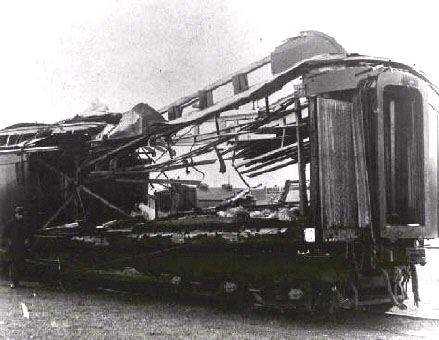
A trestle across the Union Pacific near Wilcox, Wyoming at 1:00 a.m., June 2, 1899, forces the Overland Flyer to halt. Men wearing masks made from white napkins, possible stolen from the Harvey House Restaurant, boarded the train. One of the men after unsuccessfully forcing the engineer to pull the train forward, pulls the train forward himself. The trestle is dynamited to prevent the second section of train from catching up. The train is pulled forward two miles and stopped.

There the express car was surrounded, and the attendant, E.C. Woodcock, was ordered to open the door. He refused. The car was blown up. Woodcock suffers a concussion from the blast and can’t remember the combination to the safe. The gang blows up the safe and stole $30,000, some of the bank notes being scorched by the explosion or stained with raspberries also in the car.

Train after robbers blew it up


Even though the men were masked immediate suspicion falls on the Wild Bunch.  Other newspapers identified the culprits as the Roberts brothers and reported the robbers to be George Currie and the Roberts brothers. It is now believed the name “Roberts” was used by Sundance and Harvey Logan. Authorities believed some of the robbers were headed for the Hole-in-the-Wall. Posses gave chase. Near Teapot Creek some of culprits were cornered by a posse led by Converse County Sheriff Joe Hazen. In the ensuing fire fight, Sheriff Hazen was killed and the train robbers made their escape by swimming across the river.

On August 29, 1900, train robbers, using the same modus operandi robbed the Union Pacific No. 3 Train near Tipton, Wyoming of $50,000 in gold. Woodcock, if you can believe it, was again the express car attendant. This time he opened the door. The robbers were pursued by a posse led by Sheriff McDaniel of Carbon County, Sheriff Peter Swanson of Sweetwater County and United States Marshal Frank Hadsell until the tracks of the robbers were obliterated by a rain. Five years later an employee on a construction crew for the Farris-Haggarty tramway discovered near the head waters of Cow Creek thee bags in which the money from the Tipton Robbery had originally been held.

Although successful the Wilcox and Tipton Robberies marked the beginning of the end for the Wild Bunch and many of its members fled to Bolivia or Argentina including Butch Cassidy, Sundance and Etta Place.

Butch Cassidy and Etta Place


Of all the Wild Bunch members Etta Place is the most mysterious. She is one of the Wild West’s most legendary women. Beautiful and wild she is reported to have been mistress to both Butch Cassidy and Sundance. Eyewitnesses maintain she was the second woman to ride into Robber’s Roost in the winter of 1897. She was allegedly 20 years old at the time, strikingly beautiful, an excellent horsewoman, and outstanding rifle shot, Etta became Sundance’s primary love interest.

Etta was reportedly a refined, highly educated woman of Eastern birth and rearing. She’s also alleged to have been a prostitute from Texas. Others claim she was a schoolteacher from Denver, Colorado with music as her primary discipline. Even her relationship(s) with Butch and Sundance is a mystery. It’s been said she was Butch’s mistress then Sundance took an interest and she went with him. There are even rumors the three lived as a ménage a’trois. Even her name has been debated as five different women who road with the Wild Bunch used the alias Etta Place.

We do know, Etta traveled to Argentina and Bolivia with Sundance and Butch returning to the United States three times during their time in South America. After returning to the United States in 1908 with Sundance, where he left her in Denver, Etta Place was never heard from again. Many claimed to be her, or claimed to be her son or daughter with Butch, but nothing was ever verified. But once Butch and Sundance were run to ground in South America Etta disappeared, as well.

The six cabins no longer stand at the Hole-in-the-Wall, and time has covered their foundations. But if you’d like a Wild West experience you can stay at the Willow Creek Ranch. The Willow Creek Ranch dates to 1882 when it was founded by Kenneth MacDonald, an immigrant sheep rancher. The area’s small ranchers, such as MacDonald, aided the outlaws because they didn’t want any trouble, and outlaws rustle from large cattle barons and robbed trains with well-filled strong boxes.


Today, a rugged dirt road leads from ranch headquarters to the former hideout. Guests can walk threw the chunks of foundation remaining and picnic beneath the old cottonwoods by Buffalo Creek while dreaming of the days when Butch, Sundance and the gang would seek refuge at the Hole-in-the-Wall.

Okay folks, we’re gettin’ close so get yer hand off the heel of your gun before ya get us all blown to bits. Smile big and look like ya belong! It’s sure to be a high kickin’ time with this bunch!

 
Kirsten Lynne

A Wyomingite through and through after six years in the DC area, Kirsten Lynn had enough of the big city and returned home to Wyoming. Centered in the communities in the shadow of the Big Horn Mountains, she writes stories based on the people and history of this area that holds her heart.  When she’s not roping, riding and rabblerousing with the cowboys and cowgirls who have taken up residence in her endless imagination, she has the honor of helping to preserve the history of Wyoming managing the artifact collection of a local museum and writing the histories of local ranches.
She is truly blessed to be living in and writing about the Wild West! Come visit Kirsten round the campfire at www.kirstenlynnwildwest.com.


Wednesday, October 26, 2011

BUTCH CASSIDY, SUNDANCE KID, AND THE WILD BUNCH

By Caroline Clemmons
Several weeks ago, fellow Sweetheart Ashley Kath-Bilsky invited me to a luncheon to hear Dr. Richard Selcer speak on the history of Fort Worth's Hell’s Half Acre. What a great program for any western history lover! We hated for him to finish speaking, but he had to sell a few books and get away in time to teach his next class. (Yes, of course I bought several books.) Our plan was that we would split the information and I would do Butch and Sundance today while she did Hell’s Half Acre on the 30th.

THE WILD BUNCH, 1900
Seated: Harry Longabaugh (Sundance Kid),
Ben Kilpatrick (Tall Texan), and
Robert Leroy Parker (Butch Cassidy)
Back: Will Carver (News Carver) and
Harry Logan (Kid Curry--
the most feared Wild Bunch member)
You’ve all seen the above grouping, but do you know the story behind the photo? Legend has it that someone saw it in the photographer’s window and alerted authorities, who then had copies made and sent them across the west. After extensive research, Rick Selcer disputes this. His research proved the photographer’s studio was on the second floor. Said photographer did the mug shots for the Fort Worth police. When an officer brought a handcuffed prisoner up to the studio for a mug shot, the officer saw the photo on a shelf. He recognized the Wild Bunch and asked the photographer for a copy. That’s how it came to be distributed to other law enforcement professionals. Together with the other members of The Wild Bunch gang, Butch Cassidy and the Sundance Kid performed the longest string of successful train and bank robberies in American history!

Butch Cassidy and Sundance Kid each boasted they never killed a man, and the gang was best known for their lack of violence during the course of their robberies. However, Kid Curry, George Curry, Will Carver and other members of the gang killed numerous people during law enforcement's pursuit. Kid Curry killed nine lawmen and two civilians during shootouts. Elzy Lay killed two lawmen following a robbery, was wounded, arrested, and sentenced to life imprisonment. George Curry killed at least two lawmen, before being killed by Utah lawmen.


"Wanted Dead or Alive" posters were posted throughout the country, some with as much as a $30,000 reward for information leading to their capture or death. The gang began hiding out at Hole-in-the-Wall, located near Kaycee, Wyoming. From there they could strike and retreat, with little fear of capture, since it was situated on high ground with a view in all directions of the surrounding territory.


Harry/Sundance
 Harry Alonzo Longabaugh was born in Mont Clare, Pennsylvania, in 1867, the son of Pennsylvania natives Josiah and Annie G. (nee Place) Longabaugh. He was the youngest of five children and his older siblings were Ellwood, Samanna, Emma and Harvey. At age 15, Longabaugh traveled westward on a covered wagon with his cousin George. In 1887, Longabaugh stole a gun, horse and saddle from a ranch in Sundance, Wyoming. While attempting to flee he was captured by authorities, convicted, and sentenced to 18 months in jail. During his jail time he adopted the nickname of the Sundance Kid. After his release, he went back to working as a ranch hand. I’ll save more about him and his common law wife, Etta Place, for another time. Butch deserves the spotlight today.
 

Robert/Butch
 Butch Cassidy, a so-called gentleman bandit, rivals Jesse James and Billy the Kid as the most celebrated outlaw of the American West. His specialty was robbing banks and trains.

Robert Leroy Parker, who later became known as Butch Cassidy, was born on April 13, 1866 to Ann (nee Gillies) and Maximillian Parker. The Parker and Gillies families were British Mormons who came to America and took up residence in Utah, where Ann and Maximillan met. At the age of 13, Butch began working at a ranch some miles from the Parker homestead. In his late teens, Butch found employment closer to the Parker home at a neighboring dairy farm. He met another hired hand, Mike Cassidy, who taught Butch cattle rustling and how to use guns. Butch was an excellent student and later adopted his mentor's surname when he chose his alias.

In June of 1884, 18-year-old Butch left his family home and traveled to Telluride, Colorado. He got into trouble with the law, but he successfully fought the charges. He wandered around Wyoming and Montana as a ranch hand before returning to Telluride in 1887. On the morning of June 24, 1889, Butch, Matt Warner, Tom McCarty, and another man, were seen in and around Telluride saloons watching people going in and out of the San Miguel Valley Bank. Later in the day, one of the four entered the bank and gave a teller a check he wanted cashed. The group quickly gathered up approximately $20,500 before escaping to Robbers’ Roost.

In 1894, Butch and a friend were arrested for stealing horses and possibly for running a protection racket on local ranchers in Lander, Wyoming. Butch was found guilty of horse stealing and sentenced to two years. He entered prison on July 15, 1894, at the age of 28.

After serving 18 months of his term, Butch requested an early release from the Wyoming governor. The governor agreed to release him if he would go straight. Butch said that rustling and robbery were too much a part of him, but promised that if he were released, he would not commit illegal activities in the state of Wyoming. The governor agreed and the early release was granted on January 19, 1896. How's that for justice at work?

Butch began gathering a gang of outlaws that would become The Wild Bunch.
Matt Varner

His former partner Matt Warner was in prison in Utah for murder, so Elzy Lay replaced Warner as Butch's second-in-command. Elzy was a native of Boston who had journeyed west and started a respectable life in Denver as a horse car driver. When a man was harassing one of his female passengers, Elzy threw the man from the horse car. He believed he had killed the man and Elzy fled Denver. Eventually he ended up among the outlaws.

Butch's criminal activities were interwoven with long stretches of legitimate work. Beginning in 1890, Butch purchased some land near Dubois and Blue Creek, Wyoming and set himself up as a rancher. Butch never prospered as a rancher and he soon returned to a life of crime. For a brief stint in Rock Springs, Wyoming, he worked as a butcher, which probably accounts for his nickname.

Butch was true to his word to the Wyoming governor. In August of 1896, Butch, Elzy and an another man traveled to Montpelier, Idaho, and waited until just before a bank’s closing time before they entered and approached a cashier. The bank was nearly deserted, so two of the men entered the bank with bandanas over the lower half of their faces. One kept watch at the door, while the other demanded all of the paper money the bank had. The robbery netted more than $7,000 in cash, gold, and silver. After the Montpelier robbery, Butch added Harry Longabaugh to his gang.

On July 11, 1899, near Folsom, New Mexico, a train was held up and, because one of the principal thieves was Elzy, Butch may have masterminded the robbery. Lawmen chased the gang and caught up with them a few days later. In the shootout that followed, Elzy killed a sheriff and was captured and sentenced to life imprisonment. Butch had lost his right-hand man again to a jail term. Harry Longabaugh stepped in as Butch’s new second in command.

Losing Elzy Lay so soon after Matt Warner’s imprisonment probably contributed to Butch’s decision to seek clemency and end his outlaw life. He consulted Utah Governor Heber Wells and Pacific Railroad to see if an agreement could be reached whereby the Union Pacific would not prosecute Butch for any of the train robberies. A rendezvous was arranged between Butch and Union Pacific officials, and Butch showed. The train officials were delayed by a storm and arrived one day late. Butch had already gone and left a note saying, "Tell the U.P. to go to hell."

Butch allegedly decided to pull a couple of jobs to collect enough money to live on comfortably for the rest of his life and get out of the robbery business. Butch, Sundance, and one other man traveled to Winnemucca, Nevada, on September 19, 1900, and relieved the First National Bank of $32,640. Around noon, three unmasked and armed men entered the bank and ordered a cashier to open the safe. This successful heist was followed up in July 1901 with a $65,000 train robbery near Wagner, Montana.

Following the Wagner heist, Butch, Sundance, and Sundance’s common-law wife Etta Place went east. The trio departed New York on a ship bound for Buenos Aires, Argentina on February 20, 1902.
In South America, the three bought a ranch and lived in peace for several years. No one knows the reason, but they went back into robbery and were joined by Etta. A Buenos Aires newspaper described this new addition to Butch’s gang as "an interesting woman...who wears male clothing with total correctness...a fine rider...handles...all classes of firearms."

In February of 1905, a group of men rode into Rio Gallegos, Argentina, and told residents that they were interested in buying land for raising livestock. After spending some time in the town setting up this façade, the men entered the bank on February 13th and robbed it of $100,000. A posse chased after them but only found the abandoned horses and an empty box the bank had used to store its silver. Most scholars agree that Butch and Sundance did the actual robbing while Etta waited outside and held the horses.

In a similar robbery later that year, four men robbed a bank at Villa Mercedes of about 13,000 pesos. This time the outlaws encountered more difficulties than they had previously. One of the bank employees managed to get to a gun and fired at the bandits, but missed them entirely. A man across the street from the bank ran over when he heard the shots, was held captive by the thieves, managed to escape and return to his office, and later fired at the escaping outlaws but also missed hitting any of them.

After the Villa Mercedes robbery, Butch’s trail goes quiet, and it is unclear how the trio occupied their time or exactly where they went. Etta apparently left after the Villa Mercedes robbery.

So much conjecture and myth abounds of what happened on November 4, 1908 in a remote region of Bolivia, that it is impossible to separate fact from legend. But here's the gist: A man and a mule made the difficult journey along a remote trail in Bolivia, carrying a mining company payroll. Two English-speaking bandits held up the payroll and rode off. The two bandits went to a small village called San Vincente and spent their days and nights in a boisterous manner, drawing attention to themselves and behaving in ways that Butch and Sundance never had previously just after a heist. Three nights after the robbery, the two men were surrounded in the small house where they were staying.


See the resemblance?
 Robert Redford and
Paul Newman as
Butch and Sundance
Researcher Anne Meadows, after many years of investigative searching, unearthed the original report on the events of that night as written by the Bolivian authorities and printed it in DIGGING UP BUTCH AND SUNDANCE, her detailed chronicle of her investigation into the final days of the two bandits. The official document states that the village’s mayor, miscellaneous village officials, and two soldiers went to the house where the two bandits were holed up. One of the soldiers approached the house and was shot by someone from within. The soldier retreated to care for his injury, and a few more volleys of gunfire were exchanged, although no sounds came from within the house after midnight. As the sun came up the following morning, the men outside cautiously approached the house again and found both men inside dead. The money from the mining company payroll heist was also there and was later returned to the company. The bodies of the two outlaws were soon buried in a local graveyard. Later, some time after the hasty burials, someone put forth the theory that the pair was Butch and Sundance.

Almost immediately after this identification, doubt about the identities of the dead men spread, and rumors and sightings of Butch and/or Sundance became common. Matt Warner, Mormon Church officials, and his family claimed sightings of Butch after his death. In her biography of her brother, BUTCH CASSIDY: MY BROTHER, Butch’s sister Lula Parker Betenson cites several instances of people familiar with Butch who encountered him long after 1908, and she relates a detailed impromptu family reunion that included Butch, their brother Mark, their father, and Lula in 1925. Doubtful researchers point to the cessation of all correspondence from Butch after the San Vincente episode, although Butch periodically wrote to his family up until 1908.

Rare book collector Brent Ashworth says he has obtained a 200-page manuscript, BANDIT INVINCIBLE: THE STORY OF BUTCH CASSIDY. The manuscript dates to 1934, and is twice as long as a previously known but unpublished novella of the same title by William T. Phillips, a machinist who died in Spokane in 1937. Ashworth and Montana author Larry Pointer say the text contains the best evidence yet with details only Cassidy could have known and that BANDIT INVINCIBLE was not biography but autobiography, and that Phillips himself was the legendary outlaw.

BANDIT INVINCIBLE’s author claims to have known Cassidy since boyhood. He acknowledges changing people and place names. "Some descriptions fit details of Cassidy's life too neatly to have come from anyone else," said Ashworth, owner of B. Ashworth's Rare Books and Collectibles in Provo, Utah. They include a judge's meeting with Cassidy in prison in February 1895. The judge offered to "let bygones be bygones" and to seek a Cassidy pardon from the governor. Cassidy refused to shake the judge's hand. "I must tell you now that I will even my account with you, if it is the last act I ever do," Cassidy is quoted as saying by Philips.

Wyoming's state archives contain an 1895 letter by the judge who sentenced Cassidy. The letter relates how Cassidy seemed to harbor ill-will and didn't accept the friendly advances of another judge, Jay Torrey, who had visited Cassidy in prison. Cassidy had sued Torrey's ranch two years earlier for taking eight of his cattle, Pointer said.

"What's really remarkable to me is that, who else cares?" Pointer said. "Who else would have remembered it in that kind of detail...about an offer of a handshake and refusing it in a prison in Wyoming in 1895?"

Others believe the book is a work of fiction. "Total horse pucky," said Cassidy historian Dan Buck, husband of researcher Ann Meadows. "[The book] doesn't bear a great deal of relationship to Butch Cassidy's real life, or Butch Cassidy's life as we know it."

What do you think? Did Butch and/or Sundance die in Bolivia?
 
Material from to HELL'S HALF ACRE by Richard Selcer, http://www.legendsofamerica.com/, http://www.wikipedia.com/, and the Butch Cassidy website. 
 
BUTCH CASSIDY


SUNDANCE KID