Showing posts with label Pioneer cooking. Show all posts

Tuesday, March 8, 2022

Feasting on the Plains by Cora Leland

Building a sod house began here!

How long from constructing a house to cooking a meal varied.  It wasn't unheard of for  pioneers to bring a cast iron stove, kitchen shelves or even their dining room tables and chairs on their prairie schooners, but most folks were limited to basics.  

Mention is made throughout diaries about the  sweetener, molasses. (Maybe because I love molasses cookies, I seldom write a novel without a molasses cookie scene.)  The Post civil war South's kitchen code was largely to make-do and pretend, while staples like preserves were made with sorghum, and not with sugar.

Recipes for Pie Plant Pie always demand white sugar, even this one from a cowboy chuck wagon's cook: 3 cups of pie plant, washed but not peeled, 1 cup of sugar, 1 table spoon full  flour, 1 teaspoon full butter, top and bottom pastry. The recipe concludes, "cut the pie plant <rhubarb>into small pieces. Mix sugar and flour well with pie plant. Place in crust, dot with butter and cover with upper crust."

In her little house on the prairie series, Laura Ingalls Wilder tells about her the first large meal she cooked. She frantically prepared two different kinds of pie, and forgot the sugar in the pie plant pie.  (Knowing how sour rhubarb is, it's hard to imagine how her guests were as kind as she writes they were. But she was a young bride, and a lot was forgiven.)

It's interesting that corn was a basic in the South and also for ancient Indians .  A Southern staple, grits,  was Indian favorite as well.  Muscogee (Creek)Indians made grits by soaking corn kernels in hardwood ash then cooked the rinsed kernels in a ceramic vessel.  The gruel was then mixed with crushed hickory nuts of deer bone marrow and topped with an egg.

A Creek warrior by Frederic Remington, 1903

Several times a day I come across pioneers and settler groups I'd never imagined, and my thoughts have turned to migration from other parts of the huge continent. 

Southerners were required to cut back far from the opulence they'd known before the Rebellion. Their recipes show the cheerful, enthusiastic cooks continued to love their foods, but to adapt, like when they'd used sorghum (instead of sugar) in staples like preserves. They came to depend on eggs, fish and wild game instead of fresh meat.

Still earlier records from the Lewis and Clark Expedition show a willingness to get food out at record times.  Bills state that a vital emergency food was 'portable soup.'  It was also known as 'veal glue' and 'pocket soup.' The expedition bought 193 pounds in Philadelphia!  

The recipe calls for 10 pounds of veal, then  meaty bones, like calves feet. It was cooked in 'a sufficient quantity' of salted water and strained many times, the last time through flannel. Finally the glue was dried into 'tablets' that would last 4-5 years.  

Lewis and Clark

   Though cook stoves were easily available by the 1880's, this was far from the truth earlier in the 1800's.  Railroads made life a great deal easier.  From the beginning of the transcontinental railroad project in 1863 until its completion (1869) and throughout the century, cook stoves emerged in smaller communities throughout the West.

But life in wagon trains demanded that pioneers end breakfast by 4 am. Opinions vary, but some wrote that they made up their bread while riding in wagons.  At the end of the trail, they wrote that a vessel containing pancake batter stood ready in their kitchens.  Yeast was the starting levening agent, and the batter fermented. Even when it froze, the pancakes were tastier. 

As nomad  hunter-gatherers, Indians led a simple life, as well. During the various stages of transition, though, their diet changed.  By 1890 Indians were strictly confined to their reservations and not allowed to hunt, fish or forage as before.  Rations were to replace that and various agencies supplied them.


The Rosebud Agency was the reservation home for the Brule Lakota Sioux. It's an icon to many of us who read Western history and it was here that many tribes received their rations. Below is one photo of the Rosebud Agency beef distribution.

It seems that live cattle were also distributed to the Lakota.

All tribes received food rations of some sort, even after personal allotments of land had begun.  


Comanche receiving food distribution (the ladies with parasols were spectators)


A general tribal food distribution

But cooks continued to make holiday celebrations (though the very early colonies might not have).  The gifts were simple, and often non-existent, but the kitchens were bounteous. Laura Ingalls Wilder recalls her mother's cooking  for at least a full day before a celebration.  


An early hearth kitchen


Saturday, November 14, 2015

American Cookery by Amelia Simmons


American Cookery
By Anna Kathryn Lanier

I love cookbooks and probably have more than I should, but that doesn’t stop me from looking for more.  One book I found recently in an antique store is: AMERICAN COOKERY by Amelia Simmons.  The copy I found was printed in 1969.  Amanda’s original cookbook was printed in 1769. At the time, “it was the first American cookbook to be printed in the United States.  The original volume contained 48 pages of solid type. It was bound in paper and sold very well at 2 shillings 3 pence a copy.”

According to the forward, “the recipes or the volume were gathered from Continental Europe and England, adapted to ingredients generally available in the United States at the time.  Some, however were distinctly American, such as “pompkin pie,” cramberry sauce,” and “Indian flapjacks.”  Amelia also included household hints, such as “how to keep peas green till Christmas.”

Amelia hired someone to help write her cookbook, because of what she felt were her own inadequacies.  However, the person she hired deliberately inserted errors of measurements to discredit Amelia.  Future printings corrected these mistakes.

In addition, Amanda's book uses the long ‘f’, even though at the time the round ‘s’ was replacing it. (and my reprint carried over the long f, as you will see in recipes below).  The original edition contained many errors of grammar, typography and speech; which to some degree the editors of the 1969 copy changed, but they left enough errors to leave the proper flavor of the original.

While this book was written before the Western Movement began, it is more than likely that one or two copies made the journey overland, tucked safely in a trunk.

Here's what the full title of the book is:

I hope you enjoy the small selection of recipes I've chosen from the dozens Amelia Simmons wrote down for us.

Pompkin: No. 1 One quart stewed and strained, 3 pints cream, 9 beaten eggs, sugar mace, nutmeg and ginger, laid into pafte (paste) No. 7 or 3 and with dough spur, crofs (cross) and chequer it. Baked in difhes (dishes) three quarters of an hour.

No. 2 One quart milk, 1 pint pumpkin, 4 eggs, Molaffes, allfpice and ginger in crust, bake 1 hour.

Paste:  No. 3 To any quantity of flour, rub in three fourths of its weight to butter, (twelve eggs to a peck) rub in one third or half and roll in the rest.

No. 7. Rub one third of one pound of butter and one pound of lard into two pound of flour, wet with four whites well beaten; water q:s: to make a paste roll in residue of shortening in ten or twelve rollings – bake quick.

Cramberries: Stewed, strained and sweetened, put into paste No. 9, and bake gently.

Royal Pafte         No. 9 Rub half a pound of butter into one pound of flour, four whites beat to a foam, add two yolks, two ounces of fine sugar; roll often, rubbing one third and rolling two thirds of the better is beft; excellent for tarts and apple pies.

To Alamode a Round: Take fat pork cut in slices or mince, season it with pepper, salt, sweet marjoram and thyme, cloves, mace and nutmeg, make holes in the beef and stuff it the night before cooked; put some bones across the bottom of the pot to keep from burning, put in one quart Claret wine, one quart water and onion; lay the round on the bones, cover close and stop it round the top with dough; hang on in the morning and stew gently two hours; turn it, stop tight and stew two hours more, when done tender, grate a crust of bread on the top and brown it before the fire; scum the gravy and serve in a butter boat, serve it with the residue of the gravy in the dish.


To Make the Best Bacon: To each ham put one ounce saltpeter, one pint bay salt, one pint molasses, shake together 6 to 8 weeks or when a large quantity is together, baste them with the liquor every day; when taken out to dry, smoke three weeks with cobs or malt fumes. To every ham may be added a cheek, if you stow away a barrel and not alter the composition, some add shoulder. For transportation or exportation double the period of smoking.

Apple Pie: Stew and strain the apples, to every three pints grate the peal of a fresh lemon, add cinnamon, mace, rosewater and sugar to your taste – bake in paste No. 3.
                Every species of fruit such as peas, plums, raspberries, black berries may be only sweetened, without spices – and baked in paste No. 3.

Anna Kathryn Lanier
Salvation Bride

Friday, November 14, 2014

Cowboys and Cookouts

By Anna Kathryn Lanier

A few months back I found another neat book “COWBOYS AND COOKOUTS: A Taste of the Old West” by Lewis Esson.  It’s full of tidbits about chuckwagons, cooks and cooking on the trail, along with some recipes. He quotes liberally from other sources and I’ll share a bit of the information given, plus a couple of recipes today.

“The chuckwagon was a commissary on wheels, a stout wagon covered with canvas and equipped with a box at the rear for storing tin dishes, a Dutch oven, a frying pan, kettle, and coffee pot. The standard staples also had their exact places; green-berry coffee, salt pork, cornmeal, flour, and beans.  For fresh meat, of course, there was always plenty of beef handy. A folding leg was usually attached to the chuckbox lid, so that it formed a table when lowered for action.”  ~ Dee Brown in THE AMERICAN WEST


THE COWBOY LIFE: A SADDLEBAG GUIDE FOR DUDES, TENDERFEET, AND COW PUNCHESERS EVERYWHERE by Michelle Morris, includes unwritten rules of Chuckwagon Etiquette.  According to Morris, these rules were “strictly followed by the trail crew.” 

1.       No one eats until Cookie calls.
2.       When Cookie calls, everyone comes a runnin’.
3.       Hungry cowboys wait for no man.  They fill their plates, fill their bellies, then move on so stragglers can fill their plates.
4.       Cowboys eat first, talk later.
5.       It’s okay to eat with your fingers. The food is clean.
6.       Eat with your hat on.
7.       Don’t take the last serving unless you’re sure you’re the last man.
8.       Food left on the plate is an insult to the cook.
9.       Don’t even think of going back to work without putting your dishes in the wreck pan.
10.   No running or saddling a horse near the wagon. And when you ride off, always ride down wind from the wagon.
11.   If you enjoy the water bucket, refill it—pronto
12.   If you’re refilling the coffee cup and someone yells “Man the pot,” you’re obliged to serve refills.
13.   If you come across any decent firewood, bring it back to the wagon.
14.   If you ride by the campefire and Cookie’s nowhere in sight, stop and stir the beans.
15.   Strangers are always welcome at the wagon.

This week, it looks like Canada and most of America are in a deep freeze. Even here in Houston, Texas, we only got into the 40’s on Thursday (and dropped below freezing at night). So, here’s two recipes from COWBOYS AND COOKOUTS  to help warm you up.

TRAIL SOUP

Ingredients:

10 oz (300 g) dried beans, ideally a mix of equal parts of navy, pinto, anasazi or cannellini, black beans,
and red kidney beans
1 tbsp oil
1 large onion, chopped
2 celery stalks, chopped
2 large carrots, chopped
2 garlic cloves, chopped
1 bay leaf
7 cups ( 1½  liters) beef, chicken or vegetable stock or water

Directions:

Soak beans in water overnight.

Heat oil in a large pot and sauté the onions, celery, carrots, and garlic until soft.  Add the drained beans, bay leaves and stock or water.  Bring to a boil, lower the heat, and simmer for 2 or 3 hours, until all beans are tender. Season to taste and serve.

TURKEY STEW

Ingredients:

3-5 lb. (1.35-2.25 kg) turkey pieces, raw
3 onions
3 carrots
2 celery stalks
1 garlic bulb
Salt
A few peppercorns
2 tbsp oil
2 tbsp flour
6 tbsp tomato paste
14.5 (400 g) can diced tomatoes
1 tsp dried oregano
½ tsp. ground cumin
4 potatoes

A day ahead, put the turkey in a pan, add water to cover and add 2 of the onions, cut in half, 2 of the carrots, and the celery stalks, coarsely chopped, and all but 2 cloves from the head garlic. Season with salt to taste and add the black peppercorns. Bring to a boil, reduce the heat, and simmer very gently for 3 hours.

Remove the turkey from the liquid, remove the meat from the bones, cut into bite-sized pieces, and refrigerate overnight. Return the bones to the pan and simmer for 1 hour more, adding more water if required to make a rich broth. Strain and chill overnight.

The next day, skim off any fat from the stock. Heat the oil in the large frying pan. Chop the reserved onion and cook until translucent. Stir in the flour, tomato paste, diced tomatoes, reserved garlic, finely chopped, the oregano, cumin, and 3 cups (700 ml) of the stock.  Add the potatoes and remaining carrot, both diced, and cook until these are tender, about 20 minutes.


Stir in the turkey and simmer for a few minutes a warm though before serving.

Anna Kathryn Lanier
Romance Author, A GIFT BEYOND ALL MEASURE
http://aklanier.com/
Never let your memories be greater than your dreams. ~Doug Ivester 

Friday, March 14, 2014

Log Cabin Cooking

 By Anna Kathryn Lanier

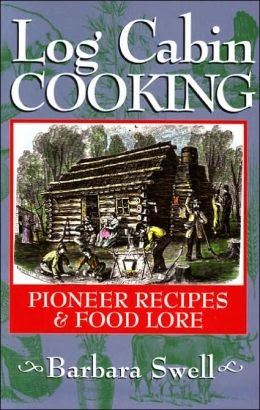
Two things I like are historical books about the old west and cookbooks.  Lucky for me, I discovered both in one when I found LOG CABIN COOKING: PIONEER RECIPES AND FOOD LORE by Barbara Swell.

You've gotten your family moved clear across the country (a four to six month trip via covered wagon) and now you've set up house in a hand-hewed log cabin. Along one wall is a fireplace, used for heating and lighting as well as for cooking.  Swell tells us, “Kettles were hung on poles built into the fireplace. Other foods were prepared in the coals or on pots over the coals.  The lucky family had an oven for bread baking built into the hearth.  A fire was built up in the oven and allowed to burn down, then the ashes were swept out and the bread was put in to bake.”

The pioneer cook had to ‘make-do’ with what she had on hand. Few cooks had measuring instruments, so they became good at ‘eyeballing’ amounts of ingredients needed, the textures and the appearance of food in various states. Swell goes on to say, “Notice how a teaspoon of salt looks and feels in your hand. Feel the weight of a cup of sugar. Notice the texture of a medium batter. What does soft butter, the size of an egg look like? Taste your food as you go along, adjust seasoning when needed.”

On page nine of LOG CABIN COOKING, Swell gives a pioneer cook’s measurements for ingredients:

BUTTER

1 Tbs (heaped) = size of a hickory nut
2 Tbs (heaped) = size of an egg (1 stick)
4 Tbs (heaped) = one teacup (2 sticks)
1 pound butter = 2 teacups well packed (4 sticks)

FLOUR, MEAL, SUGAR, COFFEE

5 Tbs sifted flour or meal (heaped) = one teacup
1 Tbs sugar (heaped) = one ounce
7 Tbs granulated sugar (heaped) = one teacup
1 pound coffee = two teacups (heaped)
1 pound sifted flour = 4 teacups (level)

LIQUID

8 oz = one teacup

When we want to make a yeast bread, we usually just reach for that little low packet of yeast, but commercial yeast and baking powder did not become popular until the late 19th century. So, what was the pioneer cook suppose to use instead? Saleratus, or baking soda as it’s known today, could be combined with sour milk to produce the carbon dioxide needed to rise breads.  In addition, “homemade baking powder was by combing saleratus with cream of tartar and corn starch.”

Reading for pioneer recipes? Remember, many of the recipes Swell shares are ‘inexact’, so you have to refer to her measurements given above when making these recipes.

BISCUITS

2 cups flour
4 Tbs shortening (size of an egg)
¾ tsp salt
3 tsp baking powder
2/3 cup sweet milk

Cut shortening into flour, salt, and baking powder. Add milk, roll out on a floured board and cut into shapes. Bake on a greased sheet in hot (450°) oven until browned.

CORNMEAL MASH

Boil 2 cups water, add ½ tsp salt, and sprinkle in cornmeal slowly until mush becomes thick. Eat warm with butter and honey or molasses or put in bread pan and chill until set. Slice and fry in frying pan with a bit of butter until crisp on both sides, then serve with maple syrup or honey.

Since many cooks were illiterate, they would remember recipes by setting them to rhyme.

JOHNNY CAKE IN RHYME

Two cups Indian (cornmeal), one cup wheat;
One cup good eggs that you can eat.
One-half cup molasses too,
One big spoon sugar added thereto;
Salt and soda, each a small spoon.
Mix up quickly and bake it soon.
                From: My Folks Come in a Covered Wagon

MIRACLE COBBLER

This is a fruit coffee cake that tastes great and is a snap to make.

2 Tbs. butter
1 cup flour
1 cup sugar
1 cup milk
1 tsp baking powder
1-2 cups berries, any kind

Melt butter in iron skillet. Stir dry ingredients together and add milk, mixing until no lumps remain. Pour into skillet with melted butter. Sprinkle berries over the top and cook at 350 ° oven for about 35-40 minutes. Sugar sprinkled on top before baking adds a great touch.

MOCK PECAN PIE (OATMEAL PIE)

Here’s a modern version of a tasty, economical mock pecan pie.  This is REALLY good.

2 eggs
½ cup sugar
¾ cup old fashion oats (not quick cooking)
¾ cup dark corn syrup
¾ cup coconut
2 Tbs. melted butter

Combine ingredients and pour into an unbaked pie shell.  Bake at 350° until it looks done. The oats will be on top. The pie will look brown and bubbly.


Available at Barnes and Noble.

Just a note: aside from purchasing this book and loving it, I have no connection whatsoever with the author.

Anna Kathryn Lanier
Romance Author, A GIFT BEYOND ALL MEASURE
http://aklanier.com/
Never let your memories be greater than your dreams. ~Doug Ivester