Tuesday, March 14, 2017

Writing Time Travel Romances and Birdie's Nest


Why I Like to Write Time Travel Romances set in the Old West

While growing up, like most children, I watched Gunsmoke, Wagon Train, Rawhide, Have Gun Will Travel,  and other western television programs in black and white. Life in many ways was romanticized and fodder for a young girl’s imagination. I’d daydream. If I lived back then, would I be the banker’s wife, a poor farmer’s wife, the schoolteacher or one of Miss Kitty’s girls. Of course I had no idea what saloon girls did other than pour drinks and sit on men’s laps.

So, this love of things past carried over into my adult life. I went to college and trained to be a teacher, but loved my history courses. We learned interesting tidbits about politics and living in the white house. President Rutherford B. Hays, to the delight of the Women’s Christian Temperance Union banned wines and liquors from the White House. To get around the President’s decree, some staff and visitors injected oranges with vodka. It wasn’t uncommon to see people sucking on oranges. This ruling led Prohibitionists to vote Republican in the coming election.

I became a Home Economics Teacher (now called Family Consumer Sciences) but often regretted not getting a degree in history. Yet, studying Home Economics gave me the opportunity to learn about the history of dress, furniture styles and housing.

I digress here, but wanted to share my love of history which led to writing time travels that are set in the old west. The first one I wrote, My Heart Will Find Yours, I struggled with how I would make travel through time and space possible. A writer friend suggested I read up on ley lines, energy fields and ancient artifacts (ex. standing stones). While reading I also ran across data on spin torsion fields, a method used in the sequel Flames on the Sky. Oh boy I had fun with these.


It is hard, however, to make the methods believable. There has to be a key to make it possible. For example in Outlander, there were the standing stones. I've read stories where gateways open at different phases of the moon. I'm sure each of you could list an example of a method you've seen used. If you would, please list them in the comments below.

I hope I’m successful in making my methods of time travel believable. And I want life in the past to be factual and credible when I send my heroine back in time to a prior time period. Oh, the fun I have writing these stories. We are so lucky to live in this modern time where things are so easy. Imagine, learning to cook on a wood stove, churning your own butter, wearing a corset and being restricted from what men considered unladylike pursuits. The hardest thing for my heroine, Texas Ranger Birdie Braxton, to cope with in 1890 is not being allowed to participate in unladylike pursuits—mainly police work.

An idea for a new time travel is perking in my mind, but I'm having difficulty coming up with a method. It is to be set in Waco again sometime in the late 1800s. I'm stuck on the Victorian era as I love the styles.

I hope this gives you a little insight into why I like to write time travels. Thanks for stopping by today. Please take a look at my other books on my website. Birdie’s Nest is available at Amazon.com     

Blurb:

Texas Ranger, Birdie Braxton boards the Brazos Belle to attend a costume party, gets tossed into the Brazos and when she's pulled from the river she's told the year is 1890. A fact she can’t accept … until she looks across the river to see Birdie’s Nest, her ancestral home, no longer exists.

Tad Lockhart is a content man—a prosperous rancher with a ladylove in Waco. He's not interested in marriage and family, yet … until he pulls an unconscious woman from the Brazos who insists she's a Texas Ranger from the year 2012.

As romance blooms between Tad and Birdie, she struggles to earn enough money to build Birdie’s Nest, and Tad strives to mold Birdie into a Victorian lady suitable to be his wife. Can Birdie give up dabbling in police work and other unladylike pursuits yet stay true to herself? When faced with an indiscretion from Tad's past, is Birdie's love strong enough to support her man and be the woman he needs?

Excerpt:

His mother, Olivia Lockhart, listened intently as Tad talked. She enjoyed a good story and his tale of saving Miss Braxton titillated her interest.
                  “You say she thinks it’s the year 2012?” She fanned her face with her napkin. His mother wasn’t overly large but her face was often red, and she complained about the heat. “The poor dear. Do you think she’s crazy, son?”
                  “No, ma’am. Her blue eyes are clear as a bell and she talks rationally. If I didn’t know it was impossible, I’d believe her.” He took another bite of roast beef and swallowed. “She had a gun holster strapped to her leg and a Texas Ranger’s star pinned to it.”
                  She paled and the fanning increased in intensity. “You looked under her skirts?”
                  “No, Mother. The nurse who undressed her found it and turned it over to the detective in charge of the case. He showed it to me.”
                  “Well, thank goodness. All we need is another scandal to tarnish our good name.” She shot him a heated look. “If you’d just settle down, you’d --”
                  “Mother, don’t start that again or I’ll take my meals in the bunk house.”
                  She sniffed. “Well, I’m just saying, you’re not getting any younger.”
                  He laughed. “I’d hardly call thirty-five old.”
                  Her mouth turned down at the corners and she sputtered. “Well, I’m not getting any younger, and I’d like to dandle a grandchild or two on my knee before I die.” She fanned her face again. “At the rate I’m going, it may not be that far off.”
                  Tad blew out a breath. “Mother, you are not that old. I’ve seen you run up and down these stairs like a woman half your age.”
                  She pursed her lips and glared.
                  “When I find a woman who can keep my interest for more than a day, then I’ll marry.”
                  “What about that woman you’re keeping time with in town. What if she turns up pregnant and expects you to marry her?”
                  Thank goodness his sister was visiting with friends tonight. He didn’t want her impressionable young ears to be privy to his private affairs, which his mother considered scandalous.
                  “She’ll be sadly disappointed because I’ll not marry someone I don’t love. Plus, I’m not sure she’d be faithful.” As far as pregnancy, Doc Floyd kept him in a supply of condoms. Odd how the Comstock Law allowed a man to have access to them to prevent disease, but wouldn’t let him use them to prevent his wife from getting pregnant. Didn’t make a lick of sense to him. If he fathered a baby out of wedlock, he’d see the child was well taken care of.
                  “It’s a sinful relationship. God is going to strike you dead one of these days.”
                  “Let’s drop the subject, Mother.”
                  “Mark my words, your clandestine affair will come back to haunt you.”
                  He didn’t know how secret the relationship was, but if it bit him on the butt, so be it. He was ready to call it quits anyway.

Thanks for stopping by. I hope you'll leave a comment, especially if you have an idea for a mode of time travel. All help is appreciated.

Happy Reading and Writing!

Linda
www.lindalaroque.com
http://www.lindalaroqueauthor. blogspot.com


Sunday, March 12, 2017

Of Texas and Muscadine Wine

http://kathleenriceadams.com/

In the Old West, folks couldn’t just walk into a liquor store and pick up a bottle of their favorite hooch. Some saloons and general stores sold wine and spirits by the bottle or jug, but a goodly number of people — especially those who lived on remote homesteads — fermented or distilled their own. Homemade wine was common all over the South and West, where pulpy fruits and weeds like dandelions grew in profusion.

wild muscadine grapes (photo by Bob Peterson)
Wild muscadine and scuppernong grapes provided the base for many southern home-brews. The two varieties differ primarily in color: Muscadines are dark, from deep cherry-red to almost black; scuppernongs are green to bronze to almost white. Both are highly acidic. Failure to wear gloves while picking or mashing can leave a rash on the skin. However, the high acid content, coupled with prodigious fruit production, makes muscadines and scuppernongs excellent candidates for fermentation.

Although the muscadines and scuppernongs used in contemporary artisanal wines are cultivated like any other crop, the wild foundation stock behaved — and still behaves — much like kudzu, overgrowing everything in its path. To say the grapes are aggressive and abundant would be an understatement. The landscaping around my home can attest to that.

In fact, according to local lore, the people who owned my house in the 1920s made good use of wild muscadine grapes. They had to be sneaky about their “hobby,” though, because during Prohibition revenuers were everywhere. Reportedly, the covert libation operation was discovered when a driver lost control of his car and collided with a hastily erected addition to the house, which dutifully collapsed. Vats and vats of muscadine wine spilled into the street. I’m not sure how that worked out for the brewers, but since they were prominent citizens, I doubt anyone got in too much trouble.

The homeowners rebuilt the addition with a good deal more attention to sturdiness. I use it as an honest-to-goodness living room (as opposed to the formal living room at the front of the house) and call it “the wine cellar.”

Muscadine wine comes to the rescue of the hero in “Making Peace,” one of three short novellas in The Dumont Way, a trilogy included in the five-book boxed set A Kiss to Remember (only 99 cents at Amazon). Heroine Maggie Fannin mixes quinine with her homemade wine to treat the malaria hero Bennett Collier picked up while tramping through swamps during the Civil War.

****

Her back to him, the woman stood at a rough-hewn table against the wall on the opposite side of the hearth. Sunlight leaked through chinks in the mortar between the split logs, gleaming along a russet braid that traced a stiff backbone. A faded calico dress hung loose on a frame without softness or curves.

She turned and caught his stare in eyes the color of warm cognac. A soldier’s eyes: resigned, yet defiant; determined to go down fighting.

Levering up onto stiff arms, he braced his palms on the floor.

The woman knelt and shoved a tin cup forward. “Drink.”

His gaze dropped to the vessel for only a moment before returning to those fascinating eyes.

Her lips and brows pinched. “Drink, or I’ll pour it down your throat. I didn’t nurse you through three days of the ague just to turn around and poison you.”

The rustic music he’d heard earlier underlay the sharp words. Holding her gaze, he shifted his weight, took the cup, and drew it to his lips. The sweet wine almost hid a familiar bitterness. “You found the quinine.”

Quinine—more precious than gold to any soldier who’d spent too much time in the swamps. He’d stolen the near-empty bottle. The righteous Bennett Collier, a common thief. “You went through my saddlebags.”

“I didn’t take nothin’ else. I swear it.”

He hadn’t meant the statement as an accusation. “Nothing in there worth taking.” Except the bundle of letters from his father. I miss you, son. Keep yourself alive and come home. Three years too late. He nearly choked trying to clear his throat.

He tossed back the rest of the wine. The bitter drug sharpened a pain in his chest; the sweet wine, a bitter memory. “Muscadine.”

****

Today, most home-brewers use commercial yeast and add pectic enzyme. The latter clarifies the wine and draws more color from the grapes. Typically, those who ferment wine at home also add Campden tablets (potassium or sodium metabisulfite) to kill bacteria and inhibit the growth of wild yeast.

None of those ingredients would have been available in Maggie’s rundown shack on the the Texas mainland across the bay from Galveston, so her recipe might have looked something like the one below, which I found written in tidy cursive on a yellowed slip of paper tucked into one of my grandmother’s books. I have no idea how old the recipe is or from whence it came. The comments in parentheses are mine.

Muscadine Wine

(makes 5 gallons)
5-gallon bucket very ripe (soft and starting to shrivel) muscadine grapes

12 lbs. white sugar

Spring water (or any water without chlorine)
1. Rinse grapes. (If the grapes have been sprayed with pesticides, wash them. Otherwise just rinse. Wild yeast on the grapes’ skins and in the air, combined with sugar, causes fermentation.)

2. Mash grapes in large (glazed ceramic) crock. (The vessel should be large enough to hold the mashed grapes and the sugar with a couple of inches of “head space” between the top of the liquid and the lip of the crock.)

3. Add sugar. Give mash a good stirring.

4. Cover crock with thick cheesecloth (or use a T-shirt). Tie string around lip (to hold the cheesecloth). Set in warm place.

5. Give mash good stirring every day until stops bubbling. (The amount of yeast in the environment will determine when the mixture starts bubbling and how long the activity lasts.)

6. Strain juice into clean (glazed ceramic) crock or churn. Add spring water to make five gallons. (Again, leave head space between liquid and rim.)

7. Cover crock. Set in cool cellar or barn. Let sit six weeks. Strain into jars. (Knowing my grandmother, “jars” meant Mason jars. That’s how my grandfather bottled his moonshine. I’d use wine bottles, but what do I know?) Screw on lids, loose, for a few days. Tighten lids, let sit six months in cellar or barn.


muscadine wine
I can’t vouch for the recipe because I’ve never tried it. Use at your own risk.

Home-brewing has become a bona fide trend over the past several years, so recipes and equipment for making beer, wine, and mead are everywhere. If you'd like to attempt a more modern approach to muscadine wine-making, you may want to visit this link (from Louisiana) or this one (from Kentucky).

Be aware: Unlike in 19th-century America, today’s federal government and all U.S. states have laws governing the production of alcoholic beverages for personal consumption. According to the federal Internal Revenue Code, home-brewers may produce 200 gallons of beer or wine per calendar year if there are two or more adults residing in the household; 100 gallons per calendar year if there is only one adult residing in the household. If they produce more, they must pay federal taxes on the overage.

State regulations vary widely. In Texas, for example, the head of a household or an unmarried adult living alone may produce 200 gallons of wine, ale, malt liquor, or beer per year. Those who wish to produce more — or do so “accidentally” — not only owe state taxes in addition to federal tax, but also must acquire a license.


A Texan to the bone, Kathleen Rice Adams spends her days chasing news stories and her nights and weekends shooting it out with Wild West desperadoes. Leave the upstanding, law-abiding heroes to other folks. In Kathleen’s stories, even the good guys wear black hats.

Her short story “The Second-Best Ranger in Texas” won the Peacemaker Award for Best Western Short Fiction. Her novel Prodigal Gun won the EPIC Award for Historical Romance and is the only western historical romance ever to final for a Peacemaker in a book-length category.

Visit her hideout on the web at KathleenRiceAdams.com.


Save

Friday, March 10, 2017

A PECULIAR BIT OF TRIVIA


A Peculiar Bit of Trivia                By E. Ayers


A little glitch getting to the blog, but thanks to Caroline, I made it, and I'm so excited to be here. When Caroline Clemmons and Celia Yeary asked me to become a permanent part of the Sweethearts of the West, I was thrilled. Writing historical westerns is…let's just say I have a quirky mind and I think it shows in what I write. I write historical westerns with a love story tucked in it. Surely, you will discover that as you read my posts and my books, and I hope you will do both!
As a child, the dictionary and the encyclopaedia were my friends. Homework took me
forever! I never could spell, so if I asked how do you spell… The answer was the same - look it up. I think my parents figured if I looked everything up, I'd eventually learn to spell. (Thank goodness for today's spellcheckers. Between my inability to spell and my fingers getting tangled on the keyboard, I'd be in so much trouble.) But back then, I'd look up a word and read every word on that page. (No wonder it took me so long to do homework.) Plus, I loved those ink drawings. If there were none on the page I was reading, I’d read until I found one. (I had a great vocabulary, but I couldn't spell!) And when I was really bored, I'd read the encyclopaedia. Well one thing leads to another and my mind would take off, sending me to look up other things.
In school, I was taught it's not how much you know, but often how fast can you find the answer. That premise is becoming obsolete with the computer and Internet search engines. But the Dewey Decimal System was like a neon lure to my young fertile mind. It was as though the entire world's database of knowledge was in those card files. I soon discovered that knowledge was fun. To this day, I love knowing how stuff works. Why did gold form here and diamonds there? How does steam turn motors? Who figured out you could burn coal? Who figured out oysters were edible? And how did they get that center in the dessert?
As an adult, I continued with my strange desire to know about things and often experimented in the kitchen with such things as yeast. I wanted to know if I could grow it from scratch. My garden became organic, because I couldn't afford chemicals and I didn't want to use them. Lack of garden space had me looking up information on companion plantings. Today, I know how to create yeast from scratch. I've made my own candles and soaps - not out of need, but because I thought it was fun learning how-to. Those are the tidbits I pull on as I write.
And when I do stop to research something, I often wind up discovering something else. Will I ever need to know about staplers for my writing? Probably not, but it's stored in my head, in case I do. Except by then, I’ll forget his name, because I'm terrible with names, so I’ll have to do another search. It was a search for information about early sewing machines for home use that sent me down the path of looking at safety pins.
***
Walter Hunt was one of those men who stand out in history for the oddest reasons. Some say he was a genius, while others claim he lacked business sense. He was definitely a colorful character in our American history for he was an inventor. He had the ability to see a need for things and to
create them. A sewing machine, a streetcar bell, a snowplow, a repeating rifle, and several more items were all his designs. But what is he best known for? The lowly little safety pin! The reason he became famous was he sold his patent for that coiled bit of wire to a man that Hunt owed $15. The man graciously bought the patent for $400 and went on to become a millionaire. (History is unclear as to the exact amount of money exchanged. Was the sale price $415 dollars or $385?) So what was in use before Walter's Hunt invention that keep fingers safe from pricks?
Go way back in history a few thousand years and there was the straight pin. They didn't have buttons as fasteners for clothing back then. Buttons were only decorations. In fact, it would take until the thirteenth century AD before buttons and buttonholes were used for securing clothing tightly to the body. (I wonder who decided that you could take a decorative button, push it though a slit in the material, and it would hold? And why did it take them so darn long to figure that out?)
It was in the fourteenth century BC that clasp-like things appeared. They were used mostly to keep clothes closed, especially cloaks. (Try saying clasps keep clothes closed, especially cloaks really fast three times.) Often the clasps were coiled things that swirled into fabric. But eventually they began to resemble a violin bow or bow saw in shape. They kept clothing closed and became decorative items.
So up until Walter Hunt decided to play with some wire, there was a little spring-loaded or a
U.S. Patent Office - inventor Walter Hunt
hinged pin used for brooches. The sharp point merely slipped under a flat plate. Well, I can image that that poky point slipped out frequently and stabbed the wearer. So Walter Hunt's little patent on the safety pin changed history.
And it wasn't until Samuel Slocum came along in the 1800's and invented a machine that would make pins with heads did we finally have what we now know as straight pins used in sewing. (He’s the one who invented the stapler.) Slocum didn't invent the pin with the head, that was William Lockwood in 1772, Slocum merely figured out how to make them quickly and cheaply.
So what do all these odd facts have to do with the West? Lots and nothing. It meant women could stop tying diapers on their babies and use a safety pin. (Although mothers would have to wait a bit before they had a locking cap on that pin.) And those women who quilted had a pin that wouldn't vanish into the fabric as they worked. It was a fascinating time in history because of manufacturing and all the advancements. These things trickled into society and made life easier. But not every woman had them.
To add a bit of humor into the mix, pin money meant they had an extra penny or two left in the budget to buy pins or some other "extravagant" item. Think purchasing power or the flow of money out of the budget. Egg money came from selling eggs giving an income or money coming into the household budget. Yes, nest egg is the result of saving egg money.
And as for that mousetrap? They've been around for hundred's of years. But that simple snap trap hasn't. We have to wait until 1894 when William C. Hooker invented the spring-loaded snap trap that is close to what is in use today.
It's all a bit convoluted, but it does affect our stories. So what starts as a simple decision to check the facts on something small, sends us down strange paths. Did you know that the kilt pin was never used to pin both pieces of fabric together? When will I ever need that piece of trivia? Aye, maybe when Hamish Campbell decides to settle Creed's Crossing, Wyoming. Or maybe not. I don't want to think about his kilt flapping in the Wyoming breeze!

Wednesday, March 8, 2017

TEXAS DREAMER

By Celia Yeary

Lee King, the hero in TEXAS DREAMER, first appeared in Texas Blue, my very first novel. He was three, a wild little boy who galloped around the yard on an imaginary horse, played with his bigger brother Dalton, and often ran to his mother in tears...as little children do.

I have used other characters from Texas Blue to write more stories, but somehow I always overlooked the little guy, the baby of the family, Lee.
Now, it's his turn.

Lee King became my Texas "dreamer."
For some reason even I can't explain, Lee King ran away from his perfectly good home at age fourteen and began to wander, always moving west.

What happened to him?
Ah, at last, I had my fourth Texas novel: TEXAS DREAMER.
~*~
TEXAS DREAMER moves into the early Twentieth Century. This presented a problem, because I want to write stories set in the Nineteenth Century. In addition, I managed to confuse some readers when they got to the elevator and learned Lee's brother owned one of the automobiles. Some readers questioned me about the time frame of the story.

However, during those early days of the new century, Texans lived much like they had during the 1900's. This mean coal oil lamps and no running water and outhouses.

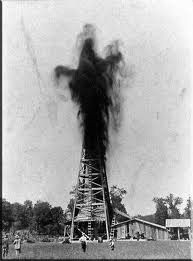
What makes Lee King different? Well, as a rancher, he also becomes one of the early successful oil men in Texas. He dreams big and goes about making his dreams come true.

While researching early Texas oilmen in North Texas, I ran across Sherman McIlRoy, a pioneer oilman. Sherman moved from Arkansas with his family to North Texas and remained until he was old enough to leave home. When he did, he followed the lure of the gold rush.
This man gave me a story for my character, Lee King.

By age seventeen, hero Lee King landed in an old gold mining town in Colorado as a homeless drunk. Two grizzled old men took him in, and soon Lee King had discovered a gold mine. The gold mine, though, was cattle, and then...well, I had to create a scenario to keep Lee King in Texas, and to make him not only a successful rancher, but a fortunate oilman, too.


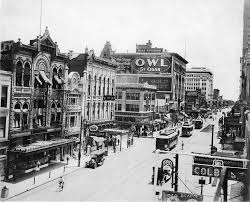
HOUSTON-1910
Houston in 1910 had 78,000 residents and numerous "high rise" buildings...which meant most were about 10 stories. There were 800 automobiles in town, owned by the very wealthy. Most residents walked, rode the streetcars, rode a horse, or used a horse and buggy. The multi-story buildings boasted electric elevators, run by a young man in a red suit and hat.
~*~
Lee travels from his ranch just west of Fort Worth to Houston to find his older brother Dalton. Dalton is eager to help his little brother, but learns that Lee only wants to find someone to work with him, a capable man around oil. Dalton leads him to Tex McDougal.
~~~
She turned in a circle with her head thrown back, looking at the ceiling. "Ohhhh, damn you!"
Whoa. The lady cursed. Lee wanted to laugh. She was tall and very slender, and maybe a good wind could blow her over. But no, she had grit and a backbone. Good for her.
Lee lowered his voice and spoke very quietly. "Where is he, Miss McDougal. You are his daughter, aren't you?"
"You know, you have gall to step up here on my porch and make demands. I nor my father know you, nor do we owe you the time of day, let alone a private meeting. I'm asking you, what's your name?"
"Lee."
"Is that your given name or surname?"
"Given. All right, I'm Lee King, and yes, I'm related to Dalton King. He's my older brother and he sent me to find your father. Now. With that out of the way, where may I locate the gentleman?"
Her shoulders sagged and she sighed. Lowering her chin and looking at the toes of her well-worn lace-up boots, she spoke. "At the barns, the stables, where this neighborhood keeps its horses. Give me a minute, and I'll take you."
Lee stepped back and touched the brim of his Western hat. "Thank you, ma'am. I'll just wait here on the porch."
When she walked away and up the stairs, he sat down in one of the two chairs on the porch. The thing looked rickety, made of some kind of straw, but it held him well enough. Like Dalton, he carried some weight. Being over six feet tall, hard work kept fat off him, but it sure did build up his body. He checked his callused hands, making sure he'd properly removed all the built-up grime.
The lady walked out the door, pulling the main door shut behind her.
"My name is Emilie. You may call me Miss McDougal."
"Yes, ma'am." He grinned to himself. Now look at her, all prim and proper with her pretty straw bonnet on her shining dark hair, carrying some kind of tiny bag on her wrist. None of it matched the worn calico ankle-length dress she wore, the sleeves now rolled down and buttoned at the wrist, and the neck buttoned up tight. He liked her height, not too tall, but enough so that he wouldn't have to bend down if he were to kiss...Damn. Where did that come from?
Miss McDougal was a study in contrasts. He wondered about her background, her education, if she had any, and why was she living alone with her father?
The father. Tex McDougal. What kind of man was he, anyway?
He remained silent as she walked with him down a few blocks to a big open space, a corral filled with horses. The stables were on either side of the area, and she turned to the left, opened an iron gate, and led him down a walkway to a line of stables. At the sixth one, she stopped and opened the half door to the stall. She stepped aside and motioned for him to enter.
The sight stunned him. There was no horse in the stall, but an older man slept rolled up into a ball on a pile of straw. The clothes he wore probably had not been changed for two weeks. The pants were filthy and the shirt faded and sweat-stained. Dried manure and straw covered his boots.
The man, obviously Tex McDougal, snored, intermingled with gurgles and snorts. His hat lay in the dirt. He was out cold.
He was dead drunk.
"There he is, Mr. King. Go ahead. Talk to him. Ask him for help with all his knowledge and expertise. If you can rouse him."
Lee stared at the man, and then at the young woman. Tears shimmered in her eyes. She stood with her shoulders stiff and her chin raised high, with her hands clasped tightly in front of her. Her chin trembled.
"Go away, Mr. King. Don't bother us again."
She turned to leave, but Lee got to the door first. On his way out, he picked up an empty bucket and took it to the water pump. When it was full, he carried it back to the stall and threw the water on Mr. Tex McDougal, well-respected oil man.
Instead of berating him as he expected, Emilie turned and began to walk away.
"Ma'am?"
She stopped and turned halfway. "Yes?"
"Go home and make some strong coffee and have plenty of sugar to put in it. We'll be there directly."
Surprisingly, she turned and sedately walked away in the direction of home.
Now what? Lee's gut burned with disgust mingled with some empathy.
He saw himself ten years ago in Colorado, broke, lost, alone...lonely...without a direction. The memories made him shudder. At barely age seventeen, he was washed up, a drunk, good for nothing and good for nobody. But he remembered the two grizzled miners in the camp who found him behind the woodpile, puking up his guts, sick in body, mind, and spirit. They said little, made no comments, did not criticize. They just hauled his backside up the hill to their makeshift cabin and threw him on a dirty bed. From there, events began to turn in his favor, and before he knew it, he'd struck gold.
The gold he found, though, wasn't in the hills of Colorado. The priceless commodity turned out to be land in northwest Texas near the Panhandle. How he acquired those thousands of acres had been a stroke of luck. A pure stroke of unexpected luck.  A turn of the cards.
* * * * *
BLURB:
Lee King is a dreamer. When he realizes he was born under a lucky star, he went for the jackpot and won. But winning a big prize isn't the same as keeping it safe from interlopers and greedy fortune hunters--including women. When oilman Tex McDougal crosses his path, Lee believes he has found the perfect man to help him. His daughter, Emilie McDougal, while not a buxom beauty, impresses him with her intelligence, her courage, and her selflessness. Could he strike a financial bargain with her? One that would suit them both?
Emilie McDougal has no family except her father, Tex, and she has followed in his footsteps from age one. When Lee King enters their lives, she begins to dream--for the first time in her life. She only wants one thing from Lee, one tiny thing that would make her life complete.
Would he agree to her counter-bargain?
~*~
Second Excerpt:
She circled her arms around the mare's neck and whispered in her ear. The mare nodded, as though saying, "yes" to something. Emilie laughed, rubbed her ears, and patted her neck. She walked all around the horse, touching and talking softly, as though wooing a lover.
Lee couldn't take his eyes off Emilie. Here was her soft side he'd never seen. Would she treat a man...a lover...the same way? Whispering, softly laughing, touching?
~*~
TEXAS DREAMER-From Publishing by Rebecca J. Vickery.
https://www.amazon.com/Texas-Dreamer-Celia-Yeary-ebook/dp/B00IHPPQ0E/ref=sr_1_15?s=books&ie=UTF8&qid=1488923381&sr=1-15&keywords=celia+yeary
99cents--for
READ-AN-E-BOOK-WEEK
March 5-11


Monday, March 6, 2017

BEHIND THE LOCKED DOORS OF SHERIDAN'S ROOMIN' HOUSES!


The year after I moved back to Wyoming, 2013,  was the 125th Anniversary of Sheridan County Wyoming. During that time, I worked at the local museum and had a wonderful time learning more about the area and digging through historical artifacts.  One of the first things I learned was Sheridan County was created during the height of the Johnson County Cattle War. The people in northern Johnson County said, "No way are we dealing with this..." and broke away creating their own county.

As I helped tear down prior exhibits, I learned about those "red door" (and in one case literally a red door) areas of Sheridan and the women who lived and survived behind them. These women, sometimes ostracized, often played an important part or at least their part in this cattle, mining, and farming community.

Today we’re going to visit the roomin' or sportin’ houses of Sheridan, Wyoming. 

March 9, 1888, Sheridan County Wyoming was founded with the county seat being the town of Sheridan.  Ranches, mines, railroads, mills and a brewery all became important entities of Sheridan’s history.  As much a part of this history were Sheridan’s brothels.  The town’s red light district boomed from 1888 through the early 1900s with the last of the “houses” closing in the 1960s.

The Sheridan County census, in 1900, listed Jane Stewart “Missoula Jane” and along with six other “dressmakers” and two “laundresses” living on Val Vista and First Streets. Police records that same year recorded Jane Stewart’s arrest for renting a house to Ida Fitzgerald for prostitution.

Lizzie Lane ran a house on East Grinnell Avenue.  Lizzie came from Kentucky, as did the cook she brought with her.  Her seven girls, all black, ranged in age from 22 to 29 and came from various parts of the South.

Fifteen Ladies of Ill Repute were arrested for violating Ordinance #72, Sect. 3. Thirteen of the girls were fined $5.50 each. Two, Nellie Lay and Vivian Crawley were fined $15.50, leading researchers to believe their higher fine meant these women were the proprietors.

Despite arrests and fines, by 1910, houses of ill repute lined East Grinnell Street. Main Street, North Connor and Custer also had a few houses scattered among other businesses and residences. The census listed 70 “soiled doves” in business. They are listed as inmates in houses of prostitution or proprietors. Sixteen houses are marked F.B. on the city’s map. This meant there was a female border (i.e. prostitute) at that house.

A further look at the city’s census records from the early 1900s sheds light on why “female borders” were choosing to settle in Sheridan. At this time Sheridan had a population of 10,000, with the majority of the population being very young men in their 30s and unmarried. Sheridan, the city and the county, was a region of mines, railroads, construction jobs, and of course cowboys.

It was also a time of few choices for women if they were single, divorced or abandoned. One researcher found that “out of 39 of the prostitutes on the census were single, seven divorced, 17 had been married, or were married, with a total of 12 children.” (George Gligoria)

Some of the “respectable” women of Sheridan benefited from the working girls selling them dishes and making their clothes.  One local woman remembers her aunt making dresses, slippers, handbags and lingerie for the girls during the early 1900s. Though she managed a peek at some of the items, her aunt kept the lingerie well hidden from prying eyes.  She also never saw the girls and didn’t know if they came to the house, or her aunt went to them.

She recalled the skirts being “hobble skirts; tight from the hip down with a drape up to the knees…Some were split. They were very tight. Girls could hardly walk in them. They were sleeveless with a low-cut neckline.”  Surprisingly, the dresses had no frills like lace or beads, but they were always made of satins in shades of pinks, greens, yellows, and blues.  Their slippers were covered in satin to match.  Cantaloupe seeds would be washed, dried and strung to tack on the satin handbags and the dresses.  As the girl walked the seeds would shake and show satin.

Not all of the soiled doves in Sheridan wore satin. As in most places there were four levels of prostitution in Sheridan.  From the elegant parlor houses like The Castle to the middle-class saloons and finally the cribs and hog ranches that catered to the lowest class of men.  Street walking was all but eliminated in the city by arrests and fines. There was a limit to what was acceptable to the citizens of Sheridan.

By 1919, there was a shift to the Red Light district from Grinnell to Main and East Works. Prostitution houses included My Hotel, Rex Hotel, Irma Hotel, Elgin Rooms, the Shirley House, and a sheep wagon parked behind Crescent.

Prohibition failed to curtail prostitution in Sheridan. There were more arrests, but through the 1930s the Rex Hotel, the Irma and the Antlers and the Palm rooms continued to operate without interruption. Side note: Prohibition didn’t curtail drinking in Wyoming either because…it’s Wyoming, but that’s a story for another day.

One of the most infamous madams was Pearl Logan, born Pearl Colett. Although Pearl ran a series of rooming houses for over 40 years, she is best known as the proprietor of the Rex Hotel from 1930 to 1960. Five working girls resided in the large rooming house.  During her long rein at the Rex, Logan secured a strong affinity with law enforcement, tenants and the girls. Sheepherders and cowboys who came to town for a bender, or for an entire off -season trusted Pearl more than the local banks and left most of their earnings with Logan. She kept their money safe from gambling tables and thieves and a cowpoke’s summer wages remained safe.

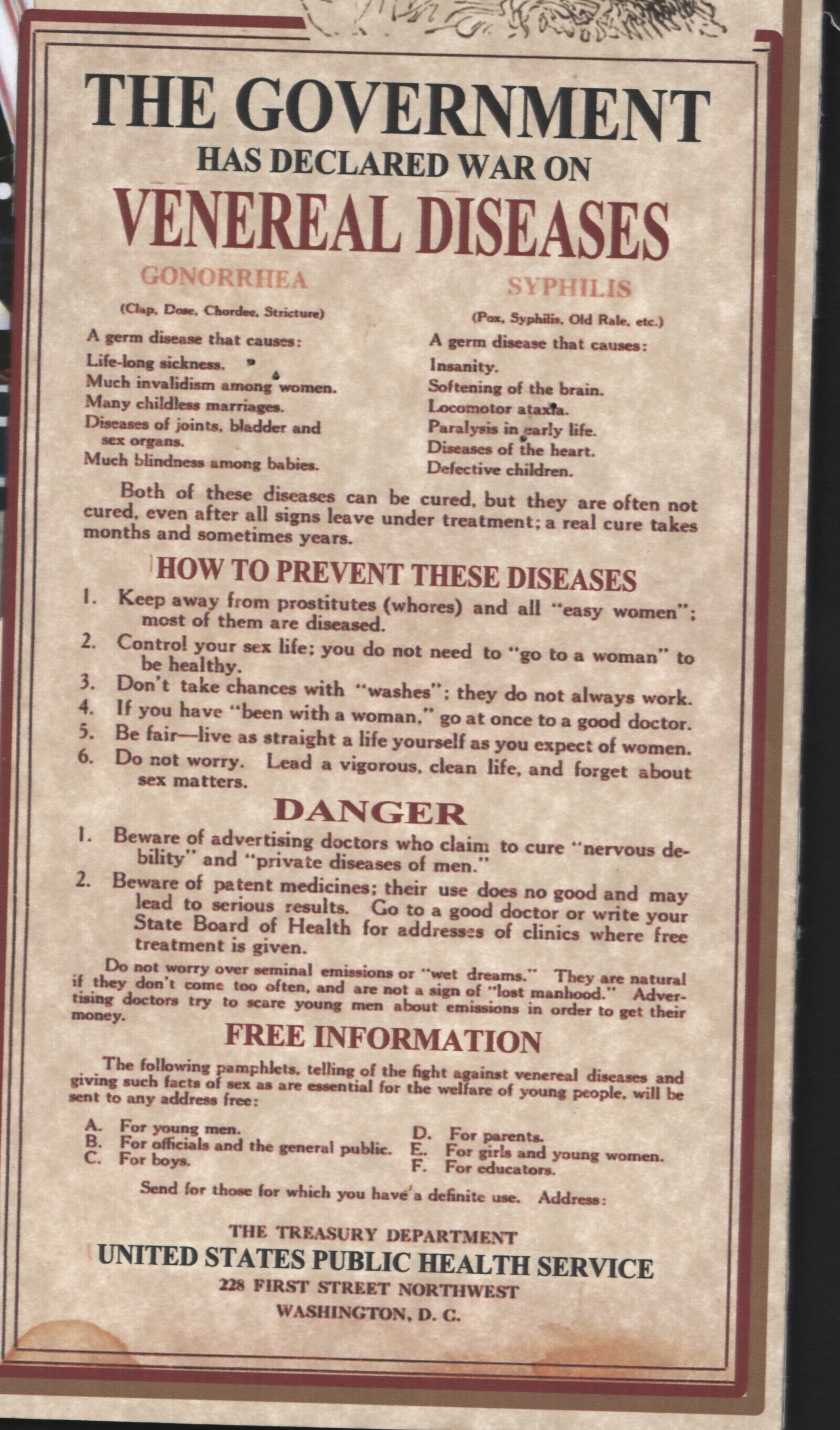
Govtpamphlet
Image courtesy of the Sheridan County Museum

When the U.S. Government decided to get tough on sexually transmitted diseases, Pearl did her part posting the pamphlets around the Rex.  The Rex closed in 1965, along with all the big houses, when County Attorney Henry Burgess ran a campaign to stop prostitution and gambling. Pearl Logan died in 1977.

Despite the taboo of their profession the women were said to be “extremely clean, well-cared for by doctors and very likable.” The women who sold items to them described them as nice women.

A cab driver from the early 1950s said the girls were great tippers. They would tip 50 cents to a dollar on a fare of 35 to 40 cents.  However, as nice as he thought the girls were he transported them “solo” rather than with other customers.

Whether parlor house or crib, these women lived harsh lives often cut short by disease or violence, but the fact is these women lived and contributed to the history of Sheridan. Some of the women were able to secure a bit of respect, and from what I could find most were considered kind and generous by many of Sheridan’s citizens.

As with most, this is not meant to be the whole story, just a small peek behind the locked doors of Sheridan’s rooming houses.


SOURCES:
THE SHERIDAN PRESS.  “Working Girls: Early Sheridan Haven for Brothels.”  Saturday-Sunday, August 21-22, 1999. pgs. 1-2.

THE LOG.  “The Business of Sin in Sheridan.” Vol. 2, Number 1, Spring 2010. Pgs. 1 and 7.


 Kirsten Lynn is a Western and Military Historian. She worked six years with a Navy non-profit and continues to contract with the Marine Corps History Division for certain projects. Making her home where her roots were sewn in Wyoming, Kirsten also works as a local historian. She loves to use the history she has learned and add it to a great love story. She writes stories about men of uncommon valor…women with undaunted courage…love of unwavering devotion …and romance with unending sizzle. When she’s not writing, she finds inspiration in day trips through the Bighorn Mountains, binge reading and watching sappy old movies, or sappy new movies. Housework can always wait.

Saturday, March 4, 2017

TOYS & GAMES OF YESTERYEAR - PART 2 By Cheri Kay Clifton


Continuing from last month’s blog, I’ve added a few more toys and games to the list that entertained children in 19th century America.


As stated before, the early immigrants brought their toys and games to America from many countries. The rules and ways of playing them were handed down from generation to generation and many of them are still enjoyed by children today. 


The history of rocking horses can be traced back to the Middle Ages, when a popular children’s toy was the hobby horse – a fake horse’s head attached to a long stick. Children would place the stick between their legs and “ride” the horse around. These toys can still be found today.

The hobby horse was replaced in the 16th century by the barrel horse, which consisted of a circular log supported by four legs and adorned with a fake horse head. Crude in nature, this toy mimicked the back of a horse better than a hobby horse.


The rocking horse in its current form is widely believed to have first appeared in the early 17th century. It was around this time that bow rockers were invented, introducing rocking to the world of toy horses. There were, however, improvements to be made to the first rocking horses. Being made from solid wood, they were heavy and their center of gravity was high, so they could easily topple over.


It was in the Victorian age that the ‘safety stand’ was introduced and the idea of making the horses hollow was conceived. This made the horses lighter and more stable, and gave birth to the idea of a secret compartment being fitted into the horse’s underbelly.

The family heirloom horse could store photographs, mint coins, locks of baby hair and other such trinkets for future generations to find. During this era, the style of choice was the dappled grey rocking horse, which was a favorite of Queen Victoria. Her love of rocking horses was instrumental in increasing the popularity of the toys.

During the 19th century, the popular wooden toy horses evolved from a cottage industry into a factory production. Today, antique wooden rocking horses have become collectors' items while new artists have emerged with their own design to make the collectors' items of the future. There is a great range of designs and styles available and horses are made in a wide variety of materials from cloth to plastic and with a wide range of prices.

Paper Dolls have existed as long as there have been paper and creative people to apply images to it. Examples of the first true paper dolls have been found in fashion centers of Vienna, Berlin, London and Paris from as early as the mid-1700’s.


McLoughlin Brothers, founded in 1828, became the largest manufacturer of paper dolls in the United States. They printed their paper dolls from wood blocks engraved in the same way as metal plates. The largest producer of paper dolls and children’s books, McLoughlin Brothers was sold to Milton Bradley in 1920.

A smaller publishing company, Peter G. Thompson, published paper dolls in the 1880’s and sold for eight to fifteen cents per set. Also in the 1880’s, Dennison Manufacturing Co. added crepe paper to their line, starting a trend that lasted for about forty years. Crepe paper added dimension to the costumes of paper dolls and provided countless hours of fun for children at home and in schools. In the 1890’s Frederick Stokes and Co. published sets of paper dolls with likenesses of European royalty and America’s Martha Washington.


In November 1859, Godey’s Lady Book was the first known magazine to print a paper doll in black and white followed by a page of costumes for children to cut out. This was the only paper doll Godey’s ever published, but it set the trend that many women’s magazines followed in years to come. The 1900’s saw an explosion of paper dolls in many lady’s and children’s magazines.


Paper dolls were most popular during the era of the 1930’s through the 50’s. During the Great Depression, paper toys could be afforded by all. Despite the product shortages of World War II, paper dolls were still manufactured. Children in the 1950’s spent many an hour playing with their favorite paper dolls, just as their mothers, grandmothers and great-grandmothers had before them.

How to jump rope was a selection in a book published in 1833 by Lydia Maria Child, titled The Girls Own Book. Why did girls in early 19th century America need instructions on how to jump rope? Up until then jumping rope had been considered a game only suitable for boys. 

By the early 19th century, the new gendered ideology promoted passiveness and domesticity that limited girls’ play. Yet the recommendations of antebellum child-rearing advisors suggest that many believed active play was good for girls. Along with Child, other experts predicted that open-air exercise would improve girls’ dexterity, diligence and strengthen their bodies, also rid them of debilitating medical conditions.

Girls’ new freedom of movement had been made possible by changes in clothing fashions as well. Their shorter dresses (frocks) enabled them to skate, sled, run and romp. Yet it was the introduction of pantalettes or pantaloons (loose pants worn under dresses) that enabled girls to make the game of jumping rope their own.


Jumping rope is traditionally a girls’ activity in which two players turn a rope (holding it by its end and swinging it in a circle) and the other players take turns jumping it while chanting a rhyme or counting. When it is played as a game, each player is required to move in while the rope is turning, complete the jump, and move out without contacting or stopping the rope; the jumps required usually become more complicated as the game proceeds. There are many types of jumps, including single, double, backward, and two at a time jumpers, even double Dutch with two ropes turned simultaneously in opposite directions.


 The first recorded pair of roller skates were used for a theatrical performance in London in 1743, unfortunately the inventor’s name has been lost to history, but the idea soon caught on and by 1819 M. Petitbled patented the first roller skates in France. These early skates were the predecessors to the inline skates we use today, although it would have been hard to do more than skate in a straight line.

By 1863 the four-wheeled skate (or quad skate) with an added rubber piece to allow skaters to curve when they moved was developed in New York City and it was such a hit that the first roller rink was opened in the city shortly thereafter. Over the rest of the century the design of the roller skate was fine-tuned with the addition of things like toe stops, making it easier and more enjoyable for people to roller skate. By the end of the 1800s roller skates were being mass produced in the U.S.

Besides the more common outdoor games of hide & seek, leapfrog and tag, board games such as tic-tac-toe, checkers and chess, other popular games of the 19th century were:

Battledore & Shuttlecock, an outdoor game played since the earliest American settlements, the forerunner to both modern badminton and table tennis.

Graces, brought to America by the French, also known as Flying Circle and French Hoops, most popular during the Victorian Period, particularly with young ladies and used for exercise and to teach gracefulness.

Tiddlywinks, a table game quite popular in the 1890’s, played by adults and children alike, in which players used a larger disk to flip smaller disks called winks into a cup.

Typical with researching historical topics, there’s no end to the fascination of reading about the games and toys of our ancestors. I hope you’ve enjoyed reading and yes, reminiscing about some of these toys and games we may have enjoyed playing ourselves…and maybe, still do!


Thursday, March 2, 2017

Music Bonded During the Civil War

By Paisley Kirkpatrick
Music can be a peacemaker of sorts. At least during the Civil War it had a way of bonding the conflicting troops.
Before the fall of Atlanta, the brass band of Major Arthur Shoaff's battalion of the Georgia Sharpshooters gave their expert cornetist to the cause. Each evening after supper, the musician went to the front lines and played for the Confederates along the entrenchments. When firing was heavy, he wouldn't appear.
Across the lines, Federal pickets would shout, "Hey, Johnny! We want that cornet player.
"He would play, but he's afraid you'll spoil his horn."
"We'll hold fire."
"All right, Yanks."
The cornetist would then mount the works and play solos from operas, and sing tunes like Come Where My Love Lies Dreaming, and I Dreamt I Dwelt in Marble Halls in a fine tenor voice.
Colonel James Cooper Nisbet, who was on hand, never forgot the scene. "How the Yanks would applaud! They had a good cornet player who would alternate with our man."
Once the concert was over, firing would resume again.
The Civil War, Strange & Fascinating Facts, by Burke Davis author of Gray Fox.