How did I wind up writing
historical westerns? It's a little convoluted. I grew up on the East coast,
riding English. Although I will admit there's something special about a guy in chaps. And
I'll confess that I'd never been to a bull-riding event until about ten years
ago when the local county fair had one. It was the last place the guys could
earn enough points to go to the PBR. Okay say PBR and I think beer. Am I an
Easterner or what?
So how did I get into historical
fiction? I wrote
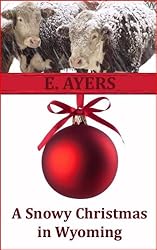
A Snowy Christmas in Wyoming. It wasn't meant to be a
western just a sweet, contemporary Christmas story.
I created a hero Andy Coyote that I
figured anyone could love. That misunderstood young man who was really a good
guy. He'd also made a few mistakes along the way, but now he had a good stable
job, an adorable little daughter, whom he loved with all his heart, and employer who
was honest and took him under her protective grandmotherly wing. Andy wasn't
stupid, but he was dyslexic, therefore he had not done well in school. I made
him tall and dark. Handsome? In the eyes of the beholder he was. And Caroline
saw him as handsome. A few clicks on the computer, and I made him a Crow Indian
because there's a Crow reservation not too far away.
Where I live in Virginia there are
plenty of Land Grant properties still within families and although that does
not exist in the west, I saw that heritage of this particular ranch that keeps
getting passed down through the generations. I casually mentioned a diary of
that original settler, Clare Coleman. So as I lay my head upon my pillow, I
could imagine this unrequited love between Clare and a young Crow Indian. And
how life tends to come full circle. Clare's love for Cheéte is repeated in Caroline's
and Andy' story.
Call it dumb luck. But that story
took off six years ago, and people began to ask for the diary. Um, I don’t
write historical - that means research! But after several requests I said hmm,
maybe I should reconsider my stance on historical. So I began researching.
WOW! I had no idea! The only thing
I'd been taught in school about those early years in the west was the Pony
Express, The Battle of Little Big Horn, and the Golden Spike. Not even a full
paragraph on each.
Debra Holland was getting ready to
write
Sweetwater Springs Christmas and asked several of her friends to
join her. I knew Debra. I had met her a few years after my husband died and I
was still coping with grief. Her book on grieving helped me to understand that
what I was feeling was normal. We all experience grief, even if it's the loss
of a pet, or a job, or a favorite piece of jewelry. Things that are taken from
us hurt! Long story short, she had read some of my other books and loved my
writing. I remember when she emailed me and said I want that house! Anyway, she
knew I was working on the Diary of Clare Coleman and she asked me to write for
her
Sweetwater Springs Christmas anthology. I said yes, and that was it. From that
historical story of Adie Reiner and Frank Coleman the grandson of Clare
Coleman, grew the story between Adie's sister Malene and a Native American man
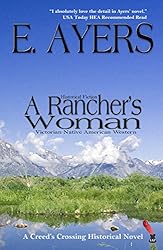
by the name of Many Feathers and became
A Rancher's Woman.
That chance to write with Debra
Holland sent me firmly down a historical path. Ninety percent of what I write
now is historical westerns. I'm hoping to finish the Diary of Clare Coleman in
2017. I've been at it for years, working on it between other things and
researching as time allows. It's not been easy for me to write. A diary is in
first person, and although that seems to be the easier voice to write for the
average author, for me, it's the most difficult. I'm used to third person. The
diary had to be in first person or it would become a biography.
Today I love writing these
historical novels. I find the research to be fascinating. I've actually had to
research pens, corrugated cardboard boxes, toilet paper, "modern"
washing machines, plumbing, cement, stoves for cooking and heating, brickyards,
and even mining. I swear I had the Bureau of Indian Affairs on speed dial when
I wrote
A Rancher's Woman.
All that research into the Crow
tribe was worth it. A Google alert came in one morning about the book. It was
being placed in an American Indian encyclopaedia. It took some more digging,
but I did find out it was because of my accurate portrayal of the Crow tribe as
people, their attitudes, and our attitudes towards them. They might as well
have given me the Nobel Peace Prize and a few million dollars to go with it,
because the feeling inside of me was the same. The fame and the money would
have been worth more, but I was so thrilled! My research had paid off, not in
dollars, but in the personal pride of knowing I had done well.
I have no idea how it happened or
who submitted it. It wasn't as though I had won the golden ticket because I had
paid a few bucks to submit it someplace for golden award or begged everyone to
vote for my book on some website. It just happened magically.
There are quite a few tribes in or
near Wyoming. I randomly said Crow tribe and that opened up a whole new area of
research. I'm still digging and trying to find answers. But I'm happy that I
said Crow because what I have discovered is a wonderful group of people with a
very rich history. I have yet to find another tribe that honors their women the
way the Crows do. But my research has branched far beyond the Crows, to the
Shoshones and the Lakota. Each is different from the other, and when I read
some of what they have been through, I cry.
It was believed that our Native
American Indians were no different from the herds that they followed. And many
people thought they should be hunted as we might have hunted a wolf when we
think it is attacking our herds or chickens. We didn't like the Indians, and we
didn't trust them. They felt the same way towards us. Were we mean to them? Oh,
yes! Did they do horrible things to us? Yes! But they also took the rap for
things done by the whites that dressed as Indians.
What we failed to see was how these
people were the stewards of the land. They weren't taking the prized buck for
his antlers and leaving the meat to rot in the sun. Wisely, they culled a herd
just as we do for management of any herd we have today. They honored the spirit
of the animal that was about to become dinner. And they used everything that
animal had to give.
We were the ones that changed the
landscape. We dug up the natural grasses and planted wheat. We dammed the
streams, over hunted the natural wildlife, and fouled the waters. We ruined
their land! Imposed our religion on them and confined them to land that we
really didn't want. And then if we decided we did want that land, we just took
it back and ignored any treaty we signed with them. And as for those
treaties…well the land may have been shared with several tribes or sub-tribes,
and if we had the signature of two or three chiefs, we thought we had all that
we needed. That would be like making a treaty today with Hawaii, and figuring
you had the backing of the other 49 states.
Today the Lakota tribe is still
"fighting" with the US government over land. Land given them and then
taken away. The government has offered money and the tribe has turned it down.
To them, it's the principle and not the money. And although it was quite a
hefty sum of money, it really does not cover the actual losses that they have
suffered. So the battle continues, not with guns, but in the court system.
We've taken their land and their lifestyle. We taken their freedom, and we've
taken away their hope.
Even as a child, I somehow knew
something was amiss. Remember playing cowboys and Indians? If you were the
cowboy, you got the shiny silver gun with the red roll of caps, the leather
holster on a gun belt and that pretty suede vest with the silver star. The red
cowboy boots and the felted red hat that hung down your back with a cord that
wrapped our necks. But if you were the Indian you got a leather strip to tie on
your head that had a few dyed feathers that stuck up and you carried either a
rubber or a wooden hatchet-like thing called a tomahawk. All you could do was
toss that hatchet at the cowboy before falling to the ground and playing dead,
because that cowboy had the noisy gun that shot you. And in my neighborhood
tossing anything at our friends was strictly forbidden. If you played the
Indian, it was an automatic loss. Or you got to be the sidekick of the cowboy,
act stupid, and grunt words like ugg.
It has been in my lifetime that
I've seen a change in attitude towards our Native American Indians. In fact, I
haven't seen a child playing with a toy gun in years. The only ones I've seen
in stores have been those huge water-blasting things made of colorful plastics.
In fact if you are under the age of 35, you probably have no memory of cap guns
or playing cowboy and Indian. That's probably a good thing.
I was six when I saw my first
Indian. We must have entered the Navajo reservation and my father stopped for
gas. My mom turned to me and said he's an Indian, referring to the man who was
pumping our gas and cleaning our windshield. I was so excited. I immediately
stuck my head out the window and asked if he was a real Indian. He never
answered me. My mom wanted to muzzle me. But I will never forget that handsome
man who was the age of my grown brothers. And at the tender age of six, I began
to put the pieces of the puzzle together. That young man was no different than
my brothers. He wore normal clothes, had a normal job, and was just
like "us", except he was very handsome. Yes, six-year-olds notice
that! Just as we noticed a pretty dress that someone might be wearing. And for
the next few hours as we drove through that reservation. It was the same as
driving through any small other small towns along our travels.
I cannot undo all the wrongful
things that have been done to these people or to any group of people, but maybe
through my writing I can allow people to see what we did. The tribes today are
working hard to preserve their language and their heritage. But they are also
trying to build a future for their people. That's a difficult task when their
children are trapped within the walls that poverty has built.
We didn't tame the west. We stole
the land from its native people and then shoved those people on reservations
that we shrunk little bit by little bit. We destroyed the natural habituate and
changed things forever.
On the flipside of all the
wrongdoing, we gave others a chance to become self-sufficient, to make
something of their lives, and become productive. All they needed to do was work
hard and persevere. Today our west appears to be tranquil, but it's not. It's a
major food producer, a giant oil field, and a rich mineral basket. It contains
some of our top universities and some of our largest parks that preserve the
natural landscape.
 |
| Wyoming |
To say it is beautiful is an
understatement. It has a bit of everything from fields planted in the wide-open
vastness, to rugged mountains, colorful rock formations, giant redwoods, deep
gullies, large rivers, and stretches of sandy nothingness. On a clear day,
there are places in the west where it feels as though you can see forever and
the night sky is extra brilliant with uncountable stars.
And that is what I love to write. I
love the people there who work those fields, herd the cattle and the sheep,
protect the environment, and look to the future. Many are still living on land
that their forefathers homesteaded. It is those people who populate my Creeds
Crossing, Wyoming books, along with the newcomers who are drawn to the small
towns and the atmosphere they provide.
I love writing about the people who
settled in Creed's Crossing and about the families that are still there. It's a
look forward and a look back.
Visit me on the web. Several of my books are available in print and in large print.
For a chance to win a free copy of one of my books, just drop a comment and tell me if you love to read history or just a good romance story.