Monday, January 16, 2017

Researching Nolan's Vow by Linda Hubalek

I released my latest book, Nolan's Vow, a historical romance set in 1885, in Debra Holland’s Montana Sky Kindle World in December.

Here's the description

Nolan Clancy finished his military career in Fort Ellis, Montana Territory and is traveling home to run his grandparent’s café in Kansas. His train is delayed in Sweetwater Springs, MT because of a snow storm, and he helps a woman feed the waylaid passengers in the café in town.

Holly Brandt grew up on military forts where her father was an interpreter between the soldiers and the Indians. Her mother, a full-blooded Cheyenne, and Holly’s two sisters died in Kansas before she and her father moved to the Montana Territory. Her father’s death leaves Holly orphaned and homeless until she finds work in a café.

When the café owner decides to sell her business and move away, Nolan invites Holly to travel to Kansas with him.

People don’t always treat Holly with respect because of her mother’s Cheyenne heritage, but Nolan sees her as a kind woman always wanting to help others. His pastor has always told him to respect and honor women as it says in the wedding vows, and Nolan realizes he wants to say the real wedding vows to Holly.

But will their differences, along with the townspeople’s interference, let them have their happily ever after?

Researching the book

Being set in someone else's story line took a lot of research for the setting, and the characters who Debra Holland and other authors had already introduced.

What businesses were in Sweetwater Springs, and who ran them? Age, married, any children?

Was there a church, sheriff, undertaker, a railroad...a stage coach which went through town, and on which day? (The list went on and on with every scene.)

I had the couple travel from MT to KS. How long did it take on a train and on which railroad lines?

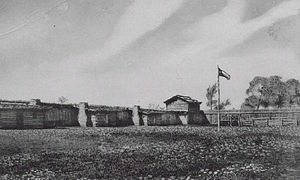
Then I researched forts both in the Montana Territory and Kansas because I wanted to work in military history. I tend to work fact into my fiction stories, so it takes more work, but I think my readers enjoy it, and have come to expect it.

I started Nolan's Vow in the Montana Sky Kindle World, but the story went on to
 introduce the Grooms with Honor series, the next series after my Brides with Grit series.

What it worth it, working in someone else's "world"?

At first it was hard to think outside my own characters "normal world" but I'm glad I did it. It's always good to learn something new, whether its about life in the 1880s, or working on a new computer program. It's the challenge that keeps us researching and writing.

Thanks for visiting Sweethearts of the West today!

Linda Hubalek

Saturday, January 14, 2017

The Mesquite Tree—The Bane of Texas Land Owners—Part 2


Reference: The Ubiquitous Mesquite. Texas Almanac - The Source For All Things Texan Since 1857.
All photos courtesy of Google Images.

Uses by Early Native Americans

Southwestern Indians had many uses for parts of the mesquite tree and "used all of it's parts: beans, bean pods, leaves, roots, trunk, limbs, bark and gum." Cabeza de Vaca and several companions, ship wrecked on the Texas Gulf Coast in 1528, lived a nomadic life, much of the time as an Indian captives. "In his Journal, he recorded the natives pounded mesquite-bean pods with a wooden pestle in a dirt hole, mixed the resulting meal with some of the dirt and added water to make a kind of mush."

They made a drink called atole from ground beans and water. Allowed to ferment, it produced a mildly intoxicating beer.

Trunks and limbs were used for shelter and fencing.

They also used it for medicines, fuel, dye and glue, clothing, recreational equipment and other tools and implements.

Uses by Early Settlers

Used it for fences because it was plentiful and resisted rotting, corrals, picket fences, wagon wheels, and ribs for small boats. Railroad crews used the logs and roots for boiler fuel.

When coffee was scarce during the Civil War, Texans made ersatz coffee from roasted mesquite beans, okra seeds wheat, corn or acorns. Boiled dried mesquite leaves became tea and honey from the flower pollen and was much prized.

Mesquite thorns were used for pins.  

Tannin was extracted from mesquite and worked fast enough that leather wasn't lost to decomposition. Dr. Park received a US patent on Dec. 5, 1985 for his method of using mesquite.

"In 1880, the first streets to be paved in San Antonio—Alamo Plaza and surrounding streets—were surfaced with hexagonal creote-treated mesquite blocks. When soaked with rain, the blocks swelled enough to push some of them up above the surface of the street, making for a rough ride. Even so, the city council in late 1891 voted to pave streets around Military Plaza—including parts of Market, St. Mary's, Trevino, Flores, Dolorosa and West Commerce—in a similar manner."

To see examples of the original wooden streets, visit
http://www.expressnews.com/150years/culture/article/Early-roads-built-with-wooden-blocks-6135750.php#photo-7661350

Today

Though ranchers are still trying to get rid of mesquite, 250 Texans can't get enough of the wood. They are artisans and value mesquite for it's beauty and the ability to work it into a high sheen.

"Mesquite has a swirling grain, radial cracks, mineral deposits in the bark, and often many insect holes, which make working it a challenge. Finding a large intact piece is almost impossible. But mesquite is dimensionally stable. As most hardwoods dry, they shrink more in one direction than they do in the other. Mesquite shrinks the same percentage in both directions. It has a surface hardness of 2,336 pounds per square inch, equal to that of hickory and almost twice that of oak and maple, and density of 45 pounds per foot, greater than oak, maple, pecan and hickory."      

Here are some examples of mesquite wood products.

Turnings and Carvings.


Furniture


Flooring


To view more examples of mesquite flooring and products, visit 

http://www.mesquitewoodproducts.com
http://www.buffalo-lumber.com/partners/mesquite-flooring.htm
http://www.mesquitefloors.com

Also, do a Google search as there are many suppliers available.

Thank you for reading today. I hope you'll leave a comment.

Happy Reading and Writing!

Linda

Thursday, January 12, 2017

Pass the Black-Eyed Peas ... to Someone Else (plus recipes)

http://kathleenriceadams.com/

Did everyone have a merry Christmas and a happy New Year? Good! I enjoyed both, thank you … except for one thing: I’m a Texan through and through, and no red-blooded Texan can let New Year’s Day pass without complaining about honoring one of its most reviled revered traditions.

I’m speaking, of course, about black-eyed peas.

No one in the American South escapes childhood without becoming painfully aware black-eyed peas are a mandatory part of the New Year’s Day meal. I say “painfully” because I would rather eat dirt than the black-eyed peas grown in it — and I’m not alone in that sentiment. Nevertheless, no matter what else is on the New Year’s Day menu, the cook had better sneak black-eyed peas into the mix somewhere or the whole year will head straight for hell on the handbasket express.

Notice the pure evil in those beady little black eyes.
Native to Africa, black-eyed peas reportedly migrated to Virginia in the late seventeenth century. Not until after the American Revolution did anyone take them seriously, but that didn’t stop the little connivers from worming their way southward and westward with settlers. The scoundrels proved incredibly hardy, darn them, and soon were well entrenched in fields hither and yon, biding their time until the moment was right to spring onto some unsuspecting family’s table.

According to legend, that moment occurred in early 1864 as General William Tecumseh Sherman’s Union troops ran roughshod over every square inch of ground from Atlanta to the sea. As if the situation weren’t dire enough for the Confederacy, the Yankees “confiscated” (read “stole”) every edible scrap they could get their hands on, leaving behind only things they considered livestock feed: black-eyed peas, greens, and corn. For Lord only knows what reason, they also left the salt pork, although they made off with every other kind of meat they could scavenge.

Little did Sherman and his men know that by abandoning the black-eyed peas, they abandoned an excellent source of calcium, folate, protein, fiber, and vitamin A, among other nutrients. (That is the only nice thing I will ever say about the vile vegetable.)

Here — look at the pretty picture of cornbread.
It'll settle your stomach.
Thankful the Yankee locusts left anything in their wake, white southerners learned to consume food slaves and po’ folks had eaten for generations: black-eyed peas, greens, salt pork, and cornbread. Those staples helped southerners of all ethnicities survive the winter. When New Year’s Day 1865 rolled around, they were delighted to find themselves still alive. The same could not be said for their palates, if the black-eyed pea custom is any indication.

Thus, a tradition was born, dangit.

According to southern lore, black-eyed peas, greens, pork, and cornbread each symbolize a hope for the future (or a reminder of the “just shut up and eat it” principle):
  • Black-eyed peas are for prosperity, because they swell when cooked. Some also say the peas represent coins. Folks who want to get technical about their prosperity eat one pea for each day of the coming year, although for the life of me I can’t figure out who has the patience to count out 365 black-eyed peas per serving.
  •  
  • Greens (collard, turnip, or mustard) bring money, because they’re the color of dollar bills. In addition to eating cooked greens, some folks hang uncooked stalks from the ceiling in order to attract prosperity. To my way of thinking, that habit just means one more thing to dust.
  •  
  • Pork symbolizes forward progress, because pigs root forward when they forage.
  •  
  • Cornbread symbolizes gold. It also does an excellent job of soaking up pot likker — the liquid left after greens are cooked — which is considered a delicacy and aphrodisiac. In addition, if you crumble enough cornbread into a serving of black-eyed peas, you’ll never know the peas are there.

There’s a trick an art to preparing inedible irresistible black-eyed peas: Disguise their flavor and texture with a whole mess of other ingredients. If you insist on adopting or continuing a tradition passed down to today’s southerners by ancestors who evidently believed suffering is good for the soul, my recipe is below. (A word to the wise: I cook by taste, not necessarily by recipe. The one dish I don’t taste while it cooks? Black-eyed peas. I prefer to save myself for dinner, in the fervent hope the disgusting delicious peas will have been devoured — or mysteriously disappeared — by the time I get to the table.)


A Pot of Good Stuff with a Couple of Black-eyed Peas Thrown in So I’m Not Singlehandedly Responsible for the End of Civilization as We Know it

4 or 5 slices bacon
1 large onion, chopped
1 stalk celery, diced
4 garlic cloves, minced
2 cups fresh or frozen black-eyed peas
2 lbs. smoked ham hock, large, meaty ham bone, or enormous slab of ham (the more meat, the less chance a black-eyed pea will creep into your portion)
½ tsp. kosher or sea salt (or to taste)
Ground black pepper to taste
¼ tsp. allspice
2 tsp. Tabasco or other hot-pepper sauce (use more or less, to taste—I use about half a bottle)
4 cups chicken stock
Additional chicken stock or water, as necessary

1. In a large stock pot, fry bacon until crisp. Remove and set aside.

2. Sauté onion, celery, and garlic in bacon grease until tender.

3. Add remaining ingredients, plus crumbled bacon, and bring to a boil. Lower heat and simmer 30 mins. to 1 hour or until tender. (There’s a fine line between tender and mushy. For me, that line is before the peas are in the pot. You’ll have to determine the texture you prefer on your own.)

****

No one has to force me to eat collard or turnip greens on New Year’s Day — or any other day. I’ve always enjoyed them. (Psst: The secret to great greens is vinegar, but you didn’t hear that from me.)

Always serve greens with black-eyed peas. Always, because this is where finesse comes into play: If you ladle greens on top of the black-eyed peas, you can eat your fill of greens and then push away from the table, pat your stomach, and announce “I can’t eat another bite!” before you’ve reached the detestable delectable peas hidden underneath.


Collard, Turnip, or Mustard Greens with Salt Pork

2 pounds (about two large bunches) fresh greens
6 strips of bacon
1 large onion, chopped
4 cloves garlic, minced
2 tomatoes, chopped
5 cups water
1 Tbsp. apple cider vinegar
½ tsp. dried red pepper flakes
1 piece salt pork, sliced, or 2 meaty ham hocks (or both)
Coarse salt (kosher or sea) and ground black pepper to taste

1. Thoroughly wash leaves and remove any woody stalks and center veins. (Small stems and veins are okay.) Tear leaves into large pieces or cut into strips.

2. In a large stock pot, fry bacon until crisp. Remove and set aside.

3. Sauté onion and garlic in bacon grease until tender.

4. Add tomatoes and meat, plus the crumbled bacon. Pour in water and vinegar and bring to a simmer.

5. Add greens, tamping them down so the water covers them.

6. Cover and simmer until tender — about 1½ to 3 hours, depending on type of greens. Turnip and collard greens require 1½ to 2 hours; mustard greens may take as long as 3 hours.


A Texan to the bone, Kathleen Rice Adams spends her days chasing news stories and her nights and weekends shooting it out with Wild West desperadoes. Leave the upstanding, law-abiding heroes to other folks. In Kathleen’s stories, even the good guys wear black hats.

Her short story “The Second-Best Ranger in Texas” won the Peacemaker Award for Best Western Short Fiction. Her novel Prodigal Gun won the EPIC Award for Historical Romance and is the only western historical romance ever to final for a Peacemaker in a book-length category.

Visit her hideout on the web at KathleenRiceAdams.com.


Tuesday, January 10, 2017

AVAILABLE ON AMAZON--
$2.99 eBook
KATHLEEN
A desperate man and a woman on the run... Kathleen Parker arrives in Trinity Hill, Texas, as a Mail Order Bride. But the name on the contract is not hers. Josiah Fremont is desperate for a wife, a woman to cook, care for his three children, and be a helpmate on his new ranch. Then a man with revenge in his heart and a gun on his hip brings danger to everyone in-volved.

LORELEI
Mail-order bride Lorelei Hastings arrives in Trinity Hill, Texas. Instead of a handsome prosperous man, a tall muscular man in dusty work clothes greets her. Daniel Carpenter, a livery owner, explains the banker ordered two brides to choose between, and he's made his choice. Lorelei is the leftover bride. She is furious, but has no recourse except to drive home with the big quiet blond man.

ANNALISA
Annalisa Morriset arrives in Trinity Hill, Texas, to learn the marriage arranged by the Boston Agency for Bridal Pairings is off. David Allen, two bedraggled children, and an infant literally run into her in the mercantile. While attempting to help those less fortunate, Annalisa and David face danger, heartache, confusion, and an attraction beyond understanding.
Each of these mail order brides stories are available separately as 99cent ebooks.
Publishing by Rebecca J. Vickery
Cover Art by Karen Michelle Nutt
Of all the books I've written and had published, these three sold far more than any others. I was so pleased with the success of them I asked that they be available in print form for my local readers.
THANK YOU !
Celia Yeary…
Romance, and a little bit of Texas


Sunday, January 8, 2017

Who Was Little Johnnie Parker?


FORT PARKER--NORTH TEXAS
The Massacre at Fort Parker:
In 1833 a caravan of thirty-two Parker family members traveled to Texas and settled on the Navasota River, a branch of the Brazos River in North Texas. They found the Indians and the Mexicans very troublesome, and to guard against them they built Fort Parker to house and protect the large extended family.

Three years later in 1836 near Weatherford, Texas, the Kiowa and Comanche gathered into one large party and began a war dance that would result in the death of many white settlers.
Little Johnnie Parker, six years old, and his sister Cynthia Ann Parker, age nine, were torn from their mother's arms and taken captive.
Their mother, Lucy Parker, after seeing the father and grandfather of the children tortured and murdered, took her children and made a break for freedom. She was quickly surrounded by the warriors who forced her to lift Cynthia Ann up behind a Comanche torturer, and little Johnnie Parker behind a Kiowa warrior. In indescribable agony, she heard her precious children's screams, as they were  sped away in horrifying captivity.
They dragged her into the fort. Her fate was not related.

 The Fort Parker massacre resulted in the death of almost all male members. The majority of the women and children got away, but several women and children were taken captive.
Johnnie Parker was separated from the rest of the family and taken to the far Southwest. With the half-naked boys his age, he played hunter, warrior, and bad man of the wilds, as do boys in civilized life. He became a full-fledged Comanche, ready for any kind of raid for food or war.

CYNTHIA ANN PARKER.
SISTER TO
JOHNNIE PARKER,
MOTHER OF
QUANAH PARKER
Johnnie was ransomed back to his family after six years, but unable to adapt to white society, ran back to the Comanche.

He made a history of his own, becoming a leader of raids along the Rio Grande valley and on the Mexican border. His band sometimes made raids far down into Old Mexico, and on one such excursion he captured a beautiful senorita named Donna Juanita.
Johnnie took Donna Juanita with him to the camp, and treated her kindly as was justified by her beauty and loveliness. She took her captor as a lover and soon became the bride of the brave and daring John with all the tender devotion and honeymoon that camp life could provide.

All went well until John contracted smallpox. There is nothing more destructive to an Indian camp than this disease. The tribe abandoned John, leaving him to his fate and to die alone. They forcibly took his beloved senora with them and moved far away, leaving poor John in the deserted camp, alone, slowly dying with no one to give him a word of cheer, none to bathe his fevered brow, or give him water to cool his burning blood.

Juanita, the Aztec beauty, was haunted day and night by visions of her suffering and dying lover. When opportunity came, she fled and hastened to the wigwam of the suffering John. Having some knowledge of how to treat the disease, she soon nursed him back to health.

Here alone, far away from other tribes and free from civilization, they enjoyed their own little part of the world.
John was so resentful of the tribe abandoning him, that he disengaged himself from the group and went with Juanita to her people in Mexico. There they lived in a little straw thatched hut.

Since John knew so much of Mexico and Texas, he worked at being a guide. When the Civil War broke out, he joined the Confederate Army in defense of Texas. When ordered to go east by the army, he refused to cross the Texas border and returned to the Rio Grande Valley.
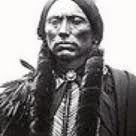
QUANAH PARKER,
NEPHEW OF
JOHNNIE PARKER

Johnnie Parker was a peculiar person. With not one drop of Indian blood, he looked like a typical Comanche. He talked very little and would not visit his sister, Cynthia Ann, nor see his nephew Quanah Parker. He departed for the west.

Parker returned to the United States during the Civil War and served with Confederate troops  in Texas. After the war, he returned to Mexico, where he died in 1915 on his ranch.
He appeared to have been the only one of the Parker children who lived a happy life.

Celia Yeary-Romance...and a little bit 'o Texas

My Website

My Blog

Sweethearts of the West-Blog

My Facebook Page 

Sources:
Wikipedia
Handbook of Texas--On-line
Texas History Textbook


Wednesday, January 4, 2017

THE KING RANCH by Cheri Kay Clifton

What and where is the King Ranch?


Some would answer, “It’s a Ford Truck.”  And yes, one can be found in our garage. My hubby has owned King Ranch trucks for years. 


However, seeing the famous “W” brand on our leather console and floor mats as well as the “EST. 1853” designation, the question for me arises, was there really a King Ranch?

Here’s a little history about a huge ranch in the big state of Texas.

Ranches in the American West grew in both size and number after the American Civil War. What may have been the largest ranch in the world in the late 1850’s was the enormous King Ranch, located in southeast Texas, south of Corpus Christie. Founded in 1853 by Richard King, the King Ranch covers 825,000 acres (1289 square miles) – a little over the size of Rhode Island.

Born to a poor Irish family, King grew up in New York City. Wanting to escape the confines of city life, young Richard learned the trade of seamanship, became a captain and with hard work and determination, made his way into the steamboat industry along the Alabama and Florida rivers. After moving to South Texas, he built up his river transportation empire, running supplies on the Rio Grande during the Texas Revolution. 


Soon he was investing his money in land for cultivation and cattle raising and by 1855 had grown a ranch empire of longhorn steers as well as thoroughbred horses. In fact, the legendary vaqueros and many of Captain King’s descendants have been devoted to the ranching life through the generations and have made top quality horses a clear priority on King Ranch.


The “running W” brand the King Ranch uses today first saw duty in the 1860’s and was officially registered in 1869. Not even the current King Ranch management knows for sure where the “W” really comes from. Some believe it represents one of the ranch’s many diamondback rattlesnakes or possibly the Santa Gertrudis Creek. Others say it signifies the sweeping horns of a Texas longhorn bull.


Regardless of its meaning, today the Running W appears on both prize-winning cattle and top quality leather goods as an indisputable icon of the American ranching industry.

Oil fields and timberland increased the success and wealth of King Ranch into the 20th Century and the empire now has satellite locations in Florida, New Mexico and South Carolina.

In 1961, King Ranch was designated a National Historic Landmark. Today the King Ranch Visitor Center in Kingsville, Texas offers an extensive museum, daily ranch tours and holds special events.

Is it still the biggest ranch in the world?

No … the biggest ranch is Anna Creek Station in South Australia covering 6 million acres. However, counting all its locations, the King Ranch is the biggest ranch in the U.S. and considered “one of the biggest” around the globe.

The King family and the ranch are part of the myth and mystique of Texas and have been featured in numerous stories and novels. The Kings of Texas traces the history of the ranch through “decades of conflict arising from the Mexican-American War, the Civil War, and the many skirmishes between Texas Rangers and border bandits.

Edna Ferber’s novel, Giant, about the ranches of Texas was turned into a film of the same name. The theme song of the film is a staple for high school bands in Texas. Many of the events of the King Ranch, such as the discovery of oil on the property, are also in the film.


In the James Michener novel, Centennial, the Venneford Ranch was said to be patterned after the King Ranch.

The western historical fiction novel, Lords of the Land by Matt Braun is based on the King Ranch and its founder, although names and some circumstances were altered.

After reading but a small portion of the history of Richard King and the King Ranch, I can see why Ford is proud to put its symbol on their trucks. 

Visit my web site at www.cherikayclifton.com and check out my books on Amazon 

"The Old West isn't just a time or place, it's a state of mind."


Tuesday, January 3, 2017

Historical Fiction - E. Ayers


How did I wind up writing historical westerns? It's a little convoluted. I grew up on the East coast, riding English. Although I will admit there's something special about a guy in chaps. And I'll confess that I'd never been to a bull-riding event until about ten years ago when the local county fair had one. It was the last place the guys could earn enough points to go to the PBR. Okay say PBR and I think beer. Am I an Easterner or what?
So how did I get into historical fiction? I wrote A Snowy Christmas in Wyoming. It wasn't meant to be a western just a sweet, contemporary Christmas story.
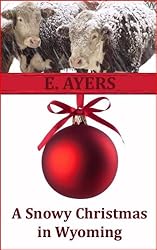
https://images-na.ssl-images-amazon.com/images/I/51jE7s7htzL._UY250_.jpgI created a hero Andy Coyote that I figured anyone could love. That misunderstood young man who was really a good guy. He'd also made a few mistakes along the way, but now he had a good stable job, an adorable little daughter, whom he loved with all his heart, and employer who was honest and took him under her protective grandmotherly wing. Andy wasn't stupid, but he was dyslexic, therefore he had not done well in school. I made him tall and dark. Handsome? In the eyes of the beholder he was. And Caroline saw him as handsome. A few clicks on the computer, and I made him a Crow Indian because there's a Crow reservation not too far away.
Where I live in Virginia there are plenty of Land Grant properties still within families and although that does not exist in the west, I saw that heritage of this particular ranch that keeps getting passed down through the generations. I casually mentioned a diary of that original settler, Clare Coleman. So as I lay my head upon my pillow, I could imagine this unrequited love between Clare and a young Crow Indian. And how life tends to come full circle. Clare's love for Cheéte is repeated in Caroline's and Andy' story.
Call it dumb luck. But that story took off six years ago, and people began to ask for the diary. Um, I don’t write historical - that means research! But after several requests I said hmm, maybe I should reconsider my stance on historical. So I began researching.
WOW! I had no idea! The only thing I'd been taught in school about those early years in the west was the Pony Express, The Battle of Little Big Horn, and the Golden Spike. Not even a full paragraph on each.
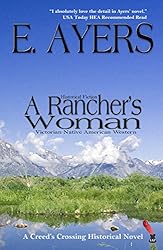
Debra Holland was getting ready to write Sweetwater Springs Christmas and asked several of her friends to join her. I knew Debra. I had met her a few years after my husband died and I was still coping with grief. Her book on grieving helped me to understand that what I was feeling was normal. We all experience grief, even if it's the loss of a pet, or a job, or a favorite piece of jewelry. Things that are taken from us hurt! Long story short, she had read some of my other books and loved my writing. I remember when she emailed me and said I want that house! Anyway, she knew I was working on the Diary of Clare Coleman and she asked me to write for her Sweetwater Springs Christmas anthology. I said yes, and that was it. From that historical story of Adie Reiner and Frank Coleman the grandson of Clare Coleman, grew the story between Adie's sister Malene and a Native American man by the name of Many Feathers and became  A Rancher's Woman.
https://images-na.ssl-images-amazon.com/images/I/51UxLA0haGL._UY250_.jpgThat chance to write with Debra Holland sent me firmly down a historical path. Ninety percent of what I write now is historical westerns. I'm hoping to finish the Diary of Clare Coleman in 2017. I've been at it for years, working on it between other things and researching as time allows. It's not been easy for me to write. A diary is in first person, and although that seems to be the easier voice to write for the average author, for me, it's the most difficult. I'm used to third person. The diary had to be in first person or it would become a biography.
Today I love writing these historical novels. I find the research to be fascinating. I've actually had to research pens, corrugated cardboard boxes, toilet paper, "modern" washing machines, plumbing, cement, stoves for cooking and heating, brickyards, and even mining. I swear I had the Bureau of Indian Affairs on speed dial when I wrote A Rancher's Woman.
https://images-na.ssl-images-amazon.com/images/I/51UnMBJoyNL._UY250_.jpg
All that research into the Crow tribe was worth it. A Google alert came in one morning about the book. It was being placed in an American Indian encyclopaedia. It took some more digging, but I did find out it was because of my accurate portrayal of the Crow tribe as people, their attitudes, and our attitudes towards them. They might as well have given me the Nobel Peace Prize and a few million dollars to go with it, because the feeling inside of me was the same. The fame and the money would have been worth more, but I was so thrilled! My research had paid off, not in dollars, but in the personal pride of knowing I had done well.
I have no idea how it happened or who submitted it. It wasn't as though I had won the golden ticket because I had paid a few bucks to submit it someplace for golden award or begged everyone to vote for my book on some website. It just happened magically.
There are quite a few tribes in or near Wyoming. I randomly said Crow tribe and that opened up a whole new area of research. I'm still digging and trying to find answers. But I'm happy that I said Crow because what I have discovered is a wonderful group of people with a very rich history. I have yet to find another tribe that honors their women the way the Crows do. But my research has branched far beyond the Crows, to the Shoshones and the Lakota. Each is different from the other, and when I read some of what they have been through, I cry.
It was believed that our Native American Indians were no different from the herds that they followed. And many people thought they should be hunted as we might have hunted a wolf when we think it is attacking our herds or chickens. We didn't like the Indians, and we didn't trust them. They felt the same way towards us. Were we mean to them? Oh, yes! Did they do horrible things to us? Yes! But they also took the rap for things done by the whites that dressed as Indians.
What we failed to see was how these people were the stewards of the land. They weren't taking the prized buck for his antlers and leaving the meat to rot in the sun. Wisely, they culled a herd just as we do for management of any herd we have today. They honored the spirit of the animal that was about to become dinner. And they used everything that animal had to give.
We were the ones that changed the landscape. We dug up the natural grasses and planted wheat. We dammed the streams, over hunted the natural wildlife, and fouled the waters. We ruined their land! Imposed our religion on them and confined them to land that we really didn't want. And then if we decided we did want that land, we just took it back and ignored any treaty we signed with them. And as for those treaties…well the land may have been shared with several tribes or sub-tribes, and if we had the signature of two or three chiefs, we thought we had all that we needed. That would be like making a treaty today with Hawaii, and figuring you had the backing of the other 49 states.
Today the Lakota tribe is still "fighting" with the US government over land. Land given them and then taken away. The government has offered money and the tribe has turned it down. To them, it's the principle and not the money. And although it was quite a hefty sum of money, it really does not cover the actual losses that they have suffered. So the battle continues, not with guns, but in the court system. We've taken their land and their lifestyle. We taken their freedom, and we've taken away their hope.
Even as a child, I somehow knew something was amiss. Remember playing cowboys and Indians? If you were the cowboy, you got the shiny silver gun with the red roll of caps, the leather holster on a gun belt and that pretty suede vest with the silver star. The red cowboy boots and the felted red hat that hung down your back with a cord that wrapped our necks. But if you were the Indian you got a leather strip to tie on your head that had a few dyed feathers that stuck up and you carried either a rubber or a wooden hatchet-like thing called a tomahawk. All you could do was toss that hatchet at the cowboy before falling to the ground and playing dead, because that cowboy had the noisy gun that shot you. And in my neighborhood tossing anything at our friends was strictly forbidden. If you played the Indian, it was an automatic loss. Or you got to be the sidekick of the cowboy, act stupid, and grunt words like ugg.
It has been in my lifetime that I've seen a change in attitude towards our Native American Indians. In fact, I haven't seen a child playing with a toy gun in years. The only ones I've seen in stores have been those huge water-blasting things made of colorful plastics. In fact if you are under the age of 35, you probably have no memory of cap guns or playing cowboy and Indian. That's probably a good thing.
I was six when I saw my first Indian. We must have entered the Navajo reservation and my father stopped for gas. My mom turned to me and said he's an Indian, referring to the man who was pumping our gas and cleaning our windshield. I was so excited. I immediately stuck my head out the window and asked if he was a real Indian. He never answered me. My mom wanted to muzzle me. But I will never forget that handsome man who was the age of my grown brothers. And at the tender age of six, I began to put the pieces of the puzzle together. That young man was no different than my brothers. He wore normal clothes, had a normal job, and was just like "us", except he was very handsome. Yes, six-year-olds notice that! Just as we noticed a pretty dress that someone might be wearing. And for the next few hours as we drove through that reservation. It was the same as driving through any small other small towns along our travels.
I cannot undo all the wrongful things that have been done to these people or to any group of people, but maybe through my writing I can allow people to see what we did. The tribes today are working hard to preserve their language and their heritage. But they are also trying to build a future for their people. That's a difficult task when their children are trapped within the walls that poverty has built.
We didn't tame the west. We stole the land from its native people and then shoved those people on reservations that we shrunk little bit by little bit. We destroyed the natural habituate and changed things forever.
On the flipside of all the wrongdoing, we gave others a chance to become self-sufficient, to make something of their lives, and become productive. All they needed to do was work hard and persevere. Today our west appears to be tranquil, but it's not. It's a major food producer, a giant oil field, and a rich mineral basket. It contains some of our top universities and some of our largest parks that preserve the natural landscape.
Wyoming
To say it is beautiful is an understatement. It has a bit of everything from fields planted in the wide-open vastness, to rugged mountains, colorful rock formations, giant redwoods, deep gullies, large rivers, and stretches of sandy nothingness. On a clear day, there are places in the west where it feels as though you can see forever and the night sky is extra brilliant with uncountable stars.
And that is what I love to write. I love the people there who work those fields, herd the cattle and the sheep, protect the environment, and look to the future. Many are still living on land that their forefathers homesteaded. It is those people who populate my Creeds Crossing, Wyoming books, along with the newcomers who are drawn to the small towns and the atmosphere they provide.
I love writing about the people who settled in Creed's Crossing and about the families that are still there. It's a look forward and a look back.

Visit me on the web. Several of my books are available in print and in large print.

For a chance to win a free copy of one of my books, just drop a comment and tell me if you love to read history or just a good romance story.