Over the Memorial Day weekend, I headed over the mountains to visit my family and a few other mountains. The trip made me think you all might like a little history of the Wind River area of Wyoming. It also reminded me that I promised a follow-up to the post on Chief Washakie and then forgot. So let's get the wagon moving and check out the area where I was born and raised (though it is known for a few more important people, places, and events than just that).
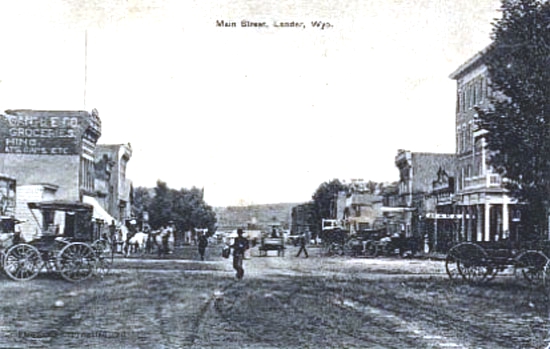
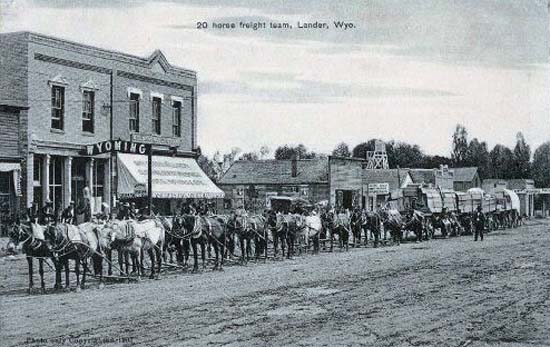
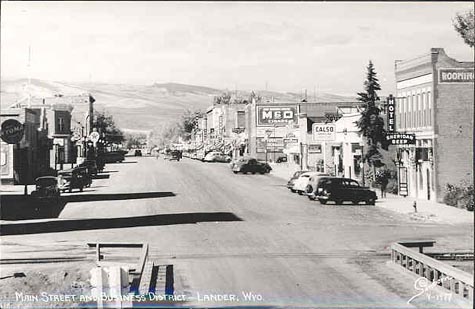
We’re chuggin’ down out of the beautiful Wind River Mountains and our first stop on the trail today is Lander…
The
gold rush in 1867 South Pass City brought not only miners and
prospectors to the area, but homesteaders began settling in the Wind
River Basin. At the same time the American Indian tribes in the area became
restless with the influx of whites and there was an increase in attacks
upon settlers, freight trains, and even part of South Pass City was
burned down.
Fort Bridger was the closest military base to the
area and it was 150 miles to the southwest. So, the Army began building
military outposts from Fort Bridger. One of these was Camp Augur built
in 1868 and named after General Christopher Columbus Augur commander of
the Army’s Department of the Platte. Before anyone had a chance to get
used to that name; Camp Augur became Camp Brown after Frederick H.
Brown who was killed at the Fetterman massacre. And before anyone got
too comfortable, in 1870 the installation was moved to its present site
to protect the Wind River Agency, Fort Washakie, about 16 miles north of
the original camp.
The town that had built around Camp Brown,
however, remained, but was called “Push Root.” The name allegedly was
derived as a result of warming Chinook winds causing crops to germinate
early. Another explanation says it was a derogatory term given by a
nearby competing town of North Fork (or Milford) five miles to the
north. Therefore, residents of Lander were known as “Pushrooters.” At
the time North Fork was experiencing a boom as a result of its saloons
and other places of entertainment for soldiers at Fort Washakie. But the
pushrooters had the last laugh when in 1884, upon the formation of
Fremont County, the pushrooters won the election to become the county
seat. When it came time for Push Root to get a post officer, the post
office department rejected the name, and at the suggestion of Benjamin
Franklin Lowe they named it Lander after F.W. Lander.

The
town was constructed on lands owned by Lowe. In exchanged for
assistance in developing the town, Lowe gave a portion of the land to a
man named Eugene Amoretti. Amoretti had previously engaged in the mining
and mercantile businesses in South Pass City, Atlantic City, Miners
Delight, and North Fork. In Lander, he continued in the mercantile
business and also founded the First National Bank of Lander, the feed
mill, and was one of the investors in the electric plant. Amoretti
became the first mayor of Lander when the town was incorporated.
Amoretti was one of the few bank owners at the time who had no need to
fear bank robbers. He was a personal friend of Butch Cassidy, and Butch
even deposited some of his ill-gotten gains in Amoretti’s bank.

Amoretti’s
friend faced a threat in Lander in the form of Charles L. Stough.
Stough came to Wyoming in 1880 and was elected sheriff of Fremont County
in 1890. He was known to administer his office in a way that made him a
terror to evildoers and gained him the enduring confidence of the
County. He’s best known for arresting the notorious Butch Cassidy and
upon the outlaw’s conviction conveying him to the Wyoming Territorial
Penitentiary in Laramie.
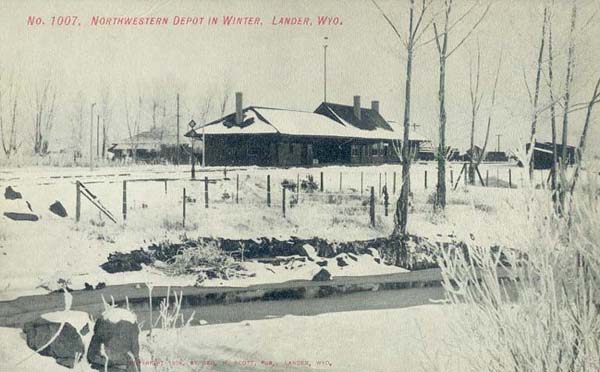
Almost
from the beginning Lander tried to get a railroad in the town first
courting the Union Pacific, then the Chicago & Northwestern. When
the Wind River Reservation opened to white settlers, the C&NW agreed
to come to town. Construction started out of Casper in 1905, and the
first passenger train arrived in Lander on October 15, 1906. The town
held a huge celebration and the county fair was incorporated into the
festivities. Schools closed and the mayor declared a three-day holiday
for the celebration.
During construction in Lander, five houses
were moved off the newly-established right- of-way, and the railroad
completely took over First Street. The passenger train ran once daily,
and included full Pullman service from Chicago. Later this was
downgraded to a doodlebug, and on April 19, 1943 passenger service to
Lander was discontinued, just 37 years after it began. On November 10,
1972, the last freight train ran out of Lander. But for 66 years, Lander
was known as the place “where rails end and trails begin.”
So let’s keep chuggin’ on our trail and revisit Washakie for just a moment.
As
we cruise along north at a whoppin’ 15 miles an hour we’re comin’ to
Fort Washakie on the Wind River Reservation. Camp Brown’s name was
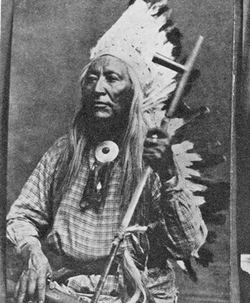
changed in 1878 to Fort Washakie, named after the great Shoshone Chief,
an ally of the army against the Sioux. Chief Washakie was the last
principal chief of the Shoshone. He became Chief in 1840. Washakie was
the only U.S. military installation named after and American Indian
Chief.
Chief Washakie’s policies of accommodation with
the whites included insistence that there be provided schools,
hospitals, and other services. Therefore, in the Fort Bridger treaty of
1868 with the Shoshone, the Government pledged to establish a school at
Fort Washakie. The first teacher at the Fort was James J. Chander. He
had a class of 35 students, both Indian and white.

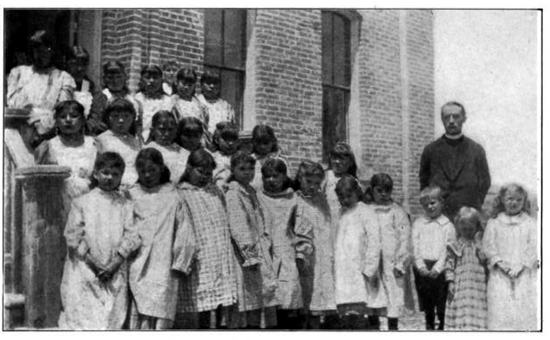
Chief Washakie continued his support for education by donating 160 acres of irrigated land to Rev.
Dr. John Roberts for the establishment of the Shoshone Indian Mission
Boarding School. Reverend Roberts, originally of North Wales, arrived in
Lander on February 10, 1883, after an eight day trip from Green River
City in 60 degree below zero weather.
In addition to starting the
school, Rev. Roberts along with Charles Lajoe translated portions of the
Book of Common Prayer into Shoshone. In recognition of his services to
the Shoshone, he was bestowed the title “Elder Brother.”
Chief Washakie died in 1900, over the age of 100, and was given full military honors.
Now
to a bit of a controversy on Fort Washakie. On April 9, 1884, Rev.
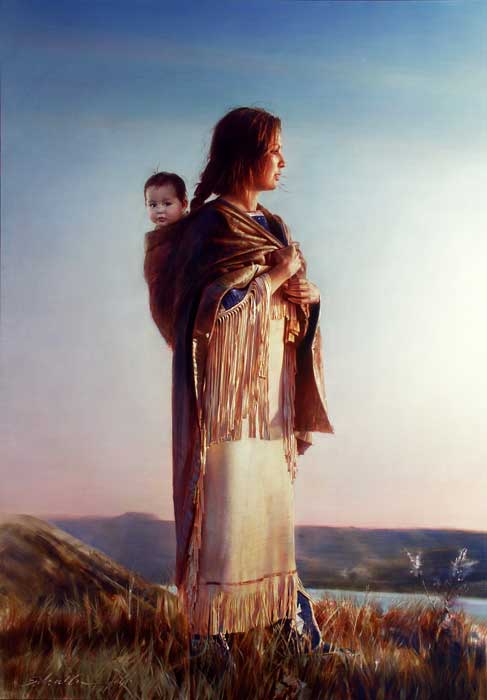
Roberts officiated at the funeral of Sacajawea, of Lewis and Clark
Expedition fame, and Shoshone oral tradition holds this to be true. This
has been disputed as many claim Sacajewea died in 1812 at Fort Mandan
in a smallpox epidemic.
According to the oral tradition, Sacajewea
left her husband Charbonneau, crossed the Great Plains and married into
a Comanche tribe taking the name Porivo (Chief Woman). When her
Comanche husband, Jerk-Meat was killed she left the Comanches and made
her way to Fort Bridger with her sons Bazil and Baptiste, who each knew
several languages including English and French. She eventually made her
way back to the Shoshone people at the Wind River Reservation.
In
1925, Dr. Charles Eastman, a Santee Sioux physician, was hired by the
Bureau of Indian Affairs to locate Sacajewea’s remains. Eastman visited
a number of Indian tribes interviewing elderly individuals, and learned
of a Shoshone woman at the Wind River Reservation with the Comanche
name Porivo. Some said she spoke of a long journey where she helped
white men, and that she had a silver Jefferson Peace Medal of the type
carried by Lewis and Clark. At the end of his investigation Eastman
concluded that Porivo was Sacajewea. In 1963, a monument to “Sacajawea
of the Shoshonis” was erected at Fort Washakie.
So we’re turning this train around for a quick
stop south of here in Riverton.
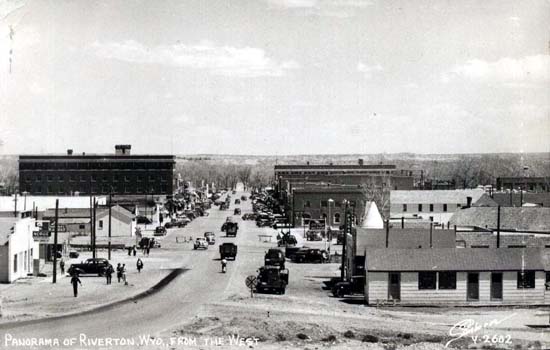
The
history of Riverton is tied to the Wind River Reservation and
irrigation. In 1868, the United States signed a treaty with the
Shoshone creating a Reservation of some 3,000,000 acres. In typical U.S.
Government fashion and under a number of separate treaties that
Reservation was slowly eaten away. The last major cession being in
1905, under which there would be a per capita payment to each American Indian and
there would be created and irrigation system, school district, and a
welfare and improvement fund would be created. In conjunction with the
proposed opening of the ceded lands for settlement, the Chicago and
Northwestern proposed to extend their line. As discussed under Lander,
on August 15, 1906, the lands were opened for settlement with the most
desirable location being near where the railroad was to be located.
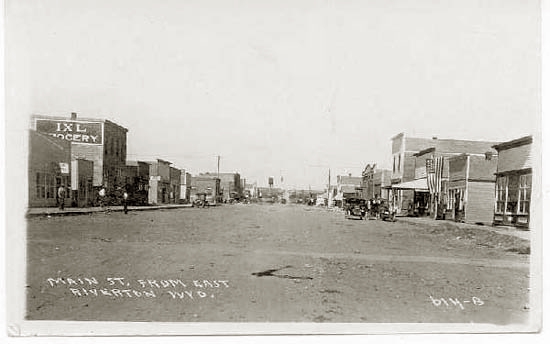
Wadsworth was founded as a tent town, named after the railroad station
manager, but within two weeks was renamed Riverton.

In
short order a municipality, school board, baseball clubs, Free Public
Library Commission, and fraternal orders were formed. The town had two
livery stables, hotels, newspaper, two banks, and two lumber companies.
From the livery stables the stage left twice a week on Tuesdays and
Fridays for Kinnear. The town rapidly became the center of commerce
taking the place of the older Shoshoni.
Initially, irrigation was
to be provided by Wyoming Central Irrigation Company, headed by Chicago
salt mogul Joy Morton and former Governor Fenimore Chatterton. The
demand for irrigated lands proved to be less than expected and the town
of Morton irrigated only 80 acres of oats.
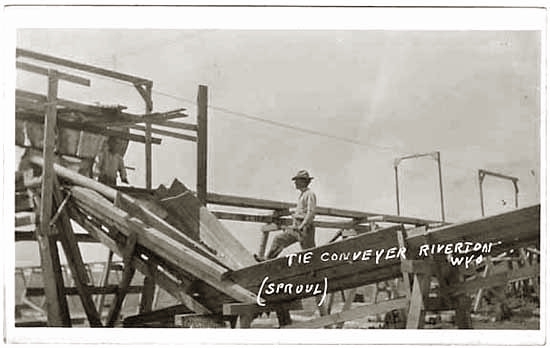
By
1914, Riverton became a primary shipping place for railroad ties for
the C&NW. The ties would be floated down from Dubois by the Wind
River Timber Company. The tie industry declined during World War I as
the federal government took over the railroads, but a resurgence
occurred after the war. In 1920, Chicago businessman, Ricker Van Metre,
took control of the timber company and changed its name to Wyoming Tie
and Timber Company. The last timber drive down the river was in 1946,
as mechanization took over the tie industry and the days of hand hewn
ties ended.
In 1928, an anniversary of the founding of the
area was celebrated with, among other things, a giant tent dance. The
tent, erected in the street was 100 ft. long with various displays and a
dance floor at one end.
The
Dust Bowl and Depression stirred interest in the Riverton area, as
farmers left their homes for what they hoped was a better opportunity.
Riverton remains a predominately agricultural area.
While
today’s focus has been on the later history of the towns built around
the Wind River region, I want to remind you, the area around Lander and
Riverton was long traversed by American Indians and trappers and
explorers. I might return in later posts and delve into
this further. However, in an effort to keep this blog short of of
Michner’s
Centennial standards I’ve chosen to jump ahead.
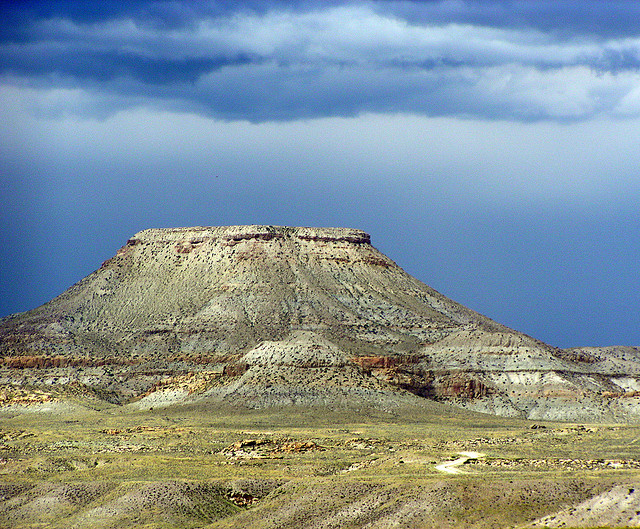
If you’ll look to the right of your wagon as we head northwest you’ll see Crowheart Butte…
As
more white settlers pushed into Wind River Country the game started to
become scarce on the Great Plains. Several tribes, including the Crow,
were forced onto the Shoshone’s traditional hunting grounds in the Wind
River Valley in search of food.
By 1866, the Crows camped along
the Wind River not far from a butte well within the bounds of Shoshone
territory. Chief Washakie sent a warrior and his wife with a message to
the Crow Chief Big Robber explaining that the Crow were welcome to hunt
in the territory of the Owl Creek Range, but they must leave the Wind
River Mountains to the Shoshone.
Big Robber responded by killing
the warrior and sending back a message with the warrior’s wife. He
considered his tribe superior to the Shoshone and stated the Crow were
prepared to go into battle and they would hunt wherever they pleased.
(Not his exact words)
Washakie sent word to the Bannocks, allies
of the Shoshone, who were camped along the Popo Agie River. The Bannocks
joined the Shoshone in an attack on the Crow camp. The battle raged for
five days, neither side gaining ground. Finally, Washakie and Big
Robber decided to fight a duel to the death to reach a conclusion. The
victorious chief would claim the Wind River Valley.
In the end,
Washakie was victorious. So impressed with the bravery of Big Robber,
instead of taking the Crow Chief’s scalp, he cut out his heart and
placed it on the end of his lance as a sign of respect. The butte
around which the battle occurred was called Crowheart Butte.
Among
the local Indian tribes, the battle between Washakie and Big Robber
settled once and for all who controlled the Wind River Country.
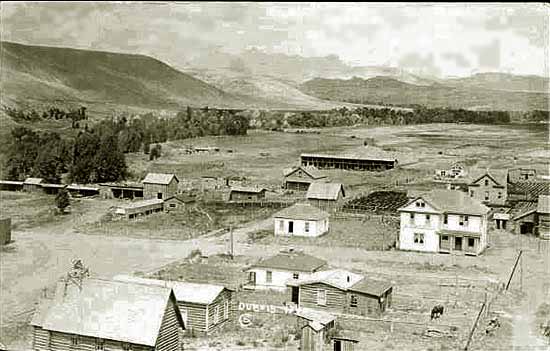
In
the 1870’s, stockgrowers and tie hacks began settling northwest of
Crowheart Butte, in a location known as Never Sweat due to its warm and
dry winds. The area was on a military road from Fort Washakie to Fort
Yellowstone. The road was not suitable for ordinary travel, and often
not suitable for military travel.
When the government decided to
establish a post office, officials in Washington found the name Never
Sweat distasteful and renamed the community Dubois, after the United
States Senator from Idaho, Fred T. Dubois, a member of the Postal
Committee. In protest, the citizens rejected the French pronunciation
of the name (it is pronounced Du-boy-se).
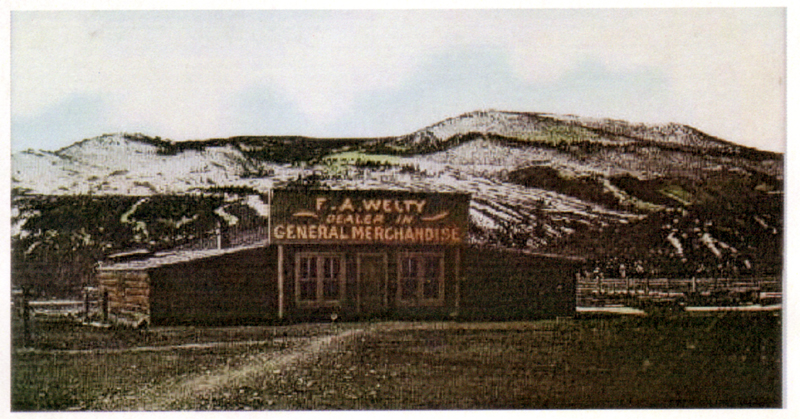
The
first postmaster of Dubois was Alice A. Welty, wife of Dr. Francis H.
Welty, the post physician at Fort Washakie. The post office was
established in a store owned by her son, Frank A. Welty. By 1915,
Welty’s store served the many ranchers in the area. The goods purchased
in Omaha were shipped by rail to Shoshoni then brought to Dubois by
16-horse freight wagons. This trip could take almost a month to
complete.
As
mentioned in the section on Riverton, the main business (other than
agriculture) in Dubois was tie hacking. In 1914, the Wyoming Tie &
Timber Company began cutting railroad ties in Togwotee Pass and Union
Pass. Tie Hacking in Wyoming dates back to the Union Pacific in 1868
with tie hack camps springing up near Medicine Bow, the Big Horns and
Winder River Mountains. The railroad took 2,500 ties per mile of track,
and until the 1940’s the Dubois area was the leading source of railroad
ties in the United States.
Ties
were cut by hand, in the beginning, using a broad axe. A good tie hack
could hew 50 ties a day. Later in the 1930’s, with more mechanization,
tie hacks were paid on a piece of work basis, 3 cents a tie. A good tie
hack could hew 300 to 310 ties a day. Dubois depended on the tie hacks
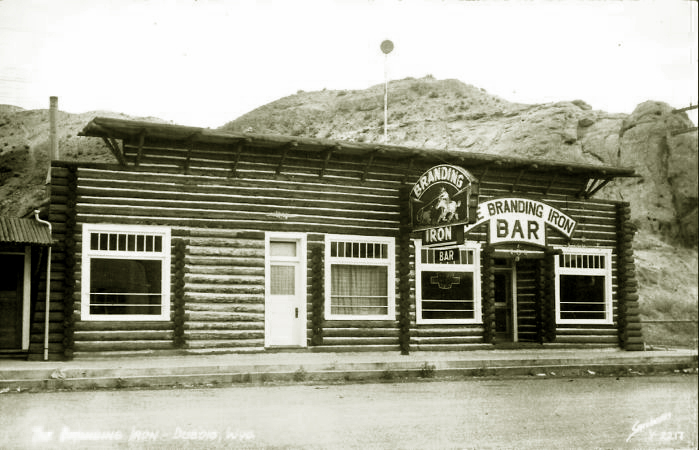
for the economy, and most tie hacks enjoyed their drink, therefore the
town remained open during the prohibition years, and continued to allow
gambling. In the winter, tie camps were cut off and access to Dubois
was by skiing. In those months, some tie hacks made their own hooch,
using dried fruit, or drank vanilla extract. “At one time there they
sold more vanilla up there in the tie camp than all the rest of the
county put together.”
The
last of the major lumber mills in Dubois closed down in 1987.
Currently, the town ‘s main economy is tourism as many travelers come
through on their way to Togwotee Pass and on to Jackson, Teton National
Park and Yellowstone.
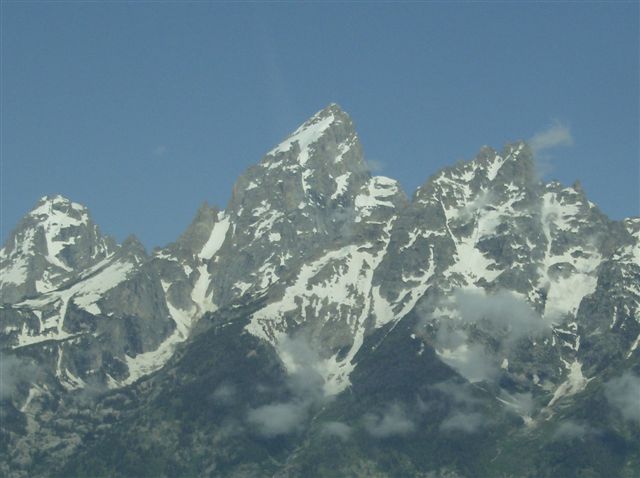
There ya go folks! I don't know about you, but I'm exhausted. Let's hop off these wagons and enjoy some time at the base of the Tetons.
SOURCES:
http://www.windriver.org/info/reservation/index.php
www.wyomingtailsandtrails.com
http://www.smalltowngems.com/browsetowns/wyoming/dubois/duboiswytownhistory.html
Kirsten Lynn is a Western and Military Historian. She worked six
years with a Navy non-profit and continues to contract with the Marine
Corps History Division for certain projects. Making her home where her
roots were sewn in Wyoming, Kirsten also works as a local historian. She
loves to use the history she has learned and add it to a great love
story. She writes stories about men of uncommon valor...women with
undaunted courage...love of unwavering devotion ...and romance with
unending sizzle. When she's not writing, she finds inspiration in day
trips through the Bighorn Mountains, binge reading and watching sappy
old movies, or sappy new movies. Housework can always wait.