Friday, September 14, 2012

Savvy Sayin's


As usual, I’m a doing my post at the last minute.   My life has just been crazy for the past year or so, and the 14th of the month always jumps up at me.  This month, I did try to find a subject, but nothing jumped out at me.  So, I doing a little cheating and going to reference a book I found a few months ago, SAVVY SAIN’S: True Wisdom from the Real West, as collected over a couple of decades by author Ken Alstad, who worked in Arizona as a farm and ranch reporter. Here are a few samplings of the hundreds of sain’s.

v  Don’t point a gun at nobody you ain’t willing to shoot, if necessary.

v  Some men’s wives are angels. The others are still alive.

v  Out West, every prairie dog hole is a gold mine, every hill is a mountain, every creek is a river, and every prospector is a liar.

v  Some cowboys got too much tumbleweed in their blood to settle down.

v  Nobody but the cattle knows why they stampede and they ain’t talkin’.

v  A corkscrew never pulled no one out of a hole.

v  When a cowboy‘s too old to set a bad example, he hands out good advice.

v  An old timer is a man who’s had a lot of interesting experiences, some of them true.

v  Don’t count the teeth in someone else’s mouth.

v  With the Homestead Law, the U.S. is betting you 140 acres that you can’t live on it.

This is a nice little book and is enhanced by the fact it has woodcut illustrations by Frederic Remington and Charles M. Russell throughout.  They add character to the book and are beautifully done.

Happy Friday!
Never let your memories be greater than your dreams. ~Doug Ivester

Wednesday, September 12, 2012

Nez Perce Legend


Sorry I'm late!! Life lately has been hectic. So here is a post I wrote promoting the first book in the Spirit series.

This was my first attempt at a paranormal, but to me it felt more historical than paranormal. I did major research into the Nez Perce or Nimiipuu tribe to be able to write this story about the daughter of a chief who is asked for in marriage by a warrior of the Blackfeet(Blackleg) tribe which at the time of the story were according to the words of a current Nimiipuu "considered the same as you all considered the Huns".  I used this fear and hatred throughout the story when the heroine is talking and thinking about living with the Blackleg(the name the Nimiipuu called the Blackfeet).


I not only researched books on their day to day living conditions, their society, and their beliefs, I also read as much as I could in their own words. Myths and legends books and any snippet I could get that was in English but translated directly from their words. It helped me to get a feel for their speaking and cadence to their dialogue.

Here is a Nimiipuu story that I copied from the Nez Perce loop I'm on. As you can see by reading the story all of the stories handed down through the generations were like our fables.

 Nez Perce boy legend

A long time ago there lived in our Blue Mountains a boy who was an only child. His parents had pampered and spoiled him until he was quite selfish and disagreeable.

His parents died and he was obliged to live with the rest of the tribe as an orphan. Because of his selfishness he was not well liked and the other children did not like to play with him. Some of the children learned that the camp was to be moved and made plans to get rid of the spoiled boy.

No one told him that they were moving and that morning they took him out to the high cattails to play hide-and-seek. They would hide and then call, "Who! Who!" Part of the time the boy was following his own echo. The children slipped away and hurried back to the camp in time to go.

The boy wandered about listening to his own echo for some time before he decided that the others had left. When he found his way back to camp it was deserted.

He was hungry and by rummaging about he found some roots that had been left. Still hungry, he decided to try some fishing. With a thorn on an improvised string he made from fibers and hair left at the camp, he placed a worm on the thorn and fished. Thus he secured fish.

Not wishing to eat it raw, his mind turned to fire, and investigation proved that someone had banked a bed of coals and he soon had a camp fire going.

Night was approaching. Where would he sleep? At last he remembered the little stone and mud igloo down by the stream where the people had taken their sweat baths. He crawled into the igloo and slept quite comfortably.

In the morning, he decided to try fishing, but this time a strange thing happened. When he felt something on his line he pulled steady and hard. Slowly it came, but it was not a fish. It was a boat loaded with many provisions and an extremely homely old lady. The old lady spoke to him, "Don't be afraid little boy, I will not hurt you. I am your Grandmother Experience. I have come to help you."

Grandmother Experience lived with him, after that and helped him do many things - make bows and arrows to kill game, gather food, build shelters, and many other things.

Time went on and the boy lived with the grandmother and grew up big and strong, but wondered where his people were. He commenced traveling about in hopes of finding them. One day he did find them and they marveled at the change he had undergone. He was no longer a spoiled selfish boy. Grandmother Experience had made a self-reliant, pleasant young man of him.

If you'd like to read an excerpt from any of the Spirit Trilogy you can visit my website: www.patyjager.net and click on paranormal. While you're there enter my website contest. 

Monday, September 10, 2012

MY HEROES HAVE ALWAYS BEEN COWBOYS


By Terry Irene Blain, Guest Author

Yes, I admit, my heroes have always been cowboys. My love of cowboys came from old western movies. Here were men who were larger than life, who stood up for what they believed in, who’s word was their bond, who were willing to do what had to be done. And when they fell in love, it was deep and forever — even if they fought it at first.

Nothing surprised me more when I started to write, than that I chose set my stories in the American frontier. Now, it wasn’t a surprise that I chose to write historicals –after all, I have a BA and MA and a second BA in History and taught US History and Western Civilization at the college level. However, I liked teaching Western Civ more than US History and my MA had specialization in Tudor and Stuart England, and the second BA in European Studies. But when it came time to write it was the frontier and the cowboy who caught my imagination. Big surprise.

Guess Fredrick Jackson Turner was right. Turner, a historian, presented his "frontier thesis" in 1893 at the American Historical Association, stating that it was the westward expansion that formed the American character, making us, as Ben Franklin said, a new race that was rougher, simpler, more enterprising, less refined.


I think now it was the frontier aspect that drew me, as on the edge of civilization, it took a man and a woman working together to make a home. This was the basis for my first novel, KENTUCKY GREEN, when the frontier was “the land beyond the mountains,” the Kentucky and Ohio territory in 1794. My hero, although he’s not a cowboy, has all those cowboy characteristics. But for most people Turner’s westward expansion brings to mind the cowboy. Which leads me right back to my old western movies.

When I was teaching, I used to have the student watch “Stagecoach”  (1939) and discuss how the character portrayed the values of the time. If you haven’t seen the movie (shame on you!) a group of disparate individual undertake a dangerous stagecoach trip through Indian Territory. Our hero, the Ringo Kid (John Wayne, where director John Ford gave Wayne’s character the greatest screen introduction ever) is out to get the man who killed his father and brother. There is the “good woman,” a military wife on the way to join her husband, and the “bad woman,” the dancehall girl run out of town. The Confederate and the Union veteran. And of course, our hero helps save the day when the Indians attack. Here are our cowboy values of putting the good of the group before personal advantage, care and protection for those who need it. Courage in the face of danger (the Indian attack).

John Wayne as Ringo Kid in "Stagecoach"


Ringo also shows determination to get revenge on the man who killed his family. This is often part of the “man’s gotta do what a man’s gotta do” philosophy of the frontier. The average man, our hero, is forced to act as the law as either the law is absent (part of the definition of frontier) or unable or unwilling to do the job that needs to be done to protect society. And, of course, after the final shoot out, our hero and his girl ride off to start a new life together. The “new start” part of the frontier standing for redemption
“Stagecoach” is #9 on the American Film Institute’s Top Ten Westerns.

I also used to show part of “Red River” (1948) to my classes. This movie is #5 on the American Film Institute’s Top Ten Westerns. In the first part (a prologue actually), our hero, Tom Dunstan (John Wayne) leaves the wagon train heading to California and the girl he’s fallen in love with to go to Texas to start his ranch, saying he’ll send for her. She fails to convince him to let her go with him, and says she’ll come.


I liked to use this to point out to my classes, who were used to instant communication, how you have to understand the times the people lived in to understand the history of what they said and did. I used to ask the men in my class, how are you going to send for her? A letter? Who would carry the letter? How would you address it? Would you go yourself? How would you find her? Then I’d ask the women in my class – how long do you wait for this guy to send for you? A year? Two years? Forever?

Perhaps part of the pull of the western is the lack of technology that sometimes seems to overwhelm and swamp the personal and individual in today’s society. People seemed more important than things in the west. Relationships were personal. Today we can spend more time with our computer that with our family.

John Wayne, Montgomery Clift, Walter Brennan
in "Red River" 1948


The main part of “Red River” deals with the dangerous cattle drive north many years later. Here again we see the cowboy hero in several guises. Dunston (Wayne), who willing to do what no man has done, the cattle drive to try and save not only his ranch but all the surrounding ranches. Dunston willing to step up and take responsibility. He’s helped by his surrogate son, Matthew Garth (Montgomery Clift) and a cast of great secondary characters. As the cattle drive is beset with disasters, Dunston becomes more autocratic and driven to the point that Matthew rebels and takes over the herd. Matthew standing up to and against the man he loves like a father, necessary to do what right in his mind. Matt says, “know he (Dunstan) was wrong. Sure hope I’m right.” The story is not only one of man against nature (taming the frontier), but of Matthew (Clift) and his conflict with Dunstan (Wayne), each man doing what he thinks is right as the central theme of the film.

And, of course, there is a romance between Matt and the girl he meets, falls in love with, but must leave to complete the cattle drive. This romance between Matt and Tess (Joanne Dru) is what help lead to the final reconciliation between the men. This is a great movie with a young and beautiful Montgomery Clift and John Wayne allowed to act before all the directors wanted him to do was be John Wayne.

Jimmy Stewart

The Forties and Fifties were a great time for western movies, really too many to mention. But you might recall a few with Jimmy Stewart such as “Winchester ’73,” or “The Far Country.”
Randolph Scott working with directory Bud Boetticher made several good western such as “The Tall T,” and don’t miss “Seven Men From Now” if only for the final gun fight between Scott and Lee Marin as the ‘good’ bad guy.

For lots of good cowboy heroes, there is always what’s known as director John Ford’s Cavalry trilogy, “Fort Apache,” “She Wore a Yellow Ribbon,” and “Rio Grande.” These three, along with “Stagecoach” were shot in Monument Valley and the scenery is as much a character as the actors. Especially the storm in “She Wore a Yellow Ribbon” which blew up as they were filming, and Ford kept right on filming. No special effect, just the real thing.

Monument Valley, Idaho
Photo by Wolfgang Staudt


I think part of the allure of the cowboy is the wide open spaces and scenery that surrounds him. It was the remembered clean, clear and bright mountain scenery around Durango, Colorado that made me set COLORADO SILVER, COLORADO GOLD there. My cowboy hero is an undercover officer for Wells Fargo who, of course, is determined, brave and does the best he can. And, of course, as all western heroines, the woman he falls in love with is strong, capable and makes him realize he’s a better man than he thinks he is.


Modern westerns in the old tradition are starting to turn up on television, such as “Broken Trail” (2007) with Robert Duvall as the older mentor and Thomas Haden Church as his nephew.


And the traditional cowboy values are showcased in “Open Range” (2003) with Kevin Costner teaming with Robert Duvall, as two itinerate cowboy who end up taking on a corrupt sheriff and town boss – doing what needs to be done to make the community safer and revenge their friend. Also a nice little romance between Charlie (Kevin Costner) and Sue (Annette Bening).


Even the contemporary cowboy has those values. “My Heroes Have Always Been Cowboys” (1991) where an estranged son and father re-connect as he finds love with an old flame. How much better would things be today, if those cowboy values – honest, true to their word, willing to sacrifice to help those who can’t help themselves, putting the good of the community before their personal needs when necessary.

Yep, my heroes have always been cowboys. I watch the old movies any chance I get, and keep a lookout to see if they are out in DVD to replace the VHS tapes I have. My current favorite is “Tall In The Saddle.” Did I miss mentioning one of your favorite westerns? I know I missed some of mine. Do you watch the old movies, or do you have a favorite “modern” western?


                COLORADO SILVER, COLORADO GOLD

To protect her siser, Juliette Lawson stole documents and fled west. Now Wes Westmoreland, undercover lawman, threatens both her plan and her heart.

Socialite Juliette Lawson fled west from Philadelphia on a train and in disguise. In Colorado she’d be safe; she’d take work with her uncle at the Rio d’Oro, his smelting operation. Her actions back east had been wrong, but to protect her pregnant sister from scandal she would have done anything. Then she met a man as hungry for answers as she was for independence. A handsome, honorable man. For him, she wished the truth was hers to tell.

From the first, Wes Westmoreland knew he couldn’t trust her. Having grown up in the saloons and brothels of San Francisco, he saw trust, like love, as a luxury an undercover lawman couldn’t afford. Not on a job like this one, not with gold involved. This woman dressed as a widow was clearly hiding something; he’d felt it the moment they touched. But he’d felt other things too, stir­rings in his heart, and for the first time ever, he saw riches worth the peril.

Check at http://www.boroughspublishinggroup.com/ for more information on the books, and a free first chapter.

Terry Irene Blain, Guest Author


Terry Irene Blain was lucky enough to grow up in a large Midwestern family with a rich oral tradition. As a child she heard stories of ancestor s adventures with Indians, wild life, weather and frontier life in general. So she naturally gravitated to the study of history, completing a BA and MA in History and taught History at the college level. Married to a sailor, now retired, she’s had the chance to live in various parts of the country as well as travel to foreign places such as Hong Kong, Australia, England and Scotland.

Terry Irene Blain
Escape to the past with a romantic adventure
http://www.terryireneblain.com

Saturday, September 8, 2012

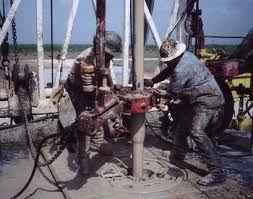
Cowboys, Cattle, and Oilwells


For over a hundred years, the discovery of oil led millions of American families just like mine to follow and work in the oilfields. It was a way of passage from rural farm life to urban industrial society. The main lure was economic opportunity. Texans, as well as citizens from other states, faced the hazards and challenges of a new life because they saw the promise of a better one for themselves and for their children.

When I began writing The Cameron Sisters series, the hero in the first book, Dalton King became a wildcatter, a man with a dream and vision of striking oil (Texas Promise-Book I-The Cameron Sisters). He'd heard of Spindletop at Beaumont, Texas, and that it ushered in the modern era of drilling. He left the Texas Rangers, and on ranch land he owned southeast of Austin, he took a chance and drilled.

Dalton King married Jo Cameron, and together they founded an empire.

Dalton's foreman was savvy Sam Deleon, a loner wandering the West, looking for work. I was so intrigued with his character I wrote Texas True, about Jo's younger sister, True Cameron. She fell in love with Sam, and wow, they have quite a story! (Texas True-Book II-The Cameron Sisters).  Sam proved to be less than honest with his new bride, but through many trials and tribulations, they do find their HEA.

I grew up on the South Plains of Texas in a small oil and cotton town just west of Lubbock. My daddy worked for an oil company, one that began with the name Standard Oil, and through numerous mergers eventually became EXXON. The strange thing is, though, he was a carpenter and that's what he did for the company. He and a crew went ahead of a "wildcat" and build "doghouses," platforms, fences, and eventually camp houses. The camp houses were identical--small but snug and much better than the tent houses families lived in.

The drive between the town we lived in and Lubbock was about twenty miles. My family--Daddy, Mother, my two sisters, and I sometimes went to Lubbock for various reasons. We'd drive back home at night and in the distance, I could see oil rigs lit up like Christmas trees. I asked Daddy, "What are those?" He said, those are wildcats. I loved that name and title, and asked him questions.

The Cameron Sisters series is being reissued with Publishing by Rebecca J. Vickery as ebooks once again, and for the first time--in print. I am very happy with these books and the lovely new covers.

Texas Promise:
After two years, Jo Cameron King’s life as a widow abruptly ends when her husband returns home to Austin. Unable to understand her angry and bitter husband, she accepts a call to travel to the New Mexico Territory to meet her dying birth father whom she knows nothing about. Her plan to escape her husband goes awry when he demands to travel with her.

Dalton King, believing lies his Texas Ranger partner tells him about Jo, seethes with hatred toward his wife. Now he must protect Jo from his partner’s twisted mind, while sorting out the truth. Jo’s bravery and loyalty convince him she’s innocent. But can they regain the love and respect they once shared?
COMING SOON
At a Governor's Ball in Austin, Texas, True Lee Cameron meets suave Sam Deleon. Before the night is out, she transforms from the coddled and protected younger sister to a woman in love. Reality crashes down when she accidentally learns he has deceived her. Daring to disobey him, she follows Sam to the oilfields and determines to live wherever he does. Has she made a mistake? Will she give up and return home where she can make her own rules?

When Sam Deleon meets the gorgeous young woman his mother has chosen for him, he fears falling in love, because he knows nothing about love. In order to carry out his mother’s plan, he marries True and moves her to his mother's home, intending to visit enough to set the plan in motion. When True fails to obey him, he faces the possibility of losing her, thereby losing his inheritance and the family property.

Sam and True attempt a reconciliation and compromise. Together, they now face a nemesis, someone who determines to thwart every action they take, endangering not only their lives, but also those whom they love.

These books are reissued by
PUBLISHING BY REBECCA J. VICKERY.
Thank you, Celia

Thursday, September 6, 2012

History of Bicycles


History of Bicycles-

Every morning I hop on my vintage Huffy bicycle and pedal to the fitness center in town. It’s a pretty ride with lots of farm fields and cows along the way. 

In the back story for my novella, An Ordinary Angel, the heroine Julianne, rode an early model bicycle through town, which caused her previous suitor to cease his courtship.

I did a bit of research to get a feel for the early history of the bicycle, which was called a velocipede at the time Julianne took her ride on the machine.

Some of the first sketches of a bicycle were made by the Italian artist and inventor Leonardo da Vinci. Crude two-wheeled vehicles propelled by the feet were popular as early as the second half of the 17th century.  In 1690 a Frenchman invented the célérifere, which consisted of a wooden beam to which the wheels were affixed. The vehicle had no handlebar; the rider sat on a cushion on the beam and propelled and steered the machine by pushing his or her feet along the ground.

The first working bicycle with a handlebar that pivoted on the frame, and enabled the front wheel to be turned, was designed by Baron Karl von Drais of Germany, in 1818. It had no pedals. He pushed himself along with his feet. Similar machines were soon developed with various improvements by inventors in France, Germany and Britain. These early versions came to be called velocipedes, from the Latin words for speed and walking.

In 1839, Kirkpatrick Macmillan, a Scottish blacksmith, added foot cranks, connected by rods to the rear wheels which allowed the rider to propel the machine with his feet off the ground.

 Later, in 1855, Ernest Michaux, of France, put rotating pedals on the front wheel of the velocipede.  The frame and wheels were made of wood. The tires were iron and the pedals were attached to the hub of the front, or driver wheel, which was slightly higher than the rear wheel.

This version was known as a boneshaker, because of its affect on the rider pedaling over rough roads or cobblestoned streets.  In 1869 solid rubber tires were mounted on steel rims and this new machine was the first to be patented under the modern name, bicycle.

In 1873, an English inventor, James Starley produced the first machine incorporating most of the features of the so-called ordinary, or high wheel bicycle. The front wheel of Starley’s bicycle was as much as three times larger in diameter than the rear wheel.

The first United States bicycles were produced after 1876 by Colonel Albert Pope of Massachusetts. They were ordinaries, with the high front wheel and a tiny rear wheel.  Few women rode due to the difficulty in mounting and riding them. They cost more than $300.00. Finally in 1885 the British introduced a bike which had equally sized tires and was driven by a chain. It was called the safety and soon replaced the ordinary, allowing women and children to take up riding in droves.

Twenty thousand people owned bicycles in 1882. That number expanded to over one million in 1893 as the entire nation fell in love with the sport.


Sources:

The writer’s Guide to Everyday Life in the 1800’s, by Marc McCutcheon, Writer’s Digest Books, Cincinnati, OH, 1993

The New Book of Knowledge, 1990 by Grolier Incorporated.

Funk & Wagnalls New Encyclopedia

Tuesday, September 4, 2012

Little Known Facts About Horses...

 
I’ve learned many things since I began writing western romance. I love learning through my work. One of the things fundamental to my western romance research has been facts about horses. Most things people already generally know these…like the word for the horse family (“equus”) comes from the Greeks. A horse’s height is measured by a “hand”…a very small hand like mine of four inches in height. When my husband and his family were rescuing the wild horse last month, I learned that a horse’s age is determined by its teeth. A female horse is known as a “mare;” a baby horse is a “foal;” a young female horse is a “filly;” the father of a horse is a “sire;” and the mother of a horse is known as a “dam.”
Here is a list of more horse facts you might not have known if you’re new to horses like me….
Equinophobia, is the fear of the horses.
 
An average horse's head weighs 11.84 pounds.

A horse's heart weighs an amazing 10 pounds.
 
A horse’s moods can be determined with the help of their nostrils, eyes and ears.
 
Horses spend more energy lying down.
 
The 1st of January is when all racehorses in the US celebrate their birthday.
 
Most foals are born at night, away from danger and prying eyes.
 
A horse’s mood mimics its owner’s emotions.
 
Horses have two blind spots; one directly in front of them, the other directly behind.
 
"Old Billy," was the oldest recorded horse; he lived to be 62.
 
I found all these great horse tidbits and more at Buzzle.com. Visit the site to learn more about horses and all their amazing traits….

*For those who are curious about the rescue horse I posted about last month, next month's blog post on the 4th will include an update on her progress. Stay tuned!

Sunday, September 2, 2012

The Longest Stage Route in the World

By Paisley Kirkpatrick
On Sunday morning, October 10, 1858, an Overland Mail stagecoach dashed along the streets of San Francisco and drew up at the Plaza. At once the shrill blast of a whistle reported the arrival of the first U.S. mail -- two bags -- over the new Butterfield route, just 23 days and 20 hours out of St. Louis. This is the longest stagecoach route the world had ever known -- the official distance being given as 2757 ½ miles. En route, the average speed was less than five miles per hour, with the fastest time, seven and a half miles, made on one stretch in California.
The San Franciscans were jubilant as their dream of closer connection with the East seemed to be coming true. They could hardly believe the recent dates on the newspapers they received were correct.
When the coach itself, behind six sweating, snorting grays, came rattling through her streets, there were horsemen sent in advance to clear a path through the surging mob. Flags were draped from crowded windows and flying from congested rooftops while the driver nodded a response to the shrieking, whistling riot with all the dignity of a field marshal. Cannon and brass bands boomed together, 'stovepipes' crushed between tramping boots in a howling stream of color that flooded the plaza. Then a mass meeting jammed the Music Hall in honor of 'a new epoch' and 'the end of the steamship monopoly.'
Up to this time, mail had reached the Pacific Coast mainly via Panama, on Pacific Mail steamers.
Communication was slow and very irregular; in fact, six weeks passed before Californians received the glad news that their state had been admitted into the Union on September 9, 1850.
January-February, 1956 issue of True West, Posted by M. R. Krythe