Showing posts with label one room schoolhouse. Show all posts

Thursday, January 28, 2021

TEACHING WAS MUCH DIFFERENT BACK THEN

 Growing up, I discovered a love of pen and paper early. It was a really strange love for it in which I exulted in the actual smell of a new ream of paper or a box of pencil erasers just after it had been opened. At that time, I knew I enjoyed making up little stories for characters I liked to draw on paper, but I didn't quite understand my fascination with paper and other school supplies itself until I became a serious writer later in life. But back to those early days . . . My father was a 5th-grade teacher. Every summer I enjoyed going down to his classroom with him and setting up desks, getting school supplies ready (those were the days when the schools supplied everything), and putting up some nice bulletin boards. Everything had to be done just so, which was a little tedious, but it also showed me how much my dad cared about his students and wanted them to have the best year possible.


At that time, I also thought that I wanted to become a teacher when I grew up. I carried an ideal in my head of teaching writing and literature, mathematics, some art and music, and having a perfectly running classroom much like having a well-oiled machine. Little did I know how difficult it was to actually teach. Students could become unruly at times, and teachers often find themselves in the middle of their students' parents and their administrators' desires. It's a difficult profession made even more difficult by these outside factors as well as increasingly stringent expectations that come from state legislators as well. Even though my desire to teach school didn't last beyond earning my teaching degree (which I did in 1999), I still have a profound respect for teachers and all the pressures they have to deal with. I often think that I may have enjoyed being a teacher in the 1800s more.


But would I have, really? Teachers back then didn't have it any easier, though life was much different. Every morning the classroom had to be swept and a fire lit before the children arrived. Other janitorial duties were to be performed weekly. In rural communities, school often took place in one room, which sometimes was a church building or other building that was designated for multiple purposes. The teacher was expected to teach a range of age groups as well as a range of subjects that I'm not sure I would have done well at. There were no cars to drive up to the school building in. Everyone either walked or rode a horse to school, often in freezing temperatures. Since parents had to pay for their children's education, arrangements were made for the teacher to live with each family for a short time and rotate around in that fashion. Not every home provided decent accommodations.


Female teachers couldn't be married, and there were even strict guidelines for her social outings. She was expected to be a moral compass not only for her students, but for the entire community. Here is an example of the kind of conduct that was expected of a teacher.


Here is a puzzle that you might enjoy putting together which I created from a picture I took of what I believe is an older schoolhouse (or probably a rebuilt one) in a small town in Illinois when I visited the state in 2015. 

 https://www.jigsawplanet.com/?rc=play&pid=1aff4050681d


Also, the picture below depicts the inside of a replica of a one-room schoolhouse that exists at an environmental learning center in my area. This is a place that several students from various schools visited before COVID-19 on field trips to learn about animal habits, fossils, and more. I went with my youngest son on his field trip and we enjoyed learning about the footprints that various animals in our area leave on the ground. The children were able to use these rubber stamps to make animal prints on paper. What a terrific activity!


I really do appreciate all the hard work that teachers put into their profession. It is clearly not for the pay that they do it, but for the love of learning and love of the children.


In my current work in progress, Ariana Stover is a teacher in rural Oregon. She has been through some harrowing events in her younger years, but has overcome them admirably, and those events have shaped her character. When an unruly twelve-year-old boy's father abandons him, and motivated by those events from her younger years, Ariana volunteers to take the boy into her care and help him become a better contributing member of society. The sheriff of Hope Hollow, Ben Tolleson, isn't one to tolerate nonsense, however, and is keeping a close eye on the situation. He and Ariana butt heads for a while, but eventually they'll come to an agreement on the best way to handle Billy. One complication that neither of them foresees, however, is when Billy's much older half-brother steps into the picture. Will their uneasy truce disintegrate, or will Ben and Ariana's fledgling relationship come out stronger in the end?
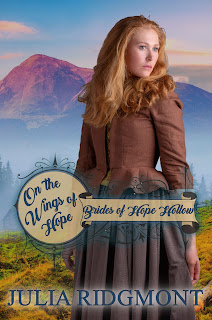


On the Wings of Hope is scheduled to release on February 12, 2021. Don't miss this exciting continuation in the Brides of Hope Hollow series! And if you didn't get a chance to read the previous books yet, they will be temporarily marked down during that week, so keep an eye out for some great deals!


Here's the preorder link for On the Wings of Hope:  https://amzn.to/3b3iWbq


Reserve your copy today!


Saturday, August 24, 2019

GO WEST YOUNG WOMAN, GO WEST! by Marisa Masterson


Late Nineteenth Century Classroom


You don't need training. You don't need materials. Wyoming needs you.

That seems to be the idea after 1870 in Wyoming. The area had been a territory for a year and already people in every small town and even rural areas wanted  a school for their children. In fact, Wyoming passed a law requiring every child between the ages of seven and sixteen to attend school at least three months each year.
Rollins House, used in 1869 by the legislature.

To help attract both settlers and teachers, lawmakers met in 1869 and passed a resolution that granted women the right to vote. They also guaranteed female teachers the same salary as male educators. While those salaries were meager, at least opportunities for women to be independent existed in that state.

Women voting in Cheyenne, WY 1888
photo titled "Fairly Determined"
What most interested me about teaching in Wyoming at this time was the teacher convention. Each year, teachers banded together to put on teacher institutes. They'd share ideas which they'd learned would work in the classroom. It didn't end there, though, They explored new methods being used back East. Even if some of these teachers were poorly trained before coming to Wyoming, other educators helped them in this way to become better at their new craft.

By 1870, females experienced another first in Wyoming. The first women ever to sit on a jury did so in Wyoming. The judge praised women jurors as being more honest, I found in my research. Unfortunately, the practice didn't continue and women would wait decades to become jurors again. Remember that the next time you get a jury summons if you're female. It's a fairly new privilege for women.

One more thing. If you'd like to learn more about the Wyoming schoolhouse of yesteryear, there's a fantastic video available--https://www.youtube.com/watch?v=VK_tILS_WGc


In my newest novel, the heroine is returning from the annual teacher institute. With a new name, she's fled west to teach in a small town. How could she anticipate her past following her that far?
Errol Marsden wandered for years, taking his cobbler's wagon from town to town fixing shoes. His heart broke with the sudden death of his young wife almost four years before. He's shocked to glimpse her on a street in Fort Bridger and follows her to Belle.
Will he get the answers he needs to understand why she faked her death? When the couple is drawn into a mystery surrounding the disappearance of Grace's aunt, will they work together or let old lies stand in their way?


This is a sweet, American western historical romance and mystery. Each story in this collection stands alone, though common events and characters appear in the novels.

https://www.amazon.com/dp/B07TSG28HM


Tuesday, April 4, 2017

READING, 'RITING and 'RITHMETIC by Cheri Kay Clifton

Some of us may recall hearing the historic American song, “School Days.” The song was written in 1907 by Will Cobb and Gus Edwards. It was about a mature couple reminiscing about their childhood together in primary school. Best known part of the song was the chorus.
School days, school days
Dear old Golden Rule days
‘Reading and ‘riting and ‘rithmetic
Taught to the tune of the hick’ry stick
You were my queen in calico
I was your bashful, barefoot beau
And you wrote on my slate, “I love you, Joe”
When we were a couple o’ kids.

 So … what were “school days” like back in the 1800’s?
First of all, children had to walk to school, usually a distance somewhere between two to five miles. No yellow school buses, no car-pooling back then. And no paved roads. Up bright and early, they did their morning chores, then cut through the woods and fields and walked along wagon trails. A few may have been fortunate enough to ride a horse. No school cancellations for bad weather, they trudged through rain and snow.


Like some of us saw on the TV show, “Little House on the Prairie,” schoolhouses consisted of one room, usually about 20 feet by 30 feet. Two things were fairly consistent in the room: a large slate blackboard at the front and a pot-bellied stove in the center.


Most schools provided kindergarten through eighth grade. The kindergarteners were called, “abecedarians.” Pronounced, “ay-bee-see-dair-ee-uns,” it means what it sounds like … they were taught their ABC’s.

Teachers were both male known as schoolmasters and female known as schoolmarms. If a female teacher married, she was expected to quit teaching since her job then would be to take care of her household and husband. In the mid 1800’s, female teachers were paid anywhere from $14 to $24 a month, with the men earning sometimes twice that amount.
The school year was much shorter back then. When the Department of Education first began gathering data on the subject in 1869 school year, students attended school for about 132 days (standard year these days is 180). In rural communities, the amount of days often depended on when they were needed to help their families harvest crops.
When the children heard the school bell ring, they would enter by separate doors, one door for the girls and one for the boys. They sat on separate sides of the room too, often the younger at the front of the classroom and the older sat at the back. Enrollment could be as large as 30 or as small as 4.
The children had one hour off from 12:00 to 1:00 p.m. to eat and play. They brought their “dinners” from home in baskets or metal pails. Their only drink was water from a bucket that the bigger boys filled from the well or nearby river many times each day. They all drank from the same tin cup or dipper. A second bucket of water would be kept in the room for washing hands.
Wooden outhouses were in the back of the school, often separate for boys and girls. They were known as privies, meaning private, or the necessary.

In the 19th century, paper was too expensive for everyday lessons, so schoolchildren wrote on slates, personal-sized blackboards. Slate is a black type of rock that was cut into thin sheets, ground smooth, and then set into wooden frames.
Slate pencils made of clay, or a softer kind of slate, were ground into cylinders and used to write on the slates. In the U.S., slate pencils were manufactured at least as early as 1844 and at least as late as the 1910’s. Students wiped away their work with a rag after it was checked by the teacher.

In response to the great wave of immigrant children in the schools, efforts were made to Americanize students through flag rituals, national symbols in the classes, English language lessons, civic lessons, and patriotic songs and theatrical performances. Some slate pencils from the 1880’s were wrapped with American flag-themed paper. They showed the Americanization practices used through the school supplies of the period.

Paper was used mainly for penmanship. Until the 1840’s scholars practiced with ink and quills (goose feathers). When quill tips broke, they would sharpen the quills with a “pen knife.” Later, scholars practiced with steel tipped pens that they dipped into ink bottles.
1800’s schoolhouse chalk boards were just a slab of board or slate painted black. Rocks were used to write on the boards, but they created scratches and indents in the boards so many teachers decided it was best to switch to a new invention called “chalk”. Today we have many colors of chalk. Back then all they had was white chalk, made from limestone.


Reading, good penmanship, and arithmetic, were stressed more than the other subjects. These subjects have been referred to as the Three Rs of education– Reading, ‘Riting, and ‘Rithmetic. By adding recitation, an important element of the reading lesson, teachers would sometimes call it the Four Rs. With the scarcity of books and paper, much memorization and oral drilling took place. Students would learn by “rote,” which meant to memorize and recite. To “cipher” meant to do arithmetic problems, either orally or on slate boards. To “parse sentences” meant to explain the meaning and function of each word in a sentence, a precursor to diagramming sentences in the twentieth century.

While learning was taking place, good behavior and strict discipline were enforced. Teachers punished those who misbehaved or did not abide by the rules.

At the end of the school year, children took an oral exam covering spelling and arithmetic problems, and answered questions on many subjects. This helped the teacher determine the next year’s level of study for each student.
One-room schoolhouses remained the backbone of American education for more than 200 years. By the time of World War II, the era was waning and the little schools were closed as a trend toward consolidation began. Most of the early structures have since been demolished, with some converted into small museums.