Showing posts with label camels. Show all posts

Sunday, March 26, 2017

CAMELS IN THE WEST


Due to my daughter’s surgeries (her fifth on her right femur last week and the sixth scheduled for tomorrow) I am caught unprepared and am recycling the first post ever to appear in Sweethearts of the West. As a giveaway, I will give an e-copy of the first book I had published, BE MY GUEST.

Since I live in, write about, and love Texas, you won’t be surprised to learn that today’s post involves Texas and Southwest history. If you saw the 1976 family comedy “Hawmps!,” then you already know that the U.S. Government experimented with the effectiveness of camels in the desert West. The movie was hilarious, but loosely based on fact.


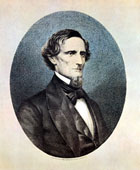
Jefferson Davis
Secretary of War in 1855

In 1855, the U.S. Congress, at the urging of Secretary of War Jefferson Davis, authorized the importation of camels and dromedaries to be used for military purposes and earmarked thirty thousand dollars for the experiment. Davis, a veteran of the war with Mexico, had seen considerable service in the Desert Southwest. Keenly aware of the role that camels had played over the centuries in the warfare of other nations, he believed that the strange beasts could be put to use in the United States as well.

Major Henry C. Wayne and Lieutenant David D. Porter departed for North Africa, where they were met by a third American, Gwinn Harris Heap, whose father had been the U.S. consul to Tunis for a number of years. They acquired thirty-three camels before departing for home in February 1856. Native camel drivers accompanied the camels and dromedaries.

The ocean voyage from the Mediterranean, through the Strait of Gibraltar, and across the Atlantic was been uneventful considering the fragile cargo. On May 14, 1856, the camels came ashore at Indianola, Texas. Ten acres of land had been set aside for them and a two-hundred-foot-long shed had been built to house them. Major Wayne decided first to acclimate the camels to the intense humidity of the Gulf Coast by letting them rest in a large corral.

Writing to Secretary of War Jefferson Davis, Navy Lieutenant Porter said, “We have lost on the voyage but one of those we purchased…and she died from no want of care, but because she was unable to produce her young one…We still have more than we started with, some young ones having been born on the passage, and are in fine condition. All the other camels I am happy to say have not received a scratch…They are looking a little shabby just now, most of them shedding their hair…but they are fat and in good health.


Three weeks later, the animals began first leg of the trip that would take them to San Antonio, Texas, on to El Paso, Albuquerque, and across the arid Southwest all the way to Fort Tejon, California. The camels performed extremely well. Capable of carrying loads of up to twelve hundred pounds—larger than a horse or mule could carry—the beasts lumbered along at a slow but steady pace.

A monument in Quartzite, Arizona pays tribute to chief camel driver, Hajid Ali, called Hi Jolly. After the camel experiment failed, he used some of the released camels to conduct a freight business. Later he married and worked in Quartzite. The monument is at his last campsite. At his death, he believed small families of camels still roamed in remote areas of the Southwest.

The great camel experiment eventually failed. With the advent of the Civil War, the personnel at Union garrisons in the Southwest scattered before the advancing Confederates. Some of the imported animals were set free and some were kept in captivity. The last known survivor died in a Los Angeles zoo in 1934. However, even today people occasionally tell tales of seeing lone camels in remote corners of the Southwest.


My giveaway is an e-copy of BE MY GUEST or another of my books if the winner prefers.


Note: Most of this info was gleaned from an article in his book IT HAPPENED IN TEXAS, by James A. Crutchfield, 1996, Two Dot Press, Helena, Montana.

Wednesday, April 24, 2013

Camels in the West


Camels in the West

www.laurirobinson.blogspot.com


Evenings around our house often consist of my husband surfing channels on the TV from the couch and me writing on my laptop in the recliner. A few nights ago, he stopped on a ‘documentary’ that caught my attention. 

Before the Civil War, the army, while trying to create a supply route from Texas to California, imported several camels, believing the animals would fare and perform better than mules and horses. The plan didn’t work as well as they hoped. It turned out the camels were unruly and rather nasty, and many of the men were afraid of them. 

When the War broke out, the army men in Texas released the camels and relocated to the East. For years, people claimed to see a strange red beast carrying a headless rider on its back. Several events kept the story alive. A woman, home alone, was found trampled to death and huge, unidentifiable hoof prints surrounded her body as well as clumps of strange red hair. Others found such evidence too, miners awaken by strange noises, would discover red hair and huge hoof prints in the morning, and still more claimed to see the beast on the horizon. 

Eventually a farmer shot the beast which turned out to be a camel. It still wore a military saddle that was said to have frayed ropes indicating something had been tied in the saddle at one time. The show went on to claim that years before an army man had been tied into his saddle while learning to ride one of the camels and lost control of the mount. Others pursued the animal, but to no avail and eventually had to give up. It was assumed the man died from thirst/hunger while strapped on the animal’s back and his corpse remained atop the camel until decaying enough to fall off. 

No, I don’t have a camel in one of my upcoming stories, I just found the story unusual enough to repeat. 


Wednesday, September 15, 2010

Camels in the United States West

Only known surviving photo of
the U.S. Camel Corp
Since I live in, write about, and love Texas, you won’t be surprised to learn that today’s post involves Texas history. If you saw the movie years ago called "Hawmps!" then you already know that the U.S. Government experimented with the effectiveness of camels in the desert West. Although the movie is listed under "turkeys" in the movie guide, my family liked it. Yes, our tastes run to lighter, less serious subjects with happy endings. The movie was even loosely based on fact.


In 1855, the U.S. Congress, at the urging of Secretary of War Jefferson Davis, authorized the importation of camels and dromedaries to be used for military purposes and earmarked thirty thousand dollars for the experiment. Davis, a veteran of the war with Mexico, had seen considerable service in the Desert Southwest. Keenly aware of the role that camels had played over the centuries in the warfare of other nations, he believed that the strange beasts could be put to use in the United States as well.

Major Henry C. Wayne and Lieutenant David D. Porter departed for North Africa, where they were met by a third American, Gwinn Harris Heap, whose father had been the U.S. consul to Tunis for a number of years. They acquired thirty-three camels before departing for home in February 1856.


Camels and Dromedaries
were imported

The ocean voyage from the Mediterranean, through the Strait of Gibraltar, and across the Atlantic was  uneventful considering the fragile cargo. On May 14, 1856, the camels came ashore at Indianola, Texas. Ten acres of land had been set aside for them and a two-hundred-foot-long shed had been built to house them. Major Wayne decided first to acclimate the camels to the intense humidity of the Gulf Coast by letting them rest in a large corral.


Writing to Secretary of War Jefferson Davis, Navy Lieutenant Porter said, "We have lost on the voyage but one of those we purchased…and she died from no want of care, but because she was unable to produce her young one…We still have more than we started with, some young ones having been born on the passage, and are in fine condition. All the other camels I am happy to say have not received a scratch…They are looking a little shabby just now, most of them shedding their hair…but they are fat and in good health.

Three weeks later, the animals began first leg of the trip that would take them to San Antonio, Texas, on to El Paso, Albuquerque, and across the arid Southwest all the way to Fort Tejon, California. The camels performed extremely well. Capable of carrying loads of up to twelve hundred pounds—larger than a horse or mule could carry—the beasts lumbered along at a slow but steady pace.
The geat camel experiment eventually failed. With the advent of the Civil War, the personnel at Union garrisons in the Southwest scattered before the advancing Confederates. Some of the imported animals were set free and some were kept in captivity.

Hajid Ali's monument
A monument in Quartzite, Arizona pays tribute to chief camel driver, Hajid Ali, called Hi Jolly. After the camel experiment failed, he used some of the released camels to conduct a freight business. Later he married and worked in Quartzite. The monuement is at his last campsite. At his death, he believed small families of camels still roamed in remote areas of the Southwest.

The last known camel corp survivor died in a Los Angeles zoo in 1934. However, even today people occasionally tell tales of seeing lone camels in remote corners of the Southwest.


Note: Portions of this info was gleaned from an article in the book IT HAPPENED IN TEXAS, by James A. Crutchfield, 1996,Two Dot Press, Helena, Montana.

Caroline Clemmons is the author of historical and contemporary books set in the Southwest. http://www.carolineclemmons.com/