Showing posts with label Shirleen Davies. Show all posts

Wednesday, August 14, 2019

THE BLACKFOOT AND CROW OF MONTANA BY SHIRLEEN DAVIES


The Blackfoot and the Crow were two tribes of Montana whose lands overlapped. Both play a significant role in book six, Promise Trail, from my Redemption Mountain historical western romance series.
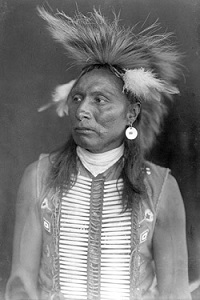
Blackfoot with bone chestplate.
The Crow, sometimes we're referred to as the “Crow Nation” derived their name from their own native word, Aspalooke (opp-sah-loh-kay), which literally means “children of a long-beaked bird.” The French translated this as “People of The Crow.”

The Blackfoot Tribe, or sometimes “The Blackfoot Confederacy,” trace their roots to lands near Alberta, Canada. Their territory stretched all the way to the Yellowstone River of Montana. They were united by a common language, and originally carried the name Niitsitapi, literally translated as, “the original people.”

Although tradition made them enemies, each tribe had many similarities. Both were nomadic hunter-gatherers, lived in tipis, were expert horsemen, and hunted buffalo.
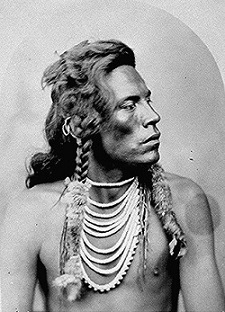
Crow brave.

Spirituality was important to both tribes, each embracing a mystical, earth-based religion. Both tribes believed everything in nature—plants, trees, rivers, mountains, and rocks—had a spirit. Crow and Blackfoot men used sacred sweat lodges to breathe in the steam from the sacred rocks, allowing mother earth to draw negative energy and toxins from their bodies and spirits.  The men emerged sweaty and virile, cleansed and rejuvenated.

Appearance was important to the Crow. Men never cut their sleek, beautiful hair. It flowed from their broad warrior shoulders past their muscled chests and flat stomachs to their powerful thighs and calves, and down to their feet. Oiled with bear’s grease, their long hair shined like raven feathers. When hunting or fighting, they’d pull the long tresses into a bun.
Crow chief.

Crow men took great pride in their dress, wearing opulent sun-bleached buffalo robes which were a brighter white and finer than those of other tribes.

The Crow were generally a friendly people, even towards the white settlers, securing them a sizable reservation in Montana. Their main food source came in the form of American Bison, which they hunted with impressive efficiency and innovation. They also used the bison skins for clothing in the winter and for their traditional shelters, the tipi and skin lodge.  Their main form of transport came from horses, which they learned to breed and train.

Crow women played an important role in society and were well regarded, evidenced by the fact that when a couple married it was always the man who moved into her home and never the other way around.
Blackfoot woman with child.

The Blackfoot were named that by French fur traders who watched them walk through a prairie fire, noticing the black bottoms of their moccasins. The name the Blackfoot called themselves means Lords of the Plains. And their plains, the majestic Blackfoot territory, held more buffalo per square mile than anywhere else in the northern lands.

Four northwestern plains tribes made up the Blackfoot Confederacy: the North Piegan, the South Piegan, the Blood, and the Siksika tribes. They shared the same language and culture, had treaties of mutual defense, gathered for ceremonial rituals, and freely intermarried.

These handsome lords of the plains fashioned their flowing hair into three long braids with a topknot or pompadour. The women wore their hair loose or in two long, thick braids.
Blackfoot chief Big Mouth.

A war-like people, the Blackfoot granted a great deal of honor and tribal esteem to members who committed brave and heroic deeds. They played a significant role in the Indian wars.

Thank you for reading the post. I’d love to hear your insights or comments about the Crow and Blackfoot people.

Promise Trail, book six in the Redemption Mountain historical western romance series, includes scenes about the Blackfoot and Crow tribes, and is available at most online retailers.


Please take a moment to sign up for my Newsletter and Follow Me on:


Thursday, February 14, 2019

VALENTINE'S DAY IN THE 19TH CENTURY

By Shirleen Davies

Valentine Day was celebrated in the 19th century with parties, balls, (including bachelor balls), and by sending valentine cards.

Mother of the American Valentine
The tradition of valentine cards in the US began with The Mother of the American Valentine, Esther Howland of Worchester Massachusetts, when she received a valentine from a friend in England in 1849. It was bordered in lace paper and colorful cut flowers were pasted on it. A small pocket of green paper in the middle held a small red-edged note of Valentine Day sentiments. She loved it, but she also thought she could make a better one. Esther created a dozen designs she gave to her brother to use as samples to try to get orders for them on the sales trip he made for their family stationery business. He returned with five thousand dollars’ worth of orders for valentines.
Esther Howland, Mother of Valentine's Day

Esther needed a lot of help to make all those cards, so she called her friends over and they worked like a team. One cut out the pictures her father purchased from the only lithographer in the country, another created the backgrounds for the valentines, one wrote the messages, and so on. Each friend did some sort of work on them until all the orders were completed. The next year the orders for valentines more than doubled. Esther hired lots of women to make the cards and Worcester, Massachusetts became the center of the budding American Valentine Day business.

Nineteenth-century valentine cards were more than sweet words and lovely pictures. People touched, held, and interacted with them due to the elaborate assembly of sumptuous textures and interactive features, such as flaps that lifted revealing hidden romanticisms like "Be Mine". So, the feelings evoked in the recipients from the loving sentiments of the cards were heightened even more from touching and feeling the materials.
An essential trait of valentine cards was that they were made to be significantly handled by the receiver. In the mid-nineteenth century, valentine cards invited multiple interactions from the people they were given to. Some had pull levers or strings that revealed hidden images. Others were much more intricate, like the Beehive valentines that you'd pull out and extend to uncover a romantic image beneath. More complex than simply lifting a flap to reveal a picture, the webbing of the cut paper compelled the receiver to move around to look at the image and peer through the spaces in the paper, similar to the way perforated paper lace partially blocked images on other types of valentines.
Civil War era Valentine.

During the Civil War people weren’t able to exchange cards that much but when it ended in 1865, the popularity of valentine cards surged. That year, New Yorkers mailed over 66,000 valentines and more than 86,000 in 1866. The valentine card tradition had blossomed into a lucrative commercial industry.

Whitney Valentines
In 1881, Esther had to take care of her sick father full time, and to do so she had to sell her business to an associate, Stationer George C. Whitney, also in Worcester, Massachusetts. Whitney designed many of his company's cards based on Esther's model.
19th Century die-cut.

During the 1880s lots of articles were publicized about the Whitney Manufacturing Company’s valentine-making process, including:

·       The use of German scrap and English embossed paper
·       The skills of their young female card makers. 
·       How the valentines were sold and distributed by salesmen going from town to town taking orders from shop owners
·       And about Whitney’s seasonal shops, which allowed customers to buy directly.  

And, here is an expert of a February 1867 New York Times article about how exorbitantly expensive some of the valentine cards were, revealing that the costliest held hidden treasures within.

"Valentines of this class are not simply combinations of paper gorgeously gilded, carefully embossed and elaborately laced. To be sure they show paper lovers seated in paper grottoes, under paper roses, ambushed by paper cupids, and indulging in the luxury of paper kisses; but they also show something more attractive than these paper delights to the overjoyed receiver. Receptacles cunningly prepared may hide watches or other jewelry, and, of course, there is no limit to the lengths to which wealthy and foolish lovers may go."

However, for the Whitney factory workers who assembled the valentines by hand (all of the assemblers were women) it was hard work, and seasonal only. They were paid by the piece and made about $12.00 a week. Here is an excerpt from one of the employees, Marion Owens—Valentine Maker, in her own words. She worked on the 4th floor of the George C. Whitney building in 1895.  
1890 Valentine

“When I was hired, they only trained me for half an hour. A woman showed me what to do--how to cut out tags which were all different sizes, how to put the cards in the envelope so that the face of the card showed through the little cellophane window--and then I just had to work my fingers until they got used to it.”

Other Popular Valentine Cards
Kate Greenaway the legendary British illustrator of children’s books designed valentines in the late 1800s which were enormously popular. Some of Greenaway’s illustrations for valentine cards were collected in a book published in 1876, "Quiver of Love: A Collection of Valentines."

Most Valentines were reasonably priced and created for a large, broad audience. In fact, for several years in the late 1800's humorous valentines, intended as jokes, were popular. Among these satirical valentines, vinegar valentines were a favorite—offering a socially acceptable way to criticize, insult, and reject certain types of people. 

Valentine Candy
Richard Cadbury invented the first Valentine's Day candy box in 1861 in England. In America, in 1907, Milton Hershey launched tear-dropped shaped “kisses,” so-called because of the smooching noise the chocolate made.  In 1866, Daniel Chase the brother of Oliver Chase, the creator of NECCO wafers figured out how to print words on candy.  People loved his conversation candies with witty romantic messages, but they weren’t available in heart shapes until 1902.

Please take a moment to check out my new release, Bay’s Desire, book 9 in the MacLarens of Boundary Mountain Historical Western Romance series. Available now!


Please take a moment to sign up for my Newsletter and Follow Me on:

Saturday, July 14, 2018

FEMALE SPIES OF THE CIVIL WAR

By Shirleen Davies
Female Spies of the Civil War

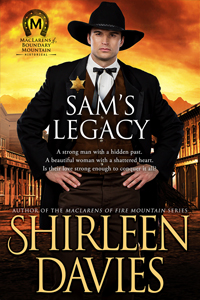
I first started researching female spies when writing Sam’s Legacy, book 4 in my MacLarens of Boundary Mountain series. The subject was so fascinating, I decided it deserved a blog post of its own.

During the turbulent, bloody years of the Civil War, 1861 to 1865, hundreds of daring ladies risked their lives as spies. Here are a few of their stories.

Rose O'Neal Greenhow
Confederate spy, Rose O'Neal Greenhow, nicknamed Wild Rose, was a darling of Washington, D.C. society. As a charming hostess to politicians and diplomats, she made a great spy and became the ringleader of a network of anti-Union spies, who forwarded coded messages. Rose even hid one message in her courier’s hair. This intel enabled Gen. P.G.T. Beauregard to gather enough forces to win the First Battle of Bull Run.
Rose O'Neal Greenhow

In 1861, Allan Pinkerton, who was head of the secret service, raided Rose’s home and held her and her eight-year-old daughter, little Rose, under house arrest. Later, Rose went to prison, but after her release in 1862, Jefferson Davis sent her on a diplomatic mission to Europe. While there, Rose not only charmed Napoleon III and Queen Victoria, she became engaged to a British aristocrat, and also published her memoirs.

As she sailed back to America in 1864, Rose's ship encountered Union forces and her boat went down off the coast of North Carolina. She tried to escape in a rowboat but it was weighed down by gold for the Confederate treasury. Rose drowned when her lifeboat capsized.

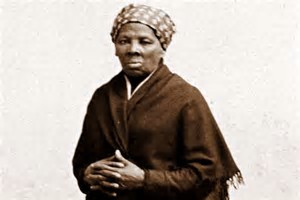
Harriet Tubman
Union spy, Harriet Tubman started an espionage ring of former slaves, who sneaked behind Confederate lines, posing as servants or slaves to gather military intelligence. Tubman was also the first woman in US history to lead a military expedition.  In 1863 Tubman and several hundred black soldiers traveled upriver in gunboats, destroyed a Confederate supply depot, and freed over 750 slaves.
Harriet Tubman
Later, Tubman was a key figure in the suffrage movement. Tubman tried to collect $1,800 for her spy services but the government only paid her $20 a month.

Pauline Cushman
Pauline Cushman was the stage name of actress Harriot Wood, who became a Union spy. In 1863, while she was on tour in Kentucky, some Confederate officers dared her to interrupt her show to toast Jefferson Davis and the Confederacy. Pauline contacted the Union’s local provost marshal and offered to perform the toast as a type of initiation for spying for the Union. The marshal agreed.

Pauline gathered intel on enemy operations, identified Confederate spies and served as a federal courier before she was caught with General Braxton Bragg’s battle plans tucked in her shoe. Pauline was sentenced to hang but was saved by the arrival of Union forces at Shelbyville. She received commendations and the rank of Brevet-Major from President Lincoln and James Garfield, a Union general at the time.

After the war, Pauline returned to her acting career, performing monologues on her exploits during the war.

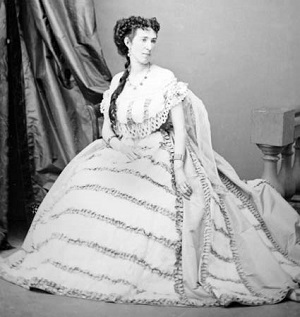
Belle Boyd
Belle Boyd

Confederate spy, Belle Boyd was born to a prominent Virginia family in 1843. At the age of 17, she was arrested for shooting a drunken Union soldier who broke into her family home and insulted her mother, but she was cleared of all charges. Belle used her beauty and charm to beguile union officers into divulging information she then passed on to the Confederacy. To put a stop to her covert activities, Union officials sent Belle to live with relatives in Front Royal, Virginia in a hotel taken over by Union officers. She eavesdropped on the officer’s meetings through a hole in a door. The intel she provided enabled Stonewall Jackson to win battles in the Shenandoah Valley Campaign of 1862.

Belle was arrested by Union forces and sent to Old Capitol Prison, but she was released a month later and was deported to Richmond. Soon, she was caught behind federal lines and imprisoned for three more months. Belle then tried to sail for England in 1864 to serve as a Confederate courier, but she was intercepted by Union naval officer, Samuel Hardinge, who fell in love with the alluring spy. He helped her escape to London, where they wed, but he died shortly afterward. Belle remained in England to compose her memoirs and launch a successful acting career. She later returned to America, where she continued acting, married twice more, and delivered lectures across the country on her clandestine experiences.

Elizabeth Van Lew
Union spy, Elizabeth Van Lew, was raised in a wealthy slave-holding family in Richmond, Virginia. She developed strong abolitionist sympathies after attending a Quaker school in Philadelphia. When her father died in 1843, Elizabeth convinced her brother to free their slaves. When war broke out, Elizabeth and her mother visited Union prisoners of war in Richmond’s Libby Prison. She helped men escape, smuggled letters for them, and gathered valuable information about Confederate strategy from both prisoners and guards.

Elizabeth Van Lew
In late 1863, Union General Benjamin Butler recruited Elizabeth as a spy. She ran an entire espionage network based in Richmond. With the help of her servants, Elizabeth sent coded messages using invisible ink and hid the dispatches in hollowed-out eggs and vegetables. When the war ended, General Ulysses S. Grant appointed Elizabeth postmaster of Richmond. She had spent her family’s entire wealth on espionage activities, so the family of a Union officer she’d assisted during the war, the grandson of Paul Revere, provided for her until her death.

Antonia Ford
Confederate spy, Antonia Ford, was born to a wealthy Virginia family. At 23, Antonia gathered information from Union soldiers occupying her hometown. She provided intel to Confederate general J.E.B. Stuart, who rewarded Antonia with an honorary commission as aide-de-camp. 

In 1863, Antonia was accused of spying for John Singleton Mosby, whose rangers captured Union General Edwin H. Stoughton in his headquarters. The Secret Service suspected that Antonia was involved in planning the attack because she and Stoughton had spent time together. The Secret Service sent a female operative, pretending to be a Confederate sympathizer, to meet with Antonia, who showed her Stuart’s commission. Antonia was arrested and they found smuggled papers on her.

After several months in prison, Antonia was released due to the petition of Union Major Joseph C. Willard—one of her captors. Willard resigned from the Union Army and married Antonia, who took an oath of allegiance to the United States. The couple’s son, Joseph Edward Willard, later became lieutenant governor of Virginia and the US ambassador to Spain.

Sam’s Legacy, book 4 in the MacLarens of Boundary Mountain series is available at these online retailers.


Comment on this post below!


Follow Me: 
Amazon | BookBub