Showing posts with label Harlequin American. Show all posts

Tuesday, April 26, 2011

LAURI ROBINSON LOVES THE WEST AND COWBOYS!

Don’t you just love the name of this blog—Sweethearts of the West?
Lauri Robinson
I do, and I’m so honored to be a guest blogger today. I have several historical western romances on the market with The Wild Rose Press and a few with Harlequin in their Undone line, and I’m often asked why I write westerns. To me it’s simple, I love the old west. I didn’t watch Bonanza and Gunsmoke because that’s what was on. I watched them because that’s what I wanted to watch. I credit John Wayne for making the western movie an American classic, and still get excited when I hear of a new western movie in the making.
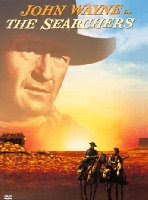
Other countries had their illustrious times, their famed heroes, and rough and wild eras, but only America can claim the ‘Old West.’ Where men were bold and women tough. The land west of the Mississippi promised change, wonder, beauty and riches, and men and women flocked to catch a piece of those promises. Gold Rushes. Land Runs. Cattle Drives. The Railroad Boom. Wagon Trains.

These were times of great changes, massive fortunes, and catastrophes. People thrived, set down roots and created communities that went well beyond kindred souls. Dreams came true and new professions were created.

Cattle Drive
 The most iconic of those is probably the American Cowboy, which came about after the Civil War, when the shortage of beef in the northern states gave some enterprising southerners, mainly Texans, the idea of moving their cattle north. Their plan was to drive their cattle to the closest railroads, namely Kansas, and from there ship beef across the nation. The plan worked. (Texas cattle drives had started before the war, but on a smaller scale and stopped completely during the war since there was no profit in it.)

The cowboy is often portrayed as a lanky, handsome, rugged, a little risky, but sexy and loveable man who didn’t need the law to tell him right from wrong. Instinct told him. He had a heart of gold, and wouldn’t allow anyone or thing to be mistreated. The six-shooter hanging off his hip was his best friend, right next to his horse, and the woman he loved was the luckiest lady around.

I, for one, am in awe of all the men and women who journeyed west. Those strong, fiery souls, full of pioneer spirit and dreams, who believed. Believed in themselves.

Can you imagine leaving everything behind to forge your way through unknown and uncivilized territory? I honestly don’t know that I have it in me. I like knowing where my next meal will come from and that I’ll have a roof over my head each night, but I love reading about these people, and writing about them. To create new characters, tell the tales of them embarking on fascinating journeys, and finding their happily-ever-after is my dream come true.
Now Available

On April 1st, the fifth book in my Quinter Brides series, WILDCAT BRIDE was released by The Wild Rose Press. Mixed Book Bag had this to say about the series: "Lauri Robinson writes wonderful romantic stories and WILDCAT BRIDE is no exception. Her well-drawn characters are people you would invite into your homes and your hearts. They face challenges with grace and humor, are loyal to a fault, admit their mistakes and act out of love. The villains get their just desserts and the good guys come out on top."


Coming May 2011
 My next release will be Nights with the Outlaw on May 1st, a Harlequin Undone. Here’s the blurb:

Nebraska, 1885Outlaw Clint Turnquist is on a mission—one that doesn’t involve falling in love. His freedom hinges on tracking down his former gang, but he can’t resist Doreena Buckman’s plea to help protect her ranch from the strangers watching her property. Bold and beautiful, she tempts Clint with both her body and her promise of a fresh start. But even with his past standing between them, denying the urge to kiss her may take more discipline than he has...

For additional information on my books and releases, feel free to stop by www.laurirobinson.blogspot.com

Thanks so much to the wonderful Sweethearts of the West for inviting me over today. They are great gals, and I’ve enjoyed many of their books.

Cheers, Ladies.

Thanks to the very gracious and writer extraordinairre, Lauri Robinson, for stepping in as guest on short notice. Lauri, we hope you'll be back soon!

Saturday, March 19, 2011

FRONTIER LIFE--SIMILARITIES BETWEEN AUSTRALIA AND AMERICA

Posted by guest, Margaret Tanner, Award-Winning
Australian Romance Author


Life on the American and Australian frontiers have a strikingly similar history. For example, take the Australian Act of Selection, which is the basis for my novel FRONTIER WIFE, and compare it with The American Homestead Act.

In the colony of Victoria the 1860 Land Act allowed free selection of crown land. This included land already occupied by the squatters, (wealthy land owners) who had managed to circumvent the law for years and keep land that they did not legally own.


The Act allowed selectors access to the squatters’ land, and they could purchase between 40 and 320 acres of crown land, but after that, the authorities left them to fend for themselves. Not an easy task against the wealthy, often ruthless squatters who were incensed at what they thought was theft of their land.

In 1861 the Act of Selection was intended to encourage closer settlement, based on intensive agriculture. Selectors often came into conflict with squatters, who already occupied land and were prepared to fight to keep it. The bitterness ran deep for many years, sometimes erupting into violence.


Australian pioneer home
(Moderators apologize for the blurry photo--it's the
only free Australian pioneer cabin photo we found)


The first permanent homesteads on the Australian frontier were constructed using posts and split timber slabs. The posts were set into the ground, about three feet apart, according to the desired layout. Slabs of timber were then dropped into the slots. A sapling or similar, straight piece of timber ran across the top of the posts, which allowed them to be tied together so they could support the roof.

Clay was often plugged in between the joins and splits of the cladding to stop draughts. The internal walls were sometimes plastered with clay and straw, lined with hessian/calico, white washed or simply left as split timber.

Roofs were pitched using saplings straight from the bush and often clad with bark. Early settlers learnt from the aborigines that large sheets of bark could be cut and peeled off a variety of trees and used as sheets to clad the roof.


The original Homestead Act was signed into law by President Abraham Lincoln on May 20th, 1862. It gave applicants freehold title to up to 160 acres of undeveloped federal land west of the Mississippi River. The law required only three steps from the applicant - file an application, improve the land, then file for a deed of title.

Anyone who had never taken up arms against the U.S. government, including freed slaves, could file a claim on the provisions that they were over the age of twenty one and had lived on the land for five years.


Certificate of homestead in Nebraska
 given under the
Homestead Act of 1868

The Homestead Act's lenient terms proved to be ill-fated for many settlers. Claimants didn’t have to own farming implements or even to have had any farming experience. The allocated tracts of land may have been adequate in humid regions, but were not large enough to support plains settlers where lack of water reduced yields. Speculators often got control of homestead land by hiring phony claimants or buying up abandoned farms.
Most of us visualise the frontier home as a rustic log cabin nestled in a peaceful mountain valley or on a sweeping green plain. But in reality, the "little house on the prairie" was often not much more than a shack or a hastily scratched out hole in the ground.


Half dugout soddy home
Mangum, Greer County, OK
in Museum park


In the treeless lands of the plains and prairies, log cabins were out of the question so homesteaders turned to the ground beneath their feet for shelter. The sod house, or "soddy," was one of the most common dwellings in the frontier west. The long, tough grasses of the plains had tight, intricate root systems, and the earth in which they were contained could be cut into flexible, yet strong, bricks.

Ground soaked by rains or melting snow was ideal for starting sod house construction. When the earth was soft and moist, homesteaders would break the soil with an ox- or horse-drawn sod cutter, which was an instrument similar to a farming plough. Sod cutters produced long, narrow strips of sod, which could then be chopped into bricks with an axe. These two- to three-foot square, four-inch thick sod bricks were then stacked to form the walls of the sod house. Soddy roofs were constructed by creating a thin layer of interlacing twigs, thin branches, and hay, which were then covered over with another layer of sod. To save time many sod houses were built into the sides of hills or banks. Some settlers gouged a hole in a hill side, so they only had to build a front wall and roof.

As a result of their extremely thick walls, soddies were cool in the summer and warm in the winter. Soddies were also extremely cheap to build. Of course, there were drawbacks to sod-house living. As the house was built of dirt and grass, it was constantly infested with bugs, mice, snakes. The sod roofs often leaked, which turned the dirt floor into a quagmire. Wet roofs took days to dry out and the enormous weight of the wet earth often caused roof cave-ins.


PRAIRIE SODDY


Even in the very best weather, sod houses were plagued with problems. When the sod roof became extremely dry, dirt and grass continually rained down on the occupants of the house.

A typical American log cabin measured about ten by twenty feet, regardless of the number of inhabitants. Settlers often built lofts across the cabin roof or lean-tos across the rear of the cabin to give the family more space. Typically, frontier cabins featured only one room, which served as kitchen, dining room, living room, workroom, and bedroom.


Homesteaders could often build a log cabin in a matter of days, using only an axe and auger. No nails were required for the task.
The first step in construction was to build a stone or rock foundation, to keep the logs off the ground and prevent rot.

North Central Texas pioneers
the Youngs' log cabin

Once the foundation was laid, settlers would cut down trees and square off the logs. These logs were then "notched" in the top and bottom of each end then stacked to form walls. The notched logs fitted snugly together at the corners of the cabin, and held the walls in place. After the logs were stacked, gaps remained in the walls. Settlers had to jam sticks and wood chips into the gaps, then they filled in the remaining gaps with cement made out of earth, sand, and water. Fireplaces were built of stone, and often had stick-and-mud chimneys. Most cabins had dirt or gravel floors, which had to be raked daily to preserve their evenness.

 
Margaret's novel FRONTIER WIFE is published by The Wild Rose Press.
 

AVAILABLE NOW!

BLURB: Only in the new world can a highborn young Englishwoman and a tough frontier man ignite the passion that will fulfil their hopes and dreams in ways they never imagined possible.

Tommy Lindsay arrives in colonial Australia to claim the rundown farm she and her brothers have inherited.
Hidden behind her fragile English rose beauty, beats the heart of a courageous young woman. She will need all this strength to survive the unforgiving heat, and the dangers lurking around every corner. Lost in the bush, captured by a feral mountain family, raging bushfires are nothing, compared to the danger she faces if she gives her heart to Adam Munro.

Adam Munro, a rugged frontier man, has no room in his heart to love a woman. All he ever wanted was a presentable wife who would provide him with heirs. He didn’t need passion in his life, not until he met the beautiful English rose living next door to him.


Margaret Tanner belongs to the Romance Writers of Australia, the Melbourne Romance Writers Group, and EPIC. She has won or been commended in competitions on several occasions. In February 2010, she won the  prestigious Australian Author of the Year Award from AussieAuthors.com for the second time.

Her World War 2 novel, THE TROUBLE WITH PLAYBOYS, was 3rd in the 2010 Preditors and Editors Poll. Her novel WILD OATS is a finalist in the 2011 EPIC Awards in the historical romance division. FRONTIER WIFE won 1st in the historical romance section of the 2010 Readers Favorite Award. DEVIL'S RIDGE from Whiskey Creek Press is a winner of the Grab a Reader contest held at WRDF.

She has had numerous short stories published over the years, but writing historical romance novels is her passion.  She is married with three grown sons, and one grand-daughter.  Margaret lives near Melbourne, Victoria, Australia. She has recently reduced her working hours as a medical typist, to concentrate on writing.

Learn more about Margaret and her books at http://www.margarettanner.com/

 Margaret's buy link at The Wild Rose Press is
http://tinyurl.com/4pgh4wa


Her buy link at Whiskey Creek Press is
http://tinyurl.com/4kkwcc8


Sunday, January 16, 2011

Mail Order Bride Romances

I write contemporary western romances but I have a fondness for historical westerns with Mail Order Bride plots. A contemporary Mail Order bride story that stuck with me long after reading it was Annie in the Morning by Curtiss Ann Matlock. (SSE) There's something very romantic about a man and a woman agreeing to take a leap of faith and marrying each other after exchanging only a handful of letters.

I love strong heroines and Mail Order Brides are among the strongest fictional heroines out there. It takes a very brave (or desperate) woman to travel West alone, straight into the arms of a strange man. Mail Order Brides were a sturdy breed, courageous and possessed a sense of adventure. What drove women to marry a practical stranger—a chance to escape poverty or the servant job they were stuck in or the fear of dying a spinster. If not for women, the West would never have become civilized. Women, not men, saw the need for schools, churches and libraries.

Often the humor in the Mail Order Bride plots is derived from the hero, heroine or both attempting to dupe the other. The hero implying in his advertisement that he is five-feet-ten inches tall and solid muscle, wealthy and owns a large parcel of fertile land. The heroine answering the hero's advertisement with a glowing description of her beauty (and a photo of a women other than herself) and her impressive homemaking skills. Many of the brides arrived only to discover their new husband had one change of clothing, lived in a shanty and owned nothing but the tin plate he used to pan for gold. In turn, the man discovered his new wife was taller, broader and uglier than himself and couldn't bake a decent loaf of bread if her life depended on it.

I highly recommend reading Hearts West: True Stories of Mail-Order Brides on the Frontier by Chriss Enss (2005) This is a terrific book!

Hearts West includes more than a dozen stories of courageous mail order brides and their exploits. Accompanying the text are actual advertisements placed by both women seeking husbands and men seeking brides.


Following are actual advertisements Enss included in her book:

Wanted: A girl who will love, honest, true not sour; a nice little cooing dove and willing to work in flour:"

"A gentleman of 26 years old, 5 feet 3 inches, doing a good business in the city, desires the acquaintance of a young intelligent and refined lady possessed of some means, of a loving disposition from 18 to 23, and one who could make home a paradise."

"An intelligent young fellow of 22 years, 6 feet height, weight 170 pounds Would like to correspond with a lady from 18 to 22. Will exchange photos: object, fun and amusement, and perhaps when acquainted, if suitable, matrimony."

"A lively widower of 40, looking much younger, 5 feet 7 inches high, weighing 145 pounds would like to correspond with some maiden or widow ladyof honor who would like a good home, kind husband and plenty."

"A lady, 23, tall, fair and good looking, without means, would like to hear from a gentleman of position wanting a wife. She is well educated, accomplished, amiable, and affectionate."

If you have any "Mail-Order Bride" stories in your family tree, I'd love to hear about them!

Marin Thomas
Roughneck Cowboy *Men of the West* Feb 2011
The Bull Rider's Surrender E-HQ March 2011
Rodeo Daddy *Rodeo Rebels* April 2011
The Bull Rider's Secret *Rodeo Rebels* July 2011
Riley's Story (w.t.) *Rodeo Rebels* Dec 2011
www.marinthomas.com

Thursday, December 16, 2010

Marin Thomas *Love off the Beaten Path*


A Romantic Times Magazine
4 1/2 Stars Top Pick!

For This Cowboy, Family Comes First

Josie Charles was back in town, and Dexter Cody desired her as much as ever. She was his twin brother’s girl, but it was hard to act honorable when all he wanted was to stake his claim on the woman and her boy. Sooner or later, his brother was going to step up and do the right thing. And when that time came, would Dexter be able to step aside and lose Josie all over again?

No way was Josie losing her heart to the sexy-as-all-get-out rancher. The last thing the single mother needed was another Cody messing with her life. But her high school pal had sure grown into one fine-looking cowboy. Caring. Hardworking. Responsible. Exactly the kind of man she’d want to be a father to her son.

Which one is the right brother? Looks as if there’s going to be a showdown...

If your a fan of contemporary cowboys, I hope you'll check out the first ever multi-author series by Harlequin American Romance called The Codys:First Family of Rodeo. Dexter: Honorable Cowboy is book #2 in the series. For information on all six books please visit my website http://www.marinthomas.com/

Dexter is a fraternal twin and the first "twin" hero I've ever written as well as the first book where an editor told me exactly what my hero and heroine's conflicts were, what their names were, ages, and even some of their backstory. It was truly a unique and interesting writing experience and one I would repeat in a heartbeat!

If you're a last minute Christmas shopper looking for a stocking stuffer for the romance reader in your life you can purchase Dexter: Honorable Cowboy (July 2010) at http://www.amazon.com/ or other online retailers. Or....you can win a copy right here.

Leave a comment today on my blog and I'll choose one winner late tonight and post their name in the comment section of this same blog. Check back to see if you've won then contact me with your snail mail address and I'll send the book out ASAP... in time for you to put it in your stocking or a friends!

REVIEWS

This book held its own in the Codys: First Family of Rodeo series, and I’m absolutely glad I got the chance to read it. It’ll join my other Marin Thomas books on the keeper shelf. If you like a hot cowboy, a fun set of characters and are looking for something a little different to do on the back of a mechanical bull, then you should grab yourself a copy of this book. Despite being part of a series, it stands alone nicely (I know, because I read this one first!) and you could do much worse than picking this up and giving it a read. I’m betting you’ll enjoy it."
~ Poppy Longandshortreviews.blogspot.com


★★★★ ½ Top Pick!
DEXTER: HONORABLE COWBOY (4.5)
by Marin Thomas: Dexter Cody was always cleaning up his twin brother’s messes. Now he’s dealing with the biggest mess of all and enjoying every moment. Josie Charles, the girl Dex loved in high school and his brother’s girlfriend, has returned home with his brother’s son. Unfortunately, she neglected to mention it to anyone, including the boy’s father. With his brother off trying to come to terms with being a father, Dex steps in and falls for Josie all over again. This time she’s tumbling just as fast. Will Dex stand up for himself and fight for what he wants, or will he step aside for his brother’s ready-made family? Thomas’ characters are wonderful and colorful, and readers will enjoy Dexter’s struggle to do the honorable thing.
~ Pat Cooper RT Book Reviews

Excerpt


Stinky.

Two thousand pounds of mulish, malodorous stench.

Dexter Cody had drawn a rodeo bull famous for its rank smell and cranky disposition.

"Cowboy up!" Dexter's competitor hollered.

The setting sun cast long shadows of the cowboys gathered around the bucking chutes at the Sweetwater County Fair in Lander, Wyoming. Soon, the fairground lights would wash the arena in a warm glow, the oppressive July heat would ease and hooves would pummel the dirt along with a few unlucky cowpokes.

Adrenaline pumped through Dexter's veins and he cursed the protective vest preventing him from sucking in a deep breath. A trickle of sweat beaded at his temple, then dripped down his cheek as he and Stinky exchanged evil-eyed glares.

A quick glance into the stands confirmed that none of his siblings were in attendance. Good. Dexter didn't relish falling flat on his face in front of family. And if word got back to his mother that he'd ridden a bull—just for fun—she'd lop his head off. His dismal track record in the event didn't dampen his love for the sport. He wished he possessed half the talent of his older brother, Jesse, who excelled at bull riding. Instead, Dexter and his fraternal twin, Dusty, team roped together—which wasn't nearly as exciting as bustin' bulls.

Dexter didn't care to delve too deeply into his attraction to the widow-makers. At twenty-seven years of age, his bull-riding days—even for fun—were numbered. He limited his participation in the event to a few times a year—when he reached his limit of pissed off. This evening, thanks to his twin, Dexter's pissed-off tank overflowed. Most days he was content to toe the line and assume his fair share of responsibility for the Cot-tonwood Ranch working horses. But for the past month Dusty's habit of disappearing at the most inopportune times grated on Dexter's nerves.

A twinge of guilt pricked his hide. Dexter's sour mood wasn't solely the result of his brother's less-than-stellar work ethic. Dexter admitted his ornery feelings had intensified since his brother Walker had been a double winner at the Cody Roundup this past Sunday. Not only had Walker taken first place in the steer-wrestling event but he'd also landed a bride. Walker and his new wife, Paula, were a perfect match and their happiness only made Dexter more aware of the sad state of his own love life.

Shaking off the depressing thoughts, he inched closer to the chute. A whiff of bull schnocker shot up his nose. Good ol' Stinky had dropped a cow patty the size of a dinner plate.

"Ladies and gents, before we kick off America's first extreme sport we got a special treat for y'all. Trick rider Cheyenne Dakota's gonna do a little showin' off on her horse Belle."

Applause broke out when the beautiful cowgirl rode into the arena, her long black hair flying in the air. Dexter had run into Cheyenne at several rodeos through the years and the one time he'd attempted to strike up a conversation with her, she'd given him the brush-off. Not even Dusty, who had a reputation of charming the jeans off most women, had been able to cozy up to the full-blooded Native American. Cheyenne did a handstand on the back of her horse, then flipped upright and raced from the arena.

The crowd quieted and cowboys covered their hearts with their hats when the Barclay sisters took stage and belted out "The Star Spangled Banner" with a cowboy twang. Finally, heads bowed as the announcer prayed for the cowboys and the great United States of America.

Forcing his attention to the task at hand, Dexter climbed the chute rails and settled onto Stinky's back. The heat from the animal's body cooked the inside of his thighs as he worked the bull rope between the pinkie and index fingers of his gloved hand, clenching and unclenching the nylon.

"All right, folks, it's time for a little bull bustin'!" The crowd roared. "Y'all know these daredevil cowboys have to keep their seat for eight seconds if they're gonna have a chance at winnin' any money."

"Lookin' a might peaked, hoss." Dwayne Kettle wasn't any better at bull riding than Dexter, but the cowboy liked to believe he was.

"Just gettin' high on Stinky." Dexter sniffed the air, then frowned. "Or maybe it's you I smell." Nothing curled a nose worse than a cowboy's armpit soaked with fear.

"Ladies and gentlemen…turn your attention to chute number three. Dexter Cody is about to tangle with Stinky! Dexter's part of the Cody clan over there in Markton. His older brother Jesse's a contender for the NFR in bull riding. Let's see how Jesse's little brother does today."

"Ready?" The gate man nodded to Dexter.

As I'll ever be. When the gate opened, Stinky shot into the arena flinging Dexter side to side. He clamped his back teeth together and raised his right arm high into the air. Stinky swung his head and bull spit slapped Dexter across the face. Shit. Distracted, he lost count of the seconds in his head.

Not that it mattered. Stinky spun right, left, then right again in quick succession, catapulting Dexter through the air. He landed in the dirt. Hard. Instinct kicked in, and he rolled in time to avoid a stomping from Stinky's hooves. The bull fighters closed in to distract the enraged animal, but when Dexter crawled to his knees, Stinky charged.

The image of his mother crying at his funeral spurred Dexter to his feet. Just as he reached for safety, the bull's horns caught him in the seat, pitching him over the arena rails. For the second time in less than eight seconds, Dexter landed in the dirt.

"Best leave the bull ridin' to your brother." Kettle chuckled.

Shut up. Dexter spit dirt from his mouth. When the world stopped spinning, a pair of red cowboy boots came into focus inches from his nose. Then a feminine hand appeared before his face. He reached for the slim fingers with pink-painted nails and scrambled to get his legs under him. Once upright, his mouth sagged open.

"Josie?"

"Hello, Dex."

"Been a long time." Nine years hadn't left much of a mark on Dusty's former high-school sweetheart—the girl Dexter had secretly coveted. Josie's face was leaner, more finely sculpted, but her brown eyes were as big as he'd remembered. Her freckles, which he'd always been a fan of, had faded except for the smattering across the bridge of her nose. The strawberry-blond hair was shorter—the locks brushing her shoulders. She wore a white Western shirt with black horses stitched across her small, perfect… He dropped his gaze from her breasts to the leather belt cinching her narrow waist.

"Better luck next time." Josie smiled a tad crookedly.


Happy Holidays!

Marin
Roughneck Cowboy *Men of the West* Feb 2011
The Bull Rider's Surrender E-HQ Weekly Read March 2011
Rodeo Daddy *Rodeo Rebels* April 2011
The Bull Rider's Secret *Rodeo Rebels* July 2011
www.marinthomas.com

Tuesday, November 16, 2010

Soiled Doves of the Old West

The Old West is full of legends…cowboys, gunslingers, Indians, pioneers, outlaws, Marshalls and "soiled doves".


What would a true western novel be without a brothel, cathouse or crib? There are several madams who made their mark on the Old West, but the parlor houses that were most profitable were the ones run by an adept business woman, flaunted elegant furnishings and boasted the most beautiful girls. Those Madams not only turned a profit but had a wealth of real estate, fine horses and material goods.

The finer brothels prided themselves on setting a good table, offering choice cigars and the finest liquor and wine to their male clientele and some would only allow the girls in the house to be seen by appointment. Parlor houses averaged six to twelve girls and the madam entertained only those customers she personally selected. Much of the profit in brothels came from drinks served, which were higher in price than the local saloons. The most successful madams maintained a strict air of respectability and a "charming home life" on the main floor of their houses, insisting the girls wear corsets when in public. Even though parlor houses were not accepted by society, the madams paid their share of community taxes and fines to corrupt law officers. They also contributed heavily to community charities.

Pearl de Vere, Cripple Creek, Colorado's famous madam was known to charge a $1,000 for her personal services. She catered only to the prosperous men of Cripple Creek and her girls were the most beautiful of any parlor in the mining camp. They wore fine clothing, received monthly medical exams and were paid well. Pearl was known to "prance" through the camp daily in a small open carriage led by a team of expensive black horses. Dressed in a different beautiful costume every outing her clothes were the envy of the respectable women in the camp.

Other famous "soiled Doves" of the Old West were Mary Elizabeth "Libby" Haley Thompson better known as Squirrel Tooth Alice because of the gap in her front teeth.


At age ten she was kidnapped by the Comanche and held prisoner for three years. After her release she was considered a "marked woman" and shunned by society. She ran away from home and turned to prostitution to support herself. Libby set up a dance hall and brothel in Sweetwater, Texas which she ran until 1921 when she retired. Libby died in 1953 at the age of 98 in a rest home in Los Angeles.

Dora Dufran was considered the Blackhill's leading madam.


Aside from her parlor house in Deadwood, South Dakota she established branch houses in Sturgis, Rapid City and Belle Fourche. In her early days in Deadwood, she became a friend and occasional employer to Calamity Jane, who sometimes worked as a prostitute. She was also said to have had a "heart of gold," often providing nursing services to those in need and helping the poverty stricken. Sometime after moving to Deadwood, she married a man named Joseph DuFran, a gentleman gambler, who not only wasn't bothered by her profession, but helped her to grow her business.

In 1909, Dora's husband Joseph died at the age of 47 and Dora returned to Rapid City, where she set up another brothel, which became popular during the Prohibition years and served as a speakeasy. Dora DuFran died at the age of 60. Her obituary in the Black Hills Pioneer mourned the passing of "a noted social worker.” Her grave is marked by four urns that feature grinning imps, symbolizing the four brothels that she had owned.

Soiled Doves lived a hard life but no matter what your opinion of their chosen profession, these women shaped the American West and found a way to survive and even thrive in a man's world. For those of you whose family roots go back generations in the Old West, can you claim any "soiled doves" in your family?

Marin
Roughneck Cowboy (Feb 2011)
Rodeo Daddy (April 2011)
Harlequin American Romance
www.marinthomas.com

Saturday, October 16, 2010

Cowboy Slang

If you write either contemporary or historical Western romances then you know how difficult it is to create authentic cowboys who "talk the walk."

I write contemporary cowboy stories so my heroes are fairly educated, but I love to throw in a few quirky characters—usually geezers—who are throwbacks to the "olden days." In order to make those characters realistic to my readers I turn to two of my favorite books: Cowboy Slang and Cowboys Talk Right Purdy by Edgar "Frosty" Potter.

One reason I have my secondary characters use colorful language is that their phrases conjur up word pictures, which add humor to my writing—most of my readers expect a little "cowboy" humor in my books. Here are a few examples of phrases from "Frosty's" book that trigger word pictures in the reader's mind.

"A man that straddles a fence usually has a sore crotch."


"His hoss throwed him forked-end up."


"She didn't wear 'nough clothes to dust a fiddle."


Below are some of my favorite Cowboy Sayings:
Blind: So blind he couldn't see through a bobwire fence.
Big: As broad beamed and cow-hocked as a Holstein's behind.
Braggart: He was full of wind as a bull in corn time.
Bronc Rider: I got throwed so high I could've said my prayers before I lit.
Courting: Thet little feller with a bow an' arrer can shore bugger up a cowboy.
Dead: He'd saddled a cloud an' rode to the great beyond.
Drunk: He drank so much hair oil he had to eat moth-balls to keep down the fur.
Dumb: He couldn't hit a bull's ass with a banjo.
Fighting: I squirted 'nough lead into him to make it a payin' job to melt him down.
Religion: Most of his religion was in his wife's name.
Swearing: He could make a bull-whacker's cussin' sound like a Methodist sermon.

Do you have a memorable line one of your characters has said...or have you read a book with a character whose language and words made him or memorable?

Marin
Roughneck Cowboy
(Feb 2011)
Rodeo Daddy (April 20110)
www.marinthomas.com