Showing posts with label Colorado Springs History. Show all posts

Monday, July 22, 2024

It's 1874 in Colrado Springs

Post by Doris McCraw

aka Angela Raines

Photo (C) Doris McCraw

In 1874, while Colorado was still a territory, two institutions got their start in Colorado Springs, The first was Colorado College, still a viable institution. The second, even more amazing institution that is now known as The Colorado School for the Deaf and Blind.

Both are celebrating 150 years in 2024. This post is focusing on CSDB. 

Jonathan R. Kennedy, 1824-1883, was the maternal grandfather and great-grandfather of actors Lon Chaney and Lon Chaney Jr.. His daughter Emma was Lon's mother.

Originally called The Colorado Institute for the Education of Mutes, its name was changed to the current one in 1893.


From CSDB website

Robert, who had three deaf children, had worked in a similar institution in Kansas before moving to Colorado in 1873. With Territorial Governor Samuel Elbert's aid and $5,000 from the Legislature, Kennedy began construction of the school on 10 or 13 acres of land donated by General William Jackson Palmer, Colorado Springs 'founder'.  

He began with seven students, three of which were his own. By 1877, the school also included blind students.

The school was set up like a college campus where you had not only classrooms but dormitories where students would live during the school year. Along with learning reading, writing, and arithmetic, the students were taught trades such as carpentry, farming, broom making, sewing, and printing.

For those who would like to know more about this historic institution, I'm attaching links.

CS Pioneers Museum

Colorado School for the Deaf & Blind - History - Make sure to watch the video.

Legitimate comments are welcomed.

Until Next Time: Stay safe, Stay happy, and Stay healthy. 

Doris


Monday, August 22, 2022

A Couple Who Left Their Mark

 Post by Doris McCraw aka Angela Raines
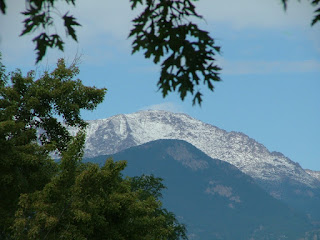
Photo property of the Author

In the early days of Colorado Springs William S. and Helen (Hunt) Jackson were quite the couple. William, as the majority owner of the El Paso County Bank, treasurer of the Denver & Rio Grande Railroad, and later the receiver of the same company when it went into bankruptcy, was a major influence on the financial health and confidence in Colorado Springs. Helen (Hunt) was already an established author when she arrived in Colorado Springs. Her writings about the area were responsible for the view many Easterners and those from Europe had of the region.

How did these two come to achieve this status? Perhaps it will help to have a bit of background on the two individually.
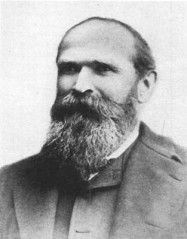
William Sharpless Jackson

Born in Pennsylvania to Caleb S Jackson and Mary Ann Gause Jackson. His parents were involved in the Underground Railway, their home being a stop on that historical line, in Kennett Square, Chester County, Pennsylvania. His parents were also Quakers, the faith that William Jackson Palmer, one of the founders of Colorado Springs, also belonged to.

Helen was born Helen Marie Fiske on October 18, 1830, in Amherst Massachusetts. Her father Nathan Fiske was a teacher at Amherst College. Her mother Deborah Waterman Venal Fiske, taught Helen and her younger sister Anne at home whenever possible. There were two other children born to the Fiskes. Both were boys and died in infancy. Both of Helen's parents wrote. Her father wrote adult books and her mother wrote children's stories.

Helen came to Colorado in 1873 at the request of her doctor. She had been having fevers and sore throats. It was thought that the climate in Colorado would help Helen heal. She first arrived in Denver but did not like the town. It was suggested that she try Colorado Springs which was a few miles south of Denver.

Her doctor had said she needed to come to a warm, dry climate. When she arrived in Colorado Springs in the late fall it was snowing, overcast, and cold. She had thought that it might be best to go back to the east coast. To her Colorado Springs was raw, new, and not very welcoming. Helen felt the mountains were foreboding and the plains flat and ugly.
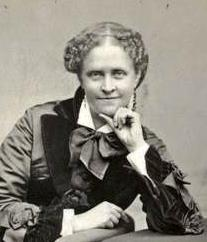
Helen H Jackson
from Wikipedia

Helen agreed to give Colorado one month. During that time, the sun came out again and Helen had a chance to see so many wonderful things. She soon fell in love with the area and over time traveled over a lot of Colorado. She wrote about what she saw and many of her essays were published in magazines back East. These essays described Colorado so well that people wanted to see what she wrote about.

While in Colorado Springs Helen met many people and one was William Sharpless Jackson. He worked for the Denver and Rio Grande Railroad and also was involved in banking. The two spent time traveling around the area and both loved the mountains and outdoors.

In October of 1875, Helen and William were married. This was Williams's first marriage and Helen's second. Helen was eight years older, but that did not seem to make any difference to William, or as Helen called him Will.

Williams's work kept him traveling a great deal; sometimes Helen would accompany him and sometimes she would stay in the home he had bought for them or travel on her own.

To Helen, Cheyenne mountain was the most beautiful mountain in the world. She and Will had spent much time around the mountain. Their favorite spot to 'camp' was an area in South Cheyenne canyon where it overlooked the city and the stream that flowed through the canyon.

Helen continued to write and travel. Sometimes she traveled without William and sometimes with him. Still, she kept writing her stories, essays, and poems. She would also return to the east coast where her sister Ann and family lived.

Up until Helen's death in 1885, this couple followed their own rules, and in the process did much that benefitted many. They both left a lasting legacy.


Doris McCraw

Saturday, May 22, 2021

AND UP THE MOUNTAIN WE GO - Pikes Peak Cog Railway

Post by Doris McCraw

writing as Angela Raines

With Colorado Springs celebrating its sesquicentennial this year, I will periodically be posting about the city and region. Earlier I posted about the Trolley Museum: Found Here. What makes this post so much fun for me is the resource I found for the article and the fact that the Cog Railway is opening up again after almost four years.

An early photo of the cog railway
from en.wilipedia.org

The Railway closed in October of 2017 for maintenance. The closure was longer than anyone expected. The re-opening coincides closely with the opening of a new Summit House at the top of the mountain. To me, there is nothing like riding up the side of the mountain to be greeted by views that take your breath away. 

But what about the beginnings. This article found in the "Cow-Boy Round-Up" was quite interesting. I'm sure they had high hopes for the publication, but I've only found one issue. As for the railway system, it didn't begin its climb up to the summit of the mountain until June 30, 1891.

Below is a short piece the publication included in that issue:

The Cow-Boy Round-Up is issued not only for the interest of the cowboy club but in the interest of the great and growing city of Denver, Colorado. The reader will find much interesting information regarding this wonderful city in this issue.

I'm not sure where this photo came from
but I had to share

And the following is the one on the railway.

To the top of Pike's Peak.

Colorado is bound to be the Mecca of tourists in the United States. A few days ago, a most important transaction took place, which will advertise Colorado all over the world. The transaction was nothing more or less than the taking up of the remaining stock in the Pike's Peak railroad company, a corporation that can now boast of a half million of capital, placed principally with Chicago capitalist. Within a few weeks, this corporation will commence breaking ground for one of the most novel railways in the United States — a cog-wheel road from Manitou to the top of Pike's Peak. The road will be 9 miles long, and will run straight up the face of the mountain. The trip to the top will be made in an hour and a half, thus enabling tourists to ascend to the top of the Peak and return between meals. At present, the traveled road is twenty-four miles long, and an entire day is generally taken for the trip. It will take the entire summer to build the road, but when completed, it will be solid, substantial, and safe. (Denver Journal of Commerce.) 

The Cow-Boy Round-Up, Volume 1, Number 1, March 4, 1889


The author's photo from one of the cog trips

I hope you enjoyed my trip back and how things may have changed, but still stay the same. Until next time.
 For more information on the process

Cog Railway History

Doris Gardner-McCraw -
Author, Speaker, Historian-specializing in
Colorado and Women's History
Author of the 'Agate Gulch' series of novellas and the 'Kiowa Wells' series of novels
Angela Raines - author: Telling Stories Where Love & History Meet
Angela Raines FaceBook: Click Here

(c) 2021 Doris McCraw All Rights Reserved.

Thursday, April 22, 2021

150 YEARS OF HISTORY?

Post by Doris McCraw

writing as Angela Raines

Photo property of the author

2021 marks the sesquicentennial of Colorado Springs. While most will still not be traveling this year, thanks to the internet, Zoom, and other media outlets, others can join in on some of what is happening. 

Besides sharing various stories from the city's history, I am sharing some links to information you might be interested in. 

The town itself was set up as a resort town. Its founders envisioned a place where those from the East and Europe to come and enjoy the clean air and the plethora of natural beauty. The additional benefit they found; the clear air also helped those show suffered from consumption. Note, that consumption during this time was considered any wasting disease which included tuberculous, asthma, cancer among others. For that reason, the area was a magnet for doctors who not only were searching for a cure for themselves but for others also.

Photo property of the author

When you think about it, the kind of people it takes to create a new town, especially one of this type, they had to believe and dream big. 

Here are a few links that you may find interesting concerning this rich history.

The history through quilts: https://youtu.be/6VhV12vzzUs

Holiday Baking at Rock Ledge Ranch: https://youtu.be/BrGiMsmtJcQ

Horsing Around Rock Ledge Ranch: https://youtu.be/2fgN98qAnEM

Women's Suffrage, Jail is not a Pleasant Experience: https://youtu.be/teyM_0CeAUo

History on the Go: https://mobile.cspmstoryofus.com/

Photo property of the author

I hope you all enjoy some of the local histories and find them useful.


Until next time and I share more history. 


Doris Gardner-McCraw -
Author, Speaker, Historian-specializing in
Colorado and Women's History
Western Writers of America,
Colorado Author League,
Women Writing the West
Angela Raines - author: Telling Stories Where Love & History Meet

Post (c) Doris McCraw


Monday, July 22, 2019

FASCINATING HISTORY

Post by Doris McCraw
writing as Angela Raines

Photo property of the author
In 1879 the city of Colorado Springs was a growing place. According to the city directory as of August 20, 1879, the population was five to five thousand five hundred people living there. They added there was probably another thousand who were making a temporary home for 'health' or 'pleasure' purposes.

What fascinated me was the business. Again according to the city directory ... "at the end of July 31, 1879 lumber, grocery, flour, feed, grain, dry goods, boots and shoes, hardware, drugs, etc. etc. were sold to the amount of $2 million. In addition to this about $175,000 worth of wool was marketed here. El Paso County, of which Colorado Springs is the capital, now stands at the head of the wool-producing counties of the state. Probably 200,000 head of sheep are now pastured upon its luxuriant grasses. The wool clip from these past seasons aggregated over 800,000 pounds. Seventy-seven individuals and firms are engaged in wool growing in the county, most of them residing in, and all drawing their supplies from Colorado Springs. This is also the center of a large trade in horses and beef cattle. There are six liveries and three banks one of which is a national and two private banks also in the city."


Photo property of the author
As I've perused this early city directory I've found a lot of pieces of history to dig into. As stated above, wool and cattle were a side by side growing concern. Of the wool growers, two were women, Mrs. Sarah B. Reed, and Mrs. R. Gamble. Mrs. Gamble was also involved as a stock grower.

Out of twenty physicians in town, three were women a fourth was in the nearby town of Manitou Springs. All four women were married and doing well in their chosen field.

There were four stage lines, four printers, two plumbers/gas fitters, three sewing machine agents, and eight music teachers.

It is from these gems, along with historic newspapers, that characters and stories arise in my writing. Both fiction and non-fiction.

When I started my 'spicy' story "Duty" for the collection in "Hot Western Nights", I thought of these women who were working in what most think of as a man's job. Being surrounded by these pieces of history and military installations created my hero and heroine. It is a wonderful gift to have so much inspiration close at hand.

Below is a short excerpt from the story "Duty".

Riding toward the ranch house, as evening approached, Dan took in the corals, barn, and bunkhouse. Everything appeared in even better shape than it seemed when he looked it over before riding down. Like a small town with a road through the middle, with gates at each end. But it was quiet, too quiet. For a second time today Dan called out, as he closed the gate behind him, "Hello?"
He heard a door open at the side of the house. Turning that way, he saw someone step out. The sun broke through and Dan was greeted by a vision in a worn gingham dress. Her hair draped across her shoulders and down her back. Her stance showed no apparent fear.
She was tall, but not overly so. She stood quietly. So taken by her unexpected appearance, Dan failed to see the rifle barrel sticking out the window.
"Yes, may I help you?" came Miranda's rich voice as she spoke to Dan.

"Pardon ma'am, I was riding through and wondered if I might water my horse and pick up some supplies before moving on? I'll pay for the supplies if you have them to spare?" Dan asked as he shook the water from his hat.

Purchase from Amazon here

What inspires you? What kind of stories do you enjoy reading or writing? Are you like me and fascinated by those little tidbits of history?

Doris Gardner-McCraw -
Author, Speaker, Historian-specializing in
Colorado and Women's History
Angela Raines - author: Where Love & History Meet


Monday, April 22, 2019

PUT AWAY RESEARCH?

Post by Doris McCraw
writing as Angela Raines

The story's done. All the research you did can be put away. But how many really ever do that? For me research is never ending. Even tonight as I sat at the dinner table with friends, the subject of research and writing came up. I shared some of my favorite sites for finding information. I thought for this post I would share a few with you.

Photo property of the author
How many have used stories found on Ancestry to add to your story? When I was researching the paper on 'Joe Ward', I found he had used different names over time. Of course, in searching the areas he lived in, I found a plethora of information. The state of Missouri has digitized the histories of the counties, written by historians who lived there. For those who would like to see what they have to offer for Vernon County here is a link: Vernon County Missouri

Then of course there is Google Books: Colorado, New Mexico, Utah, Nevada, Wyoming and Arizona Business Directory 1884
Library of Congress: Dance instruction manuals from 1490-1920
National Archives: Main Research Page

Of course, I also use my local library's special collections section; which include magazines and books which focus on Colorado and the Pikes Peak Region. This includes the various digitized newspapers, from Colorado Historic Newspapers, Pikes Peak Newsfinder, 19th Century Newspapers and Newspaper Archives. There is nothing like finding those little tidbits that add to the authenticity and joy to a story.

Arkansas River, Canon City, Colorado
Photo property of the author
In "The Outlaw's Letter", my heroine is traveling back to Colorado Springs to take in a horse and goat show. Yes, there really was a show that was advertised during the time she would have been in the area. It is those little gems I love including to add color.

"The Outlaw's Letter" has more specific historic information than most of my previous works. Those tidbits made writing the story so much fun.

How do you use research in your stories? I would love to know.

Below is a short excerpt from the above mentioned book:

Grant rode toward Canon City, the town he tried to avoid. He would just deal with whatever happened there. Hetty was more important.
An hour later, he came to a small cabin. "Hello the house?" Even when he called out, Hetty didn't respond. She was dead weight in his arms. If it weren't for the rise and fall of her chest, he'd have sworn she was dead.
A middle aged-looking woman came to the door. "What can I…" She began, then seeing Hetty she hurried forward. "What happened?"
"She fell from her horse and hit her head. She's still breathing, but…" Grant stopped, he didn't want to continue, didn't want to think what might happen. Taking a deep breath, Grant continued, "If I could leave her here while I go for a doctor?"
"Who is she?"
"My wife."
The woman nodded, heading to the door of the cabin. "Come on in. I'll have my boy go for the doctor, it'll be quicker."
Grant tried dismounting while he still held Hetty. He didn't want to let her go.
"Let me help. Know you want to hold on to her, but if you drop her..." the woman insisted.
Grant finally accepted the woman's help, but the minute his feet hit the ground he took Hetty back into his arms.
Purchase Here

Doris Gardner-McCraw -
Author, Speaker, Historian-specializing in
Colorado and Women's History
Angela Raines - author: Where Love & History Meet
For a list of Angela Raines Books: Here 
Angela Raines FaceBook: Click Here

Friday, February 22, 2019

AN OLD WEST POWER COUPLE? #history

Post by Doris McCraw
writing as Angela Raines

Garden of the Gods - Kissing Camels
Colorado Springs, CO
photo (C) by the author
We write about the West, and about love. What many may not know, Helen (Hunt) Jackson and her husband William were both successful, in love. This was William's first marriage and Helen's second. He was six years her junior, but that didn't seem to matter. They could be called a 'power couple'.

Together William and Helen with their respective talents were possibly the first equally successful couple in Colorado Springs. William as a successful business man and Helen as a nationally known author. Each in their own way had an impact on not only Colorado Springs, but Colorado and beyond. As a 'power couple' they were also the subject of conjecture and gossip. This not only included Helen's niece Helen, but being thought of as better than everyone and the back room dealings with regard to William and his handling of the receivership of the Denver & Rio Grande and subsidiary railroads.

William was a majority owner of the El Paso County Bank, treasurer of the Denver & Rio Grande Railroad and later the receiver of the same company when it went into bankruptcy. His was a major influence on the financial health and confidence in the growth of Colorado Springs.

Image result for images of William Sharpless Jackson Colorado Springs
William Sharpless Jackson
When Jackson started his bank in 1873, the world was just beginning to feel the results of a larger world wide depression. In the United States banks were failing and as a direct result of the failure of the Henry Clewes & Company bank in New York, the Wm. B Young & Company a local bank failed. This depression has been called the long depression and the depression of 1873-1879 and lasted longer than the great depression of the 1920's -1930's. His business acumen kept the bank and this region afloat. Colorado Springs was only two years old and was in need economic stability for its continued growth.

Helen (Hunt) was already an established author when she arrived in Colorado Springs. Her writings about the area were responsible for the view many Easterners and those from Europe had of this region. That in turn helped bring about growth of the town and region. Later when she took up the cause of the American Indian, she was responsible for bringing a conscience to the general public. While she may not have been popular for her view, she did not back off from her stance on the subject. Of note is the discussion she had with William Byers in the New York Independent on the subject of 'The Sand Creek Massacre'. Although William didn't believe as Helen about the Indians, letters between the two indicate that he eventually accepted her point of view.

Image result for historic images of William S Jackson Colorado Springs
Helen (Hunt) Jackson from
en.wikipedia
The Jackson's most would call a husband and wife team. Man and wife tends to indicate the man is the principal and all that the wife does and how she is perceived is based on her husband. Husband and wife verbiage seems more a relationship of equals. William and Helen together created a dynamic relationship that had a larger influence than most may realize. Helen was on the library board and William was one of the early board members for Colorado College as an example of their influence. Neither sought notoriety for themselves, only their work. Both were fairly private people, which may be part of the reason their contributions are largely forgotten by the general public. As stated earlier, both were focused on their respective careers, their work was instrumental in helping Colorado Springs and the Pikes Peak region, in fact a lot of Colorado, become what it is today. Had William not been able to restructure the Denver & Rio Grande we would not have railroading as we know it for Palmer might have lost it all. His banking acumen both in Colorado Springs and the state had an impact on the financial health of our region. Helen, in highlighting all that this state had to offer has left a legacy for future generations to remember how it was. She also was vocal about Colorado Springs and protecting the natural beauty of the area,Seven Falls, Cheyenne Canon to name two, which tourist can still enjoy today, .

The same sense of privacy, in addition to a sense of self, may have also contributed to the negative comments and feelings the two generated. Although not as well documented, there were some who felt the two, especially Helen, were above the rest of the population. There does not appear to be any record that the two were aware, or even took notice of such thoughts. Instead the focus was on their relationship and their respective careers. Even when Helen took up the cause of the American Indians, which was not a popular stance, she as well as William went forward with what they thought was the correct course. Helen however, did need to persuade William that her course regarding the Indians was the only way open for her to deal with the glaring inequities in the governments treatment of Indians.

Together their impact and influence on the area may have been far greater than we may realize. 

Amazon link


In "Chasing a Chance" Edwin comes to the rescue of Mary, a woman he's loved when younger, but had left and she married another. Now a widow, she is in danger. This is a story of second chances, much like Helen and William.

Doris Gardner-McCraw -

Author, Speaker, Historian-specializing in
Colorado and Women's History
Angela Raines - author: Where Love & History Meet
For a list of Angela Raines Books: Here 
Angela Raines FaceBook: Click Here