Monday, December 5, 2022

Christmas From The Past


Did you ever wonder what Christmas was like years ago? Did families gather and exchange
gifts? Well, I did quite a bit of research from several sites and blogs and it seems they did. During the 1800's some of the American Christmas tradition included many of our usual festivities. Some were decorating a tree, giving gifts, looking for Santa Claus to come, sending out cards, stockings by the fire, joyous church activities, and friends and family visiting and enjoying good food. Also, I'm sure laughter and stories of their families. 

For those far away from towns and cities, like cowboys and mountain men, they would have celebrated Christmas with homemade gifts. Their Christmas dinner was likely comprised of dried venison, moose or perhaps fresh bear meat, roasted slowly on a spit over an open fire.


I found one quote from Osborne Russell's journal, which offered some insights into Ogden Valley, Utah's first recorded Christmas gathering.  Russell recounts in his diary:  The principal topic which was discussed was the political affairs of the Rocky Mountains, the state of governments among the different tribes, and the personal characters of the most distinguished warrior chiefs. 

Doesn't sound like a festive Christmas discussion to me, but again, we are dealing with Indians and trappers. I suppose they talked about what interested them, no matter if it was Christmas, or just any other day of the year. 


Another quote was from Old-timer D.O. Newton, who was one of the original Pioneer settlers. She recounted her first Christmas in Ogden Valley in an Ogden Standard Examiner article written by Dorothy Porter many years later. "We celebrated all the holidays which are nowadays, but in a different manner. For instance, on Christmas we never had a tree and we did not receive so many beautiful gifts; it was just the spirit of the day that made everything so nice."

I also found a video that someone made about Trapper W.A. Ferris and how he spent one Christmas back in 1833. I laugh at how sophisticated he sounded. I wonder did he talk like this all the time or did he know that many years from now others would read what he said and sit back in awe at how educated he sounded. Either way, it's a nice quick story about a make shift family enjoying Christmas as they sat around the fire, talking about honesty, charity, and philanthropy.


Taken from in part here and here


Pixabay images

  We should also remember that Christmas for many in the  Old West was a difficult time. Those on the prairies often suffered through blizzards and savage winds. Mountain men were forced away from activities before Christmas, in preparation of the storms and freezing cold. The holidays often were meager. But, for these pioneers, Christmas would not be forgotten.


I am a huge fan of Laura Ingalls Wilder. Her life in general is amazing. I'm so happy to include a few quotes about her life and some links you might find interesting. Many of the quotes come from this blog here. 


Laura Ingalls Wilder 

Wikipedia images

Laura Ingalls Wilder wrote of the preparations for Christmas on the Kansas Prairie: “Ma was busy all day long, cooking good things for Christmas. She baked salt-rising bread and ‘Injun bread, Swedish crackers, and a huge pan of baked beans, with salt pork and molasses. She baked vinegar pies and dried-apple pies and filled a big jar with cookies, and she let Mary and me lick the cake spoon.

 That very Christmas, Laura Ingalls was delighted to find a shiny new tin cup, a peppermint candy, a heart-shaped cake, and a brand new penny in her stocking. In those days, these four small gifts in her stocking were a wealth of gifts to the young girl.

Though perhaps modest, these hardy pioneers made every attempt to decorate their homes for the holidays with whatever natural materials looked attractive at the bleakest time of year, such as evergreens, pinecones, holly, nuts, and berries.

For some, there might even be a Christmas tree, gaily decorated with bits of ribbon, yarn, berries, popcorn or paper strings. Some homemade decorations were often dolls made of straw or yarn. Cookie dough ornaments and gingerbread men were also popular. In other places, wood was too scarce to “waste” on a tree, if one could be found at all. Other pioneer homes were too small to make room for a tree.

At the very least, almost every home would make the holiday a time of feasting — bringing out preserved fruits and vegetables, fresh game if possible, and for those that could afford it, maybe even beef or ham. Many women began to bake for the holiday weeks ahead of time, leaving the plum pudding to age in the pot until Christmas dinner.

I found several YouTube videos on Laura Ingalls so I'll share them here. I've not had time to watch them all but they seem dedicated to the woman and her life story. This one here is over an hour long HERE  This one is 30 minutes long HERE.  Last if you have PBS you might be able to watch this one HERE.

Traditions 

From here we'll change gears just a bit and talk about some traditions and how they got their start. 


Candy Canes

Pixabay images

A popular account for why we have the candy cane is that a choirmaster back in 1670 wished to quiet the children in church. He wanted this so much that he commissioned a candy maker to design the candy in the shape of a crook to remind them of the shepherds who came to visit baby Jesus at His birth. The candy was handed out to children as they watched plays concerning the nativity.
Most, however, agree the white candy cane made its U.S. debut in 1847 in Wooster Ohio, according to Schildhaus, when August Imgard, a German-Swedish immigrant, decorated a small blue spruce with paper ornaments and candy canes.

Who Brought Christmas Trees to America?


Pixabay images

The first record of one being on display was in the 1830s by the German settlers of Pennsylvania, although trees had been a tradition in many German homes much earlier. The Pennsylvania German settlements had community trees as early as 1747. 

Christmas Trees were first sold commercially in the United States in 1851 and were randomly cut down from the forests. Today, approximately 30-35 million real (living) Christmas trees are sold each year in the United States.


Fruit Cake

Pixabay images

You either love or hate fruit cake, either way I was curious about the origin of the fruit cake.  The earliest record of something resembling fruitcake is from Ancient Rome. Recipes for a confection called satura called for mixing raisins, pomegranate seeds, and pine nuts with barley mash and honeyed wine. It was supposedly a favorite snack of Roman soldiers. Its portability and shelf-life were valuable assets. Satura, with its hodgepodge of ingredients, is even thought to be connected to the origin of the word satire, the cutting but humorous literary form the Romans helped create. 


A version of fruitcake that more closely resembled what we eat today appeared in the Middle Ages. The Crusades led to an increase in trade between Europe and the Muslim world, and dried fruits imported from the Mediterranean became common in parts of Europe. People started baking them into their cakes for special occasions. Different countries throughout the continent put their own spin on the dessert. Be sure and tell us in the comments do you love or hate fruit cake? 
Some information about fruit cakes come from this blog here.


The Legend of St. Nicholas: The Real Santa Claus

The legend of Santa Claus can be traced back hundreds of years to a monk named St. Nicholas. It is believed that Nicholas was born sometime around 280 A.D. in Patara, near Myra in modern-day Turkey. Much admired for his piety and kindness, St. Nicholas became the subject of many legends. It is said that he gave away all of his inherited wealth and traveled the countryside helping the poor and sick. One of the best-known St. Nicholas stories is the time he saved three poor sisters from being sold into slavery or prostitution by their father by providing them with a dowry so that they could be married. 


Christmas Lights

This is one of my most favorite things about Christmas. I love putting up lights, and tinsel on just about everything. This year will be a little drab for I know that Puppy, that is just now 10 weeks old, will eat everything he can get into his mouth. Here are some fun facts about Christmas lights that I found. 

Christmas lights started out as candles. They were attached to the tree using wax or pins. The practice began in Germany in the 17th century and over the next 200 or so years; it became a popular practice in Germany and began to spread into other countries. The practice originally started to bring illumination to the ornaments on the tree. It continued until around 1900 when candleholders became popular.


It was not until 1915 that glass balls were replacing candles on trees. The world of Christmas lights became something amazing with the invention of the light bulb and electricity. In 1882, the first Christmas tree to be lit by electric lights was in New York.

It was lit by Edward Johnson who happened to be a friend of Thomas Edison. The Christmas tree was lit with beautiful red, white, and blue lights, which are still favorites of many today. It also led to the creation of the first string of Christmas lights, which were easily massed produced and were available for sale around 1890. This of course was the start of the wonderful traditions we have today of placing strings of Christmas lights around our trees and homes to liven the holiday. More on the topic here.

I hope you've enjoyed this walk back in time. I know I have Christmas is my most favorite time of the year. For me it's all about giving and having fun, and of course celebrating the Lord's birth. I pray you all have a great Christmas and enjoy celebrating and decorating in your usual manner. 


I'd like to thank Kim Grist for her help and inspiration
in getting this blog finished. Check out
her new release, it's a good one. 


Website Facebook Group Contact Us Samantha Fury is the author of  the Street Justice Series.  She's written many articles on book covers, for Indie Authors. She operates several Indie Groups. Editing Services, Cover Artist, Helpful Indie Facebook Groups. 
Latest Release here Rachel's Ransom buy Here It is also in Kindle Unlimited 


Wednesday, November 30, 2022

Survey Markers by Zina Abbott


Survey markers are objects placed to mark key survey points on the Earth's surface. They are used in geodetic and land surveying.

Geodetic, or geodesy, refers to accurately measuring and understanding the earth’s geometric shape and size, its orientation in space, and gravity.  As for land surveying, this becomes necessary—not only to create more accurate maps, including topographical maps, but also to mark off land boundaries.


Survey markers are used to mark national and state boundaries, such as this 1877 marker on the Arkansas-Oklahoma state line.


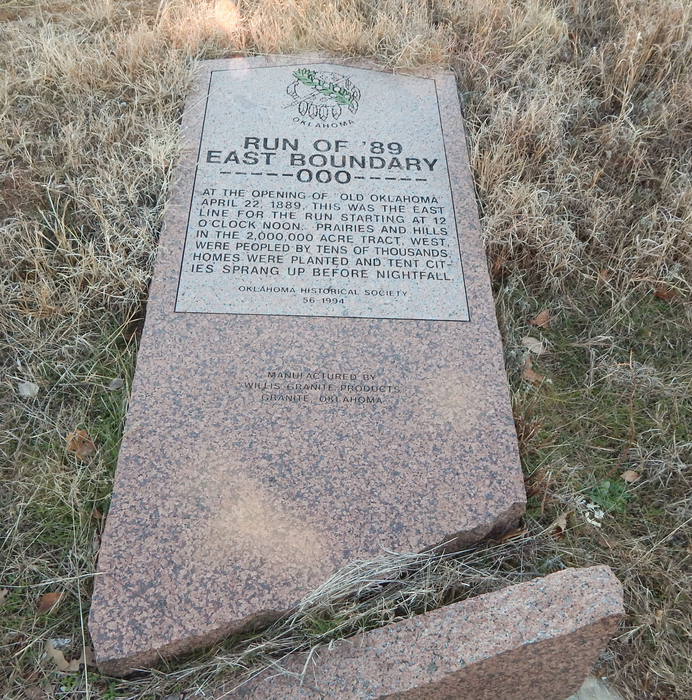
This survey marker was originally upright. It marked the eastern 1893 Oklahoma Land Run boundary.


A benchmark is a type of survey marker that indicates elevation (referring to a vertical position). Horizontal position markers used for triangulation are also known as triangulation stations. Considering the earth is a globe, not flat, and contains mountains and valleys, these details must be accounted for through triangulation.


Survey markers are also called survey marks, survey monuments, or geodetic marks. My husband, who worked almost his entire career in one aspect or another of engineering construction, called them shiners.


This particular shiner is next to Merced River inside Yosemite National Park, just after entering the toll gate on Highway 140. There is a small rest stop there. While waiting for me one year, he wandered out over the rock that overlooked the river and was pleased to find this shiner firmly embedded in the stone.

1855 Geodetisch station at Ostend, Belgium used for triangulation

Survey markers were often placed as part of triangulation surveys, measurement efforts that moved systematically across states or regions, establishing the angles and distances between various points. Such surveys laid the basis for map-making across the world. 

Located on peak of Prospect Hill-Wompatuck State Park, Hingham, MA
 

All sorts of different objects, ranging from the familiar brass disks to liquor bottles, clay pots, and rock cairns, have been used over the years as survey markers. 

Some show the meeting points of three or more countries. In the 19th century, these marks were often drill holes in rock ledges, crosses or triangles chiselled in rock, or copper or brass bolts sunk into bedrock. 


 Today in the United States, the most common geodetic survey marks are cast metal disks with stamped legends on their face set in rock ledges,


embedded in the tops of concrete pillars,or affixed to the tops of pipes that have been sunk into the ground. These marks are intended to be permanent, and disturbing them is generally prohibited by federal and state law.


Some old markers were buried several feet down to protect them from being struck by ploughs or disturbed by other means. Occasionally, these buried marks had surface marks set directly above them.

This year, it was my research for two books set in the new Oklahoma Territory that was formed as a result of the land runs that led to my research on survey markers.

In 1871, the internal format of Oklahoma, then the Indian Territory, began to take shape. Based on Thomas Jefferson's standard United States public land survey system of townships, ranges, sections and quarter sections, an Initial Point was selected and a grid work of north-south and east-west lines was established. The entire Indian Territory was surveyed from a "bearing point" located one mile south of Fort Arbuckle and eight miles west of present-day Davis.

Survey crew Cherokee Strip (Outlet)

I have not discovered exactly what style of survey marker was used when the Cherokee Outlet was divided into quarter sections or city lots for those new cities that were planned in preparation for the 1893 land run. I’m sure they were set in a manner to avoid being disturbed or removed. 

However, in my book, Joshua’s Bride, my fictional heroine, Rose Calloway, attempted to secure the survey marker on the back, out of the way corner of the homestead plot she claimed. Being told by two of her neighbors who shared the corner that it was illegal for her to remove the survey marker did not deter her from digging it up. She was determined to keep usurpers from coming onto the back portion of her land and copying down the coordinates in an effort to claim the homestead plot for themselves. Here is an excerpt from the book:

         “You need to put it back, right away. In fact, give it me. I’ll find a surveyor and have him reset it.” The clerk reached for the pole.

         “No!” Rose twisted to keep the post away from his reach. “It’s my pole that goes to my property. Well, mine and three of my neighbors.”

         “Sir, you won’t need to go to all that trouble.” Joshua pulled Rose behind him and stepped to squarely face the clerk. This woman needs a keeper. “She’s with me, and I’ll help her return it where it goes.”

         “She your wife?”

         “No, sir, she’s my fiancé. We have one more matter of business to see to while we’re here, and then I’ll return her home and help her reset it.” The word fiancé was out of Joshua’s mouth before he even thought about it. He did not know how she felt about it, but, he reasoned, it was better for her reputation to be traveling in the company of a fiancé than a man with whom she had a casual acquaintance. He held the clerk’s gaze.

         “Is there a problem, Charlie?” A deep voice sounded as an older, thick-shouldered man with a deputy marshal’s badge on his chest approached.

         “This woman here—” The sputtering clerk waggled a finger at Rose as he turned his head to toward the deputy marshal.

         “There’s just been a little misunderstanding, marshal.” With a smile that lit her entire face, Rose stepped back to Joshua’s side. “I brought this survey post with me to help me register my land. You know, to prove I am the one who has the claim on that particular homestead? However, the clerk just told me I wasn’t supposed to take it out of the ground. I assured him I will take it home and put it back where it goes.”

         Joshua shifted his gaze between Rose, the deputy marshal with the thoughtful expression, and the clerk, who rolled his eyes. He resisted the urge to roll his eyes, too. I want to be her keeper. He cleared his throat. “As I was telling this gentleman, here…” he gestured toward the clerk. “Now we know the pole needs to stay in place, we’ll leave as soon as we finish one more item of business and go directly to the property where this survey post goes. I’ll help her get it set in the ground properly.”

         “Sounds reasonable to me.” His hands on his hips, the deputy marshal pressed his lips together and nodded. “Work for you, Charlie?” He turned to the clerk with an expression that did not invite a challenge.


         As he stared at the deputy marshal, Charlie swallowed. “If you say so.” Then he stiffened his posture as he turned and scowled at Rose. “Swear you’ll put it back as soon as you return to the property.”

         “I don’t swear, sir.” Rose straightened her spine and lifted her chin. “But, I will promise. I will return home and put the pole back where I found it.”

Joshua’s Bride is available for sale as an ebook and a paperback. It is also available at no additional cost with a Kindle Unlimited subscription. You may find the book description and purchase link by CLICKING HERE


         Rose’s sister, Marigold Calloway, claimed two lots in the town of New Ponca that was created as part of the same 1893 Cherokee Outlet Land Run. Even the boundaries of many town lots are marked with survey markers. You may find the book description and purchase link of Marigold by CLICKING HERE


Sources:

https://en.wikipedia.org/wiki/Survey_marker

https://libraries.ok.gov/state-government/corner-monuments/

https://en.wikipedia.org/wiki/1877_survey_marker_48


Sunday, November 27, 2022

STAGECOACH TRAVEL

 By Caroline Clemmons

In the Eastern United States, riding a coach meant travel from one stage stop to the next, stopping at a tavern or inn for a meal and perhaps spending the night. In the West and Southwest, there were not enough established towns. Western travelers had to be made of grit and determination!

In 1858, John Butterfield undertook an overland stage line connecting St. Louis and San Francisco by way of El Paso, Texas. The route also ran through Tucson and Los Angeles, both of which were only villages of a few hundred residents. A federal contract paid the stage company $600,000 a year to carry U. S. mail across the continent. That sum helped subsidize way stations at regular intervals. The company spent nearly a year getting everything into place to support semi-weekly stagecoach service.


When Butterfield’s Overland Mail Line opened for business on 16 September 1858, the journey between St. Louis and San Francisco required three weeks of hard traveling—if the weather was good. Coaches moved all day and all night except for brief intervals at way stations. The fare did not include the cost of meals, which cost an average of a dollar each three times a day. Passengers had to sleep aboard the coach. These mail lines were guaranteed to be rugged but they got the mail through.

At this time, most coaches set on springs which provided a bumpy, jostling ride. If passengers were fortunate, the route included riding in a Concord stagecoach. The first Concord stagecoach was built in 1827 in Concord, New Hampshire. Abbot Downing Company employed leather strap braces under their stagecoaches which gave a swinging motion instead of the jolting up and down motion of spring suspension. They were known to be built so solidly they didn’t break, they just wore out.

Concord stage in Wells Fargo colors

Over 700 Concord stagecoaches were built by the original Abbot Downing Company before it disbanded in 1847. However, the company was still building coaches, wagons, and carriages according to their business card of 1898. The coach was noted for its ability to keep passengers dry while floating across streams and rivers. The swaying motion caused some passengers to become “seasick”.

In his 1861 book ROUGHING IT, Mark Twain described the Concord stage’s ride as like “a cradle on wheels”. Hmm, guess it's a matter of perspective.

Not all stagecoaches were of one of these types. Celerity or mud wagons were much lighter and cheaper to build. They had no springs so they offered a much rougher ride. They were primarily used on lines where passenger and express traffic was too light to justify the expense of Concord coaches. Instead of having a heavy wooden top, the celerity had a light frame structure with thick duck or canvas covering, greatly reducing the vehicle’s weight. Wheels were set further apart and were protected by wide steel rims that helped keep the coach from tipping over or the wheels from sinking in soft sands.

Celerity or Mud Wagon
Note canvas roof, open sides

While not as comfortable for daytime travelers, they were designed for passenger travel at night. Waterman L. Ormsby, special correspondent to the New York Herald, described the sleeping accommodations. “As for sleeping, most of the wagons are arranged so that the backs of the seats let down and form the length of the vehicle. When the stage is full, passengers must take turns sleeping. Perhaps the jolting will be found disagreeable at first, but a few nights without sleeping will obviate that difficulty, and soon the jolting will be as little of a disturbance as the rocking of a cradle to a sucking babe. For my part, I found no difficulty sleeping over the roughest roads, and I have no doubt that anyone else will learn quite as quickly. A bounce of the wagon, which makes one’s head strike the top, bottom, or sides, will be equally disregarded, and ‘nature’s sweet restorer’ found as welcome on the hard bottom of the wagon as in the downy beds of the St. Nicholas. White pants and kid gloves had better be discarded by most passengers.”

Unlike the classic Concord stagecoaches, which could be mired in bad weather, mud wagons could travel over trails and roads during inclement weather. The only protection provided for passengers against bad weather and dusty roads were the canvas side curtains which could be rolled down and fastened.

By the way, the word “stage” meant the place where the horses or mules were changed—staged along the route. These were spaced every 12 to 20 miles, depending on the terrain, and were usually operated by a single man living in a small cottage who kept a change of horses in a barn and/or corral. The stage stopped only long enough for passengers to stretch their legs while the horses or mules were changed.

Every 50 miles were the “home” stages, which were usually a couple or family who served meals and could provide overnight lodging—though sometimes passengers slept on a dirt floor. These stations also might include a blacksmith and stables. Drivers might be switched there.

Some coaches had two seats facing one another. The larger Concord squeezed in a center, forward-facing third seat, which made passengers very crowded and uncomfortable. Often the third seat had no back, which must have made retaining balance awkward as the coach swayed along. Often passengers had to interlock knees due to the crowded interior. Imagine you were a lady in the 19th century who’d been raised to observe propriety and you found yourself on a long coach ride having to lace legs with a male stranger. Ugh! Come to think of it, that wouldn’t be comfortable now.

Here are a set of rules posted by Wells Fargo in 1888:

1.      Abstinence from liquor is requested, but if you must drink, share the bottle. To do otherwise makes you appear selfish and unneighborly.

2.      If ladies are present, gentlemen are urged to forego smoking cigars and pipes as the odor of same is repugnant to the Gentle Sex. Chewing tobacco is permitted but spit WITH the wind, not against it. (I’d think this would be a given, wouldn’t you?)

3.      Gentlemen must refrain from the use of rough language in the presence of ladies and children.

4.      Buffalo robes are provided for your comfort during cold weather. Hogging robes will not be tolerated and the offender will be made to ride with the driver.

5.      Don’t snore loudly while sleeping or use your fellow passenger’s shoulder for a pillow; he or she may not understand and friction may result.

6.      Firearms may be kept on your person for use in emergencies. Do not fire them for pleasure or shoot at wild animals as the sound riles the horses.

7.      In the event of runaway horses, remain calm. Leaping from the coach in panic will leave you injured, at the mercy of the elements, hostile Indians, and hungry coyotes.

8.      Forbidden topics of discussion are stagecoach robberies and Indian uprisings.

9.      Gents guilty of unchivalrous behavior toward lady passengers will be put off the stage. It’s a long walk back. A word to the wise is sufficient. (I love this one)

To these, the Omaha Herald in 1877 added cautions to:

Never ride in cold weather with tight boots nor close-fitting gloves.

When the driver asks you to get out and walk, do so without grumbling. He will not request it unless absolutely necessary.

Don’t linger too long at the pewter wash basin at the station. Don’t grease your hair before starting out or dust will stick there in sufficient quantities to make a respectable ‘tater patch. Tie a silk handkerchief around your neck to keep out dust and prevent sunburns. A little glycerin is good in case of chapped hands.

Don’t discuss politics or religion nor point out places on the road where horrible murders have been committed.

In very cold weather, abstain entirely from liquor while on the road. A man will freeze twice as quick while under its influence.

Don’t imagine for a minute you are going on a picnic: expect annoyance, discomfort, and some hardships. If you are disappointed, thank heaven.


The seven heroines in my Bride Brigade Series—each book of which has a new cover—traveled in a Concord coach from Fort Worth to (fictional) Tarnation, Texas. The first book is JOSEPHINE, which is only 99¢. https://www.amazon.com/Josephine-Bride-Brigade-Book-1-ebook/dp/B015M4FJUY/  

Caroline Clemmons is an award winning and bestselling author of historical and contemporary western romance. She and her husband live in cowboy country in North Central Texas where they are owned by a menagerie of rescued pets.

Sources:

Texas State Historical Association Handbook of Texas online

http://www.deadwoodmagazine.com/archivedsite/Archives/Stage.htm

http://www.historicthedalles.org/rules_for_stage_travelers.htm

http://www.encyclopedia.com/topic/stagecoach.aspx

http://www.wikipedia.com

http://www.parks.ca.gov/?page_id=25449