Saturday, February 12, 2022

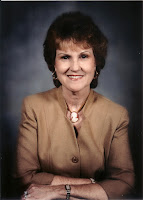
Madame Candelaria by Bea Tifton


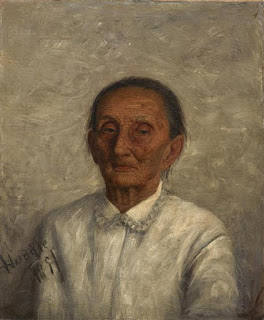
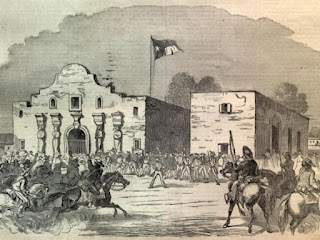
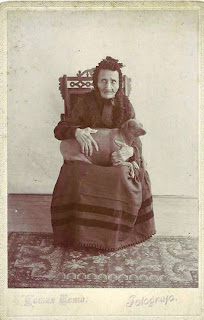
Madam Candelaria was born in 1785 as Andrea Castanon Villanueva. She died in 1899 at the age of 113 and claimed to be a survivor of the Battle of the Alamo in 1836. 

Madam Candelaria was born in either Laredo, Texas or Presidio del Rio Grande. She moved to San Antonio at the age of 25 and married her second husband, Candelario Villanueva. She had four children and raised 22 orphans. Madam Candelaria was known for her philanthropy and her nursing skills. She claimed that she nursed Jim Bowie during the Battle of the Alamo. Until the day she died, she would relate the story of the Alamo with tears running down her cheeks. 


Because there isn't well documented evidence either way, it is impossible to prove Madame Candelaria's story, but in 1891 the Texas legislature awarded her a pension of $12 a month for being a survivor of the Alamo and for her help in nursing smallpox victims in San Antonio. 

She is buried in the San Fernando Cemetery. 

Madame Candelaria lived to see Texas become its own republic, then a state in the United States of America, then a member of the Confederacy after seceding, then a state once again. She saw so many innovations and inventions change people's lives dramatically.


A Few Inventions Made During Madame Candelaria's Lifetime:

1793      Cotton Gin

1801      Suspension Bridge

1834      Refrigerator

1833      Sewing Machine

1836      Morse Code

1839      Train Sleeper Car

1842      Ether Based Anesthesia

1843      Rotary Printing Press

1846      Printing Telegraph

1850      Dishwasher

1857      Mass Produced Rolled Toilet Paper

1859      Electric Stove

1860      Vacuum Cleaner

1867      Motorcycle

1877      Phonograph

1885      Electric Mixer

1886      Automobile

1890      Incandescent Lamp


Tuesday, February 8, 2022

Valentine's Day in the Wild West by Cora Leland

 St. Valentine's Day in the Wild West


You know that the largest settler groups came from Europe to America, and that their children, or sometimes their relatives back in the old country settled the American West.  Here's a sampling of St. Valentine's Day celebrations back then.
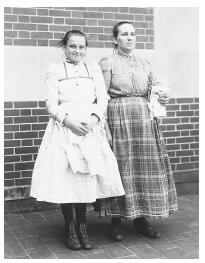
Czechoslovakian women newly arrived in America

Czechoslovakia was formed in 1918, but these very religious people fled to American shores long before then.  The first Czechoslovakian settlers in Texas arrived in 1847.  St. Valentine's Day was a symbol of the Ascension. 

 Welsh settlers, though, celebrated St. Valentine's Day as romantic.  Their patron wasn't St. Valentine, but 
St Dwynwen.   The myth surrounding her is that she fell in love with a handsome prince, but her father planned for her to marry someone else.  She went into a convent and married no one. 
Remains of St. Dwynwen's churcn
However, she was granted three wishes.  She gave all of them for success in matrimony for others.  Her holiday is three weeks before St. Valentine's Day.
St. Valentine's Day in early England.  When I traveled in the UK I was studying English lit & was surprised by how many English students - and citizens - told me about which author lived in the area.  Since then I'm never surprised when I read about English people and their dedication to the language and traditions.  For example, the first mention of love and St. Valentine's Day came from the poet Chaucer in 1382.  In his tale, The Parliament of Fowles, Chaucer congratulates young Prince Richard on his new engagement, likening it to the meeting of love birds on that day set apart for lovers.
Chaucer's Love Birds
 
But St. Valentine's Day really took off after the Civil War.  Before then New Yorkers bought and exchanged valentines they'd originally seen in England.  Before long, Valentine's Day was an established custom in America.  Since the first pilgrims, romance has always been an important part of American life.


Wishing you all the best.  Hoping you're warm and comfortable!  Sincere thanks to our admin.   Cora Leland Author

Friday, February 4, 2022

THE BEAUTIFUL PINTO HORSE By Cheri Kay Clifton

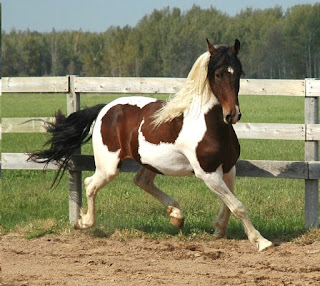
This month I'm writing about my favorite breed of horse, the Pinto which Grey Wolf rode in Trail To Destiny, Book 1 of my Wheels of Destiny Trilogy.


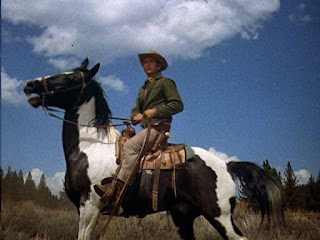
In my stories, I consider the hero or heroine's horse as much a secondary character as the people are!  Look back on lots of TV and movie westerns and you'll remember the names of so many horses the main characters rode.  One of the first Pintos in movie westerns dates back to the early 1920's with a horse named Fritz owned by William Hart.  He performed with Hart in multiple movies and remained a beloved companion into the actor's retirement.


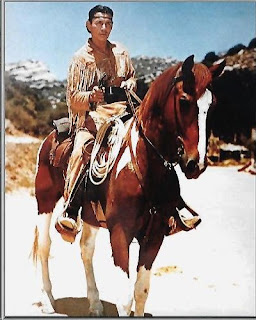
Another famous Pinto was Tonto's horse, Scout.  And can't forget to mention Bonanza and Little Joe's Pinto, Cochise.


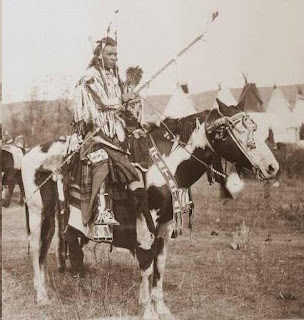
Though commonly associated with the Native American for its legendary magical qualities in battle, the Pinto horse was actually introduced to North America by European explorers, chiefly those from Spain, bringing their Barb stock that had been crossed with native European stock years before.

It is believed that the Pinto patterns may have arrived in Europe via the Arabian strains, as Pinto markings appear in ancient art throughout the Middle East. However, evidence of the more dominant Tobiano pattern among the wild horses of the Russian Steppes suggests the introduction of Pinto coloring to Europe possibly as early as during the Roman Empire.


After the arrival of these European horses, great wild herds infused with the flashy color patterns we know today began to develop across America, eventually to be domesticated by the Native American. The white man continued to import many of the well-established and stylish European breeds as his foundation stock. Over time, however, with the civilization of the Native American and the white man's migration to the frontier, it often became necessary to cross these fancy, but less suitable breeds of the Eastern seaboard with the wild mustang stock to increase size and attractiveness as well as availability of a horse better suited to the strenuous working conditions of the day.

This Western-bred horse became a fixture of America, especially the uniquely marked Pinto whose colorful presence in parades and films always added a little extra glamour.

 What are the Pinto patterns and how do they differ? There are two recognized Pinto color patterns:

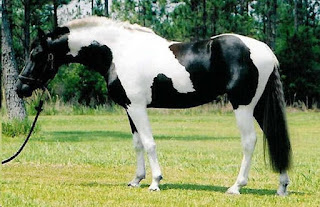
1) TOBIANO (Toe-bee-ah'-no) appears to be white with large spots of color, often overlapping on animals with a greater percentage of color than white. Spots of color typically originate from the head, chest, flank, and buttock, often including the tail. Legs are generally white, giving the appearance of a white horse with large or flowing spots of color. Generally, the white crosses the center of the back or topline of the horse. It is considered necessary to have a Tobiano parent to achieve a Tobiano foal.


 2) OVERO(O-vair'-o) appears to be a colored horse with jagged white markings usually originating on the animal's side or belly, spreading toward the neck, tail, legs, and back. The color appears to frame the white spots. Thus, an Overo often has a dark tail, mane, legs, and backline. Bald or white faces often accompany the Overo pattern. Some Overos show white legs along with splashy white markings, seemingly comprised of round, lacy white spots. White almost never crosses the back or topline. A horse of Pinto coloration descendant from two solid colored parents of another typically solid colored pure breed is called a "crop-out" and is of the Overo pattern.


The Pinto Horse Association of America was formed in 1956 although the bloodlines of many Pintos trace three or four generations before that date. Choice, versatility and achievement for the breed that offers something for everyone is what the Pinto Horse Association has to offer.

The Pinto horse is a color breed in contrast to most other breeds which are defined by their genetic ancestry. In America, the Pinto is regarded as a proper breed. The Pinto coloration may occur in any breed or specific conformation. However, the Pinto Horse Association of America does not accept horses with Appaloosa, Draft, or mule breeding or characteristics.

In the American west, the Pinto has traditionally been regarded as a horse the American Indian favored as a war horse since its coloring provided a natural camouflage.

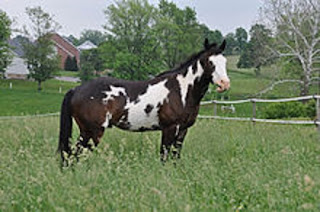
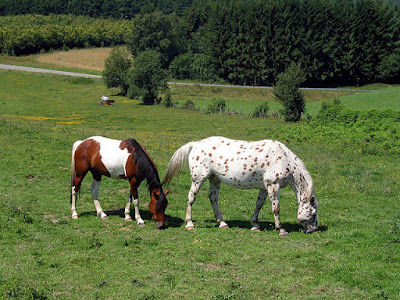
This photograph shows the difference between a Pinto

horse (left) and a leopard-spotted Appaloosa (right).

The Pinto does not have consistent conformation since it is bred for color. When the darker color is black, the horse is often described as Piebald. When the darker color is anything but black, the horse is described as Skewbald. Pintos may be from a variety of breeds, ranging from Thoroughbred to Miniatures.

What is the difference between Pintos and Paints? Of the questions posed to the PtHA, this is invariably the most frequently asked.  The short answer is the Paint Horse (registered by the APHA) is limited to horses of documented and registered Paint, Quarter Horse or Thoroughbred breeding.

I could go into more depth about the various Pinto colors, markings and categories, but anyone interested can learn more about these beautiful horses through the Pinto Horse Association of America (PtHA).

I learned a lot about Pintos as well as all types of horses for that matter, when my husband and I visited the Kentucky Horse Park in Lexington, KY.  We rode up there on our "steel horse," a Harley-Davidson Screamin' Eagle motorcycle.  They call that area the "Horse Capitol of the World," although believe it or not, Ocala, Florida staunchly contends it is.

But I tell you this, we rode over the most beautiful country roads, passing by unbelievably picturesque horse farms with their herds of horses grazing on that Kentucky Blue Grass!  I highly recommend visiting the state and in particular, taking a tour of the Horse Park and surrounding areas including Churchill Downs, the Keeneland Race Track and the Kentucky Bourbon Trail.  Yep, wouldn't have been complete if we didn't visit a couple of those Bourbon distilleries including a few tastings!

HAPPY TRAILS!


Book 1, Trail To Destiny - A turbulent cross-country journey of heated passion, bitter vengeance and a haunted past lead Grey Wolf & Laura Westbrook on their Trail To Destiny.

Book 2, Destiny's Journey - Family deception kept Jennifer O’Malley from marrying her first love ten years ago, West Point officer, Glen Herrington.  Now a Civil War widow, she leaves war-torn Richmond, determined to find her destiny.  She makes the long journey west in search of Glen, only to discover he is a notorious outlaw with a price on his head.

Book 3, Yesteryear’s Destiny - When Angela Moore skydives out of a plane and into the western frontier of yesteryear, she not only meets the love of her life, Ben Herrington, but discovers a fateful revelation that exceeds the boundaries of time and will control her destiny.


Sunday, January 30, 2022

The Unnecessary War by Zina Abbott


Once the American Civil War ended, the U.S. Army turned its attention back to dealing with the hostilities between the white Americans and Plains tribes. Part of their effort involved making treaties where the tribes –primarily Cheyenne, Arapaho, Sioux, Comanche, Kiowa, or Plains Apache—gave up rights to certain lands in exchange for reservation land plus annuity payments in food, hunting weapons, and ammunition. White Americans did not really care about any territory rights the tribes still held. Native tribes retaliated when the perceived whites had violated the treaties.

An incident on the Kansas frontier in 1867—now known as Hancock’s War—is an example of the disasters that took place due to incompetence, intolerance, and misunderstandings. It is also known by some as “The Unnecessary War.”

Part of the misunderstandings came about because generals and other high-ranking officers who performed well in the Civil War were not suited to dealing with the Native Americans. In addition to having an arrogant contempt for tribal people as a whole, they did not understand the Native way of thinking or the way their leadership was organized. In addition, they were disinclined to listen to their own Indian agents who had developed a certain rapport with the different tribes.

After several tribes carried out a series of raids and confrontations because they felt certain treaties had been broken by white Americans (in most cases, true), many generals, including Gen. William T. Sherman, then assigned to oversee the Kansas frontier region, wished to carry out a revenge expedition. Gen. Grant decided against it. Instead, he directed Gen. Winfield S. Hancock to intimidate the people of the tribes into remaining peaceful. Hancock did not have authority to make any new treaties. However, he did intend to restore peace by forcing them into submission. He intended to accomplish this with a display of military might.

Gen. Hancock was confident in his ability to bring the tribes under control and intimidate them into falling into line with United States interests. He raised a force of 1,400 soldiers involving  seven companies of the 37th Infantry under Capt. John Rsiha, eight companies of new 7th Cavalry under Col. (brevet Lt. Maj. Gen,) A. J. Smith, a battery of 4th Artillery commanded by Capt. Charles Parsons (brevit lt. col.) and some Delaware Indian Scouts, also a few white scouts including “Wild Bill” Hickok.

Also, Leavenworth (The man, not the fort, the Indian agent of Kiowas and Comanches) and Wyncoop (the Indian agent of the Cheyenne and Arapaho) came. They repeatedly offered advice regarding the best way to negotiate with the tribal leaders, but were, for the most part, ignored.

Gen. Hancock and his men marched from Fort Riley to Fort Harker, where they were joined by Colonel Custer George a Custer, with four companies of 7th Cavalry and one infantry company. At Fort Harker the Expedition added two more Cavalry troops. Gen. Hancock and his men left Fort Harker on April 3, 1866 and arrived at Fort Larned on April 7, 1866.

From Ft. Larned, Gen. Hancock sent word to the surrounding tribal leaders that he expected them to come to the fort. He wished to speak to them, but he wanted to address them all at the same time. From among the tribes’ leaders, several stood out to officers at Fort Larned by March 1867, including Satanta and Kicking Bird of the Kiowa; Tall Bull, White Horse, Bull Bear, Roman Nose, and Black Kettle of the Cheyenne; and Little Raven of the Arapaho.

A few of the chiefs met with Hancock at Fort Larned. Although they kept insisting other chiefs were on their way, they repeatedly resisted all gathering in one place at the same time.  

Hancock concluded the meeting by indicating that he wanted to meet with the other chiefs. He and his troops rode west of Fort Larned toward a combined Cheyenne and Lakota village at Pawnee Forks. On April 13, 1867, as Hancock and his men approach the village, several chiefs came out to meet them. They said they would meet with the general the following day at the location where the Army set up camp.

Gen. Hancock insisted he wanted to come into their village at Pawnee Forks to talk to the chiefs.

Worried about the fates of their families, the Cheyenne chiefs and their Lakota Sioux allies resisted. It had been only three years since the massacre at Sand Creek where a village of Cheyenne under Black Kettle and some Arapaho were massacred by a unit of Colorado Volunteers.

Insisting on having his way, on April 14, 1867, Gen. Hancock ordered his troops forward. As the army drew nearer the village, a group of about 300 Cheyenne warriors—dressed in full battle array—rode out to meet them, mirroring the army’s display of military strength.

Cheyenne Warriors

Gen. Hancock and his forces continued to move forward. Before reaching the Cheyenne camp, they were met by a large body of Indians waving a white flag. The Chiefs said they wanted peace instead of War.

Colonel Ned Wynkoop, the Cheyenne and Arapaho Agent at Fort Larned from 1866 to 1868, rode out between the lines to ask the warriors to stay calm and stay put. The warriors agreed. The Army troops marched to within one mile of the village and set up camp.

Fearing that the Army intended to attack their village, the women and children—along with many of the men to protect them—fled the village. They left their lodges and belongings—including most of their food—behind.

Gen. Hancock, talked and acted as though he could not understand of why the people would flee. Offended that they would have the audacity to take independent action, he demanded the return of the villagers. Some of the Cheyenne warriors obliged Hancock and rode to look for the women and children, but returned empty-handed. However, after observing the general’s anger and fearing retaliation, they fled without staying for any “talks.”

Gen. Hancock was far from acting in good faith with the Cheyenne. On the sly, he ordered Col. Custer’s 7th Cavalry to surround the village that night to keep them from running. However, Custer and his men either got there too late, or the villagers escaped past them.

Custer pursued them the next day. He discovered two stations of the Overland Stage Company on the Smoky Hill Trail had been raided and several people killed. He sent back word it must have been the escaping Cheyenne. He later realized it could not have been them (It was the work of the Lakota chief, Little Raven, and his warriors, who left the Cheyenne village shortly after Gen. Hancock and his troops arrived.) By the time Col. Custer sent another message saying, because of timing, it could not have been the Cheyenne, it was too late for the village.

On April 18, 1867, Hancock, contrary to Indian Agent Wyncoop’s advice, confiscates all Cheyenne goods and burned the village. He justified it by claiming the Cheyenne were “a nest of conspirators.”

Enraged, the Cheyenne vowed revenge. They waged war, not only on the U.S. Army, but on any white Americans whose paths they crossed. 1867 was considered an “unprecedented season of violence on the plains of Kansas.”

For more details about his incident, as well as some of the quotes by participants I used as chapter headers, please CLICKHERE.


I featured this incident in my book, Hannah’s Highest Regard, the second book in the box set, Hannah’s Lieutenant, I recently published. The box set is available in both ebook and print formats.


Sources:

https://www.nps.gov/fols/learn/historyculture/hancocks-war.htm

https://www.legendsofamerica.com/hancocks-war/


Friday, January 28, 2022

THE GREAT STORM THAT SURPRISED THE PACIFIC NORTHWEST

 Have you ever claimed something to be true and promptly afterward been shown up? The poor territorial governor of Washington State had this happen to him in 1880. He had just finished sending out his State of the Territory address in which he stated that the Seattle area has a mild climate and "ice and snow are almost unknown to Washington Territory" when it actually began snowing on January 5, 1880.


For most of the other townships in the Pacific Northwest, they didn't see the great storm hit their area until Friday, January 9, 1880. What is now believed to have been a Category 3 hurricane landed on the West Coast along southern Washington and northern Oregon. Somehow the extratropical storm (typhoon) formed deep in the Pacific Ocean but didn't follow the normal pattern of heading westward out to the islands. Instead it got pulled into a jet stream of cold air north of Seattle and dragged onto the coastline. Two vessels on the ocean at the time, the S.S. Oregon and the Victoria, reported an unusual and significant drop in barometric pressure, their readings only registering 28. 20". And in Portland, Oregon, the barometric pressure dropped to 28.56", the lowest reading on record. The same goes for Astoria - the reading of only 28.45" still stands as a record to this day.


Depending on which source you read regarding the Great Gale of 1880, or Storm King, as this hurricane came to be called, the region experienced winds from 70 miles per hour to 138 miles per hour. Most people remained inside, but there were a few hardy souls who were caught in it, and although there was thankfully minimal loss of human life, several heads of livestock were lost and buildings in Seattle and Olympia were smashed to pieces. Near Portland, over 500 trees measuring over 175 feet tall, were blown down, causing the trains to stop. Rivers overflowed with water, and the tide rose seven feet above normal. The Rev. A. Attwood, walking between Oakville and Turnwater, noted that "raging rivers" had formed from "small brooks" and there were many downed trees.


Seattle received 4-6 inches of snow, Tacoma 54 inches, and Eugene, Oregon 5 inches. Siletz, Oregon received 18 inches of snow. One newspaper, the Itemizer out of the Dalles, reported: "The storm of Friday was considered very severe here at the time, but since the reports of the havoc in other places, we have concluded that we had no storm here to speak of."


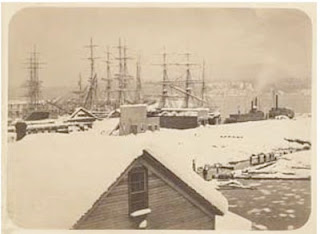
Here is a picture of the Seattle harbor when it was hit by this storm:


Although this storm only seems to have hit the shoreline as far south as Coos Bay, Oregon (where it blew a 3-masted schooner onto the beach, breaking it into two pieces) I have taken creative license with it and am extending the area affected by this hurricane all the way south and east to Grant's Pass and Medford, Oregon, for plot purposes in my work in progress, a prequel to my Brides of Hope Hollow series called An Abiding Hope. I can't show you the cover right now because it is part of a larger promotion that will launch in April, but what I can share with you is that this story will affect a young woman named Penny Burton from San Francisco as she is traveling up by train to Portland. When the weather turns nasty, the train stops in Hope Hollow (approximately 15 miles south and east of Ashland, Oregon) while the engineers and conductor try to decide whether to continue the journey. When Penny inadvertently becomes stranded in the small town, newspaper reporter Nathan Hoffman is there to assist her--in a rather unusual way. A marriage of convenience results from their unlucky encounter, a marriage which neither of them wanted but will learn is the best thing to ever happen to them.


Nathan will also contend with a few of the foes that appear in later books in the series, particularly books 4 and 5, with one of those foes being named at the very end of book 5, Hope in Her Heart. You can read these two books here:


On the Wings of Hope: amzn.to/3b3iWbq

Hope in Her Heart: https://amzn.to/2ZxYYUg


Please also note that I have made a few changes to the book covers in this series in order to more clearly brand it as a sweet historical Western romance series.