Sunday, April 12, 2015

A Horse is a Horse: Breeds Common in the Old West

Wild Horses in Arizona (photo by John Harwood)
By Kathleen Rice Adams

In the Old West, a horse was a horse, right? As long as it had four hooves and a modicum of “horse sense,” nobody really cared about its pedigree, did they?

Yes and no. Just as in the modern world, folks used different horse breeds for different purposes—and a broader spectrum of horse breeds and purposes existed than most people realize.

Without considering draft horses, ponies, and mules (which are fodder for other posts), here are some of the more common horse breeds found west of the Mississippi River. This is not an exhaustive list by any stretch of the imagination—just an accounting of the breeds most folks would have recognized.

Mara, an American Quarter Horse mare
(photo by Derrick Coetzee)
American Quarter Horse
A truly American breed, the Quarter Horse was essential to life on the frontier for very good reasons: They could do almost everything. Heavily muscled, hardy, and acutely intelligent, Quarter Horses were the horses that won the West.

Steel Dust, the first recognized Quarter Horse, was foaled in Kentucky from stock developed in the Colonies by crossing English stock with animals left behind by the Spanish conquistadors. After his arrival in Texas in 1844, the breed came into its own. Originally called “Steeldusts,” the horses quickly became a favorite of Texas ranchers, who admired their “cow sense,” calm disposition, and the short-coupled bodies that made them maneuverable in a variety of terrain. Found in every remuda and pasture from the southern tip of Texas to Canada and from the East Coast to California, the horses worked cattle, broke sod, pulled wagons and buggies…and raced. Racing was as common in the old west as cattle drives and quilting bees. Quarter Horses came by their enduring breed name because on a straight, level quarter-mile track, they can outrun any other horse on the planet—including Thoroughbreds.

American Saddlebred yearlings (photo by Heather Moreton)
American Saddlebred
A cross between the now-extinct Narragansett Pacer and Thoroughbreds, American Saddlebreds were common by the time of the American Revolution, when they were called simply American horses. Tall and graceful like Thoroughbreds, they also exhibited the Pacer’s easy-to-ride gait. Known as Kentucky Saddlers by the early 1800s, owners and breeders prized the animals for their beauty, pleasant temperament, eagerness, strength, and stamina. Although used in the West primarily to pull carriages and provide snazzy mounts for the wealthy, they also did their share of hard work on ranches and farms.

Nez-Perce men with an Appaloosa, 1895
Appaloosa
The Appaloosa arose among the Nez-Perce Indians of the Pacific Northwest. The Nez-Perce were skilled horse breeders, and by selecting the best animals from among the wild herds, they produced equines especially suited to war and hunting. The horses were practical, hardy, and versatile with the additional advantages of tractability, good sense, and almost endless stamina.

Unfortunately, the color pattern that made the horses distinctive also led to the downfall of their creators. To escape continuously broken treaties and the U.S. government’s Indian extermination policies, the Nez-Perce headed for Canada under relentless pursuit, only to surrender several miles from the border when starvation and ceaseless battle prevented their continued flight. The government confiscated their horses—a symbol of the people—and sold them to local settlers, hunting and killing the animals that got away. Today, the annual Chief Joseph ride, open only to Appaloosas, travels the last 100 miles of the Nez-Perce trail marking the battles of Chief Joseph’s band with the U.S. Cavalry nearly 140 years ago.

Mirage, an Arabian stallion (photo by Trescastillos)
Arabian
Prior to the first Arabian’s arrival in the U.S. as a gift to President George Washington, the world’s oldest true breed enjoyed a long and storied history as prized mounts of royalty and European war horses. In 1877, the Sultan of Turkey presented a pair of stallions to General Ulysses S. Grant, who bred them to Arabian mares imported from England. Celebrated for their beauty, intelligence, loyalty, and stamina, a few were used as cavalry mounts in the Civil War but the majority saw lives of leisure among the wealthy in the Old West.

Quick Trigger, a Missouri Fox Trotter (photo by Kayla Oakes)
Missouri Fox Trotter
Developed around 1821 in the Ozark Mountains of Arkansas and Missouri, the Fox Trotting Horse comprised a mixture of Morgan, Thoroughbred, and Arabian bloodlines. The horses excelled at plowing, hauling logs, and working cattle in the rugged, rocky terrain. After adding Tennessee Walker and Standardbred blood, the horses became known as Missouri Fox Trotters and went West as stylish buggy and riding horses. Because of the breed's ability to travel long distances at a speed of five to eight miles an hour, Missouri Fox Trotters quickly became a favorite of sheriffs and marshals, country doctors, and others who needed a comfortable ride.

Known for their surefootedness, sweet nature, and comfortable seat, today Missouri Fox Trotters are the horse of choice for the National Park Service.

Morgan colt (photo by Laura Behning)
Morgan
America’s first recognized horse breed descended from a two-year-old stallion of unknown ancestry acquired by a teacher in 1791 as settlement of a debt. The horse famously passed along his extraordinary traits, including sweet disposition, cobby and well-muscled body, and hardiness. Morgans were official cavalry mounts on both sides during the American Civil War. Confederate General Stonewall Jackson and Union General Philip Sheridan both rode Morgans they personally owned.

Both before and after the war, Morgans served as draft horses, stock horses, and speedy, durable mounts, playing roles on farms and ranches, among the miners during the California Gold Rush, as favored mounts of the Pony Express, and racing horses. Morgan blood heavily influenced the development of Quarter Horses in Texas. Although the breed almost died out in the 1870s, a few diligent breeders revived the bloodlines that continue today.

Mustangs in Nevada (Bureau of Land Management photo)
Mustang
America’s feral horses are living history and an enduring reminder of the country’s Wild West past. Descended from escaped and abandoned horses brought to the New World by the Spanish in the 1500s, Mustangs claim Barb, Sorraia, and Andalusian blood, along with traits inherited from all other American breeds. “Hot” horses (meaning they love to run), their intelligence and intuition made them notoriously difficult to catch, contain, and tame, but once domesticated, Mustangs became strong, loyal, reliable, and sturdy mounts and draft animals, performing all sorts of tasks in the American West.

In 1900, approximately 2 million Mustangs roamed 17 western states; by 1970, thanks to an extermination program undertaken by stockmen who considered the wild horses a threat to their range and purebred herds, fewer than 17,000 remained. The Wild Free-Roaming Horse and Burro Act of 1971 protects the animals now. Under the auspices of the Bureau of Land Management, herds thrive on open rangeland in Nevada, Arizona, New Mexico, Montana, Wyoming, and several other western states. Without natural predators, herds can double in four years, so the BLM periodically conducts roundups and places the detainees up for adoption. Those not adopted are re-released. (The BLM program is controversial and way beyond the scope of this post.)

Paint Horse (photo: American Paint Horse Association)
Paint Horse
Paints, also called pintos during the period, were favored by the Comanche Indians not only for their speed and endurance, but also because their “loud” color patterns gave the horses and their riders “magic” in battle. Reportedly brought to the New World by Hernando Cortés, the first horses with “white splotches” appeared on the American continent in 1519. Some escaped, others were left behind when the explorers returned to Spain, but eventually the animals interbred with other wild horses and produced entire herds with paint markings.

Similar to American Quarter Horses in body type, appearance, and versatility, modern Paints also are considered quintessential stock and rodeo horses.

 Rocky Mountain Horse (photo by Heather Moreton)
Rocky Mountain Horse
Somewhat of a latecomer, the Rocky Mountain horse originated in the foothills of the Appalachian Mountains of Kentucky. Largely a secret outside that area until about 1880, the horses were surefooted, easy-gaited, and versatile. In the Old West, postmen, doctors, and traveling preachers favored the horses. Because the breed also is strong and tough, Rocky Mountain Horses were used to plow fields, herd cattle, and pull buggies and wagons.

Tennesse Walking Horse (photo by Jean)
Tennessee Walking Horse
Known today primarily for its “running walk” gait and flashy, high-stepping movement, the original Tennessee Walking Horses were developed in the American South for use on plantations in all sorts of capacities. The breed’s ancestors include Narrgansett Pacers, Canadian Pacers, and Spanish Mustangs from Texas. Today’s breed arose in the late 1800s after interbreeding with Morgan stock.

Primarily a pleasure-riding horse for well-to-do city dwellers, a few Tennessee Walkers were employed by Old West doctors and others who required a mount that wouldn’t jar all their bones loose during lengthy trips.

Canadian Horse (photo: Rare Breeds Canada)
Canadian Horse
One last breed deserves mention, not because people would have encountered it in the Old West, but because it contributed a great deal to other breeds. Descended from draft and riding horses imported to Canada in the late 1600s, the Canadian Horse became popular in the American Northeast during the late 1700s. Due to massive exportation to the U.S. and Caribbean, along with extensive and often fatal service during the American Civil War, the breed nearly became extinct in the mid-19th Century.  In the mid-20th Century, a group of dedicated breeders began a repopulation program, but the horse remains a rare breed.
http://holeinthewebgang.com/


Friday, April 10, 2015

Texas Women in History and Government


I missed posting early this morning as I remembered until yesterday. We didn't have internet all day, so I guess I removed all traces of responsibility from my head. BIG oops. I'm sharing a post I submitted to Smart Girls Read Romance last month on Women in Texas History and Government. I promise to be better next month.

March was Women's History Month so I thought I'd talk about several women who've made strides in government to help shape our future in the state of Texas and the world

Sarah Cockrell


 I've spoken before about Sarah Cockrell (1819-1892), a business woman who built the first iron bridge over the Trinity River in Dallas in 1872. She thought big and invested wisely and set up her own corporations. When she died in 1892, her properties were so extensive that her will had to be published in pamphlet form.


Molly Goodnight (1839-1926) established the first ranch household in the Texas Panhandle in 1877. She rescued orphaned buffaloes, had her own cattle brand, the Flying T and helped establish the Goodnight College in 1898.
Mollie Goodnight


Elizabet Ney

Elizabet Ney (1833-1907) was a renowned sculptor from Bavaria. She
moved to Texas with her husband in 1872. She secured a commission to create statues of Stephen F. Austin and Sam Houston for the Chicago World's Fair in 1893. She became the outspoken advocate of the teaching of fine arts in the state's schools and was instrumental in the founding of the Texas Fine Arts Association.


Minnie Fisher Cunningham
Minnie Fisher Cunningham (1882-1964) was President of the Texas Equal Suffrage Association from 1915 to 1920 and became the first executive secretary of the National League of Women Voters. She was an important leader in the campaign for votes for women on the state and national levels. Graduating in 1901, she was one of the first women in Texas to receive a pharmacy degree from the University of Texas medical school. She ran for but lost races for the U.S. Senate in 1928 and for governor in 1944.


Sarah T. Hughes
Sarah T. Hughes was an attorney, legislator, women's rights activist, United Nations supporter, and Texas' first female state and federal judge. A member of a Dallas law firm from 1923 to 1935. she was elected to her first term in the Texas House of Representatives as a Democrat on 1930 and voted "Most Valuable Member" her second term. In 1935, she became Texas' first female district judge and was reelected seven times. She was Dallas County co-chair of the Kennedy-Johnson campaign in 1960, and in the following year, President John F. Kennedy appointed her Texas' first female federal judge. After Kennedy's assassination in 1963, she administered the Presidential oath of office to Lyndon B. Johnson.


These are but a few of the many women who have influenced me and I hope by reading about these women, you'll be inspired to read more about them or look up other influential women in our state of Texas and other states in our great nation.

Thank you for stopping by today. I love seeing y'all here on Sweethearts of the West.

Hugs, Carra

  Carra Copelin WebsiteCarra's Blog , Carra's FB page , Carra's Twitter Page
   

Wednesday, April 8, 2015

One Thousand White Women

By Celia Yeary

THE ORIGINAL COVER
FOR
ONE THOUSAND WHITE WOMEN
One Thousand White Women-by Jim Fergus
A Review and Commentary

Blurb:
One Thousand White Women is the story of May Dodd and a colorful assembly of pioneer women who, under the auspices of the U.S. government, travel to the western prairies in 1875 to intermarry among the Cheyenne Indians. The covert and controversial "Brides for Indians" program, launched by the administration of Ulysses S. Grant, is intended to help assimilate the Indians into the white man's world. Toward that end May and her friends embark upon the adventure of their lifetime.
Jim Fergus has so vividly depicted the American West that it is as if these diaries are a capsule in time.
~~*~~*~~
One Thousand White Women: The Journals of May Dodd by Journalist Jim Fergus was published in 1998. It is written as a series of journals chronicling the adventures of an "J. Will Dodd's" ancestor--May Dodd-- in a "Brides for Indians" program of the United States government.

The premise of the story is that the Northern Cheyenne Indians are shrinking in numbers and seek a way to assimilate into white society. They decide to marry white women and have half-blood children, enabling the two cultures to blend naturally. The Cheyenne Chief Little Wolf approaches President Ulysses S. Grant with the proposal to trade 1000 white women for 1000 horses, an offer publicly refused by the government.

However, the U.S. government sees placating Indians as being to their benefit, so they begin the "Brides for Indians" program in which women who are physically healthy and of child rearing age may volunteer to go.

In order to keep the plan unpublished, they offer the trip to women in prisons, asylums, and other restrictive situations.

In Chicago, May Dodd was born into a wealthy family but she fell in love with a man who was "beneath" her, and bore his two children out of wedlock. Her family had her institutionalized in a mental asylum and had her children taken away.

The "Brides for Indians" program sounded like a way out of the asylum, so she joined and started a life of adventure.
~~*~~*~~
The book is Fergus' debut novel based partially on fact blended with his wonderful imagination to tell a tale of a remarkable group of women who embarked on an adventure into the land of the Cheyenne in 1854.

"The women move out west to become the brides of Cheyenne warriors," Fergus said. "It is based on a true event."

FACT: In 1854 a group of Cheyenne chiefs requested of the white authorities one thousand white women as brides for their young warriors. The Cheyenne were a society in that any child born automatically belonged to the mother's rather than the father's tribe. As early as 1854 the Cheyenne saw that their life as they knew it as free people was going to be soon swallowed by the whites. They saw this as the perfect way to assimilate themselves into white culture. All of their offspring, from their way of thinking, would automatically be white people.

But, the peace conference where the Cheyenne made their proposal fell apart and the women were not actually sent to mate with the Cheyenne.

"But in my book they do," Fergus said.

Fergus was researching a non-fiction book about the Cheyenne for a biography of Little Wolf, chief of the Cheyenne nation, when he learned about the request for the women. He knew he could expound on the subject and turn it into a novel about what could have happened if the chiefs had not been refused.

"I wasn't sure just what I was going to do with the information at first," he said. "I thought it was going to be a non-fiction book. Then I thought it was going to be a collection of three novellas. My agent decided to drop the other two and turn this one into a novel. I was very intrigued by this, I couldn't get it out of my mind. I got to thinking what if it really did happen."

NEW UPDATED COVER
FOR
ONE THOUSAND
WHITE WOMEN
~~*~~*~~

If one did not read the description carefully, one would read this novel as a true story--May Dodd's story.

There was no May Dodd.

There are some who maintain the tale is all true.

The author created this story, but he did use several non-fictional entities to his novel, including:

Chief Little Wolf of the Northern Cheyenne tribe.

Description of many Cheyenne beliefs.

The military forced move to the reservations.

Some other situations are adapted from real life, including Little Wolf's murder of a tribe member and exile.

One Thousand White Women can be found in ebook form, hardback, and paperback. I read this novel several years ago by checking it out of our city library.

Celia Yeary
SOURCES:
Novel: One Thousand White Women
Blurb for the novel
Jim Fergus's notes.
Wikipedia
Amazon

Sunday, April 5, 2015

FACT AND FICTION ON A COLLISION COURSE FOR A FUN STORY AND GIVEAWAY!! by Kirsten Lynn

Sometimes a story is born from an actual event in history. This is the case with my newest release THE WIDOW'S LAWMAN.  Butch Cassidy, Harry Longabaugh (The Sundance Kid) and the rest of their Wild Bunch are popular subjects of study near where I live, mainly because the Hole-in-the-Wall is right down the road.

From researching the Wild Bunch and the Wilcox train robbery, a stubborn widow and an outlaw failing to reform were born. Along with these two wild and wonderful characters, Butch, Sundance, Etta and the boys came to life and joined forces to wreak havoc on the Wyoming countryside.

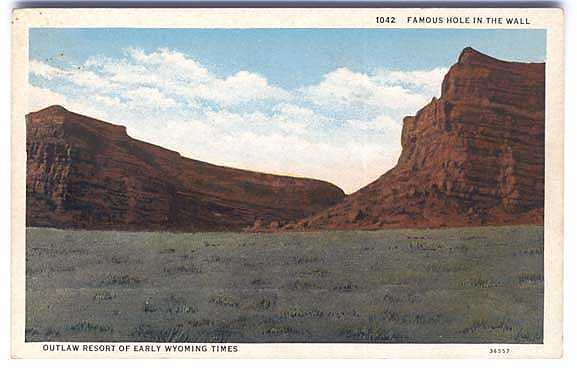
First let me give you a little peek at the Hole-in-the-Wall.


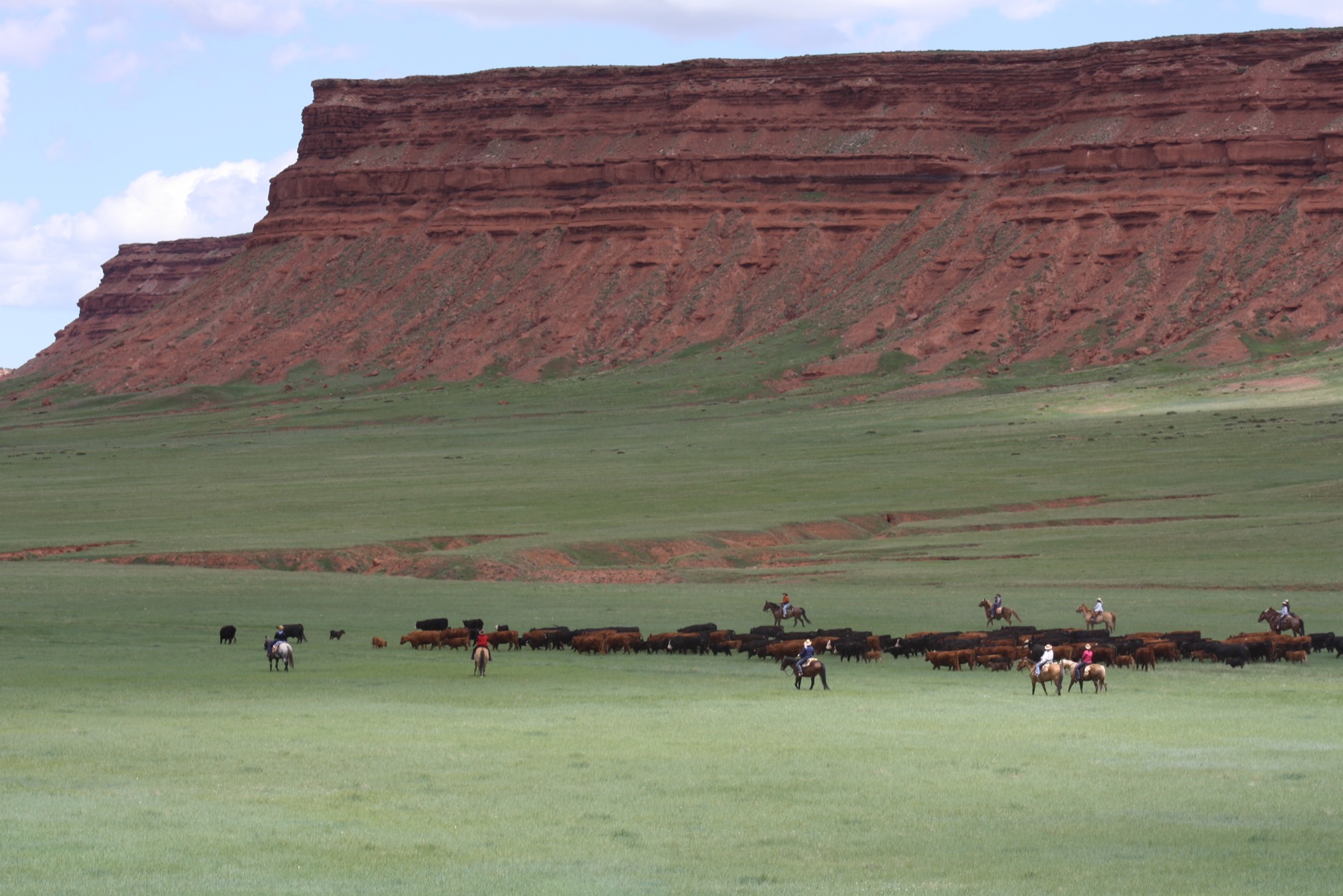
In Southwest Johnson County, Wyoming lying between the Red Wall and Big Horn Mountains is the most famous hideout on the Outlaw Trail, the Hole-in-the-Wall. Between roughly the 1860s and 1910, 30 to 40 outlaws stayed in the secluded spot including Jesse James and Butch Cassidy’s Wild Bunch.                                                                               

The area was (and still is) isolated taking about a day’s journey by horseback from any semblance of civilization. It is a steep climb to the top of the Wall, but overlooking the country below it is no wonder this location was chosen. With sweeping 360 views the pass was well situated to spot approaching lawmen and the narrowness of the approach made it easy to defend. The grassy plateau at the top and creek bed of the canyon below made it a good spot to graze all the rustled cattle.


In this area in the 1880s and 1890s, rustlers grazed stolen cattle and provided refuge to outlaws. Inhabitants of the six cabins that stood in the valley were known as the Hole-in-the-Wall Gang. Members of the gang included Bob Smith, Al Smith, Bob Taylor, George Currie, Tom O’Day, and the Roberts Brothers. Later Robert Leroy Parker (Butch Cassidy), Harry Longabaugh (the Sundance Kid), and Harvey Alexander Logan (Kid Curry).


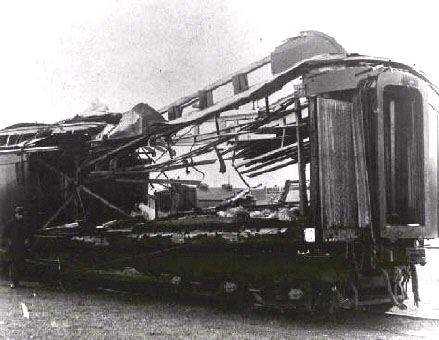
A trestle across the Union Pacific near Wilcox, Wyoming at 1:00 a.m., June 2, 1899, forces the Overland Flyer to halt. Men wearing masks made from white napkins, possible stolen from the Harvey House Restaurant, boarded the train. One of the men after unsuccessfully forcing the engineer to pull the train forward, clubbed the engineer with a gun butt and pulled the train forward himself. The trestle was dynamited to prevent the second section of train from catching up. The train was pulled forward two miles and stopped.
There the express car was surrounded, and the attendant, E.C. Woodcock, was ordered to open the door. He refused. The car was blown up. Woodcock suffered a concussion from the blast and couldn't remember the combination to the safe. The gang blew up the safe. Initial reports stated the Wild Bunch made off with $30,000, some of the bank notes being scorched by the explosion or stained with raspberries also in the car. Later the superintendent of the Union Pacific, confirmed the gang made off with over $50,000 in stolen items, bank notes and even gold. 
then Union Pacific Superintendent W.L. Park wrote that the railroad had actually lost more than $50,000, some of it in gold. The outlaws escaped in a northerly direction, toward the Hole-in-the-Wall, a well-known outlaw enclave in the middle of Wyoming. - See more at: http://www.historynet.com/the-wilcox-train-robbery.htm#sthash.RHe0zya9.dpuf

Even though the men were masked immediate suspicion fell on the Wild Bunch.  Other newspapers identified the culprits as the Roberts brothers and reported the robbers to be George Currie and the Roberts brothers. It is now believed the name “Roberts” was used by Sundance and Harvey Logan. Authorities believed some of the robbers were headed for the Hole-in-the-Wall. Posses gave chase. Near Teapot Creek some of culprits were cornered by a posse led by Converse County Sheriff Joe Hazen. In the ensuing fire fight, Sheriff Hazen was killed and the train robbers made their escape by swimming across the river.

The members of the Wild Bunch involved included: "Flatnose" George Curry, Harvey Logan "Kid Curry," Lonnie Logan,  Harry Longabaugh "Sundance Kid," Ben Kilpatrick "The Tall Texan,"  and Will Carver.  Butch was thought to have been the mastermind behind the robbery, but did not participate in the actual robbery. In 1896, Butch was pardoned by Governor William A. Richards from the Laramie Penitentiary. The condition of this pardon was Butch promised to never again participate in any crimes within Wyoming's borders.

The Wilcox train robbery became one of the most famous train robberies in the West. A year later the Wild Bunch held up a second train near Tipton, Wyoming. While these robberies were successful, they also signaled the end of the Wild Bunch. Butch, Sundance and Etta made their way to South America. Other members were eventually tracked down and killed or imprisoned.

In one of those history makes a great a story, poor Agent Woodcock was the agent aboard the train during the Tipton train robbery. 

The Flyer also carried horses...And that's where Jake and Ellie enter the picture.


GIVEAWAY: Today I'm giving away TWO e-book copies of THE WIDOW'S LAWMAN, so you can have a chance to join the fun. Please leave a comment and your contact information for a chance to win.

Join Jake, Ellie, Butch, Sundance and the Wild Bunch on the track to true love...and a lot of shenanigans along the way.

Outlaw Jake Avery is handed an ultimatum--hang for his crimes, or become the new Sheriff of Sheridan, Wyoming. When he chooses the life of a lawman, he doesn’t expect a local widow woman to tangle with his emotions.

Ellie Reed needs Sheridan’s new sheriff to help her rob a train, and recover her late husband’s treasured property. She doesn’t expect the outlaw-turned-sheriff to steal her heart, as well.

As the train barrels through Wyoming, Jake and Ellie plan a robbery to avenge the past. But can they heist a future together?


 AMAZON BUY LINK

BARNES & NOBLE BUY LINK


 Kirsten Lynn writes stories based on the people and history of the West, more specifically those who live and love in Wyoming and Montana. Using her MA in Naval History, Kirsten, weaves her love of the West and the military together in many of her stories, merging these two halves of her heart. When she's not roping, riding and rabble-rousing with the cowboys and cowgirls who reside in her endless imagination, Kirsten works as a professional historian.
 
FACEBOOK    WEBSITE   TWITTER   NEWSLETTER

Saturday, April 4, 2015

Washing Day in the 1800's


Being a full time writer affords me the convenience of being home on a daily basis and one would assume the house work would be easily accomplished. That's not the case. Like most everyone else, its still a chore. Nothing like it was one hundred years ago, thankfully. Stuffing a load of laundry into a machine to wash is easy compared to the job it was in the 1800's. Take a look at the following excerpt from the book The Easiest Way In Housekeeping and Cleaning by Helen Stuart Campbell, 1893.


The advantages of washing on Tuesday are, that it allows Monday for setting in order after the necessary rest of Sunday, gives opportunity to collect and put in soak all the soiled clothing, and so does away with the objection felt by many good people to performing this operation Sunday night.
To avoid such sin, bed-clothing is often changed on Saturday; but it seems only part of the freshness and sweetness which ought always to make Sunday the white-day of the week, that such change should be made on that morning, while the few minutes required for sorting the clothes, and putting them in water, are quite as legitimate as any needed operation.
If Monday be the day, then, Saturday night may be chosen for filling the tubs, supposing the kitchen to be unfurnished with stationary tubs. Sunday night enough hot water can be added to make the whole just warm—not hot. Now put in one tub all fine things,—collars and cuffs, shirts and fine underwear. Bed-linen may be added, or soaked in a separate tub; but table-linen must of course be kept apart. Last, let the coarsest and most soiled articles have another. Do not add soap, as if there is any stain it is likely to set it. If the water is hard, a little borax may be added. And see that the clothes are pressed down, and well covered with water.
Monday morning, and the earlier the better (the morning sun drying and sweetening clothes better than the later), have the boiler full of clean warm suds. Soft soap may be used, or a bar of hard dissolved in hot water, and used like soft soap. All the water in which the clothes have soaked should be drained off, and the hot suds poured on. Begin with the cleanest articles, which when washed carefully are wrung out, and put in a tub of warm water. Rinse out from this; rub soap on all the parts which are most soiled, these parts being bands and sleeves, and put them in the boiler with cold water enough to cover them. 
To boil up once will be sufficient for fine clothes. Then take them out into a tub of clean cold water; rinse them in this, and then in a tub of water made very slightly blue with the indigo-bag or liquid indigo. 
From this water they must be wrung out very dry, and hung out, always out of doors if possible. A wringer is much better than wringing by hand, as the latter is more unequal, and also often twists off buttons.  The lines must be perfectly clean. A galvanized-iron wire is best of all; as it never rusts, and needs only to be wiped off each week. If rope is used, never leave it exposed to weather, but bring it in after each washing. A dirty, weather-stained line will often ruin a nice garment. Leave clothes on the line till perfectly dry.
If any fruit-stains are on napkins or table-cloths, lay the stained part over a bowl, and pour on boiling water till they disappear. Ink can be taken out if the spot is washed while fresh, in cold water, or milk and water; and a little salt will help in taking out wine-stains. Machine-oil must have a little lard or butter rubbed on the spot, which is then to be washed in warm suds. Never rub soap directly on any stain, as it sets it. For iron-rust, spread the garment in the sun, and cover the spot with salt; then squeeze on lemon-juice enough to wet it. This is much safer and quite as sure as the acids sold for this purpose. In bright sunshine the spot will disappear in a few hours.


I can imagine wash day filled with many back breaking hours, made even more uncomfortable when you factor in women of that time wore long dresses every day. I'll never enjoy doing laundry but I certainly won't complain about how easy I have it compared to my ancestors.


About Lily Graison

USA TODAY  bestselling author Lily Graison writes historical western romances and dabbles in contemporary and paranormal romance. First published in 2005, Lily has written over a dozen romance novels that range from sweet to spicy.

She lives in Hickory, North Carolina with her husband, three high-strung Yorkies and more cats than she can count and is mother of two and grandmother of three. On occasion, she can be found at her sewing machine creating 1800’s period clothing or participating in civil war reenactments and area living history events. When not portraying a southern belle, you can find her at a nearby store feeding her obsession for all things resembling office supplies.

To see the dresses Lily has created, visit her Pinterest page.

Website | Facebook | Twitter | Goodreads | Pinterest | Google+ 
Wattpad | Instagram | Push Page


Thursday, April 2, 2015

Charles Kirkpatrick, Jr. - Emigrant, Writer, Surgeon Major

Written by Paisley Kirkpatrick
My great-great grandfather, Dr. Charles Alexander Kirkpatrick, kept a journal during his adventurous travel by wagon train across the country in 1849. Written with such eloquence, it is on microfilm and sealed in a glass container and kept in an air tight room in the Bancroft Library at the University of California, Berkeley, California. Its size is about 9 x 12 inches and its cover is of leather, which is tattered and very delicate due to its age. There are a total of forty hand-written pages. It was willed to the Bancroft Library so others could read about the adventurous early California pioneer.
An excerpt from my great-great grandfather's journal:
"This morning we again started on our journey and at 2 p.m. we had the best view of the train that we have had since we started. The road, in order to keep on good ground, forms a complete letter 'S'. In the middle of the letter, as it were, is a very high front from which a person can see the road and the wagons as far as the eye could distinguish objects. Within the range of this letter could be distinguished and counted with the naked eye 100 teams, all bound on the fool's errand to California. In this company might be seen the old gray-headed man who had almost numbered his three score and ten - the mother with the babe on her breast - the blushing girl of 16, but who by the time she had reached California will have lost the maiden blush by the association with the course vulgarity with which she is surrounded. It is useless to speak of particular characters, for every description from the reverend priest to the low footpad may be found enroute for California. And pain, disease and death also accompany us and, first one and another of our company are silently laid by the roadside to wait the summons of the Judgment day. And yet this makes no impression upon the survivors. The next day appears as though nothing had happened."
At the point of his adventure from St. Joseph, Missouri, to the gold fields of California, Charles was well-educated and already had his degree as a doctor of medicine. His handwriting was a beautiful script and written by a man with high morals and consideration of his fellow man.
Becoming rich in the gold fields didn't materialize, so he returned to the practice of medicine. He married and moved to Rio Vista, California, where he practiced his profession, had a pharmacy, and was also the postmaster of the town.
This is the can Surgeon Major Kirkpatrick kept his belongs in during the Civil War.
He kept his epilates on top inside the can.
In the photo below are all the objects inside the can.
When the Civil War broke out he volunteered as a surgeon in the army from October 15, 1861 to October 15, 1865, and was stationed at Fort Mason, San Francisco, California and Fort Douglas, Utah as a Surgeon Major.
After the war he became one of the leading doctors in San Francisco and Redwood City, California. In order to raise his family in a more favorable atmosphere he had built a lovely ten room home in Redwood City. It was considered a fine modern home at the time.
One of the many interests Dr. Kirkpatrick had was acting. He and his friends performed plays which were presented in their spacious home in Redwood City. Elaborate costumes were made and worn by the cast members. One of his associates was Mrs. Brown, a survivor of the Donner Party. Another friend, sculptor Douglas Tildon, made the famous Mechanic Statue which is displayed on Market Street in San Francisco.
My grandfather, Arthur Rowell Kirkpatrick, Jr., was born in this elaborate house and was delivered by his own grandfather, Charles Kirkpatrick on May 24, 1891. Dr. Kirkpatrick died in St. Luke's Hospital in San Francisco on April 27, 1892.