Sunday, November 18, 2012

Thanksgiving in History


Thanksgiving in History
Just for the sake of historical factitude (I know. Not a word.), Thanksgiving was not a regular American holiday until Abraham Lincoln proclaimed it a holiday for October 3, 1863. Imagine celebrating Thanksgiving before Halloween, but there ya go. So, for the most part, westerners didn’t celebrate Thanksgiving. Nobody did. Then during the most deadly war the United States has ever known, the nation took a breath as Abraham Lincoln delivered this proclamation:

The Year that is drawing to a close, has been filled with the blessings of fruitful fields and healthful skies. To these bounties, which are so constantly enjoyed that we are prone to forget the source from which they come, others have been added, which are so extraordinary a nature, that they cannot fail to penetrate and soften even the heart which is habitually insensible to the ever watchful providence of Almighty God.
In the midst of a civil war of unequaled magnitude and severity, which has sometimes seemed to foreign States to invite and to provoke the aggression, peace has been preserved with all nations, order has been maintained, the laws have been respected and obeyed, and harmony has prevailed everywhere except in the theater of military conflict; while that theater has been greatly contracted by the advancing armies and navies of the Union.
Needful diversion of wealth and strength from the fields of peaceful industry to the national defense, have not arrested the plough, the shuttle or the ship; the axe has enlarged the borders of our settlements, and the mines, as well of iron and coal as of the precious metals, have yielded even more abundantly than heretofore.
Population has steadily increased, notwithstanding the waste that has been made in the camp, the siege, and the battle-field; and the country, rejoicing in the consciousness of augmented strength and vigor, is permitted to expect continuance of years with large increase of freedom.
No human counsel hath devised nor hath any mortal hand worked out these great things. They are the gracious gifts of the Most High God, who, while dealing with us in anger for our sins, hath nevertheless remembered mercy.
It has seemed to me fit and proper that they should be solemnly, reverently and gratefully acknowledged as with one heart and one voice by the whole American People.
I do therefore invite my fellow citizens in every part of the United States, and also those who are at sea and those who are sojourning in foreign lands, to set apart and observe the last Thursday of November next, as a day of Thanksgiving and Praise to our beneficent Father who dwelleth in the Heavens.
And I recommend to them that while offering up the ascription's justly due to Him for such singular deliverance's and blessings, they do also, with humble penitence for our national perverseness and disobedience, commend to His tender care all those who have become widows, orphans, mourners or sufferers in the lamentable civil strife in which we are unavoidably engaged, and fervently implore the interposition of the Almighty hand to heal the wounds of the nation, and to restore it as soon as may be consistent with the Divine purposes to the full enjoyment of peace, harmony, tranquility, and Union.
In testimony whereof, I have hereunto set my hand and caused the seal of the United States to be affixed.
(Quote from Wikipedia)

A touch more about history. It wasn’t until Franklin D. Roosevelt declared the 3rd Thursday of every November Thanksgiving that Americans celebrated a yearly holiday. His reason for deciding on the 3rd Thursday was a wee bit mercenary. He wanted to kick off the Christmas shopping season. Keep in mind that this decision took place in the midst of the Great Depression. Like now, people were hurting financially and businesses were suffering. President Roosevelt was attempting to ignite the economy. It worked in some ways and there is still the tradition of “Black Friday” (so named because it is hoped to put finances from red into the black) in which Americans kick off the Christmas shopping season.

Now let’s talk about food. Only in modern times has the turkey taken center stage on the Thanksgiving table. Earlier times would see just about any fowl or beast show up for that auspicious meal. Corn, pumpkin and other harvested items would have been on the menu along with braised bear meat, venison or dried beef, but candied sweet potatoes with marshmallow crème and other present day traditional side dishes would have been absent from early Thanksgiving tables. So much for pumpkin cheesecake, too.
                                                 (I'm the bleary-eyed kid on my dad's lap)
In my childhood, my parents tried making alternative Thanksgiving feasts. One of them was a Yankee Pot Roast which was a total disappointment to me. Though my parents tried to convince us that, if the pilgrims could have chosen a meal, beef would have been at the top of their list, my sister and I remained staunch conformists.
There has always been the fun of the family gathering together to share in preparing the food. Sometimes our family was stretched from North Caroline to Pennsylvania to Nebraska, Texas and Washinton. So Thanksgiving could be very exciting when we all gathered from far and near. We sure had a lot to talk about and catch up on, but that was fun, too.
Most families regardless of religion have their own Thanksgiving traditions including mine. After we get the turkey in the oven, we sit around the kitchen table to play board games for some fun while the air fills with the delicious aroma of turkey and pie. Once the turkey is ready along with all the fixings, we sit at the dining table set with the Azalea pattern Nortake china and silver flatware that has been passed down through the family from Grandmother McNeal. We go around the table sharing what each of us is grateful for, and then we say grace and tuck into our grub. I like the idea of the attitude of gratitude. Sometimes life seems overwhelming and not much seems to be going right for us, but it’s a good practice to stand back and have a bit of gratitude for what we do have—even if it’s only one day a year.
Once you’ve had your Thanksgiving dinner and the house quiets down, I hope you’ll consider reading my Christmas short, Gifts From The Afterlife from Victory Tales Press available for just $.99 at all online bookstores.

How dark must it get before Lydia sees the light?
Blurb:
Lydia Sinclair’s life has run off the rails.  She has lost everyone she loves and Christmas has lost its meaning.  As Christmas approaches, Lydia wants to go to sleep and never wake up again.  Perhaps an angel, some ghosts and a childhood sweetheart can convince her that life is worth living again.  Can Lydia let go of what once was, renew her joy in Christmas and find the promise of hope for her future?
Excerpt:
 Careful not to injure him with her elbows or knees, Lydia flattened her body against Austin's back. He felt warm and her position felt oddly sensual, even though they both wore several layers of clothes. She glanced over the top of the hill where they perched. The bottom seemed like a very long way down. She felt her nerves jangle at the prospect of flying down that hill. "You better not get me hurt."
"That is the last thing I would ever want to do." He glanced back at her. "Hold on tight now."
Next thing she knew, Austin had used his foot to shove them off the top of the hill. They hurtled down the slope at what felt like a hundred miles an hour. The cold wind bit into her cheeks and snow gathered in her hair. Filled with exhilaration, fear, and joy, Lydia clung to Austin like a monkey to its mama. Both of them let out bursts of laughter as they neared the neighbor's fence at the bottom of the knoll.
"We're not going to make it, Austin. We're going too fast." Lydia's heart beat wildly against her ribs. He promised he wouldn't hurt her. He promised.
"Trust me," he said in a calm voice.
She wanted to trust him, she really did, but the fence seemed too close for him to stop. Then, all of a sudden, Austin turned the sled and both of them rolled off. He quickly turned his body to face her and gathered her up close as they rolled several times until they came to a stop in a bank of snow beside the fence.
She still held on to him and clutched at his jacket for a few moments after they stopped. He peered down at her, his eyes darker than before and his expression changed from giddy to intense. She knew he was going to kiss her before his lips touched hers, and she didn't want to stop him.
Buy Links:


Places you can find me:

Sarah’s Provocative Ponderings:  http://pasttheprint.blogspot.com/
My Amazon Author’s Page: https://www.amazon.com/author/sarahmcneal

Friday, November 16, 2012

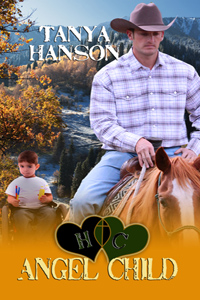
ANGEL CHILD ~Tanya Hanson


First of all, may this Thanksgiving season be filled with every good thing for you and yours!

It's a busy month for me with two books out. The first one is Angel Child, the sixth in my Hearts Crossing Ranch series at White Rose Publishing. (The second one I'll tell you about next time.) Here's how it all came about:

When my novella Hearts Crossing Ranch led to a contract for seven more books, I knew I’d have to stretch my imagination and my daily experiences to concoct stories about the eight Martin siblings of my fictional Colorado ranch. A ranch! Me, living on a cul-de-sac in a coastal California community surrounded by strawberries and avocados  not horses and cows! With the first book set on a city slicker wagon train trip--similar to the one we took around the Tetons not long ago, I looked back on that breathtaking experience for more inspiration.

And I found it in Heather, a severely disabled fourteen year old who went on the trip with her family. Unable to talk or stand or walk unaided, she nonetheless had the time of her life. The last day, when wagon master Jeff put her on a horse for her very first ride, everybody cheered, tears running down our faces. She was the prettiest cowgirl ever.

Somehow that moment stuck. You’ll meet a disabled young girl in Angel Child, my upcoming release, who comes to Hearts Crossing for therapy riding lessons.  Closer to home, though, is my twenty-something godson, born with the extremely rare, extremely debilitating Angelman Syndrome, who inspired fictional Creighton in the book. The disabled ten year old boy manages to steal Scott Martins heart as the handsome cowboy falls in love with Creighton’s mom...his former high school art teacher. Oh, who cares about the age difference? They’re grown up now. Mary Grace Gibson has returned to Hearts Crossing as a substitute teacher, and the scene below shows her dealing with a disagreeable student, Keith.

I hope you enjoy Angel Child, my tribute to disabled kids everywhere and the people who love them. The power of forgiveness is a pretty big theme, too. I always seem to need a lot of that.

Anyway, I hope you like the excerpt and blurb below. And make sure to have a wonderful Thanksgiving!

Hot, living blood ran through his veins. Scott rushed to her, she to him. They met in front of the teacher’s desk, and he wrapped her tight in his arms against his beating heart.
“Aw, Mary Grace,” he mumbled into her hair.
Desire stabbed him straight in the gut, rich searing feelings that surged into love and made him tremble. OK, he could admit it now. Love. He could say the word inside his head. Love. Soon he’d get courageous enough to tell her out loud. He’d been smitten last summer, but these past days with her in his life, at his ranch, at his side whether on horseback or discussing the therapy program finally merged the physical with the emotional, and he knew full well what it all meant.
Scott Martin was in love. In love. Reaching down, he took her face between his palms and lowered his mouth to hers. His lips closed over hers as if he was breathing in a new kind of life, and her mouth nibbled against his. Heat raged but turned to contentment as he the cuddled her close to rid her shudders. “Oh, you are so beautiful.”
“I can return that compliment,” she murmured, their lips still one. “I didn’t like not getting to say goodbye this morning,”
“I didn’t like not getting to say goodbye last night. I missed you.” His arms tightened and they stood melded, both holding the other upright as Scott willed his love to wash over them both.
“Ooooops. Sor-reee.” A whine split the air.
Startled, they broke apart like a quick sword had sliced between them.
“Oops. Sorry,” Keith Murphy repeated, not looking the least abashed. He made a big show about bobbing his head and peering closely at Scott. “Hey, you’re Scott Martin, right? You did my mom’s website for the mercantile.”
Mary Grace ran her hands through her hair to tidy it, cheeks glowing with a furious, beautiful flush. “I told you you’re dismissed, Keith.”
“I just had one last question, Ms. Gibson.” He waggled a smartphone at her. “How come Grant Gibson’s website doesn’t say a thing about Cray-ton It says he lives in Florida with his second wife Marla and their three kids Morse, Mason, and McKenna. You sort of get alluded to, a first wife, I mean, if there’s already a second. But not your so-called son.”
He stood insolent, his sneer so wide Scott held back a swat. Beside him, Mary Grace’s flush turned snow white.

Blurb:
Determined to get her life back on track,  Mary Grace Gibson takes on a substitute-teaching  job, grateful for the room and board offered at Hearts Crossing Ranch. The bustling family life helps her heal after abandonment by her ex. But her little boy’s serious disabilities make her cautious about revealing her secrets to anybody. Even Scott Martin, the handsome cowboy who’s fast stealing her heart.

Her former student now grown up, cowboy and graphic artist Scott Martin is instantly drawn to the beautiful single mom. She’s had some hard luck but never let go of her faith. Their age gap doesn’t fret him, and their kisses ignite his love. But as they fall for each other, Mary Grace’s lack of trust in him shatters his feelings, for he’s been down that broken trail before.


Wednesday, November 14, 2012

A Short History of Thanksgiving

By Anna Kathryn Lanier


Most of us believe that the first Thanksgiving in America was held in Plymouth in 1621 by the Pilgrims to give thanks for surviving the previous winter and for the recent good harvest.  However, celebrations of thanks had been taking place in the Americas for many years prior.  The Spanish held celebrations in the sixteenth century and areas of what would become the Commonwealth of Virginia had Thanksgiving services as early as 1607, with Jamestown holding their first celebration in 1610.  

In 1619 a group of new arrivals settled in an area known as Berkeley Hundred. The Charter of Berkeley Hundred specified a thanksgiving service: “We ordaine that the day of our ships arrival at the place assigned for plantacon in the land of Virginia shall be yearly and perpetually kept holy as a day of thanksgiving to Almighty God.” 

But of course, it is the Pilgrims’ thanksgiving that we remember when we celebrate our Thanksgiving today. As many may have learned already, the foods that we traditionally serve today are not even close to what the Pilgrims (or other seventeenth century citizens) served during their feast.  The three day Plymouth celebration included:  geese, ducks, turkey, lobsters, oysters, clams, venison, corn (roasted, parched or soaked in maple syrup), cornmeal, johnnycakes, beans and squash. 

Here are two updated recipes for your family to enjoy on Thankgiving:

Baked Glazed Squash

2 ½ pounds butternut squash    
1/3 cup packed brown sugar
2 TBSP butter
¼ tsp paprika
½ tsp salt
Dash of pepper

Slice squash in 1-inch thick slices; remove seeds. Arrange squash rings in 13x9x2 pan. Cover with foil. Bake at 350° till almost tender, 45 to 60 minutes. Meanwhile, in a saucepan combine brown sugar, butter , paprika, salt and pepper; cook and stir until bubbly.  Spoon mixture over squash.  Continue baking, uncovered, till squash is tender, about 15 minutes, spooning mixture over squash occasionally. Serves 8.

Johnnycakes

2 beaten eggs
1 cup water
¾ cup milk
2 TBSP lard, melted
1 tsp salt
2 cups yellow cornmeal
Butter
Maple syrup

In a bowl mix eggs, water, milk, lard and salt.  Stir in cornmeal. Stir well before making johnnycakes. For each cake, place ¼ cup batter onto a hot, well-greased griddle, spread to ¼-inch thick. Cook till golden brown, 2 to 3 minutes per side. Serve warm with butter and syrup. Makes 12 to 14 cakes.
 
 
President George Washington proclaimed the first National Thanksgiving in 1789. For the next seventy or so years, each president would or would not proclaim a Day of Thanksgiving, as they wished.  It did not become a national holiday until President Abraham Lincoln made a proclamation in 1863 declaring the final Thursday of November to be a national day of Thanksgiving.  This proclamation tradition held true with successive presidents until Franklin Roosevelt.  In 1939 there were five Thursdays in November, so he proclaimed the next-to-last Thursday as Thanksgiving Day, claiming the extra week of Christmas shopping would help the economy.  At the time, advertising Christmas goods before Thanksgiving was considered inappropriate! This move, however, confused people and states, some of whom already had set celebrations (and football games) scheduled.  Twenty-three states went along with the change, twenty-two did not and some states, like Texas, just celebrated both days. 

For 1940 and 1941, both of which had only four Thursdays, Roosevelt kept with his next-to-last Thursday for Thanksgiving.  But the states continued to be confused and most celebrated it when they wanted to. In 1941, Congress decided to take charge and passed a bill making the fourth Thursday of November as the fixed date for Thanksgiving. This was most often the last Thursday, but every so often it is the next-to-last (as it is this year).  Roosevelt signed it into law on December 26, 1941, effective in 1942.  Some states still held it when they wanted to for several more years, with Texas not settling on the fourth Thursday until 1956.

In 1947, The National Turkey Federation and the Poultry and the Egg National Board have given a turkey to the President of the United States at a White House ceremony.  While recent speeches have credited Harry Truman with pardoning the first White House turkey, the Truman Library has no record of him doing so.  President John Kennedy, when presented the turkey, said “Let’s just keep him.”  However, the first official pardon took place in 1989 when President George H.W. Bush pardoned his turkey.  Presidents Bill Clinton, George W. Bush and Barack Obama continued the tradition by also pardoning their turkeys.

Fun Tid Bit: It’s estimated that 48 million turkeys are on the dinner table for Thanksgiving.
 
References: 
Better Homes and Garden Heritage Cook Book, 1975

Note: pictures are from dreamstime.com and belong to me. They should not be used without permission.
Anna Kathryn Lanierhttp://annakathrynlanier.blogspot.com/
Never let your memories be greater than your dreams. ~Doug Ivester


Monday, November 12, 2012

Native American Heritage Month by Paty Jager


November is American Indian and Alaska Native Heritage Month. It is a time to celebrate the rich and diverse cultures, traditions, and histories. And to acknowledge the important contributions of Native People. It was formed to educate the general public about tribes, to raise a general awareness about the unique challenges Native people have face both historically and int eh present, and show how tribal citizens work to conquer these challenges.

This month with the elections many Native Americans voted. We've discussed the fact women were a long time in getting the right to vote, but the people who lived in this country before it was a country didn't receive that right completely until 1965. 

The Indian Citizenship Act in 1924 gave citizenship rights to American Indians and Alaska Natives who had not already become U.S. Citizens by military service or denouncing tribal status and affiliations  At that time even though they became citizens not all states allowed American Indians to vote. 

The Voting Rights Act in 1965 finally gave American Indians and Alaska Natives the right to vote in every state. But there is still only a small group of Native Americans who vote. The National Congress of American Indians(NCAI) has started campaigns and pushed the need for Native Americans to take an interest in where this country is going and vote.


Friday, November 9, 2012

Kristy McCaffrey-Guest from Arizona


RATTLESNAKES
by Kristy McCaffrey


AWARD-WINNING AUTHOR
OF THE
WINGS OF THE WEST
SERIES
Three years ago my family and I moved to the desert north of Phoenix and one of the many aspects to which we had to adjust was the presence of rattlesnakes. Because our property buffers an open area of desert belonging to the city, we get a fair amount of wildlife (coyotes, javelina, bobcats) as well as snakes that wander onto our land. Most are non-poisonous—bull and garter snakes—but we’ve also encountered and caught a good number of rattlers. In this area the prevalent species is the Western Diamondback Rattlesnake. It blends well into its surroundings, with a dirt-colored hide, but does have one outstanding feature which helps with a swift identification. On its tail, just below the rattle, are one to two inches of black and white stripes.


YOUNG RATTLER IN AN APPLE JUICE JAR
In the summer, when it’s very hot, snakes gravitate toward water, so puddles can pose a problem. We found a young rattler near the house this way. My husband captured and placed it into an empty (RS in jar)apple juice bottle. We then deposited the snake off-property. We’ve been told that rattlers will live within a one mile territory; because we have dogs and children we prefer to relocate the snakes. The other alternative is to kill them, which many of our neighbors do. Not only is this dangerous (to kill one you must get close to it—distance is always the safest course of action when dealing with a poisonous reptile) but I also feel it’s unnecessary. Western Diamondbacks aren’t very aggressive unless threatened. And even then they’ll slither away the first chance they get.

            This was apparent when one of our chocolate labs, Lily, encountered a rattler during a walk in the desert. It lay coiled and when she poked her nose at it the snake struck. Luckily she pulled back just in time to avoid a bite. Just as quickly the snake turned and slithered into a bush, rattling it’s pathetic rattle (nothing like in the movies).

            My husband and older son often ride motorcycles and quads in the desert and have come across rattlesnakes on the trails several times. Sometimes they can pass but often are forced to turn back. Rattlesnakes tend to enjoy their moments of sunning and simply won’t move unless pressed. In the winter months it’s never a good idea to be out in the desert during the day since the snakes will be warming themselves from the cold night. And during the summer, dusk is a dangerous time since they’ll be out after staying in the shade of a bush for the better part of the day. Initially we had the false impression that rattlesnakes hibernate but have come to learn this isn’t true. They can be out and about year round.


KRISTY'S HUSBAND RESCUING
A RATTLER TO BE RELOCATED
We’ve found big rattlers on our driveway twice on chilly winter nights, likely soaking up the warmth of the concrete. My husband has a long metal snake catcher, which he uses to capture the reptile and then lift it into a large garbage bin. We then load the can on the back of our pickup truck and drive it to a portion of the desert far from our house for release.
A SNAKE-CATCHER
I must admit I don’t fear rattlesnakes as much as I did when we first arrived. I have a healthy respect for them, scan my surroundings at all times, and don’t walk outside barefoot. We keep a close eye on our dogs during walks. It’s also important to keep the property clear of clutter, to minimize hiding places.


KRISTY'S ARIZONA DESERT HOME
            Still, we had one in the backyard the other day, despite it being completely fenced in. My mother happened to discover it. As she sat by the pool, reading a book and enjoying a break in the heat, she heard a low, quiet rattle. She didn’t think it was a snake, but then noticed that our dogs as well as hers (four in all) had surrounded something and were on full alert. The snake stood its ground, only because it had to, against the dogs. She quickly got all the animals inside without incident and my 18-year-old son wrangled the snake into the garbage bin and sent it on another relocation program. Maybe if we move enough of them they’ll breed elsewhere!

            Now, if we could just get rid of the scorpions...
 
BIO: Kristy McCaffrey

 
Kristy McCaffrey has been writing since she was very young, but it wasn't until she was a stay-at-home mom that she considered becoming published. A fascination with science led her to earn two engineering degrees--she did her undergraduate work at Arizona State University and her graduate studies at the University of Pittsburgh--but storytelling was always her favorite hobby. Born and raised in Arizona, and recently returned after a 20 year absence in Pittsburgh, she writes Old West romances to capture the landscapes that were such a big part of her childhood. Her first novel "The Wren" was a CAPA winner for best new author traditional, a Texas Gold finalist, and a HOLT Medallion finalist for best first book. She lives in Scottsdale, Arizona with her husband,
four children, and two chocolate labs, Ranger and Lily.


Posted by: Celia Yeary 

Tuesday, November 6, 2012

Trimming the Victorian Christmas Tree

The Christmas tree has been a tradition in Germany for hundreds of years. But it when Prince Albert, Queen Victoria’s German husband, introduced the Christmas tree to the Royal Family, that it suddenly became fashionable for every Victorian home to have one.

Originally trees were table-top size, but by the end of the century they stood from floor-to-ceiling.

Children helped to make the decorations, stringing popcorn and cranberry garland. They made paper chain flowers and set up nativity scenes.

The decorations were elaborate with tiny hand-dipped candles, gingerbread men, cookies, and marzipan candies. Paper cornucopias hung from the branches filled with fruit, nuts, and sweets. There were paper fans and angels, crocheted snowflakes, mittens, tin soldiers, whistles and wind-up toys.

Later in the century hand-blown glass balls, called kugels were imported from Germany along with Dresdens, cardboard painted in gold, silver and copper, to look like metal. They were usually done in the shapes of animals, birds, fish, ships, trains, and trolley cars.

On the top of the tree was a Christmas doll, or a Nuremberg angel with a skirt of spun glass, a crinkled gold skirt and a wax face.

When I wrote my holiday novella, Another Waltz, I tried to capture some of that Christmas magic and transport it onto the page. Here is an excerpt from Another Waltz.
                                       ****
Squinting, Madeline peered around the branches of the large Christmas tree, which filled the back corner of the ballroom.

Hoping to avoid the prying eyes of Lucille’s guests, Madeline had just stepped through the servants’ door and sidled along the back wall until she’d reached the wide boughs of the twelve foot Douglas Fir.

Red and gold ribbons, strings of popcorn and cranberries, all twined around the tree. Paper angels and cornucopias hung from the many branches. Silver and gold Dresdens in shapes of animals and trains filled the empty spaces, and hand-blown, glass ornaments from Germany had been clipped to the tree, each holding a candle, their tiny flames flickering like stars among the branches.

She focused her gaze on the blurry rainbow of beautiful gowns swirling across the floor. The gentlemen, austere in their dark tail coats with splotches of white waistcoats and shirts, partnered the perfect complement to the ladies’ finery. Garland of evergreens, ivy, dried flowers, and red bows festooned the large windows, doorways, and picture frames.

Stringed music floated from the raised platform at the north end of the ballroom to mingle with the laughter and conversation of more than seventy guests.


To Purchase Another Waltz

Friday, November 2, 2012

Little Known Fort Churchill

By Paisley Kirkpatrick
One of my friends recently visited Fort Churchill. I was intrigued by the buildings making up this fort and thought to share them with you and give you a little bit of history. I live over the mountain from Carson City, Nevada, and had never heard of this place before. It was small, but seems to have had an integral part in our history. Talk of Indian atrocities at Williams Station, a Carson River outpost located 30 miles east of Carson City, filtered back to settlers in the Carson Valley. Because of the fear of impending attacks, the settlers demanded immediate protection.
The so-called Pyramid Lake War began on May 12, 1860, when three white men living at Williams Station kidnapped and held two Indian girls prisoner. Their action and refusal to release the girls led to reprisals. Indians killed the three men, released the girls and burned the station. Because rumors exaggerated the number of whites killed and the number of Paiutes thought ready to move against white settlements, hasty and ill-conceived plans resulted in the movement of 105 volunteers to Pyramid Lake to avenge the deaths of the white men.
The out-numbered whites suffered a major defeat in the battle that followed. They lost two-thirds of their original force. The Indians' momentous victory led to immediate white retaliation. Urgent calls went out to California for regular armed troops. The troops, bolstered by additional volunteers, moved against the Indian forces in early June. In this second battle, the out-numbered Indians were forced to retreat. Casualty reports ranged from four to 160 Indians killed while only two whites died.
Captain Joseph Stewart and His Carson River Expedition were then ordered to establish a post on the Carson River. Starting July 20, 1860, tens of thousands of dollars were spent to construct Fort Churchill, the desert outpost that guarded the Pony Express run and other mail routes. Between expeditions against the Indians, hundreds of soldiers were based there.
The fort was named in honor of Sylvester Churchill, the Inspector General of the U.S. Army. It was built as a permanent installation. Adobe buildings were erected on stone foundations in the form of a square, facing a central parade ground. The Civil War made the fort an important supply depot for the Nevada Military District and as a base for troops patrolling the overland routes.
The fort was abandoned in 1869, and the adobe buildings were auctioned for only $750. In 1884, the remains of soldiers buried in the post cemetery were moved to Carson City. The remaining graves are those of the Buckland family, pioneer ranchers who sold supplies to the fort.
Fort Churchill sits at an elevation of 4,250 feet and is flanked on the south by rolling desert hills and higher areas of the Pine Nut Range. The Carson River originates in the Sierra Nevada Mountains to the west. It forms the major water resource in the area and is the only perennial source of surface water near the fort.
Photos by Judy Newberry Ashley