Showing posts with label White Rose Publishing. Show all posts

Friday, November 16, 2012

ANGEL CHILD ~Tanya Hanson


First of all, may this Thanksgiving season be filled with every good thing for you and yours!

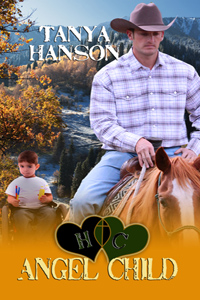
It's a busy month for me with two books out. The first one is Angel Child, the sixth in my Hearts Crossing Ranch series at White Rose Publishing. (The second one I'll tell you about next time.) Here's how it all came about:

When my novella Hearts Crossing Ranch led to a contract for seven more books, I knew I’d have to stretch my imagination and my daily experiences to concoct stories about the eight Martin siblings of my fictional Colorado ranch. A ranch! Me, living on a cul-de-sac in a coastal California community surrounded by strawberries and avocados  not horses and cows! With the first book set on a city slicker wagon train trip--similar to the one we took around the Tetons not long ago, I looked back on that breathtaking experience for more inspiration.

And I found it in Heather, a severely disabled fourteen year old who went on the trip with her family. Unable to talk or stand or walk unaided, she nonetheless had the time of her life. The last day, when wagon master Jeff put her on a horse for her very first ride, everybody cheered, tears running down our faces. She was the prettiest cowgirl ever.

Somehow that moment stuck. You’ll meet a disabled young girl in Angel Child, my upcoming release, who comes to Hearts Crossing for therapy riding lessons.  Closer to home, though, is my twenty-something godson, born with the extremely rare, extremely debilitating Angelman Syndrome, who inspired fictional Creighton in the book. The disabled ten year old boy manages to steal Scott Martins heart as the handsome cowboy falls in love with Creighton’s mom...his former high school art teacher. Oh, who cares about the age difference? They’re grown up now. Mary Grace Gibson has returned to Hearts Crossing as a substitute teacher, and the scene below shows her dealing with a disagreeable student, Keith.

I hope you enjoy Angel Child, my tribute to disabled kids everywhere and the people who love them. The power of forgiveness is a pretty big theme, too. I always seem to need a lot of that.

Anyway, I hope you like the excerpt and blurb below. And make sure to have a wonderful Thanksgiving!

Hot, living blood ran through his veins. Scott rushed to her, she to him. They met in front of the teacher’s desk, and he wrapped her tight in his arms against his beating heart.
“Aw, Mary Grace,” he mumbled into her hair.
Desire stabbed him straight in the gut, rich searing feelings that surged into love and made him tremble. OK, he could admit it now. Love. He could say the word inside his head. Love. Soon he’d get courageous enough to tell her out loud. He’d been smitten last summer, but these past days with her in his life, at his ranch, at his side whether on horseback or discussing the therapy program finally merged the physical with the emotional, and he knew full well what it all meant.
Scott Martin was in love. In love. Reaching down, he took her face between his palms and lowered his mouth to hers. His lips closed over hers as if he was breathing in a new kind of life, and her mouth nibbled against his. Heat raged but turned to contentment as he the cuddled her close to rid her shudders. “Oh, you are so beautiful.”
“I can return that compliment,” she murmured, their lips still one. “I didn’t like not getting to say goodbye this morning,”
“I didn’t like not getting to say goodbye last night. I missed you.” His arms tightened and they stood melded, both holding the other upright as Scott willed his love to wash over them both.
“Ooooops. Sor-reee.” A whine split the air.
Startled, they broke apart like a quick sword had sliced between them.
“Oops. Sorry,” Keith Murphy repeated, not looking the least abashed. He made a big show about bobbing his head and peering closely at Scott. “Hey, you’re Scott Martin, right? You did my mom’s website for the mercantile.”
Mary Grace ran her hands through her hair to tidy it, cheeks glowing with a furious, beautiful flush. “I told you you’re dismissed, Keith.”
“I just had one last question, Ms. Gibson.” He waggled a smartphone at her. “How come Grant Gibson’s website doesn’t say a thing about Cray-ton It says he lives in Florida with his second wife Marla and their three kids Morse, Mason, and McKenna. You sort of get alluded to, a first wife, I mean, if there’s already a second. But not your so-called son.”
He stood insolent, his sneer so wide Scott held back a swat. Beside him, Mary Grace’s flush turned snow white.
Blurb:
Determined to get her life back on track,  Mary Grace Gibson takes on a substitute-teaching  job, grateful for the room and board offered at Hearts Crossing Ranch. The bustling family life helps her heal after abandonment by her ex. But her little boy’s serious disabilities make her cautious about revealing her secrets to anybody. Even Scott Martin, the handsome cowboy who’s fast stealing her heart.

Her former student now grown up, cowboy and graphic artist Scott Martin is instantly drawn to the beautiful single mom. She’s had some hard luck but never let go of her faith. Their age gap doesn’t fret him, and their kisses ignite his love. But as they fall for each other, Mary Grace’s lack of trust in him shatters his feelings, for he’s been down that broken trail before.


Monday, July 16, 2012

Yellow Ribbons..by Tanya Hanson


I never liked the song much, Tie a Yellow Ribbon 'Round the Old Oak Tree, but that doesn't mean I can't sing it at will all these years later!  These days, I see frequent reminders to pray for our troops on yellow-ribbon car magnets.

But not until a recent visit to Old Sacramento, California, did I learn the origins of the yellow ribbon. For almost 150 years, displaying a yellow ribbon is a sign of loyalty to family, friends and loved ones far away from home in difficult situations such as war or captivity.

According to legend, the custom of a yellow ribbon showing support for a loved one far away began during the Civil War. At this time, the United States Cavalry wore yellow piping on their uniforms. Women who were married or promised to a Cavalryman wore yellow ribbons while waiting for their soldiers' return. Supposedly the practice kept prospective suitors at bay as well as warned of reprisal by the soldier if his lover was harmed.

Another version of the custom traces its origins to the horrific Andersonville Prison. Officially known as Camp Sumpter, Andersonville was one of the largest, most notorious Confederate prison camps. During its 14 months of operation, more than 45,000 Union soldiers were confined, 13,000 losing their lives from disease, malnutrition, overcrowding, and exposure.

Supposedly a member of the Ninth Ohio Cavalry who had been a Confederate prisoner there for several years, wrote to his wife with the suggestion that, rather than wear her ribbon, she tie it to a signpost near the train station so he could see it upon his return. The tale soon became part of Civil War lore.

The following song spread throughout the North, its words set to an old British drinking song:

Around her neck she wore a yellow ribbon
She wore it in the Springtime and in the month of May.
And if you ask her why the hells he wore it,
She wore it for her soldier who is far, far away.


(Chorus)
Far away, far away.
She wore it for her soldier who is far, far away
.

During the 1991 Gulf War and following 9/11, the yellow ribbon symbol has gained widespread popularity as it sends our service members the message that they are never far from our hearts.

Sincere thanks to the Old Sacramento School House Museum for this information.

~Tanya Hanson
www.tanyahanson.com

Thursday, February 16, 2012

Some Black Magic, Western-style~ Tanya Hanson

By Tanya Hanson
     Not long ago, my hubby and I recently took a fantastic city slicker wagon train trip around the Tetons. Just as we started planning the trip, I started writing the eight-book Hearts Crossing Ranch series where wagon train adventures play a big part. In fact, one of the eight Martin siblings is a chuck cook on her family’s adventures. The fifth book in the series, Soul Food, stars Kelley Martin and will be out in the spring.

     Of course, Kelley cooks many outdoor meals for those city slickers in cast-iron Dutch ovens. Any discussion of this hearty kettle starts by mentioning the method of casting with iron in dry sand molds. The technique’s exact origin isn’t known, but it most probably dates from the Dark Ages in Western Europe, refined later in both England and the Netherlands. The term “Dutch oven” may have come from the Netherlands connection and the Dutch traders who peddled them.


     The “bulge” style pot –in my head I envision a witch’s cauldron— likely came over with the Pilgrims, but the 3-legged “bake” or “camp” oven appeared in the early 1700’s. Paul Revere (yes, he of the famous 1775 Midnight Ride) is said to have adapted the oven lid’s flanged lip to hold coals on top while the pot rested on a campfire. However, the oven was versatile and could be used on the hearth and for roasting in a stove’s oven.
     Lewis and Clark’s Corp of Discovery (1803-05) carried a “large-size Dutch oven” across their entire route to the Pacific Northwest and home again. No self-respecting covered wagon or cattle drive traveled without the Dutch oven, and every Gold Rush mining camp had several, needing at least one for their historic sourdough bread. Miners lucky enough to have a burro or pack mule invariably had a Dutch oven tied on top.

     By the mid 1870’s, every American household had some sort of cast iron cooking item, Dutch oven, skillet, or pot. Around 1920, casting iron reached its pinnacle in quality and quantity, but the invention of the electric stove in the 1890’s had already started a decline in interest of the Dutch ovens. However, one great casting company, Lodge, began operations in 1896 and continues to this day.
     In recent years, the mystique of Dutch oven “black pot” cooking has made a comeback, not because of need but because of a resurgence in the outdoors, in nostalgia, and in love of history. Most Dutch oven recipes can be revised for stove top, oven or slow cooker as well.

     Today’s Dutch oven chef needs a lid lifter, heavy special gloves, wooden utensils, briquettes, and a Dutch oven of 5 to 22 inches in diameter. The 12-incher is the most popular. The well-sealed lid allows heat and pressure to build while preserving the moisture of the food. Although there are many directions (e.g. “above-to-underneath” and “checkerboard pattern” among them) for actual food production, the general rule for the cook is to use twice as many briquettes as the diameter of the lid. Briquette placement on the lid and under the pot is crucial, as is rotating the lid and pot 90 degrees every fifteen minutes. Altitude, sun and even wind play important roles, too.
     The premier organization for Dutch oven cooking, the International Dutch Oven Society (http://www.idos.com/) began in the Rocky mountains and now has 48 chapters in 27 states and 2 Canadian provinces. Each spring IDOS holds the World Championship Dutch Oven Cook-off.
    Any Dutch oven stories or recipes to share today?

Monday, January 16, 2012

The Olivas Adobe..come back in time today! ~Tanya Hanson.


The Olivas Adobe is a great way to “visit” Southern California’s Rancho Period first-hand. Not far from my home, this prime example of adobe (dried clay brick) architecture is unique with its two-story structure. Don Raymundo Olivas added an unusual second floor during the rancho’s hey-day in the late 1840’s, and the house has been restored to its original stature.

Don Raymundo was born poor in 1809 in the tiny pueblo that grew into today’s Los Angeles and joined the Mexican Army in California at 16. As a Lancer (cavalryman), he was assigned to the Presidio (fort) at Santa Barbara, about two hours north of L.A.

It was here in Santa Barbara that Raymundo met Teodora Lopez and married her in November 1832. In gratitude for his loyalty and service, Mexican Governor Juan B. Alvarado granted Raymundo and a friend 4,670 acres of land in today’s Ventura County. Raymundo began ranching this land while Teodora began bearing children. 21 total, eight girls and 13 boys.

When gold was discovered along the American River about four hundred miles north, Raymundo found his own "gold mine" and made a fortune supplying those Forty-Niner miners with beef as well as hides.

These were the golden years for the adobe, with its remodeling and additions and glorious parties. Raymundo’s family prospered until drought in the 1860’s destroyed the cattle empires. He survived by raising sheep.

His death in 1879 was the beginning of the end for the Olivas' fortune, and the adobe house was sold in 1899. Some of the ranchland has become a municipal golf course, some strawberry fields, some subdivisions. After passing through many owners, the adobe itself was purchased by Max Fleischmann, of the yeast empire, who restored the building in 1927. Upon his death, the adobe was given to the City of Ventura, and it opened as a museum in July, 1972. Docent-led tours are frequent.

We local folks enjoy the “Cowboys, Heroes and Outlaws: Passport to the American West” held every summer, with Western reenactors in full regalia as well as pioneer crafts for the kids.

In fact, many fourth-grade schoolchildren take field trips to the adobe for a hands-on two-hour program that brings to life the Rancho Period of California History.

And just last month, folks enjoyed the annual holiday candlelight tour that showcased the tradition of Las Posada, where Mary and Joseph seek room at the inn.

It’s a great place to visit. Ya’ll come on down, ya hear?

~Tanya
www.tanyahanson.com
www.petticoatsandpistols.com


My latest release, Right to Bragg, is available now at Amazon and White Rose Publishing.. It's Book Four in the Hearts Crossing Ranch series...I just turned in Book Eight and the feelings are bittersweet. I love that ranch and the Martin family. Book Three, Sanctuary, and my first-ever suspense story Faithful Danger are both up for CAPA Awards at The Romance Studio. Enjoyable start to a new year.

Friday, December 16, 2011

The Mason Jar...fill 'er up for Christmas. ~~Tanya Hanson

In 1858, The Mason jar was invented as the first canning jar by John Landis Mason. He expanded upon the ideas of Frenchman Francois Nicolas Appert, a pickler, brewer, chef and distiller who in 1810, had established the principles of preserving food in hermetically-sealed glass containers. 


John Mason developed a shoulder-seal jar with a zinc screw-cap.  Ten years later, he inroduced a top rubber seal above the threads and under a glass lid.

So why do most Mason jars come marked with the name Ball? 

When John Mason’s patent expired in 1879 , the market opened for competition. In 1884, the Ball brothers swooped in and started a manufacturing company inNew York State. However, three years later, Ball Brothers Glass Manufacturing Company moved to Indiana. During the Great Depression, the company did not lay off one single worker. After 88 years as a family business, the company went public in 1972.

And their lovely jars can be used to construct the perfect Christmas gift for your neighbors. Cover the lid with a circle of gingham or calico, tie with a festive bow, and you’ve got it made. Don’t forget to attach the directions.


SAND ART BROWNIES!                                 
This recipe makes one gift jar using a wide-mouth quart Mason jar.  For 1 jar:
2/3 t. salt
1 1/8 c. flour, divided
1/3 c. cocoa powder
2/3 c. brown sugar
2/3 c. sugar
1/2 c. chocolate chips
1/2 c. white chocolate chips
1/2 c. walnuts or pecans
Instructions:
In  a clean, dry canning jar, layer the ingredients as follows:
2/3 t. salt
5/8 c. flour
1/3 c. cocoa powder
1/2 c. flour
2/3 c. brown sugar
2/3 c. sugar
1/2 c. chocolate chips
1/2 c. white chocolate chips
1/2 c. walnuts
Close jar, add fabric circle and attach the following directions:
Preheat oven to 350 degrees. Grease one 9x9 baking pan.
2. Pour the contents of the jar into a large bowl and mix well.
3. Stir in 1 teaspoon vanilla, 2/3 cup vegetable oil and 3 eggs. Beat until just combined.
4. Pour the batter into the prepared pan and bake at 350 degrees for 20 to 25 minutes. Cool and enjoy!


There's still time to cuddle up with Right to Bragg, Book Four in the Hearts Crossing Ranch series...set at the ranch during a snowy Christmastime...

Wednesday, November 16, 2011

Bragging Rights...Tanya Hanson

One of my favorite Christmas songs has long been Amy Grant's "Grown up Christmas List." Well, I get weepy easily, but it's one of those songs that really starts the waterworks, especially during the holidays. Mostly because I have some really wing-nut relatives, I like to change a couple of words so that the lyrics can easily pertain to a family in need.

Do you remember me?
I sat upon your knee.
I wrote to you with childhood fantasies.

Well, I'm all grown up now
And still need help somehow.
I'm not a child
But my heart still can dream.

So here's my lifelong wish,
My grown-up Christmas list.
Not for myself
But for a family (world) in need:

(Chorus)
No more lives torn apart,
That fights (wars) will never start
And time would heal all hearts.

Everyone would  be (have) a friend
And right would always win,
And love would never end.
This is my grown-up Christmas list.

So....when I started my latest release Right to Bragg, the fourth book in my Hearts Crossing Ranch series, I knew from the one-paragraph synopsis on which I'd sold the story that the heroine Tiffany Vickers is a woman alone. Abandoned. Dealing with wing-nuts of her own and trying to find her way.  Cowboy Bragg Martin uses his own faith to help guide her…even as he struggles with guilt of his own. As  I plotted all the why’s and wherefore’s, the setting just called out that it needed to be Christmastime. The time of hope and healing, reunion and peace.

My latest, released 11/11/11!

I hope you enjoy Tiffany’s falling both in faith and love during a picture-perfect Christmas on that fictional little ranch, Hearts Crossing, where everybody loves to come home.

BLURB:
Disowned by her family, Tiffany Vickers faces a lonely Christmas and takes great comfort in the baby boy in her care. Her faith in tatters, she guards her heart against the baby's uncle, handsome cowboy Bragg Martin, a man with baggage of his own. While Bragg longs to open his heart and family to the lovely nanny, he doesn't understand her interest in his arch enemy. Saving a man's life and saving Tiffany's faith bring the couple together…and home to Hearts Crossing Ranch. 


EXCERPT:
     Tiffany got up for another cup of coffee, Matty’s eyes watching her every move.
     “He sure notices you,” Bragg remarked as the baby drained the bottle.
     “Yeah. We bonded right off. I’m so glad about it.” As she’d made a snap decision just then, she rushed on. “I left behind my precious nephew. I guess in my psyche somewhere I figured maybe nanny to Matty might help ease that hole in my heart.”  Gently she rubbed her hand over Matty’s head, the edge of her hand tugging at Bragg’s shirt and causing a funny havoc. Mostly though he listened to her pain.
     She sank back down into a kitchen chair, resting her cheek in her hand. “I was with Connor from the moment he was born. Paul and Diana wanted me there. Then things went haywire. It was my fault. You talk about forgiveness, but there isn’t any in this case. And I miss that little boy. Oh, I miss him so. I need him. His love was unconditional, you know. He’s three now. I can’t let him forget me.”
     Bragg’s heart tugged at the agony on her face, and Matty’s little hand flailed. Tiffany took it at once. “It can’t be that bad, can it?”
     “I’ve been disowned, so, yeah, Bragg. It’s that bad.” 

Sunday, October 16, 2011

Do Horses Fly? ~Tanya Hanson

Leland Stanford (1824-1893), who wore such hats as California governor, railroad baron, university founder and race horse owner, sought to settle one of the hottest debates of the 1870’s: Is there a moment in a horse’s gait when all four hooves are off the ground at once?

Legend says he bet $25,000 that it was true. Common opinion at the time nixed the idea. After all, if God wanted horses to “fly”, He would have given the creature wings. But determined to settle the question, Stanford hired celebrity photographer Eadweard Muybridge (1830-1904) to prove it.

One of San Francisco’s most celebrated landscape photographers, Muybridge took more than 2,000 photographs with 20x24 inch negatives. His 1867 photographs of Yosemite Valley brought the valley…and himself…almost mythic status.

Accepting Stanford’s challenge in 1877, Muybridge captured Stanford’s horse, Occident, silhouetted against white sheets with all four feet off the ground. He used 12 to 24 cameras and a self-designed shutter that gave an exposure of 2/1,000 of a second. Although these original pictures didn’t survive, Muybridge continued to work with Stanford to develop techniques in the “science of animal motion.”

In 1878, he succeeded in photographing a sequence of frames produced on wet plate with 12 cameras that proved the “flying horse.” The slow wet plate collodion process produced images that were mostly silhouettes, but they showed something never before seen by the human eye.

Scientific American and other prominent publications featured articles on Muybridge’s accomplishment. However, Stanford invited his close friend, horseman and medical physician Dr. J.D.D. Stillman to produce a book analyzing the horse-in-motion. Stillman used Muybridge’s photography without crediting the photographer. Interestingly, when Muybridge sued Stanford and Stillman for copyright infringement, he lost his suit.

Eadweard Muybridge migrated to the University of Pennsylvania after that. His invention of the zoopraxiscope earned him the title of the father of the motion picture. To illustrate his lectures, he developed the scope; its lantern projected images in rapid succession onto a screen. The images came from his photographs, printed on a glass disc. From the rotating disc came the illusion of moving pictures.

Muybridge’s zoopraxiscope display, an important predecessor of the modern cinema, was a sensation at the World's Columbian Exposition of 1893 in Chicago. His works are still in demand by art students.

--Tanya Hanson
www.tanyahanson.com
www.petticoatsandpistols.com

P.s. Right to Bragg, fourth book in the Hearts Crossing Ranch series, will be released 11-11-11. How about that for a magic number?

Friday, September 16, 2011

"I plinked it." Elizabeth Servaty Toepperwein (1882-1945) ~by Tanya Hanson

Renowned Texas trick-shooter Adolph Toepperwein (1869-1962) loved rifles as a kid and toured the vaudeville circuit until 1901, when he began a fifty-year gig as an exhibition shooter with the Winchester Repeating Arms Company.

True to any romance novel plot, he fell instantly in love with a 19-year old employee upon meeting her while visiting a Winchester manufacturing plant when he was 34. Elizabeth Servaty was nineteen. Upon their marriage in 1903, “Ad” taught his bride to shoot. Connecticut born Elizabeth had never shot a gun before in 
her life, but Ad found her to be “a natural.” 

During her training, she shot at tin cans with a .22, and after several tries, made her first hit. “I plinked it,” she declared, referring to the distinctive sound. And forever after she was known as Plinky.

(Practice-shooting at easy targets like cans is known across the world today as “plinking.”)

Within three weeks of her first lesson, Plinky joined her hubby’s act, shooting one-inch pieces of chalk from between his fingers, and empty shells off his fingertips. They began touring as a husband and wife trick-shooting team in a career that spanned 40 years.

At the 1904 World’s Fair in St. Louis, they set one amazing record after another. They shot while standing o their heads and while lying on their backs. They broke two targets at the same time, one in front and one behind using a mirror. Plinky’s aerial targets included metal disks, apples, oranges, eggs…and glass marbles.

Not only did Plinky delight the crowds, but she also set records. The first woman to break 100 straight targets at trapshooting, she repeated the incredible feat more than 200 times, often with a twelve-gauge Winchester model 97 pump gun. She also earned the world endurance trapshooting record by hitting 1,952 clay birds out of 2000 thrown –in only five hours, 20 minutes. The phenomenal time span also included the time needed to cool the gun barrel and unpack targets. Missing only eight targets meant Plinky had hit an unprecedented 97.6%


World-famous shooter Annie Oakley, a member of the Trapshooting Hall of Fame, once said to Plinky: “Mrs. Top…you’re the great shot I’ve ever seen.” In 1969, Plinky was inducted into the Trapshooting Hall of Fame in Vandalia, Ohio.

Although trapshooting was her main focus, Plinky was equally skilled with rifle, pistol and shot gun. She became the first woman in United States history to quality as a national marksman with a military rifle. Amidst all this, Plinky gave birth to and raised son Lawrence, who sadly predeceased her in 1940 when he was only 36.

While folks in the know informally believe that Plinky was a better all-around shot than her husband, they never held a contest to see. And despite her amazing talent, Plinky was proud to claim she never shot an animal.

She passed away in her San Antonio home on January 27, 1945, her husband at her side. After Ad’s death in 1962, their lifetime of marksmanship memorabilia went on display on the grounds of The Long Star Brewery in San Antonio. In late 1998, the gallery was moved to the Buckhorn Saloon and Texas Ranger Museum a few blocks from the Alamo, which is how and where I “met” this remarkable couple on my first-ever foray to Texas not long ago.

I hope you enjoyed meeting her today! And I especially thank the Sweethearts for inviting me to join their corral!

Tanya Hanson


Coming soon, Book Four of my Hearts Crossing Ranch series. I'll draw a name today for a pdf. copy of Book One, Hearts Crossing Ranch, for everybody who comments and leaves an e-mail address..