
by Lyn Horner
A couple years ago a good friend of mine, Sharla Rae, was preparing a blog post on the use of colors to draw readers into a book and help them "see" the characters and scenes clearly. She asked me to contribute a few short excerpts from my Texas Devlins books to help illustrate the point of her post. Today, I'd like to share those bits with y'all. See if you agree that colorful description makes a story more vivid.
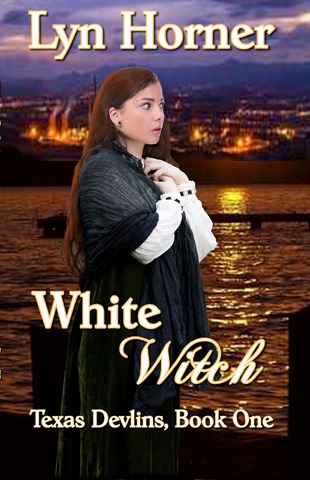
From White Witch – on the night of the Great Chicago Fire of 1871:
Bright sheets of fire flapped in the air, frighteningly beautiful in hues of orange, gold and angry red. Flung out by the murderous blaze, burning debris scattered hither and yon, a threat Jessie constantly fought, using a blanket to smother cinders that fell on the wagon.
From Darlin’ Irish – in the Omaha Union Pacific depot
Finding a gap in the crowd, David caught sight of a red-faced young corporal. The trooper bobbed and weaved, arms raised to fend off blows being rained upon him by a woman in a brown poke bonnet. Her weapon was a heavy looking black reticule.
A couple years ago a good friend of mine, Sharla Rae, was preparing a blog post on the use of colors to draw readers into a book and help them "see" the characters and scenes clearly. She asked me to contribute a few short excerpts from my Texas Devlins books to help illustrate the point of her post. Today, I'd like to share those bits with y'all. See if you agree that colorful description makes a story more vivid.
From White Witch – on the night of the Great Chicago Fire of 1871:
Bright sheets of fire flapped in the air, frighteningly beautiful in hues of orange, gold and angry red. Flung out by the murderous blaze, burning debris scattered hither and yon, a threat Jessie constantly fought, using a blanket to smother cinders that fell on the wagon.

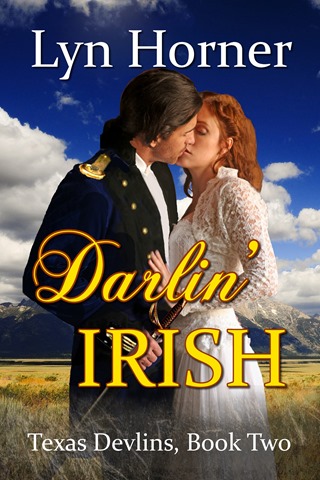
From Darlin’ Irish – in the Omaha Union Pacific depot
Finding a gap in the crowd, David caught sight of a red-faced young corporal. The trooper bobbed and weaved, arms raised to fend off blows being rained upon him by a woman in a brown poke bonnet. Her weapon was a heavy looking black reticule.

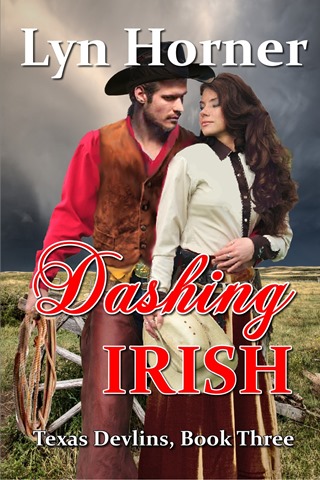
From Dashing Irish – At a Saturday night social, Lil’s view of a man she doesn’t like:
He was big, with strong, even features and shoulder-length blond hair. In his dark blue shirt with its fancy yellow piping, he was easy on the eyes. He was also vainer than a turkey cock.

Also from Dashing Irish – Tye Devlin’s impression as the cattle drive nears Fort Worth:
Fort Worth rose against the warm, crystal-blue morning on a bluff overlooking the Trinity River.
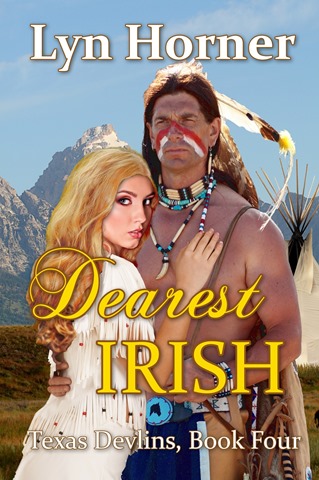
From Dearest Irish – Jack is a blacksmith and cowboy on the Double C ranch
. . . [Rose] recognized Choctaw Jack by his long, midnight black hair, tied back with a leather thong at his nape, and by the healed red scar across his left shoulder blade. . . . Coated with sweat in the heat from the forge, his muscular arms and torso gleamed like molten copper.

Okay, readers, what do you think? Can you picture characters and settings better if an author describes them in color? Does it bother you when there isn’t enough color description? I'd love for you to share your thoughts.

