
In my Oregon and Arizona historical romances, Chinese characters played secondary roles. One of them, Han Jei, was someone I intended for an Oregon romance, but it has yet to happen-- partly because I knew more about him than with whom he might become romantically involved. Most Chinese men in that time period were forced to leave their families behind. I thought his family history, where he and his brothers had first landed in San Francisco, would make for an interesting hero-- with the right heroine. It still might happen when the right story comes along for him.

With many small hate crimes, there was one more heinous than the rest-- the murder of 34 Chinese miners in May 1887 at Deep Creek on the Oregon side of the Snake River in Hell's Canyon. It is claimed the killers murdered the men, may have tortured some, and also took the gold they had mined. The crime was not discovered until some of the bodies were spotted downstream near Lewiston in Idaho Territory.

Because the victims had worked for the Sam Yup Company of San Francisco, the company directed a local, Lee Loi to find out more and make someone accountable. As happened so often in the American West, this wasn't an easy thing to accomplish as some lives were regarded as more important than others.

Lee hired Judge Joseph Vincent to investigate. He reported his findings to the Chinese consulate in San Francisco. Help in getting justice was requested of the U.S. State Department without much result-- see above. It might have ended there; but in March of 1888, one of the men, with the gang that day, confessed and turned state's evidence against the rest.
Six men and boys were indicted for murder. Three, including the presumed leader (who escaped from jail), fled and were never caught. Some local Wallowa County residents believed they took the gold with them, burying some, leading to possibly a different sort of treasure hunt.
September 1, 1988, after a two-day trial, the defendants were found innocent by a local jury. Considering the widespread resentment against the Chinese, again, the verdict was not a surprise.

In 1891, the father of one of the boys quoted his son, who had been fifteen at the time of the massacre, as saying his son confessed to him of the murders of 34 miners. Other accounts from locals at the time claimed from 31 to 34.

The names of the Chinese victims are not known, but they were claimed to have come from Canton in China. The 1880 U.S. census put the nation's Chinese population at 105,400+. The men had come for work, sometimes fleeing violence in their home districts. They came without their
In Arizona Moon, my hero was a US Marshal and was told due to the 1882 Chinese Exclusion Act, that he should act to deport certain Chinese-- those who were farming lucratively along the Santa Cruz and had established businesses to sell their produce. He resisted the order, and it was instrumental in his disappointment regarding being a marshal where so much was political.
 The
Chinese Exclusion Act was the first such law regarding immigration in
the US and blatantly racist. It banned new arrivals but even more would
not allow the Chinese already here to return to their families for
visits. To do so, they would have to attain certificates for reentry
and, given the times, those weren't easy to get. The Act also made
Chinese immigrants unable to ever be citizens. After the Act's passage, Chinese men in the U.S. had little chance of
ever reuniting with their wives, or of starting families in their new
abodes. It was not repealed until 1943.
The
Chinese Exclusion Act was the first such law regarding immigration in
the US and blatantly racist. It banned new arrivals but even more would
not allow the Chinese already here to return to their families for
visits. To do so, they would have to attain certificates for reentry
and, given the times, those weren't easy to get. The Act also made
Chinese immigrants unable to ever be citizens. After the Act's passage, Chinese men in the U.S. had little chance of
ever reuniting with their wives, or of starting families in their new
abodes. It was not repealed until 1943. Where it came to unfairness such as the massacre on the Snake River, there is no
making up to those murdered or the gold stolen. Beginning in 1995,
there was an attempt to at least acknowledge the atrocity when a Wallowa
County clerk uncovered old court documents including a copy of the 1888
grand jury indictment, description of the escape from jail by the gang
leader, Bruce Evans, a lengthy deposition by Frank Vaughan regarding
details of the crime, and finally transcripts from the trial itself. It
revealed the full story of the horror.
Where it came to unfairness such as the massacre on the Snake River, there is no
making up to those murdered or the gold stolen. Beginning in 1995,
there was an attempt to at least acknowledge the atrocity when a Wallowa
County clerk uncovered old court documents including a copy of the 1888
grand jury indictment, description of the escape from jail by the gang
leader, Bruce Evans, a lengthy deposition by Frank Vaughan regarding
details of the crime, and finally transcripts from the trial itself. It
revealed the full story of the horror. 
In 2005, the name Chinese Massacre Cove was officially recognized by the U.S. Board on Geographic Names. In June of 2012, a memorial, at the site, was dedicated to honor the slain miners. It was totally paid for by private donations. The inscription there is in Chinese, Nez Perce, and English. (image from: http://nwasianweekly.com/2012/05/community-members-install-memorial-at-chinese-massacre-cove/)
Today, we recognize the important contributions of the Chinese to our country's development and to whom we are as a people, with our cultural roots coming from many places. Part of this acknowledgement was the dedication in Portland, Oregon to a downtown city block for a Chinese garden, currently called Lan Su Chinese Garden. Much care was taken to create a 14th century Chinese garden of a wealthy Chinese family, a scholar.

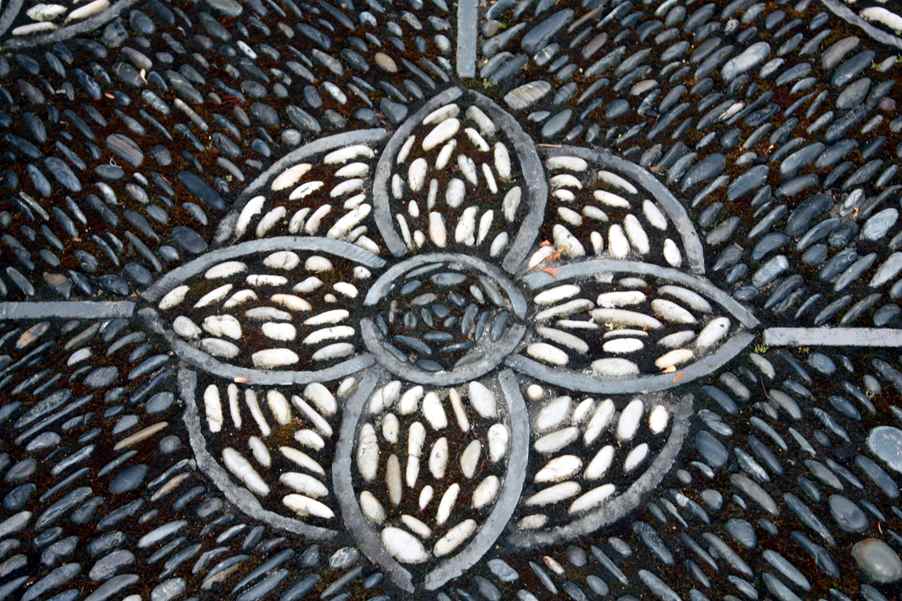
I thought of using historic photos of the Chinese in the West. Some are quite interesting, but I chose instead to use these from one of our times in Lin Su because it illustrates something of the Chinese culture, some of which Americans appreciated and adopted along with the parts or our cities that are called Chinatowns.
In the garden, the plants are ones that would be in a Chinese garden. Since they could not be imported due to current laws, they had to be found already here. The unique stones did come from China. The structures are true to Chinese culture.
This garden is the upside to what sometimes had a very ugly downside. It's how we can learn and grow with our diversity. To me, it is an important

I began this intending to write about two Chinese men who arrived in John Day in the late 1880s. I quickly realized their experiences would be better understood in the broader context of the Chinese in the American West. Their story comes August 12 .
My historical romances where I incorporated some of the Chinese story:


