|
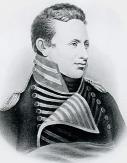
| John Otto with spyglass. Recently erected in downtown Grand Junction. |
John Otto couldn’t. In 1906, he arrived in Grand Junction, Colorado which sits at the confluence of the Gunnison River and the Grand River, renamed the Colorado River in 1921.
 |
| Atop CNM looking north across Grand Valley to the Bookcliff range. |
John spent most of the next twelve months exploring the mesas and plateaus that protect the city’s thirty-mile arcing valley home. Uncompahgre Plateau forms Grand Valley’s southern boundary. Its north-facing, sandstone strata rim drops toward the Colorado River in wild, winding canyons with soaring monoliths. This area seemed to speak to John’s soul the most. He thought all the world should experience it the way he did. Determined to make that possible, the eccentric recluse used pick and shovel to carve trails he envisioned visitors using along with him and his two burros, Foxie and Cookie.
His desire to gain National Park designation originally included Grand Mesa, Riggs Hill, the current Colorado National Monument, and McInnis Conservation area between the Monument and the Utah border. His choice of name was Monument Park. To attain this goal, John discarded his solitude in favor of any opportunity to publicize his beloved canyons, like an interview with a reporter and photographer, meeting public representatives, even conducting tours up and down the trails he’d broken to showcase such sights he’d patriotically named Independence Monument and Liberty Cap. Fundraising campaigns, petitions, editorials and letters to Washington politicians won more and more supporters.

On May 24, 1911, President William Taft added the Colorado National Monument to the park system. Smaller than the tireless eccentric had labored for and designated as a monument rather than a park; the thirty-two square miles of stunning grandeur was nevertheless open and preserved for an admiring public.
 |
| Coke Ovens |
John Otto served as the new attraction's first custodian. And, on June 20, he married Boston artist Beatrice Farnham at the base of Independence Monument. John’s departure from a solitary life was short lived. His wife found the austere reality, and possibly his irascible behavior, far from her romantic idea of their life together. A few weeks after the ceremony, she left. "I tried hard to live his way, but I could not do it, I could not live with a man to whom even a cabin was an encumbrance."
John stayed, living in a tent and working within the monument’s boundaries at a salary of one dollar a month for sixteen years. One of his first accomplishments as a park ranger was the perilous four-hundred-fifty-foot ascent of Independence Monument. He laboriously hand drilled holes into the rock, hammering pipes into the narrow openings to create a ladder to the summit. There, he hoisted an American flag to celebrate Flag Day and Independence Day.
 |
| Independence Monument |
Otto’s Route uses “Indy’s” broad northwest face and south ridge in four pitches that offer varied climbing techniques on mostly solid rock. It’s the easiest of Colorado’s classic climbs and the easiest of the Colorado Plateau’s major towers. However, don’t let those descriptions lure you into thinking it’s a route for novice climbers. The climb’s dangerous and tricky parts require experience at leading, placing gear, routefinding, multi-pitch climbing, and rappelling.
John’s peculiar attitudes finally placed him out of favor with local authorities. He retired from park service and headed for California.
His legacy was shouldered by hundreds of young men--the CivilianConservation Corps. The CCC provided employment for young men, ages 18-25, in relief families who had difficulty finding jobs during the Great Depression. Paid thirty dollars a month in contrast to Otto’s one, the pay was almost equalized by the automatic sending of twenty-five to each man’s parents. President Roosevelt’s program also implemented a general natural resource conservation program in every state and territory.
Today, thousands of hikers, bicyclists, and motorists enjoy the Colorado National Monument. All owe a debt of gratitude to John Otto’s vision and perseverance.
If you want to learn more about both John Otto and the Colorado National Monument, the USGS offers an absorbing write up on the geologic story of the area.
I hope you enjoyed this glimpse into my backyard. Here's where the shameless plug occurs for my contemporary romantic suspense, CAUGHT BY A CLOWN -- a spontaneous freelance journalist on a mission of mercy gets entangled in the case of a methodical undercover agent out to settle a score.
Visit my website at www.sandracrowley.com for more info--like CAUGHT BY A CLOWN is available in both paperback and ebook and can be purchased at Amazon as well as many other online sites. VBG
Thank you,
Sandra Crowley