Showing posts with label Jo-Ann Roberts. #Christmas Quilt Brides. Show all posts

Monday, January 16, 2023

Gathering Around the Frame - The Quilting Bee by Jo-Ann Roberts


If you've been reading my blogs here on Sweethearts of the West, you know of my great love of quilts and quilting. Besides writing sweet historical romance, the afternoons I've spent creating quilts are the most relaxing, enjoyable, and self-satisfying hours to unwind.

  
Here are two examples of my quilts.

I quilt purely for pleasure, most days by myself. It's only during my annual Quilt Week in Lancaster County that I get together with my quilting "sisters" for ten days of sewing, fun, and food! In our own way, we are keeping alive the traditions of a quilting bee...exchanging ideas, swapping fabric, and sharing ideas and patterns.


Photos from my 2022 Quilt Week in Lancaster County, PA

So, what is a quilting bee?

The exact origin of the word is hard to determine, as is the case with many old things. It is either one, or a combination, of these two things:

  • The name bee stems from a beehive where bees work together for a single purpose
  • Bee is a folk-derivative from the word been or bean, meaning something good or helpful

Both words indicate the communal, helping-each-other spirit of a quilting bee. This spirit is still present in the quilting bees today.


A quilting bee has been a social tradition that has existed since the 19th century. Then, this social event was popularized as a way for women, especially for settlers of the Great Plains, to gather around the showcase their talent while they talked and gossiped with each other. Sometimes, women and their families came from miles away just to attend a quilting bee. Many times, the goal of a quilting bee was mainly social, and beginners were welcomed along with the experienced. A fun example of this was when young women would gather to help a bride-to-be finish her quilts before she married. What joyous social events these would have been.


These gathering were typically held when the weather got warm in the spring and
summer.  If a house was too small to hold a quilting frame, the quilting would be held outside. Gathered around a simply constructed wooden frame, the quilt in

Mehama, Oregon, 1905

progress would be stretched between two boards. This would result in a taut, flat surface for the women to sew on. Each woman would quilt her own block on the quilt. This allowed for the entire community to be represented on one quilt. Equally important, the women enjoyed getting away from the house and all the interruptions and distractions that come from being at home.


Edgar Melville Ward, Quilting Party, 1892
Collection of the International Quilt Study Center & Museum

Once the day was over, it was ended with a feast. The feast usually included wither roasted chicken or turkey. Men were also invited to the feast and gave the women the opportunity to mix and mingle.

The entire night was filled with dances and songs. The event was well-celebrated in many communities as it marked the end of long hours of labor, love, and exquisite craftsmanship.


The Quilting Bee by Anna May Robertson Moses (Grandma Moses)

 A quilting bee has always been a place where quilters help each other. In the olden days by finishing a quilt together, and in modern days by learning techniques and give each other feedback and inspiration. And mostly a quilting bee is a place for friendship and support. 


A widow reluctant to love again…
A deputy determined to win her heart…

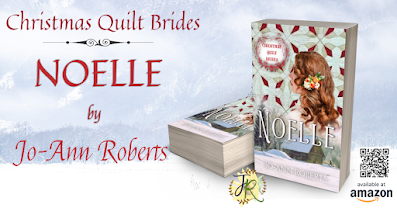
Two years ago, Noelle Prentiss lost her husband to an outlaw's bullet. With two children to raise, a small farm to tend, and a job making quilts to sell at the mercantile, she's doing her best to keep her property and life intact...until a man claiming to be the new deputy rides into her life captivating her children with his dog, his smile, and his easy-going charm.

When Coleman West agrees to stop by the Widow Prentiss's home on his first day as a deputy in a small Kansas town, he has no way of knowing obeying the sheriff's order will change his life. Spurned by love years before, he became a lawman, dedicated to protect and serve. Yet, he has no idea the widow and her children would call to his heart in a way he never expected.

With Christmas looming, will the growing attraction between Noelle and the deputy reveal the gift of a second chance?

Or could a stranger from the deputy's past threaten the man who captured her heart?


Friday, December 16, 2022

Mrs. Santa Claus - The First Lady of Christmas


The amount of Christmas lore we see, hear, touch, and taste at this time of year is staggering. We've got songs about reindeer, snowmen, the 12 days of Christmas, an elf who sits on a shelf, and letters to Santa. 

Little is known about Mrs. C ... that's Mrs. Santa Claus to you and me. who, in vivid imagination, is seen baking cookies with the help of her house elves in a cozy, dainty kitchen somewhere in their North Pole abode. As Santa Claus's wife, Mrs. Claus has been imagined as a stout woman, a little on the heavier side, with grey hair and spectacles...gee, that describes yours truly to perfection!

So, how much do we really know about Mrs. Claus?

But before Mrs. C. came on the scene, here's a bit about her husband. There is no mention of St. Nicholas, Bishop of Myra, having a wife. Yet as the 4th century Turkish bishop's practice of distributing gifts anonymously expanded and morphed over time, he has transitioned into a full-time behavior monitor, jolly elf, and bringer of toys.


However, even mythological love affairs don't just happen overnight. It would be centuries before Santa found his lady love. The first mention of Mrs. Claus appears in an 1849 short story "A Christmas Legend" by James Rees, in which a couple disguise themselves, angel-like, as travelers, and seek shelter with a family. As it turns out the two strangers are not the Clauses at all, but long-lost family members in disguise...thus, the legend was born.


Cover art from the Unremembered History website post by Ken Zurski.


Mrs. Claus is known to have lived during the early 
Middle Ages with Santa and was
 given the name 'Goody' which meant a good wife who took care of the house and Santa Claus. Her reputation was further elevated in Katharine Lee Bates's 1889 poem "Goody Santa Claus on a Sleigh Ride" when she demands to accompany her husband on his rounds and deliver the toys herself. 


It seems she had a bit of feistiness hidden beneath her red dress!  

People unanimously agree on Mrs. Claus's character. So, it stands to reason that since Santa Claus was a jolly character, his wife would be no different. She has been portrayed as an elderly woman, with white hair, spectacles and a red outfit with white fur trimmings. She was made to look like the perfect, caring wife who would wrap a scarf around Santa Claus every year, before he embarked on his long Christmas journey.


Mrs. Claus's role may have been overshadowed by the other important aspects of Christmas, but nothing can take away her pedestal as the woman in red waiting, on a night of celebration, for her husband to return from his long journey. The image is complete with her decorating Christmas trees and making cookies or gingerbread houses with her dear elves in the backdrop of a cozy fireplace.


Whether she goes by the name of Jessica, Mary, Anna or Gertrude, Mrs. Santa Claus has been a part of the oral and literary Santa Claus stories for as long as Santa himself, but she has been a quiet companion for several generations.

On behalf of Santa and Mrs. Claus, I wish you a holiday filled with love, joy, peace and all things that make you happy.

Merry Christmas!

My New Release!


...and here's the link for the Christmas Quilt Brides series!


Wednesday, November 16, 2022

Apple Pie - It's Not as American as You Think by Jo-Ann Roberts


With Thanksgiving less than ten days away, many of us are planning our holiday feast...or more specifically, planning the desserts to make for family and friends!

In our family it's no different. Thanksgiving wouldn't be complete with my daughter's Apple Crostata (an Italian version of an open-faced apple pie).

Growing up in a large, extended Italian family, I naturally equate food to family and love. While I'm an okay cook, I'm a much better baker. So, I usually mention food in my sweet historical romances...which leads me down the rabbit hole to find authentic foods the pioneers in the Old West might have eaten.

In my upcoming release, Noelle - Christmas Quilt Brides, the hero Coleman West recalls eating Vinegar Pie as a child. But that's a blog for another time.

Today, it's all about apple pie. 

 Photo Credit: Pinterest

Believe it or not, apple pie has a surprisingly un-American history. In fact, apples aren't even native to North America and didn't grow here until the arrival of European settlers. And cinnamon and nutmeg? Those came from as far away as the Far East (Sri Lanka and Indonesia)

According to food historians, apple pie originated in England. It arose from culinary influences in France, the Netherlands, and the Middle East as early as 1390--centuries before the Pilgrims landed at Plymouth Rock. When they landed, the only indigenous tree of the species they could find was the crab apple. They found it to be a far cry from the apples they usually had eaten back home, as crab apples were to0 sour to eat and were much smaller in size.

During colonial times, the European explorers did not eat apples but instead used them in making the alcoholic 'hard cider'. How did they remedy this situation? Transport apples from Europe through tree cuttings and seeds. The initial problem was pollination which made it difficult for the trees in North America to bear fruit. This problem was solved when European honeybees were introduced. After that, colonists began growing their domesticated apples in the country.

By 1800, some of those 14,000 varieties of apples were a good fit for apple pie. Around the same time, John Chapman planted so many apple trees in Pennsylvania, Ohio, and Indiana that he earned his nickname, "Johnny Appleseed."

Courtesy of Harper's Monthly, 1871

As the pioneers pushed westward, public interest in new fruit varieties of apples, pears, and peaches were discovered and introduced into their menus.

Easy and affordable, apple pie was a typical American cuisine by the 18th and 19th centuries. But it didn't become associated with our cultural identity until the 20th century, when advertising, news, and two world wars transformed the dish into a nationalist symbol.

Though the exact origin of the phrase "as American as apple pie" is unclear, a 1928 New York Times article used it to describe the homemaking abilities of First Lady Lou Henry Hoover. By World War II, it was a symbol of feminine love associated with home, warmth, and soldiers proudly proclaimed that they were fighting for "mom and apple pie." 

Interesting Facts About Apple Pie
 
The early English people didn't use sugar to sweeten the pies as it was very expensive. Rather, they used sweet fruits like figs, raisins, pears, and honey.

In the beginning, apple pies had a "take-off" crust. The apples were first baked in a crust, the Top crust was then removed, and sweeteners and spices were added. The pie was served with the top crust replaced.

                                                       Photo Credit:  Pinterest

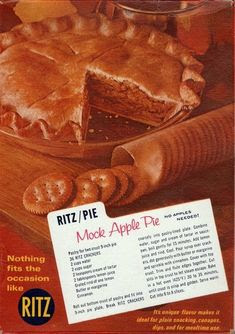
The American West settlers made mock apple pie because they didn't have apples, so they used crackers and special spices, and though it tasted like real apple pie. Some people still make it mock apple pie today. 

Maria Ann Smith was an inspiration for the name Granny Smith apple variety. Mrs. Smith was well-known for her fruit pies, and the Smiths were apple farmers. She accidentally crossed a wild European crab apple with a more commonly grown orchard apple to make a new kind of apple.

Symbolism aside, apple pie actually does represent America, but not for the reasons most people think. Apple pie is American because it illustrates how cultures worldwide can join together to create something new and altogether wonderful. Like apples, we're all transplants.