

Each of my family members loves history. This means we enjoy
finding new destinations and delving into the area’s past. Last week, my
youngest daughter and I traveled to Ennis, Texas to look at their famous (well, at least here in Texas it’s famous) Bluebonnet Trail.
 |
| From a better year for Bluebonnets, photo by Nelda Liles |
Heavy rains the week before had caused grasses to grow
taller than the flowers we sought in some places, but we were not to be
deterred. After TexMex for lunch, we started at the Visitor Center. At one time
the building had housed the Wells Fargo Freight Office. I couldn’t help thinking of Wells Fargo stages
and the danger they faced.
Armed with brochures and a map, we went next door to the Ennis
Railroad and Cultural Heritage Museum. The small but interesting museum was converted
from a Van Noy Restaurant building. The restaurant served customers from as
many as ten passenger trains a day that once stopped in Ennis.
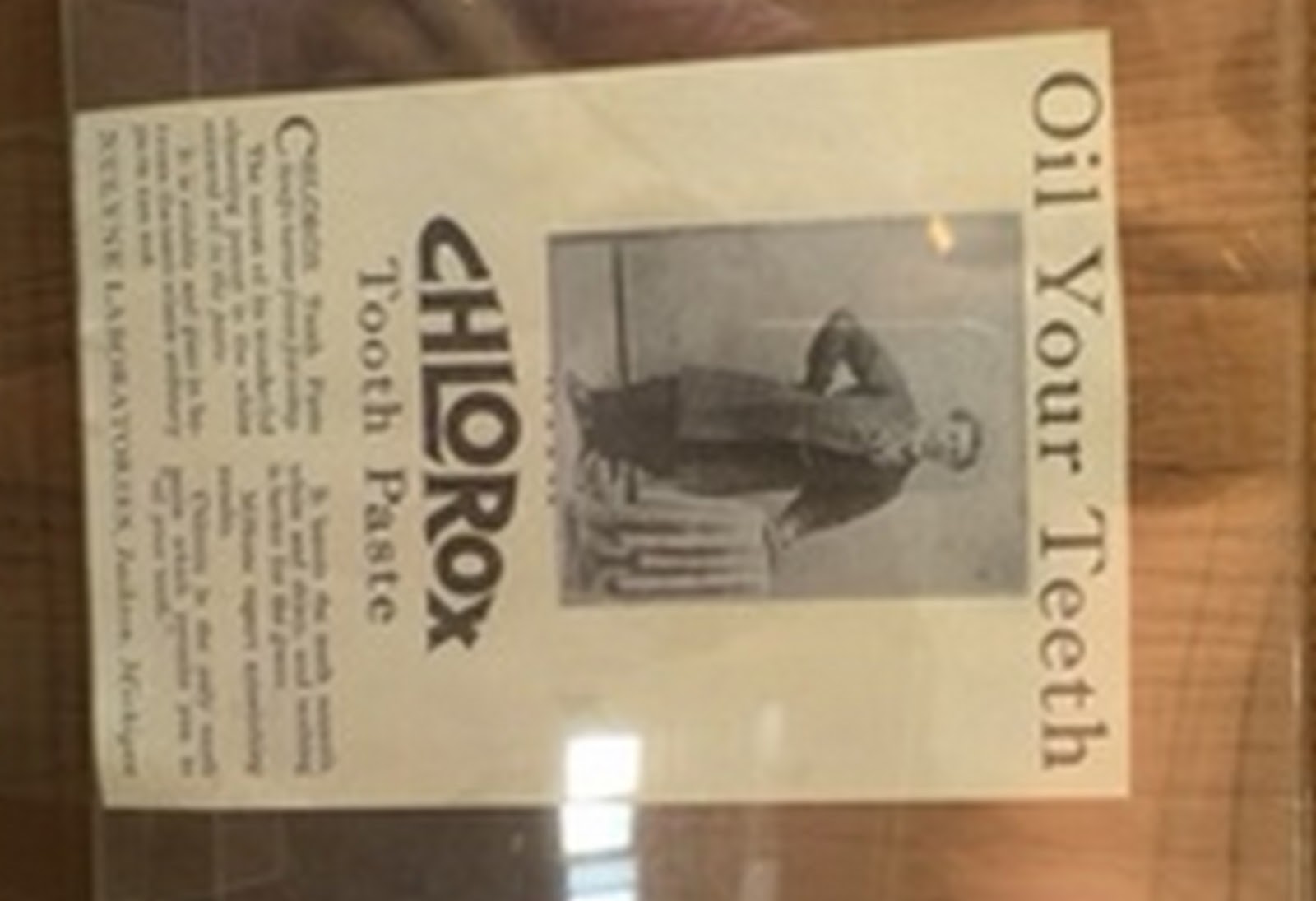 |
| Sorry I can't get this to turn the right way. I think I'll stick with my toothpaste. |
Those of you not from Texas may not find this as interesting
as I do, but this is the way towns all across the country grew. This could be Anytown, Anystate, USA. Towns blossomed
or died due to the railroad.
I had no idea Ennis had been such an important railroad center.
In 1871, the Houston and Texas Central
Railroad, a forerunner of the Southern Pacific Railroad, purchased 647 acres of
land in Ellis County at a price of $5.00 an acre. This established the line’s
northern terminus.
 |
| Ennis depot in 1911 This two-story depot burned |
A year later, the site was established as the City of Ennis,
named after Cornelius Ennis, an early official of the Houston and Texas Central
Railroad. The first train ran through
the community in 1872 on its way from Corsicana to Dallas. Citizens of Burnham,
a small town to the south, responded violently to being bypassed and attacked
the new community. They killed one man and wounded several others.
In its earlier days, Ennis had a “wild west” reputation. At
one time the city contained 13 saloons and 6 beer halls. In 1883, Ennis
National Bank held the title of the largest bank in the county with $100,000. on
deposit. The outlaw gangs of Cole Younger and Sam Bass stopped in Ennis. Younger
reportedly checked out the Ennis National Bank but decided it was too well
guarded to rob.
 |
| Sideways, but Ennis in its early days |
In 1873, Jacob Shebasta, an immigrant from Czechoslovakia,
was the first of many Eastern Europeans to make this area home. The town has a
strong Czech influence. Today the city is home to four Czech social halls as
well as the National Polka Festival on Memorial weekend each May. (I have to
admit we stopped for Czech pastries to take home. We bought cinnamon rolls and
kolaches, which we jokingly call square donuts.)
 |
| Dancers at a past National Polka Festival in Ennis |
In 1891, the Texas and New Orleans Railroad, a part of the
Southern Pacific, established a division point in Ennis. This led to the
construction of shops and a roundhouse that employed several hundred men. Ennis citizens contributed $25,000, 90 acres
of land, and a 43 acre lake toward the project.
Here’s where Ennis officials were clever. A contract was drawn up that stated that the
railroad could NOT move its shops out of town as long as the City of Ennis was
able to provide water for the railroad’s use. The city built three lakes for this purpose:
one in 1892, one in 1895, and the last in 1940. Between 1910 and 1915 the
railroad tried to move the shops, but the community was supported in the
courts, and the shops remained in Ennis.
The city was growing. By 1890, Ennis had two banks, a cotton
compress, three cottonseed depositories, a cotton gin, a fruit-canning
business, a brickyard, an opera house, and two weekly newspapers, the Local and the Saturday Review. In 1894 Ennis received its second railroad, the
Texas Midland, which provided service from Paris, Texas, by 1897.
 |
| Old postcard showing cotton bales waiting to be loaded onto trains |
Today, Ennis is known as the Bluebonnet City because of the
springtime beauty and abundance of the Texas state flower in and around the
city. Ennis was designated by the 1997 State Legislature as the "Official
Bluebonnet City of Texas" and home to the "Official Bluebonnet Trail
of Texas." This year rains caused the Bluebonnet Festival to be rained out
two of the three days. However, the Bluebonnet Trail still offered beautiful
vistas.
 |
| Photo of bluebonnets and Indian paintbrush by Nelda Liles |
The Kachina Prairie is one of the last remaining examples of
Texas blackland prairies. Ennis' first bluebonnet trail was marked through this
area in 1939. On our drive along the trail, we were lucky to see a herd of red
deer but the Clydesdales were not out during our drive nor were the animals at
the exotic farm. We were pleased to see longhorns, though.
 |
| Longhorn nibbling on bluebonnets, grass, and Indian paintbrush |
Ennis is home to the Texas Motorplex, a quarter-mile drag
racing facility built in 1986 by former funny car driver Billy Meyer. It
annually hosts the NHRA O'Reilly Fall Nationals each September, when hundreds
of professional and amateur drag racers compete for over $2 million in prize
money.
Our day was a lovely experience. We plan to go again next
year if the rains don’t interfere with the bluebonnets. We didn't get to see all the lovely Victorian homes so we have to go again.

