Showing posts with label Sweethearts of the West. Show all posts

Friday, August 20, 2021

The Alamo Before and After


Remember the Alamo!
Most Americans and many others know the significance of that stirring cry. The story of the Battle of the Alamo has been told and retold in print and cinema. But how much do you know about the 300-year history of the Shrine to Texas Liberty before and after the famous battle?

Established in 1718 as Mission San Antonio de Valero, the site was one of several religious outposts founded in Tejas by the Spanish Empire. Soldiers controlled the territory and its indigenous people, who were taught the Spanish language and Catholicism by priests.

The mission was moved twice, the second time due to a hurricane, settling in its current location in 1724. A stone convento to house the priests’ private quarters, offices, refectory and gardens was built first. The mission church began construction in 1740 but suffered many setbacks and was never completed while the mission was active.

Mission de Valero as imagined in 18,83; wikipedia public domain

In addition to learning Spanish and the Catholic faith, indigenous residents of the mission were taught skills such as weaving, farming, masonry, and metalworking. They also worked to harness the nearby San Antonio River and built irrigation ditches called acequias, providing water for vegetable gardens and livestock.

Mission Valero was secularized in 1793. Lands and goods acquired by the mission were distributed to the indigenous residents who became parishioners at San Fernando on the other side of the river. The former mission became a community known as Pueblo de Valero.

However, threats on Tejas’ borders from French and American explorers caused Velero to become a defensive military post by 1803. It was occupied by a Spanish cavalry unit, La Segunda Compañia Volante de San Carlos de Parras. For short, they were called the Alamo Company after their hometown of Alamo de Parras, explaining how the post got its name.

The soldiers converted the old convento into barracks and established the first hospital in Texas on the building’s second floor. The Alamo Company remained at the outpost for 32 years, through Mexico’s fight for independence from Spain that culminated in 1821, and until 1835.

With the need to protect its northern frontier, Mexico had established laws allowing colonists into Texas. Led by men such as Stephen F. Austin, immigrants flooded in, attracted by land and opportunity. Along with the native population, they lived fairly free of government interference, being far away from the capital in Mexico.

This autonomy changed with the election of Antonio Lopez de Santa Anna as president in 1833. He instituted a more centralist government, leading to a civil war and Texas seeking its own independence.

I will not go into the battles that led to the 13-day siege of the Alamo, its fall and the eventual defeat of Santa Anna’s army at San Jacinto. If you wish to read a detailed account, visit this site: https://www.thealamo.org/remember/battle-and-revolution 

The Alamo drawn in 1838 by Mary Maverick; wikipedia public domain

Oct. 28, 1845—First U.S. Army Unit Arrives in San Antonio 

On Mar. 1, 1845, the U.S. Congress passed a joint resolution signaling impending Texas statehood. The U.S. Army dispatched three companies of the 2nd Dragoon Regiment – trained to fight mounted or on foot - from Fort Washita, Indian Territory, to San Antonio in the Fall of 1845 to protect the region.

The Dragoons established a camp near the Alamo in rented facilities which became known as the Post at San Antonio. The Army leased the Alamo between 1849 and 1861 and again between 1865 and 1876 for use as a quartermaster depot.

The Alamo ca. 1854; wikipedia public domain


The Depot quartermaster, Major Edwin B. Babbitt, recommended that the building be demolished and replaced with a new warehouse, but Quartermaster General Thomas Jessup vetoed that idea. Instead, he directed the building to be repaired. These repairs incorporated an arched façade to hide a new pitched wooden roof, giving the Alamo its world-famous silhouette.

“Absent Jessup’s directive…the Shrine of Texas Liberty would probably have been demolished…!” —George Nelson, The Alamo, An Illustrated History

With Texas’ secession from the union in 1861 the Alamo was under control of Confederate forces until 1865. In the late 1870s the Army began relocating its operations to what is now known as Fort Sam Houston.

Clara Driscoll, Savior of the Alamo

Clara Driscoll; wikipedia public domain


By1903, the Alamo had been neglected and was nearly torn down and replaced by a hotel. Once again, it was saved, this time by 22-year-old Clara Driscoll, whose grandfather had fought in the battle of San Jacinto. Donating her own money, she collaborated with the San Antonio chapter of the Daughters of the Republic of Texas to protect the historic mission. For her generosity, Driscoll is known as the “Savior of the Alamo.”

Born in 1881, Clara was the only daughter of Corpus Christi millionaire Robert Driscoll. Educated in Europe, she knew the importance of preserving historical sites. She wrote: “By the care of our eloquent but voiceless monuments, we are preparing a noble inspiration for our future.”

When Driscoll died in 1945, her body lay in state at the mission’s chapel, in recognition of her work to preserve “the shrine of Texas Independence and glory,” as she described it.

A Battle Over Preservation

Today, the Alamo needs updates. Plaster is flaking off the walls of the nearly 300-year-old building. Its one-room space can hold only a fraction of key artifacts and is usually so packed with tourists that it’s impossible to give each exhibit the time it deserves. The surrounding plaza is a circus, packed with novelty shops and a Ripley's Believe It or Not Museum.

But Texans are deeply divided over how to renovate the Alamo. A $450 million plan proposed in 2017 turned into a five-year fight over whether to focus narrowly on the 1836 battle or present a fuller view that delves into the site’s Indigenous history and the role of slavery in the Texas Revolution.

Several defenders in the 1836 Battle were slave holders, including William B. Travis and Davy Crockett. Whether or not to point this out in future displays at the Alamo is a bone of contention between conservative groups and those who wish to tell the Alamo story from a more inclusive perspective. Indigenous leaders also want the site to respect its ancient role as a burial ground. Historians argue that support for slavery really was a motivating factor for the Texas Revolution.

Alamo Cenotaph; image by David R. Tribble; creative commons share-alike 3.0


Another virulent disagreement concerns the Cenotaph, a 56-foot-tall monument to Alamo defenders erected in the plaza between 1936 and 1940. Under the renovation plan, the Cenotaph would be moved 500 feet south and deposited in front of the historic Menger Hotel. The intent was to make the plaza “period neutral” and help visitors imagine how the Alamo looked as a mission and fort. But conservative groups rallied in armed protest and turned up at public meetings chanting “Not one inch!”

The struggle over the Cenotaph ended when the Texas Historical Commission, a state board whose members are appointed by Gov. Greg Abbott, voted to deny a permit to move it. Nearly half of the board members of the nonprofit raising funds for the Alamo renovation resigned in protest.

On April 15, the San Antonio city council voted for a new plan that leases much of the plaza to the state for at least 50 years — and leaves the Cenotaph in place. Let’s hope the new plan goes forward.

I have visited the Alamo several times and am always filled with awe for those who gave their lives there, but I agree the plaza needs to be redesigned to show more respect for the shrine. As for the matter of slavery, it distresses me to know some of our heroes owned slaves, but I’m not sure I want to dwell on that fact when I stand in the most revered site in Texas. What do you think?

Sunday, December 20, 2020

Christmas Then and Now


I grew up in a city - Minneapolis - an only child living in an apartment with my folks. I remember trudging along snowy aisles between rows of Christmas trees at the lot down the street, my toes and fingers freezing in temps that sometimes dropped to minus 10 or 20 degrees. We never chose a very big tree because we didn't have much room in our living room. Later, when I was in my teens, the folks bought a shiny aluminum tree. Remember those? They placed it on my mom's cedar chest and set an electric wheel thingy nearby that turned, casting bright colors on the tree. I thought it was pretty cool back then. But so fake!


Now, compare that to what a Christmas tree looked like in a settler's cabin, if they had one. Remember, trees were scarce on the prairies. In those regions, a few leafy boughs might have to suffice. But if the settler dad did manage to find and cut down a tree, and drag it into his family's small, crowded shelter, it would probably be decorated with bits of ribbon, yarn, berries, popcorn or paper chains. There might also be homemade decorations such as figures made of straw or yarn, cookie dough ornaments or gingerbread men.

Old-fashioned Christmas; wikipedia, public domain

Underneath the tree you’d see homemade gifts like corn husk dolls, sachets, carved wooden toys, pillows, footstools, and embroidered hankies. Members of the family might have worked on some of these gifts for months ahead of Christmas. Others knitted scarves, hats, mittens and socks. If the year had been good, the children might find candies, small gifts, cookies, fruit or shiny new coins in their stockings.

Christmas Eve would generally find most families singing carols around the tree or fireplace. Children undoubtedly went to bed dreaming of what gifts they would find under the tree come morning. Did they believe in Santa Claus? Perhaps. Santa was part of holiday traditions in the eastern U.S. by then, but whether he'd made it into Christmas lore on the western frontier is debatable.

On Christmas Day, if there was a church within a reasonable distance, the family would attend services. Then they’d return home for the Christmas meal, which might feature venison stew, deer chili, and canned homegrown veggies. For those who could afford it, they might have beef or ham. Some possible desserts were molasses cookies, vinegar pie or dried apple pie.

In pioneer days, Christmas was a lonely time for many a mountain man, explorer, or lone cowboy. This was often true for settlers as well, cut off from family and friends “back home.” No different, really, from this year when many of us will forego traditional family gatherings for fear of catching the covid virus. Let's hope and pray that 2021 will be a much kinder year.


If you would like to sample a Christmas of yesteryear on a Texas ranch, you might enjoy this novella set in 1885. Young love is budding and a special surprise awaits the youthful heroine.

Sunday, September 20, 2020

Breast Binding: Dangerous!

Have you ever read a romance, historical or contemporary, in which the heroine disguises herself as a boy/man? And she binds her breasts? I’m thinking of a book I love: Ashes in the Wind by Kathleen E. Woodiwiss. In it, the heroine binds her breasts for weeks, maybe months (I don’t recall exactly) in order to pass herself off as a boy and work in a Union hospital in New Orleans during the Civil War.


Now, Ms. Woodiwiss was and still is a hero of mine and I hate to criticize her work, but she really should have done more research on the topic of breast binding. I recently read up on it myself because I was planning to have the heroine of my upcoming book don men’s clothing and follow her love, the hero, into danger. She considers binding her breasts but instead decides to strategically pad her undergarment.

Why? Because I learned by poking around on the internet how binding, particularly with bandages, can damage soft tissues and underlying muscles if done over a prolonged period. It may cause shortness of breath, chafing, excessive sweating, rashes, back pain, bruised and even broken ribs. Unsafe binding may lead to permanent deformation of the breasts, scarring, and lung constriction.

Yowser! I sure didn’t want my heroine experiencing such unpleasantness. She has enough to deal with as it is.

Despite all the nasty side effects, breast binding has gone on historically. Wearing a corset was one way to reduce the size of breasts. There was widespread use of corsets throughout western European history up to the Victorian era. The Japanese kimono is a very elaborate form of binding. The obi (belt) goes around the lower torso, while the chest is bound by the sarashi. In the 1920s, flappers bound their chests to achieve the desired look.

I doubt American pioneer women bound their breasts. They were too busy raising children, cooking, sewing and helping their men tame the Wild West. However, a number of women disguised as men fought in the Civil War, their gender going undiscovered until they happened to be wounded or come down sick and require medical attention. They may quite possibly have bound their breasts.


There is also the famous case of Charley Parkhurst (Charlotte) who worked for years as a stagecoach driver in the West. “Loose fitting clothing hid her femininity and after a horse kicked her, an eye patch over one eye helped conceal her face. She weighed 175 pounds, could handle herself in a fistfight and drank whiskey like one of the boys.” Who knows if she bound her breasts? 

Thursday, February 20, 2020

Corsets for Ranch Women? Not Mine!


In the Victorian Era women were regarded as the weaker sex and corsets were considered a necessity to protect their virtue and support their “fragile” bodies. Tight lacing indicated a virtuous woman, loose lacing a loose woman.
Hourglass corset c. 1878; wikipedia commons, public domain
Of course a corset’s main purpose was to pinch in the waist and push up the bust, making the wearer more appealing to the opposite sex. It didn’t matter that the devices made deep breathing impossible, caused fainting, led to lung infections, deformed internal organs and caused many miscarriages. Yes, maternity corsets were available, but rather than provide helpful support, they were designed to constrict the pregnancy. I hate to think what this did to the mother and baby.

Doctors were well aware of these ill effects. The following is from an article published in the British medical journal, The Lacet and reprinted in the The Times of London.

“Our old friend, tight-lacing, has again made his appearance. ... The folly is one which was formerly to be found mainly in the drawing-room, but now it also fills our streets. ... as medical practitioners, we see its effects every day in the train of nervous and dyspeptic symptoms … and in the still more grave internal mischief of permanent character which is often caused by it.”

Corsets also seriously restricted movement. After donning a chemise to protect the corset from body oil, it was advisable for a woman to put on her drawers, stockings, garters and shoes before being laced up because she wouldn’t be able to bend over afterward.

How could a woman encased in layer upon layer of clothing, bone or metal stays, and laced up tight, ride a horse? Well, there were corsets designed especially for riding, cut higher over the hips to allow sitting in a saddle – a side saddle that is. Ladies did not ride astride, not by society standards.

However, those society ladies didn't perform all the tasks required of a frontier wife and mother. Quoting an article by Susan Jarrett, on her site History of Fashion and Dress:

“While there is evidence of high fashion entering the frontier, it can be surmised that for the average American settler of the early frontier, practicality and functionality mattered more than high style. A frontier family's day was filled with hard labor and long hours. For women, skirt lengths were shorter, necklines higher, and sleeves were close fitting. Both women and children wore large sunbonnets or woven hats to protect their skin from the sun. Aprons and smocks were worn to protect clothing from the laborious chores of frontier life.”

Nowhere does the author mention corsets. Although she was writing about an earlier period (1800-1840) it’s safe to assume the same applied to women on the advancing frontier. If a ranch wife needed to mount a horse and help her husband push cattle, which some did, she would likely pull on a pair of boots, hike up her skirts and ride astride. Alternatively, she might make a split skirt or buy one ready made if available. Such a skirt wasn’t tailored. It contained yards of cotton, wool, corduroy or even denim in later decades. It would be hot and heavy but far more comfortable than a tightly laced corset.

In Dearest Irish the heroine, Rose Devlin, must learn to ride if she’s to save the life of a wild stallion that won’t let anyone but her touch him. A split skirt may preserve her modesty.


Rose met Jack’s stare, reading challenge in his dark eyes. “I would like to try riding him,” she said timidly, wondering where the words came from.
Tye glared at her. “Have ye lost your mind? That fiend would likely kill ye.”
She regarded the stallion, who was now rubbing his neck on the fence rail separating him from herself. His warm brown coat gleamed in the sunlight. Raising his head, he nibbled at her open palm with his lips. It tickled, making her giggle.
“We’re friends. He wouldn’t hurt me, would ye, Brownie?”
“Brownie? You’ve named him? Woman, you’re as daft as Choctaw Jack,” Tye said crossly. Bending close, he whispered, “And ye plied your healing arts on the beastie last night, didn’t ye?”
Rose gave him a tiny smile, not denying his accusation.
Her riding lessons began the next morning. For the first few days, her brother attempted to teach her, but she had trouble getting used to the lady’s saddle, was afraid of falling off and found it impossible to obey his directions. He became impatient and snappish, driving her to tears at one point, until he finally turned her over to Choctaw Jack for instruction. Tye was not happy about the Indian cowboy being her teacher, why she didn’t know, but Lil convinced him his sister would learn more easily from a stranger, for which Rose was very grateful.
Jack insisted she learn to ride on a man’s saddle, saying it was more natural and safer. Tye grumbled but couldn’t say no since his wife pointed out she’d always ridden astride before growing heavy with child. Rose expressed no opinion in the matter until Lil casually mentioned she would need to wear a pair of men’s trousers for riding. Horrified at the thought, Rose stared at her wide-eyed from her chair at the kitchen table, where she sat peeling apples for a pie.
“What? No! I can’t,” she protested.
“Why not? I did,” Lil said, frowning from across the table as she shucked corn for dinner. Her mother stood between them, preparing dough for the pie.
“Ye did? But how could ye display yourself so . . .?” Rose bit back the word she’d been about to utter, not wishing to insult her sister-in-law, but it was too late.
Lil narrowed her eyes. “So brazenly? Is that what you were going to say?”
“I-I meant no offense,” Rose stammered, clutching a paring knife in one hand and a half peeled apple in the other. “But I’m not as b-brave as yourself. I simply can’t wear trousers.”
“Even if it means never riding your Brownie and knowing he’ll be shot?”
“Oh, please don’t say that!” Rose cried. Her eyes filled with tears. Dropping the knife, she clapped a hand over her trembling lips, fighting to hold back a flood of regret.
“There is another way,” Rebecca said. Wiping her hands on the long white apron draped over her dress, she glanced at Rose. “I could make a riding skirt for you.”
“You mean one of those split skirts like Jessie wears?” Lil asked dubiously. “I don’t know how she climbs aboard a horse with all that skirt dragging on her.”
“She manages.” Motioning Rose to her feet, Rebecca looked her up and down carefully. “You are about the same size as your sister. Perhaps she will let me use one of her skirts as a pattern.”
“I’m sure she would,” Rose said, a surge of hope helping to dry her eyes. Recalling the riding skirt she’d once seen on Jessie, she thought she could stand to wear such a garment. Certainly it was better than figure-hugging trousers. If it allowed her to ride Brownie, thereby saving his life, she would do it.
Word was sent to Jessie and she immediately supplied not only a skirt, but the paper pattern she’d used to make it. At Rebecca’s request, Tye escorted Rose and her into Clifton, the nearest town, where Lil’s mother chose a durable corded fabric suitable for their purposes. While there, Tye also outfitted Rose with a plaid work shirt, a pair of thick-heeled western boots, and a Stetson hat much like the one he wore.
Once back at the ranch, Rebecca wasted no time in cutting out the pieces for Rose’s skirt. With Lil pitching in to help, the three of them finished sewing it within two days.
On the morning her lessons were to commence with Jack, Rose hesitantly stepped out of the house wearing her blue plaid shirt and grayish blue riding skirt. She’d pinned her long hair into a tight knot at her nape beneath the brim of her brown hat. Walking cautiously in the unfamiliar boots, she tugged on a pair of leather gloves borrowed from her sister-in-law.
Lil had assured her she looked fine; Tye had merely raised an eyebrow and shrugged at her appearance. Still, when Rose spotted Jack standing by the corral, watching her approach, she blushed hotly, feeling self-conscious in her strange new clothes.
“Morning. You ready to learn?” he asked as she drew near.
“Aye, I’m ready.” Painfully aware of his gaze upon her and his imposing size, she studied the ground. Much to her relief, he made no comment about her changed attire.
“Good. Come on. I saddled Betsy for you,” he said without any inflection in his voice. Ushering her into the corral, he led her over to the quiet mare Tye had previously chosen for her. She was a muddy brown color, not the lovely warm hue of Brownie’s coat, but she was sweet-natured and patient, qualities Rose had come to value during her inept attempts to ride.
“Hello, Betsy,” she murmured, patting the mare’s neck. The animal turned her head and eyed her, perfectly calm.
“The first thing you need to learn is how to mount and dismount,” Jack said. With that, he demonstrated the proper way to do both. Then it was her turn.
She felt horribly exposed with her backside partially outlined by the riding skirt and practically in his face as she clumsily lifted herself into the saddle, but he seemed not to notice. All he did was adjust her feet in the stirrups and order her to sit straighter. Once he was satisfied with her posture, he had her climb down and repeat the process. This went on for close to an hour, with Jack patiently, if somewhat coolly, correcting her mistakes. Finally, he seemed satisfied with her efforts.
“That’s enough for today. I’ll meet you here tomorrow morning,” he said, touching his hat to her.
Lyn Horner is a multi-published, award-winning author of western historical romance and paranormal romantic suspense novels, all spiced with sensual romance. She is a former fashion illustrator and art instructor who resides in Fort Worth, Texas – “Where the West Begins” - with her husband and two very spoiled cats. As well as crafting passionate love stories, Lyn enjoys reading, gardening, genealogy, visiting with family and friends, and cuddling her furry, four-legged babies.

Amazon Author Page: viewAuthor.at/LynHornerAmazon (universal link)
Newsletter:  Lyn’s Romance Gazette http://eepurl.com/bMYkeX
Website:  Lyn Horner’s Corner 

Wednesday, November 20, 2019

Late but Still Here


Sorry for being late posting this! The past few days have been hectic, beginning with our granddaughter's wedding on Saturday. It took place in McKinney, Texas, about an hour from our home in Fort Worth. We spent two nights in a hotel up there rather than drive back and forth for the rehearsal dinner and wedding. The venue was beautiful, a rustic setting in the countryside, and everything went off without a hitch. Grandgirl Hannah was a stunning bride!

Unfortunately, not long after returning home on Sunday, my husband started feeling sick. He has been miserable for the past two days but seems to be fine today. Now I'm waiting to see if I caught whatever bug he had.

Meanwhile, I've been trimming some low bushes and pulling weeds in our back yard, all while kneeling or parked on my backside because my knees are too weak for me to stand for such work. Not quite done yet, but looking better out there.

Summing up, I totally forgot about posting here until a little while ago. So I'll keep this short and just wish you a Happy, Blessed Thanksgiving.


Monday, May 20, 2019

A Texas Plantation


I am in the middle of boxing up books in my home office because we are going to have the room's old carpet replaced. Not a fun job! I've collected hundreds of research books over the years from library book sales, used book stores, historical places hubby and I toured, or from online sources, mainly Amazon. In many cases I'd forgotten I even had the book.

One such example is Plantation Life In Texas by Elizabeth Silverthorne.
https://www.amazon.com/Plantation-Texas-Clayton-Wheat-Williams/dp/089096288X

Published in 1986 as part of a Texas life series, this fascinating volume is based on earlier books, articles and first-hand accounts from former slaves collected during the 1930s by interviewers employed by the Works Progress Administration (WPA). The text is liberally illustrated with scenes of plantation life drawn and painted by noted Texas artist Charles Shaw.

Ms. Silverthorne grew up in Brazoria County on Texas's Gulf coast, where cotton and sugar plantations flourished in antebellum days. She opens her book with a history of how planters came to Texas in the early 1800s when it was still part of Mexico. "Along with slaves and seeds, they carried ideas and ideals about the kind of life they wanted to create for themselves."

One of these "would-be empire builders" was Jared E. Groce. Born on a Virginia plantation, he moved west, managing plantations in Georgia and Alabama. Then, in January 1822, Groce became one of Stephen F. Austin's Old Three Hundred settlers. He and his son Leonard, along with an overseer, led fifty covered wagons to Texas. They brought pontoons to ferry the wagons across rivers. Included were his family, over ninety slaves, furniture, spinning wheels, looms, clothing, farming equipment, and enough food to see them to their destination. A train of livestock followed the wagons.

Groce chose to settle on a high bluff overlooking the Brazos River. Some of his slaves set to work building a small cabin (for his family presumably) while others cleared ground for planting seed corn and cottonseed. He named his plantation Bernardo.

Bernardo Plantation; https://www.thcfriends.org/special-projects/bernardo-plantation

Due to a severe drought, the corn crop failed, leaving Groce, his family and slaves to subsist on wild game until the following year when a corn crop was grown successfully. However, the dry weather and rich soil produced more cotton than Groce had imagined. The first few crops were carried by pack mules into Mexico, with Groce leading accompanied by his body servant Edom, who performed many servised for his master, whose arms were crippled.

One slave managed ten or twelve mules, walking or riding behind them, yelling at them to move on. Each animal carried two bales of cotton, weighing seventy-five to eighty pounds a piece, plus a sack of feed. Strong little critters!

Groce eventually built a river landing near his plantation, allowing him to float his cotton on homemade flatboats down the Brazos and transfer it to a schooner bound for New Orleans. Other plantation owners and travelers also used his landing, calling it Groce's Ferry.

In 1825 Groce's son, Leonarrd, brought the first cotton gin to that part of Texas. The family's empire grew, building more plantations. When Groce's only daughter, Sarah Ann, and her husband William H. Wharton moved to Nashville, Tennessee, he enticed them to return by promising to build them their own plantation. They returned and he built for them the Eagle Island plantation on Oyster Creek, where Sarah became a famous hostess and political influencer for her husband.

Bernardo Plantation played a large part in the War for Texas Independence. The plantation provided a strategic location for Sam Houston and his Texian soldiers before the Battle of San Jacinto, which ended the conflict. The Twin Sisters cannon supplied by Ohio sympathizers arrived at the plantation and soldiers were ferried across the Brazos by steamboat prior to the battle. Additionally, Bernardo is considered the South's last major cotton plantation and the nation's farthest west cotton plantation.

I can't go into how slaves lived, worked and died to provide their masters an opulent lifestyle, not without writing another book about it. Or how everything changed after the Civil War, forcing plantation owners to free their slaves, thereby losing their cheap labor. For that, I suggest you get hold of Elizabeth Silverthorne's amazing book. The wonderful illustrations, alone, are worth the cost.

Saturday, April 20, 2019

Fort Concho and the Concho Pearl


Yesterday, my dear friend Charla Chin (Sharla Rae) passed away after a long, painful battle with cancer. She was a wonderful western romance author, whose career was cut off by the monster disease. I am filled with sadness at her loss and frankly can't think of anything to write about. Instead, I am reblogging a post from a few years ago about Fort Concho and the Concho Pearl.

Concho PearlThe Concho River was named after mussels found in the river and lakes surrounding the town of San Angelo in west Texas. Called “Concha” by early Spanish explorers, the large gray mussels produce “Concho Pearls” in purple, lavender, pink and orange. The Spanish were enthralled by the lustrous pearls and enlisted local Indians to help harvest them. There may even be Concho Pearls in the Spanish Crown Jewels.

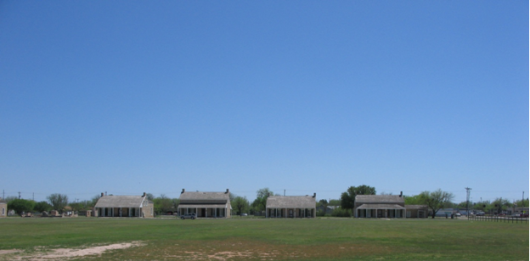
Centuries later, Fort Concho was also named after the mussels, or more likely the river. The fort was established as a frontier U.S. Army post in 1867, with five companies of the Fourth Cavalry commanded by Col. John P. Hatch. Situated beside the North Concho River, the fort replaced the earlier Fort Chadbourne north of San Angelo.  Although built on flat, treeless prairie, Concho was described as “one of the most beautiful and best ordered posts in Texas.”

Fort Concho cropped
The fort was vital to settlement because five major trails crossed the area. An active post for twenty-two years, Fort Concho protected settlers, stagecoaches, wagon trains and the United States mail, and kept trade routes open. The Army launched campaigns against the Comanche and Kiowa from Fort Concho, as well as actions against the Comancheros who traded illegally with the Indians.

Pecan wood was first tried as a building material for the fort, but it proved too hard to work with. Next, the soldiers tried adobe bricks but they didn’t know how to properly make adobe. Consequently, when heavy rain came, it dissolved the bricks. Finally, it was decided to build the fort out of native limestone, and the Army hired German stonemasons from Fredericksburg, in the Texas Hill Country to the south. Construction went on throughout the fort’s active period and was never completed.

Today, Fort Concho is a National Historic Landmark owned and operated since 1935 by the city of San Angelo. Over time several buildings have crumbled into ruins, but the remaining buildings are repaired and preserved by the city, assisted by the Fort Concho Foundation. While attending a conference in San Angelo several years ago, my husband and I visited Fort Concho and snapped a number of photos. Below are the best of the bunch. Unfortunately, I neglected to add captions after hubby loaded the pics to our old computer, and now I can’t recall what all the buildings are. I’ve labeled the ones I know. For more historical information and photos from the fort’s active period, visit http://www.fortconcho.com/index.htm

2
Officers Row
13
Officers Quarters
3
Enlisted Men's Mess Hall
4
5
Enlisted Man's Space (I think)

11
Reconstructed Post Hospital
6
7
Doctor's Room and supplies

8
Human Litter Box???

10
Not sure what this building was used for.

12
Ruins of Fallen Building

The Kiowa and Comanche Indians were the most feared raiders on the southern plains. Subdued for the most part by the mid 1870s, by soldiers from Fort Concho and other posts, the tribes were confined to a reservation in the Indian Territory.

Can romance blossom between a timid Irish colleen with a healing touch and a half-breed cowboy in a time when such a love drew violent hatred? Find out in Dearest Irish, recognized as a Reviewers Choice Award winner by the Paranormal Romance Guild.


Thursday, December 20, 2018

What is A Christmas Pyramid?


While researching Christmas traditions in Texas, I came across something I’d never heard of before: the Christmas Pyramid. A common tradition in Germany, the weihnachtspyramide (Christmas pyramid) is a tiered wooden tower adorned with nativity figures topped by a ring of candles. When lighted, heat from the candles turns a windmill atop the tower which causes the figures to rotate.

Fredericksburg, Texas, boasts a 26-foot-tall Christmas pyramid. Imported from Germany, it’s the only one of its kind in the U.S.

https://www.visitfredericksburgtx.com/2018/11/22/the-fredericksburg-german-christmas-pyramid/ 

Settling mainly in the hill country of Central Texas, the influx of Germans to Texas started in 1831, when Frederick Ernst acquired land in Austin County. The largest immigration of Germans came in the 1840s when the Adelsverein (The Society for the Protection of German Immigrants in Texas) was organized in Germany. It assisted thousands in coming to Texas and establishing settlements such as New Braunfels and Fredericksburg.

German Christmas Pyramids date back to the 16th century, and many believe they evolved into the custom of a Christmas tree. Christmas pyramids have their roots in the Erzgebirge (Ore Mountains), a silver mining region in eastern Germany. When the mines began to close, woodworkers turned to making and selling wooden toys including pyramids. Most were tabletop-size.

The pyramids captured the attention of children and were used to teach them Bible stories. Figurines depicting each part of a story were arranged in order on the tiers of the pyramid. Christmas pyramids tell the Nativity story of Jesus’ birth and include angels blowing trumpets, shepherds visiting the stable and magi bringing gifts.

Fredericksburg’s Christmas pyramid was first displayed at Marktplatz, the town square, during the 2009 holiday season. It is illuminated each year on the Friday evening following Thanksgiving, and remains lit through Epiphany, the first week of January.

The city’s German heritage is also on display at the Pioneer Museum, featuring settlers’ homesteads and artifacts.

Lyn Horner is a multi-published, award-winning author of western historical romance and romantic suspense novels, all spiced with paranormal elements. She is a former fashion illustrator and art instructor who resides in Fort Worth, Texas – “Where the West Begins” - with her husband and a pair of very spoiled cats. As well as crafting passionate love stories, Lyn enjoys reading, gardening, genealogy, visiting with family and friends, and cuddling her furry, four-legged children.

Amazon Author Page: viewAuthor.at/LynHornerAmazon (universal link)
Newsletter:  Lyn’s Romance Gazette http://eepurl.com/bMYkeX
Website:  Lyn Horner’s Corner 

Tuesday, November 20, 2018

Tales of Thanksgivings Past


Since it’s so close to Thanksgiving, I will share with you a few stories of pioneer Thanksgivings that I enjoyed reading. I hope you do too.


Thanksgiving on the Frontier

Wild turkeys were present on the frontier, but on one occasion thankfulness came not for enjoying the turkey, but for still being alive, as recalled by Mrs. Hulda Esther Thorpe.  “One of the best Thanksgiving dinners we ever knew of was when a family of settlers had their nice wild turkey dinner taken by the Indians, who came in silently and just shoved the folks back and eat [ate] it up.

“They did not harm the white people though and after they were gone the women made a big corn bread and with what few things the Indians left, they had a feast, the best as the daughter tells, that she ever eat [ate]. This was because they were so happy and thankful that the Indians spared them.”   (Excerpt from American Life Histories: Manuscripts from the Federal Writers’ Project, 1936-1940, a public government work).
Miracle of the Gulls Monument, Salt Lake City;
photo by David McConeghy; wikipedia creative commons 2.0

The Mormons’ First Thanksgiving

The first Mormon pioneers arrived in the Salt Lake Valley in 1847. They got a late start on planting that summer, and the crops didn’t yield a plentiful harvest, not allowing for any thanksgiving feast. The hundreds of Saints who arrived that year had a rough time just surviving winter.
A late frost in May 1848 killed many crops, and a lack of rain caused further difficulty. The warmer summer planting season would have allowed some of the frozen crops to recover, but crickets came on the frost’s heels and destroyed the few healthy plants that remained.
It was a difficult time to live in the Valley—the outlook was so bleak that a few people continued on to California or returned to the United States. But most of the Saints stuck it out, did all they could to preserve their crops, and trusted that God would make up the difference.
That’s when the famous seagulls came to their rescue, consuming the destructive crickets and leaving the Saints with a chance to plant again. By midsummer they were hopeful for a plentiful harvest. They believed God had brought the seagulls and provided much-needed assistance. They decided to set aside a day for giving thanks to God—August 10, 1848.
That morning, the Saints gathered for the celebration. They raised a white flag on a pole—a traditional symbol of freedom—and decorated the pole with wheat, barley, oats and corn. They fired a cannon and a band played. The Saints shouted “Hosannah to God and the Lamb, for ever and ever, Amen.”
Then they feasted on bread, butter, cheese, cakes, beef, pastries, corn, lettuce, melons, radishes, beets, carrots, peas, onions, cucumbers, parsnips, squash and beans. No Jello salad!


How to Season the Dressing
The most famous Laura Ingalls Wilder Thanksgiving story is the argument between Laura and her sister Mary about how to season the dressing. The argument began when their Pa announced he intended to shoot a goose for Thanksgiving dinner. After he left to hunt, Laura delighted over the prospect of dressing seasoned with onion. Mary objected, saying she doesn’t like it seasoned with onion and wanted it seasoned with sage instead.

The sisters continued to bicker back and forth: “Sage.” “Onion.” “SAGE!” “ONION!” Until Pa came back without the goose. This evidently remained a favorite story for Laura because it’s a reminder at Thanksgiving to look around and be grateful even if “the seasoning of my blessings has not been just as I would have chosen.”

Sources


http://littlehouseontheprairie.com/thanksgiving-laura-ingalls-wilder/

Lyn Horner is a multi-published, award-winning author of western historical romance and romantic suspense novels, all spiced with paranormal elements. She is a former fashion illustrator and art instructor who resides in Fort Worth, Texas – “Where the West Begins” - with her husband and a pair of very spoiled cats. As well as crafting passionate love stories, Lyn enjoys reading, gardening, genealogy, visiting with family and friends, and cuddling her furry, four-legged children.

Amazon Author Page: viewAuthor.at/LynHornerAmazon (universal link)
Newsletter:  Lyn’s Romance Gazette http://eepurl.com/bMYkeX
Website:  Lyn Horner’s Corner