Showing posts with label Dallas. Show all posts

Tuesday, November 10, 2015

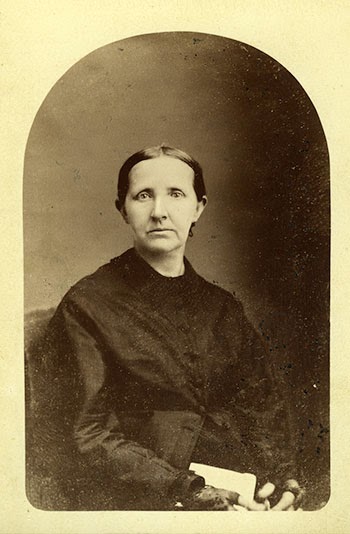
SARAH HORTON COCKRELL, DALLAS' FIRST CAPITALIST


Sarah Horton Cockrell was a prominent business woman in Dallas, Texas as well as a wife, mother and daughter. For over four decades she played a pivotal roll in the development of the young town. 
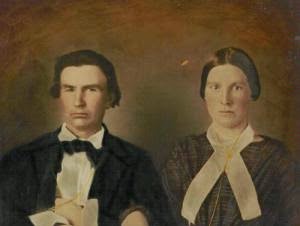

She was born in Virginia to Enoch and Martha Horton on January 13, 1819. In her early twenties, she moved to Dallas and, with her family, was among the earliest pioneers to come to Dallas County in 1844. On September 9, 1847, Sarah married businessman, Alexander Cockrell. They lived in a tent on Mountain Creek until they were able to purchase a headright along the Trinity River, the last remaining townsite in Dallas, from John Neely Bryan.


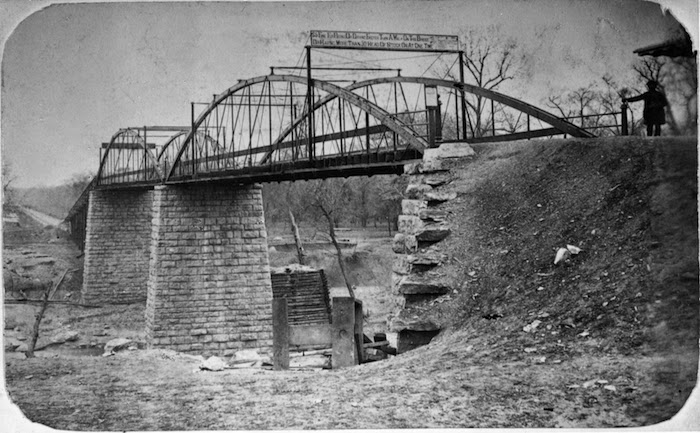
Sarah and Alexander had many business ventures which included brickmaking, construction, real estate, operating a sawmill and running the Trinity River ferry service, a part of the Bryan acquisition.  In 1855, she and her husband built a wooden bridge across the Trinity, but it collapsed due to flooding in 1858 after Alexander's death. Subsequently, she took over the family businesses with assistance from her son and son-in-law.

She continued to expand the business to establish her family as one of the more eminent in Dallas. Her enterprises spanned various industries including flour milling and multiple real estate ventures, and in 1870, Sarah formed the Dallas Bridge Company. It was at this time she constructed an iron suspension bridge over the Trinity River. This bridge is, perhaps, the most significant contribution to the development of Dallas.


In 1884, Sarah opened the Sarah Cockrell Addition, a private residential subdivision and the following year she constructed a three story office building. The First Methodist Church counts her as a founding member. Along with her sons, Sarah Cockrell owned an estimated twenty-five percent of downtown Dallas plus her other landholdings in Houston, Cleburne and Mineral Wells. She is often commended for being able to to profit in business, while maintaining the respect of society. When she died in 1892, her properties were so extensive that her will had to be published in pamphlet form.

Sarah Horton Cockrell will definitely be remembered as Dallas's first capitalist.

Wishing you a Happy Thanksgiving,
Carra

Wednesday, June 10, 2015


Hi, everyone,
I hope you'll forgive me. I'm reposting an old post today due to limited internet access and my forgetful self. This article is still relevant, however, because every time a new book is thought about, we have to decide where to place the characters. My newest soon-to-be-released book and a blurb will follow at the end.

Finding a location in which to plop our characters has tremendous bearing on the story, but can be a bit of a dilemma for the author. Several elements come into play and must be considered. For instance what is the time period? Is the story a historical, contemporary, or futuristic? Is the story a time travel or paranormal?

I decided early on that all my stories would take place in my native state of Texas. This worked for me because first and foremost I'm comfortable writing about Texas and would need little additional research. Next, the state has any terrain I might need for any time period and with its multiple areas to choose from, each story can be unique unto itself.

When it came time to choose an area in which to base my Texas Code Series, the natural choice for me was right here in North Central Texas. The history of the Bennings and McTiernans started back in 1859 when Ian Benning and Dermot McTiernan came from Ireland with its political unrest to start their lives anew in Texas with the land grant amended in 1850. The Texas Emigration and Land Company offered 160 acres to single men, plus a free cabin, seed, and musket balls.


North Central Texas Land - Peters Colony


The two men received their land located north of Dallas in the originally named Peters Colony. Each generation will have a chance to tell their stories in and around the fictitious town of McTiernan, along with the ever changing landscape that will either be a blessing or a challenge all the way to present day when the first novel, CODE OF HONOR, takes place.

El Pasofar west Texas, a beautiful area of desert and Mountains, is the location of, Book Two, CODE OF CONSCIENCE. CODE OF JUSTICE, Book Three, is set in Dallas, back in North Central Texas, and Book Four, CODE OF LAW, may be in the lush land of The Hill Country.
 El Paso, Texas and the Franklin Mountains
                                                        Dallas, Texas, City Skyline

Two other areas of this great state range from the mountains of Big Bend, to the coast at Galveston. 
 Big Bend National Park

Galveston, Texas


My most recent stories, The Brides of Texas  Code Series, are also set in Texas. Book One, Katie and the Irish Texan and Book Two, Matelyn and the Texas Ranger are set in Dallas (1875) and Galveston (1877).


Book Three, Angel and the Texan From County Cork, is set in Denison in North Central Texas close to the Texas Panhandle.


Blurb:
Jamey O'Donnell has reached a crossroads in his life. It's time to make his own way and stop living off the charity of others, specifically from his brother-in-law, Ian Benning. Off to find his new life, Jamey stops to help an old friend only to find out the friend has been killed. Can he help the widow restart her life and then walk away? Will he be able to ignore the newly awakened emotions she brings to the surface?


Angel Rivers buried her first husband on the trail after a short three month marriage. Now, one year later, her second husband, Will, has been shot and killed leaving her to fend for herself, to work a ranch with little to no knowledge. When the stranger shows up in her barn on the coldest day she's ever experienced, can she trust that he's her husband's friend and not a henchman sent by her neighbor? The same one she suspects of the killing? Will she embrace her bad luck in marriage and bury the feelings stirred by the stranger to live a life alone?


Anyway, you see what I mean about the choice of location. My stories could be located anywhere in our beautiful country. The details might change depending which area is chosen and that has the potential to redirect a storyline. My choice was logical for me and I hope resonates well with you the reader.
Thank you for visiting with Sweethearts of the West today. I hope you'll leave a comment to tell me your thoughts on this subject. Love hearing from you!

Tuesday, May 26, 2015

RAGS TO RICHES CATTLE KING OF TEXAS


This is a true story of rags to riches. Christopher Columbus “Lum” Slaughter claimed to be the first male child born of a marriage contracted under the new Republic of Texas. He was born on 9 February 1837 to Sarah (Mason) and George Webb Slaughter in Sabine County.  Lum was a ranching pioneer, banker, millionaire, and philanthropist. Yet at one time, he was so poor he had to ride bareback because he didn’t own a saddle.

Christopher Columbus "Lum" Slaughter
He was educated at home and at Larissa College in Cherokee County. As a boy he worked cattle with his father and at age twelve helped drive the family's ninety-two-head herd to a ranch on the Trinity River in Freestone County, where the family moved in 1852. Because of his expertise in herding cattle across the often swollen river, he was regularly employed by drovers bound for Shreveport with Brazos-country livestock. At age seventeen he made a trading expedition hauling timber from Anderson County to Dallas County for sale and processing Collin County wheat into flour for sale in Magnolia, Anderson County, a trip that yielded him a $520 profit.

With what must have seemed vast wealth to him at that time, he bought his uncle's interest in the Slaughter herd. Having observed the better quality of the Brazos stock, he persuaded his father to move farther west. They selected a site in Palo Pinto County, well positioned to provide beef to Fort Belknap and the nearby Indian reservations. In 1856, Lum drove 1,500 cattle to his new ranch.
On 5 December 1861 (possibly 1860), Slaughter married Cynthia Jowell of Palo Pinto, Texas; they had five children. After being widowed in 1876, he married Carrie A. Averill (Aberill) in Emporia, Kansas, on January 17, 1877; they had four children.

When open war with the Indians broke out in 1859, he volunteered his service and was in the expedition that unexpectedly liberated Cynthia Ann Parker from a Comanche camp. With the withdrawal of federal protection during the Civil War, Slaughter continued to fight Indians as a lieutenant in the Texas Rangers. He also served under Capt. William Peveler in Young County in the Frontier Regiment, part of the effort to maintain frontier protection during the war.

Nadua and Topsannah, 1861
Cynthia Ann Parker and Prairie Flower
When the Confederacy fell and Indian harassment continued, Slaughter and other ranchers started for Mexico in search of new ranchland. During the expedition Slaughter suffered an accidental gunshot wound that incapacitated him for a year, causing a nearly ruinous decline in his cattle business. After his recovery he started a cattle drive to New Orleans in late 1867, but en route contracted with a buyer for a Jefferson packing business to sell his 300 steers there for thirty-five dollars a head in gold, a large sum. At some time during this period, people began referring to him as Colonel Slaughter.

With his new stake he began regular drives to Kansas City in 1868, selling his herds for as much as forty-two dollars a head. He sold his Texas ranching interests in 1871 and in 1873 organized C. C. Slaughter and Company, a cattle-breeding venture, which later pioneered the replacement of the poor-bred longhorn with Kentucky-bred blooded shorthorn stock. By 1882 a herd shipped to St. Louis received seven dollars per hundred pounds, several times what he could have made selling in Kansas. His income increased until it reached $100,000 per year, at which time he began giving away money to charitable purposes, donating from 10 to 25 per cent of his income to philanthropy each year.

In 1873, Colonel Slaughter moved his family to Dallas and a few years later dissolved his partnership with his father. About 1877 he established one of the largest ranches in West Texas, the Long S, on the headwaters of the Colorado River and there grazed his cattle on the public domain. Desirous of becoming a gentleman breeder, Lum purchased the Goodnight Hereford herd in 1897 and the 1893 Chicago World's Fair grand champion bull, Ancient Briton. In 1899 he acquired the famous Hereford bull Sir Bredwell for a record $5,000.

C.C. Slaughter home, Dallas
Through these purchases Slaughter's purebred Hereford herd became one of the finest in the business. Around 1898 Slaughter undertook a major land purchase in Cochran and Hockley counties. He bought 246,699 acres, leased more, and established the Lazy S Ranch, which he stocked with his Hereford herd and mixed breed cattle from the Long S and consigned to the management of his eldest son.

In 1877, Slaughter helped organize the Northwest Texas Cattle Raisers' Association (later the Texas and Southwestern Cattle Raisers Association), for which he also served a term as president in 1885. He was the first president of the National Beef Producers and Butchers Association in 1888, an organization formed to combat market domination by the meat-packing industry.

Frequently titled the "Cattle King of Texas," Slaughter became one of the country's largest individual owners of cattle and land. By 1906, he owned over a million acres and 40,000 cattle and was the largest individual taxpayer in Texas for years. For a time "Slaughter Country" extended from a few miles north of Big Spring for 200 miles to the New Mexico border west of Lubbock. By 1908–09, however, he opened his Running Water and Long S Ranches to colonization and sale.

Hereford cattle
Failure of the land company promoting colonization caused much of the land to revert to his ownership by 1911. Under the management of Jack Alley, it was restored to profitability by 1915. Slaughter maintained strict control over his operations until 1910, when he suffered a broken hip that crippled him for the remainder of his life, compounding problems caused by his failing eyesight. He consequently turned the business over to his eldest son, George.

In addition to ranching, Slaughter participated in banking in Dallas where he helped organize City Bank in 1873 and invested in the bank's reorganization as City National Bank in 1881. At that time he became its vice president. In 1884 he helped establish the American National Bank, which evolved by 1905 into the American Exchange National Bank (later First National Bank). He was vice president from its organization until his death.

Slaughter was a Democrat and Baptist who contributed two-thirds of the cost for the construction of the First Baptist Church in Dallas and served as vice president of the Southern Baptist Convention, as president of the state Mission Board from 1897–1903, and as an executive board member of the Baptist General Convention of Texas from 1898–1911. His support of a plan to retire the consolidated debt of seven Texas Baptist schools and coordinate their activities into a system capped by Baylor University assured its acceptance by the general convention in 1897.

C. C. Slaughter breaking ground for what
would become Baylor Hospital in Dallas
Slaughter also contributed generously to the establishment of the Texas Baptist Memorial Sanitarium, which later became Baylor Hospital in Dallas. This is especially interesting to me, as both our daughters were born at Baylor Hospital in Dallas. He also contributed to the medical school and to the Nurses Home and Training School.

Colonel Slaughter often summed up his philanthropic philosophy saying, "I have prayed the Master to endow me with a hand to get and a heart to give."

Slaughter established this Free Clinic for Minorities
He died at his home in Dallas on 25 January 1919. However, his death precipitated a tangled family financial scandal. Less than a week after his death, his younger brother Bill, with whom he had had a long and strained financial relationship but who managed the Long S, was accused of fraud. Bill had attempted to sell his nephew Bob Slaughter’s new Western S Ranch on the Rio Grande in Hudspeth County to an unknown company from Mexico. 

C, C. Slaughter grave, Greenwood Cemetery, Dallas, Texas
Learning of the fraudulent negotiations and backed by his brothers, Bob confronted and fired his uncle. Although Bill Slaughter later filed a $3 million slander suit against his nephews, he apparently never collected anything from it. Colonel Slaughter’s family continued to give to causes close to the heart of C.C. Slaughter, and Baylor Hospital became one of many testaments to his generosity.

Monday, November 10, 2014

GONE TO TEXAS IS PERSONAL FOR CARRA COPELIN


The Thanksgiving celebrations are coming up real soon. We've started to talk about who in our family will be able to get together and how can we accommodate everyone's schedule. Planning the festivities got me to thinking about -- you guessed it -- Family. I thought I'd share a bit of Texas that I posted a while back on the phrase, Gone To Texas, and a brief story on my family's beginnings in this great state.

Gone to Texas, often abbreviated GTT, was a phrase used by Americans immigrating to Texas in the mid-1800's. They moved to Texas for many reasons, often to escape debt incurred during the Panic of 1819, to start over again or to begin for the first time, to get land or to look for adventure as well as for new fortunes. Obtaining "land" seemed to be the driving force for most of those who came to Texas. People became so obsessed with the hopes promised and the romance of Texas that "Gone to Texas" or "G.T.T." was often written on the doors of abandoned houses or posted as a sign on fences.

After Davy Crockett was narrowly defeated for re-election in Tennessee, he famously said, 


My ancestor, Amon McCommas, was one so obsessed. He came to Peter's Colony in December 1844 from Virginia, stopping for repairs successively in Kentucky, Ohio, Illinois, and Missouri. Accompanying him in his journey was his wife, Mary, their grown children, James B., John (my g-g-grandfather and a soldier in the Mexican war), Elisha, William M., Amon, Jr., Stephen B. (died a soldier in the city of Mexico, December 24, 1847), Rosa, Armilda, and Mary E.

Also along for the adventure were Amon's two brothers, Stephen B. and John C., and a sister-in-law Mrs. Lavinia McCommas and her children. 

Circulars printed for distribution and posted in public places advertising the rich lands of the Red River and Trinity Colony in Texas lured many to this area of North Central Texas. One advertisement stated that the Peters Colony was “peculiarly adapted to the successful growth of cotton and tobacco,” and, “Indian corn, rye, barley, oats, sweet and Irish potatoes, peas, beans, melons, figs, garden vegetables and all the fruits.” Circulars further claimed that “the country abounds in wild game, such as buffalo, deer wild turkies, prairie hens, quails, and grey squirrels, and the forest with wild honey.” With advertisements such as this, it is easy to see why so many families decided to emigrate to Texas.
Every family settling in Texas during this period was to receive 640 acres of land and each single man 320 acres, provided they lived on and work the land for three years.
I'm in awe of so many families, not just my own, starting out with their meager belongings to travel hundreds, sometimes thousands, of miles to a complete unknown. When the McCommas' reached their destination, Peter's Colony, they set up camp on the banks of the Trinity River, where Elder Amon McCommas preached the first Sermon.

 Amon settled, with his family, five miles northeast of where the city of Dallas now stands. At that time, Dallas contained only five or six families, settled along the banks of the river.  He was a Campbellite preacher (Deciples of Christ Minister) and he founded the Christian Church of Dallas in 1845 with twelve members. In 1846, Amon chaired the meeting that formed Dallas County and was later elected as the first Chief Justice of the Dallas County Commissioners Court. He was a farmer who owned the first "tread - mill "(grist mill powered by mules) in Dallas. He served as president of the first county fair, which later became the State Fair of Texas.


We all have family traditions. Some of these are developed with new families, some are carried down through generations. We lean toward a more Southern menu when it comes to dinner I think. Starting with the oven roasted turkey, we add mashed potatoes, sweet potatoes, kernel corn, green beans, cranberry sauce, giblet gravy and dressing -- not stuffing -- cornbread dressing. Dessert includes pumpkin and pecan pies. In the last few years, my daughter has been making cheesecakes that would give any one's efforts a run for their money.

 As it turns out, due to work schedules, I believe we'll have at least two Thanksgiving get togethers in order to be with everyone. Over the course of a few days, immediate family will be coming to our house, including our daughter and her husband, our son and his wife and our three grandchildren. Each family will contribute to the meal. The atmosphere will be chaotic and tremendous fun.
Family.

I wish all of you a Happy Thanksgiving and hope you are able to enjoy good food and your families. If you care to share your traditions, I'd love to hear them.

Love always,
Carra

Wednesday, September 10, 2014

A GIRL FROM DALLAS


As some of you know from previous posts, I'm a sixth generation Texan on my mother's side. My ancestors helped to settle Dallas in 1845 and stayed in the area. I am proud to be a member of the Daughters of the Republic of Texas.

Matelyn Roddy and Phillip Carr met in Dallas in 1942. She was 14 and he was a much older man of 18. They dated, with my grandmother's permission, until he enlisted in the Army in February 1943. A very determined young girl, my mother boarded the train a few days after her 15th birthday and headed  for North Carolina to say, "I do".

Matelyn and Phil Carr c.1943


Gloria Lynn Carr (Cope) aka Carra Copelin about 9 months old in this snap.
I'm proud to say I've managed to maintain my girlish figure. 


I came to Dallas on December 6, 1947 at 11:55 am, via Florence Nightingale Hospital.


My first abode - 1022 Kings Highway


My parents lived with her family in a beautiful old home in Oak Cliff, a suburb of Dallas.


Mother and Daddy bought their first house in 1951, in the newer neighborhood, where my brother made his appearance in 1952. We lived there until 1956 when we moved to Arlington.


Carra in 3rd grade

 I attended school there from 2nd grade through the 12th and I graduated from Sam Houston High School.

Jerry Cope about 10 months


Now, oddly enough, I met my future husband, Jerry Cope, at the local A&P Grocery and as folks do we got to talking. He was born at Florence Nightingale Hospital, lived in Oak Cliff and moved to Arlington in 1953. Turns out we've always lived within five miles of each other.


Jerry in 3rd grade

Jerry and I married in May, 1967 and started building our home in 1969, in Arlington. Where else? It remains our home today.


Our daughter, Amye, came along in 1972 on Thanksgiving morning and our son, Brady, was born in 1976 in the Bicentennial year. 

I worked as a Medical Laboratory Technologist from 1965 (I did start in high school) until the clinic I worked for sold the lab in 2008. Since Jerry was already retired, I decided to stay home, too. Why should he have all the fun?

Writing became my focus and my first book, Code of Honor, Texas Code Series, Book One ,was published in July 2013. Three other titles followed with a fifth due out soon. I'm a member of RWA and serve as President of Yellow Rose Romance Writers.


Jerry and I this past summer on our Arkansas vacation.
I enjoy getting together with friends, critique partners and my bridge group. Our grandkids come over frequently, oh and Jerry is now a chicken farmer. He has twelve chickens out back in their area we call, Cackleberry Farms. Save your cartons, we should be gathering eggs by November.


Katie and the Irish Texan, a novella, is the first book in the Brides of Texas Code Series. It's available on Amazon Kindle and soon to be at Apple iBooks.

Blurb:

Dermot McTiernan is determined to move on with his life after losing his one and only love to another man. He decides to try his hand at ranching in North Central Texas with his friend, Ian Benning. He figures if that doesn't work out, there are many other opportunities in the booming post-war state. When the luscious red-head from County Cork, Ireland shows up in Dallas, can he retain the courage of his convictions and move on without her?

Kathleen O'Donnell made a monumental mistake marrying, Kelsey Gilhooley. Her decision for entering the union, no matter how honorable, had made her life a living hell. Even though still married, she holds out hope for finding the man of her dreams. When she comes across her tall, dark-eyed Irishman in Dallas, Texas, will she be able to abandon happiness and walk away a second time?

Link to Amazon Kindle:  http://tinyurl.com/n8wg34k for $1.99.

Thanks for visiting, Carra

Tuesday, June 10, 2014

A HISTORICAL FIRST - FOR ME


I'm so excited to share my news with you. For the last several months, I've posted about Jefferson and Dallas,Texas history in the late nineteenth century. More specifically, 1873. Texas was finally recovering from the war and these two cities were booming with populations as large as 30,000. I hope I've captured some of the spirit of the people and the cities in my novella, KATIE AND THE IRISH TEXAN, my first historical. It tells the story of the McTiernans and their beginnings in Texas. 


The following is a brief introduction to my story. 

Blurb:

Dermot McTiernan is determined to move on with his life after losing his one and only love to another man. He decides to try his hand at ranching in North Central Texas with his friend, Ian Benning. He figures if that doesn't work out, there are many other opportunities in the booming post-war state. When the luscious red-head from County Cork, Ireland shows up in Dallas, can he retain the courage of his convictions and move on without her?

Kathleen O'Donnell made a monumental mistake marrying, Kelsey Gilhooley. Her decision for entering the union, no matter how honorable, had made her life a living hell. Even though still married, she holds out hope for finding the man of her dreams. When she comes across her tall, dark-eyed Irishman in Dallas, Texas, will she be able to abandon happiness and walk away a second time?

          Excerpt:

Dermot looked around the room and its many patrons. Most were men dressed in black business suits. He noticed two women serving food and drinks, one a tall brunette, the other had red hair worn in a long single braid down the center of her back. He sincerely hoped the brunette served them because he wanted nothing else to remind him of Katie O'Donnell What-ever-her-married-name-was.
He closed his eyes to the memory and swore he caught a whiff of her scent. His imagination was playing a cruel trick. He thought to get up and leave, but before he could tell Ian he'd changed his mind about eating, a female voice whispered in a familiar brogue. "Jesus, Mary, and Joseph."

Kathleen O'Donnell Gilhooley almost swallowed her tongue. The very moment she'd prayed for since the day she'd left Ireland a year ago had materialized, yet she wanted to run as far and as fast as she could. She'd hoped to meet Dermot McTiernan dressed in her best, but obviously the saints had other plans.
Hands shaking, she smoothed the humidity-laden curls back from around her face, and blotted the perspiration from her forehead with the hem of her apron. Trying her best to hide her nervousness, she stepped forward, shoulders squared. "Dermot, is it really you?"
"It would appear so, wouldn't it?" He stared past her to the window apparently fascinated by the activity on the street.
 There was no way she could've known how he'd react to seeing her for the first time in almost ten years, but his tone took her aback none-the-less.  She wondered if he'd gotten her letter explaining the circumstances surrounding her union with Kelsey Gilhooley.  From his reaction this morning, she guessed he hadn't. Either that or it hadn't made a difference.
Well, that was okay. They were here now and, hopefully, with time on her side, she could make him understand. "How many eggs for ye?"
Dermot's friend and the taller of the two by a couple of inches, spoke up first. "I'll have four, please."
Kathleen waited patiently for Dermot to speak. He took so long, she wondered if he'd gone mute in the last minute and a half.
Finally, he lifted his head, looked her straight in the eye but spoke to his companion, "Ian Benning, this is Katie O'Donnell."
"Pleased to meet you, ma'am." The man stood, offered his hand in greeting.
She shook his hand, correcting her name, "Kathleen Gilhooley, 'tis my pleasure." She directed her attention back to Dermot. "Will ye be havin' four eggs, as well?"
"Sure."
After turning in the order, she checked on the pan of biscuits she'd left cooking in the oven. She'd placed them in to bake just before going out to help Sarah take orders. Normally she liked to help out in the dining room instead of being cooped up in the over-heated kitchen. This morning, however, turned out to be a different story.
Following what just happened in the dining room, she certainly questioned her decision to leave her homeland. She might've expected anger when they met, discomfort to be sure. What he'd exhibited had been much different. He'd been distant and sullen. That scared her more than any outburst.
She put two biscuits on each plate and took them to the table. The man introduced to her as Ian, thanked her. Dermot said nothing until she grabbed the pot and poured each of them a cup of coffee. The hurt and betrayal in his eyes wounded her far more than any physical injury she'd endured in her marriage to that drunken monster Gilhooley.
As she turned to walk away, he grabbed her hand demanding, "What're ye doin' here?"
His tone set her off and, while she knew it wasn't rational, that he was trying to defend himself by making the first strike. But she'd learned to protect herself, too, and rose to the bait. "'Tis a free country and I can be here if I want." She backed away in an effort to pull her hand from his grasp, but he only tightened his grip.
"I want to know why you're here," he demanded through clenched jaws. "How could ye've done such a thing to me?"
Ian stood. "McTiernan, calm down and let her go."
"I'll let her go when she gives me a good answer."
Kathleen looked about the large room in a panic. Every one of the café's patrons watched the scene with interest including the owner, Mr. Browder, who was walking in their direction. She feared what Dermot might say and she needed this job to keep her room above the establishment.
"Can we talk outside?" she pleaded. With one last great tug, she wrenched her hand loose but the motion sent her reeling backwards into the table behind her where she sat in a plate of fried eggs and a bowl of strawberry jam. A couple of gentlemen, their mouths agape, helped her stand, after which they returned to their seats. Her face heated with humiliation, she straightened to face her boss.
"Mrs. Gilhooley, please return to the kitchen. I'll handle the situation from here." He turned to Dermot and Ian. "I apologize for the interruption to your meal. Let Sarah or me know if there's anything else you require."
Kathleen entered through the kitchen door, as Mr. Browder aided the diner who'd lost his eggs to her backside. The whole incident had been embarrassing enough without having to sashay through the dining room with bright yellow yolks streaming down her green skirts.
Mrs. Browder waited for her with a wet soapy rag. "What in the world caused all that commotion?"
"A reunion with an old friend that didn't go as well as I'd hoped."
"I see."
Sarah came into the kitchen carrying the customer's empty plate. Her look was one of wary amusement. "Mr. Browder said to replace Mr. Smith's breakfast right away."
 Kathleen took the egg soaked rag from Mrs. Browder and, while the older woman fussed over cooking the gentleman's eggs, she found she didn't care if her dress could be saved. She really didn't even care if she lost her job.

The only thing that mattered to her more than her livelihood or a place to lay her head at night was Dermot. She had to talk to him and make him understand she'd married to ensure a good future for her parents. After that, well, she didn't know yet but, being the optimist she was, something was bound to turn up.

Well, there it is. I hope it peaks your interest. The book will be released on June 27 on Amazon in ebook and print.

As always, thank you for visiting Sweethearts of the West.

Hugs and love,

Carra


Find me on my website: