We western authors
have researched stories of legendary frontiersmen, outlaws, gunslingers, lawmen
and Native Americans. For this post,
I’ve written how a few of their stories ended and where they now "rest in
peace."
For many notorious
outlaws, the Old West cliché is true, they
died with their boots on! Not surprising that a number of cemeteries in the
West are named Boot Hill. The most
famous one of all is Boot Hill in Tombstone, Arizona. And its most famous inhabitants are Billy Clanton and Tom and Frank McLaury, all
killed at the gunfight at O.K. Corral on October 26, 1881.
Certainly another
outlaw at the top of the numerous list of those lying 6 feet under is Henry
McCarty, aka, William Henry Bonney, aka, Billy
the Kid. On July 14, 1881, Pat
Garret, the Lincoln County, New Mexico Sheriff was questioning a friend of
Billy’s at his home in Fort Sumner, New Mexico. Sitting in a darkened bedroom,
Garrett was asking Billy’s whereabouts when Billy unexpectedly entered the
room. Billy didn’t recognize Garrett in
the dim light and asked, “Quien es?” – “Who is it?” These were the last words Billy uttered. Garrett shot Billy twice in the heart. Billy the Kid was buried the next day at Fort
Sumner cemetery. He was just 22. The old Fort Sumner Post Cemetery is near
present day Fort Sumner, New Mexico.
As for lawman,
Pat Garrett, (proper name, Patrick
Floyd Jarvis Garrett), he endured a sullied reputation from folks accusing him
of killing Billy the Kid without warning.
After finishing his term as Lincoln County Sheriff, Garrett wrote (with
the help of a ghostwriter), his experiences with the Kid. He died his own strange death, shot on the
road, while talking to a rancher who he’d leased grazing rights to in order to
pay debts. Originally buried in Odd
Fellow Cemetery in 1908, Las Cruces, New Mexico, Garrett was reinterred in the
Masonic Cemetery in 1957.
Outlaw Jesse Woodson James held the well know
distinction of gang leader, bank robber, stagecoach robber, train robber, and
murderer from the state of Missouri and the famous member of the James-Younger
Gang. In 1882, he was killed by a member of his own gang who hoped to collect a
reward. Originally buried at his
homestead in Kearney, Missouri, his grave was moved to Mount Olivet Cemetery in
1902. Jesse was 34 years old.
Known as Texas’ most
deadly gunman,
John Wesley “Wes” Hardin
killed over thirty people. Captured by a
Texas Ranger, he was released in 1894 after serving eighteen years in
prison. One year later, Hardin was shot
and killed by John Selman, an outlaw-turned-lawman in El Paso’s Acme
Saloon. Selman was gunned down just a
year later. Hardin is buried at the
Concordia Cemetery in El Paso, Texas at the age of 42. Ironically, Hardin’s killer, John Selman is
buried just a few feet away.
John Henry “Doc” Holliday was a gambler, gunfighter, dentist and good
friend of lawman Wyatt Earp. He’s best
known for his role as deputy marshal in the events leading up to and following
the gunfight at O.K. Corral. The man
suffered nearly his entire life with tuberculosis. In 1886 he moved to Glenwood Springs,
Colorado, hoping that the hot springs vapors would improve his health. However, a year later after spending two months
in bed, he looked down at his bare feet and said, “That’s funny,” and
died. He’d always figured he would have
died with his boots on. He was 36 years
old.
The Glenwood Springs
cemetery sits high on a steep hill. At
the time of Doc Holliday’s death, the steep road was too icy so he was buried
at the bottom of the hill with the intention of his body being moved when the
ice thawed. But, he never was and many
years later, a housing development was built at the base of the hill and though
a marker sits in the cemetery, his actual remains are probably buried in
someone’s back yard!
Don’t want to
discriminate, for there was also the female legendary “outlaw queen,” Belle Starr who was a horse thief,
outlaw and part-time prostitute, and first woman to be tried for the serious
crime of horse thievery by the famous Judge Isaac Parker. In 1889, she was shot
in the back and killed by an unknown assailant. Forty years old, she was buried at her cabin
southwest of Porum, Oklahoma. Her daughter, Pearl had the following inscription
engraved on her tombstone:
“Shed not for her
the bitter tear,
Nor give the heart
to vain regret,
‘Tis but the casket
that lies here,
The gem that fills
it sparkles yet.”
Can’t leave out
James Butler “Wild Bill” Hickok, a legend
in his time and one of the most famous frontiersman in the West. On August 2,
1876, he was playing poker at the Nuttall & Mann’s #10 Saloon in Deadwood,
South Dakota when he was shot from behind by Jack McCall. At age 39, lying dead on the floor, Wild Bill
was holding a pair of black aces and a pair of eights, which has since been
known as the “Dead Man’s Hand.” When in Deadwood, I visited his grave at the
cemetery.
Calamity Jane, who had
long been infatuated with Wild Bill during his lifetime, asked to be buried
next to him. Her last request was granted when she died on August 2, 1903.
Another famous
lawman and gunfighter,
Wyatt Berry Stapp
Earp, who was marshal of Ellsworth, Kansas in 1873, marshal in Wichita in
1874, and marshal in Dodge City in 1876, spent his final years working mining
claims in the Mojave Desert during the winters and summered in nearby Los
Angeles, California. In 1929 at age 80,
he died peacefully with his wife, Josie at his bedside. Earp is buried at Hills of Eternity Memorial
Park in Colma, California.
Lt. Col. George Armstrong Custer’s death became one of the most famous American
legends known as “Custer’s Last Stand.” Custer finished at the bottom of his
West Point class in 1861, yet led courageous service during the Civil War, only
to lead his 7
th Cavalry troops to their demise at the Little Bighorn
Battlefield in 1876. He was 36 years old when he died and is buried at West
Point, New York.
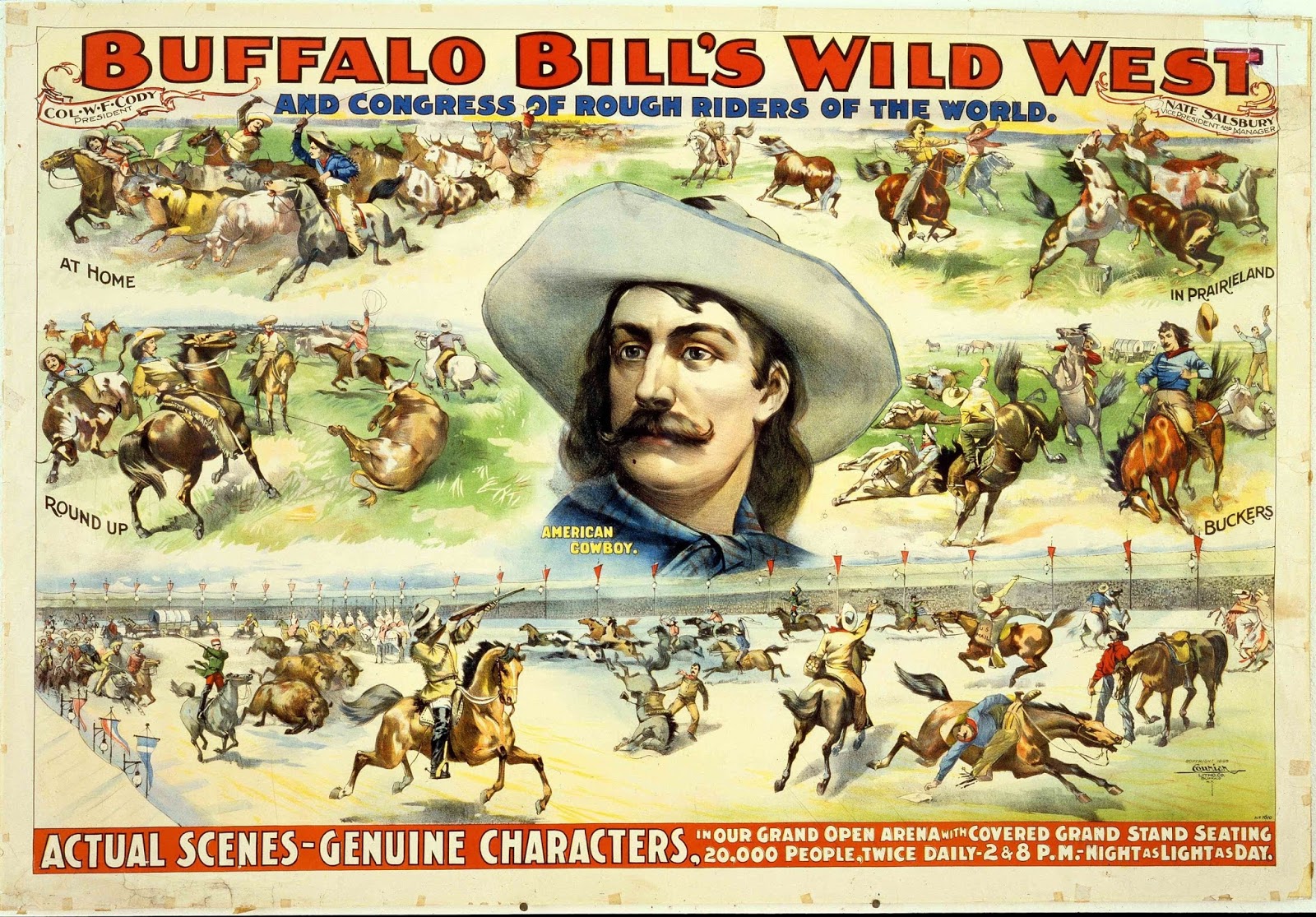
In a previous blog,
I had reported on
Buffalo Bill Cody,
the greatest showman the Old West ever knew and his extensive museum in Cody,
Wyoming. After his death in 1917, he was
buried on Lookout Mountain in Golden, Colorado.
He was 70 years old.
Speaking of Buffalo
Bill, I’d also like to add
Phoebe Ann
Moses, a sharp shooter who rose to fame in a way most men could only dream
of doing and became a legend in her own time!
She was known as
Annie Oakley.
Buffalo Bill cast her as “Little Sure
Shot” and she did trick shooting with his Wild West show for 16 seasons. Even at age 60, she was still performing and
winning shooting contests.
Her health declined in 1925 and she died of pernicious
anemia in Greenville, Ohio
at the age of 66 on November 3, 1926. Her body was cremated in Cincinnati two
days later and the ashes buried at Brock Cemetery near Greenville, Ohio. Assuming
their marriage had been in 1876, Oakley and her expert marksman husband, Frank Butler
had been married just over 50 years.
Butler died 18 days later in Michigan. His body was buried
next to Oakley's ashes, or,
according to rumor, Oakley's ashes, placed in one of her prized trophies, were
laid next to Butler's body in his coffin prior to burial. Both body and ashes
were interred in the cemetery on Thanksgiving Day (November 25, 1926).
I would be remiss if I didn’t mention at least four Native
American leaders who changed the course of history:
Hunkpapa Lakota
Sitting Bull, holy man and tribal chief, led several attacks on U.S. forts
in the West and played a role in the Battle of the Little Bighorn. Years later,
he was offered a pardon. By 1885,
Buffalo Bill had him in his Wild West
Show and Sitting Bull gained significant popularity. He befriended,
Annie Oakley and often made public appearances. However, in 1890,
after returning to the Agency reservation and during the Ghost Dance Movement,
he was accused of encouraging Indian rebellion and his arrest was ordered. Sitting Bull refused to cooperate and a
scuffle ensued. A nearby Lakota,
Catch-the-Bear, shot the arresting officer, who fired back, killing Sitting
Bull. Sixteen people were killed in the skirmish, including eight police
officers, Sitting Bull, and seven other Sioux. Two weeks later the massacre at
Wounded Knee would take place. Age 59, Sitting
Bull was initially buried at Fort Yates, ND, the remains were supposedly dug up
in 1953 and moved to Mobridge, SD off U.S. 12.
Crazy Horse, literally "His-Horse-Is-Crazy"
was a
leader of the
Oglala
Lakota. He took up arms against the United States Federal
government to fight against encroachments on the territories and way of life of
the
Lakota people, including leading a war party
to victory at the
Battle of the Little Bighorn. Four months after surrendering
to U.S. troops under
General Cook, in May 1877, Crazy Horse
was fatally wounded by a bayonet-wielding military guard, while allegedly
resisting
imprisonment at
Camp Robinson in present-day
Nebraska.
His remains were given to his elderly
parents who secretly buried the 35 year-old Sioux leader somewhere in the wilds
near Nebraska’s Red Cloud Agency. No
marker exists showing his final resting place.
He ranks among the most notable and iconic of Native American tribal
members and was honored by the
U.S. Postal
Service in 1982 with a 13¢
Great Americans series
postage stamp.
Red Cloud was another
highly respected leader of the Oglala Lakota. He led from 1868 to 1909 and was
one of the most capable Native American opponents the United States Army
faced. After finally signing the Treaty
of Fort Laramie (1868), Red Cloud led his people in the important transition of
reservation life. He continued fighting for his people, even after being forced
onto the reservation. He outlived all
the other major Lakota leaders of the Indian Wars. He died in 1909 at age 88 on
the Pine Ridge Reservation, where he was buried. He is quoted as saying in his
old age, “They made us many promises, more than I can remember. But they kept
but one – They promised to take our land…and they took it.”
Last but not least is one of the most recognizable names
in the world, Geronimo. After years
on the warpath, Chiricahua Apache warrior, Geronimo achieved fame when he
turned himself in for the final time in 1886. He traveled with Buffalo Bill’s
Wild West show and made appearances at fairs and gatherings before dying in the
prisoner of war camp in 1909, never achieving the freedom he had been promised. He died quietly of pneumonia in the post hospital at
Fort Sill, Oklahoma, in 1909 a few months before his 80th birthday. He was
buried in the fort’s Apache cemetery, but tribal legend says his remains were
secretly removed to the Arizona Mountains of his youth.
There are so many stories of where the famous legends lie. As you’ve read, some of the stories of how
they died, though sad, were almost as interesting as how they lived. I could go
on & on, but have to end somewhere!
I am going to save three special stories to post on my blog next month.
Happy Trails To You,
Cheri




 Born in
Nebraska, Cheri Kay Clifton loved researching the Oregon Trail, historically
known as the "Gateway to the West." Her passion for those brave
pioneers, Native Americans and 19th Century America led her to write the epic
western historical Wheels of Destiny Trilogy.
Cheri is married and has one grown son.
If she’s not riding on the back of her husband’s Harley, she’s writing
the third book in the Wheels of Destiny Trilogy which includes already
published Book 1, Trail To Destiny and Award Winning Book 2, Destiny’s Journey.
Born in
Nebraska, Cheri Kay Clifton loved researching the Oregon Trail, historically
known as the "Gateway to the West." Her passion for those brave
pioneers, Native Americans and 19th Century America led her to write the epic
western historical Wheels of Destiny Trilogy.
Cheri is married and has one grown son.
If she’s not riding on the back of her husband’s Harley, she’s writing
the third book in the Wheels of Destiny Trilogy which includes already
published Book 1, Trail To Destiny and Award Winning Book 2, Destiny’s Journey. 


