
My original thoughts about heroines for THE HUACHUCA TRILOGY were to focus on a
ranching woman, an artist and a writer. I started with Josephine and used her
life story to relate happenings along the Arizona Territory border with Mexico.
Before I could finish with Josephine, a friend of hers snuck into the story and
ruined my plans, temporarily.
Over the years I’ve enjoyed the work and lives of some
late 19th and early 20th century women artists: Canadian
Emily Carr, Mexican Frida Kahlo and Americans Georgia O’Keefe and Grace
Carpenter Hudson. I wanted my painter to share in what drove these real artists
and so Maggie O’Brien depicts women at work, pursuing their daily lives in
vivid color and action. She blew my plans for Book #2. My fascination with
Louis Comfort Tiffany led to the jewelry work of Grace Elizabeth Pelham, the
lead character in BY GRACE.
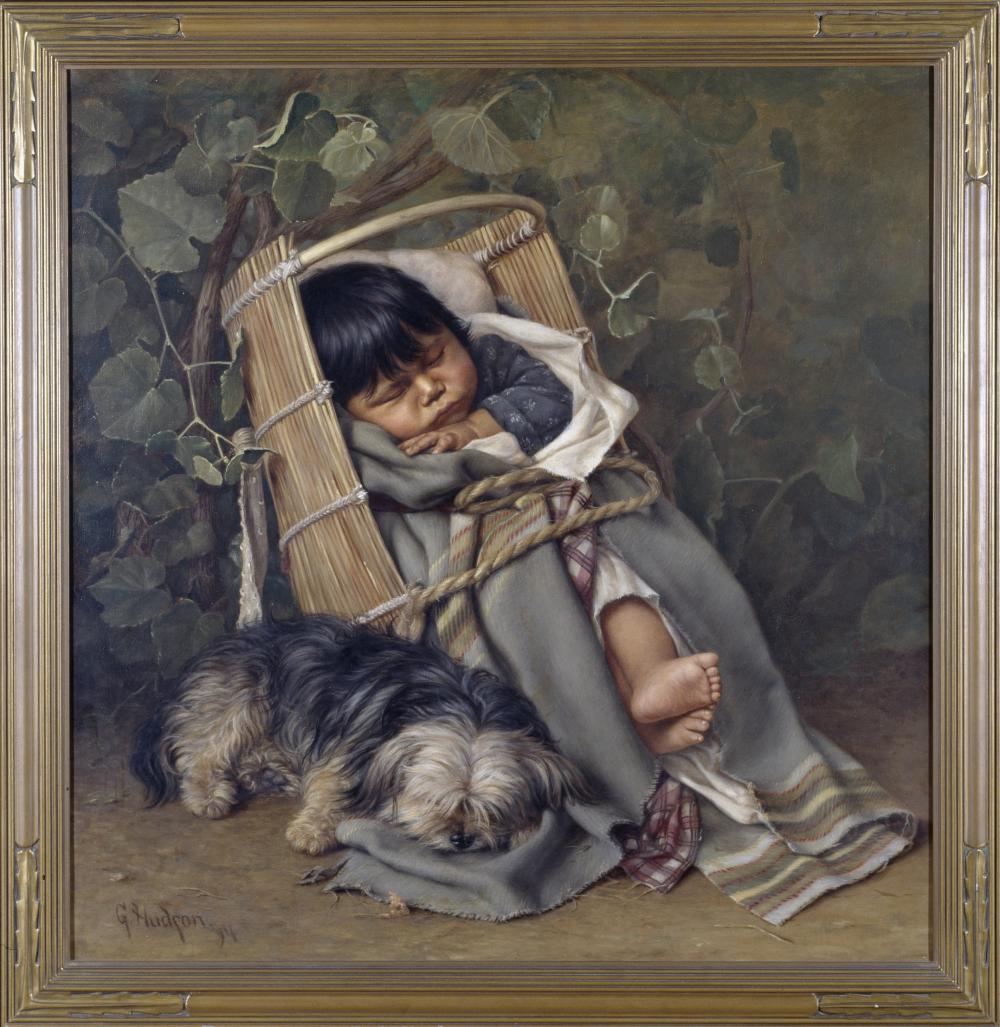
A copy of one of Grace Carpenter Hudson’s sweet
picture of a Pomo Indian Baby and his dog hangs on the wall in my
bedroom/office. In the 1970’s, I lived
and worked in Mendocino County about 110 miles north of San Francisco and first
encountered the works of the Hudsons.
**********
Grace Carpenter Hudson was born (1865-1937) into a well-educated
and talented family that settled in Potter Valley, east of Ukiah, after coming
across country in covered wagons. They were abolitionists, painters, photographers,
journalists, and teachers. The area was rich in wildlife and Pomo Indian
history, families and culture. Grace, her twin Grant and older sister May
thrived in these diversities and challenges.
Grace’s gift as an artist was apparent from an early
age and by 15 she was sent off to San Francisco’s California School of Design.
It was a long trek from all that nurtured and inspired her back in Mendocino
County. With highwaymen like Black Bart raiding and attacking travelers, it was
not a trip she could take very often.

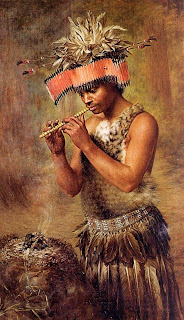
Grace formed lifelong friendships and fell into an
early, unsuccessful first marriage to William T. Davis, fifteen years her
senior. They separated after three months and divorced in 1885 after she
returned to her family.
Her early activities in San Francisco earned her
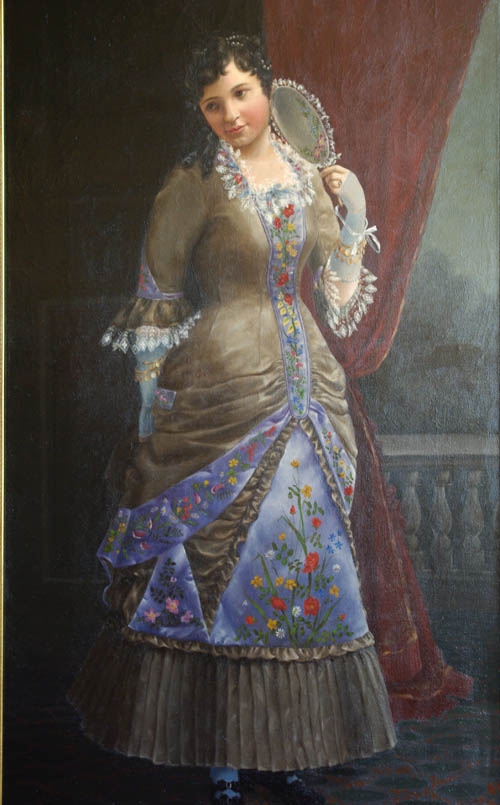
awards and recognition while still a teenager. She loved fashion and created,
at 16, an elaborate dress in lace, embroidery and painted roses. Her portrait
in the dress greets visitors to the Grace Hudson Museum in Ukiah.
The foundations for Grace’s work can be found in the
culture and lives of Pomo Indians, especially in her portraits of infants and
young children. These might be classed as romantic views of native life but
they won country-wide attention very quickly.
In 1889, Grace met the young physician John Hudson
(1857-1936) fell in love and married him in 1890. Grace’s work exploded in
volume and fame in the following years, making her the family breadwinner. John
retired from medicine and devoted his life to preserving the language, culture
and basketry of the Pomos. The couple traveled throughout Mendocino County as
well as sojourns into Lake and Sonoma counties, recording their findings in her
art and his ethnographic chronicles and collections. Both relied on photography
and detailed written documentation of their work. After one of Grace’s earliest
paintings (“Little Mendocino #5”) was
forged, she took to copyrighting her work, one of the first artists to do so;
she or her father photographed, titled, numbered, dated, named the buyer, and amount
paid for each. John kept meticulous notes on his observations and collections,
including botanicals. Each wrote articles for national publications, were
interviewed and provided illustrations.
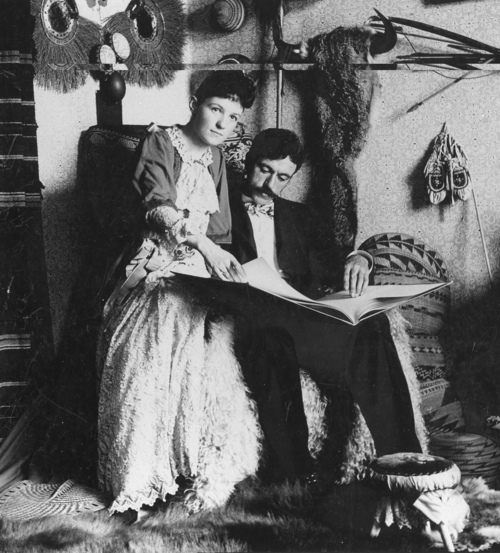
The Hudsons entertained family and visiting friends often,
especially in the summer months. Grace and artist friends hosted landscape
painting sessions in the countryside. Photos from the era show swimming,
hunting and musical gatherings with much laughter and merriment. One of Grace’s
best friends over the years was Charmian Kittridge London, Jack’s wife who
called her “Huddy.”
By the turn of the century, John was struggling to
gain recognition and acceptance of his work; he sold some 300 pieces to the
Smithsonian for about $10 each and negotiated a contract with Chicago’s Field
Museum to catalog his work. Meanwhile, Grace was near collapsing with exhaustion,
insomnia, depression and weight loss. At barely 5’ tall she was fragile.
When John went off to Chicago, Grace went to Hawaii.
She didn’t paint for the first months, made friends, rested and recovered
eventually. Often referred to as “the painter lady,” she had a following and did
26 paintings of locals of varied backgrounds. Returning to the mainland, she
and John reunited. She joined him over the next few years, helping to record
and document collections of basketry and artifacts at the Field.
The experience at the Field Museum was not good as
John was exploited, received no recognition for his writings demanded by Dr.
George Dorsey. The final straw came in 1905 when Dorsey expected John to
produce a
book only to have it attributed to himself. The Hudsons made plans for a European tour.

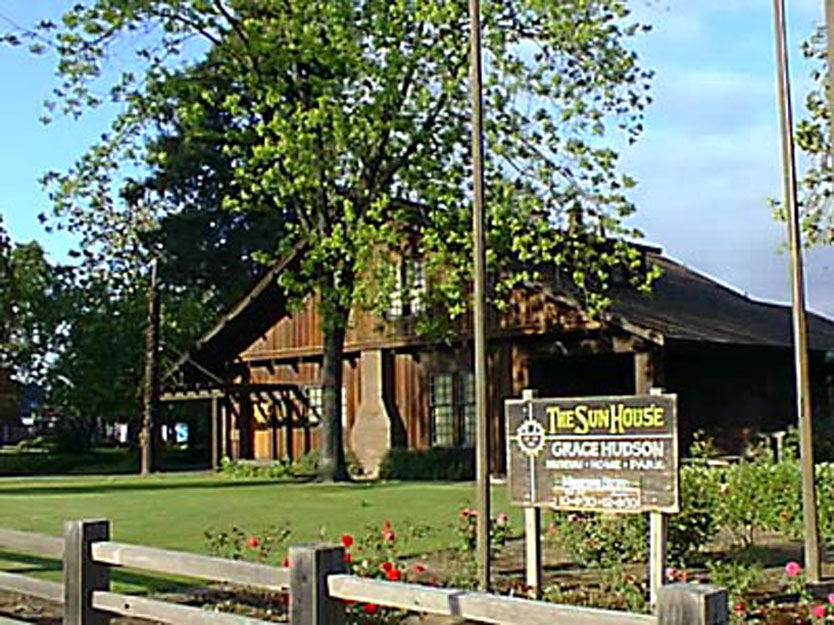
Their last thirty years led to the building of their
home, Sun House with its light controlling roofline in Grace’s studio and with
John’s inevitable study. They continued to write articles, sell Grace’s
canvases which ultimately amounted to 684, and seek recognition for John’s work
only to lead to broken promises from the Field and Smithsonian. Childless, they
drew close to Grace’s nephew Mark Carpenter and his wife Melissa. The
Carpenters continued the mission to get John’s collections acknowledged but
also failed; they successfully turned Sun House into a museum and after them,
the city of Ukiah founded the Grace Hudson Museum adjacent to their home. The museum
contains some 30,000 artifacts and art works.
References:
1. Lanson,
MD, Lucienne T and Patricia L. Tetzlaff, “Grace
Hudson, Artist of the Pomo Indians, A Biography,” The Donning Company
Publishers, 2006
3. www.wikipedia.com,Grace
Hudson
Photos: Google Images, Grace Hudson Museum

