Wednesday, May 20, 2015

Fictional Characters & Historical figures

by Lyn Horner

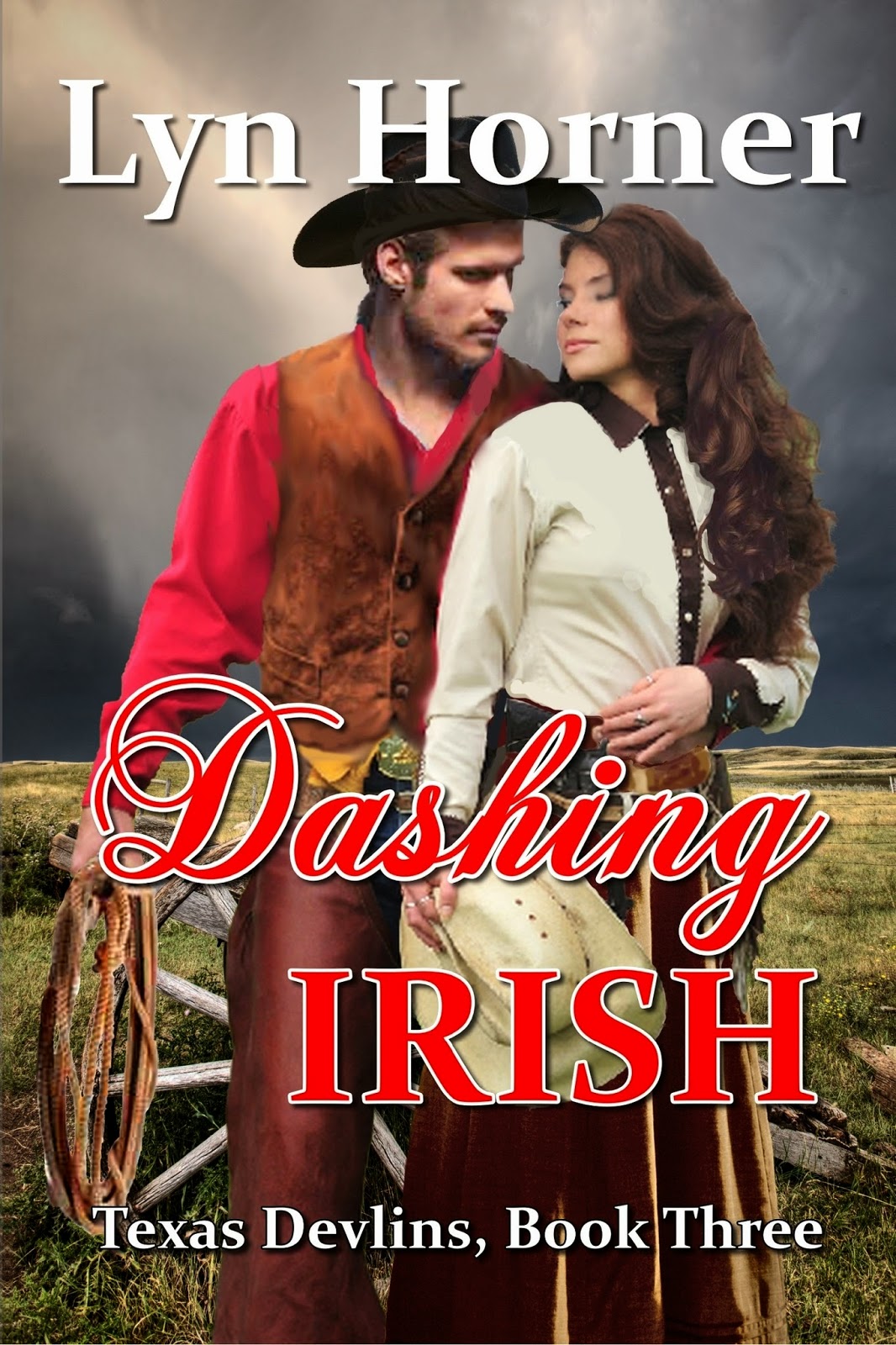
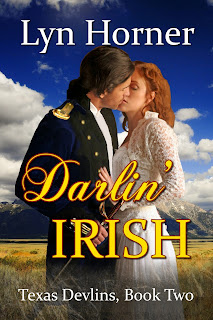
Recently, Charlene Raddon of Cover-OPs http://cover-ops.blogspot.com/ designed new covers for my Texas Devlins series. She and I both spent many hours searching for models to portray my characters, not an easy task in some cases. I think we succeeded fairly well, but this got me thinking about how I come to "see" the people in my stories. Do they pop into my mind full blown like Athena from the head of Zeus? No! They are never that obliging.

Usually, my imaginary friends (they do become my friends) take shape gradually. They begin as shadowy figures with one or two distinctive characteristics, like Jessie Devlin's red hair and fiery temper. Yes, she's Irish and I gave her those stereotypical traits with backstory to explain them. Other facets of her appearance and personality are a compilation of real people, either ones I've met or seen on TV and movies -- or historical figures. This is true with all of my characters.

For instance, Captain David Taylor, Jessie's dream hero in Darlin' Irish, is based partly on Mac Traven, Tom Selleck's character in The Shadow Riders, one of my favorite Louis L'Amour novels and TV westerns. Mac is a Texan who fought for the North in the Civil War, the same as David Taylor. However, David is edgier than Mac and unlike the Traven family, David's father considers him a traitor. This is what happened to many southern-born soldiers who sided with the Union.


6 Generals Who Fought Against their Home State in the Civil War: A native of Southampton County, Virginia, George Thomas was a career soldier who had served with distinction in the Mexican-American War and later taught at West Point. But despite his strong southern roots—he’d grown up on a plantation and even owned slaves—Thomas refused to break his oath to the U.S. Army and remained loyal to the Union during the Civil War. The decision sent shock waves through the South. J.E.B. Stuart, a former pupil of Thomas’ at West Point, said he deserved to be hanged as a traitor. Even his own sister disowned him, writing that he had been, “false to his state, his family, and to his friends.”

Lil Crawford, the heroine of Dashing Irish, Is based on real cowgirls who worked as hard as any man on ranches and trail drives. Some wore riding skirts, others wore britches. Virtually all were well versed in riding, roping, branding and handling a gun. They were not your average pioneer woman in calico and poke bonnet, but neither were they all that rare. The same goes for Lil's mixed blood lineage. She's one quarter Cherokee because her mother was the offspring of a French fur trapper and an Indian woman. Many a white man on the western frontier took an Indian wife, including some of my ancestors.


One of my favorite characters in Choctaw Jack from Dearest Irish. Jack is a half breed (actually three quarters) who works as a cowboy part of the year and a blacksmith the rest of the time for the Army at Fort Sill in the Indian Territory (Oklahoma.) He's also a Confederate veteran who fought with one of the Indian brigades in the Civil War. Think I made that up? Nope. In his very cool little book CIVIL WAR in the Indian Territory, Steve Cottrell says, "...Choctaws and Chickasaws, whose lands bordered Texas, readily sided with the South..." Other tribes fought for the North.


Authors gain inspiration from many sources and I'm no different in that. The next time you fall in love with a fictional character, think about what might have gone into creating him or her. Just for the fun of it, you could even look for stories on the internet about real people who bear a similarity to that character. You might learn some surprising historical facts.
 
 
Meanwhile, let me know what you think of my new book covers. Do the people depicted on them catch your eye? Do they tempt you to get acquainted with them in the pages of the book? I would love to know.
 
Oh, in case you're wondering, there is a Texas Devlins, Book One. Titled White Witch, it's a novella introducing the Devlins before they head west to Texas.
 
You can find all of my books on Amazon: http://www.amazon.com/Lyn-Horner/e/B004CY506Y


Monday, May 18, 2015

LITTLE WOLF, THE GREAT CHEYENNE CHIEF


Chief Little Wolf

As a Southeasterner, I haven’t had an opportunity to become acquainted with the descendants of the western tribes of Native Americans. The Cherokee and Lumbee Indians where I live have become widely incorporated into our blended society. Although there is a Cherokee reservation in the mountains of North Carolina, most of the Cherokee were forced to leave their native land here by President Andrew Jackson on the now infamous Trail of Tears exodus.

Because I’m a western author, I am fascinated by western tribes and their battle to maintain their culture and land. One of these famous American Indian leaders was Cheyenne Chief, Little Wolf or Ohcumgache which literally translated means Little Coyote. Little Wolf was born in Montana in the mid-1820’s. As he grew into adulthood, he became greatly respected and honored by his people. Little Wolf was chosen as one of the "Old Man" chiefs among the Council of Forty-four, a high honor in traditional Cheyenne culture. He was also chosen as Sweet Medicine Chief, bearer of the spiritual incarnation of Sweet Medicine, a primary culture hero and spiritual ancestor of the Cheyenne. Because of this honorary title, he was expected to be above anger, as well as concerned only for his people and not for himself.

Little Wolf is known as a great military tactician and led a group of warriors known as the "Elk Horn Scrapers" during the Northern Plains War. He also fought in Red Cloud's War and the war for the Bozeman Trail, which lasted from 1866 to 1868. He was the chief of the Bowstring Soldiers, an elite Cheyenne military society. Even in his youth, Little Wolf demonstrated exceptional bravery and brilliant understanding of battle tactics. First in conflicts with other Indians like the Kiowa and then in disputes with the U.S. Army, Little Wolf led or assisted in dozens of important Cheyenne victories.
Historians believe Little Wolf was most likely involved in the disastrous, Fetterman Massacre of 1866, in which the Cheyenne cleverly lured a force of 80 American soldiers out of their Wyoming fort and wiped them out. After Cheyenne attacks finally forced the U.S. military to abandon Fort Phil Kearney along the Bozeman Trail, Little Wolf is believed to have led the torching of the fort. He was also a leading participant in the greatest of the Plains Indian victories, the Battle of the Little Bighorn in 1876.
Although he did not fight in the Little Bighorn battle, he did play a significant role before and after the battle. Some scouts from Little Wolf’s camp found food left behind by Custer’s attack troops and were observed by U.S. military scouts. When it was reported to Custer, he thought he had been discovered by the main camp of the Sioux and Cheyenne on the Little Bighorn and decided it was crucial for him to move forward with his attack in order to prevent the escape of the Indians. When the battle ended, Little Wolf arrived and was almost killed by the angry Sioux who believed he had scouted for the whites. Little Wolf was able to convince the Sioux by his adamant denials and from the support of his fellow Northern Cheyenne present during the battle and, therefore, was saved him from harm.


Little Wolf at Fort Laramie

But, what Little Wolf is most famous for is his great escape from captivity.

After the defeat of Morning Star (Dull Knife) by Col. Ronald S. Mackenzie in November 1876, Little Wolf was forced onto a reservation in Oklahoma's Indian Territory. Two years later, he and Dull Knife led almost 300 Cheyenne from their reservation near Fort Reno, Oklahoma, through Kansas, Nebraska, and the Dakota Territory into the Montana Territory, their ancestral home.
All the while, they miraculously eluded the U.S. cavalry units which repeatedly tried to capture them. Though Little Wolf and Dull Knife announced that their intentions were peaceful, settlers in the territory they passed through feared attack. The government dispatched cavalry forces that assaulted the Indians, but Little Wolf’s skillful defensive maneuvers kept Cheyenne casualties low. When the band neared Fort Robinson, Nebraska, Dull Knife and some of his followers stopped there. Little Wolf and the rest of the Cheyenne continued to march north to Montana.

While continuing to travel north, in the spring of 1879, Little Wolf and his followers were overtaken by a cavalry force under the leadership of Captain W.P. Clark, an old friend of Little Wolf’s. The confrontation could have turned violent, but with his force of warriors diminished and his people tired, Little Wolf was reluctant to fight the more powerful American army. Clark’s civilized and gracious treatment of Little Wolf helped convince the chief that further resistance was pointless, and he agreed to surrender.


Little Wolf And His Wife, Morning Star

Later on, Little Wolf would become a scout for the U.S. Army under Gen. Nelson A. Miles. It is unfortunate that Little Wolf became involved in a dispute which resulted in the death of Starving Elk. Drunk, Little Wolf shot and killed Starving Elk at the trading post of Eugene Lamphere on December 12, 1880. Little Wolf went into voluntary exile as a result of this disgrace. His status as a chief was revoked. Though formerly a celebrated Cheyenne warrior, the disgraced Little Wolf lived out the rest of his life in self-imposed exile on the Northern Cheyenne Indian reservation but had no official influence among his own people. He died in 1904 and is interred in the Lame Deer cemetery, alongside the gravesite of Morning Star. George Bird Grinnell, a close friend and ethnographer who documented Little Wolf's life, called him, "the greatest Indian I have ever known."


             Author, Sarah J. McNeal

Sarah McNeal is a multi-published author of several genres including time travel, paranormal, western and historical fiction. She is a retired ER nurse who lives in North Carolina with her four-legged children, Lily, the Golden Retriever and Liberty, the cat. Besides her devotion to writing, she also has a great love of music and plays several instruments including violin, bagpipes, guitar and harmonica. Her books and short stories may be found at Publishing by Rebecca Vickery, Victory Tales Press, Prairie Rose Publications and Painted Pony Books, and Fire Star Press, imprints of Prairie Rose Publications. She welcomes you to her website and social media:


You can find all her western stories about the Wilding family saga by clicking onto The Wildings link.

Saturday, May 16, 2015

Cattle Drives to Ellsworth, Kansas in 1873 by Linda Hubalek

The setting of my Brides with Grit series is Ellsworth County, Kansas in 1873. Although I created the fiction town of Clear Creek for the story, there really is a "Clear Creek" running through the county. 
I picked this specific year because of the information I found on Ellsworth when it was a major cattle shipping town from 1872 to 1875.
In 1867, Abilene, Kansas became a shipping facility for cattle driven up from Texas, loading over 36,000 head of cattle in its first year. By 1871, the area was settled and the huge herds of cattle were no longer welcome because they trampled farmer's crops and spread Texas Cattle Fever to local cattle.
Cattle drives coming up the Chisholm Trail veered west to Ellsworth in 1872. The area was still native grassland and able to accommodate the grazing herds.
Ellsworth businessman anticipated the shift in the cattle trade from Abilene to their town, adding merchandise that the cowboys would need, or want, when they were done with the drive. It was reported that the Big Boot Company sold more than one hundred pairs of boots in the first months of 1874.
The Drovers Cottage, once owned by Joseph McCoy in Abilene, was moved to Ellsworth in 1872 to take advantage of the people coming into town. This hotel could accommodate 175 guests and its stable could hold fifty carriages and a hundred horses. 

Most drovers arrived in town in June and completed shipping by early fall. In the 1873 season, more than 150,000 cattle were trailed into Ellsworth. Over 30,000 of those cattle were shipped east, and the rest driven on to stock ranches further west. 
You could imagine how many cowboys were in town when each 2,500 to 3,000 head of cattle coming in, had a trail boss, ten cowboys, a cook and at least one horse wrangler with the herd. And you usually had three horses along for each cowboy.
So for a rough count, there were 150,000 head of cattle, 700 cowboys and 2000 horses coming into the little town of Ellsworth, although not all at the same time. What a gold mine for stores and saloons, although the trade lasted only a few years.
I'd love to have been in Ellsworth in 1873, but I'll research and write about it instead!

Thursday, May 14, 2015

HOW THE FLU PANDEMIC HIT AMERICA IN 1918

By Anna Kathryn Lanier

This past flu season a lot was said in the news about how the vaccine didn't seem to be affective, mainly because the strain that seem to be striking people wasn't in the vaccine.  Still, I am for getting the vaccine, because none of us want to have a repeat of the epidemic of early 1900's. In his book "It's About Time: How Long History Took," Mike Flanagan writes on page 106 about the pandemic, which lasted three years and that:

"Chicago's crime rate dropped 43 percent. In one day 851 New Yorkers died. More American soldiers died of the "Spanish Flu" in 1918 than were killed on battlefields of World War I. Since epidemic bronchitis preceded the flu from 1915-1917 in France and England, few individuals had a prior immunity to this new lethal strain and often died within a week of exposure. In the United States, 500,000 deaths were recorded between March and November of 1918. Globally, about 40 million people died. Recent studies say the virus may have percolated within humans and pigs for several years until it grew lethal enough to emerge as history's worst influenza pandemic."


The flu really hits America in 1918.


March 11
At Fort Riley, Kansas, an Army private reports to the camp hospital just before breakfast complaining of fever, sore throat, and headache. He is quickly followed by another soldier with similar complaints. By noon, the camp’s hospital has dealt with over 100 ill soldiers. By week’s end, that number will jump to 500.

The West wasn't immune from the deadly disease either:


September 24
Edward Wagner, a Chicagoan newly settled in San Francisco, falls ill with influenza.
San Francisco public health officials had been downplaying the potential dangers posed by the flu. Dr. William Hassler, Chief of San Francisco’s Board of Health had gone so far as to predict that the flu would not even reach the city.

November 21
Sirens wail, signaling to San Franciscans that it is safe — and legal — to remove their protective face masks. At that point, 2,122 are dead due to influenza.

December 17
The chief clerk of the Navajo Indian reservation reports that influenza has taken the lives of more than 2,000 Navajos in Apache County, New Mexico.
The epidemic will continue its lethal campaign into 1919, ultimately killing upwards of 600,000 people. It will be deemed the worst epidemic in American history.

Trivia:
You may recall that this pandemic was mentioned in the holiday classic "It's A Wonderful Life." As an employee at the pharmacy, George Baily reads a telegram from the war department to Mr. Gower telling him his son died of the influenza. That causes Mr. Gower to poison some medicine by accident and George saves the day by noticing what had happened. When George is 'never born,' Mr. Gower was sentenced to years in prison for killing people that day.

Additional information can be found out:
http://virus.stanford.edu/uda/
http://www.syracuseuniversitypress.syr.edu/encyclopedia/entries/influenza-pandemic.html


You can read about your state (or one you may want to use in a story) during the pandemic here:
http://www.flu.gov/pandemic/history/1918/your_state/index.html

For a time line:

http://www.pbs.org/wgbh/amex/influenza/timeline/index.html (date facts above taken from here)

The CDC's website says:

Influenza (the flu) is serious.
Each year in the United States, on average:

Today, more than 200,000 people are hospitalized from flu complications;
36,000 people die from flu.


For more information from the CDC (Center for Disease Control) check out their website:

http://www.cdc.gov/flu/

And more information on flu shots and statistics can be found at WebMD:

http://www.webmd.com/cold-and-flu/news/20080925/flu-shots-whats-your-excuse


If you're at high risk for the flu, young, old, or chronically sick, you should get your flu shot, before the flu gets you.

**Thus ends my public service announcement.

Anna Kathryn Lanier

www.aklanier.com
Never let your memories be greater than your dreams. ~Doug Ivester 

This post first appeared on Chatting with Anna Kathryn Blog, October 16, 2008.

Tuesday, May 12, 2015

An Outlaw by Any Other Name

By Kathleen Rice Adams

Thomas Mitchell, Jack Buetel, and Walter Huston in
The Outlaw (HowardHughesProductions, 1941)
If you've ever read a western novel or watched a western movie, you no doubt have run across a whole herd of quaint terms that add character to the story. Where did those terms come from, why did folks use them, and when were they popular?

Here are some of the words and phrases used to describe the bad boys of the Old West. Some of them are older than one might imagine. Western historical romance authors may be dismayed to find others are newer than they hoped.

Buscadero: gunfighter. From the Spanish buscadero, literally a searcher. The origin of the slang usage is obscure; possibly “seeking trouble.”

Bushwhacker: cowardly enemy who strikes from ambush. Americanism; arose c. 1809. Oddly, the verb “bushwhack” arose later, c. 1837. During the American Civil War (at least from 1862-1865), “bushwhacker” acquired a less-pejorative connotation, meaning any irregular who took to the woods to strike from cover and then vanish. The term was applied in equal measure to both friend and foe.

Promotional flier for
The Law and the Outlaw, 1913
Cabrón: an outlaw of low breeding and even lower principles. In Spanish, the word means “goat.” Origin of the slang usage is obscure.

Cold-blooded: unfeeling, dispassionate, cruel. Arose c. 1828 from the old (1600s) notion that excitement increased human blood temperature. Reptiles have been called cold-blooded since about 1600, and the reptilian image also played into the description as applied to killers and other reprehensible sorts who acted without apparent regret.

Cold lead: from the mid-1800s until the 1920s, a bullet. About 1920, usage changed and “hot lead” became slang for bullets. The reason is unclear.

Cowboy of the Pecos: rustler, based on the notion safety could be found in the lawless area around Texas’ Pecos River.

Dressed to kill: double entendre meaning not only that a man wearing two guns most likely was a killer, but also that wearing a double rig (a holstered pistol on each hip) made it difficult for a gunman to do anything with either hand without implying a threat; therefor, dudes who adopted the practice were likely to be killed.

Dry-gulch: to ambush someone, particularly in a cowardly manner.

Get the drop on: to obtain a marked advantage, especially with the help of a gun. Probably dates to the California gold rush of 1849, when claim-jumpers sometimes seemed to materialize from the ether before hijacking a profitable claim at gunpoint. First documented appearance in print 1869 in Alexander K. McClure’s Three Thousand Miles through the Rocky Mountains: “So expert is he with his faithful pistol, that the most scientific of rogues have repeatedly attempted in vain to get ‘the drop’ on him.”

GTT: on the wrong side of the law. Short for "gone to Texas," this usage dates at least to the Civil War, when deserters and other former soldiers from both armies — suddenly unemployed and inured to violence — migrated to still-wild, wide-open Texas, “lost” their names, and took up outlawry. (Originally, “Gone to Texas” was the phrase families ruined by the financial panic of 1819 painted on doors and fence signs before lighting out to begin anew in greener pastures south of the Mexican border.) In his 1857 book Journey through Texas, Frederick Law Olmstead noted that many newcomers to the state were suspected of having skipped out on something “discreditable” back home. Thomas Hughes, in his 1884 book G.T.T., wrote “When we want to say that it is all up with some fellow, we just say, ‘G.T.T.’ as you’d say, ‘gone to the devil,’ or ‘gone to the dogs.’”

Days on the Range (Hands Up!)
by Frederic Remington
Gun: until the early 20th Century, cannon or long guns like shotguns and rifles. Handguns were called pistols or — after Samuel Colt introduced his first patented repeating revolver in 1836 — six-guns or six-shooters.

Gunman: shootist; gunfighter. First recorded use 1903 in a New York newspaper. (Gunsman, with an S in the middle, arose on the American frontier during the Revolutionary period.)

Gunslinger: No such term existed in the Old West. The word is pure Hollywood, from the early days of western movies.

Gun shark: gunfighter. Arose mid-1800s from the earlier (1700s) use of “shark” to indicate a voracious or predatory person, based on the reputation of the fish.

Heeled up: armed. Arose ca. 1866 from the 1560s usage of “heel” to mean attaching spurs to a gamecock’s feet.

Hogleg: large revolver. Originally referred to the Bisley single-action Colt (first manufactured 1894), but later generalized to any big pistol.

Holdup: a robbery. American English colloquialism, 1851. The verb “to hold up,” meaning “to stop by force and rob,” didn’t arise until 1887, apparently from the robbers’ command to raise hands. “Hold up,” meaning to delay, dates to 1837.

Hustler: thief, especially one who roughs up his victims. Arose 1825. Sense of “energetic worker” is from 1884; sense of “prostitute” dates from 1924.

Lam: to run off. U.S. slang dating to 1886; of uncertain origin. “On the lam,” meaning flight to avoid prosecution or consequences, arose c. 1897.

On the cuidado: running from the law. From the Spanish warning ten cuidado, which means “be careful.”

Owlhoot: outlaw. “Riding the owlhoot trail” referred to a man who had left the straight and narrow to become an outlaw. One explanation of origin came from a man living in the Indian Territory of eastern Oklahoma around 1870. He claimed the name came about from the Indians in the area using owl hoots to signal danger or someone’s approach. Another tale indicates outlaws were called “owlhoots” because, when they were getting ready to ambush somebody in the dark, they would imitate the hooting of owls to signal one another.

Jesse James' Oath, or Tracked to Death by W.B.
Lawson (Street & Smith Publishers, Dec. 1897)
Pecos swap: theft. Again, based on the reputation of Texas’s Pecos River area.

Pistolero: expert with a handgun. Adopted from Mexican Spanish, in which the word has the same meaning.

Rattlesnaked: ambushed (literally or figuratively) in a particularly devious or cunning way. Dates at least to 1818.

Safecracker (also safe-cracker): individual with a talent for liberating money from locked vaults. Arose ca. 1897, as a reference to robbers who used dynamite to thwart security boxes.

Shootist: expert marksman. Arose 1864.

Sidewinder: dangerously cunning or devious person. Arose American West ca. 1875 as a reference to some species of rattlesnakes’ “peculiar lateral movement.”

Stickup: robbery at gunpoint. Arose 1887 from the earlier (1846) verb “stick up,” meaning to rob someone at gunpoint. The phrase “stick up for,” meaning defend, is from 1823. The archaic noun “stick-up” arose ca. 1857 as a colloquial term for a stand-up collar.


Friday, May 8, 2015

FICTIONAL MOTHERS IN HISTORIC NOVELS

By: Celia Yeary

 
      Many western historic novels or novellas feature a mother, and sometimes the mother plays a major role. If the story concerns a family structure, we usually meet the mother, or at least know she's around. Mothers shape our lives, one way or another.
      Mother's Day probably evokes more memories and emotions than any other time of the year. If our mothers are living, we send cards and gifts, or at least a long phone call to say hello. If our mothers are deceased, and we have good memories, then we think about her in positive ways. Some of you may live in the same town as your mother, so creating a nice day for her would be easy.
      My mother ruled the house because Daddy worked out of town during the week for many years while we were growing up. Thankfully, though, I remember both parents with equal appreciation and love.
~~*~~*~~
In my newest release WISH FOR THE MOON, set in 1901, Annie's mother, Helen, is the first in the family to meet Max Landry, a young man who wanders from town to town with no purpose in mind. You'll learn later in the story why he is living hand-to-mouth, so to speak.

He comes upon a farm with a house that sits back off the road in a big clump of trees. The plowed fields fill the huge area behind the house. He knocks on the door and asks for a job, just enough to have one meal. The mother of the home tells him to walk around to the back porch, and "she'd hand a plate out to him." She does, and the plate is filled with fried chicken, mashed potatoes, gravy, collard greens, with cornbread and butter.
~~*~~*~~
Max nodded and replaced his hat. Walking slowly off the porch and around the house, he tried to walk straight and tall, but he was exhausted and hungry, and loose-limbed, because he didn’t have much on his bones holding him together anymore. The boots he wore were the only halfway decent things he owned, but even those looked like they’d seen better days.

A rose garden caught his attention, so he stopped for just a moment to gaze at the pretty sight there by the side of the house. The rose bushes grew about six in each of four rows, with a path trod down between all the blooming plants. The dirt, packed and cleaned, looked like someone had taken a broom and swept it smooth, cleared of dead leaves and fallen petals.

Before he passed by the colorful flowers, he bent down and sniffed one big red rose. He closed his eyes and swayed a little, emotion almost choking him. Roses always reminded him of his sweet mother and home. All gone now, but his memories remained.
~~*~~*~~
While Annie and her brother Clifford are in the mining town one county over, their older brother Kyle rides there to summon them home. Their mother is dying.

Annie had known within her heart that her precious mama would leave them and go to Heaven. What would she do without her? Everything, that’s what. She would have to step into her mama’s shoes. She couldn’t even pray about it; she knew what to do.

Her father, Grover, waited on the porch when they arrived. The reunion had been tearful and heartbreaking. Annie had cried enough tears to last a lifetime. Even Kyle and Clifford sobbed like babies as they knelt beside their mama’s bed.
~~*~~*~~
For eight days, Annie rarely left the bedside of the dying woman. Once or twice a day, Helen would open her eyes and look around, bewildered and confused. On the seventh day, she uttered two words. “Home. Love.”
Annie knew in that moment that her mama would go home to Jesus very, very soon. She would not leave her mama’s side.
~~*~~*~~
I always think and pray for a friend or church member who loses a mother. As adults, we expect her to die first, so you might think we'd prepare ourselves better emotionally. But it hurts, doesn't it, to lose the one person in the world who knows you better than anyone.

I found this poem long ago and saved it. I send it to a person who has lost a mother, if I'm sure that person loved and appreciated her.
(Note: I do know and recognize that some are not as lucky as others in having a wonderful mother.)
 "THE WATCHER"
She always leaned to watch for us,
Anxious if we were late,
In winter by the window,
In summer by the gate.

And though we mocked her tenderly,
Who had such foolish care,
The long way home would seem more safe,
Because she waited there.

Her thoughts were all so full of us,
She never could forget!
And so I think that where she is,
She must be watching yet.

Waiting till we come home to her,
Anxious if we are late--
Watching from Heaven's window,
Leaning from Heaven's gate.

~*~ Margaret Widdemer~*~
From Cross Currents 1921
~*~*~*~
Thanks to Prairie Rose Publications for publishing this story.
 

WISH FOR THE MOON
BLURB: At the dawn of the Twentieth Century, sixteen-year-old Annie McGinnis wishes for a chance to see more of the world, since all she’s ever known is the family farm in North Texas. A mysterious visitor arrives who will change not only her life, but her family’s as well. To save Max Landry from a bogus charge, she follows him and the Texas Rangers back to the coal-mining town one county over where a murder occurred. The short journey sets Annie on a path of discovery—new horizons, an inner strength, and quite possibly…love.   


Celia Yeary-Romance...and a little bit 'o Texas

Monday, May 4, 2015

The Language of the Fans


When my husband and I first started doing living history events with our reenacting group, I mostly watched the other ladies as I hadn’t been in it long enough to immerse myself into the history of the period. One of the first things I learned was the Language of the Fans. 

Imagine those southern belles dressed in their finest with those elaborate ‘hand held fans’ fluttering past their faces. They weren’t only a means to keep cool. To the observant man, they were a way to communicate when the freedom of speech for women was restricted. The gestures and motions in which you move the fan can convey your intentions from across the room and I imagine many clandestine meetings were arranged with the flicker of a small fan. 

I had the opportunity to meet with readers this past weekend for a luncheon and in the goodie bags I brought, I placed a silk hand fan. We had a blast playing the part of southern belle and practicing our secret language so I thought I'd share that with you all today. Take a look below at the Secret Langue of the Fan. 


  • To hold the fan with the right hand in front of the face - Follow me. 
  • To hold it in the left ear - I want you to leave me alone. 
  • To let slide it on the forehead - You have changed. 
  • To move it with the left hand - They are watching us. 
  • To change it to the right hand - You are imprudent. 
  • To throw the fan - I hate you. 
  • To move it with the right hand - I love another. 
  • To let slide it on the cheek - I want you. 
  • To hold it closed - Do you love me? 
  • To let it slide on the eyes - Go away, please. 
  • To touch the edge of the hand fan with the fingers - I want to talk to you. 
  • To hold it on the right cheek - Yes. 
  • To  hold it on the left cheek - No. 
  • To open and close it - You are cruel. 
  • To leave it hanging - We will continue being friends. 
  • To fan slowly - I am married. 
  •  To fan quickly - I am engaged. 
  • To hold the fan against the lips - Kiss me. 
  • To open it slowly - Wait for me. 
  • To open the hand fan with the left hand - Come and talk to me. 
  • To strike it, closed, on the left hand - Write me. 
  • To semi-close it in the right and on the left - I cant. 
  • To hold it opened, covering the mouth - I am single.


About Lily Graison

USA TODAY  bestselling author Lily Graison writes historical western romances and dabbles in contemporary and paranormal romance. First published in 2005, Lily has written over a dozen romance novels that range from sweet to spicy.

She lives in Hickory, North Carolina with her husband, three high-strung Yorkies and more cats than she can count and is mother of two and grandmother of three. On occasion, she can be found at her sewing machine creating 1800’s period clothing or participating in civil war reenactments and area living history events. When not portraying a southern belle, you can find her at a nearby store feeding her obsession for all things resembling office supplies.

To see the dresses Lily has created, visit her Pinterest page.

Website | Facebook | Twitter | Goodreads | Pinterest | Google+ 
Wattpad | Instagram | Push Page