Showing posts with label Western novels. Show all posts

Friday, April 28, 2017

Is Your Setting Another Character? by Cheryl Pierson


Location. Setting. Why is it so important to the stories we read and write? It seems obvious in some cases. In others, there could be a 'hidden' agenda. It can actually become another character.

Let's take a look, first, at the importance of setting to our genre, or sub-genre.
Fifty years ago, the choices were limited. Regencies and Westerns were prevalent sub-genres in the historical category, and mysteries and detective stories captivated the 'contemporary' nook. Science fiction was still relatively uncharted.
The setting of a novel was a definitive device, separating the genres as clearly as any other element of writing.

The glittering ballrooms and colorful gowns and jewels whisked historical romance readers away to faraway, exotic locales. Sagebrush, cactus, and danger awaited heroes of the western genre, a male- dominated readership.


But something odd happened as time went by. The lines blurred. Rosemary Rogers combined the romance of exotic places with the danger of an action plot, and an unforgettable hero in Steve Morgan that, had a man picked up 'Sweet Savage Love' and read it, he certainly could have identified with.


By the same token, the male-oriented scenery accompanied by the stiff, stylized form of western writers such as Owen Wister (The Virginian) and Zane Grey (Riders of the Purple Sage, The Last Trail) gave way to Louis L'Amour (Conagher, the Sackett series) and Jack Schaefer (Shane, Monte Walsh).

Why is the evolving change in description of location so important? In older writings, many times the location of a novel was just where the story happened to take place. Often, the plot of the story dictated the setting, rather than the two forming any kind of 'partnership.'

But with the stories that came along later, that partnership was strengthened, and in some cases, location became almost another character in the plot.

Take, for example, Louis L'Amour's 'Conagher.' As he describes the heroine's (Evie) dismal hopelessness at the land her husband (Jacob) has brought her to, we wonder how she will survive. Yet, Jacob has plans, sees the possibilities that Evie cannot, or will not see. The underlying message is, "The land is what we make of it."

As the story continues, she begins to appreciate the beauty of the prairie, while acknowledging the solitary loneliness of her existence. She plants a garden, nurturing the plants, and gradually she sees the farm being shaped into a good home from the ramshackle place she'd first laid eyes on.


The land is beautiful, but unforgiving. Her husband is killed in a freak accident, and for months she doesn't know what has happened to him. She faces the responsibility of raising his two children from a previous marriage alone.
In her loneliness, she begins to write notes describing her feelings and ties them to tumbleweeds. The wind scatters the notes and tumbleweeds across the prairie. Conagher, a loner, begins to wonder who could be writing them, and slowly comes to believe that whomever it is, these notes are meant for him.

At one point, visitors come from back East. One of them says to Evie something to the effect of "I don't know how you can stand it here."

This is Evie's response to her:
"I love it here," she said suddenly. "I think there is something here, something more than all you see and feel…it's in the wind.

"Oh, it is very hard!" she went on. "I miss women to talk to, I miss the things we had back East–the band concerts, the dances. The only time when we see anyone is like now, when the stage comes. But you do not know what music is until you have heard the wind in the cedars, or the far-off wind in the pines. Someday I am going to get on a horse and ride out there"–she pointed toward the wide grass before them–"until I can see the other side…if there is another side."

The land, at first her nemesis, has become not only a friend, but a soulmate. If that's not romance, I don't know what is.

In your writing projects, what importance do you give setting in your description, plot, even characterization? Within 40 pages of 'Conagher', we understand that the land, with all its wild beauty and dangers has become enmeshed in Evie's character. She can't leave it, and it will never leave her.

I'd love to hear from you about settings in stories that you've read or written that have played an important part.

Tuesday, May 12, 2015

An Outlaw by Any Other Name

By Kathleen Rice Adams

Thomas Mitchell, Jack Buetel, and Walter Huston in
The Outlaw (HowardHughesProductions, 1941)
If you've ever read a western novel or watched a western movie, you no doubt have run across a whole herd of quaint terms that add character to the story. Where did those terms come from, why did folks use them, and when were they popular?

Here are some of the words and phrases used to describe the bad boys of the Old West. Some of them are older than one might imagine. Western historical romance authors may be dismayed to find others are newer than they hoped.

Buscadero: gunfighter. From the Spanish buscadero, literally a searcher. The origin of the slang usage is obscure; possibly “seeking trouble.”

Bushwhacker: cowardly enemy who strikes from ambush. Americanism; arose c. 1809. Oddly, the verb “bushwhack” arose later, c. 1837. During the American Civil War (at least from 1862-1865), “bushwhacker” acquired a less-pejorative connotation, meaning any irregular who took to the woods to strike from cover and then vanish. The term was applied in equal measure to both friend and foe.

Promotional flier for
The Law and the Outlaw, 1913
CabrĂ³n: an outlaw of low breeding and even lower principles. In Spanish, the word means “goat.” Origin of the slang usage is obscure.

Cold-blooded: unfeeling, dispassionate, cruel. Arose c. 1828 from the old (1600s) notion that excitement increased human blood temperature. Reptiles have been called cold-blooded since about 1600, and the reptilian image also played into the description as applied to killers and other reprehensible sorts who acted without apparent regret.

Cold lead: from the mid-1800s until the 1920s, a bullet. About 1920, usage changed and “hot lead” became slang for bullets. The reason is unclear.

Cowboy of the Pecos: rustler, based on the notion safety could be found in the lawless area around Texas’ Pecos River.

Dressed to kill: double entendre meaning not only that a man wearing two guns most likely was a killer, but also that wearing a double rig (a holstered pistol on each hip) made it difficult for a gunman to do anything with either hand without implying a threat; therefor, dudes who adopted the practice were likely to be killed.

Dry-gulch: to ambush someone, particularly in a cowardly manner.

Get the drop on: to obtain a marked advantage, especially with the help of a gun. Probably dates to the California gold rush of 1849, when claim-jumpers sometimes seemed to materialize from the ether before hijacking a profitable claim at gunpoint. First documented appearance in print 1869 in Alexander K. McClure’s Three Thousand Miles through the Rocky Mountains: “So expert is he with his faithful pistol, that the most scientific of rogues have repeatedly attempted in vain to get ‘the drop’ on him.”

GTT: on the wrong side of the law. Short for "gone to Texas," this usage dates at least to the Civil War, when deserters and other former soldiers from both armies — suddenly unemployed and inured to violence — migrated to still-wild, wide-open Texas, “lost” their names, and took up outlawry. (Originally, “Gone to Texas” was the phrase families ruined by the financial panic of 1819 painted on doors and fence signs before lighting out to begin anew in greener pastures south of the Mexican border.) In his 1857 book Journey through Texas, Frederick Law Olmstead noted that many newcomers to the state were suspected of having skipped out on something “discreditable” back home. Thomas Hughes, in his 1884 book G.T.T., wrote “When we want to say that it is all up with some fellow, we just say, ‘G.T.T.’ as you’d say, ‘gone to the devil,’ or ‘gone to the dogs.’”

Days on the Range (Hands Up!)
by Frederic Remington
Gun: until the early 20th Century, cannon or long guns like shotguns and rifles. Handguns were called pistols or — after Samuel Colt introduced his first patented repeating revolver in 1836 — six-guns or six-shooters.

Gunman: shootist; gunfighter. First recorded use 1903 in a New York newspaper. (Gunsman, with an S in the middle, arose on the American frontier during the Revolutionary period.)

Gunslinger: No such term existed in the Old West. The word is pure Hollywood, from the early days of western movies.

Gun shark: gunfighter. Arose mid-1800s from the earlier (1700s) use of “shark” to indicate a voracious or predatory person, based on the reputation of the fish.

Heeled up: armed. Arose ca. 1866 from the 1560s usage of “heel” to mean attaching spurs to a gamecock’s feet.

Hogleg: large revolver. Originally referred to the Bisley single-action Colt (first manufactured 1894), but later generalized to any big pistol.

Holdup: a robbery. American English colloquialism, 1851. The verb “to hold up,” meaning “to stop by force and rob,” didn’t arise until 1887, apparently from the robbers’ command to raise hands. “Hold up,” meaning to delay, dates to 1837.

Hustler: thief, especially one who roughs up his victims. Arose 1825. Sense of “energetic worker” is from 1884; sense of “prostitute” dates from 1924.

Lam: to run off. U.S. slang dating to 1886; of uncertain origin. “On the lam,” meaning flight to avoid prosecution or consequences, arose c. 1897.

On the cuidado: running from the law. From the Spanish warning ten cuidado, which means “be careful.”

Owlhoot: outlaw. “Riding the owlhoot trail” referred to a man who had left the straight and narrow to become an outlaw. One explanation of origin came from a man living in the Indian Territory of eastern Oklahoma around 1870. He claimed the name came about from the Indians in the area using owl hoots to signal danger or someone’s approach. Another tale indicates outlaws were called “owlhoots” because, when they were getting ready to ambush somebody in the dark, they would imitate the hooting of owls to signal one another.

Jesse James' Oath, or Tracked to Death by W.B.
Lawson (Street & Smith Publishers, Dec. 1897)
Pecos swap: theft. Again, based on the reputation of Texas’s Pecos River area.

Pistolero: expert with a handgun. Adopted from Mexican Spanish, in which the word has the same meaning.

Rattlesnaked: ambushed (literally or figuratively) in a particularly devious or cunning way. Dates at least to 1818.

Safecracker (also safe-cracker): individual with a talent for liberating money from locked vaults. Arose ca. 1897, as a reference to robbers who used dynamite to thwart security boxes.

Shootist: expert marksman. Arose 1864.

Sidewinder: dangerously cunning or devious person. Arose American West ca. 1875 as a reference to some species of rattlesnakes’ “peculiar lateral movement.”

Stickup: robbery at gunpoint. Arose 1887 from the earlier (1846) verb “stick up,” meaning to rob someone at gunpoint. The phrase “stick up for,” meaning defend, is from 1823. The archaic noun “stick-up” arose ca. 1857 as a colloquial term for a stand-up collar.


Monday, January 26, 2015

Special Guest--Western Author J. D. McCall

My guest is J.D. McCall who was "born too late to be a cowboy," but does write westerns by night. By day, he is an industrial hygienist in the field of occupational health and safety.
His full-length novel intrigued me and kept me glued to the pages. Please welcome him by leaving a comment. He will give away a copy of his book to one lucky person.
Celia Yeary
 
1.  Hello, J.D. Thanks for visiting and answering some questions.
Your stories take place in Kansas. What about the early settling of Kansas inspires you?

First of all, thanks for having me on Sweethearts of the West. 
 I think it's a combination of things. Kansas was born in the midst of violence and played a significant role in precipitating the bloodiest conflict our country has ever been in. Then after the Civil War ended, Kansas was THE hub of the Old West.  With the exception of Billy the Kid and a few others, nearly every iconic figure from Old West history lived or spent significant time in Kansas.  All the cattle trails and railheads dead ended in Kansas, giving rise to the wild and legendary cow towns which have been the subject of countless books, movies and television shows.  And if you look past the best-known of these wicked little cities, you can even discover lesser-known cow towns such as Caldwell, Brookville, Newton, Ellsworth, and others, many as lawless and untamed as the big three. If you like to write westerns, Kansas is the perfect setting to find a story.    

2.  You live in Ottawa, Kansas. Does this city boast of anything in its past that resembles the wild and dangerous Kansas towns, especially Dodge City, Abilene, or Wichita?

Excuse my laughter at this question.  My mirth is because Ottawa has probably the least interesting early history to it of any Kansas town, much to the dismay of this western writer.  It was founded in 1865 by Baptist ministers, so it never had much going for it in the way of sin, depravity and evil. You know, all the things which make a western town fun!  Hard as I tried to find something juicy about Ottawa's past I could use for a story, the best I could do was to learn of an Ottawa nurseryman who ran off with a man's wife in Winfield, which forced the sheriff there to hunt them down when the husband filed charges against the man for "alienation of affection."    

 3.   From reading your bio, I wonder how you have time to write while holding down a full-time profession and caring for a family which includes three Labrador Retrievers.

Now you know why I take so long to write a story.  Fortunately, my family has been wonderful about giving me time to write.  At the same time, I feel like I have to keep myself accessible to them, so I don't lock myself away in a quiet room when I write.  My writing space is the recliner in the middle of the living room which means there is always a TV show or a video game going on, or else one of our dogs is badgering me to pay attention to them.  Between all that and the occasional conversation, I'm surprised I finish anything.  Seriously, I get out of my chair almost every fifteen minutes.  I sometimes wonder if I have adult ADD or som . . . Oooh, look! There's a squirrel outside my window!     

 4.   I can identify with the adult ADD! What are some of the pros and cons of a writer's life?

I think the pro portion of the job is the fun in being able to create something using only words and your mind.  What I see as the con to being a writer is that for many of us, we'll never be able to support ourselves by our writing alone.  That and getting a sore keister from sitting on my rear so much (no, really).  In all honesty, I wouldn't want to give up being an industrial hygienist because I like what I do, so there's actually no down side to it for me.  I'm perfectly fine with writing as a hobby.
MCCALL AND FRIENDS--JUST HAVING A LITTLE FUN
5.  You're a child of the fifties. What do you remember from your childhood that is special to you? How did that period in time shape your life?

I was in a coma for the first ten years of my life, so I'm a little hazy about that period, lol.  Lord, am I that old?  Yeah, I guess I am.  Looking back, it was all pretty special, from running through the dark scary hallway that separated our dining room from the living room where I watched the Saturday night Chiller movie by myself moments earlier, to summer afternoon sandlot baseball games with the neighborhood kids.  Having a fun childhood has probably kept me from becoming a stodgy old grump. 

Now, if I had to pick the thing which influenced me to write westerns, two come to mind.  Seventy years ago, my parents found an 1871 Richards Mason Conversion Model Army Colt Pistol which I now have.  It was always sort of magical when my mom would bring it out for a little while for us to look at and hold.  It felt like it weighed a ton!  

The other circumstance is that from the time I was six years old, my dad was a projectionist for the drive-in and indoor theaters in our town, so while growing up, I got to see all the current westerns for free.  Once I got to high school, I too, became a projectionist at both theaters, where I met, Polly, the woman who eventually became my wife.  Interestingly, the indoor theater (the Crystal Plaza) is now recognized as the "Oldest Continuously Operating Movie Theater in the United States."  It may actually be the oldest in the world, but they're still trying to document that.

 
http://www.amazon.com/South-Rising-Sun-J-D-McCall-ebook/dp/B00QD0D332/ref=sr_1_1?ie=UTF8&qid=1422053531&sr=8-1&keywords=J.D.+McCall

6.  You know I love your novel South of Rising Sun. Would you tell the readers the meaning of this title? 

I'm really thrilled you liked SoRS, Celia.  As for the title, my tale takes place in Lecompton, Kansas, but unfortunately, Lecompton just doesn't have a very lyrical sound to it.  What was fortunate is that in 1861, just north of Lecompton and across the Kansas River, was a little town called Rising Sun.  It had a reputation for housing a few horse thieves and some wild saloons, plus it had the distinct advantage of having a terrific name for a title.  None of that, however, was enough to keep Rising Sun from completely disappearing from the Kansas landscape a few decades later.  Not a board or a foundation stone exists today.

 7.  The hero in South of Rising Sun is an aging U.S. Marshal named Alistair Taggart. I know you created Al Taggart using the memories you hold dear of a good friend. Can you explain?

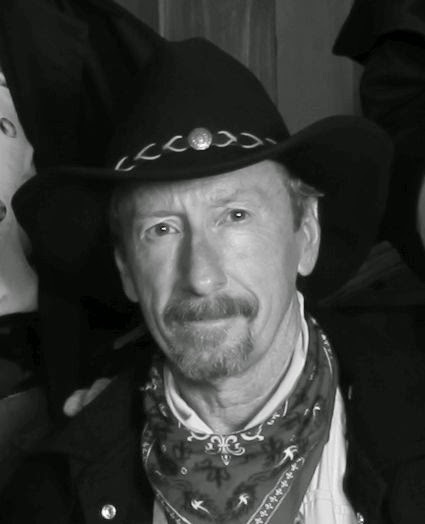
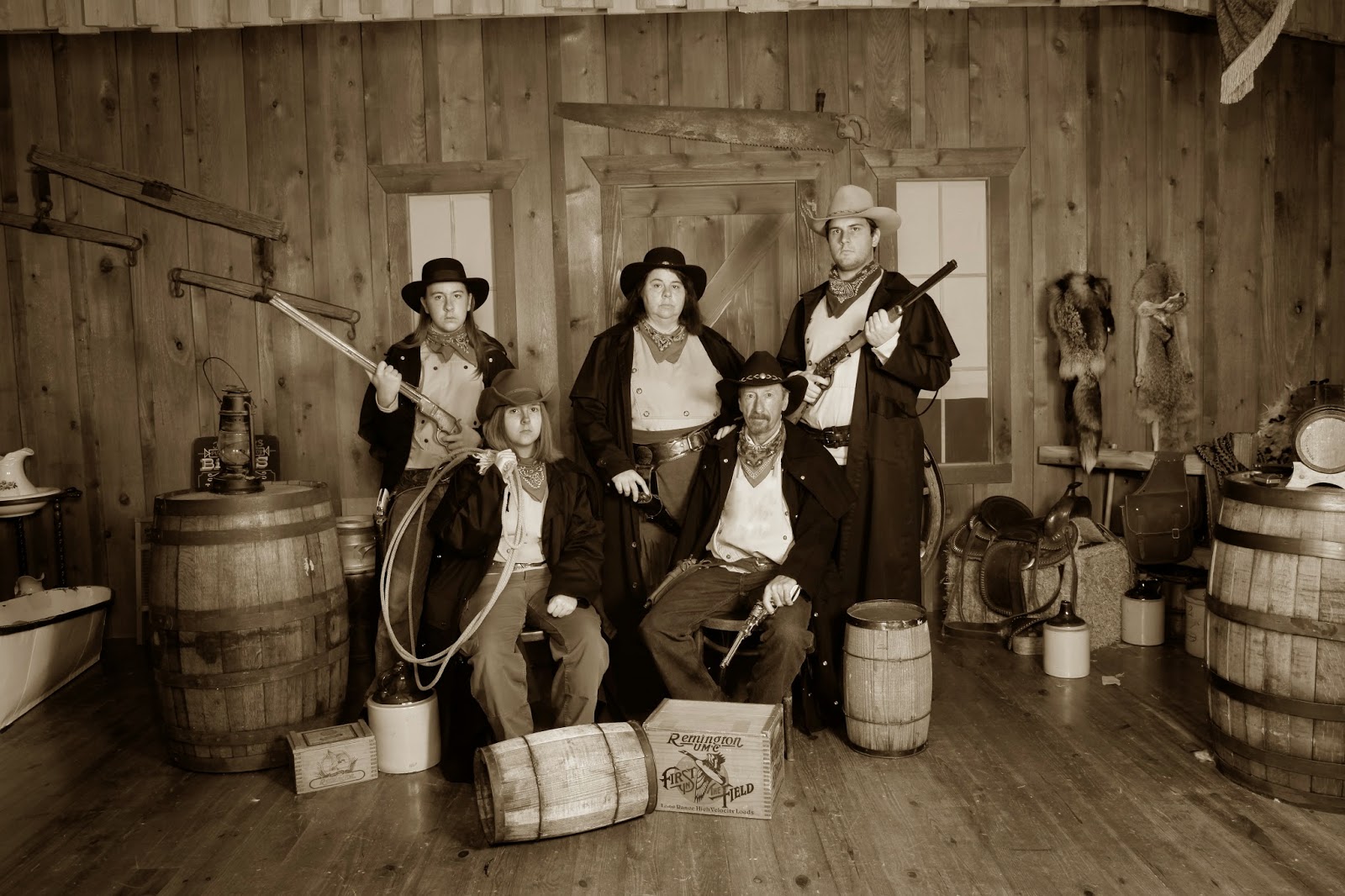
My friend was a wonderful older gentleman who helped me get into the field of industrial hygiene, and in the process, became my best friend (not counting my wife, of course).  He was the most interesting and colorful fellow I have ever met, with many unusual stories to his past, some of which have western analogs in my books.  Every year since my first son was born, whenever we went on vacation, we would have an old time western photo taken (I now have twenty of them on my living room wall).  I had always wanted to do one with my friend as I always pictured him in the role of a lawman had he been born in the Old West.  Several years before his passing, I talked him into doing a photo with the two of us, and he looked so much like he had stepped out of time and into the past, I was inspired to write a story about a marshal based on him.  I even used the photo on the cover of my first book.             

 8.Your writing style somewhat resembles classic novels from another century. Yes, you use tough words when needed, and some scenes are somewhat violent and wicked, but the flow and cadence of your sentences and paragraphs is almost lyrical. Did this come naturally, or did you write in this manner for this novel?

I guess this style comes naturally to me, which I think is a by-product of having a good ear for music.  I don't have the talent to get proficient at playing an instrument, but I constantly have original music popping into my head and always have. (For the first time ever, I found someone to help me put a couple of these on a tape and I used them as music for my audiobook.) I also have for years, entertained my family by spontaneously making up funny lyrics to popular songs, sort of in the same tradition as Weird Al Yankovich. When I write, I seem to be very aware of the rhythm of my words, as you would be in a song, and if they don't flow well, I can't be satisfied until I achieve the cadence I'm comfortable with.   

9. Marshal Taggart befriends a young black man named Jerome Jenkins who lives and works on the ranch belonging to Al's friend. Through this character, we learn the Marshal Taggart is also a teacher, and he uses his knowledge to teach Jerome to read and write. This part of the story touched me, and gave me an additional perspective of Alistair Taggart. Why did you include this side story?

The dear friend upon whom I based the character of Marshal Taggart actually taught high school chemistry for three years before switching to industrial hygiene. His students loved him and always invited him to their class reunions whenever they had one.  Teaching would forever be his first love, and though he left the profession, he remained a teacher in spirit and deed throughout the rest of his life.  He was also a very caring man, one without prejudice, and once the character of Jerome was introduced, I couldn't conceive of Taggart not doing everything in his power to help this runaway slave fashion a new life for himself.

 10.  Here you are on Sweethearts of the West, where the all-female members generally write western romance novels. Is your novel "South of Rising Sun" in any way romantic?

Well, having five older sisters, you would think I might have an inside perspective on what could make a good romantic scene for a novel (or real life), but sadly, I'm like the majority of men who are never sure if they are getting it quite right.  There is a tender moment in SoRS between Taggart and a soiled dove in Rising Sun which never comes to fruition, but even in this occasion, I'm not all that confident I nailed the scene the way seasoned romance writers like you ladies could.  In my next novel, I might try flexing my romantic muscles a little more, provided the consensus is I didn't botch this minor attempt too badly. 

(Note: You see how well he writes?) 

 11. Here are a few trivia questions for short answers:

What is your favorite meal?

**Anything I don't have to cook myself.

How do and your family spend free time?

**We're big movie buffs and we like to discuss lots of different topics.

If you had one wish, what would it be?

**That everyone in the world had a decent quality of life.

I know you love Kansas. Have you lived in other places that you also enjoyed?

**I've spent all my fifty-nine years in the most boring part of the state, but I'm not complaining.  I really do love the majestic scenery of the western states, though.   

In your opinion, what would be a perfect day?

**Being on vacation with my family out west somewhere.  Doesn't matter what we do, just so long as we are all together.
See?  I can be brief when necessary, lol.
~~*~~*~~

BLURB for "South of Rising Sun.":
U.S. Marshal Alistair Taggart has spent almost seven years protecting the citizens of Bleeding Kansas from the lawlessness surrounding its push to achieve statehood. Now, Kansas has entered the Union as a free state, but the violence threatens to continue when the Civil War erupts only three months later. 
During one of Taggart’s regular visits to the former Kansas territorial capitol of Lecompton, local rancher James Harper enlists the marshal’s help to catch the cattle rustlers intent on stealing his livelihood. But Kansas is just beginning its reign as the wildest state in the Union, and Taggart must also deal with Jayhawkers, highwaymen, unpredictable weather, and those hell-bent on revenge. Taggart finds his job further complicated by a runaway slave and animals gone delinquent, along with his own concerns that age may finally be catching up with him. 
Solving the case will prove harder than Taggart ever imagined, and its resolution will cost him dearly. Sometimes, justice only comes with a price… 


EXCERPT:
It was all Taggart needed to hear. "Don't move! Any of you. If you so much as twitch, I'll blow a hole in you big enough for me to see the man standing in front of you. I have two guns aimed at you, and I have no concerns about shooting you in the back if you force my hand. Now, throw down your weapons."

No one moved, but the middle rider spoke. "Mister, I don't know who you are, or what business this is of yours, but there's four guns aimed at the man you're trying to protect. Either you throw down your guns, or we'll open fire on him."

"Then you best contemplate how much comfort that will be to you when you're dead," Taggart said. "I can take down three of you before you can get turned around, starting with the two holding rifles. I figure I can shoot at least two more while you're busy firing at this man. The remaining two need to be damned certain they're expert enough to hit me from atop a spooked horse. I'll have no such difficulty shooting you, as my horse doesn't startle at the sound of gunfire. Is this a gamble you really want to pursue?"

Still, there was no response. Taggart refused to give them time to weigh their odds.

"Gentlemen, I have things to do and places to be today. If you intend to turn this into a fight, then I would be wise to give myself the advantage and shoot first." A double click pierced the silence as he thumbed the hammer of his left gun.
~~*~~
LINKS:
http://www.amazon.com/South-Rising-Sun-J-D-McCall-ebook/dp/B00QD0D332

https://www.smashwords.com/books/view/497440

http://www.mccalljd.com/

Please leave a comment for J.D. He would love to give away a copy of his book in PDF, Mobi, or ePub.