Showing posts with label Dearest Irish. Show all posts

Sunday, August 20, 2017

Kiowa Mythology & Mysterious Origins


Dearest Irish (Texas Devlins, Book 4) takes place mainly on the Kiowa-Comanche-Apache reservation in Indian Territory (Oklahoma) ca. 1876. A lot of my research for this book focused on the Kiowa Indians, a small part of which I’ll share with you today.


Kiowa myth tells of a creator being who summoned their ancestors into the world from a hollow cottonwood log. They emerged one by one until a pregnant woman got stuck in the log, preventing any others from getting out. Sounds painful! Fanciful perhaps, but this may be the Kiowa way of explaining why their numbers were so few compared to the Comanches and other tribes.

Another myth relates how a divine boy, child of the sun and an earthly mother, gave himself to the tribe as eucaristic offerings. As late as 1896, this tribal medicine was kept in Ten Grandmother bundles. Kiowa children grew up listening to these legends and many others, told by the old men and women of the tribe.

Three Kiowa Men ca, 1898; wikipedia, creative commons 2.0
During the 18th and 19th centuries, the Kiowa Indians were one of the preeminent horse tribes of the southern Great Plains. Together with their Comanche and Kiowa-Apache allies, they held off white settlers and the frontier Army for decades. However, they were not always among the world’s greatest mounted warriors. Once, they were hunter-gatherers living in the northern Rockies, who had never laid eyes on a horse. Long before that, they may have dwelled in the desert southwest. Confused yet? Me too!

The Kiowas speak a language called Tanoan or Kiowa-Tanoan. Tanoan is also spoken by many of the Pueblo Indians in New Mexico, proving the two peoples were linked in the distant past. Yet, Kiowas trace their earliest known location to the headwaters of the Yellowstone and Missouri rivers in western Montana. In the late 1890s, tribal elders still remembered northern tribes such as the Blackfeet, Arapaho, Gros Ventres and Shoshonis. How the Kiowas came to be in the far north remains a mystery. One theory is that they split off from their Pueblo roots and migrated northward to colder climes, only to reverse direction and return south eventually.

While living in the northern mountains, the Kiowas depended on dogs to pull travois and possibly sleds. They mainly hunted small game. According to legend, the tribe split over a dispute, one faction heading northwest (where to, no one knows) while the others moved southeastward across the Yellowstone. This group, destined to become the Kiowa tribe of recorded history, met and grew friendly with the Crow Indians, settling east of them in the Black Hills. The Crow apparently taught the Kiowa about life on the plains and intermarried with them, passing on cultural traditions.

Around 1765, the Kiowa obtained the “Tai-me,” a powerful fetish incorporated in the annual Sun Dance ceremony. They acquired horses, hunted buffalo and lived in hide tipis like other plains tribes. They carried personal medicine bundles and belonged to societies within the tribe. Elite among the men’s groups was the Koitsenko soldier society.
Chief Setangya (Sitting Bear), Called Satank, wearing sash with Koitsenko badge
Young boys started out as “Rabbits.” Girls and women also had their own special groups. Among them were the Old Women society and the exclusive Bear society, with only ten or eleven members.

The Kiowa were forced from the Black Hills by the Dakota Sioux as that tribe pushed westward. South of the Kiowa lived the Comanches, who were in turn forced southward. They had acquired horses early on and ranged deep into Mexico on their raids. As early as the 1730s, the Kiowa had also become superb horsemen and were raiding Spanish settlements.

The two tribes warred against each other for years, but around 1790 they made peace and became allies. From then on, they and the Kiowa-Apaches, a small band closely connected to the Kiowas, hunted and raided together. The Comanches ruled the Staked Plains and a large portion of Texas, a vast domain known as Comancheria, while the Kiowas roved southward along the Arkansas River.

This fierce confederation drove out other, weaker tribes and raided Spanish, Mexican and American settlements virtually unchallenged until the mid-1800s. They were after horses, goods they could use or trade, scalps and captives – also tradable at forts and towns along the frontier. Their cruelty toward those they captured or killed was notorious.

Texas militia and later the Texas Rangers fought to protect far-flung settlements, but it would take concerted efforts by the Army and tactics that were often as brutal as the Indians’ to finally defeat the Kiowa, Comanche and their allies. The death blow came on September 28, 1874, when troops of the 4th Cavalry, under the command of Colonel Ranald S. Mackenzie, attacked a string of Indian villages in Palo Duro Canyon, in the Texas panhandle. There was little loss of human life and the Indians escaped up the walls of the canyon, but Col. Mackenzie ordered his men to shoot most of the 1,400 captured Indian ponies. They also destroyed the Indians’ tipis and winter provisions.

Palo Duro Canyon, photo from dreamstime.com

Left afoot on the open prairie, without food and shelter, the tribes soon surrendered. They were confined on the Kiowa-Comanche-Apache reservation and guarded by the soldiers at Fort Sill, located in the shadow of the Wichita Mountains in southwestern Indian Territory. The Kiowa mainly settled near Rainy Mountain, which has since been made famous by N. Scott Momaday’s The Way to Rainy Mountain. Today, most Kiowas in Oklahoma still live in the same general vicinity.


There is so much more I’d like to tell you about the Kiowas’ life on the reservation – it wasn’t pleasant – their crafts, especially the beautiful bead work they’re known for, and their adaptation to the white world. However, I think I’ve gone on long enough. If you’d like to learn more about these proud people, here are a few of my favorite sources:

The Kiowa by Mildred P. Mayhall


Lyn Horner is a multi-published, award-winning author of western historical romance and romantic suspense novels, all spiced with paranormal elements. She is a former fashion illustrator and art instructor who resides in Fort Worth, Texas – “Where the West Begins” - with her husband and a gaggle of very spoiled cats. As well as crafting passionate love stories, Lyn enjoys reading, gardening, visiting with family and friends, and cuddling her furry, four-legged children.

Amazon Author Page: http://amzn.to/Y3aotC
Newsletter:  Lyn’s Romance Gazette http://eepurl.com/bMYkeX
Website:  Lyn Horner’s Corner 

Wednesday, May 20, 2015

Fictional Characters & Historical figures

by Lyn Horner

Recently, Charlene Raddon of Cover-OPs http://cover-ops.blogspot.com/ designed new covers for my Texas Devlins series. She and I both spent many hours searching for models to portray my characters, not an easy task in some cases. I think we succeeded fairly well, but this got me thinking about how I come to "see" the people in my stories. Do they pop into my mind full blown like Athena from the head of Zeus? No! They are never that obliging.

Usually, my imaginary friends (they do become my friends) take shape gradually. They begin as shadowy figures with one or two distinctive characteristics, like Jessie Devlin's red hair and fiery temper. Yes, she's Irish and I gave her those stereotypical traits with backstory to explain them. Other facets of her appearance and personality are a compilation of real people, either ones I've met or seen on TV and movies -- or historical figures. This is true with all of my characters.

For instance, Captain David Taylor, Jessie's dream hero in Darlin' Irish, is based partly on Mac Traven, Tom Selleck's character in The Shadow Riders, one of my favorite Louis L'Amour novels and TV westerns. Mac is a Texan who fought for the North in the Civil War, the same as David Taylor. However, David is edgier than Mac and unlike the Traven family, David's father considers him a traitor. This is what happened to many southern-born soldiers who sided with the Union.


6 Generals Who Fought Against their Home State in the Civil War: A native of Southampton County, Virginia, George Thomas was a career soldier who had served with distinction in the Mexican-American War and later taught at West Point. But despite his strong southern roots—he’d grown up on a plantation and even owned slaves—Thomas refused to break his oath to the U.S. Army and remained loyal to the Union during the Civil War. The decision sent shock waves through the South. J.E.B. Stuart, a former pupil of Thomas’ at West Point, said he deserved to be hanged as a traitor. Even his own sister disowned him, writing that he had been, “false to his state, his family, and to his friends.”

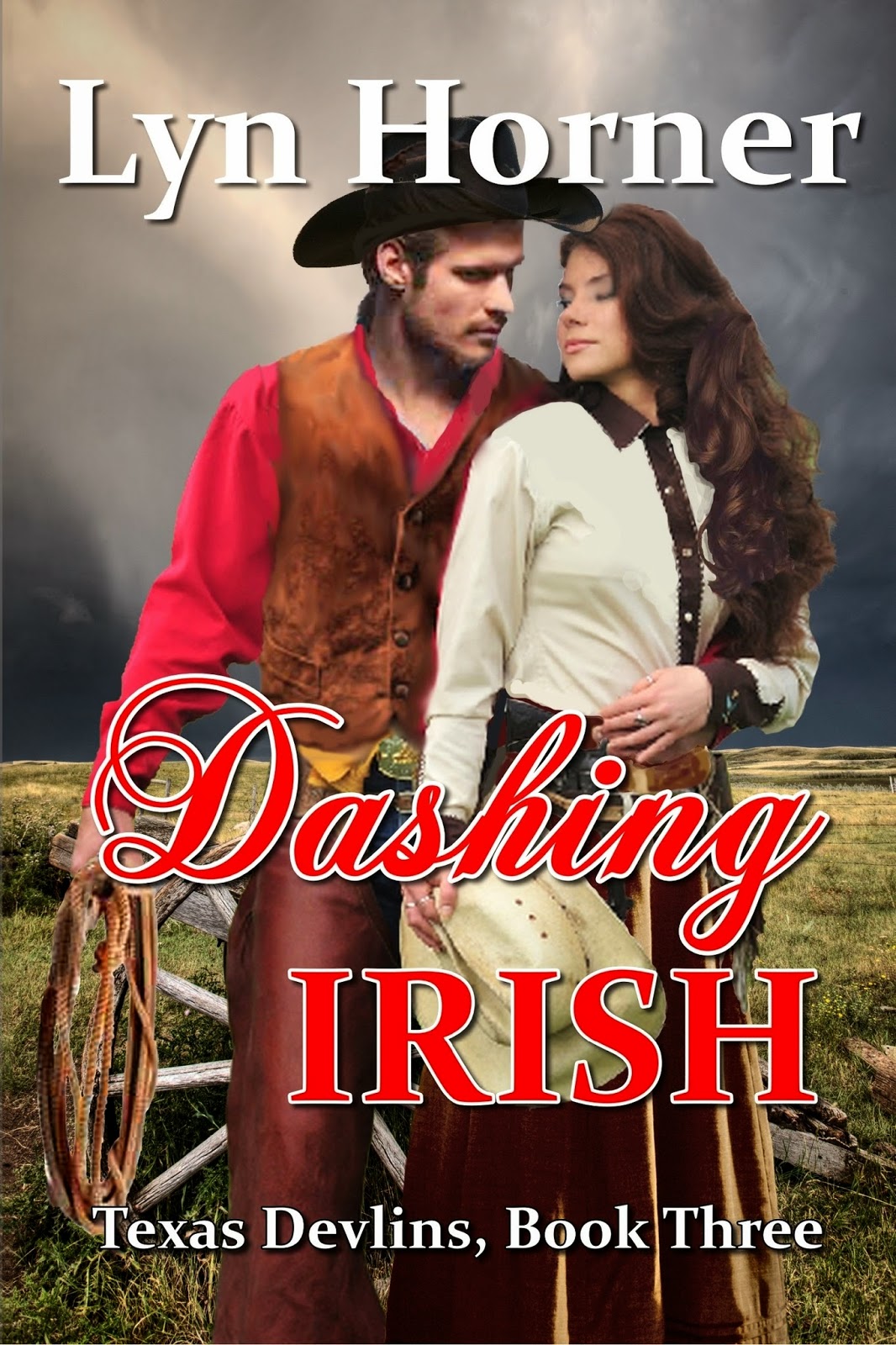
Lil Crawford, the heroine of Dashing Irish, Is based on real cowgirls who worked as hard as any man on ranches and trail drives. Some wore riding skirts, others wore britches. Virtually all were well versed in riding, roping, branding and handling a gun. They were not your average pioneer woman in calico and poke bonnet, but neither were they all that rare. The same goes for Lil's mixed blood lineage. She's one quarter Cherokee because her mother was the offspring of a French fur trapper and an Indian woman. Many a white man on the western frontier took an Indian wife, including some of my ancestors.


One of my favorite characters in Choctaw Jack from Dearest Irish. Jack is a half breed (actually three quarters) who works as a cowboy part of the year and a blacksmith the rest of the time for the Army at Fort Sill in the Indian Territory (Oklahoma.) He's also a Confederate veteran who fought with one of the Indian brigades in the Civil War. Think I made that up? Nope. In his very cool little book CIVIL WAR in the Indian Territory, Steve Cottrell says, "...Choctaws and Chickasaws, whose lands bordered Texas, readily sided with the South..." Other tribes fought for the North.


Authors gain inspiration from many sources and I'm no different in that. The next time you fall in love with a fictional character, think about what might have gone into creating him or her. Just for the fun of it, you could even look for stories on the internet about real people who bear a similarity to that character. You might learn some surprising historical facts.
 
 
Meanwhile, let me know what you think of my new book covers. Do the people depicted on them catch your eye? Do they tempt you to get acquainted with them in the pages of the book? I would love to know.
 
Oh, in case you're wondering, there is a Texas Devlins, Book One. Titled White Witch, it's a novella introducing the Devlins before they head west to Texas.
 
You can find all of my books on Amazon: http://www.amazon.com/Lyn-Horner/e/B004CY506Y


Tuesday, January 20, 2015

Two Legendary Cherokee Outlaws

When I wrote Dashing Irish, Texas Devlins Book Three, I incorporated cowboys from a variety of ethnic backgrounds because, as you may know, not all cowboys were white in the old days anymore than they are now. I gave Tye Devlin a black ranch hand friend who plays a part in the big trail drive to Kansas. There’s also a Mexican wrangler who teaches Tye how to break a wild bronc and a half-breed cowboy who makes Tye jealous by flirting with Lil, the heroine.

New Cover redo 2013

That character, Choctaw Jack, caught my attention from the first moment he popped into my head. I soon knew he would be the hero of the next Texas Devlins book, Dearest Irish. But how did he come to life? Where did I get the idea for his name and later for his sideline profession as a blacksmith?

Revised cover lg.

The answers lie in the research I did for Dashing Irish. There were trips south to Bosque County, Texas, home of the Devlins, and trips north to Oklahoma (the Indian Territory) through which the Chisholm Trail passed. And there were the books about cattle drives, ranching and the Indian Nations.

In one of those books I read about a notorious mixed-blood outlaw nicknamed Cherokee Bill who killed seven men and, with his cohorts, terrorized the Indian Territory for over two years. He was eventually caught and sentenced to death by U.S. District Judge Isaac Parker, the “Hanging Judge.”

Cherokee Bill

That story gave me the idea for Choctaw Jack’s name, although he wasn’t going to be an outlaw. (He does hide an unsavory past. Shh, don’t tell.)

I also learned about another legendary Cherokee named Ned Christie (NeDe WaDe in Cherokee.) He was on the executive council in the Cherokee Nation senate and served as one of three advisers to Chief Bushyhead. Ned’s parents were survivors of the Trail of Tears ordeal and belonged to the Keetowah band, most traditional among the Cherokee.

Ned Christie

Ned Christie was a large, powerful man at 6’4”. Perhaps that explains why he became a blacksmith and gunsmith. Now you know what gave me the idea for Jack to be a blacksmith as well as a cowboy.

Unfortunately, in May 1887, Ned was wrongly accused of shooting and killing U.S. Marshal Daniel Maples in the Cherokee Nation. Fearing he would not receive justice from a white jury, Ned hid out and appealed to the U.S. Court of the Western District of Arkansas in Fort Smith (also in charge of the Ind. Terr.) for bail to allow time to prove his innocence. Judge Parker turned down his request.

Labeled an outlaw, Ned Christie held off U.S. marshals in fortified locations for the next five years, fighting what has been called “Ned Christie’s War.” He was shot and killed in his final battle against the lawmen in 1892. His body was put on display in different locations so the lawmen and others could have their picture taken next to the notorious “outlaw.”

Twenty-six years later, a man named Dick Humphreys told authorities he had witnessed Marshall Maples’ killing. He said it was not Ned Christie who shot him, but a man named Bud Trainer. Christie’s name was finally cleared. Some researchers believe his opposition to railroad development in the Indian Territory may have led to him being falsely accused of Maples’ murder.

Dashing Irish:

Amazon: http://amzn.to/1xzqpT9

Barnes & Noble: http://tinyurl.com/lk8w55d

Dearest Irish:

Amazon: http://amzn.to/1pFwM39

Barnes & Noble:  http://bit.ly/VO3N5l

Wednesday, August 20, 2014

Character Interview with Choctaw Jack

by Lyn Horner
Partners, do you want to have some fun today? Yeah? Then come on along with me and a special friend to Sunbonnet Sue's Down Home Radio Roost.
Sunbonnet Sue greets us on her front porch. A rather plump woman of indeterminate age, she's sitting in the shade with a microphone and a tall glass of iced tea, the national drink of Texas.

Sue: "Howdy Lyn. Glad you could drop by. I see you’ve brought a guest."

Lyn: "I’m pleased as punch to be with you today, Sue. This tall, good looking gent is Jack Lafarge. Um, you might know him as Choctaw Jack in Dearest Irish. That’s what most people called him until he hooked up with Miss Rose Devlin."

Sue: "How-do, Mr. Lafarge. I’m right happy to meet you."

Jack smiles and flicks back his long black hair. “Howdy Miz Sue. It’s nice meeting you, too. Just call me Jack.”

Sue: “My pleasure, Jack. Take a seat and kick back for a spell. You too, Lyn.” Our hostess points to a pair of rawhide-bottom chairs facing her, and we make ourselves comfortable.
 
Lyn: “Jack, why don’t you tell Sue a little about yourself?”

Jack: “Be glad to. I’m a cotton planter’s son, Miz Sue, but I’ve done some cowboying since the war. Uh, the War of Secession, I mean.”

Sue: “Young fella, I understand you fought on the Confederate side. Isn’t that a bit odd for a man of Indian blood?”

Jack: “No ma’am. A lot of us from what you white folks call the Five Civilized Tribes fought on one side or the other. The Choctaws mostly sided with the South and my pa was half Choctaw. When he joined up, I tagged along.”

Sue: “You don’t say. As the old saying goes, we learn something new every day. I’ve also heard you’re handy at blacksmithing. How’d you happen to learn that trade?”

Jack shrugs. “Pa was a blacksmith over in Louisiana before he moved us to Texas. I learned from him when I was a boy.”

Sue nods. “I see. So, is your father the person who most influenced you as you grew up?”

Jack frowns, studying the question. “I’ve never given that much thought. It’s true Pa influenced me a lot, but so did my mother. She turned my life around after the war when she convinced me to walk the white man’s road.”

Lyn: “That’s intriguing, but please don’t go into details. We don’t want to give away all your secrets. Instead, can you tell Sue about the scariest moment of your life?”

Jack turns pale beneath his copper coloring. “That has to be the day my P’ayn-nah, I mean Rose, was bitten by a rattler.” In a husky voice, he adds, “I nearly lost her.”

Lyn looks guilty. “Oh dear, I’m so sorry for putting the two of you through that. But the experience did bring you closer together, didn’t it?”

Jack scowls, ebony eyes glaring at the author. “Yeah, it did, but that doesn’t mean I forgive you for nearly killing off the woman I love.”

Lyn squirms uncomfortably. “Yes, well, on a more pleasant topic, is Rose a good cook? And if so, what’s your favorite food that she fixes?”

Jack’s scowl lifts. Crossing his muscular arms, he says. “P’ayn-nah – that mean Sugar, by the way – is a pretty fair cook, even if she burns our supper now and again. Her favorite food is Indian fry bread, and I reckon it’s mine too. Leastways, when I get to watch her make it.” He grins, dark eyes twinkling.

Sue laughs. “On that happy note, Jack, I’ll let you head on back to your Red River home. Thanks for coming to visit me today. Now, Lyn, why don’t you give me and my listeners a little taste of Rose and Jack’s exciting story.”

Lyn winks. “I thought you’d never ask, Sue. Here you go.”
 

Dearest Irish

Texas Devlins, Book Three

Blurb:

Although the story begins in Bosque County, Texas, where the first two books in this series both end, much of this paranormal Native American romance takes place in the Indian Territory (Oklahoma) ca. 1876.

Rose Devlin, like her older siblings, possesses a rare psychic power. Rose has the extraordinary ability to heal with her mind, a secret gift which has caused her great pain in the past. She also keeps another, far more terrible secret that may prevent her from ever knowing love.

Choctaw Jack, a half-breed cowboy introduced in Dashing Irish, book two of the trilogy, hides secrets of his own. If they ever come to light, he stands to lose his job, possibly even his life. Yet, he will risk everything to save someone he loves, even if it means kidnapping Rose. The greatest risk of all may be to his heart if he allows himself to care too much for his lovely paleface captive.

Excerpt:

Rose stretched and yawned. Something hard supported her head, and another something lay half across her face. This object felt like cloth and gave off a vaguely familiar scent. Swatting whatever it was away, she opened her eyes and had to squint at the bright sun glaring down at her from on high. In the time it took to blink and shield her eyes with her hand, everything that had befallen her during the night burst upon her like a waking nightmare.

Realizing she lay on the hard ground – she had the aches and pains to prove it – she turned her head to the right and saw Choctaw Jack lying a hand’s breadth away. He lay on his back, head pillowed on his saddle and one arm thrown over his eyes. Where was his hat, she wondered absurdly. Recalling the object she’d pushed off her face, she rose on one elbow and twisted to look behind her. First, she saw that she’d also been sleeping with a saddle under her head; then she spotted the hat she’d knocked into the high grass surrounding them. Jack must have placed it over her face to protect her from the sun’s burning rays. In view of his threat to beat her if she tried to run away again, she was surprised by this small kindness.

A throaty snore sounded from her left. Looking in that direction, she saw Jack’s Indian friend sprawled on his stomach, with his face turned away from her. He was naked from the waist up, his lower half covered by hide leggings and what she guessed was a breechcloth, never having seen one before. His long black hair lay in disarray over his dark copper shoulders.

He snored again, louder this time. Rose’s lips twitched; then she scolded herself for finding anything remotely amusing in her situation. Glancing around, she wondered how far they were from the Double C. Jack had been right to chide her last night. She’d had no idea where they were or in which direction to run for help. Even more true now, she conceded with a disheartened sigh.

She heard a horse snuffle. Sitting upright, she craned her neck to see over the grass and spotted three horses tethered among a stand of nearby trees. She caught her breath. Was one of them Brownie? Aye, she was certain of it. Excited and anxious to greet him, she folded aside the blanket cocooning her and started to rise, but a sharp tug on her ankle made her fall back with an astonished gasp. Only then did she notice the rope tied loosely around her ankle. To her dismay, the other end of the rope was wrapped around Jack’s hand.

“Going somewhere?” he asked, startling her.

“You’re awake!” she blurted, meeting his frowning, half-lidded gaze.

“Thanks to you, I am. You didn’t answer my question. Where were you going?”

“I saw Brownie over there.” She pointed to the trees. “I was only wishing to let him know I’m here, nothing more.” She swallowed hard, fearing he would think she’d meant to climb on the stallion and make a run for freedom – though without a saddle on his back and no one to boost her up¸ ’twould be well nigh impossible.

Staring at her a moment longer, Jack evidently came to the same conclusion. “I reckon he’ll be glad to see you,” he said, sitting up and freeing her ankle. “Go ahead. Say howdy to him.”

She again started to rise, but he forestalled her, saying, “Hold on. You’d best put your boots back on.” Reaching behind his saddle, he retrieved her footgear.

“Aye, I suppose there could be cactuses about,” she said tartly, recalling what he’d said last night. She forced a tight smile.

“Yeah, or snakes.”

Amazon: Dearest Irish                 Barnes & Noble: Dearest Irish

Visit Lyn on these sites:

http://lynhorner.com


https://www.facebook.com/lyn.horner.1 

This article is adapted from a 2013 post on Ruby On Tuesday. http://rubypjohnson.wordpress.com/ 

Wednesday, March 19, 2014

A Woman for President -- in 1872?

Victoria Woodhull

Have you heard of Victoria Woodhull? I had only a vague recollection of her being an early suffragette before coming across an article tucked inside a book purchased from a used bookstore. Who placed it there I have no idea, but this Parade Magazine article, printed in March 1998, astounded me.

Victoria Woodhull was far ahead of her time. The first woman owner of a Wall Street investment firm and founder of her own newspaper, she was an adviser to Cornelius Vanderbilt and spoke before Congress demanding women be given the vote. Most astonishing, she ran for President in 1872 against incumbent Ulysses S. Grant and newspaper mogul Horace Greely. Just think, that was 142 years ago – and we still haven’t had a woman president.

On top of all that, Victoria was a psychic, or claimed to be. Being a firm believer in such God-given gifts, when I read that about her, I had to find out more. From young childhood, she was exploited by her father in his carnival show as a clairvoyant and fortune-teller. She was able to recall past events and predict future ones, could find missing objects and people, and supposedly cured afflicted individuals. She was also said to communicate messages from the dead.

Raised in squalor, beaten and starved by her father, with little or no education, Victoria always claimed to be guided by spirits, one of whom told her she would “rise from poverty one day to become ruler of the nation.” Perhaps that’s why she ran for President. Obviously she didn’t win, but she did “set America on its ear” proclaims the 1998 article.

In her book Other Powers – The Age of Suffrage, Spiritualism and the Scandalous Victoria Woodhull, author Barbara Goldsmith says of Woodhull’s time, “If a married woman worked, her wages were given directly to her husband. She could not dispose of her property upon her death. If she divorced, she automatically forfeited custody of her children. Women could not enter universities, law schools or medical schools. They could not serve on juries, and they could not vote.

“Most significantly, women had no control over their own bodies: There were no laws to protect them from physical abuse at the hands of their husbands or fathers, although some states stipulated the size of the objects that might be used to inflict discipline. They had no right to deny their husbands sexual access.”

Good grief! No wonder Victoria Woodhull preached for the “. . . emancipation of woman and her coming into control of her own body . . . the end of pecuniary dependence upon man . . . the abrogation of forced pregnancy . . . “ and more.

For those of us who read and write romances set in the Old West, it behooves us to keep in mind the great difference between women’s circumstances then and now. We like our heroines to be capable of standing up for themselves, but the harsh reality is that they often had little or no say in what their husbands, fathers or other men decreed. Which is not to say there weren’t women who defied convention and men who respected their opinions, even loved them for their independent ways. My kind of heroes!

Horshoe, cactus, stetson & horse divider

Speaking of heroes, let me introduce three guys who learn their women are strong enough to walk beside them, not two paces behind.New cover 2013 redo

From Darlin’ Irish:

Captain David Taylor is an obstinate Texan who’s determined not to get involved with a hot-tempered colleen. She might make his blood run hot but he’s certain she doesn’t have the stuff to make a good frontier wife. It takes almost losing her to make him admit he’s wrong.

New Cover redo 2013


From Dashing Irish:

Tye Devlin feels an instant attraction to a gun-toting Texas cowgirl and she to him, but he’d rather walk away than allow her to stand with him against his enemies. However, the lady has a mind of her own. If she has to hogtie him, she’ll teach him two heads, two hearts and two guns are stronger than one.


From Dearest Irish:WordPress Cover 2

Half-breed cowboy Choctaw Jack may need help from a timid white girl with a healing touch, but he has no intention of letting her into his heart, for he treads a dangerous line between the white and red worlds. She can’t walk it with him. Or can she?


Find these Texas Devlins books plus the prequel novella, White Witch, on these sites:

                               Amazon              Barnes and Noble

Also available as a boxed set: Texas Devlins 4 Book Bundle

Http://lynhorner.com

Sunday, January 19, 2014

Fort Concho and the Concho Pearl

Concho PearlBy Lyn Horner The Concho River was named after mussels found in the river and lakes surrounding the town of San Angelo in west Texas. Called “Concha” by early Spanish explorers, the large gray mussels produce “Concho Pearls” in purple, lavender, pink and orange. The Spanish were enthralled by the lustrous pearls and enlisted local Indians to help harvest them. There may even be Concho Pearls in the Spanish Crown Jewels. Centuries later, Fort Concho was also named after the mussels, or more likely the river. The fort was established as a frontier U.S. Army post in 1867, with five companies of the Fourth Cavalry commanded by Col. John P. Hatch. Situated beside the North Concho River, the fort replaced the earlier Fort Chadbourne north of San Angelo.  Although built on flat, treeless prairie, Concho was described as “one of the most beautiful and best ordered posts in Texas.” Fort Concho cropped The fort was vital to settlement because five major trails crossed the area. An active post for twenty-two years, Fort Concho protected settlers, stagecoaches, wagon trains and the United States mail, and kept trade routes open. The Army launched campaigns against the Comanche and Kiowa from Fort Concho, as well as actions against the Comancheros who traded illegally with the Indians. Pecan wood was first tried as a building material for the fort, but it proved too hard to work with. Next, the soldiers tried adobe bricks but they didn’t know how to properly make adobe. Consequently, when heavy rain came, it dissolved the bricks. Finally, it was decided to build the fort out of native limestone, and the Army hired German stonemasons from Fredericksburg, in the Texas Hill Country to the south. Construction went on throughout the fort’s active period and was never completed. Today Fort Concho is a National Historic Landmark owned and operated since 1935 by the city of San Angelo. Over time several buildings have crumbled into ruins, but the remaining buildings are repaired and preserved by the city, assisted by the Fort Concho Foundation. While attending a conference in San Angelo several years ago, my husband and I visited Fort Concho and snapped a number of photos. Below are the best of the bunch. Unfortunately, I neglected to add captions after hubby loaded the pics to our old computer, and now I can’t recall what all the buildings are. I’ve labeled the ones I know. For more historical information and photos from the fort’s active period, visit http://www.fortconcho.com/index.htm 2
Officers Row 13
Officer’s Quarters 3
Enlisted Men’s Mess Hall 4
  5


Enlisted Man’s Space (I think) 11
Reconstructed Hospital Building 6
 7
Doctor’s Room & Supplies 8


Um, this one explains itself. 10
Mysterious Little Building 12
Ruins of Fallen Building The Kiowa and Comanche Indians were the most feared raiders on the southern plains. Subdued for the most part by the mid 1870s, by soldiers from Fort Concho and other posts, the tribes were confined to a reservation in tNew Cover 2013he Indian Territory.
Can romance blossom between a timid Irish colleen with a healing touch and a half-breed cowboy in a time when such a love drew violent hatred? Find out in Dearest Irish, recognized as a Reviewers Choice Award winner by the Paranormal Romance Guild.

3rd lace 2013 sm

Dearest Irish (Texas Devlins, Rose’s Story)http://www.amazon.com/dp/B00CK9LGA2 (Kindle)               http://tinyurl.com/l64ctss (Nook)


Wednesday, November 20, 2013

Denison, Texas: The Little Railroad Town That Could

New CK header

My dad was born on a farm just outside Denison, Texas in 1916. Third to the youngest of thirteen children, he left home at the age of 17, “hitting the road” during the Great Depression. He traveled all over the western U.S., eventually settling in San Francisco, where he met my mother, a Minnesota farm girl who had come west during WWII in search of work and a bit of adventure.
 W D Horner & George sm
My dad with legs dangling, his siblings and father, ca. 1925

Daddy never lived in Denison again, but he was always proud of coming from the town where President Dwight Eisenhower was born in 1890. The President’s home has been restored and is now the centerpiece of the Eisenhower Birthplace State Historic Site, which includes a museum.
  Eisenhower_Birthplace_State_Historic_Site_in_2009
 
Dwight Eisenhower Birthplace, Denison, Texas
 
Denison was founded in 1872 to serve as a depot for the Missouri–Kansas–Texas Railroad (MKT) or "Katy" as it’s affectionately known. The town was named after MKT vice president George Denison. The first train arrived on Christmas Eve, 1872.
 
KATY Railroad
 
1881 Ad for the MKT
 
Denison was incorporated the following summer. Main Street boasted a neat row of businesses, but beyond that sprawled a tent city of bars, gambling halls, and brothels. However, because the town was laid out where the MKT crossed the Red River (both important transportation routes), it soon grew into a thriving center of commerce in the Old West. In 1875 John Henry "Doc" Holliday kept offices in Denison. By the end of the 1870s the town had two cotton compresses, a large flour mill, and a slaughterhouse. In the 1880s an opera house was built, and the Denison Herald began publication.
 Map of Denison
 
1891 Aerial Map of Denison by Artist Thaddeus Fowler
 
In The Sunday Gazetteer on January 11: “It is believed to include every residence within the city limits, covering a territory of over three miles square”  -- Amon Carter Museum website http://www.birdseyeviews.org/zoom.php?city=Denison&year=1891&extra_info=
 
During the mid-19th century, an epidemic of phylloxera, small insects that feed on the roots and leaves of grapevines, destroyed most European vines. Denison horticulturalist T.V. Munson pioneered ways to grow phylloxera resistant vines, for which he was inducted into the French Legion of Honor. Denison was named sister city to Cognac, France.
 
On February 6, 1873, Denison established the first free public school in Texas. In 1886 a post office opened, and in 1889 the town had 5,000 residents. In addition to the MKT, several additional rail lines connected to Denison. In 1901 the first electric "Interurban" railway in Texas was completed between Denison and Sherman, Texas. Sherman is situated seven miles south of Denison in northeastern Grayson County.
 Denison U.P. Depot

New Union Depot, Denison Texas (postcard, circa 1909)

Denison U.P. Depot
Rusk Avenue facing north, Denison, Texas (postcard, circa 1911)

By the mid-1920s Denison had just over 17,000 residents and 400 businesses, including four banks. It also hosted two high schools, nine grade schools, and a number of churches. My grandparents moved into town after losing their farm during the Depression, and my great grandmother, who lived with them, died at their home in 1939 at the age of 91. So, you see, I have deep roots in this small Red River railroad town that broke ground in several arenas.
 
I  mention Denison in Dearest Irish, Texas Devlins, Book III.
 
WordPress Cover 2

Here’s a snippet from the story, set in 1876.
 
Rose stretched and yawned. Something hard supported her head, and another something lay half across her face. This object felt like cloth and gave off a vaguely familiar scent. Swatting whatever it was away, she opened her eyes and had to squint at the bright sun glaring down at her from on high. In the time it took to blink and shield her eyes with her hand, everything that had befallen her during the night burst upon her like a waking nightmare.
Realizing she lay on the hard ground – she had the aches and pains to prove it – she turned her head to the right and saw Choctaw Jack lying a hand’s breadth away. He lay on his back, head pillowed on his saddle and one arm thrown over his eyes. Where was his hat, she wondered absurdly. Recalling the object she’d pushed off her face, she rose on one elbow and twisted to look behind her. First, she saw that she’d also been sleeping with a saddle under her head; then she spotted the hat she’d knocked into the high grass surrounding them. Jack must have placed it over her face to protect her from the sun’s burning rays. In view of his threat to beat her if she tried to run away again, she was surprised by this small kindness.
A throaty snore sounded from her left. Looking in that direction, she saw Jack’s Indian friend sprawled on his stomach, with his face turned away from her. He was naked from the waist up, his lower half covered by hide leggings and what she guessed was a breechcloth, never having seen one before. His long black hair lay in disarray over his dark copper shoulders.
He snored again, louder this time. Rose’s lips twitched; then she scolded herself for finding anything remotely amusing in her situation. Glancing around, she wondered how far they were from the Double C. Jack had been right to chide her last night. She’d had no idea where they were or in which direction to run for help. Even more true now, she conceded with a disheartened sigh.
She heard a horse snuffle. Sitting upright, she craned her neck to see over the grass and spotted three horses tethered among a stand of nearby trees. She caught her breath. Was one of them Brownie? Aye, she was certain of it. Excited and anxious to greet him, she folded aside the blanket cocooning her and started to rise, but a sharp tug on her ankle made her fall back with an astonished gasp. Only then did she notice the rope tied loosely around her ankle. To her dismay, the other end of the rope was wrapped around Jack’s hand.
“Going somewhere?” he asked, startling her.


Other Books in this series available on Amazon and Barnes & Noble:
 
White Witch: Texas Devlins Origins (a Prequel Novella) 
Darlin’ Irish: Texas Devlin (Book I)
Dashing Irish: Texas Devlins (Book II)