Showing posts with label Rosemary Rogers. Show all posts

Monday, August 28, 2017

WHO IS YOUR FAVORITE FICTIONAL CHARACTER THAT YOU'VE CREATED OR READ ABOUT? BY CHERYL PIERSON


What a great question! I came upon this one when I was answering a questionnaire for another blog and thought it would be a fantastic question to expand on all by itself. Because who among us—writers, readers, or both—DOESN’T have a favorite fictional character?
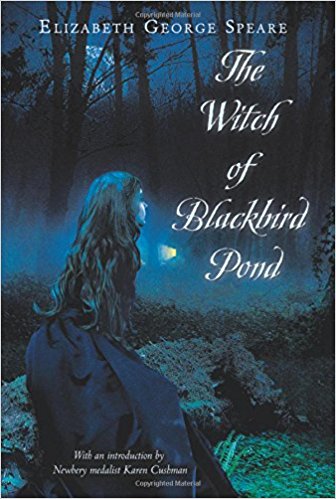
And it changes, doesn’t it? When I was a little girl, I remember being enthralled with stories of the Color Kittens, Pippi Longstocking, and finally Nancy Drew. Later, heroines such as Kit Tyler—Elizabeth George Speare’s unforgettable character in THE WITCH OF BLACKBIRD POND held my interest.

But I also loved the heroes, too—Hugh O’Donnell, THE FIGHTING PRINCE OF DONEGAL, and Robin Hood, fighting their way to freedom and justice for the people they served! And of course, I was a western lover even then. I was spellbound by Travis and Arliss, the brothers in Fred Gipson’s OLD YELLER, and the sequel, SAVAGE SAM.

Davy Crockett and Mike Fink were favorites, for a while, with books complete with pictures from the Disney series. I couldn’t find an image of the actual books I had, but I did find this one of the “stamp” book—which I also had!

GONE WITH THE WIND was my first “adult” book and I’d seen that movie, so I was enraptured by Scarlett O’Hara. Even at a young
age, the facets of her personality both on the screen and in the book fascinated me. How could she be “all” bad? She gave up so much to save her family…or did she? I still love to think about what a wonderful character Margaret Mitchell gave us to ponder.


The first romance book I ever read was SWEET SAVAGE LOVE by Rosemary Rogers. I can’t tell you how that book changed my life in so many ways. I had never read a book that made me feel as if I was right there in the main character’s skin like I did with Ginny, the heroine. As soon as I finished that book, I turned around and read it again, and it’s on my keeper shelf to this day.
The hero of that book, Steve Morgan, is as hard as they come. But there is a place in his heart for Ginny that no other can fill, and she feels the same for him. I read this book close to 40 years ago, and those characters are still memorable today.

As far as characters I’ve written…all writers know that is nearly an impossible choice. Of course, the first book you ever wrote probably contains your favorite character(s)—even if that wasn’t the first book you ever published! They are your first loves, the reason you started writing in the first place.

The first book an author publishes holds an unforgettable place in their hearts, as well. Those characters were the ones that people were able to read about, to relate to, and to give the author feedback on.

The current book is one that is full of hopes, dreams, and promise—just like the ones before. Will people love your characters as much as you do, or will it flop?

Then there are the books that are “experiments”—maybe shorter, longer, or a different genre. How did others like those characters…but moreover, how did YOU like the characters you created?

My favorite male character I’ve created is one that was the “star” of my first book—the one that has never seen the light of day. I still have hopes and plans to rework it and get it out there, but it’s LONNNNNG. But Johnny Brandon is a man’s man, and he’s going to have his vengeance no matter what. Still…there’s room for love—though he is an unwilling participant in the beginning. As always, things have a way of working out for the best, but he kept me on my toes the entire time I was working on that manuscript, and he’s utterly unforgettable.

Probably the couple that were “the odd couple” for me were U.S. Deputy Marshal Jaxson McCall and runaway debutante, Callie Buchanan in THE HALF-BREED’S WOMAN. Jax is hired “on the side” to go after Callie who has run away from her stepfather, a prominent socialite in Washington, D.C. She is headed west, into his familiar territory. He tracks her easily enough, but when he catches up with her, he realizes that his instincts were right—there’s something terribly wrong with her stepfather’s “worry” about her disappearance. Their relationship becomes something neither of them expected, and when Callie’s stepfather comes after them both, Jax realizes he’s got to pull out all the stops to keep Callie safe from the man who is evil to the core.

But Callie has lost so much in her life, she’s determined she’s not going to lose Jax—or her life. She surprised me several times, and I loved the way she grew as a character and found her own strength and bravery as time went by.
What’s your favorite fictional character you’ve read, or one you’ve created? Be sure to leave a comment to be entered in a drawing for a FREE DIGITAL COPY OF THE HALF-BREED’S WOMAN!


If you can't wait to see if you won, here's the buy link at AMAZON!
https://www.amazon.com/Half-Breeds-Woman-Cheryl-Pierson/dp/1496128966/ref=sr_1_1?ie=UTF8&qid=1503888273&sr=8-1&keywords=The+Half+Breed%27s+Woman


Here's an excerpt from THE HALF-BREED'S WOMAN:

The set up: U.S. Deputy Marshal Jaxson McCall has tracked down debutante Callie Buchanan in her flight across the country to get away from her powerful stepfather. Now, because of an overzealous cavalry commander, they have been forced to marry to save Callie’s reputation and Captain Tolbert’s military career from question. It’s their wedding night, but Jax is still uncertain that he’s the best thing for Callie—he wants her to have choices, not something forced on her. But Callie knows what she wants…in her heart, she will forever be THE HALF-BREED’S WOMAN…

Jesus. A king’s ransom in rubies. But more important, the love of the woman kneeling beside him, offering him, truly, the only valuable she had left. The only thing that stood between her and destitution. She was handing him her future, and he held it in his hands, glittering in the lamplight.

“Callie.” His voice was husky, rough, but infinitely tender. “You trust me so much, sweetheart? This is everything you own, isn’t it?”

As Callie lay her head beside him, Jax laced his hands through her hair, thoughtfully fingering the silken mass of burnished copper. She nodded, not answering.

“Think long and hard about what you’re saying, Callie. I’m…not your only choice. Once we’re out of here, we can get this marriage annulled—if you want—”

Her head came up swiftly. “Is that what you want, Jaxson? Truly? To walk away and pretend we never knew each other, never made love together—”

“Shh, no, baby, it’s not what I want.” He put a roughened finger against her lips.

“Then, what? Is it the idea of marriage itself that repels you—or marriage to me?”

“Dammit, Callie, you’re young, you’re beautiful—educated—”

“A fugitive.”

“We’ll get that set straight, sweetheart, and then your whole life will be open to all kinds of possibilities—not just marriage to a—a half-breed U.S. deputy marshal, for God’s sake!”

“I happen to be in love with a half-breed U.S. deputy marshal! One that I want to spend my life with! Remember, Jax? Remember? ‘Laugh with me, love with me, have babies with me—’ Remember?” She moistened her lips, her voice carrying the husky edge of tears, her emotions raw.

Roughly, with a muttered curse, he dropped the case on the bed and pulled her to him. He held her tightly as she scrambled to move herself away from him. He speared his fingers through her soft, tumbling hair, loving the feel of it against his fingertips and across the bare skin of his neck and shoulder.

“Jax! Stop it! I don’t want to hurt—”

“You aren’t going to hurt me, Callie. Not like you mean. Physical pain, I can deal with. Emotional pain, that’s a little harder.” He pulled her back against him, but she resisted, turning her head as he tried to kiss her. He shifted to his left side, throwing a bare leg across her, forcing her head around to look at him.

“Can I trust you, Callie?” His eyes were hot, burning into hers. “If I give you my heart, can I trust you?”

“Jax—” Callie murmured, stopping her thrashing at the hoarse, raw emotion in his voice, the intensity in his eyes. He held her arms tightly in his hands. “I will never, hurt you, Jaxson. Never.” Their lips were only a hairsbreadth apart, her voice a soft whisper, gliding across his skin. “I love you, Jax.” She moistened her lips. “I love y-”

His lips slanted across hers, cutting off the rest of her words. She opened her mouth for him, and his tongue entered her in a promise of what he planned to do to her body in a few short minutes. Boldly, she touched his tongue with hers, and his fingers tensed against her scalp. He had turned until his body almost completely covered hers, pinning her beneath him. Finally, he lifted his head. “I’ll never let you go, girl. That’s one thing you better know. If we make love tonight, you’re mine, Callie. Forever.”

Friday, April 28, 2017

Is Your Setting Another Character? by Cheryl Pierson


Location. Setting. Why is it so important to the stories we read and write? It seems obvious in some cases. In others, there could be a 'hidden' agenda. It can actually become another character.

Let's take a look, first, at the importance of setting to our genre, or sub-genre.
Fifty years ago, the choices were limited. Regencies and Westerns were prevalent sub-genres in the historical category, and mysteries and detective stories captivated the 'contemporary' nook. Science fiction was still relatively uncharted.
The setting of a novel was a definitive device, separating the genres as clearly as any other element of writing.

The glittering ballrooms and colorful gowns and jewels whisked historical romance readers away to faraway, exotic locales. Sagebrush, cactus, and danger awaited heroes of the western genre, a male- dominated readership.


But something odd happened as time went by. The lines blurred. Rosemary Rogers combined the romance of exotic places with the danger of an action plot, and an unforgettable hero in Steve Morgan that, had a man picked up 'Sweet Savage Love' and read it, he certainly could have identified with.


By the same token, the male-oriented scenery accompanied by the stiff, stylized form of western writers such as Owen Wister (The Virginian) and Zane Grey (Riders of the Purple Sage, The Last Trail) gave way to Louis L'Amour (Conagher, the Sackett series) and Jack Schaefer (Shane, Monte Walsh).

Why is the evolving change in description of location so important? In older writings, many times the location of a novel was just where the story happened to take place. Often, the plot of the story dictated the setting, rather than the two forming any kind of 'partnership.'

But with the stories that came along later, that partnership was strengthened, and in some cases, location became almost another character in the plot.

Take, for example, Louis L'Amour's 'Conagher.' As he describes the heroine's (Evie) dismal hopelessness at the land her husband (Jacob) has brought her to, we wonder how she will survive. Yet, Jacob has plans, sees the possibilities that Evie cannot, or will not see. The underlying message is, "The land is what we make of it."

As the story continues, she begins to appreciate the beauty of the prairie, while acknowledging the solitary loneliness of her existence. She plants a garden, nurturing the plants, and gradually she sees the farm being shaped into a good home from the ramshackle place she'd first laid eyes on.


The land is beautiful, but unforgiving. Her husband is killed in a freak accident, and for months she doesn't know what has happened to him. She faces the responsibility of raising his two children from a previous marriage alone.
In her loneliness, she begins to write notes describing her feelings and ties them to tumbleweeds. The wind scatters the notes and tumbleweeds across the prairie. Conagher, a loner, begins to wonder who could be writing them, and slowly comes to believe that whomever it is, these notes are meant for him.

At one point, visitors come from back East. One of them says to Evie something to the effect of "I don't know how you can stand it here."

This is Evie's response to her:
"I love it here," she said suddenly. "I think there is something here, something more than all you see and feel…it's in the wind.

"Oh, it is very hard!" she went on. "I miss women to talk to, I miss the things we had back East–the band concerts, the dances. The only time when we see anyone is like now, when the stage comes. But you do not know what music is until you have heard the wind in the cedars, or the far-off wind in the pines. Someday I am going to get on a horse and ride out there"–she pointed toward the wide grass before them–"until I can see the other side…if there is another side."

The land, at first her nemesis, has become not only a friend, but a soulmate. If that's not romance, I don't know what is.

In your writing projects, what importance do you give setting in your description, plot, even characterization? Within 40 pages of 'Conagher', we understand that the land, with all its wild beauty and dangers has become enmeshed in Evie's character. She can't leave it, and it will never leave her.

I'd love to hear from you about settings in stories that you've read or written that have played an important part.

Sunday, February 28, 2016

BORING CHARACTERS? HERE'S WHY! by CHERYL PIERSON


The other day, I came across an article in a little newsletter I get a few times each week called QUORA. This is a newsletter/site where people can write in and ask questions—sometimes really odd or different questions, like “What does it feel like to die?” or “Are only children happier than children from large families?” – just stuff like that, and anyone can answer. Once the questions are answered, you can see all the answers, but the ones with the most “Upvotes” are the ones that move to the top of the answer page.

The other day, one of the questions was something like, “What makes a person boring? How can I try NOT to be boring?” I read several of the answers, and as I did, I thought about the characters we create and how this might apply to them, as well.

Growing up in the 60’s/70’s, there was still a prevalent idealogy that, to “catch a man” everything had to be about him. Even articles in magazines for young girls, such as Seventeen and Glamour and Mademoiselle talked about the things we women should do to make sure we snagged our guys and kept them. Number 1 on every list was “TALK ABOUT HIM”. Make him feel that he’s the most interesting thing on earth.

Here's an example from Tiger Beat: Look at the worried expression on Davy Jones's face...what teen girl wouldn't give anything to make him smile again?

And David Cassidy? Be still my heart. Let me find out what I need to do to make him MY OWN!


My personal heart throb at the time, Mark Lindsay of Paul Revere and the Raiders...I must know the bad things he does, and of course, the things he can't live without. How can I hope to please him, otherwise?


Have you noticed this in some of the romance books you’ve read? In the words of the Toby Keith smash hit, “I wanna talk about me, wanna talk about I, wanna talk about number one, oh my me my…” (I’ve included the song below with lyrics so you can enjoy them all!)


Well, some of the responses to what makes a boring person (or character) were pretty eye-opening. One of them was that the boring person was “absent” from the conversation—although they’re right there physically, they’re always trying to guide the conversation back to their interests. When everyone else is discussing books, the “boring” person is wanting to talk about something they are an authority on, or at least know more about than others there, rather than contributing to the ongoing conversation. If they DO manage to take part in the conversation that’s flowing around them, they’re only waiting on their chance to say what they have to say—not listening to what other people have to contribute.

I’ve noticed that in many romance books, the hero is not listening to the heroine because he wants to; he listens for information he might be able to use. A classic example of this is Sweet Savage Love. Oh, how I loved that book, and still do—but I do recognize that in today’s world there are some problems with it. Steve really doesn’t see Ginny as a person with wants and needs and desires—his goal is to make sure the intrigue that’s happening around him is manipulated to his plans, and Ginny is there to slake his sexual thirst. He does fall in love with her, but for much of the book, we know she is very much in love with him…and aren’t so sure he has any feelings for her at all above the sexual desire he feels every time they’re in a room together.

http://www.amazon.com/Sweet-Savage-Love-Rosemary-Rogers-ebook/dp/B00KF49VRO/ref=sr_1_1?s=digital-text&ie=UTF8&qid=1456611895&sr=1-1&keywords=sweet+savage+love+by+rosemary+rogers

So our hero needs to actively listen to what the heroine is saying (which is going to require him to think about what she says) and he is going to need to be “present” mentally and emotionally—not just physically—when they’re having a conversation.

As for the heroine? Voicing an opinion or a conviction about a subject she feels strongly about is imperative. This is usually not a problem for the hero—he’s out fighting for the cause, or going after the bad guys, and so on. But for our heroine, in a time when women were to be silent, well…our heroines can’t be held to that rule. You’ve heard the word “feisty” used to describe heroines of many books. That’s a nice way of saying, “A heroine who has her own opinions and isn’t afraid to stand up and be counted!” If a heroine isn’t interested in any social injustices around her, or doesn’t have a cause of her own of some kind, what does she do to be interesting? Constant parties or working on needlepoint doesn’t make for an interesting person. She must have something to care about—something that might even come between her and the hero.

In my book, Gabriel's Law, Brandon Gabriel and Allison Taylor were at the same orphanage together for a few years as children. It's Allie's dream to open her home to young boys who can help her raise cattle, investing in their futures. Brandon has no dreams...but as adults,when Allie saves his life, her dreams become his without his even realizing it's happening.

http://www.amazon.com/Gabriels-Law-Cheryl-Pierson-ebook/dp/B00K2I2JRM/ref=sr_1_1?s=digital-text&ie=UTF8&qid=1456609776&sr=1-1&keywords=Gabriel%27s+Law
Remember, in dialogue, the most important key to keep your characters from being boring is letting them tell their story in an interesting way. Keeping a secret until the end of the dialogue, a secret the reader may know but the heroine is keeping from the hero, then springing it on him in a bombshell, is an interesting way of making the facts known. But it does something more—it shows personality traits about both the hero and the heroine. More on that next time!

What's something one of your heroines cares passionately about? What about one of your heroes? Does he have something he believes in that makes him interesting? Leave a comment for a chance to win a digital copy of GABRIEL'S LAW! Don't forget to include your contact information. I look forward to hearing what you all have to say! And this is for everyone--if you aren't a writer, tell us about a character(s) you've read about and what made them interesting to you.

Thursday, February 20, 2014

The Roots of Western Romance

New CK header

Today’s post is a revamped version of an article published on Cowboy Kisses in April 2012, and originally on Lyn Horner’s Corner in 2011.

Sweethearts of the West is dedicated to western romance readers and authors. As such, I thought it might be fun to pass on a little history of the genre, and how I came to love it.

The Flame and the Flower

Historical Romance as we know it was born in 1972 with the publication of The Flame and the Flower by Kathleen E. Woodiwiss. After her death in 2007, Ms. Woodiwiss’s editor, Carrie Feron, called her “the founding mother of the historical romance genre.” She wrote epic adventures with strong plots and character development, and she dared to include sizzling love scenes that went far beyond a kiss and a hug. However, she was not the first to write western romances.

Sweet savage Love

Rosemary Rogers claimed that honor with Sweet Savage Love, published in 1974. Whereas Woodiwiss often chose settings in far off lands and time periods, Rogers set SSL and following books in the Old West. Her plots were highly dramatic, her characters’ actions sometimes hard to be believe, but that didn’t matter to her fans. And yes, I’m one of them. Maybe she was queen of the bodice rippers back then, but oh my, her heroes were men with a capital “M.”

Sweet Savage Love set the stage for authors such as LaVyrle Spenser, Kat Martin, Linda Howard, and many more. But where did modern western romance spring from? What sets it apart from earlier literary genres?

Pride and Prejudice

Early illustration from Pride And Prejudice by Jane Austin

The taproot of all modern romances, westerns included, traces back to nineteenth century authors of romantic fiction such as Jane Austin and the Brontë sisters. Their books are notable for commentary about life in their time period. Some of the stories do not end happily, as most modern romances do, but they contain strong romantic themes.

 cowboy gear divider

The other main root of western romance leads back to classic shoot-em-up westerns, but the two genres differ greatly. Westerns are action driven and often focus on male characters; women are sometimes little more than props. Western romances, on the other hand, frequently tell the story from both the woman’s and the man’s point of view. The plots may be action-packed but they are largely character driven.

Quoting Constance Martin from a 1999 piece she wrote for Romantic Times, “Heroes in these novels seek adventure and are forced to conquer the unknown. They are often loners, slightly uncivilized, and ‘earthy.’ Their heroines are often forced to travel to the frontier by events outside their control. These women must learn to survive in a man’s world, and, by the end of the novel, have conquered their fears with love. In many cases the couple must face a level of personal danger, and, upon surmounting their troubles, are able to forge a strong relationship for the future.” Riders of the Purple Sage

My love of western romance evolved in the same way from classic westerns. I’ve always loved tales of the Old West thanks to my dad. He was a Texan born only a few decades after the great cowboy era, and I believe he always wished he’d lived in those days. With him, I watched every western he could find on TV. Later, he started me reading western novels, mainly those of Zane Gray. I remember writing book reports on westerns when I was in junior high. The usual girly books bored me to tears.

Then, as a young married, I discovered the Romance Revolution – so named by Bertrice Small in a newsletter article she wrote in 2007 for Long Island Romance Writers. She was, of course, talking about the beginning of modern romance, in which she played a part. With this revolution came the birth of western romance, and once I discovered this sub-genre, I was hooked.

CreateSpace cover 2013

Some years later, I began writing my own stories, publishing my first book, Darlin’ Irish,  in 2010. A prequel novella and two more novels in the Texas Devlins series followed. In the tradition of western romance, they combine fast-paced action with passionate love stories. h, and a glimmer of psychic magic and Irish charm just for fun.


shamrocks for home page


Book two, Dashing Irish (Texas Devlins, Tye’s Story) features a cattle drive – a nod to my favorite John Wayne classic, Red River.

In this scene feisty cowgirl Lil Crawford is driving off a troublesome band of wild mustangs, with help from a certain pesky Irishman.New cover for Createspace

She glanced over her shoulder, already knowing it was Tye. He waved and grinned, blue eyes twinkling in the sunlight, much like the bluebonnets spread among the prairie grass and other wild flowers along the trail.

Suddenly lighthearted, Lil smiled and waved back. “We’d better drive them off a ways, or they’re liable to turn and come back,” she shouted above the thunder of hooves.

“Whatever ye say, milady,” he called. Flashing her another impudent grin, he took position on the other side of the horse herd.

They pounded onward for a couple of miles. By then, Lil felt reasonably sure the mustangs wouldn’t return to harass the cattle. Spying a buffalo wallow partly filled with rain water, she waved her arm, catching Tye’s attention and signing for him to pull up.

“Let’s water our horses,” she called, pointing to the wallow.

“Grand idea. I could use a drink myself.” He wiped a dusty shirtsleeve across his forehead. “And a bath wouldn’t hurt.”

Lil glanced at him sharply as they approached the pond. Was he serious? If so, he could forget it. She wasn’t about to strip down in front of him. That would be asking for trouble, maybe more than she could handle.

“That can wait,” she declared. “We’ve got to get back to the herd.”

He looked at her and sighed. “Aye, I know. But a man can wish, no?” His warm gaze said he wished for more than a bath, causing Lil to hastily avert her eyes.

Dismounting, they led their horses to the wallow. While the animals drank their fill, she and Tye knelt nearby to drink. Though tepid and a little murky, the water tasted a lot better than trail dust. Once she’d quenched her thirst, Lil splashed water on her face, washing away some of the grit. She, too, longed for a bath. If her father located a creek where they could bed down tonight, maybe she’d find a hidden spot and clean up proper. For now, she pulled off her grimy bandanna, rinsed it out and swabbed her throat and neck.

Beside her, Tye plunged his head into the water, swished it back and forth vigorously and threw more water over his neck. He came up dripping, shirt half-soaked. Swiping water from his face, he took a breath and slicked back his hair. The wet tendrils immediately sprang back into unruly waves, making Lil long to run her fingers through the glistening black strands.

Tye turned his head and caught her staring. Stunned by the instant leap of desire in his eyes, she gazed into their beckoning depths. Her mouth went dry and her heart pounded wildly.

She still held the wet bandanna pressed to her throat. Shifting to face her, Tye took the wadded up material from her and tossed it aside. She was mesmerized by his caressing gaze, but when he leaned close, panic set in. He mustn’t kiss her again. That would be playing with fire.

“No!” she cried, pushing him away. She jumped up, but before she’d taken two steps, he was on his feet, catching her arms.

“Lily!” he murmured, soft tone imploring her not to run.

This time she couldn’t force herself to stop him as he bent toward her.

cowboy gear divider

All Texas Devlins books are available in ebook & paperback: http://www.amazon.com/lyn.horner.award-winning.books

http://www.barnesandnoble.com/s/Lyn-Horner?keyword=Lyn+Horner&store=catalog

Visit Lyn on these sites:
http://lynhorner.com                                https://twitter.com/LynHornerauthor     https://www.facebook.com/lyn.horner.1